The Korean Skincare Routine, Actually Explained
Ten steps, or three? What Koreans actually do — and why the West got it wrong.

If you've ever Googled "Korean skincare routine," you've been hit with a wall of conflicting information. Ten steps. Twelve steps. Seven steps. Some guides insist on double cleansing even if you haven't left the house. Others treat essence like it's liquid gold that will solve every skin problem you've ever had.
Here's the reality: most Koreans don't do ten steps. The famous ten-step routine is a marketing framework that Western beauty media turned into gospel. Real Korean skincare — what people who live in Seoul actually do — is simpler, more flexible, and more about consistency than complexity.
Let's break down what actually matters.
The Real Korean Skincare Philosophy
Korean skincare isn't about the number of steps. It's about three principles:
-
Prevention over correction. Koreans start skincare young — often in middle school — and focus on stopping damage before it starts. Sunscreen isn't optional. It's step one.
-
Hydration over treatment. Western skincare leans heavy on active ingredients (retinol, AHA/BHA, vitamin C). Korean skincare prioritizes keeping skin hydrated and its barrier intact. Healthy, hydrated skin fixes a surprising number of problems on its own. It's also the real engine behind the glass skin look everyone's chasing — though, honestly, that glow owes as much to genetics, makeup, and lighting as it does to any bottle.
-
Gentle consistency over aggressive intervention. A simple routine done every single day beats an elaborate one done sporadically.
The Core Routine (What You Actually Need)
Here's what Korean dermatologists typically recommend for most people. Three to five steps, morning and night.
Morning
| Step | Product | Why |
|---|---|---|
| 1 | Gentle cleanser (or just water) | Remove overnight sebum without stripping |
| 2 | Toner / Essence | Hydration layer, preps skin to absorb everything after |
| 3 | Moisturizer | Seal in hydration |
| 4 | Sunscreen (SPF 50+ PA++++) | Non-negotiable. This is the single most effective anti-aging product. Period. |
Evening
| Step | Product | Why |
|---|---|---|
| 1 | Oil cleanser (if you wore sunscreen or makeup) | Dissolves oil-based products that water cleansers can't |
| 2 | Water-based cleanser | Removes remaining residue |
| 3 | Toner / Essence | Hydration |
| 4 | Serum or treatment (optional) | Target specific concerns — acne, dark spots, fine lines |
| 5 | Moisturizer | Lock everything in |
That's it. Five steps in the evening, four in the morning. This is what most skincare-conscious Koreans actually do.
Where the "Ten Steps" Come From
The famous ten-step routine adds these extras between the core steps:
- Double cleansing (oil + water) — actually useful, now included in the core
- Exfoliant (AHA/BHA) — 2-3 times per week at most, not daily
- Toner — one of the core steps
- Essence — the most Korean-specific step; a lightweight hydrating liquid
- Serum / Ampoule — concentrated treatment
- Sheet mask — 1-2 times per week for a hydration boost
- Eye cream — dermatologists debate whether this is necessary if your moisturizer is good
- Moisturizer — core step
- Sleeping mask — heavy overnight moisturizer, 2-3 times per week
- Sunscreen — morning only, core step
The ten-step framework isn't wrong — it's just the maximum. Think of it as a menu, not a checklist. Pick what your skin needs today.
What You'll Actually See at Korean Dermatology Clinics
Walk into a 피부과 in Gangnam or Apgujeong and you won't see a wall of Olive Young bestsellers. Clinical dermatology in Korea leans on derma-specific brands and pharmacy imports — built for barrier repair, post-procedure care, and compromised skin.
The brands you'll actually see at clinics
- Zeroid (제로이드) — Korean derma brand; the most-prescribed barrier-repair line. Pimprove and Intensive Cream are the staples.
- BioDerma (바이오더마) — French, stocked in almost every Korean 피부과. Sensibio for sensitive skin, Atoderm for dry/atopic.
- La Roche-Posay (라로슈포제) — widely recommended. Toleriane (cleanser), Cicaplast (barrier balm), Anthelios (sunscreen).
- Atopalm (아토팜) — Korean brand focused on atopic/sensitive skin, often recommended for kids and adults with compromised barriers.
- Aestura (에스트라) — Amorepacific's dermatology arm; widely stocked at clinics and pharmacies, and a perennial Olive Young Awards winner (Atobarrier 365 Cream won OY's Cream category #1 in 2024 and again in 2025).
- Cetaphil (세타필) — the quiet workhorse cleanser on nearly every clinic shelf.
- Dr. Jart+ Ceramidin (닥터자르트 세라마이딘) — the Korean-accessible ceramide line; recommended for compromised barriers.
These aren't the most fun products on the shelf. They're the ones that do the job when your skin is actually struggling.
Reader discount: Everything in the Olive Young section below is available at Olive Young Global with international shipping. Use code
82CRAFTEDat checkout for 5% off your order. (82 Crafted earns a small commission — zero extra cost to you.)
What Koreans buy at Olive Young (different story)
Clinical brands and consumer favorites live in different worlds. Olive Young's bestsellers — COSRX, Beauty of Joseon, Isntree, Roundlab, Klairs, Missha — are what most Koreans in their 20s and 30s reach for in everyday routines. Perfectly good products; just not what's on a dermatologist's shelf.
A starter consumer routine, if you want brand names:
- Cleanser: COSRX Low pH Good Morning Gel or Banila Co Clean It Zero (oil cleanser)
- Toner: Klairs Supple Preparation (unscented) or Missha First Treatment Essence
- Moisturizer: COSRX Advanced Snail 92 or Illiyoon Ceramide Ato Cream
- Sunscreen: Beauty of Joseon Relief Sun or Roundlab Birch Juice Sun Cream
Both tiers have their place. Knowing which is which is the difference between buying skincare and actually knowing it.
Common Mistakes Foreigners Make
1. Starting with too many products
You don't need ten products on day one. Start with cleanser, moisturizer, and sunscreen. Add one product at a time, every two weeks. If your skin reacts, you'll know exactly which product caused it.
2. Skipping sunscreen
It bears repeating. Korean SPF formulations are years ahead of Western ones — they're lightweight, leave no white cast, and actually feel pleasant. There's no excuse.
3. Over-exfoliating
Western skincare culture loves acids. Korean dermatologists see patients with destroyed skin barriers from people using AHA and BHA every single day. Two to three times per week is plenty.
4. Expecting overnight results
Korean skincare is a long game. Most products need 4-8 weeks of consistent use before you'll see meaningful changes. The before/after photos you see online? Those are usually 3-6 months of consistent routine.
5. Ignoring the ingredients and chasing the brand
Korean beauty brands are masterful marketers. Cute packaging doesn't mean the product works. Learn to read ingredient lists — or at minimum, check a resource like INCI Decoder before buying.
How to Start: The Absolute Beginner Kit
If you're starting from zero, here's the simplest possible Korean skincare routine:
Morning: Wash face with water → Moisturizer → Sunscreen Evening: Cleanser → Moisturizer
Total products: 3. Total cost: under $30 if you buy Korean brands.
Do this for one month. Then, if you want, add a toner or essence. Then maybe a serum. Build slowly. Your skin will tell you what it needs.
The Korean skincare routine isn't magic. It's discipline, hydration, and sunscreen. The ten steps are a maximum, not a minimum. Start simple, be consistent, and protect your skin from the sun. Everything else is fine-tuning.
Keep Reading
More Stories
K-Beauty Just Had Its Biggest August on Record. Its Two Largest Companies Went Backwards.
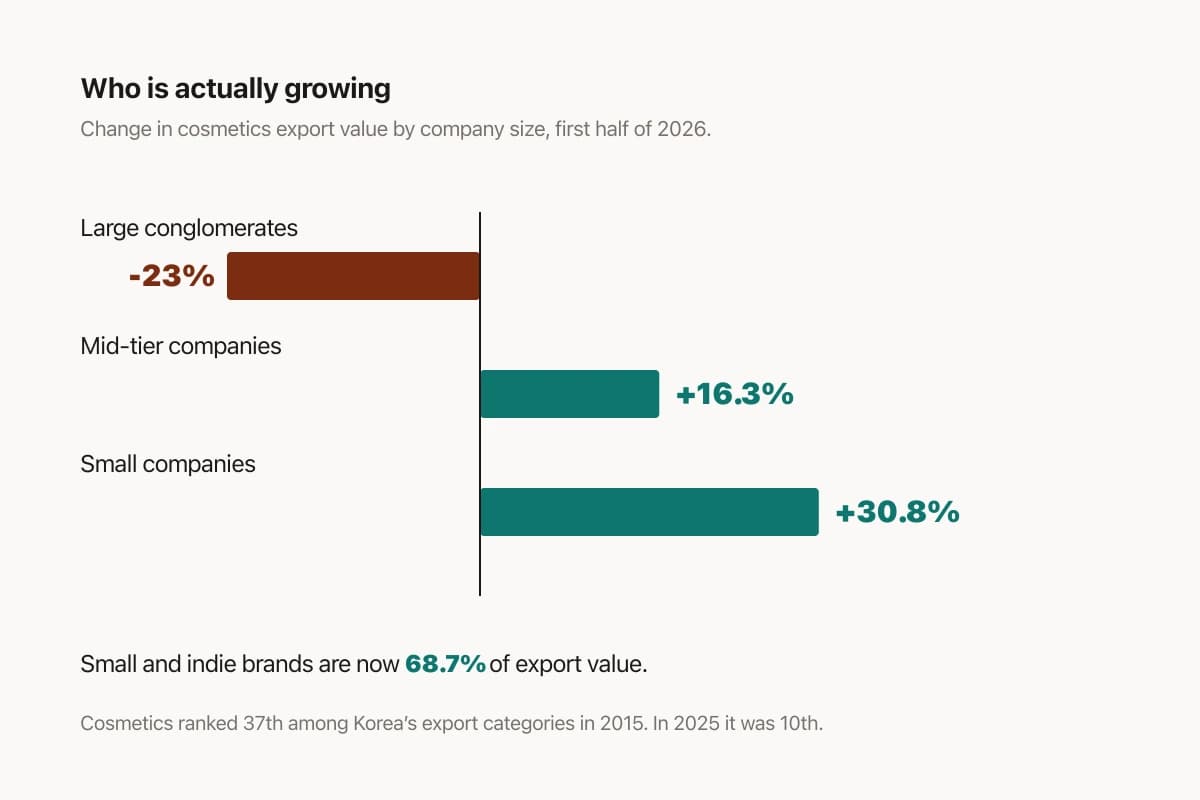
Korean cosmetics exports hit $1.31 billion in August, up 52 per cent — the fastest monthly growth in nearly three years. Almost none of it belongs to AmorePacific or LG Household & Health Care, whose export value fell 23 per cent in the first half. Small brands are now 68.7 per cent of what Korea ships. And China, which took more than half of it five years ago, now takes one seventh.

Is Korea the Plastic Surgery Capital of the World? The Numbers, Honestly
The claim rests on a 2011 survey. ISAPS hasn't published a Korean procedure count since. The figure Korean media reported as an ISAPS finding in 2024 is the one row in its own source table that can't be reproduced — and the standard calculation counts a million foreign patients as if they were Korean.
Glass Skin, Honestly: How Much of K-Beauty's Most Famous Look Is Real?
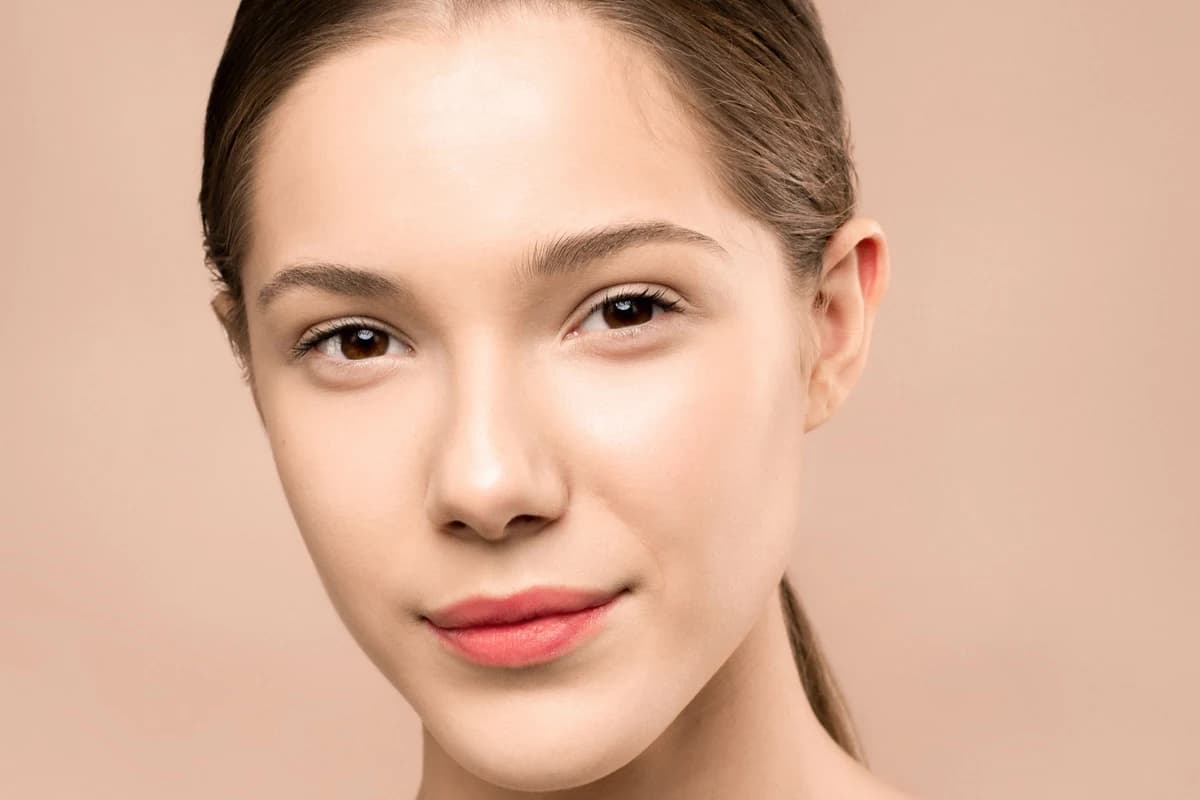
It's the most screenshotted goal in all of K-beauty — poreless, lit-from-within, smooth as a pane of glass. Here's where the term actually comes from, the richer Korean vocabulary it flattens, and the honest breakdown of how much is skincare, how much is makeup and a ring light, how much is a dermatologist's needle — and how much is just genetics.
The Weekly Dispatch
Korea, curated. Every week.
The best of K-culture, straight from Seoul. Written by people who actually live here.
Free, no spam, unsubscribe whenever.