What Koreans Actually Eat at 2am
Skip the tourist spots. A night-eater's guide to the convenience store, pojangmacha, and the bar you haven't heard of.
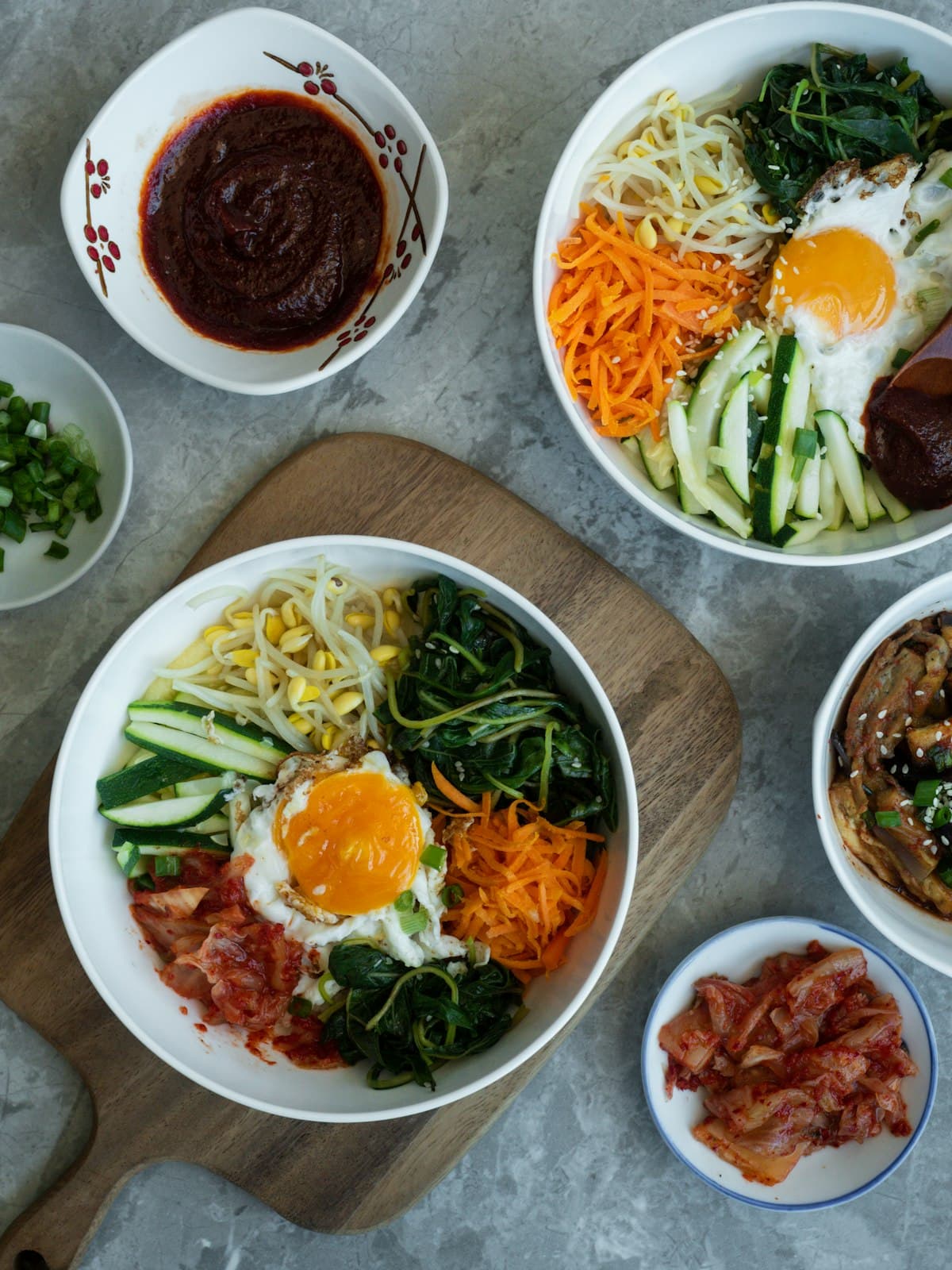
Korea doesn't sleep. Or more accurately — Korea sleeps late, and it eats even later. The concept of "late-night dining" in most Western countries means finding a kebab shop that's still open. In Korea, 2am is a fully operational meal hour with dedicated restaurants, street food infrastructure, and an entire convenience store cuisine that could sustain a civilization.
Here's what Koreans actually eat when the clock hits 2am.
The Convenience Store Run (편의점)
This is the most common 2am meal in Korea, and it's not even close. GS25, CU, and 7-Eleven stores are open 24 hours, there's one on every block, and the food is legitimately good. (We wrote a full field guide to Korean convenience-store food — what to actually grab, the golden combos, and how the chains differ.)
The Starter Pack
| Item | Price | What It Is |
|---|---|---|
| Triangle kimbap (삼각김밥) | 1,000-1,500 won | Seaweed-wrapped rice triangle with filling (tuna mayo, kimchi, bulgogi). Korea's answer to the Japanese onigiri. |
| Cup ramyeon | 1,500-2,000 won | Instant noodles in a cup. Fill with hot water from the in-store dispenser. Add a slice of cheese from the fridge for the authentic Korean upgrade. |
| Lunch box (도시락) | 3,000-4,500 won | A full meal — rice, meat, kimchi, side dishes. Microwave it in-store. |
| Banana milk (바나나맛우유) | 1,500 won | The iconic yellow bottle. Every Korean has an emotional relationship with this drink. |
The Advanced Move
Koreans combine convenience store items like a chef working a limited pantry:
- Buy a cup of ramyeon + a triangle kimbap + a hard-boiled egg
- Cook the ramyeon at the hot water station
- Drop the egg in the broth
- Eat the kimbap on the side
Total cost: under 5,000 won ($3.80). That's a hot, filling, satisfying 2am dinner.
Where to sit: Most Korean convenience stores have a small table and chairs outside (or inside, in newer stores). Eating at the convenience store at 2am is not sad in Korea. It's normal. Groups of friends, couples after dates, salarymen after overtime — everyone's there.
Pojangmacha (포장마차) — Street Tent Bars
The orange-tented street stalls you've seen in every K-drama exist in real life, and they're spectacular at 2am. A pojangmacha is essentially an outdoor bar that also serves food. You sit on plastic stools under a vinyl tent, order soju and snacks, and talk too loudly with strangers.
What to Order
- Tteokbokki (떡볶이): Spicy rice cakes in gochujang sauce. The quintessential Korean street snack. 4,000-5,000 won.
- Odeng (오뎅): Fish cake skewers in hot broth. Take a skewer, sip the broth from a cup. 1,000-2,000 won per skewer.
- Twigim (튀김): Korean-style tempura — vegetables, squid, sweet potato, glass noodles, all deep fried. 3,000-5,000 won for a plate.
- Sundae (순대): Korean blood sausage stuffed with glass noodles. Sounds alarming, tastes incredible. Dip in salt + pepper mix. 4,000-5,000 won.
- Gyeran-ppang (계란빵): Egg bread. A sweet, fluffy bread with a whole egg baked on top. 2,000-3,000 won.
Where to Find Them
Pojangmachas cluster in entertainment districts. Best areas in Seoul:
- Jongno 3-ga — the most traditional, most local pojangmacha street
- Euljiro — the "hip" spot that still has legit old-school tents
- Hongdae — more touristy but still good quality
- Sindang — specifically for tteokbokki (Sindang Tteokbokki Town is a real place)
Chimaek (치맥) — Chicken and Beer
If Korea has a national 2am meal, it's chimaek: fried chicken (치킨) plus beer (맥주). Korean fried chicken is a religion unto itself. Every neighborhood has multiple dedicated chicken restaurants, and most deliver until 3-4am.
The Big Three Styles
| Style | What It Is | Best Chain |
|---|---|---|
| Huraideu (후라이드) | Classic golden fried | Kyochon, BBQ Chicken |
| Yangnyeom (양념) | Sweet-spicy glazed | Nene Chicken, BHC |
| Ganjeung (간장) | Soy garlic | Kyochon's signature |
How Koreans Actually Order
Most people order through delivery apps — Baemin (배달의민족) or Coupang Eats. A whole fried chicken (enough for 2-3 people) costs 20,000-26,000 won ($15-20) depending on the brand and whether you order via delivery app (delivery apps charge 1,000-3,000 won more than store pickup). With delivery fees on top, the total can approach 30,000 won — but split between friends, it's still one of the best value late-night meals. Add beer from the convenience store and you have the most Korean 2am experience possible.
The unwritten rule: Never order just one flavor. Koreans always order "ban-ban" (반반) — half fried, half seasoned. This way you get two flavors in one order.
Ramyeon Restaurants (라면 맛집)
Not convenience store ramyeon — actual restaurants that specialize in ramyeon cooked properly. These places are open late and serve elevated versions of what you'd make at home.
What to Know
- Shin Ramyeon is the most popular base (spicy beef broth)
- Add cheese, egg, rice cake, or dumplings as toppings
- Some places let you choose your spice level — start at "normal" (보통) before attempting "very spicy" (매우 매운)
- A bowl of restaurant ramyeon runs 5,000-8,000 won ($4-6)
Best Late-Night Ramyeon Spots
- Jongno ramyeon alleys — multiple small shops competing for the best bowl
- University areas (Sinchon, Konkuk) — student budgets mean excellent cheap ramyeon
- Any 24-hour kimbap restaurant — kimbap chains like Kimbap Cheonguk (김밥천국) serve ramyeon alongside their regular menu, and many locations are 24 hours
Haejangguk (해장국) — The Hangover Cure
Korea's answer to the morning-after problem — except Koreans don't wait until morning. Haejangguk restaurants start filling up at 2-3am when the drinking crowd needs salvation.
The Essentials
- Haejangguk (해장국): Literally "hangover soup." Rich, spicy broth with pork spine, congealed blood, vegetables, and napa cabbage. Sounds intense. Works miracles.
- Dwaeji-gukbap (돼지국밥): Pork bone soup with rice. Busan's signature, but available in Seoul. Lighter than haejangguk.
- Sundae-gukbap (순대국밥): Blood sausage soup. Hearty, porky, restorative.
- Samgyetang (삼계탕): Whole chicken stuffed with ginseng, rice, and dates in a milky broth. More of a 24-hour restaurant find than a 2am stall.
Price: 8,000-12,000 won ($6-9) for a massive bowl with rice and banchan.
The ritual: Walk into a haejangguk restaurant at 3am. You'll see businessmen in suits, couples in date clothes, groups of friends who can barely sit straight, and solo diners who clearly know exactly what they're doing. Order. Eat. Feel human again.
The 2am Tier List
| Tier | Option | When to Choose It |
|---|---|---|
| S | Chimaek delivery to your hotel | You want comfort and privacy |
| S | Haejangguk restaurant | You've been drinking and need rescue |
| A | Pojangmacha street tent | You want the authentic Korean night-out experience |
| A | Convenience store combo meal | Quick, cheap, effective |
| B | Ramyeon restaurant | Warming, simple, satisfying |
| B | Tteokbokki from Sindang | Specific craving, worth the trip |
| C | Fast food chain | You're in Korea. Do better. |
Korea's 2am food scene isn't a compromise for when real restaurants are closed. It's a fully developed culinary category with its own traditions, its own specialties, and its own rituals. Some of the best meals you'll have in Korea will happen after midnight, standing at a pojangmacha in the cold, arguing with strangers about which soju brand is best — even if, these days, Koreans are drinking less of that soju than they used to.
Eat late. Eat well. That's how it works here.
Keep Reading
More Stories
Spinach Is Up 152% in a Month. It's Also Cheaper Than It Was Last August.
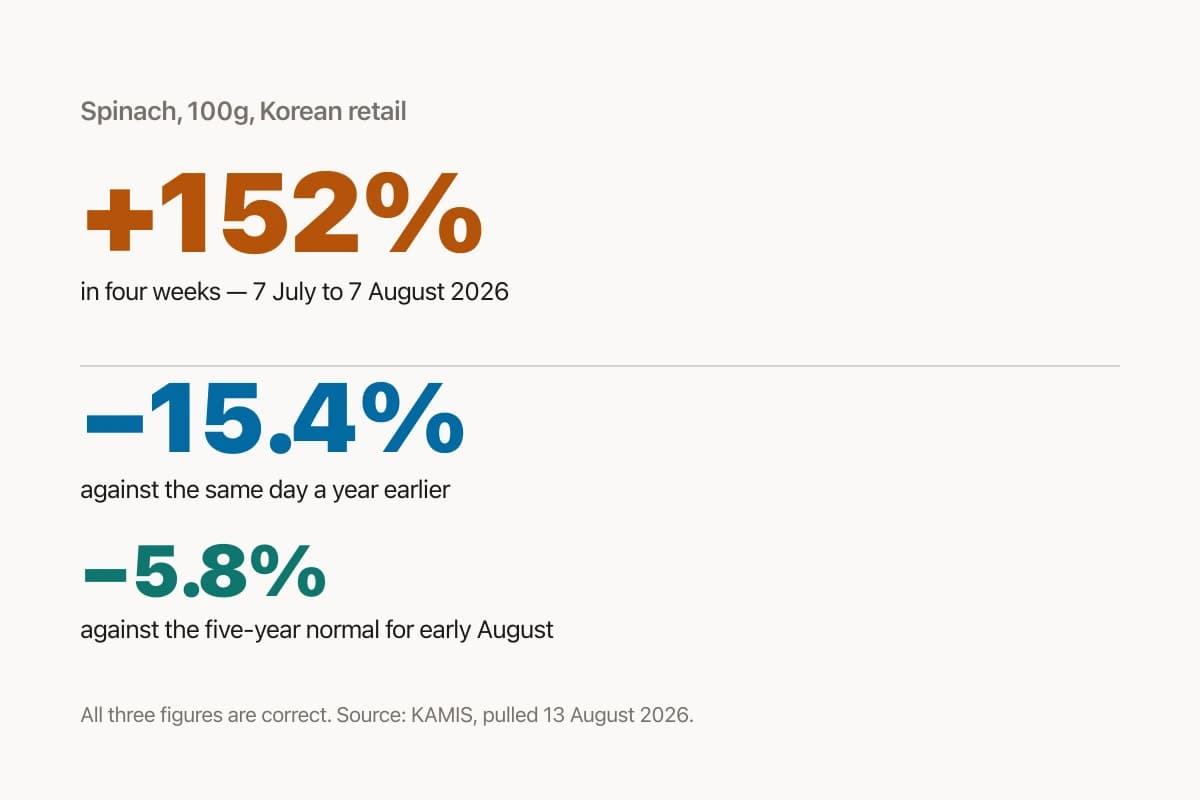
Korean vegetable prices produced a genuinely alarming number this month: spinach at ₩1,978 per 100g on 7 August, up from ₩784 four weeks earlier. Both figures are real and we pulled them ourselves. But spinach is currently 15% cheaper than it was a year ago and below the five-year normal — and the agriculture ministry has taken the unusual step of asking people to stop making the comparison that produced the headline.
The ₩18,154 Bowl: How Korea's Hottest-Day Ritual Got Priced Out
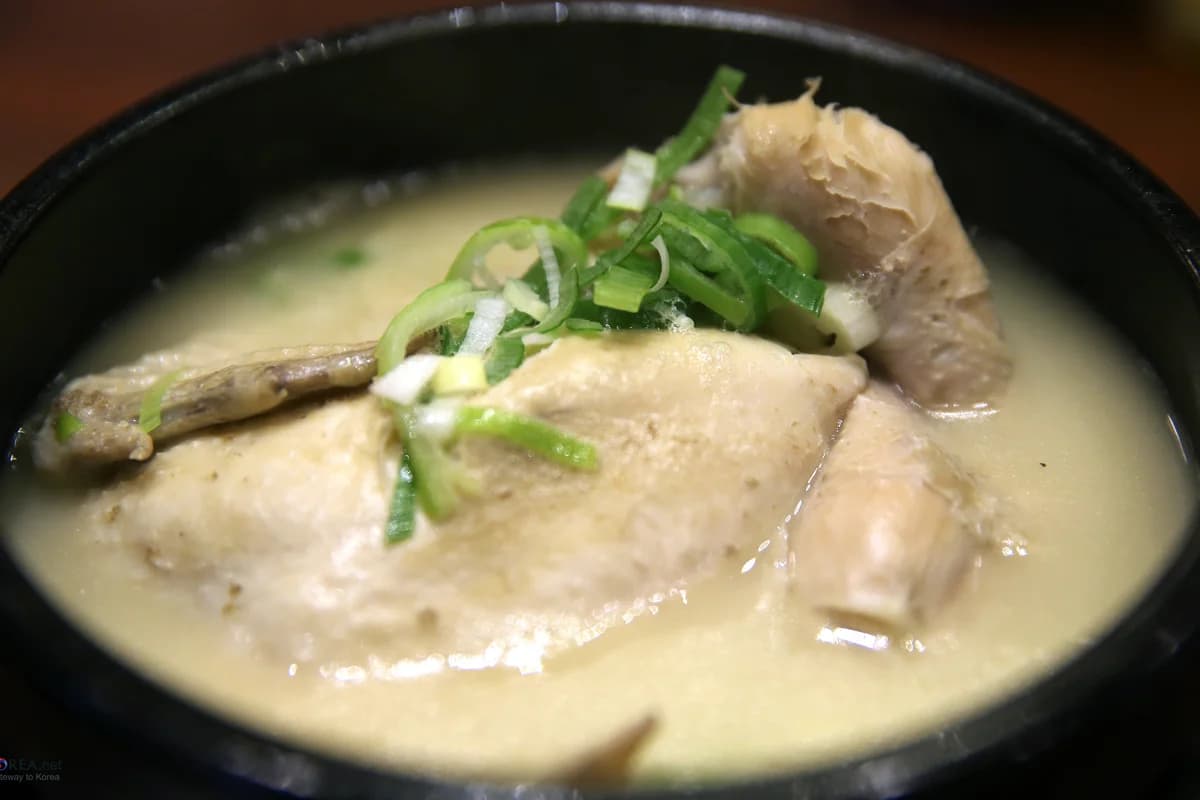
On the hottest days of the year, Koreans queue for boiling chicken soup. But samgyetang now costs ₩18,154 in Seoul — while the same ingredients run ₩8,800 at a market. Jungbok falls on July 25. A guide to boknal, the logic of fighting heat with heat, and why the convenience-store version isn't the end of a tradition.
What Is Soju? Korea's Green-Bottle Spirit, Explained
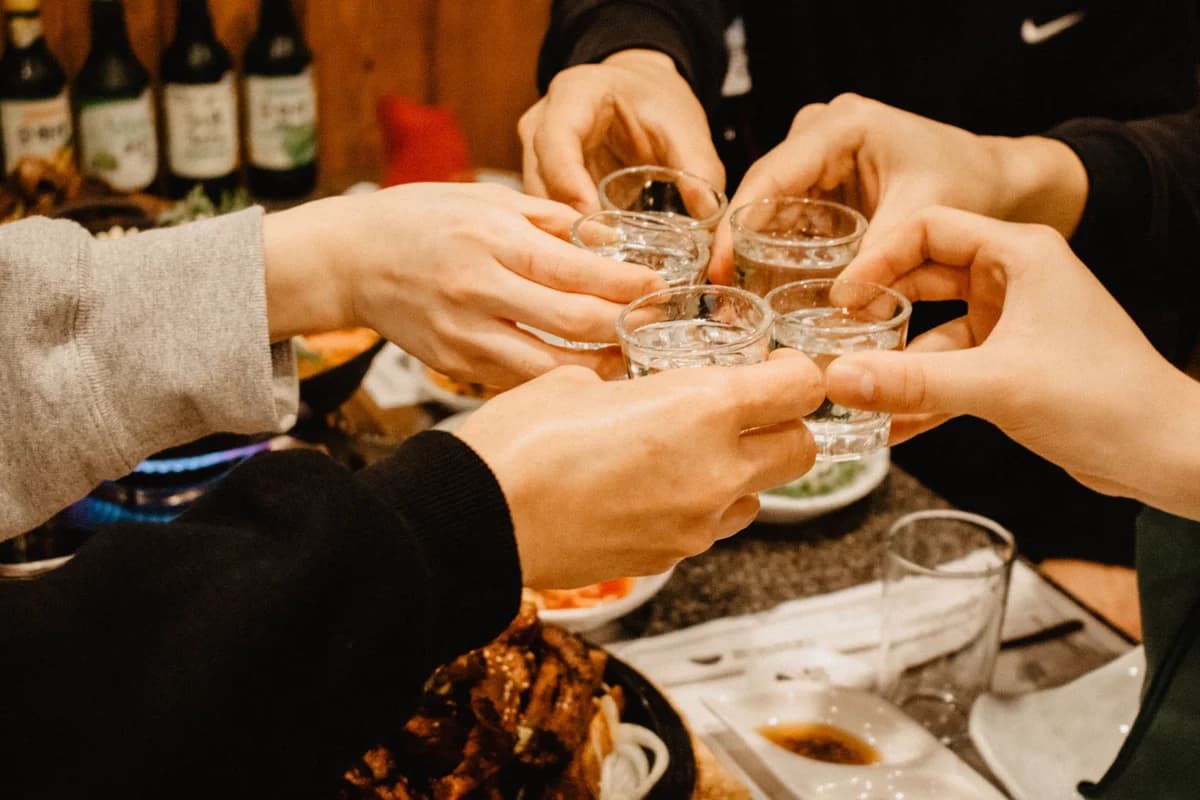
It's the best-selling spirit brand on Earth, and most people outside Korea couldn't pick it out of a lineup. A field guide to soju: what's actually in the green bottle, how a 1965 rice ban created the modern version, why it's suddenly conquering export markets — and how to drink it like you know what you're doing.
The Weekly Dispatch
Korea, curated. Every week.
The best of K-culture, straight from Seoul. Written by people who actually live here.
Free, no spam, unsubscribe whenever.