Where Locals Actually Eat in Seoul (Skip the Tourist Traps)
Forget Myeongdong. These are the restaurants Koreans book for themselves — from a 4.9-star Chinese spot in Jongno to a hidden Spanish gem in Seongsu.
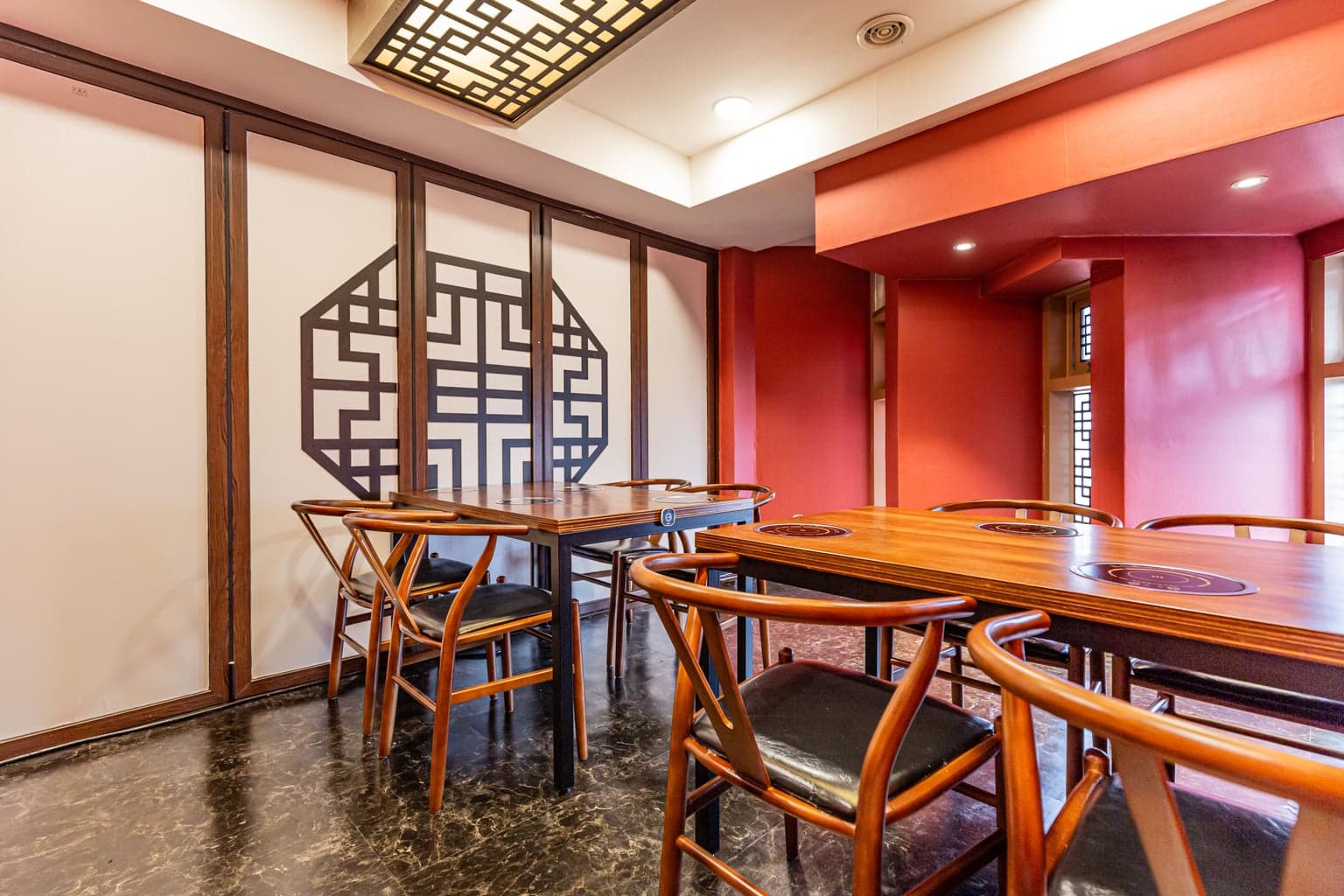
There are two Seouls when it comes to food. There's the Seoul that TripAdvisor shows you — Myeongdong BBQ joints with English menus, Gwangjang Market stalls that already know how to pose for your camera, the same 5 restaurants in every "Seoul food guide" written by someone who visited for a week.
Then there's the Seoul where Koreans actually eat.
We pulled from CatchTable's Loved by Locals and Local Favorite lists — restaurants that real Korean diners book repeatedly, rate highly, and recommend to friends. No tourist traps. No hype-only spots. Just good food that locals keep going back to.
Doryang (도량) — Jongno
4.9★ (5,514 reviews) · Chinese · ₩10,000–₩70,000
📍 Find it 서울 종로구 자하문로6길 6 2, 3층 (통의동 35-12) View on Naver Map ↗
4.9 stars across 5,500+ reviews. That might be the highest-rated restaurant with significant volume in all of Seoul. Doryang does Chinese cuisine in Jongno — not the Korean-Chinese fusion you're used to (짜장면, 탕수육), but proper Chinese cooking with technique and ingredients that justify the rating.
The price range says ₩10,000–₩70,000, which means you can do a casual lunch or a serious multi-course dinner. Either way, you're eating at what might be statistically the best restaurant in Seoul.
PEREHIL — Seongsu
4.9★ (2,335 reviews) · Spanish · ₩10,000–₩60,000
📍 Find it 서울 성동구 연무장길 37-22 1층 (성수동2가 316-48) View on Naver Map ↗
A Spanish restaurant in Seongsu with a 4.9 rating? PEREHIL is proof that Seoul's dining scene has gone global in ways most visitors don't realize. This isn't Korean-fusion-Spanish — it's actual Spanish cooking (paella, tapas, Iberian pork) done at a level that earned nearly-perfect scores from Korean diners who are notoriously hard to impress.
Open from 11:00 to 22:30. The lunch service is the local move — same food, calmer vibe, easier to book.
Mimiok Sinyongsan (미미옥) — Yongsan
4.7★ (4,414 reviews) · Shabu-Shabu · ₩20,000–₩60,000
📍 Find it 서울 용산구 한강대로15길 27 (한강로3가 40-463) View on Naver Map ↗
Mimiok has 4,414 reviews. That's not a restaurant — that's a movement. Located in the newly revitalized Yongsan area, Mimiok does shabu-shabu (Korean hot pot with thinly sliced meat) with broths and ingredients that have turned a simple concept into a destination. The volume of reviews tells you this isn't a fad — locals have been coming here consistently for years.
Deepin Oksu — Oksu
4.6★ (6,123 reviews) · Pasta · ₩10,000–₩40,000
📍 Find it 서울 성동구 독서당로 194 지하1층 (옥수동 244-10) View on Naver Map ↗
6,123 reviews. Deepin Oksu might be the most-reviewed restaurant on CatchTable, period. It's a pasta restaurant in Oksu — not a trendy neighborhood, not a tourist area, just a residential district where a genuinely great Italian place became the entire neighborhood's default dinner spot.
The review count is the story. This is what happens when a restaurant gets food, price, and consistency right in a neighborhood where the audience is 100% local.
Aino Garden Kitchen — Gwanghwamun
4.5★ (2,878 reviews) · Set Menu, Home-cooked · ₩10,000–₩20,000
📍 Find it 서울 종로구 경희궁2길 10 2층 (내수동 110-9) View on Naver Map ↗
Korean home-cooking in a garden setting near Gwanghwamun for ₩10,000–₩20,000. Aino Garden serves the kind of food Korean grandmothers make — 집밥 (jipbap, home food) elevated just enough to be worth going out for. The set menu changes with the seasons, the banchan is generous, and the garden setting gives it a warmth that most restaurants can't replicate.
This is the restaurant Koreans take their parents to.
Haidilao Gasan — Gasan
4.7★ (3,763 reviews) · Chinese · ₩30,000–₩50,000
📍 Find it 서울 금천구 디지털로10길 9 현대아울렛 가산점 6층 (가산동 60-8) View on Naver Map ↗
Yes, the Chinese hot pot chain. Haidilao's Korean branches have become legitimate local favorites — not because the food is groundbreaking, but because the service is. Free snacks while you wait, the famous noodle-pulling show, unlimited condiment bar, and the kind of attentive service that Koreans (who are very particular about service) genuinely appreciate.
The Gasan branch specifically has 3,763 reviews because it's near the Gasan Digital Complex — one of Seoul's biggest office clusters. This is where thousands of Korean workers go for team dinners.
Centralreducer — Seongsu
4.4★ (4,069 reviews) · Fusion · ₩10,000–₩40,000
📍 Find it 서울 성동구 성수일로6길 7-1 1층 (성수동2가 301-98) View on Naver Map ↗
The name is strange. The food isn't. Centralreducer is a Seongsu fusion spot with over 4,000 reviews — the kind of local-favorite volume that means repeat visitors, not one-time tourists. The menu blends Korean and Western influences in ways that only make sense if you live here and eat both cuisines daily.
Hikinikutocome Dosan — Apgujeong
4.5★ (3,455 reviews) · Japanese · ₩25,000
📍 Find it 서울 강남구 선릉로155길 21 2층 (신사동 656-5) View on Naver Map ↗
A Japanese hamburg steak restaurant with a cult following and a fixed ₩25,000 price point. Hikinikutocome does one thing — hamburg steak (ハンバーグ) — and does it obsessively well. The single-price model keeps things simple: sit down, get steak, leave happy. Over 3,400 reviews confirm the formula works.
How to Find Where Locals Eat
Look at review counts, not ratings. A 4.9-star restaurant with 50 reviews might be a fluke. A 4.5-star restaurant with 4,000 reviews is a proven local institution. Volume is the signal.
Avoid neighborhoods that are >70% tourists. Myeongdong, Insadong main street, and Namsan Tower base are tourist dining zones. Walk 10 minutes in any direction and the restaurant quality jumps dramatically.
Check CatchTable, not Google Maps. Google Maps restaurant ratings in Korea are skewed by tourist reviews. CatchTable is used almost exclusively by Korean diners, so the ratings reflect local opinion.
Eat where the office workers eat. Areas like Gwanghwamun, Yeouido, Gangnam station, and Gasan have massive lunch crowds of Korean professionals. These neighborhoods have the best price-to-quality ratios because the restaurants compete for daily repeat customers.
Data from CatchTable, April 2026.
Keep Reading
More Stories
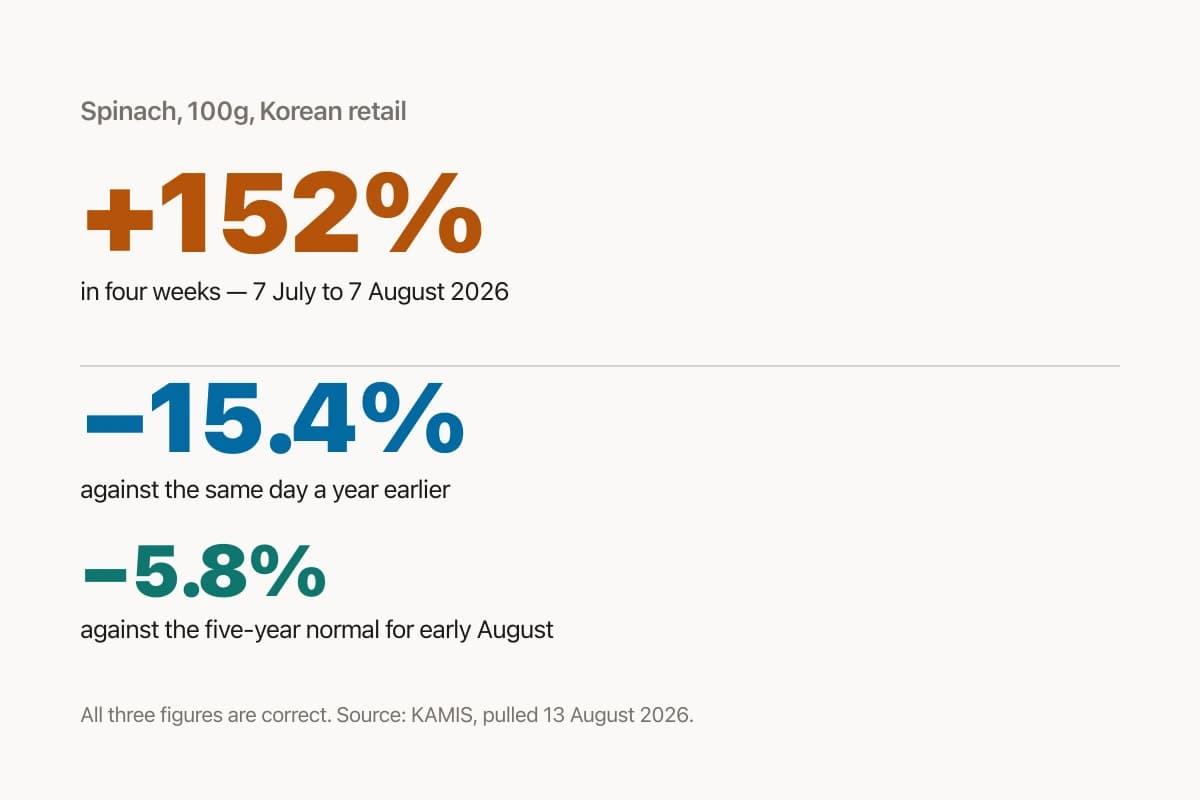
Spinach Is Up 152% in a Month. It's Also Cheaper Than It Was Last August.
Korean vegetable prices produced a genuinely alarming number this month: spinach at ₩1,978 per 100g on 7 August, up from ₩784 four weeks earlier. Both figures are real and we pulled them ourselves. But spinach is currently 15% cheaper than it was a year ago and below the five-year normal — and the agriculture ministry has taken the unusual step of asking people to stop making the comparison that produced the headline.
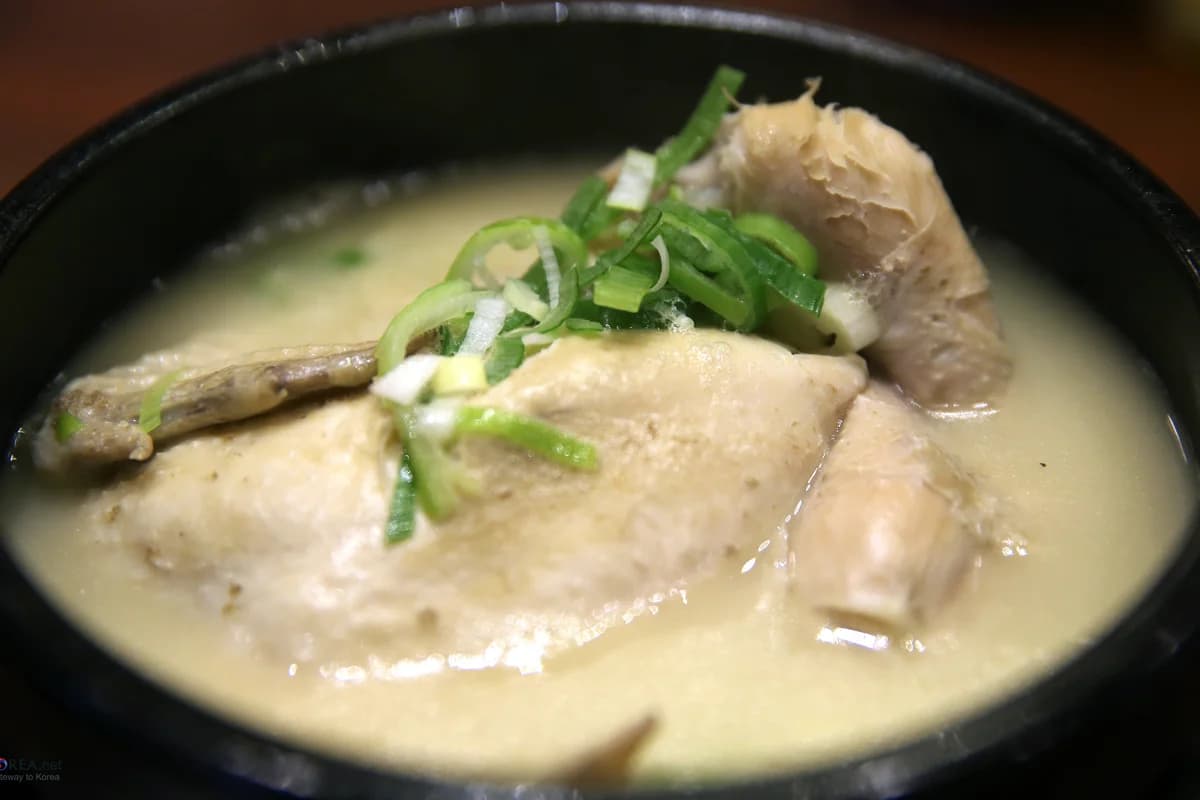
The ₩18,154 Bowl: How Korea's Hottest-Day Ritual Got Priced Out
On the hottest days of the year, Koreans queue for boiling chicken soup. But samgyetang now costs ₩18,154 in Seoul — while the same ingredients run ₩8,800 at a market. Jungbok falls on July 25. A guide to boknal, the logic of fighting heat with heat, and why the convenience-store version isn't the end of a tradition.
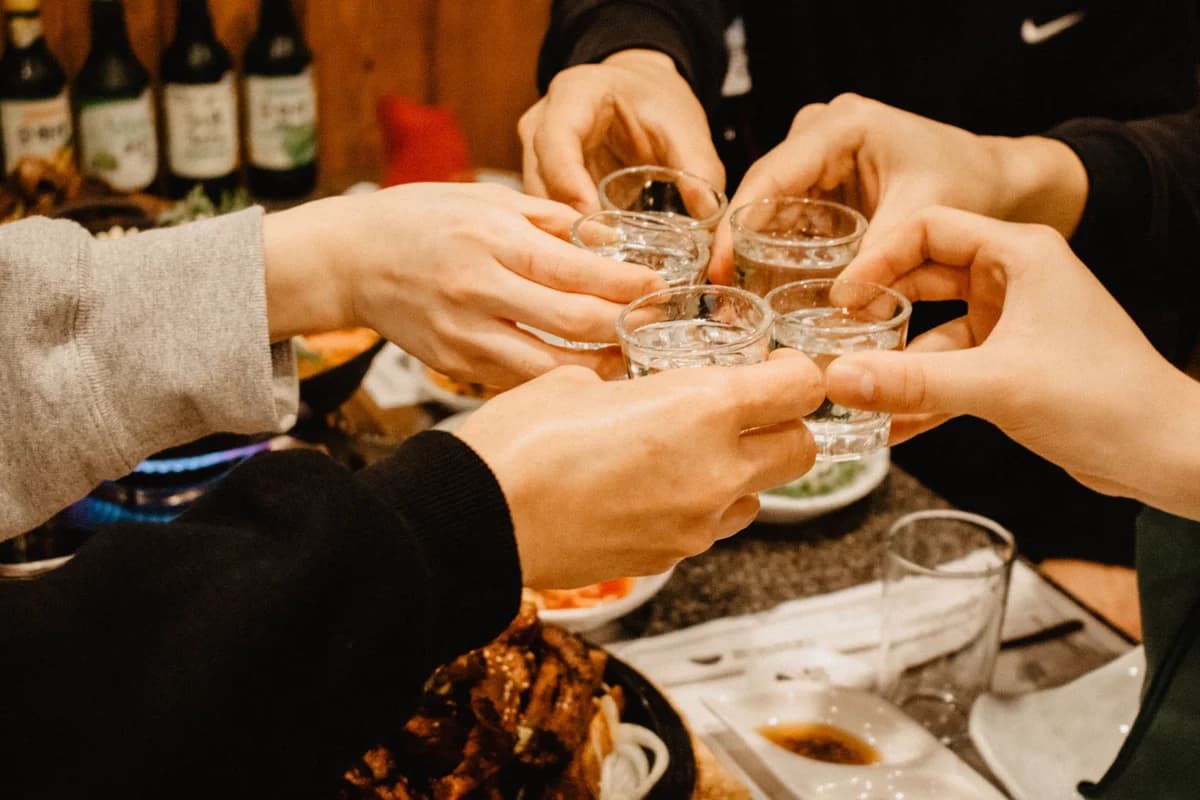
What Is Soju? Korea's Green-Bottle Spirit, Explained
It's the best-selling spirit brand on Earth, and most people outside Korea couldn't pick it out of a lineup. A field guide to soju: what's actually in the green bottle, how a 1965 rice ban created the modern version, why it's suddenly conquering export markets — and how to drink it like you know what you're doing.
The Weekly Dispatch
Korea, curated. Every week.
The best of K-culture, straight from Seoul. Written by people who actually live here.
Free, no spam, unsubscribe whenever.