12 Things Tourists Get Wrong About Korea
Most Korea articles were written by people who flew in for a week. We live here. Twelve corrections, sorted into the four categories that trip up tourists most: food, money, etiquette, and places.
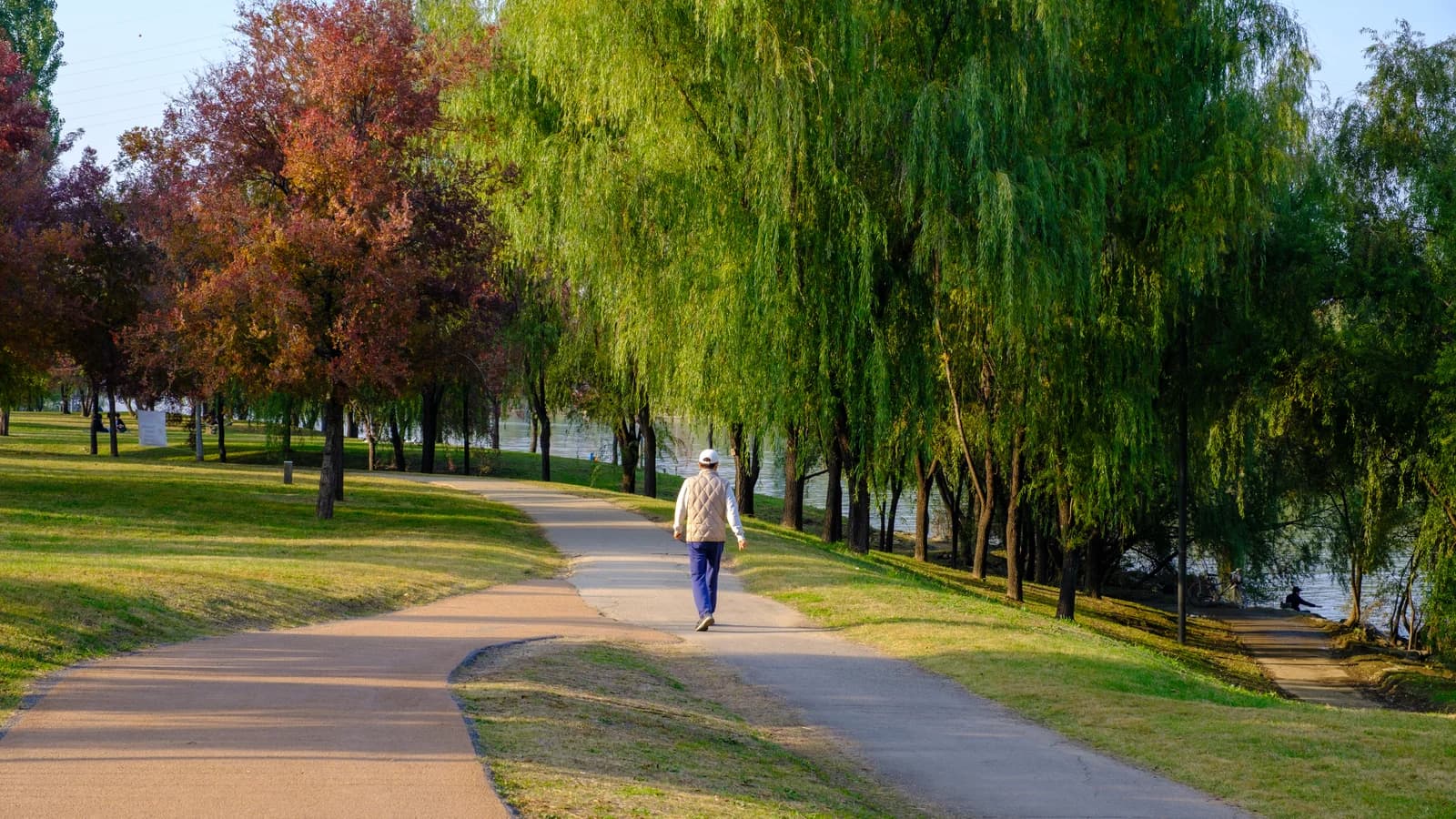
Most articles about Korea were written by people who flew in for a week — or by AI trained on those articles. We live here. Our grocery store is here. So when we see "top 10 places locals love" lists naming the same five spots foreigners always go, we want to set the record straight.
This isn't about telling tourists they're wrong to enjoy what they enjoy. The Han River is beautiful at sunset. Korean BBQ is delicious. Bukchon's hanok rooftops do photograph well. Enjoy them.
But the picture in your head probably doesn't match the picture out our window. Here are twelve specific corrections — three each across food, money, etiquette, and the places we'd actually take a visiting friend.
Food
What Koreans actually eat is mostly mild, mostly home-cooked, and mostly cheap. The marketing version of Korean food culture — sizzling cuts of beef, rivers of soju, a glamorous group of friends — is the version that sells flights and TV shows. The version that gets eaten on a Tuesday night looks different. It's a 7,000-won 백반 lunch eaten alone at the office. It's 김치찌개 reheated for the third night in a row because it tastes better that way. It's the gentle, almost ceremonial mildness of 잡채 at a holiday dinner. The picture tourists arrive with — that everything is spicy, that BBQ is the default — gets corrected within about a week of actually living here.
1. "Koreans eat Korean BBQ all the time"
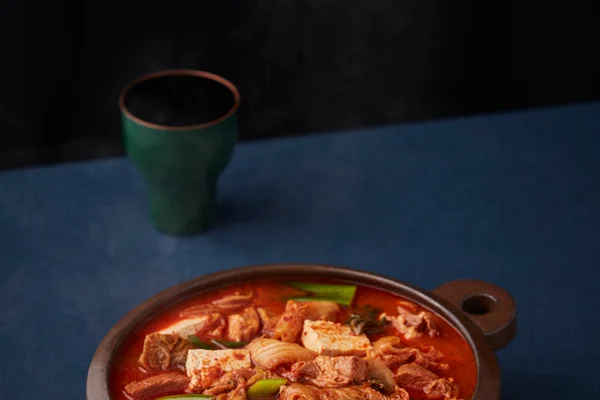
This is the single most common Korea myth, and the easiest to debunk: walk into any Seoul office building at 12:30 pm. Almost no one is eating BBQ. They're eating a 7,000-won 백반 (rice + soup + 반찬 combo), or 김밥, or convenience-store noodles, or whatever the closest 분식 stand serves before the line gets too long.
Korean BBQ — 삼겹살, 갈비, 한우 — is occasion food. It's what you eat at a 회식 (company dinner), to celebrate a friend's promotion, or when out-of-town family visits. The economics don't even allow it as a daily meal: a single 삼겹살 dinner for two runs ₩40,000-60,000, which is more than most Koreans spend on three weekday lunches combined.
The everyday weeknight reality, for actual Koreans we know, is closer to: 김치찌개 reheated from yesterday's pot, served with a bowl of rice and three or four 반찬 from the fridge. Or 비빔밥 thrown together from leftovers. Or 라면 at 11 pm because the day got long.
If you visit Seoul and eat Korean BBQ every night, that's fine — we'd do that too on vacation. But don't go home thinking you've experienced "what Koreans eat." You've experienced what Koreans eat at restaurants where tourists are. That's not the same thing.
2. "Korean food is all spicy"
The "Korean food is spicy" stereotype is built on three or four signature dishes — kimchi, 떡볶이, 라면, 김치찌개 — and then projected onto an entire cuisine. The reality: a huge percentage of the Korean canon is mild, slow, and gently seasoned.
A typical week of Korean home cooking includes things like:
- 잡채: glass noodles tossed with sweet soy and sesame oil. Zero chili.
- 갈비찜: braised short ribs in a soy-pear-garlic glaze. Sweet, savory, not spicy.
- 만둣국 / 떡국: dumpling soup and rice cake soup, served in clear beef broth. Comfort food, mild.
- 삼계탕: whole young chicken stuffed with rice and ginseng, in a milky broth. Restorative, mild.
- 미역국: seaweed soup, the traditional birthday breakfast.
- 곰탕 / 설렁탕: bone-broth soups, rich and clean.
- 백숙: poached chicken with garlic and jujubes.
These are the dishes that show up at family dinners, at hospital recovery meals, at weekday lunches. The Korean government's own cultural promotion site, Korea.net, publishes lists of "non-spicy Korean dishes for visitors who can't handle heat" specifically because the stereotype is so persistent — and so wrong.
The single-line correction: Korean food is mostly seasoned with soy, sesame, garlic, and ginger. Spicy is one register out of many, not the default.
3. "Tipping is appreciated"
There is no tipping culture in Korea. Not at restaurants, cafés, taxis, hotels, or salons. Not "small tips appreciated" — none. Service is built into the price. The cashier rings up exactly the menu price; you pay exactly that; everyone nods and moves on.
This isn't a soft norm or a regional quirk. It's universal. The Korean Tourism Organization's official guidance for visitors states it directly. Lonely Planet's South Korea section frames it as "Tipping is not required at restaurants and is considered impolite."
What happens if you try to tip anyway:
- At a café or restaurant counter, the cashier will likely push the cash back to you, sometimes physically.
- At a hotel, bellhops are trained to refuse — accepting a tip can create accounting issues since unrecorded cash transactions get flagged.
- In a taxi, the driver will round down to the whole won and hand back your change.
- The exception that proves the rule: a few hotels in tourist-heavy districts have started accepting tips from foreigners specifically because they realized arguing was slower than just taking it. Even there, locals don't tip.
Why we're this direct about it: well-meaning tourists who tip 15-20% on a Korean meal aren't being generous — they're creating an awkward problem for whoever has to figure out what to do with cash that wasn't supposed to be there. Pay the menu price. Smile. Leave.
Money
Korea is one of the most cashless economies on earth, and one of the more expensive ones to live in. Tourists arrive prepared for the opposite of both. They pull out ₩500,000 in cash at the airport ATM, brace themselves for "cheap Asia" pricing, and then watch a Seoul coffee cost more than the same coffee in Brooklyn. The disconnect comes from articles still describing 2014 prices and the 2014 cash-only reality. Both are gone. Korea today runs on Toss, KakaoPay, NaverPay, and credit cards — and Korean rents, restaurants, and cafés have caught up to (or surpassed) Tokyo on most line items. Here's what to expect now, not what your guidebook said.
4. "Cash is king"
We haven't carried cash in years. Most Koreans we know don't either. The country's cashless transaction ratio is among the highest in the world — Bank of Korea data consistently puts card and digital-payment usage above 95% of all consumer transactions, with cash trending toward niche cases like temple donations and small flea-market stalls.
What this means in practice:
- Every café, restaurant, taxi, convenience store, and subway terminal accepts card or KakaoPay/NaverPay/Toss QR. Often there's no cash drawer on the counter at all.
- Many small shops and food trucks are now card-only or QR-only. Cash isn't refused so much as it's awkward — the owner has to dig for change they don't keep.
- Tipping isn't a thing (see Myth 3), so you don't need cash for that either.
- ATM withdrawals are still possible. They're just not necessary.
Tourists who've prepared for "cash is king" arrive, pull ₩500,000 out of the airport ATM, and spend the trip trying to break it. By day three they've stopped. By day five they're using their foreign card or a Wise/Revolut account and forgetting the won bills exist.
If you're visiting Seoul tomorrow: bring ₩50,000 for emergencies (a stalled card reader, a flea market vendor who really doesn't take card) and put away the rest until you're home.
5. "You need cash for street food"
The 포장마차 (pojangmacha) — the orange-tarp street food cart with steaming pots of 떡볶이 and 어묵 — was the last cash holdout in Korean food culture. That changed about three years ago. Today, even ₩2,000 fish cake skewers come with a Toss QR code taped to the cart's wooden ledge.
Worst case (very rare in Seoul): the owner doesn't have a QR set up. Their next move isn't "sorry, cash only." Their next move is to give you their bank account number and have you transfer on the spot. Korea's instant bank transfer is so embedded in daily commerce that "그냥 계좌로 보내 ('just send it to my account')" is a normal sentence at a street stall. Toss processes the transfer in two seconds, the owner sees the deposit notification, you walk off with your skewer.
This goes for traditional markets too. At Mangwon Market or Gwangjang Market, the older 할머니s running 빈대떡 stalls almost all have laminated cards with their account numbers on the counter. Some have signs in Korean and English: 카드 안돼요, 계좌이체 가능 — "no card, bank transfer fine."
The instinct to stuff your wallet with ₩10,000 bills "just for street food" is residual habit from the early 2010s, when this was true. It isn't anymore. The whole country runs on Toss now, including the lady selling you 호떡 from a cart on a Wednesday.
6. "Korea is cheap"
Korea was cheap. Fifteen years ago. The "cheap Asia" YouTube vlog you watched was probably filmed when $1 USD got you ₩1,200 won and a Seoul hotel cost ₩70,000 a night.
That trip doesn't exist anymore. Current Seoul reality:
- Coffee: a Starbucks Americano is ₩4,700-6,100 depending on size. An independent specialty café in Seongsu or Hannam runs ₩6,000-8,000 for a pour-over. That's roughly $3-5 USD per cup at current FX (~₩1,470/USD).
- Casual dinner out: ₩15,000-25,000 per person for a mid-tier 김치찌개 or 돼지국밥 spot. ₩30,000-50,000 per person at any restaurant with a Naver Map photo grid you'd recognize from Instagram.
- Hotels: a mid-tier 4-star in central Seoul is ₩200,000-300,000 a night. Boutique 한옥 stays in Bukchon or 서촌 push ₩400,000+. Hostels still exist, but the "Seoul for $30/night" budget is a fantasy.
- Subway and bus: ₩1,550 base fare, up from ₩1,400 in June 2025. Still cheap by global standards, but it has moved — and the ₩1,400 figure is all over older guides.
The deeper story: it's not that Korea got expensive in a vacuum. It's that costs went up and salaries didn't. Real wage growth for Korean workers under 40 has been roughly flat since 2019 while restaurant prices, rent, and groceries have risen 25-40%. Korean financial press calls it 외식물가 급등 + 실질임금 정체 — "dining-out price spike, real wages stuck." Everything has gone up except for salaries.
Visit Seoul because it's beautiful, complicated, and unlike anywhere else. Don't visit Seoul because it's cheap. It isn't, anymore.
Etiquette
Korean etiquette guidebooks are mostly correct on the rules and mostly wrong on the intensity. The rules they list are real — there are situations when shoes come off, when bows are deep, when you receive with both hands. But the books frame each rule like a tripwire: do it wrong and you've insulted someone. The actual lived experience is gentler and more contextual. Most rules apply only in specific settings (a home, a formal meeting, a meal with elders). In casual settings — coffee shops, supermarkets, taxis, brunch with friends — Korean etiquette looks like etiquette anywhere else: be polite, pay attention, don't be a jerk. The three corrections below cover the most-overdone tripwires.
7. "Take your shoes off everywhere"
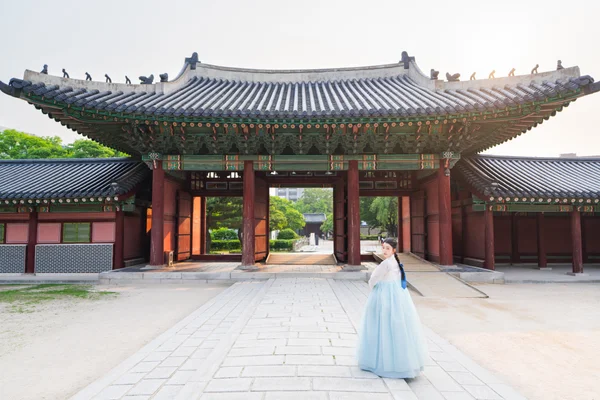
Shoes come off in three specific contexts in Korea: a Korean home, a traditional 한정식 or 좌식 restaurant where seating is on the floor, and a temple. That's it. In any modern restaurant with Western table-and-chair seating — which is most restaurants in Seoul — your shoes stay on.
The visual cue is unambiguous. If there's a raised wooden floor, a step-up area (마루), OR a row of cubbies/shelves at the entrance, take your shoes off. If the floor is the same level as the sidewalk and there's no shoe storage in sight, keep them on. The cue exists because Koreans want to make the rule self-evident — no one wants to embarrass a guest.
Where tourists overcorrect: cafés, brunch spots, izakaya-style restaurants, modern bistros, hotel restaurants, food courts, fast food. None of these require shoe removal. Trying to take your shoes off at a Hannam coffee shop is the kind of thing that gets a polite but visible "어… 신발 신어도 돼요" ("um... you can keep your shoes on") from the barista.
The hanok stays in Bukchon and 서촌 are the most common context tourists encounter where shoes do come off — those are traditional homes, treated like homes. Same for any temple visit (signs are usually posted in English).
Quick rule: look for the cubbies. No cubbies, no rule. Cubbies, take them off.
8. "Bow deeply at every greeting"
Korean greeting culture has three tiers, and the everyday register is much lighter than tourists assume.
- 목례 (mokrye): a small head nod, maybe 5-15 degrees of forward tilt. The standard daily greeting. You use it with colleagues, café staff, neighbors, the security guard in your apartment building, anyone you encounter in passing. It's the equivalent of a quick "hi" with eye contact in the West.
- 정중례 (jeongjungrye): a polite bow, maybe 30-45 degrees. Used in formal contexts: meeting a client, a job interview, a wedding receiving line, a respected elder you don't know.
- 큰절 (keunjeol): a full deep bow, often kneeling. Reserved for ancestral rites, traditional ceremonies, or as a profound apology.
Tourists who've watched too many K-dramas tend to perform a 정중례 or even a 큰절 at every interaction — bowing 45 degrees to a Starbucks barista, to a taxi driver, to the convenience store cashier. This reads, frankly, weird. It's the equivalent of curtsying every time you order coffee. The barista will smile politely and feel a little awkward.
The fix is simple. A small head nod is the entire daily etiquette toolkit. Save the deep bow for contexts that actually call for it — a host's parents, a business meeting with someone two ranks senior, a wedding.
If you forget which is which, default to the head nod. It's almost never wrong, and it's almost always sufficient.
9. "Always receive things with two hands"
The "always use two hands" rule exists, but it's contextual, not universal. Two hands signals respect to someone explicitly senior to you — by age, position, or first-meeting formality. With friends, peers, partners, kids, and most casual interactions, single-hand exchange is fine and normal.
When two hands matters:
- Receiving a business card from someone older or in a senior role.
- Pouring or accepting a drink from an elder, especially in a 술자리 (drinking gathering).
- Handing a gift to a host or first-meeting guest.
- Receiving a phone, document, or wallet from someone you should show respect to.
When two hands does NOT matter:
- Buying coffee. The barista hands you the cup with one hand; you take it with one. Nobody cares.
- Paying at a register. Cash, card, phone — single hand is normal.
- Accepting change from a taxi driver. Single hand is fine.
- Handing your friend a 김밥. They are your friend. Just give them the 김밥.
- Receiving a package from a delivery driver. Both parties are usually in a hurry. Single hand.
The two-hand rule is a respect signal, not a politeness blanket. Tourists who try to two-hand every transaction — including handing a credit card to a cashier with both palms — are sending a respect signal where none is expected. It doesn't offend; it just looks slightly off, like greeting a colleague with a handshake at a barbecue.
If in doubt: two hands with elders and bosses, one hand with everyone else.
Places
Tourist-Seoul and local-Seoul are mostly different cities sharing the same subway map. Tourist-Seoul is the loop you've heard of: Myeongdong, N Seoul Tower, Bukchon hanok village, the Gangnam Style sign, the COEX aquarium. Local-Seoul is the loop we actually live in: Mangwon for groceries and 망리단길 cafés, 한남 for slow Sunday lunches, Seongsu for the new café opening this month, 양재천 for jogging, 석촌호수 if we want to sit by water without driving. The two loops occasionally overlap — the Han River belongs to everyone — but the everyday Seoul Koreans inhabit is built around neighborhoods most tourists never reach. Three corrections to help close the gap.
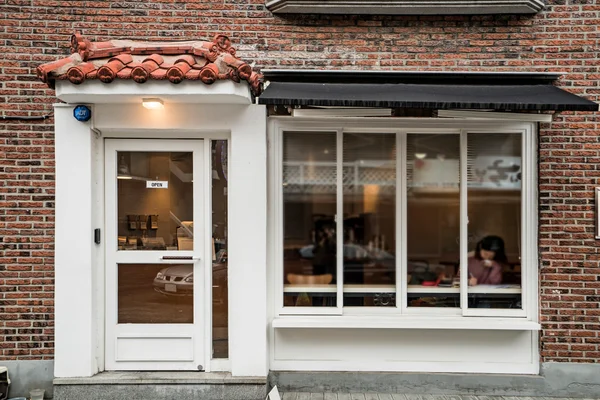
10. "Shop in Myeongdong"
Myeongdong is where tourists shop. It is no longer where locals shop. The data is clear and the trend is steep: in 2025, foreign visitors made up the overwhelming majority of Myeongdong foot traffic, with brands like Topten reporting roughly 60% of their Myeongdong sales came from foreigners, and Olive Young's Myeongdong stores posting 100%+ year-over-year growth driven entirely by international visitors.
Where Koreans actually shop:
- Online: Coupang for groceries and household everything (next-day delivery, frequently same-day). Musinsa for fashion (the dominant Korean apparel platform, valued at over ₩5 trillion). 29CM and W Concept for design-leaning lifestyle. Naver Smart Store for everything else.
- Seongsu (성수): the new center of gravity for fashion and lifestyle retail. Foreign-brand spend in Seongsu was up roughly 650% year-over-year in early 2025 — about ten times the rate of Myeongdong. The brand flagships (Aimé Leon Dore, COS, Maison Kitsuné) opened here, not in Myeongdong.
- Hannam (한남): slower, higher-end. Boutiques, gallery-adjacent retail, the kind of place where the staff learns your name.
- Mangwon (망원) and 연남 (Yeonnam): indie boutiques, vintage, secondhand. Where Korean twenty-somethings actually find clothes that don't look like everyone else's.
If you're visiting and want to shop where Koreans shop, skip Myeongdong entirely. Take the green line to 뚝섬 and walk around Seongsu. You'll see what Korean retail actually looks like in 2026 — not what it looked like in the 2018 K-beauty tourism boom.
11. "Yeouido for cherry blossoms"
Locals avoid Yeouido for cherry blossoms. The Yunjungno cherry blossom festival in early April draws roughly 3 million visitors over two weeks — concentrated in a 10-block stretch along the National Assembly. The crowd is so dense that walking becomes shuffling. Korean media articles on the festival routinely include the phrase 유명한 곳은 피하자 — "skip the famous spots."
The Korean-only spots — the ones we go to instead — are the neighborhood streams.
- 양재천 (Yangjaecheon): a small stream in 강남구, lined with cherry trees for several kilometers. A residential walking path used mostly by locals. No festival, no food trucks, no shoulder-to-shoulder crowd. Just trees, a stream, and people walking dogs.
- 안양천 (Anyangcheon): similar setup on the southwest side of Seoul. Bigger than 양재천, equally local. The cherry tunnel near 구로 is breathtaking and almost no one outside the neighborhood knows about it.
Even 석촌호수 (Seokchon Lake), which used to be a true local secret, has tipped into "secondary tourist destination." Subway runs no-stop service on peak weekends. It's still better than Yeouido, but if you want a 5 pm walk under cherry trees with no one in your photos, go to 양재천 or 안양천 instead.
The general rule for cherry blossom season in Seoul: the streams beat the river, and the residential streams beat the famous lake. Locals don't fight for cherry blossoms. They walk to them.
12. "N Seoul Tower is a must-do"
Locals don't go to N Seoul Tower. We see it every day from our windows; we've never paid the ₩29,000 to ride to the top. Twenty-plus years of Seoul residency, zero observation deck visits.
There is one exception: brand-new couples in their honeymoon phase doing the love-locks tradition on the fence around the tower. Korean dating culture treats the love-locks as a rite of passage in early relationships — you make the pilgrimage, you write your names, you attach the lock, you take the photo. After that phase ends (and it does end, usually within a year or two), Koreans never go back. The lock stays. The couple doesn't.
For everyone else, the tower is essentially invisible. We see it as a landmark for orientation — "we're east of Namsan" — not as a destination. The cable car is ₩15,000 round-trip; the observation deck is ₩29,000 adult, ₩23,000 child or senior. For the price of two adult deck tickets, you could have a multi-course Korean dinner at a place serving food we'd actually recommend.
What we'd suggest instead: walk around the base of Namsan, especially the Namsan Park stairs from 명동역 or 한남. It's free, the view from the lower park is genuinely beautiful, and you'll see actual Seoul residents on a Saturday hike. Skip the tower itself unless you're with a partner in the love-lock phase. In which case, congratulations.
We could keep going — there are at least twelve more myths in any given category. But the pattern is the same: most "Korea content" online was written by someone who didn't live here, or by AI trained on someone who didn't live here. The corrections matter not because tourists need to feel bad about what they enjoyed, but because the picture in your head shapes the trip you take. If you arrive in Seoul expecting BBQ, cash, and Myeongdong, you'll find them — and miss everything else.
Better picture, better trip.
Keep Reading
More Stories
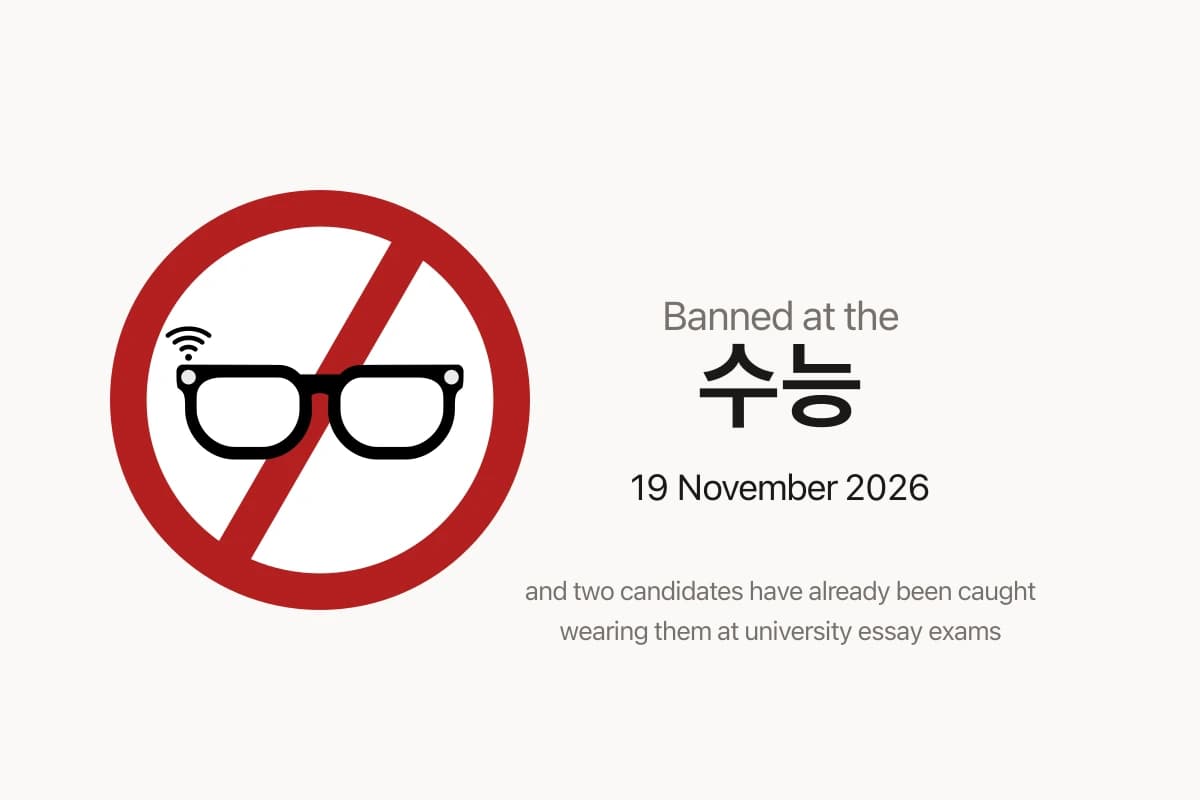
Two Candidates Wore AI Glasses Into Korean University Exams This Month. Five Weeks Later, 550,000 People Sit the 수능
At the University of Seoul on 3 October and at Yonsei a week later, proctors spotted AI smart glasses on candidates sitting essay exams for admission. Both had passed the glasses check in ordinary frames and switched once the exam began. The 수능 on 19 November already bans the devices; the question is whether anyone can see them.
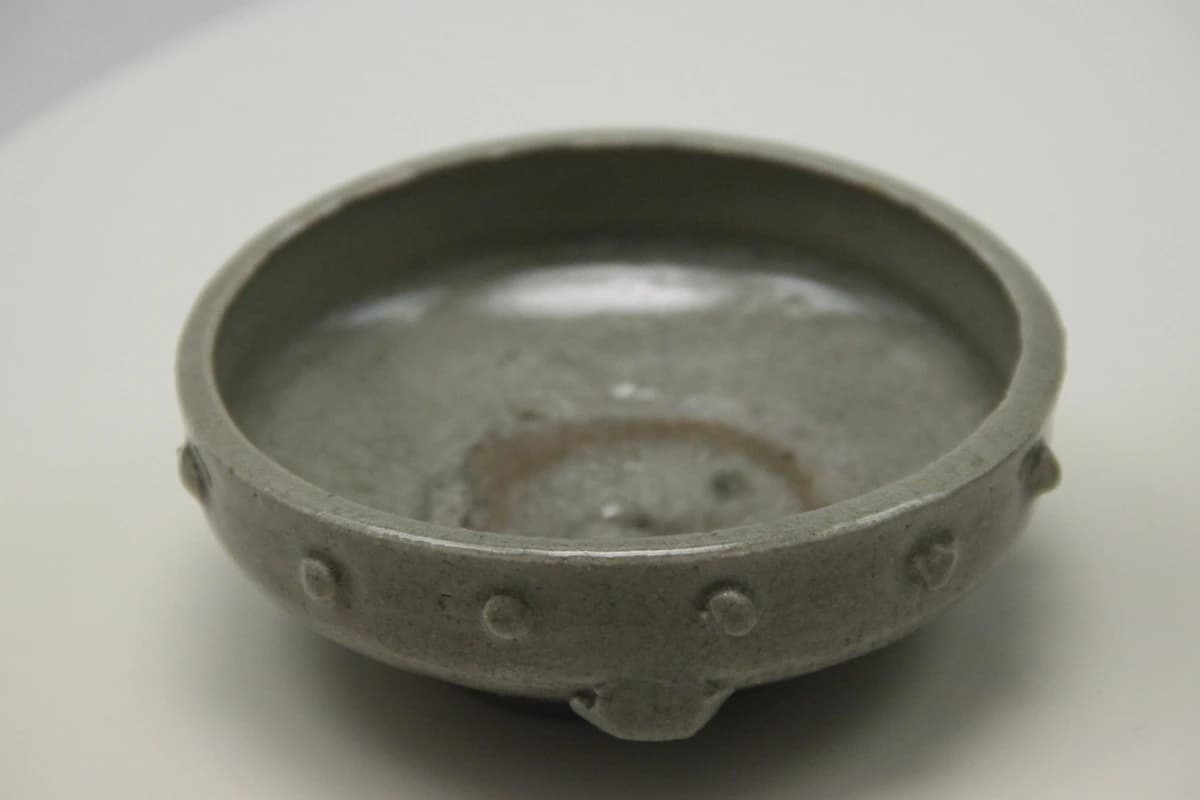
The Fisherman Hid It Under His Floorboards. The Reward He Eventually Got Set Off a Decade of Looting.
Korea marked fifty years of underwater archaeology in Mokpo in September 2026. The official story starts with a net and a report. The documented one starts with six pieces of Chinese porcelain given away as presents, a schoolteacher brother who had to get them all back, and officials who did not want the paperwork. Then the state paid a reward, a diver worked out how much of it went in tax, and for the next ten years people stole the wreck faster than the government could raise it — until the navy's own divers could not find the ship, and the excavation hired the looters.
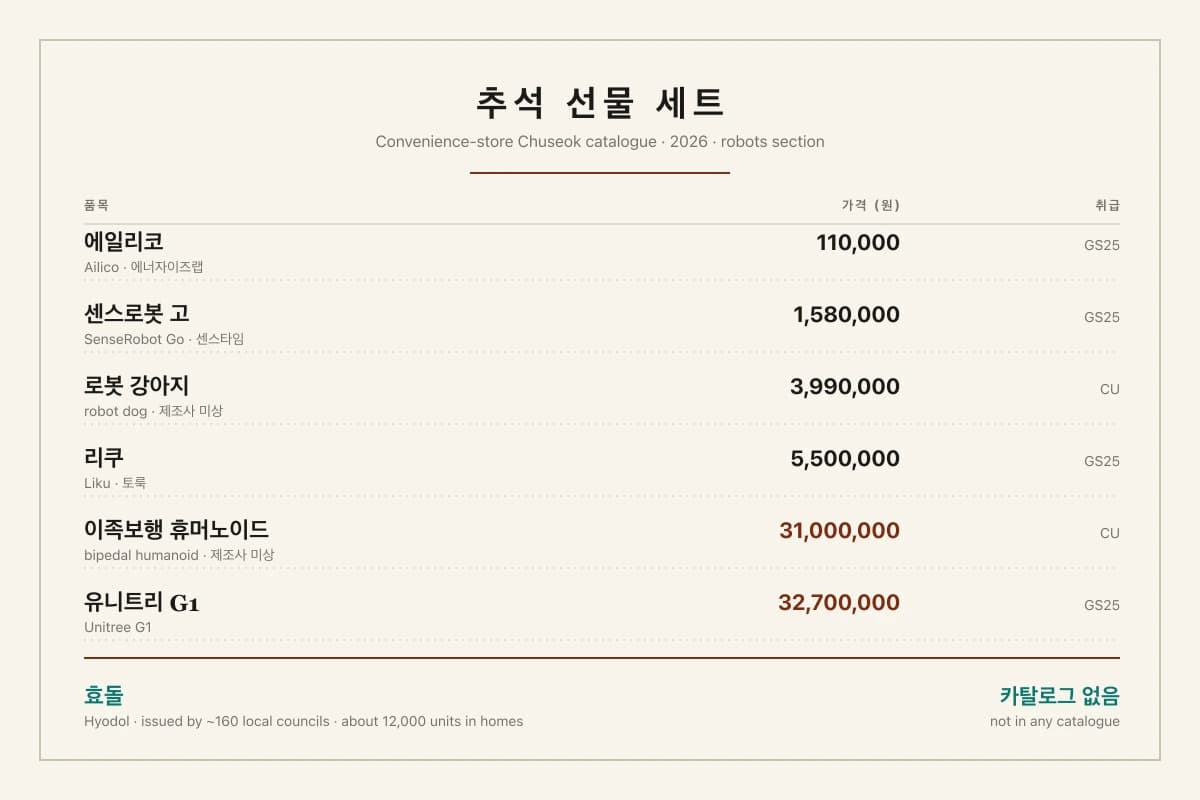
Korea's Convenience Stores Are Selling Humanoid Robots for Chuseok. Neither Chain Expects to Sell One, and Both Have Said So.
CU's holiday catalogue has a bipedal humanoid at ₩31 million, next to the beef and the gold bars. GS25 has an AI companion robot at ₩5.5 million and a keyring that talks back at ₩110,000. We assumed the pitch was companionship for parents you won't be visiting. It isn't — the retailers say plainly these are there to be noticed, not bought. Meanwhile about twelve thousand robots are already in Korean homes, asking elderly residents whether they've taken their medicine, and nobody put those in a catalogue.
The Weekly Dispatch
Korea, curated. Every week.
The best of K-culture, straight from Seoul. Written by people who actually live here.
Free, no spam, unsubscribe whenever.