Beauty of Joseon: The K-Beauty Brand Koreans Are Finally Catching Up On
Americans have been buying out entire Sephora shelves since 2023. In Korea, search interest just spiked 120%. Here's how a 200-year-old women's encyclopedia became the engine behind one of K-beauty's fastest-growing global brands.
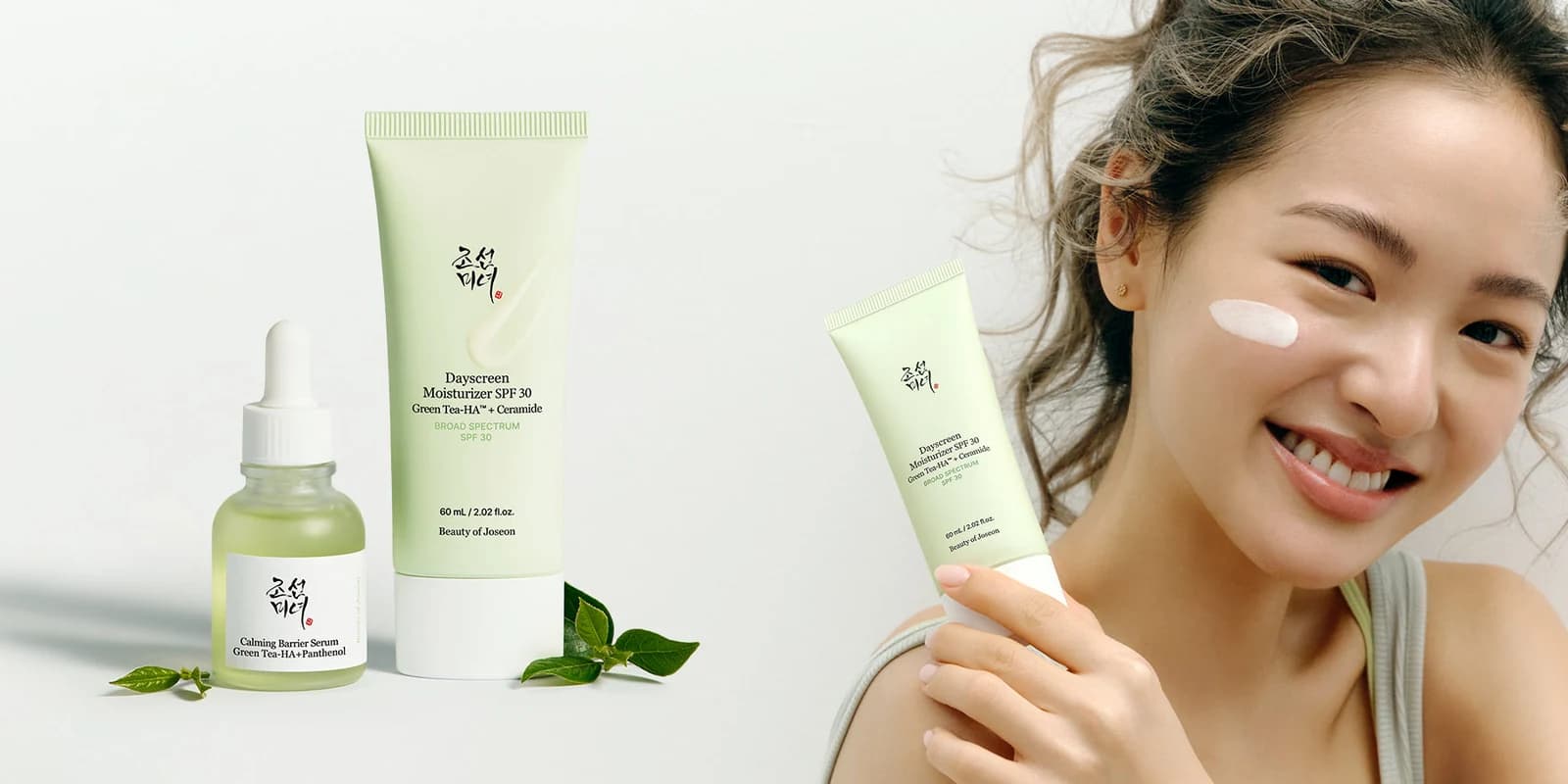
Ask a twenty-something in Brooklyn or East London which K-beauty brand is on their bathroom shelf, and there's a decent chance the answer is Beauty of Joseon. The cream sunscreen with the calligraphy label. The propolis serum. The one TikTok keeps telling everyone to buy.
Ask the same question in Seoul, and until a few months ago, the answer might have been a blank stare.
That's not our guess — it's the data. Naver's trend dashboard just showed a +120% surge in Korean searches for 조선미녀 (the brand's Korean name, Joseon Minyeo — "beauty of Joseon"). A brand that's been dominating American skincare TikTok for three years is finally going viral at home. The Korean internet is asking the question American skincare obsessives answered back in 2023: what is this, and why does everyone have it?
Here's the answer.
Reader discount: Olive Young Global carries the full Beauty of Joseon range and ships internationally. Use code
82CRAFTEDfor 5% off any order. 82 Crafted earns a small commission — zero extra cost to you.
The 200-Year-Old Book That Built the Brand
Every K-beauty brand claims some kind of traditional heritage. Most of it is marketing. Beauty of Joseon's version is unusually literal: the brand is built on a real book written by a real woman in 1809.
The Gyuhap Chongseo (규합총서), sometimes translated as Encyclopedia of Women's Life, was compiled by Yi Bingheogak (빙허각 이씨) — a rare Joseon-era female scholar who wrote on subjects that were almost exclusively the domain of men at the time: astronomy, geography, household medicine, agriculture, skincare, cooking. Her authorship wasn't even confirmed until 1939, 130 years after the book was published.
That's the text Beauty of Joseon cites as its source material. When the brand talks about "hanbang" — traditional Korean medicine using ingredients like ginseng, rice, propolis, green plum, and mugwort — it's pulling from a historical tradition that's both older and more textually specific than most K-beauty brands bother with.
Whether Yi Bingheogak would recognize an SPF 50 sunscreen as her legacy is a different question. But the brand's reverence for the source isn't window-dressing. It's in the bottle names, the label calligraphy, the ingredient philosophy.
The 2019 Reset That Made Everything Work
Here's the part most coverage skips: the Beauty of Joseon you can buy at Sephora today isn't the brand's original incarnation.
The original brand launched around the mid-2010s as a small domestic-market player in Korea. Few people bought it. In 2019, the Korean beauty startup Goodai Global Inc. acquired the brand when it came up for sale, recognizing that the hanbang-meets-modern positioning was an unexploited angle for the global market. Sumin Lee — the creative lead who reinvented the brand — drove the repositioning.
The strategy was specific and, at the time, contrarian: don't try to win in Korea first. Build for the American Gen Z market on TikTok, price aggressively, and let the product do the talking.
The rise tells the story of what happened next. In a handful of years Beauty of Joseon went from a near-obscure domestic startup to one of the top Korean indie beauty brands sold worldwide — one of the fastest growth curves in recent K-beauty history.
The Hockey Stick Was a Single Product
One sunscreen did most of the work.
Beauty of Joseon Relief Sun: Rice + Probiotics SPF 50+ PA++++ launched in 2020 and became, over the next three years, arguably the most-recommended sunscreen on skincare TikTok. The brand's TikTok hashtag has 1.7 billion views. It features in 16 of the top 20 videos about sunscreen on the platform. At Boots in the UK in 2025, the brand sold one product every 15 seconds — and Relief Sun was the top seller.
Why that one product? Korean sunscreen formulations are years ahead of Western ones — lighter, no white cast, actually pleasant to wear. Relief Sun delivers all of that in a 50ml tube priced well under most Western equivalents, with a dewy finish that made it a makeup-prep favorite long before it was a sunscreen phenomenon. It became the default "good sunscreen that won't pill under foundation" recommendation in an entire corner of the internet.
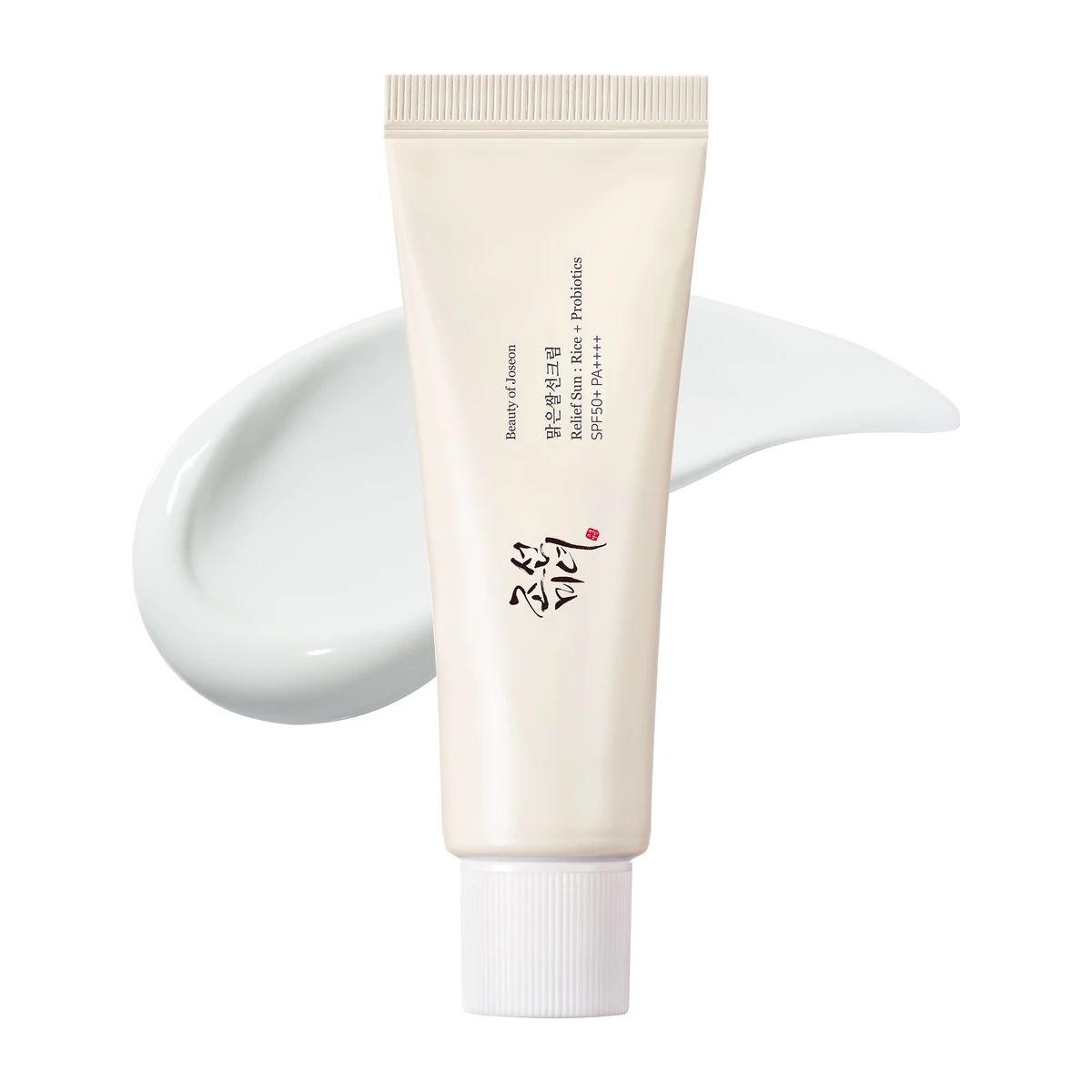
Relief Sun: Rice + Probiotics SPF50+ PA++++ — 30% rice extract, four modern chemical sunscreen filters, a creamy texture that finishes dewy. This is the one that started it all.
Shop on Olive Young Global → Also at Stylevana — US/UK/AU/EU shipping →
The Rest of the Line Worth Knowing
Relief Sun opened the door. These are the products keeping customers.
Glow Serum: Propolis + Niacinamide
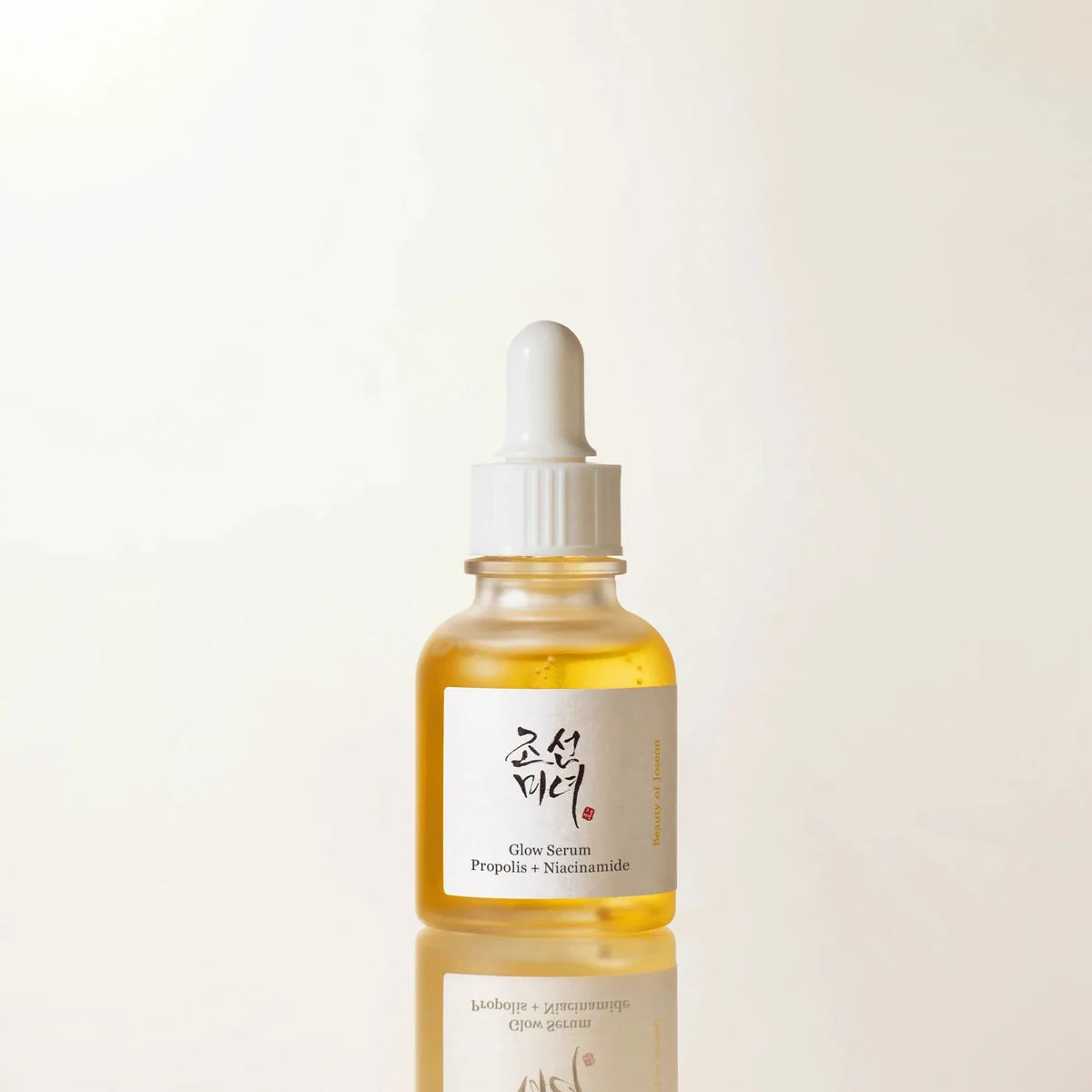
The brand's second viral moment. 60% propolis extract (a bee-produced resin with long-documented antibacterial and antioxidant properties in Korean folk medicine), 2% niacinamide for tone, and 0.5% BHA for gentle pore exfoliation. The texture is honey-thick but absorbs to a "glassy" finish — which is exactly the aesthetic K-beauty sells.
$17 for 30ml. 4.9 stars across 1,588 reviews on the brand's own site. Koreans call this category 꿀피부 (honey skin) — skin that glows like it's lit from within.
Shop on Olive Young Global → Also at Stylevana — US/UK/AU/EU shipping →
Ginseng Essence Water
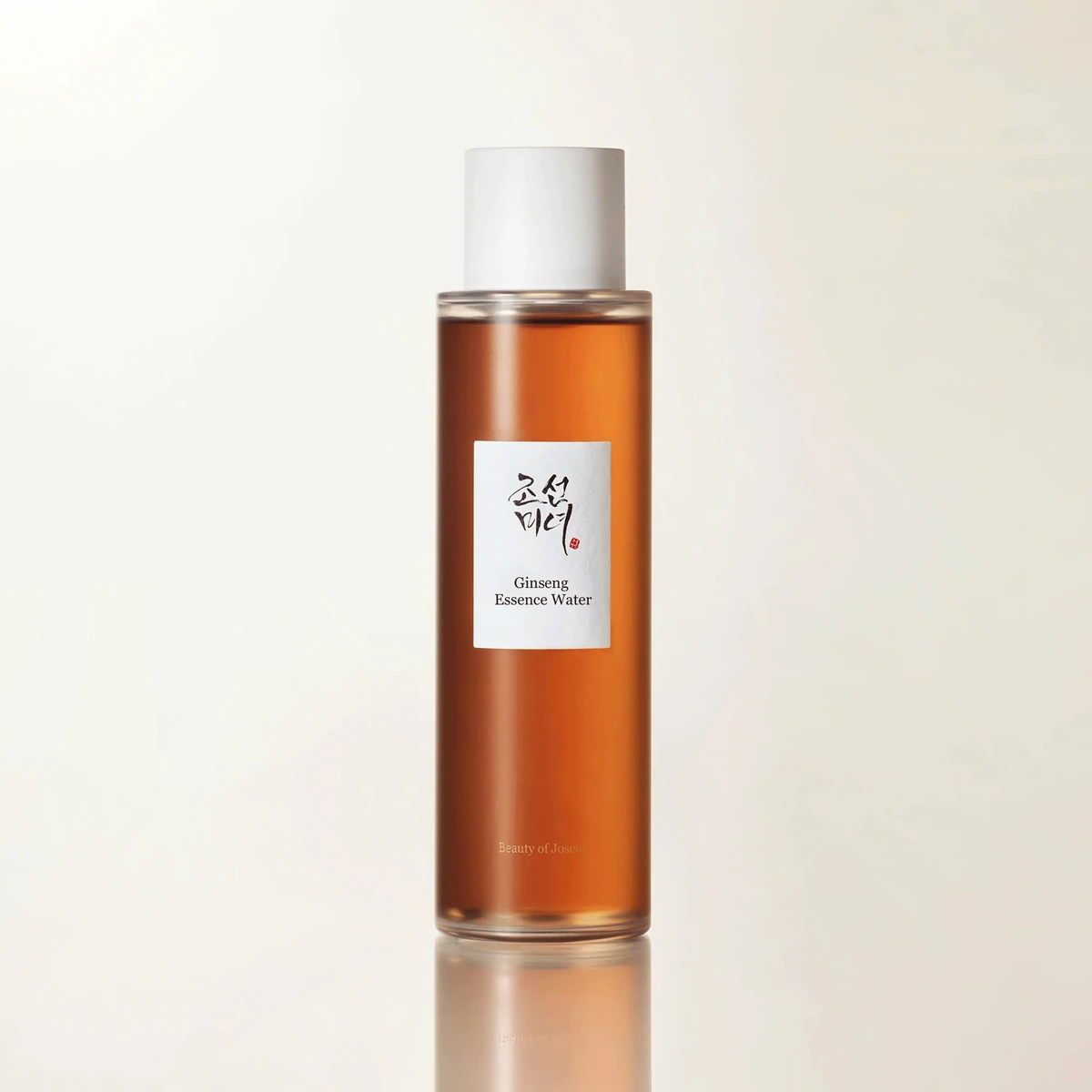
Eighty percent ginseng root water, 2% niacinamide, everything else short and boring in the best way: glycerin, panthenol, allantoin, hyaluronic acid. No alcohol, no fragrance, no essential oils. A watery toner-essence that's meant to be the hydration layer under everything else.
Ginseng is arguably the most storied ingredient in the Gyuhap Chongseo and in Korean traditional medicine broadly — it shows up here in the hero concentration. $18 for 150ml.
Shop on Olive Young Global → Also at Stylevana — US/UK/AU/EU shipping →
Dynasty Cream
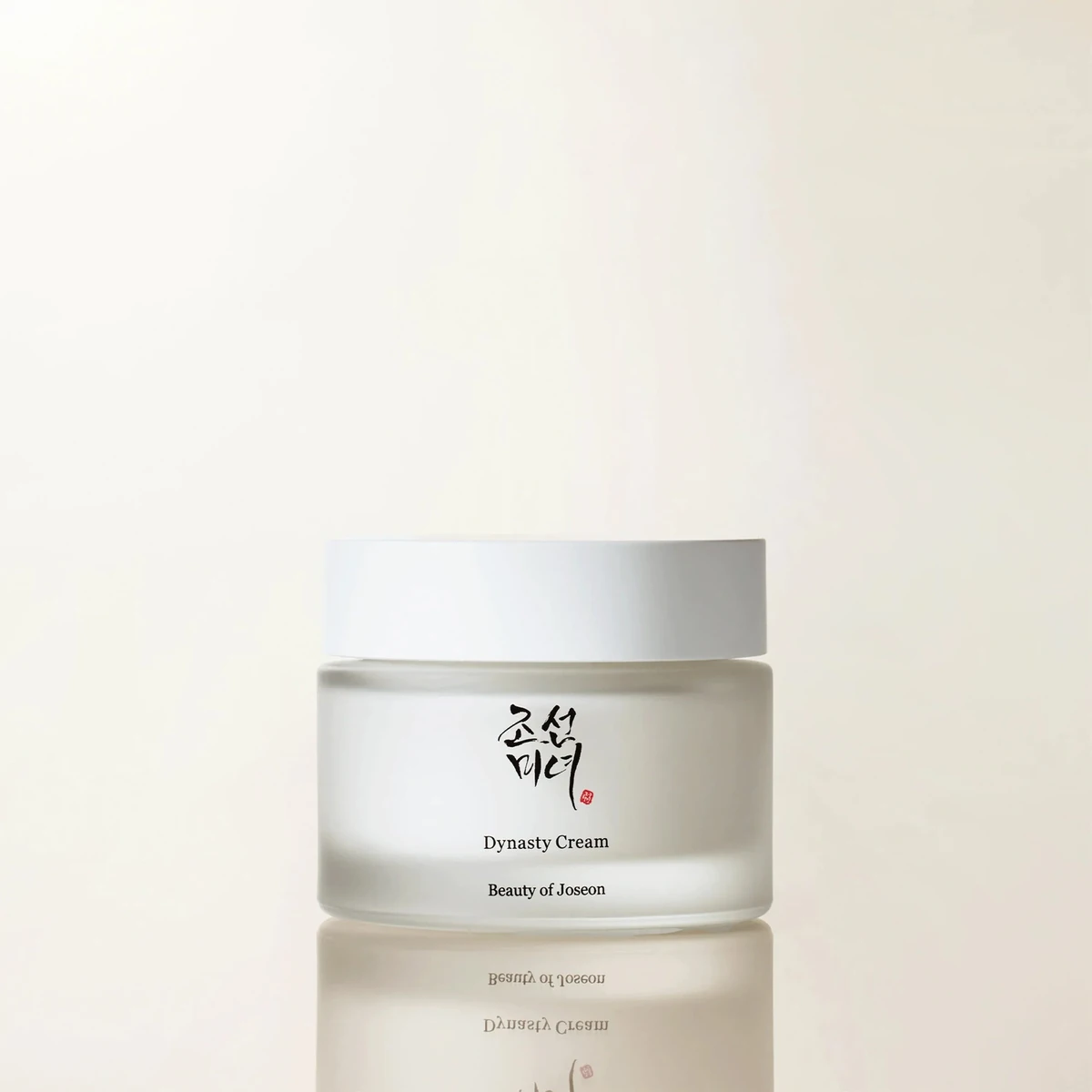
If there's a product that quietly out-performs Relief Sun on repeat purchases, it's Dynasty Cream. Rice bran water, ginseng root water, squalane, niacinamide, ceramide NP, multiple forms of hyaluronic acid. It's a no-drama moisturizer designed to do the one thing most moisturizers overcomplicate: actually moisturize.
$17 for 50ml. 3,376 reviews and a 4.9-star rating on the brand's site — the highest review count of anything they make. That's not hype; that's repeat buyers.
Shop on Olive Young Global → Also at Stylevana — US/UK/AU/EU shipping →
Why Korea Is Suddenly Catching Up
For most of its run, Beauty of Joseon has been a paradox — a Korean brand that sold more in California than it did in Gangnam. The reasons are instructive:
- Olive Young dominance. Korea's skincare retail is consolidated around Olive Young, which heavily promotes its own exclusive bestsellers. Brands that went viral on TikTok in the US took longer to earn real estate in Olive Young's front-of-store displays back home.
- Korean consumers trust dermatologist brands first. Zeroid, Aestura, Cetaphil, Dr. Jart+ — the brands Koreans actually stock in their bathrooms skew clinical. A propolis serum that went viral on American TikTok wasn't automatically compelling to a Korean consumer who was already loyal to a dermatologist-prescribed routine.
- The reverse-halo effect takes time. International virality has to loop back. It usually does — Korean consumers eventually pay attention when a Korean brand becomes a global brand — but there's a lag.
That lag appears to be closing right now. Beauty of Joseon launched on Sephora's online store in July 2025, then rolled out to 600 physical doors. The Sephora x Olive Young partnership announced for late 2026 will push Beauty of Joseon even deeper into global retail. That kind of scale eventually shows up in Korean search data — which is exactly what Naver is now showing.
What to Actually Buy
If you're new to the brand, three products get you most of the value:
- Relief Sun: Rice + Probiotics — the sunscreen that built the brand. Start here.
- Dynasty Cream — the moisturizer that keeps customers coming back.
- Glow Serum: Propolis + Niacinamide — if your skin is dull or uneven, this is where you'll see results.
That's a full starter routine for about $50. If you're building from a skincare wasteland, pair it with a gentle cleanser (COSRX Low pH works) and you're set.
Reader discount, again: Every Beauty of Joseon product above is available at Olive Young Global with code
82CRAFTEDfor 5% off your order. Their affiliate cookie lasts three years — click once and any future Olive Young purchase still supports the site.
The best K-beauty brands have always been built on a specific kind of cultural translation — Korean skincare discipline made accessible to everyone else without losing what made it Korean in the first place. Beauty of Joseon's particular version of that — a 1809 women's encyclopedia reinterpreted as modern skincare, sold first to Los Angeles and finally, after a four-year lag, to Seoul — might be the most interesting case study of the wave.
Now Koreans are buying it too. That's usually the last thing that happens.
Keep Reading
More Stories
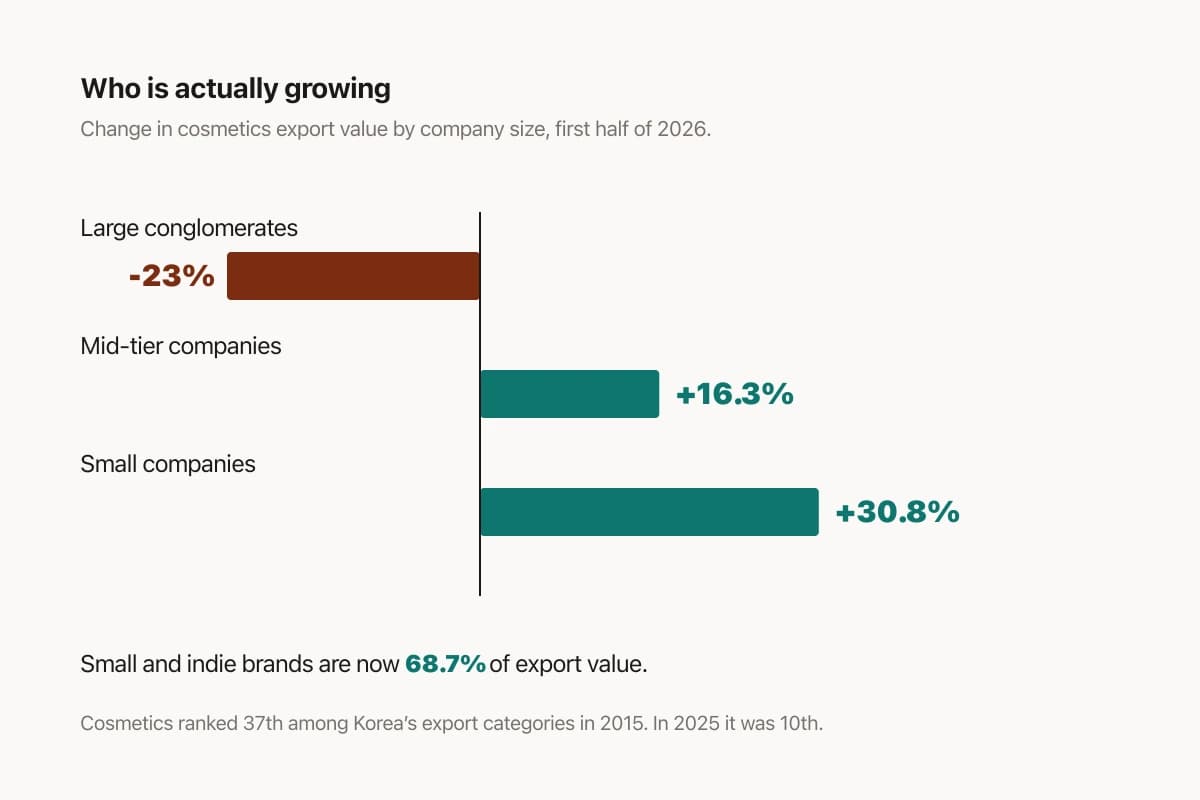
K-Beauty Just Had Its Biggest August on Record. Its Two Largest Companies Went Backwards.
Korean cosmetics exports hit $1.31 billion in August, up 52 per cent — the fastest monthly growth in nearly three years. Almost none of it belongs to AmorePacific or LG Household & Health Care, whose export value fell 23 per cent in the first half. Small brands are now 68.7 per cent of what Korea ships. And China, which took more than half of it five years ago, now takes one seventh.

Is Korea the Plastic Surgery Capital of the World? The Numbers, Honestly
The claim rests on a 2011 survey. ISAPS hasn't published a Korean procedure count since. The figure Korean media reported as an ISAPS finding in 2024 is the one row in its own source table that can't be reproduced — and the standard calculation counts a million foreign patients as if they were Korean.
Glass Skin, Honestly: How Much of K-Beauty's Most Famous Look Is Real?
It's the most screenshotted goal in all of K-beauty — poreless, lit-from-within, smooth as a pane of glass. Here's where the term actually comes from, the richer Korean vocabulary it flattens, and the honest breakdown of how much is skincare, how much is makeup and a ring light, how much is a dermatologist's needle — and how much is just genetics.
The Weekly Dispatch
Korea, curated. Every week.
The best of K-culture, straight from Seoul. Written by people who actually live here.
Free, no spam, unsubscribe whenever.