Glass Skin, Honestly: How Much of K-Beauty's Most Famous Look Is Real?
It's the most screenshotted goal in all of K-beauty — poreless, lit-from-within, smooth as a pane of glass. Here's where the term actually comes from, the richer Korean vocabulary it flattens, and the honest breakdown of how much is skincare, how much is makeup and a ring light, how much is a dermatologist's needle — and how much is just genetics.

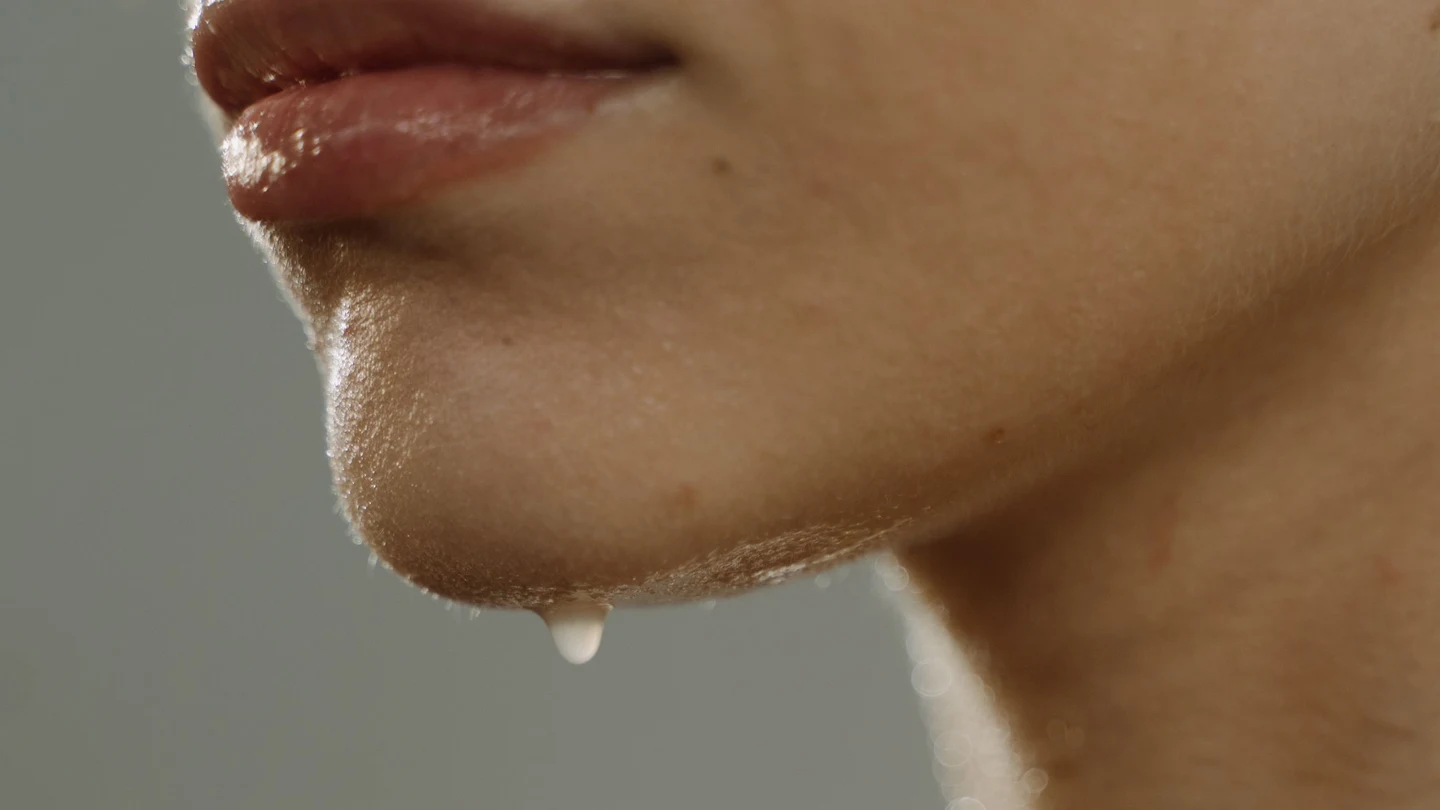
Open any K-beauty hashtag and one image keeps coming back: a face so smooth and luminous it looks lacquered, catching the light like the surface of water. No visible pores, no dry patches, no texture — just an even, wet-looking glow that seems to come from under the skin. That's glass skin, the single most aspirational look in Korean beauty, and the promise stitched into a thousand product ads: buy this, layer that, and you too can look like glass.
We wanted the honest version. Not "here are ten steps," but the real accounting: where the term comes from, how much of that glow is actually skincare, how much is makeup and good lighting, how much is a needle in a Gangnam clinic — and how much is simply the face you were born with. Here's what glass skin really takes, minus the marketing.
First — what "glass skin" actually means
The look has a literal name. The English phrase is a translation of the Korean 유리 피부 (yuri pibu) — yuri meaning glass, pibu meaning skin. It describes exactly what it sounds like: a complexion so smooth and intensely hydrated that it has an all-over sheen, "just like a pane of glass." (Refinery29)
The English term went mainstream in the West around 2017–2018, through beauty features that treated it as K-beauty's newest export — often with Peach & Lily founder Alicia Yoon on hand to explain it, and a "Glass Skin" serum line built around the idea. But the concept wasn't invented for that launch. 유리 피부 is the older, native term; the English "glass skin" is the repackaging. Which is the first honest thing to know about it: the look is real and Korean, but the branding around it is very much a product of the export market.
The word English flattens
Here's what gets lost in translation. In Korean, "glass skin" isn't one idea — it's the flattest, simplest word for a whole family of glow, and Koreans talk about that glow with far more precision than a single English phrase allows.
- 물광 (mul-gwang), "water glow." Literally water (물) + light (광). The natural, dewy, just-out-of-a-humid-spa look — hydrated and fresh rather than shiny. This is the one closest to what most people mean by glass skin.
- 꿀광 (kkul-gwang), "honey glow." Kkul means honey. A thicker, glossier, more deliberate sheen — as if a thin layer of honey were spread over the skin. Dialed up from mul-gwang.
- 유리 피부 / 유리알 피부, "glass skin." The smoothness-and-clarity end of the spectrum — the poreless, even-toned ideal.
(Glow Recipe's K-beauty glossary is a good primer on the vocabulary.) The takeaway: when a Korean beauty video says a look is 물광, it's describing a specific, achievable finish — not promising your pores will vanish. English collapsed all of it into "glass," which quietly raised the bar to "flawless."
Honest part 1: a lot of it is makeup
Here's the beat the ads skip. A huge share of the "glass skin" you scroll past is makeup, not skincare — and in Korea, that's not a secret; it's a named technique.
물광 메이크업 (mul-gwang makeup) is a whole genre of base makeup engineered to fake the water-glow: dewy, luminous foundations and cushions instead of matte ones, skin tints, liquid highlighter tapped onto the high points of the face, sometimes a mist or a drop of facial oil over the top. The point is a finish that reads as glass in a photo. Add a ring light — which erases shadow and pore texture — and a phone camera's "beauty mode," and you have most of what makes a viral glass-skin selfie look the way it does.
None of that is cheating, exactly. But it means the honest answer to "why doesn't my skin look like that even though I did the routine" is often: because that person is also wearing a dewy base, standing in flattering light, and shooting through a soft-focus lens. The glow is partly cosmetic and partly optical. Skincare is only one of the three ingredients.
Honest part 2: pores and genetics have a vote
Now the part dermatologists want you to hear, because it's the one that saves people money.
Truly poreless "glass" skin does not exist. Board-certified dermatologist Dr. Carmen Castilla puts it flatly: "Flawless, poreless skin does not exist. It's normal to have some texture, and regardless of what people say you cannot get rid of your pores." Even reducing how visible your pores are, she notes, is "exceptionally hard." (Marie Claire)
And pore size is largely genetic. If yours run large, no toner, serum, or ten-step ritual will permanently shrink them to nothing — they can look temporarily tighter when skin is hydrated and clean, but the baseline is set by your DNA, plus age and sun damage. People born with fine pores and even tone have a running start toward "glass" that no amount of product fully closes for everyone else. (US Dermatology Partners)
So the realistic reframe, straight from the same dermatologists: glass skin isn't a literal material state. It's "getting your skin in its healthiest state" — its most hydrated, clearest, most even version — with, as one derm describes it, "a glow or an enhanced light reflection." That version is achievable for most people. The poreless-pane-of-glass version is a photo, not a face.
Honest part 3: some of it is the dermatologist
There's one more source of that glow the routine videos rarely mention: the clinic. Part of the reason Korean skin looks the way it does in person — not just on camera — is that in-clinic skin treatments are cheap, normal, and everywhere in Seoul. Quite how much of it, though, is genuinely unmeasured — the famous statistics about Korean cosmetic procedures turn out to rest on a 2011 survey, as we set out in the plastic surgery numbers, honestly.
The signature one is 물광주사 (mul-gwang jusa), the "water-glow injection." It's a skin booster: fine micro-injections of non-crosslinked hyaluronic acid (often with vitamins and peptides) delivered into the upper layers of the skin to plump hydration and smooth texture from the inside — not to add volume like filler, but to create exactly that dewy, lit-from-within finish. It's one of the most in-demand treatments in Gangnam's dermatology clinics. (Korea Clinic Guide) Lasers and other minimally invasive procedures do similar work on tone and texture.
We're not recommending it — just being honest about the full picture. Some of the "glass" you're comparing your bare face to is maintained by a needle every few months.
What actually moves the needle at home
Strip away the makeup, the lighting, the genetics, and the injectables, and there is a real skincare core — the part that genuinely gets your own skin to its healthiest, glassiest-for-you state. Dermatologists are consistent about what it is: hydrating, gently exfoliating, sun-protecting, and anti-inflammatory care, done consistently. (Marie Claire)
In practice, that means:
- Hydration, in layers. The dewy look is a hydrated look. This is where Korean toners, essences, and humectant serums (hyaluronic acid, glycerin, panthenol) actually earn their place.
- Gentle exfoliation — occasionally. Smooth skin reflects light evenly, so removing dead-cell buildup helps. But two-to-three times a week, not daily; over-exfoliating wrecks the barrier and does the opposite of glass.
- A healthy skin barrier. Ingredients like ceramides and niacinamide keep skin calm, even-toned, and reflective. A damaged, flaky barrier can't look glassy no matter what you layer on it.
- Daily sunscreen — the non-negotiable. As Dr. Castilla says, "the most important aspect of maintaining healthy skin is daily UV protection with a broad-spectrum sunscreen." Nothing undoes clarity and even tone faster than sun damage.
Notice what this is: not a magic serum, but the same boring fundamentals as any good routine. If you want the step-by-step, we broke down what Koreans actually do (and why "ten steps" is mostly a Western myth) in The Korean Skincare Routine, Actually Explained.
So, honestly — is glass skin achievable?
Yes and no, and the distinction is the whole point.
No, you cannot buy or ritual your way to a literal poreless pane of glass. That image is a stack — good genetics, a dewy base, a ring light, a phone filter, and often a standing appointment at a skin clinic. Chasing it as a bare-skin standard is a fast track to over-buying, over-exfoliating, and feeling like your normal, textured, human face is a failure. It isn't.
Yes, a realistic version is well within reach: your skin at its most hydrated, calm, clear, and even — with a genuine, healthy glow — plus, if you want the full look for a night out, a dewy 물광 base that finishes the job cosmetically. That combination is honest, achievable, and frankly looks great. It just isn't the same thing as becoming glass.
Hydrate, exfoliate lightly, protect from the sun, be consistent, and let a good dewy foundation do the last 20 percent. That's glass skin, honestly — the achievable amount of it.
This article is general information, not medical or dermatological advice. In-clinic procedures like skin-booster injections carry their own risks and should be discussed with a licensed professional. If you have a specific skin concern, talk to a dermatologist.
Keep Reading
More Stories
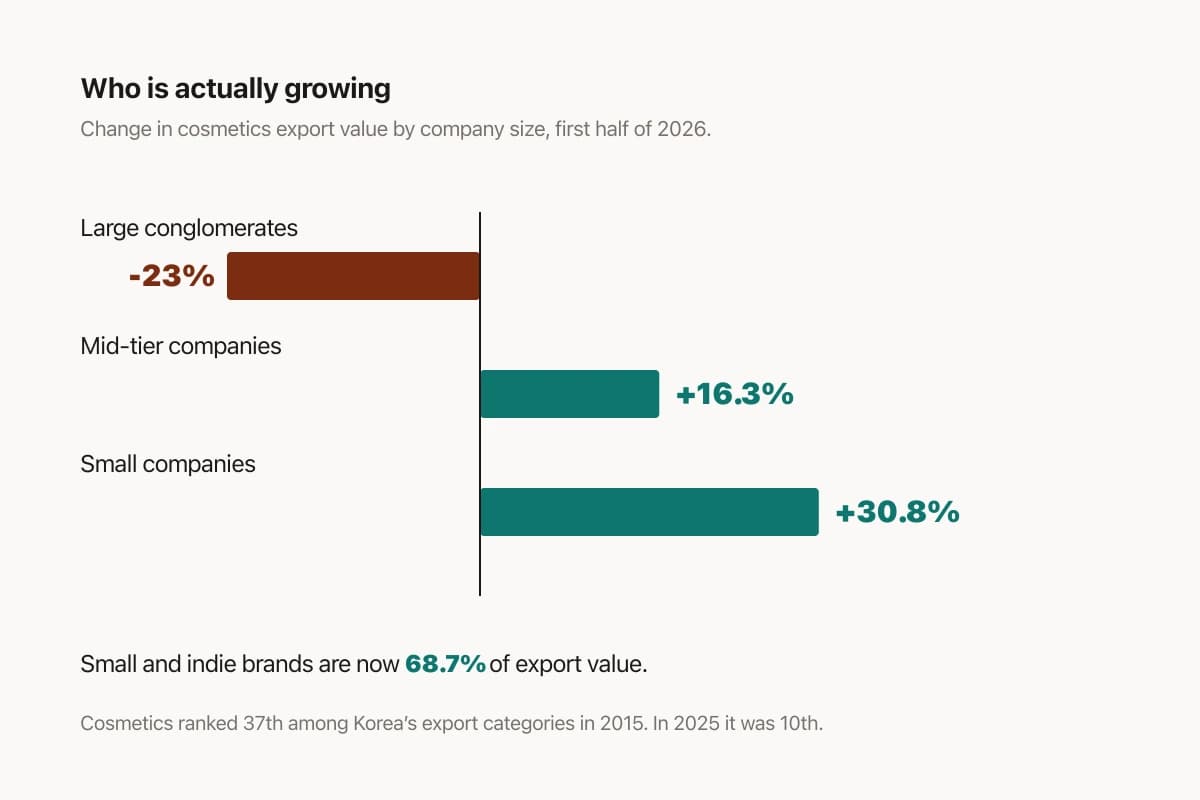
K-Beauty Just Had Its Biggest August on Record. Its Two Largest Companies Went Backwards.
Korean cosmetics exports hit $1.31 billion in August, up 52 per cent — the fastest monthly growth in nearly three years. Almost none of it belongs to AmorePacific or LG Household & Health Care, whose export value fell 23 per cent in the first half. Small brands are now 68.7 per cent of what Korea ships. And China, which took more than half of it five years ago, now takes one seventh.

Is Korea the Plastic Surgery Capital of the World? The Numbers, Honestly
The claim rests on a 2011 survey. ISAPS hasn't published a Korean procedure count since. The figure Korean media reported as an ISAPS finding in 2024 is the one row in its own source table that can't be reproduced — and the standard calculation counts a million foreign patients as if they were Korean.
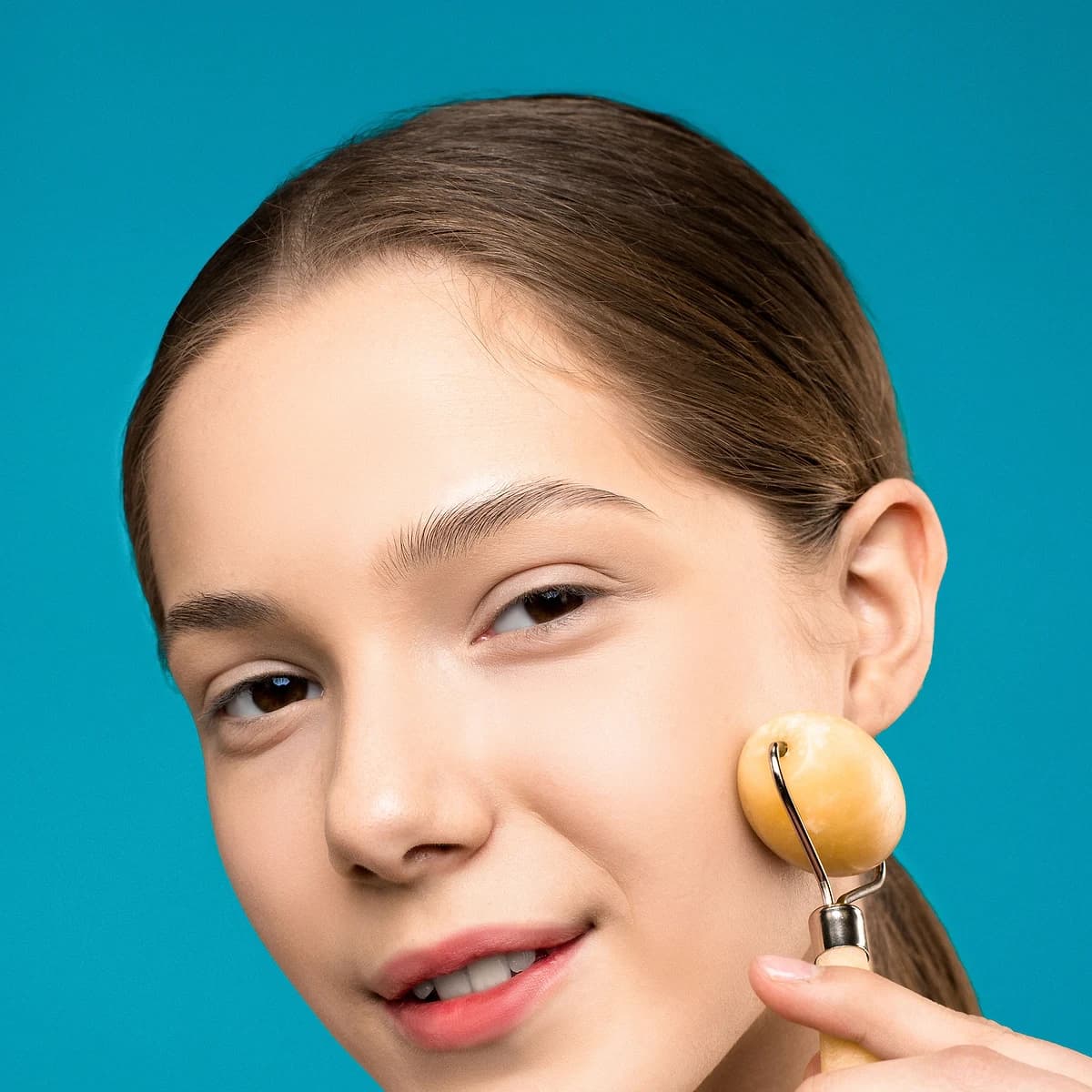
Korean Face Yoga, Honestly: Does 중안부 운동 Actually Work?
Your Korean feed is full of it right now — five-minute 'midface lifting' routines that promise to take ten years off, with dermatologists themselves doing them on camera. Here's what the science actually shows, what it quietly can't do, and the one mistake that makes it backfire.
The Weekly Dispatch
Korea, curated. Every week.
The best of K-culture, straight from Seoul. Written by people who actually live here.
Free, no spam, unsubscribe whenever.