The Korean Celebrity Comeback, Explained: Who Gets Forgiven — and Who Never Does
A trot star walks out of prison to fans who waited all morning — and drives past them without a word. A pop idol has been shut out of the country for 24 years. Between them runs Korea's unwritten script for falling from grace — 자숙, the apology, the quiet return — and the invisible line that decides who gets a second act.
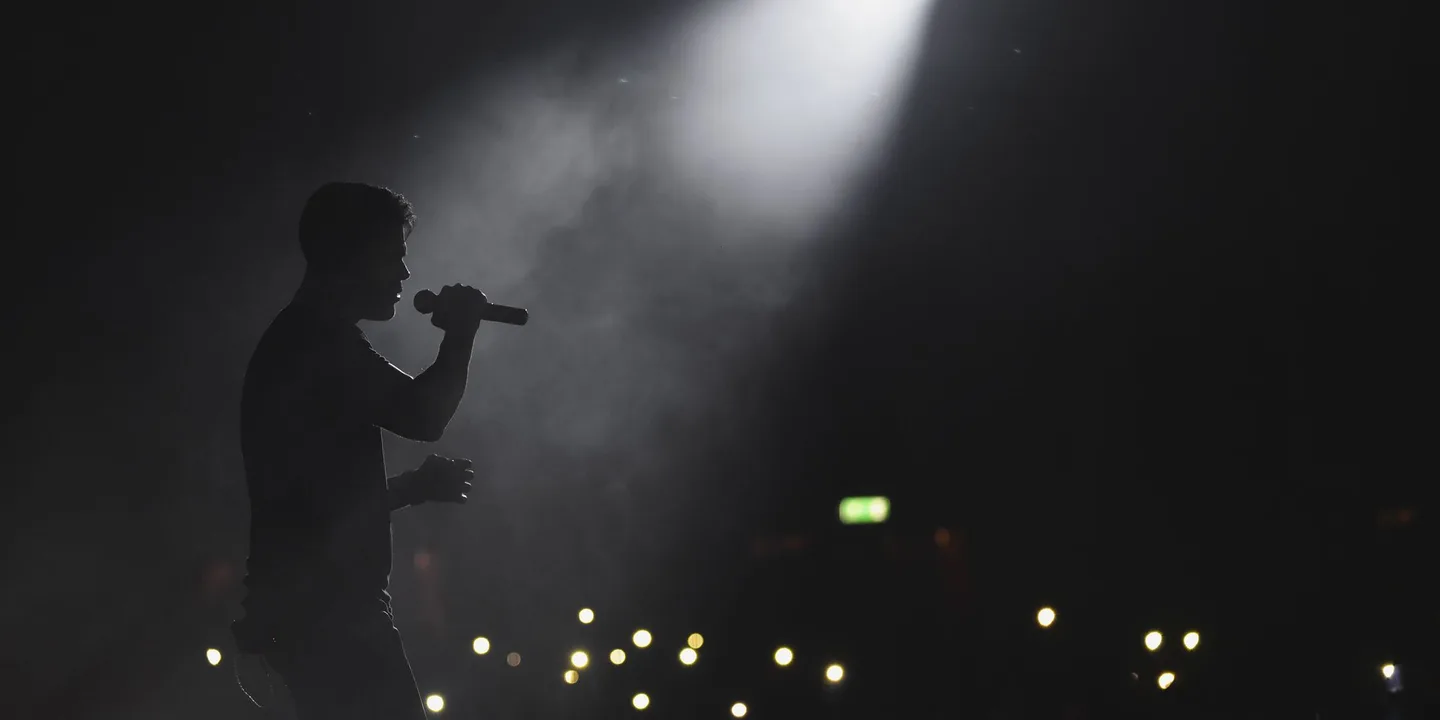
On the morning of June 30, 2026, a 35-year-old trot singer named Kim Ho-joong walked out of prison — about five months early, on parole. Some seventy fans in purple had been waiting at the gate since dawn, holding hand-made banners ("You worked so hard — we love you"), alongside roughly thirty reporters. Kim stopped for none of them. In a black suit and a black mask, he slipped straight into a waiting car and was gone — no statement, not even a wave. (Herald, Hankyung)
That, on its own, tells you most of what you need to know about how scandal works in Korea. Because Kim didn't fall over a rumor. In May 2024, he drove drunk through Seoul's Apgujeong district, crossed the centerline, hit a taxi, and fled. Then he had his manager pretend to be the driver and — in a detail that reads like satire — bought more alcohol afterward to blur the timeline, the so-called "hip-flask defense." Prosecutors indicted not only Kim but agency staff accused of helping the cover-up. He was sentenced to two and a half years. (Korea Herald, allkpop)
And his fandom never left.
This is the question that hangs over every Korean celebrity scandal: who gets a second act, and who gets exiled forever? Korea forgives some of its disgraced stars and buries others, and the dividing line is not where outsiders expect it to be. It has very little to do with how serious the crime was, and almost everything to do with what kind of trust got broken. Here is the script — and the cases that prove where it stops working.
The unwritten script: 자숙, the apology, the return
When a Korean celebrity is caught doing something indefensible, the response is almost choreographed. It has three movements.
First comes 자숙 (jasuk) — literally "self-discipline," but in practice a self-imposed disappearance. The star steps down from every show, freezes their social media, cancels endorsements, and vanishes from public life. There is no fixed sentence for 자숙; the length is read by the public like a penance. Disappear too briefly and you look unrepentant. The point is visible suffering.
Second comes the 사과문 (sagwamun), the apology — usually a handwritten letter posted to a fan café, sometimes a press conference with the deep, held 90-degree bow that is the universal Korean image of contrition. The grammar matters: accept responsibility, don't make excuses, promise to "live as a more mature person."
Third, eventually, comes the 복귀 (bokgwi) — the return. It is almost never a triumphant one. The well-managed comeback re-enters through a side door: a digital single with no TV promotion, a low-key variety appearance, a documentary about "reflection," sometimes a religious or charity turn. The star tests the temperature before stepping back into the light.
The whole sequence rests on one assumption — that enough time and enough visible remorse can buy back public goodwill. (Korea Times) For some, it does. For others, no amount of either will ever be enough.
The model comeback: Lee Soo-geun
If you want to see the script executed perfectly, look at Lee Soo-geun, today one of the most in-demand variety hosts in the country.
In late 2013, Lee was caught up in a celebrity illegal-gambling case; he had wagered hundreds of millions of won over several years. He did the one thing the script demands and most stars fumble: he moved fast. He admitted the charges almost immediately, announced his own indefinite 자숙, and walked away from everything — including the hit show 2 Days & 1 Night. The court handed him a six-month sentence, suspended for a year. (Wikipedia, Soompi)
Then he disappeared properly. For roughly two years he stayed out of sight — at one point reportedly helping out at his older brother's dakgalbi restaurant — and let the public forget the worst of it. When he came back around 2016, he came back small and humble, easing in through a modest cable program before rebuilding into the A-list MC he is now. (Korea Times)
The lesson Korean entertainers draw from Lee Soo-geun is precise: own it early, vanish completely, return modestly. His offense — gambling — hurt no one but himself, which is exactly why the script had room to work.
When the courts forgive but the public doesn't: Park Bom
Here is the first place the script breaks, and it breaks in a direction that surprises foreigners: you can be cleared by the law and still finished in the court of public opinion.
In 2014, news erupted that a shipment of 82 amphetamine pills addressed to 2NE1's Park Bom had years earlier been flagged at Korean customs. Amphetamines are a controlled substance in Korea; the optics were catastrophic. But the legal reality was far softer than the headlines: Park had been prescribed the medication in the United States for a long-standing condition, submitted her medical records, and the prosecution suspended her indictment. She was, in the eyes of the law, cleared. (Koreaboo, Dazed)
It didn't matter. The word "drug" had attached itself to her name, the public never fully accepted the explanation, and her career stalled into a long hiatus that ended only when 2NE1 disbanded in 2016.
Park Bom's case is the one that teaches the real rule of Korean celebrity scandal: the verdict that counts isn't the court's — it's the public's. A prosecutor can decline to charge you. The audience holds its own trial, on its own evidence, and it does not have to explain its reasoning.
The third rail: military service
If there is one offense that the script simply cannot touch, it is this one — and to understand why, you have to understand what military service means in Korea.
Nearly every able-bodied Korean man is required to serve in the armed forces, roughly 18 months of his youth handed over by law. It is a shared sacrifice, and a deeply felt one: the man who dodges it isn't just breaking a rule, he's betraying every family that sent a son. Which is why the surest way for a male star to become permanently radioactive is to be seen wriggling out of the draft.
MC Mong learned the milder version of this. In 2010, the rapper was accused of deliberately having teeth extracted to lower his physical grade and avoid enlistment. A court acquitted him of the evasion charge — ruling prosecutors couldn't prove he pulled teeth on purpose — and convicted him only of obstructing the process, a suspended sentence. (Wikipedia, Soompi) Legally, he was largely in the clear. Publicly, he never was. His music kept charting after his 2014 return, but the major broadcasters effectively kept him off television, and — extraordinarily — he is still, in 2026, taking legal action to fight the "draft dodger" label more than fifteen years later. (allkpop) Charts yes; forgiveness no.
And then there is the case that defines the outer limit of Korean unforgiveness entirely.
Yoo Seung-jun — known in the US as Steve Yoo — was one of the biggest pop stars in Korea at the turn of the millennium, and he had publicly promised to serve. In January 2002, on the eve of enlistment, he became a naturalized US citizen instead, which legally released him from the obligation. The country read it as the ultimate betrayal. The government banned him from entering Korea, and he has been shut out ever since — for 24 years and counting. He has fought it all the way up: Korea's Supreme Court ruled in 2019 and 2020 that denying him a visa was unlawful, and in 2023 a high court again found "no just cause" to keep him out. (Korea Herald, Wikipedia) He has won in court, repeatedly — and he still cannot come home, because the Justice Ministry keeps the entry ban in place at its own discretion, arguing his return could "cause social unrest." (Korea Herald)
Sit with that contrast for a second. Kim Ho-joong committed an actual crime, served real prison time, and walked free to fans who had camped at the prison gate. Steve Yoo committed no crime at all — he used a legal route — and a quarter-century later the door is still bolted. In Korea, breaking the law can be survivable. Breaking the military covenant may not be.
The line you can't cross: crimes with victims
There is one more category the script cannot reach, and it is the one that should be hardest to come back from anywhere: crimes with real victims.
Seungri, once the youngest member of the megagroup BIGBANG, was the public face of the Burning Sun scandal — a sprawling 2019 case that began with a Gangnam nightclub and unspooled into allegations of drugs, assault, and police collusion. He was ultimately convicted by a military court on nine charges, including arranging prostitution and habitual gambling, and served an 18-month sentence, released in 2023. (Wikipedia, SCMP) There has been no Korean entertainment comeback, and there is unlikely to be one.
The same wave took down Jung Joon-young, a singer once marketed as the wholesome boy-next-door, who was convicted in 2019 of secretly filming sexual encounters without consent and sharing the footage in group chats, and of group sexual assault. His sentence was finalized at five years; he was released in 2024. (allkpop, Korea Times) His career is over, full stop.
When the offense has a victim — especially a sexual crime — 자숙 has nothing to work with. There is no length of disappearance and no depth of bow that buys it back, because the thing that was broken wasn't the public's image of the star. It was a person.
Why fans forgive — and the "image laundering" backlash
So why does the script work at all? Why were seventy people standing outside a prison gate at dawn, in matching purple, for a convicted hit-and-run driver?
The answer is the fandom itself. Korean fan culture is intense, organized, and unusually willing to absorb a fallen idol's penance as if it were their own — a loyalty so total that, at its extreme, it curdles into the obsessive over-identification we've written about as sasaeng culture. For a committed fandom, the comeback isn't a betrayal of principle; it's the redemption arc they've been waiting for. They buy the digital single. They fill the small venue. They are, quite literally, the constituency that votes the star back into public life.
But the goodwill is contested, and the contest has a name: 이미지 세탁 (imiji setak), "image laundering" — the accusation that a star is using a documentary tear, a charity donation, or a religious awakening to scrub a record rather than atone for it. Watch the comments under any comeback announcement and you'll see the two camps go to war, the fandom welcoming the return and the wider public sneering that remorse was bought, not felt.
That fight is getting louder, because the audience is changing. Korea's younger generation — the same one walking away from the coercive parts of its drinking culture — has markedly less patience for the old "he's served his 자숙, let him back" reflex. They are quicker to call a comeback premature, quicker to organize against it, and far less moved by a well-staged bow. The script still exists. The crowd it has to persuade is harder than it used to be.
Back to Kim Ho-joong
Which is what made the June 30 release such a clean test of where the line sits in 2026 — and the muted, masked exit told its own story. He had vowed a return: in a handwritten letter from prison he wrote that he would "keep my wrongdoing etched in my bones" and promised, "I will sing. I will not give up." But his agency says the immediate plan is medical treatment — both ankles need surgery — not the stage, and early polling on a comeback ran conspicuously cold. (Asiae, Naewoeilbo)
Kim has the one asset that the script absolutely requires: a fan base that genuinely never left, that stood by him through the trial and the sentence — and that stood at the prison gate the morning he walked free. By the old rules, that loyalty plus a stretch of 자숙 plus a humble re-entry is more than enough for a second act.
But his case carries the two things the modern audience punishes hardest. The first is that there was a victim — he fled the scene of a crash. The second is the cover-up: the false confession, the staged drinking. It is one thing to do something terrible and own it, the way Lee Soo-geun did. It is another to do something terrible and try to engineer your way out, and a public that has watched the "image laundering" trick too many times is primed to notice the difference.
So the question isn't really whether Kim Ho-joong comes back. With a fandom like his, some version of a return is nearly guaranteed. The question is the one Korea asks of every disgraced star who walks back into the light: not can he, but should he — and who, this time, gets to decide.
—The Editors
Sourcing: Kim Ho-joong's 2024 DUI hit-and-run, the cover-up indictments, his two-and-a-half-year sentence, and the June 30, 2026 parole are reported by the Korea Herald and allkpop. The release-day scene — the roughly seventy fans and thirty reporters at the gate, his masked departure by car without a statement, his "I will sing" letter from prison, and his agency's stated focus on medical treatment over an immediate comeback — is reported by Herald Biz, Hankyung, Asiae and Naewoeilbo. Lee Soo-geun's 2013 illegal-gambling case, suspended sentence, hiatus, and return draw on Wikipedia, Soompi and the Korea Times. Park Bom's 2014 amphetamine controversy, her US prescription, and the suspended indictment are reported by Koreaboo and Dazed. MC Mong's 2010–11 case (acquittal on the evasion charge, conviction for obstruction) and his continued 2025–26 legal fight over the "draft dodger" label draw on Wikipedia, Soompi and allkpop. Yoo Seung-jun (Steve Yoo) renouncing Korean citizenship in 2002, the standing entry ban, and the 2019/2020/2023 court rulings in his favor are reported by the Korea Herald and Wikipedia. Seungri's Burning Sun convictions and 18-month sentence draw on Wikipedia and the South China Morning Post; Jung Joon-young's 2019 convictions and finalized five-year sentence are reported by allkpop and the Korea Times. Legal outcomes are described as adjudicated; where a matter remains contested, it is noted as such.
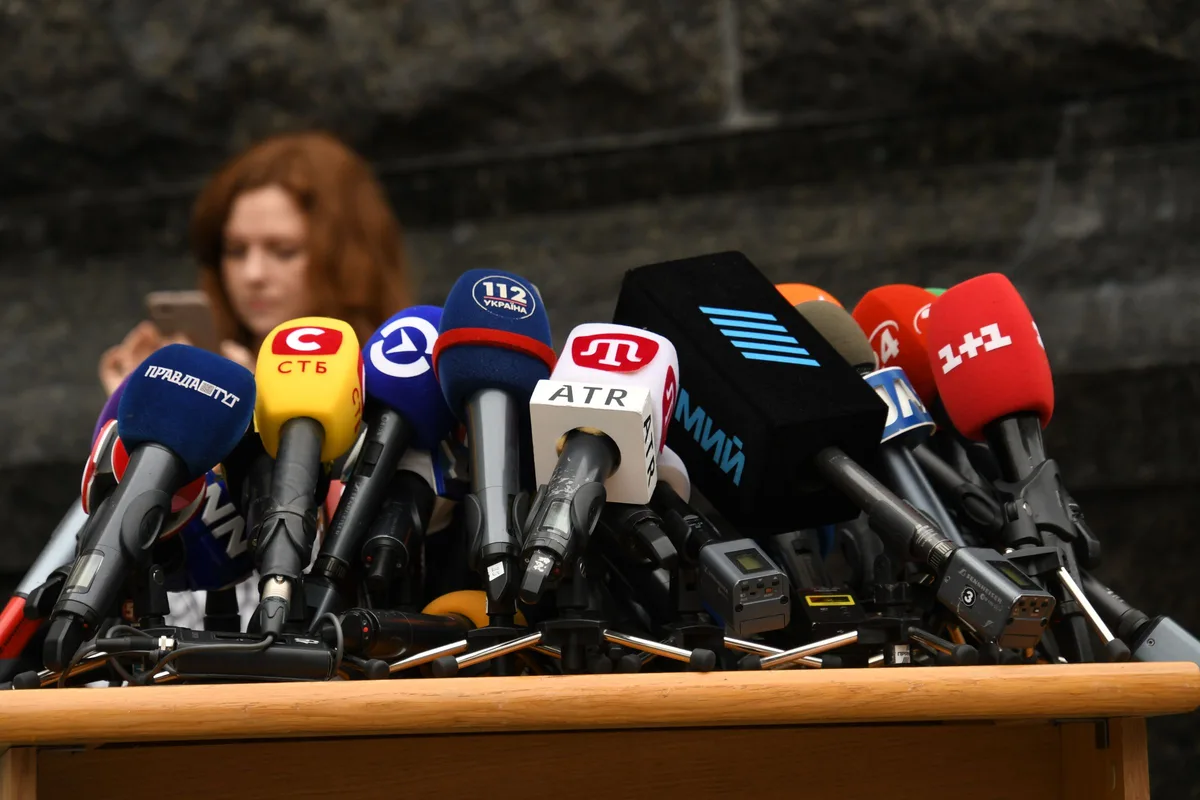
Cover: a concept image of a performer under the spotlight — photo via Pexels (free to use), posed by a model. Listing card: an AI illustration (generated with Higgsfield, GPT Image 2.5) of an anonymous performer bowing to a table of press microphones. In-article photo: a wall of press microphones — photo via Pexels (free to use). All images are illustrative and do not depict any individual named in this article.
Keep Reading
More Stories

Jun Ji-hyun, Explained: Why Korea Is Watching Her Right Now (May 2026)
Her first theatrical film in 11 years just crossed 1.5 million tickets in 4 days. Cannes gave it a 7-minute standing ovation. A candid stage-greeting photo of her abs broke Korean entertainment SNS this weekend. What's actually stacking, and where to start with her back catalog.

Park Seo-joon, Explained: Why Korea Is Watching Him Right Now (May 2026)
A surprise variety reunion, a Netflix animated megahit name-check, and a brand-ambassador retail push — what stacks together to put a Korean actor's search trend at +95% in May.

Kim Go-eun, Explained: Why Korea Is Watching Her Right Now (May 2026)
A finale, a red carpet, a brand campaign, and a horror megahit two years ago — what stacks together to make a Korean actress 'the moment.'
The Weekly Dispatch
Korea, curated. Every week.
The best of K-culture, straight from Seoul. Written by people who actually live here.
Free, no spam, unsubscribe whenever.