Idle Worship: K-pop Promised Intimacy. Some Fans Took It Literally.
The K-pop industry sells closeness at industrial scale — and a small, devoted minority takes the promise literally, escalating from devotion into surveillance, stalking, and worse. Drawing on BTS, NCT, and Jackson Wang, a guest essay on the machine that manufactures longing, and the people who pay for it.
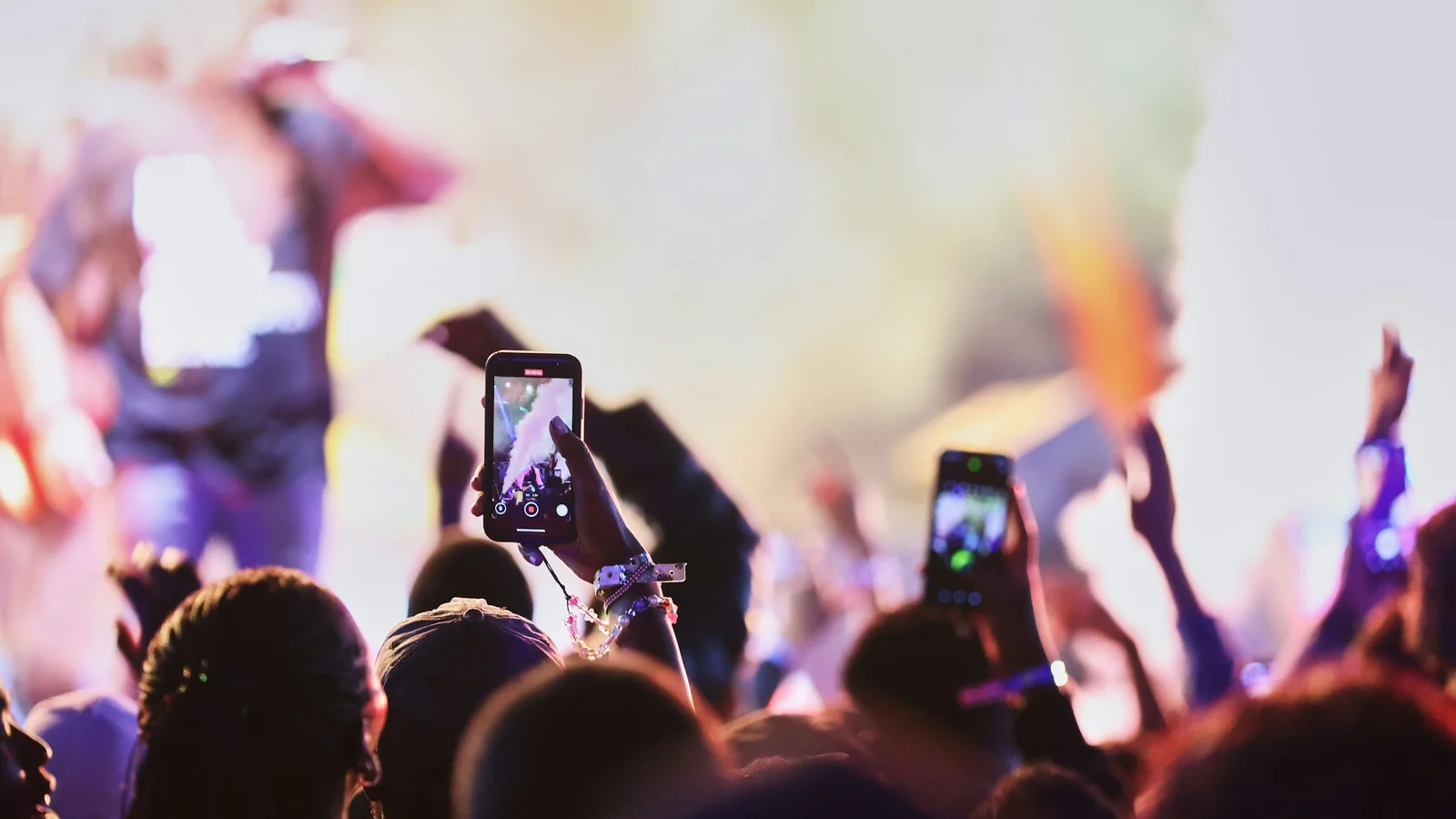
Heavy is the head that wears the crown — especially when the crown was fitted by the same hands now rattling the gate.
There is a particular kind of love that does not knock. It does not announce itself at the door, observe visiting hours, or concern itself with the basic social contract that the rest of us, through some combination of upbringing and self-preservation, have agreed to honour. It books the seat next to yours on a flight to Osaka, knows your room number before you do, and has, on at least one documented occasion, changed your in-flight meal selection — not out of malice, but out of something far more unsettling than malice, something that looks, from the inside, exactly like devotion.
The sasaeng — from the Korean sa (private) and saeng (life), a compound that functions simultaneously as a noun, a diagnosis, and a restraining order waiting to happen — is the obsessive fan who has taken the K-pop industry's most seductive promise at face value: that closeness is possible, that the connection is real, that the relationship between idol and devotee is something more than a beautifully produced commercial transaction. She is not entirely wrong to have believed it. After all, the industry worked very hard to make her believe it. The industry is also now, with considerable urgency, filing the necessary paperwork.
K-pop — the South Korean pop music industry that has, over the past two decades, grown from a regional curiosity into one of the most economically significant cultural exports on the planet — is, among many other things, the most sophisticated parasocial delivery system ever engineered by human beings with access to venture capital and a thorough understanding of loneliness. Parasocial describes the one-sided emotional bond that forms when a person invests genuine care, attention, and in some documented cases, a significant portion of their annual income, into a public figure who remains entirely unaware of their existence. It is not inherently pathological — most of us who have cried at a concert or felt bereft when a favourite band broke up have experienced some version of it. The difference is that most of us understand, somewhere in the functioning part of our brains, that the relationship is not reciprocal. K-pop companies have spent considerable resources making that part harder to find.
Through platforms like DearU's Bubble — subscription apps through which idols send personalised messages directly to fans' phones — messages reach hundreds of thousands of subscribers simultaneously, each addressed by name in the warm register of someone who has been thinking of you specifically, when the truth is considerably less romantic: the message went to everyone. You are a node in a distribution network receiving a personalised broadcast, which is less a relationship and more a very expensive newsletter that occasionally uses your name. The intimacy is the product, deliberately inexhaustible, and the business model depends on you never quite receiving enough of it to feel satisfied.
This is, to put it charitably, a volatile thing to build. To put it less charitably, it is a machine designed to manufacture longing, and longing — as any poet or divorce lawyer will tell you — does not come with an off switch.
Most fans absorb the system's contradictions with relative grace. BTS — the seven-member South Korean group widely considered the most successful act in K-pop history, whose fanbase, known as ARMY, numbers in the hundreds of millions globally — has mobilised that fandom for humanitarian causes with an efficiency that would embarrass most NGOs and several small governments. When the group took the stage at Goyang in April for the first nights of their ARIRANG world tour — the full reunion of seven men returning from nearly three years of staggered mandatory military service, a peculiarity of South Korean law that temporarily dismantled the world's biggest band — the fervour in the stadium was operatic, ecstatic, and entirely earned.
And then there was the other contingent.
The sasaeng does not appear from nowhere. She is the logical endpoint of a system that told her, repeatedly and with great production value, that she mattered to someone who has never learned her name. Professor Kwak Keum-joo, who spent her career at Seoul National University's psychology department, has written extensively on this dynamic — the mechanism she has described is one in which excessive affection directed toward someone outside one's daily life hardens into fantasy; a construction the person becomes ferociously invested in preserving. Deviation from that imagined version of the beloved is not experienced as reality intruding, it is experienced as a personal affront. The obsessive behaviour, as Kwak observed, is not despite its futility. It is because of it.
The sasaeng is also, to be direct about it, running what amounts to a mid-sized criminal enterprise, and the details are staggering enough to warrant their own genre of prestige television. The WeChat groups — each dedicated to a single idol with a fervour that makes religious fundamentalism look like a casual hobby — operate with the organisational structure of a cartel and the discretion of an intelligence cell. General channels exist below restricted leader channels, information trickling downward while money flows upward, everyone anonymous, ages unknown, occupations unknown, moral compasses apparently left at the door, along with any residual concept of another person's interior life as something worthy of protection. The only rule, enforced with the rigidity of scripture, is that only the artist matters. Not the other members. Not the stranger she has shared a channel with for two years. Only him. Always him.
The funds go toward procurement: flight schedules, hotel routes, car movements, and the funding of a representative who travels to Seoul to camp near dormitories and airports, compiling intelligence distributed back to the membership by contribution tier. Fifty thousand albums this comeback, ten hours of daily streaming rotation in the first week, coordinated purchasing windows timed to chart cycles — figures presented not as targets but as floors, the baseline of acceptable devotion, below which loyalty becomes suspect.
Travel is where the fantasy acquires a boarding pass. Women fly from Beijing or Shanghai or Tokyo to Seoul — not to see a concert, not to visit the city — but to position themselves at the arrivals terminal like wildlife photographers in a hide, lenses trained on a gap in the undergrowth, waiting with the particular stillness of people who have learned that patience is its own form of devotion. They capture footage of a man walking through an airport who will not acknowledge their existence, then return directly to the departure hall and fly home. Four hours. Several thousand dollars. No luggage. The trip is not a journey. It is a receipt.
BTS's V — Kim Taehyung, one of the group's vocalists — eventually announced that the group had stopped flying commercially altogether, because fans had taken to booking the seats beside them and the unglamorous, defenceless hours of long-haul transit had become, quietly and without consent, a spectator sport. A sentence that should not need to exist outside a Kafka novel, and yet here we are, in 2026, where the only viable response to being watched while you try to sleep at thirty thousand feet is to purchase the sky outright. Speaking out was, for V, a relative rarity — though not, for BTS, a new problem. The group's maknae had once addressed a sasaeng call mid-livestream with the breezy resignation of a man describing a mild administrative inconvenience: he blocked them immediately, he said, he received a great many of those calls, it was simply something that happened. The normalisation contained in that sentence is its own kind of horror. NCT — another of the industry's flagship groups — was not exempt. Haechan had a sasaeng walk directly into his family home. Fellow member Renjun wrote publicly about being followed and receiving dozens of calls from numbers reverse-engineered with the patience of someone who has genuinely nothing else going on — before, in desperation, publishing what he believed to be a sasaeng's number, which turned out to belong to an entirely innocent civilian. He apologised — he had, by that point, already stepped back from his duties on health grounds just two months earlier — and the calls continued regardless, because consequences in this world are largely theoretical. Korean Air and Asiana Airlines have both introduced cancellation fees after sasaengs discovered that a refundable ticket was a remarkably affordable way to access a departure lounge. This is not a fandom with boundary issues. This is a fandom with a logistics department, a procurement budget, and an HR problem that law enforcement has so far failed to adequately address.
At Goyang, BTS's Jungkook — the group's youngest member and, by most metrics, its most followed individual on social media — walked to the barricade mid-concert and jumped, in the uncomplicated way of someone who wants very badly for the people in front of him to be there, to feel it, to be part of something alive. The fans at the front stood perfectly still. Cameras up. Recording. The clip circulated on X within the hour, the reaction one of genuine second-hand mortification that these concertgoers had not come to attend a concert but to produce one. The idol had become, in the language of the people recording him, content.
Japan, by comparison, enforces what everywhere else merely requests. BTS have thanked Japanese audiences for keeping their phones away, an observation so quietly damning that it functioned, without intending to, as a comprehensive review of every other audience they have ever played to. It is, it seems, the only place where the members can reasonably expect to look out from a stage and see faces rather than screens. That this should register as a gift rather than a baseline tells you something precise about the current state of live performance that no industry report has quite managed to articulate.
But even the cleanest stage cannot contain what happens offstage.
Recent events were not finished with these kinds of illustrations. Japanese weekly magazine Shukan Bunshun published photographs of RM — or rather, of Kim Namjoon, a distinction worth pausing on, because the entire architecture of this story lives in that hyphen. RM is the construction: the stage name, the artistic identity, the group's de facto spokesman, the man who delivered a speech about self-worth at the United Nations. Kim Namjoon is the human being who rents the space behind that construction — a thirty-one-year-old man who, after two sold-out nights at Tokyo Dome, went to Shibuya with friends, had a few drinks, and allegedly smoked in designated no-smoking zones. The no-smoking allegation is legitimate — Japan's public smoking regulations exist for real reasons, and the reporting, if accurate, warrants a genuine response. It is worth noting, for context, that a survey published in April found that more Korean teenagers have misused prescription ADHD medication than have ever smoked a cigarette, which places the cigarette, statistically speaking, in the more wholesome category — though one suspects this is not quite the framing the fandom was looking for.
One contingent arrived in full devastation — not at the civic violation, but at the cigarettes themselves, at the revelation that the man who served his country like every other Korean son is also, in his private hours, someone who occasionally smokes, which is to say: a person.
The other contingent responded with the weary pragmatism of people who have completed several circuits of this particular track: he is an adult, they said. The fandom does not hold a casting vote on how he spends a Tuesday evening in Tokyo. Both positions are entirely reasonable. The fact that either required stating is the whole story.
This is what the crown actually weighs. Not the touring schedules or the military service or the scrutiny of a global press — but this: that somewhere in the gap between RM and Kim Namjoon, between the persona the industry built and the man living inside it, millions of people have set up permanent residence and begun redecorating. And every time the man inside reminds them that he lives there too, that he has his own furniture and his own habits and his own unremarkable human vices, the noise is extraordinary.
This particular pathology is not the exclusive property of Korean acts. GOT7's Jackson Wang — Hong Kong-born, Seoul-trained, now operating independently under his own label with the unmediated ferocity of someone who never fully absorbed the idol industry's preference for managed silence — spent two days in late May arguing on the platform X with someone who appeared to understand his psychology considerably better than he does, in the distinctive manner of a person who has confused years of observation with years of intimacy. A more conventionally managed idol might have issued a carefully worded statement, or more likely said nothing at all, letting the agency absorb the impact with a press release and a period of dignified quiet. Wang just argued back, which is both entirely human and a useful illustration of what the parasocial machine looks like when it meets someone who didn't fully agree to its terms. He was also filmed, on a separate occasion, visibly placing a chair between himself and a fan who had been brought onto a livestream set — the body language of a man who recognised the face and understood that what was approaching him was not closeness but its shadow. He chose furniture over protocol. The chair said what no statement ever could.
The tragedy is not the behaviour, strange and violating as it is, but the machinery that produced it — the industry's talent for manufacturing genuine feeling in exchange for currency, for building an architecture of intimacy so convincing that a certain number of people, entirely predictably, mistake the model home for a place they actually live. The sasaeng did not arrive at her spreadsheets and Seoul camping trips through simple derangement. She arrived through a system that told her, over and over, that she was close to someone — and then, when she tried to close the remaining distance, suddenly produced a restraining order and expressed surprise.
Outside the walls of Goyang Stadium on the opening night of BTS's ARIRANG world tour — their first full-group concerts in nearly four years — fans who couldn't get tickets stood in the dark listening to the music spill over. No camera, no access, no agenda. Just people held at the beautiful edge of something they loved, asking nothing back. That image is what this industry was built on, and what it keeps accidentally producing despite its best commercial instincts: the profound human experience of being moved by something that doesn't require you to own it.
The sasaeng, for all her spreadsheets, has never actually felt that. She has been too busy trying to get inside to notice that the music was already out here with the rest of us, freely available, requiring nothing in return. There is a word for someone who spends thousands of dollars flying to airports to stand at the precise edge of another person's life without ever being invited into it. The industry calls them a problem. The courts call them a matter for investigation. The psychology department at Seoul National University calls them a case study in escalating fantasy maintenance.
Most of us would simply call it heartbreaking — which is, after all, the one thing the industry never intended to build, and the only thing, it turns out, that it cannot sell.
"Idle Worship" is the first piece in 82 Crafted's Opinion section — essays and arguments from outside contributors, published under their own names. The views are the writer's own.
Brooke McMaster is an Australian screenwriter of over ten years whose work spans Western film and television and, most recently, Korean TV drama. An academic at Bond University, she has taught across Linguistics, Criminology, Modern History, and Communications & Culture, and is a student of Korean Studies with Curtin University. She travels to Seoul regularly, where she can be found loitering at a GS25 comparing banana milk expiration dates like a sommelier, and is a proud, card-carrying member of the BTS ARMY.
Keep Reading
More Stories

A Portmanteau Walks into a Party: In Defence of the Koreaboo
The word 'koreaboo' travels fast and lands hard — but nobody can define it, nobody who matters invented it, and it applies, with suspicious consistency, almost only to East Asian cultures. Drawing on the Francophile, the Anglophile, and a 1,555-day Duolingo streak, a guest essay on the double standard that calls Western cultural enthusiasm personality and Korean cultural enthusiasm a phase.
Summoned to Testify, Korea's Chief Justice Came, Refused the Oath, Answered Anyway — and Left at Lunch
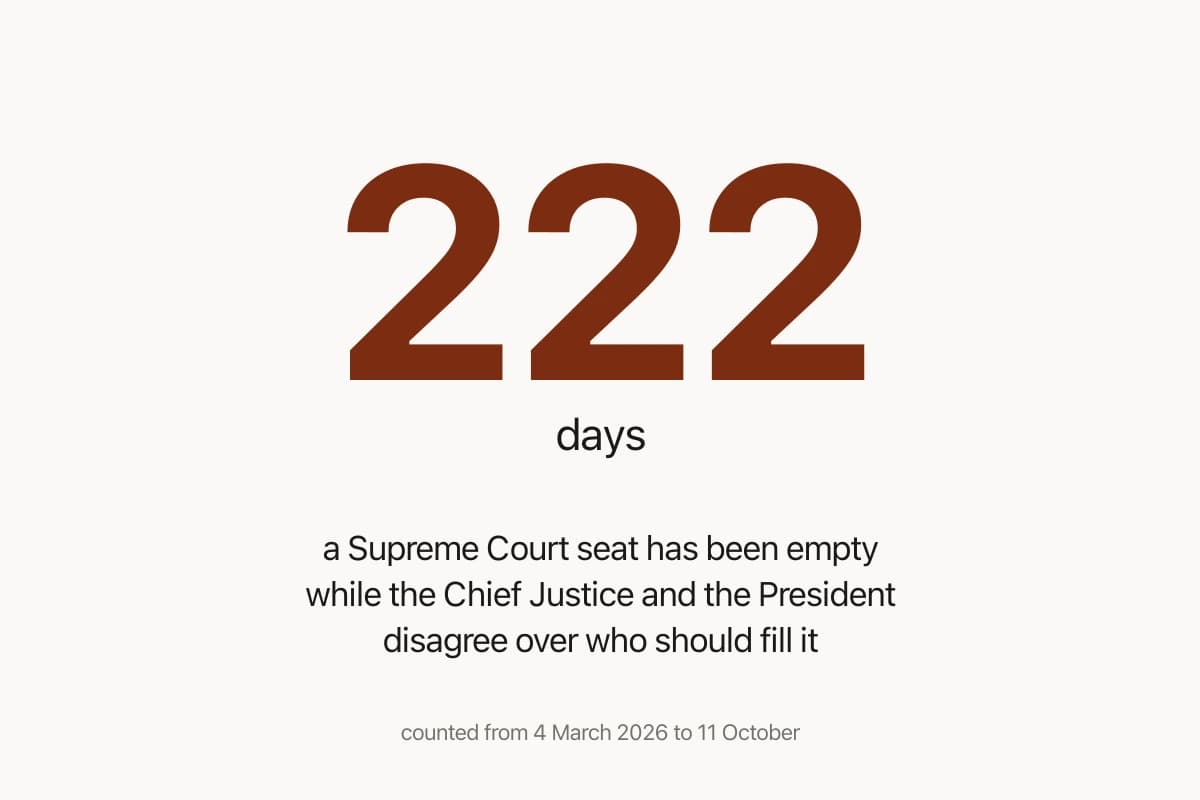
On 6 October 조희대 sat before the National Assembly's judiciary committee for two and a half hours, unsworn, defending a refusal to put forward a second name for a Supreme Court seat that has been empty since March. Then the Chief Justice went, and came back at ten to eleven at night to give closing remarks. Nobody voted to compel a return, and the seat is still empty.
Korea Abolishes Its Prosecution Service on 2 October. One Successor Opens Without a Chief or a Finished Building. The Other Opens With the Same Prosecutors Under a New Sign
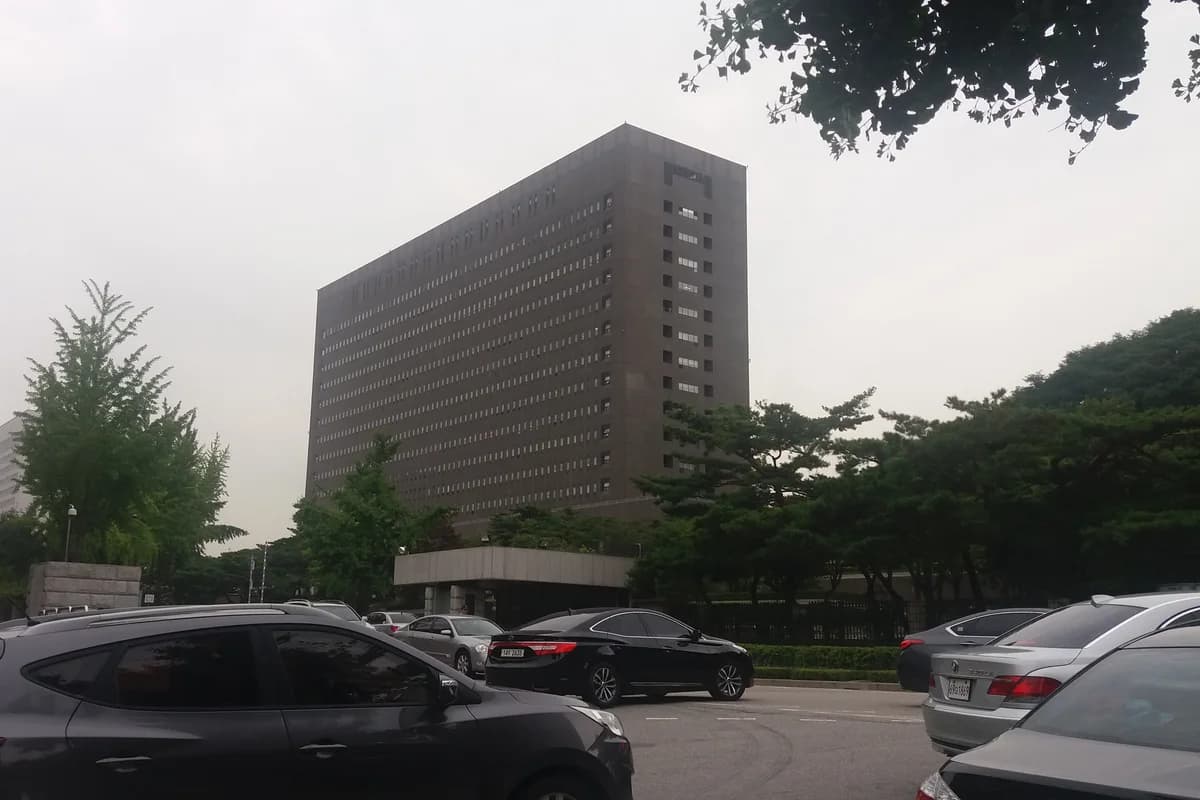
At midnight on 1 October the 검찰청법 is repealed and the institution that has dominated Korean politics since 1948 splits in two: a 공소청 that charges and tries cases, and a 중대범죄수사청 that investigates serious crime. It is the largest change to Korean criminal justice in seventy years, and it begins with acting heads at the prosecution office, the justice ministry and the national police, no head at all at the new investigation agency, seven sets of rules still unpublished, four challenges pending at the Constitutional Court — and the President arguing on X, in the small hours, with his own party about whether a former prosecutor may run the agency that replaces prosecutors.
The Weekly Dispatch
Korea, curated. Every week.
The best of K-culture, straight from Seoul. Written by people who actually live here.
Free, no spam, unsubscribe whenever.