Why Koreans Are Drinking Less — and What's Replacing 회식
For decades Korea drank like almost nowhere else on earth, and the all-night company dinner — 회식 — was the engine that fueled it. Now the numbers are falling fast, a whole generation barely drinks, and the after-work hours are filling up with gyms, cafés, and running crews instead. Here's what's actually changing, why, and what it means if you visit or work here.
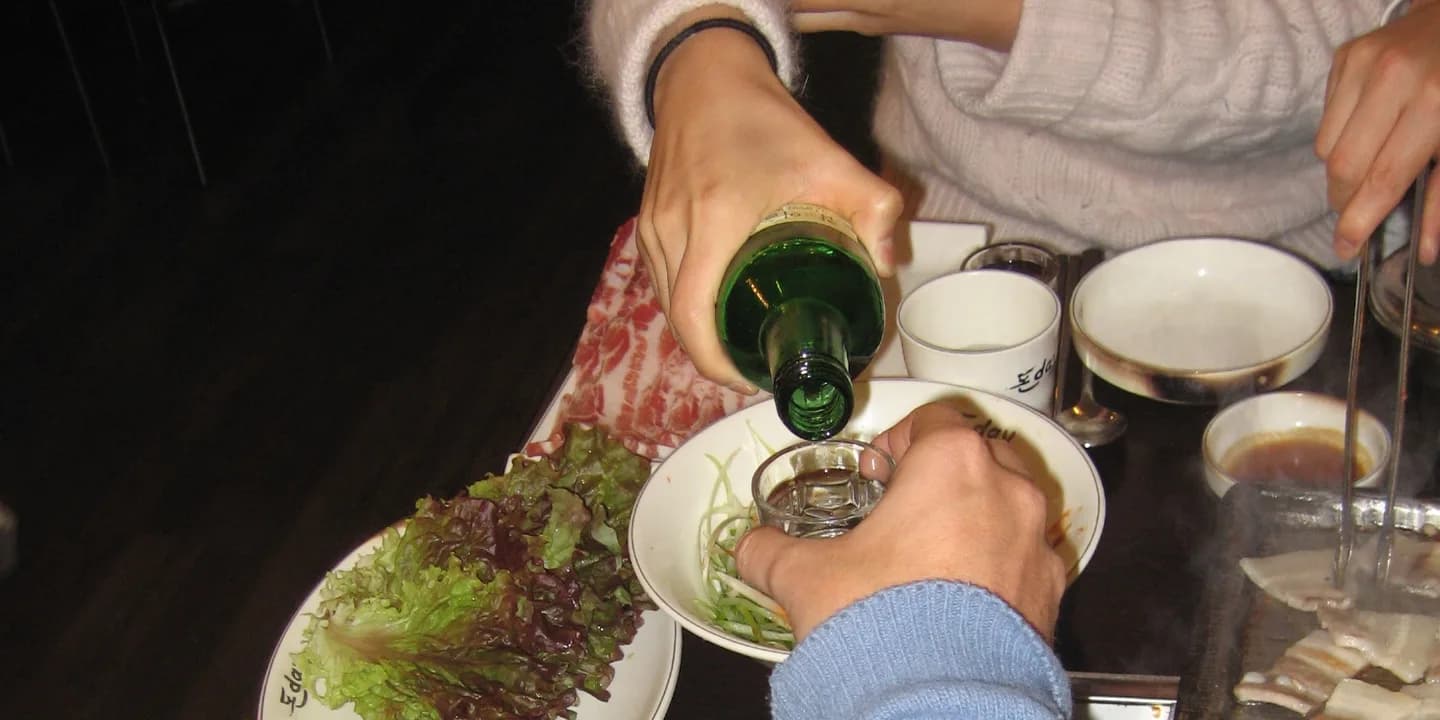
If your picture of Korea comes from K-dramas, it probably includes a green bottle. Soju at the barbecue table, soju at the orange-tented street stall, soju poured two-handed by the youngest person at a company dinner that shows no sign of ending. For a long time, that picture was accurate. Korea drank — a lot, and together, and often whether you felt like it or not.
That picture is now going out of date, fast. Household spending on alcohol just posted its steepest fall in years, the twenty-somethings barely drink, and the once-mandatory all-night 회식 is quietly shrinking into a quick dinner that everyone's home from by eleven. The country that made hard drinking a national sport is, by its own government's numbers, sobering up.
Here's what's actually happening — the data, the generation driving it, and what's filling the hours that used to belong to round three.
First, how heavy it really was
To see how big the shift is, you have to know the starting point. As recently as 2016, Koreans drank 10.2 litres of pure alcohol per person a year — the highest level in Asia. Soju, the clear little bottle that costs barely more than a bottle of water, has for years been one of the best-selling spirits on the planet, almost entirely on the strength of Koreans drinking it at home.
And the drinking was social, structured, and frequently not optional. The center of it was 회식 (hoesik), the company dinner — a team meal, paid by the company, that doubled as the place where bonds were forged and hierarchies reinforced. A proper 회식 ran in rounds: 1차 (ilcha) for grilled meat and the first bottles, 2차 (icha) for beer or a 노래방 (singing room), 3차 (samcha) for whatever was still open. (If you've read our tour of Korea's 방 culture, this is the machine those rented rooms were built to serve.)
The drinking itself came with rules you couldn't really refuse. You pour for others, never for yourself; you pour and receive with two hands; the youngest keeps everyone's glass full; and you turn your head away from your elders to take the first sip. The toast is 건배 (geonbae), and the dreaded follow-up is 원샷 (wonsyat) — bottoms up. The signature drink is 소맥 (somaek), a soju-and-beer boilermaker mixed at the table. Saying no to a senior's pour was, for a long time, a small act of insubordination.
That's the part worth being honest about: at its worst, this culture was coercive. The after-work 술자리 (drinking gathering) could be a loyalty test you passed by getting drunk, and "I have plans" was not an accepted answer — forced drinking is one of the uglier faces of Korea's 갑질 (power-abuse) culture. It's exactly the part the next generation has decided it's done with.
The numbers say the party's winding down
This isn't a vibe or a trend piece written from a café. It's in the official statistics, and they're striking.
- Spending is falling, quarter after quarter. In early 2026, real household spending on alcohol dropped about 9% year-on-year — the sharpest decline since Statistics Korea began compiling the quarterly data in 2019, and the tenth straight quarter of contraction.
- So is volume. Shipments of alcoholic drinks came to 3.15 million kilolitres in 2024, down more than 17% from a decade earlier.
- Per-person consumption is sliding. That Asia-leading 10.2 litres of pure alcohol in 2016 had fallen to 8.2 litres by 2022, according to the World Health Organization.
- When Koreans do drink, they drink lighter. Regular beer sales fell over 6% in 2024 — but non-alcoholic beer jumped 21% and lighter beers rose 32%. The non-alcoholic shelf, a novelty a few years ago, is now a category.
Even the binge-drinking rate, long Korea's stubborn embarrassment, has turned. By the Korea Disease Control and Prevention Agency's count, the share of adults who binge-drink at least once a month climbed to 35.8% in 2023 — and has now fallen two years running, to about 34% in 2025. It's the first sustained decline in a number that used to only go up.
Put it together and the direction is unambiguous: less alcohol, less often, and weaker when it happens.
The twenty-somethings barely drink
The averages hide where the real change is: people in their twenties have nearly opted out.
According to the government's National Health and Nutrition Examination Survey, 56% of Koreans in their twenties now either don't drink or drink less than once a month — a higher share of near-abstainers than among people in their thirties (47.6%), forties (44.4%), or even fifties (52.8%). The youngest working adults are the soberest group in the country, which would have been unthinkable a decade ago.
Why them, why now? Sociologists point to a clean, almost accidental cause: Covid. The current twenty-somethings hit university during the pandemic, when curfews shut the bars and campus life moved online. They missed the freshman orientations, the membership-training retreats (MT), the all-night dorm 술자리 — the entire apparatus that used to teach young Koreans how to drink in a group. As one Hanyang University sociologist put it, they simply never formed the habit.
You can hear it in how they talk about it. "I spent my freshman year during Covid, so I never experienced drinking late with friends," a 25-year-old told the Korea Herald. "When we gather, we usually go to cafés. Most of my friends don't drink either." A café where there would once have been a bottle of soju — that's the whole shift in one sentence.
회식 isn't what it was
The company dinner hasn't vanished. But the version that ran until sunrise is on life support.
"회식 used to last until 2 or 3 a.m.," a 34-year-old office worker told the Korea Herald. "But now, if the clock hits midnight or even 11 p.m., people feel they should head home." The pandemic taught everyone the pleasure of an early night, and it stuck. The marathon 1차→2차→3차 has, in a lot of workplaces, collapsed into a single round — dinner, maybe one drink, home. Some teams have moved 회식 to lunch entirely, or made attendance genuinely optional, or swapped the soju for a movie or a bowling alley.
The legal and generational backdrop matters here. In 2018 Korea introduced a 52-hour weekly cap on working hours, formally shrinking the runway for an after-work bender on a Tuesday. When the government floated raising the ceiling toward 69 hours in 2023, young workers revolted and the plan was walked back. Surveys by the Korea Employers Federation have found work-life balance to be the single most important factor for the country's younger employees — ahead of pay. A generation that fought for its evenings is not inclined to spend them watching a director drink himself toward a taxi.
Refusing the 회식, once a quiet act of insubordination, is now just a normal boundary. That alone is a cultural sea change.
What's replacing it
Here's the part that makes this more than a story about decline: the hours didn't disappear. They got reallocated — toward health, hobbies, and going home.
The umbrella idea, much discussed in Korea, is "healthy pleasure" — the idea that you can enjoy yourself without wrecking your body the next morning. A consumer-studies professor framed the change to the Korea Herald about as well as anyone could: "In the past, the key question was 'How much did you drink?' Now it has shifted to 'Why are you drinking?'" Enjoyment is being weighed against well-being in a way it simply wasn't before.
You can see where the energy went:
- The gym, on the daily. 오운완 (oun-wan) — short for "오늘 운동 완료," today's workout, done — is a genuine social-media ritual, the post-workout selfie as a small daily trophy. Korea's own culture service has noted the wave of health, anti-aging, and longevity trends riding behind it.
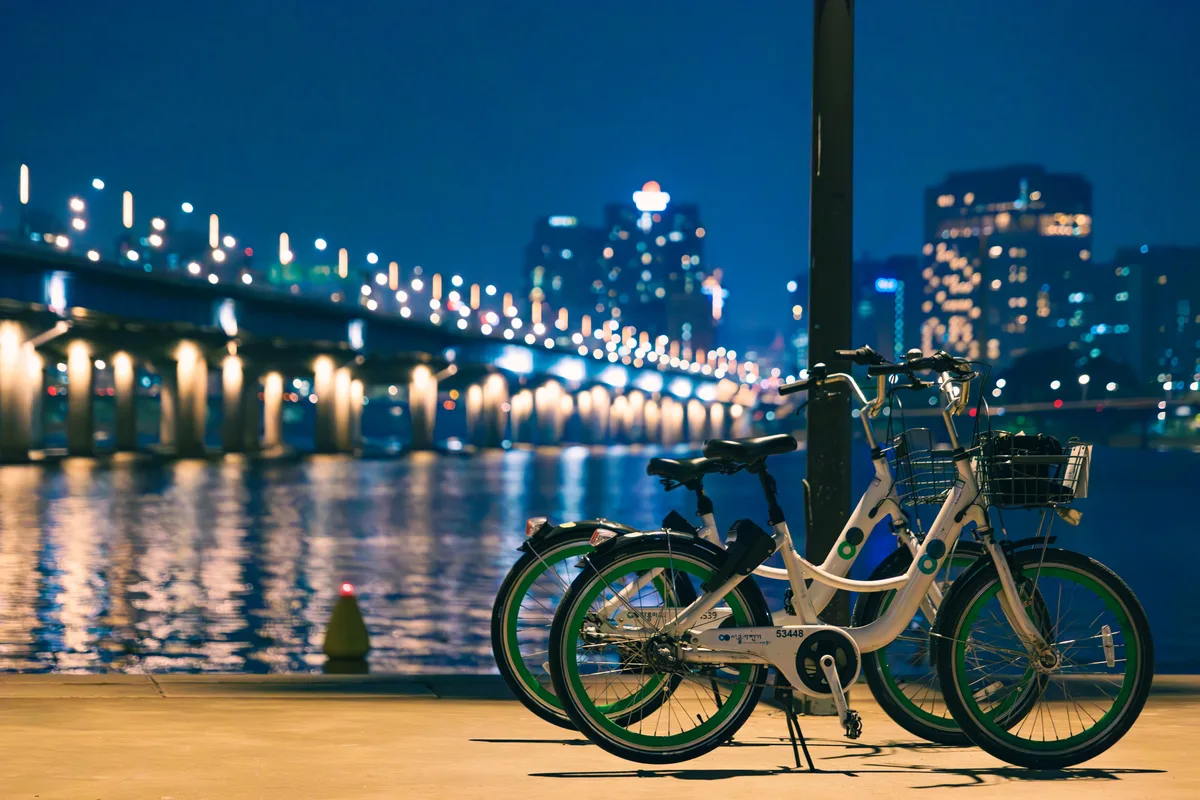
- Running, as a social scene. The Han River parks at dusk now fill with running crews and cyclists; a group run has become a legitimate alternative to a group drink — same camaraderie, no hangover.
- Cafés over bars. When young Koreans gather, the default venue has quietly shifted from the 술집 to the coffee shop. (It helps that Korea has one of the densest café cultures on earth.)
- Drinking on your own terms. Even 혼술 (honsul), drinking alone at home, is part of the story — not because people are drinking more, but because a single quiet beer by choice has replaced four rounds by obligation.
The market has noticed. Health-consciousness surveys find about a third of Koreans now actively trying to cut their alcohol intake — versus roughly a fifth globally — and wine has been the only alcohol category to grow in recent years, precisely because it reads as the moderate, with-dinner choice rather than the get-drunk one.
But Korea hasn't gone dry
It's worth keeping this honest, because the headlines can overshoot. Korea has not stopped drinking. Soju is still everywhere, still absurdly cheap, still the default lubricant of a good barbecue night. Plenty of young Koreans still drink, and will tell you so. Older generations and certain old-school industries still run the full marathon. Walk past a pojangmacha at 2 a.m. and the tents are far from empty.
What's actually changing isn't the existence of drinking — it's the compulsion around it. The mandatory 회식, the pour you couldn't refuse, the loyalty measured in empty bottles: that scaffolding is coming down. Drinking is becoming a choice you make rather than a duty you perform. Which, if anything, is a healthier place for a drinking culture to be.
If you're visiting — or working here
A few practical takeaways from all this, whether you're passing through or signing a Korean employment contract:
- You can say no now. Declining a drink, or a second round, or the 회식 itself, no longer reads as an insult the way it once did — especially among younger colleagues. A polite "I'm good, thanks" genuinely lands.
- Expect lighter nights. If you do get the 회식, it's increasingly likely to be one round, dinner-forward, and over by a reasonable hour. The all-nighter is the exception, not the rule.
- The after-work scene is wide open. Your Korean coworkers are as likely to be at a gym, a café, a class, or a Han River run as at a bar. If you want to bond, an invitation to any of those now counts.
- The soju's still there if you want it. None of this means missing out. A bottle shared over Korean barbecue or grabbed from the convenience-store drinks wall is still one of the great cheap pleasures of the country. The difference is that it's yours to choose.
For decades, the question a Korean night asked you was how much can you take? Increasingly, it asks something gentler and more modern: what do you actually feel like? That's not the death of Korean social life. It's just Korean social life, growing up.
—The Editors
Consumption and spending figures are from Statistics Korea (household spending, 2026), the Korea Disease Control and Prevention Agency (binge-drinking and abstention rates, via the Korea Herald), the World Health Organization (per-capita pure-alcohol consumption), and a National Institutes of Health study of Korean drinking trends (the 2016 Asia-leading figure); industry shipment and beer-category data and the health-consciousness comparison draw on Euromonitor and Korean industry reporting. The 52-hour workweek, the 2023 working-hours backlash, and Korea Employers Federation findings on younger workers' priorities are widely reported; etiquette and 회식 customs described here are standard nationwide. Korea still ranks among the more alcohol-consuming nations in its region — the story here is the direction of travel, not abstinence.
Cover: the two-handed soju pour at a Korean barbecue table — photo by Kai Hendry, Wikimedia Commons, CC BY 2.0. In-article photo: share-bikes along Seoul's Han River at night — photo by TurnOnTheNight, Wikimedia Commons, CC BY-SA 4.0.


Keep Reading
More Stories
The Fisherman Hid It Under His Floorboards. The Reward He Eventually Got Set Off a Decade of Looting.
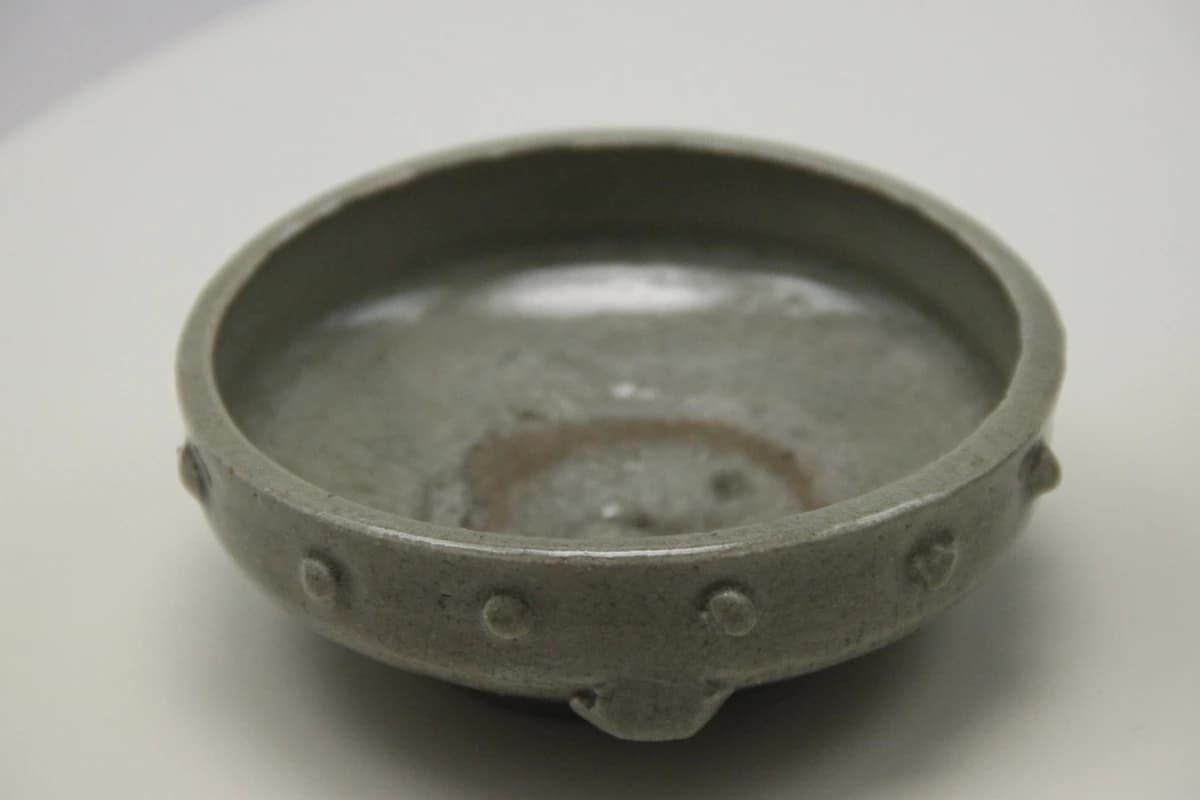
Korea marked fifty years of underwater archaeology in Mokpo in September 2026. The official story starts with a net and a report. The documented one starts with six pieces of Chinese porcelain given away as presents, a schoolteacher brother who had to get them all back, and officials who did not want the paperwork. Then the state paid a reward, a diver worked out how much of it went in tax, and for the next ten years people stole the wreck faster than the government could raise it — until the navy's own divers could not find the ship, and the excavation hired the looters.
Korea's Convenience Stores Are Selling Humanoid Robots for Chuseok. Neither Chain Expects to Sell One, and Both Have Said So.
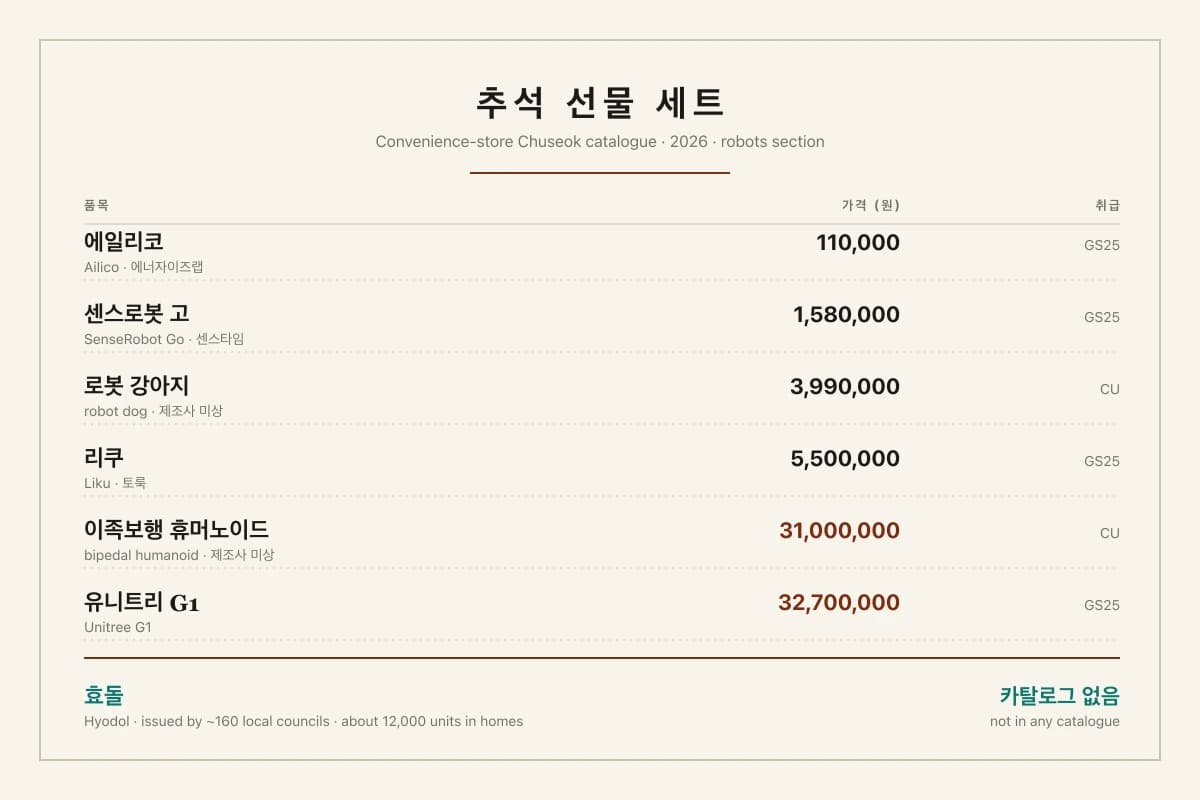
CU's holiday catalogue has a bipedal humanoid at ₩31 million, next to the beef and the gold bars. GS25 has an AI companion robot at ₩5.5 million and a keyring that talks back at ₩110,000. We assumed the pitch was companionship for parents you won't be visiting. It isn't — the retailers say plainly these are there to be noticed, not bought. Meanwhile about twelve thousand robots are already in Korean homes, asking elderly residents whether they've taken their medicine, and nobody put those in a catalogue.
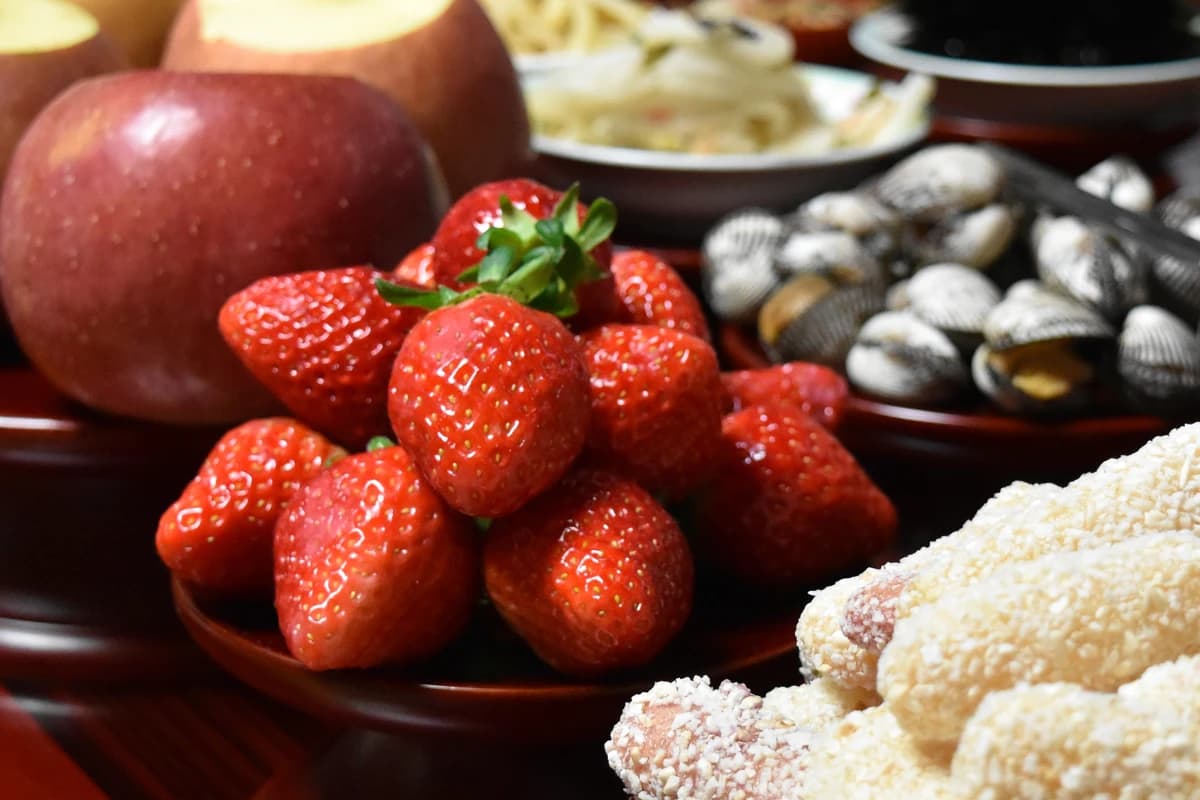
The Chuseok Table Rules Your Family Argues About First Appear in Print in 1920 — as an Insult
Red fruit east, white fruit west. Jujube, chestnut, pear, persimmon, in that order. Korean families treat these as ancient Confucian law and fight about them every Chuseok. Scholars who have gone through the ritual classics cannot find them in any of them. What they can find is a 1920 newspaper column using the phrase to mock people who quote rules to seem learned — and a sixteenth-century master who laid his own family's table with six things on it.
The Weekly Dispatch
Korea, curated. Every week.
The best of K-culture, straight from Seoul. Written by people who actually live here.
Free, no spam, unsubscribe whenever.