돌잔치 and 돌잡이: What the Baby Is Actually Grabbing
Korea's first-birthday party has a divination ritual at its centre, a gold ring being priced out of existence, and a hotel booking so competitive parents call it an exam. Also: the ritual isn't Korean in origin, and one item on the table used to be bad luck.
At a Korean first-birthday party, the baby is set down in front of a spread of objects and allowed to grab one. A thread means long life. Money means wealth. A brush or a book means scholarship. Whatever the child seizes is read, half-seriously, as a forecast.
This is 돌잡이 (doljabi), and English-language writing about it gets three things wrong: where it came from, which items are traditional, and whether any of them were ever bad.
The party around it is 돌잔치 (doljanchi), and that has its own set of surprises — including a gold ring that is roughly a century old rather than ancient, and a hotel restaurant booking so hard to get that parents have named it after the civil-service exam.
First, the Word — and an Honest Dead End
돌 means a baby's first birthday. It also functions as a counter for years of age: 한 돌, 두 돌, 세 돌.
Where the word comes from is the interesting part, because nobody official will tell you.
In March 2025 a parent preparing a doljanchi asked Korea's National Institute of the Korean Language directly. The Institute's answer, the next day, was that 돌 is glossed as "a unit counting the number of times a birthday has come round," that it was formerly written 돐 — and then:
"그 말이 어떠한 이유로 생겨났는지에 대해서는 표준국어대사전이나 우리말샘에서 직접 설명하는 바가 없어 답변을 드리기 어렵습니다." As to why the word arose, neither the Standard Korean Dictionary nor Urimalsaem explains it directly, so it is difficult to answer.
You will find English (and Korean) pages confidently deriving 돌 from 돌다, "to turn" — twelve months come full circle. That is a folk reading. The language authority declines to endorse it, and so will we.
What is documented is more interesting anyway. Korean used to spell the word two ways: 돌 for a birthday, 돐 for an anniversary. Article 6 of the 1988 Standard Language Regulations merged them into 돌 alone, on two grounds — that the distinction was 인위적이고 불필요, artificial and unnecessary, and that the pronunciations the 돐 spelling implied, [돌씨] and [돌쓸], did not exist in actual speech. A spelling was abolished for describing a language nobody spoke.
The Grabbing Ritual Came From China
Open Korea's national folk encyclopedia at 돌잡이 and the first sentence tells you something English blogs never do:
"돌잡이는 중국 육조시대六朝時代부터 있었던 풍속으로…" Doljabi is a custom that existed from the Chinese Six Dynasties period…
The source text is the sixth-century Chinese 『안씨가훈』 (Yan Family Instructions), describing a Jiangnan custom: at one year, the child is bathed and newly dressed, and then —
"남자는 활과 화살과 종이와 붓을, 여자는 칼과 자와 바늘과 실을 쓴다." For boys, bow and arrows and paper and brush; for girls, knife and ruler and needle and thread.
Food, fine clothes and toys are laid before the child, and the future is tested by what they choose. The Chinese name for the rite is 시아 (試兒), "testing the child."
That list — bow and brush for boys, needle and ruler for girls — is essentially the "traditional Korean" doljabi set that English sources present as uniquely Korean. The Joseon scholar 이수광 quoted the passage in his 『지봉유설』 precisely because Korean practice matched it so closely.
Korea's real contribution is the documentary record, which is unusually good:
| Date | Source | What it records |
|---|---|---|
| 1552 | 이문건, 『양아록』 | His grandson's first birthday: objects laid out to see which he grabs, "because the ancients all did it this way" |
| 1598 | 오희문, 『쇄미록』 | His grandson's birthday: toys set down, and they watched which he took first |
| 1791 | 『국조보감』 / 『정조실록』 | The future King Sunjo, at his dol, grabbed coloured thread first, then an arrow, then a musical instrument |
Korean historians put the spread of the rite into yangban households at before the mid-16th century. So: not Korean in origin, thoroughly Korean in practice for at least five hundred years, and documented down to which objects a future king picked up in 1791.
The Traditional Set — Including the One That Was Bad
Here is the full traditional inventory from Korea's national encyclopedia, which is richer than any English list.
Shared: 쌀 (rice) · 돈 (money) · 책 (book) · 붓 (brush) · 먹 (ink) · 두루마리 (scroll) · 흰실타래 (white thread skein) · 대추 (jujube) · 국수 (noodles) · 떡 (rice cake)
Boys only: 활 (bow) · 장도 (ornamental knife) Girls only: 바늘 (needle) · 가위 (scissors) · 잣대 (measuring rod) · 인두 (pressing iron)
And the readings, in the encyclopedia's own terms:
| Grabbed | Meaning |
|---|---|
| 책 · 붓 · 먹 · 두루마리 | Will study, pass the state exam, hold office |
| 쌀 · 돈 | Will be wealthy |
| 활 · 장도 | Will be a military official |
| 실 · 국수 | Will live long |
| 대추 | Will have many descendants |
| 바늘 · 가위 · 자 · 인두 | Will be skilled at needlework |
| 떡 | 미련하리라 — will be dull |
Grabbing the rice cake was bad. Not neutral, not funny — a prediction that the child would be slow-witted. No English account we've seen mentions that any doljabi item carried a negative reading, which rather changes the character of the ritual. It wasn't a menu of blessings. It was a divination with a wrong answer in it.
Two more details that don't survive translation. The 돌상 is deliberately round, not square, so a baby who isn't walking steadily can't catch itself on a corner. And the child sits on a folded bolt of white cotton, which is kept afterwards for their own use.
Also, the fix is in — and has been for at least thirty years. The 1995 encyclopedia entry says so plainly: parents place the object they want nearest the baby. And then, drily: "부모가 바라는 대로 물건을 집지 않는 수가 많다" — the child often doesn't grab what the parents hoped.
The Modern Items Are Korean, Not Imported
Here the common English correction — that stethoscopes and microphones are Western party-supply intrusions — is simply wrong, and we'd assumed it too until we checked.
Kyunghyang Shinmun, August 2007:
"돈, 쌀, 실, 연필 등 전통적 '돌잡이'는 요즘 돌잔치에선 보기 힘들다. 대신 '청진기(의사)', '마이크(연예인, 아나운서 등)', '골프공 등 스포츠용품(스포츠 스타)', '칫솔(치과의사)', '분필(교수)', '외제차 키' 등이 그 자리를 차지하고 있다."
Stethoscope for doctor, microphone for entertainer, golf ball for athlete, toothbrush for dentist, chalk for professor, imported-car key for — well, quite. Nearly twenty years ago, in Korean, in a Korean paper. The paper's own reading: the table now carries "현대인의 가치관," modern people's values, made visible.
The best detail in that piece is an item that left. The credit card was on doljabi tables for a while, then disappeared — because its association had shifted to 신용불량자, credit delinquency. The table is a live document, and it edits itself.
The 2025 crop, from Korean hospitality trade coverage: 카메라 (YouTuber/influencer), 게임 컨트롤러 (pro gamer), 마이크 (announcer), 로봇 피규어 (AI developer). Korea's own National Folk Museum notes that families now sometimes put out a computer mouse or a mobile phone.
So what actually got lost isn't tradition-to-America. It's the gendered set — the bow, the pressing iron, the reading that a girl who grabs sewing tools will make a good wife and wise mother. That vanished quietly, and nobody misses it. Along with 떡, and the possibility of a bad answer.
If the idea of a ritual that sorts a person into a type feels familiar, it should: Korea has since built an MBTI obsession and kept saju alive alongside it. Doljabi is the first one you get, before you can talk.
The Gold Ring Is About a Century Old
The standard dol gift is the 돌반지, a small pure-gold ring, conventionally 1 돈 = 3.75g.
It is not ancient. According to Korea's National Institute of Korean History:
"이것은 20세기 초 조선에 들어온 중국인들의 풍속이다." This is a custom of the Chinese who came to Korea in the early 20th century.
Chinese residents gave gold rings and bracelets to mark celebrations; Koreans who saw it adopted it for doljanchi, and it hardened into custom. And it did not take over quickly — into the mid-1950s, dol gifts were still commonly cloth or rice.
The ring carried two meanings: gold was thought to ward off inauspicious energy, and it was a store of value, an investment held on the child's behalf. That second function is why, during the 1997 IMF crisis, families brought hoarded 돌반지 to be surrendered in the national gold-collection campaign.
And It's Being Priced Out of Existence
The ring is now dying commercially, and the numbers are stark. Price of 순금 1돈 (3.75g):
| Date | Price |
|---|---|
| March 2024 | ₩300,000s |
| April 2025 | just under ₩600,000 |
| December 2025 | ₩936,000 — a record |
| March 2026 | around ₩1,000,000 |
More than doubled in a year, and roughly four times the level of a decade earlier. Finished rings cost more again, because of craft fees and VAT.
The behaviour has already changed. A 2023 survey of 1,000 Korean adults on what they'd most consider giving at a doljanchi:
| Gift | Share |
|---|---|
| Cash, ₩100,000 | 53.1% |
| Baby clothes | 29.3% |
| Cash, ₩200,000 | 26.9% |
| Half-don (1.875g) ring | 23.2% |
| Full 1-don (3.75g) ring | 14.1% |
And 88.6% said giving a 돌반지 feels burdensome.
By 2025, the four best-selling "dol rings" at a Shinsegae online mall were all 1g to 2g — a fifth to half the traditional weight. A Jongno jeweller told reporters that customers now ask for quarter-don and 1g rings. A Sookmyung University consumer economics professor put the shift plainly: Koreans used to see gold as a keepsake; having watched the price, they increasingly see it as an investment asset.
The tradition isn't being abandoned. It's being denominated in something else.
On how much cash to actually give: Korea does not survey doljanchi money the way it surveys wedding envelopes, and that absence is itself informative. The one real figure is the 53.1% above. For context, ₩100,000 is now the cross-category norm for Korean life events generally — the machinery of which, the reciprocal ledger that governs all of this, we set out in Korean wedding money.
The Law Says a First Birthday Is Not a Life Event
Which leads somewhere genuinely odd, and entirely absent from English coverage.
Korea's 청탁금지법 — the Kim Young-ran Act, its anti-graft law — permits public officials to accept 경조사비, life-event money, from job-related parties within value limits. Korea's Anti-Corruption and Civil Rights Commission has ruled, on the record, on what counts:
"이 때 경조사비는 결혼·장례에 한정됩니다. 따라서 돌잔치에 직무관련자가 축의금 명목으로 제공하는 것은 … 예외적으로 수수할 수 있는 금품등이 아닙니다." Here, life-event money is limited to weddings and funerals. Therefore money provided as a congratulatory gift at a doljanchi by a job-related party is not among the items that may exceptionally be accepted.
A first birthday is not a 경조사 in Korean law. A public official cannot take doljanchi money from anyone job-related, at any amount. Two carve-outs: meals served uniformly to all guests are fine, and relatives within eight degrees of kinship are exempt.
Korean law drew a line through the middle of the reciprocal-envelope system, and the first birthday landed on the wrong side of it — alongside, but separated from, the funeral envelope that sits on the other.
The Party Got Smaller and More Expensive at Once
The English story about doljanchi post-COVID is that it shrank. That's half the picture.
Headcount collapsed. Before COVID, thirty or more guests; since, ten to fifteen immediate family. Hotels now sell 10-person and 50-person packages as distinct products.
Spending went the other way. Per Korean hospitality trade reporting, Walkerhill's 명월관 별채 saw doljanchi demand up 137% in 2023 against 2022, and The Plaza Hotel's first-quarter 2025 doljanchi bookings up 76% year on year — both figures supplied by the hotels themselves, so treat them as company-issued. Hotel doljanchi run ₩100,000–200,000 per adult, and still need booking two to three months out.
The emblem of it: 팔선고시, "the Palseon exam." Booking the Chinese restaurant at the Shilla is so competitive that parents named it after Korea's civil-service examination and announce online when they've passed. Three months of slots vanish instantly.
The industry's own explanation is demographic. Korea's total fertility rate rose to 0.75 in 2024 — the first increase in nine years, part of the story we told in Korea's rising birthrate. One child, two sets of grandparents, and no restraint. The trade term is VIB — Very Important Baby.
The other structural change: the party is now organised around the 돌스냅, the photo shoot. Hotels bundle table stylists and snap studios into single packages, and the selection criteria have become whether the room allows private shooting, whether the natural light is good, and whether there's a proper photo zone. The newest wrinkle is hiring a second photographer for "아이폰 스냅" alongside the main one — cheaper, delivered next day, more natural-looking.
Even the trade press flags the risk: that SNS-driven luxury doljanchi becomes 과시 문화, display culture, imposing unnecessary financial and psychological pressure — and that 팔선고시 is a scarce booking turning into a status marker.
Why It Was Ever a Big Deal
Underneath all of this is a plainer fact. Reaching one year old used to be an achievement.
Korea's encyclopedias state it carefully: medicine was not what it is now, infant mortality was high, and making it through the first year without incident was not easy. The social meaning follows:
"돌을 맞이했다는 것은 생의 한 고비를 넘기고 이제 사람으로 대접받을 수 있음을 의미…" Reaching the dol meant crossing one ridge of life, and now being able to be treated as a person.
We're deliberately not giving you a mortality statistic. A specific figure — 73% infant mortality under colonial-era data — circulates widely in Korean and English writing on this subject, and it does not survive scrutiny: a 2020 peer-reviewed history paper shows those same colonial statistics reported Korean infant mortality as among the lowest in the world, implausibly low, because infants who died before their births were registered were never counted at all. The number is not merely inflated; it's attributed to a dataset broken in the opposite direction. The qualitative claim is well founded. The number isn't, so we're leaving it out.
The 100-day celebration, 백일, which precedes the dol and has its own ritual foods and its own logic about the number 100, we covered in Korean couple culture. Worth noting the contrast rather than a sequence: 백일 was smaller, domestic, attended mostly by older women, skipped entirely if the baby was ill — and as late as the 1960s, rarely held at all for daughters. 돌 was public, gift-bearing, and observed, in the encyclopedia's phrase, without distinction of rich or poor, high or low, capital or countryside.
One Last Thing: the Baby Is Two
Under Korea's traditional 세는나이 count, a baby is one at birth and gains a year every January 1. Which means that at their doljanchi — always exactly one calendar year after the birth year — every Korean baby is two.
Since June 2023, 만 나이 has been Korea's legal default, so officially the child turns one. But the traditional count says two, and plenty of Koreans still say it socially. If that arithmetic seems designed to confuse, our guide to the Korean age system explains why it works that way.
And the day starts earlier than the party. Before guests arrive, the family sets a 삼신상, an offering to the childbirth goddess, and then eats 미역국 and rice for breakfast — the same seaweed soup Koreans eat on every birthday afterwards, for the same original reason.
Then everyone puts the baby down in front of a bow, a brush, a microphone and a robot, and finds out what she's going to be.
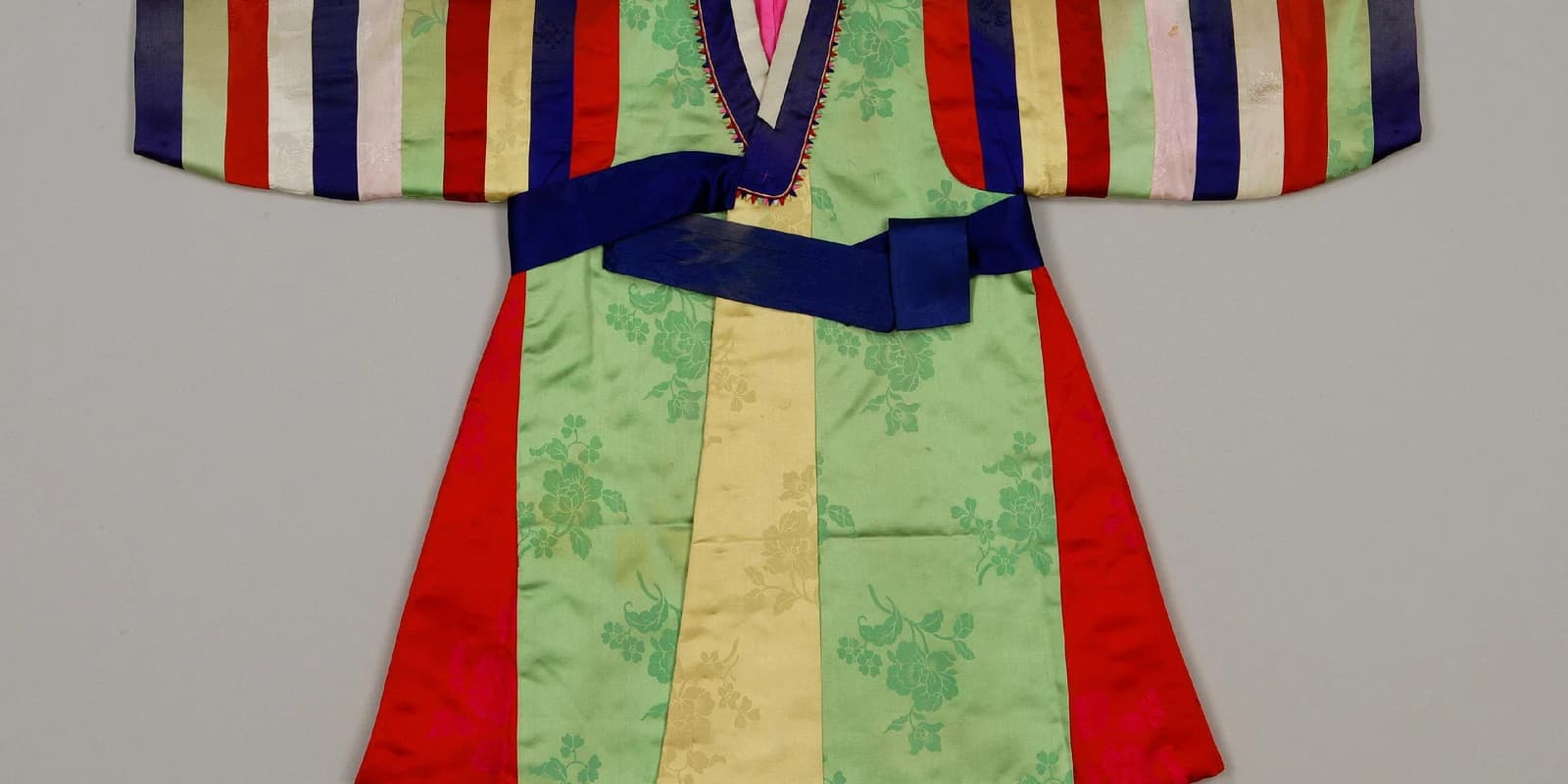
The origin of the word 돌 is not asserted: the National Institute of the Korean Language stated in March 2025 that neither of its dictionaries explains it, and the "twelve months come round" derivation is identified here as folk etymology. The 돌/돐 spelling merger is from Article 6 of the 1988 Standard Language Regulations and its official commentary. The Chinese origin of 돌잡이 and the 『안씨가훈』 passage are from Korea's national folk encyclopedia; the 1552, 1598 and 1791 Korean records are as cited there and in the National Institute of Korean History's cultural history. The traditional item list and its readings, including 떡 as an unlucky grab and the note that parents place favoured objects nearest the baby, are from 한국민족문화대백과사전 (1995, revised 2023). Modern doljabi items are documented in Kyunghyang Shinmun (August 2007) and Korean hospitality trade coverage (April 2025) — we correct, rather than repeat, the claim that they are Western imports. The 돌반지's early-20th-century Chinese-immigrant origin is attributed to the National Institute of Korean History. Gold prices are dated and move weekly; the gift-preference figures are from a 2023 Embrain Trend Monitor survey of 1,000 adults, reported via Yonhap, which we could not open at source. Hotel booking-growth figures are company-supplied to a trade magazine and labelled as such. The 청탁금지법 ruling is quoted from a 2019 written reply by the Anti-Corruption and Civil Rights Commission. We give no infant-mortality statistic: the widely repeated 73% figure is traced to colonial-era data that a 2020 peer-reviewed study shows was systematically broken in the opposite direction. We do not claim 돌 overtook 백일 in importance — no source supports a documented shift, so we describe the contrast instead. Two sources give different publication years for 『지봉유설』 and different hanja for 돌, so neither is stated. Images: listing card — a 돌상 laid with the 돌잡이 objects, by Kim Jiho for the Korea Tourism Organization, KOGL Type 1; cover — a 까치두루마기, a child's ceremonial coat, National Folk Museum of Korea, KOGL Type 1; hero — a 굴레, an antique child's headdress, National Folk Museum of Korea, KOGL Type 1. All three are museum or institutional photography of objects; no child and no private family appears in any of them.
Keep Reading
More Stories
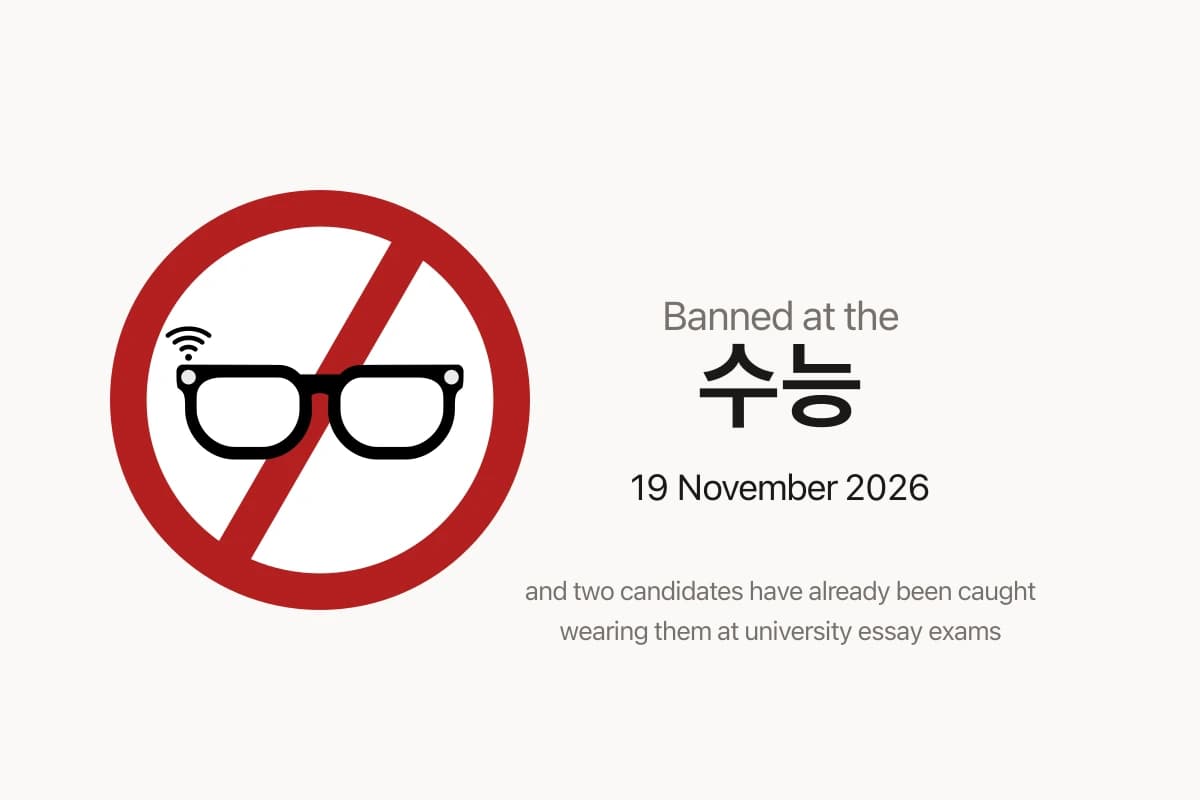
Two Candidates Wore AI Glasses Into Korean University Exams This Month. Five Weeks Later, 550,000 People Sit the 수능
At the University of Seoul on 3 October and at Yonsei a week later, proctors spotted AI smart glasses on candidates sitting essay exams for admission. Both had passed the glasses check in ordinary frames and switched once the exam began. The 수능 on 19 November already bans the devices; the question is whether anyone can see them.
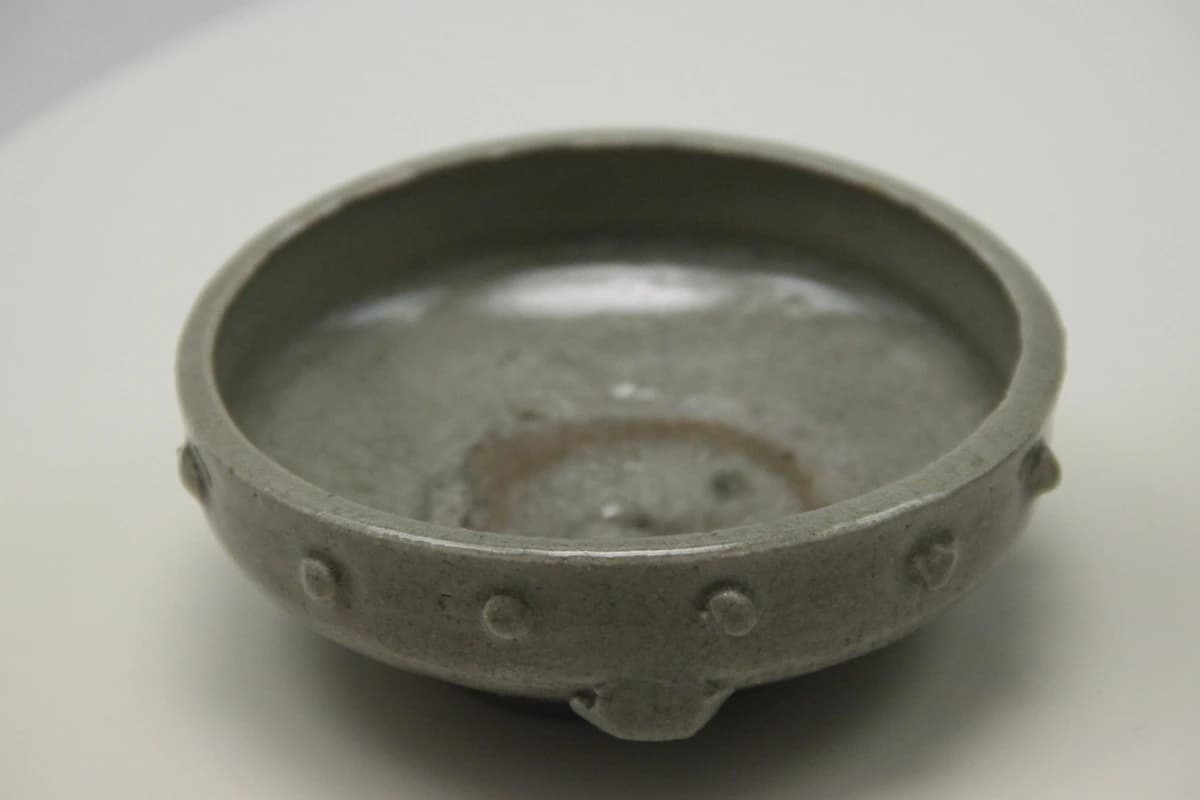
The Fisherman Hid It Under His Floorboards. The Reward He Eventually Got Set Off a Decade of Looting.
Korea marked fifty years of underwater archaeology in Mokpo in September 2026. The official story starts with a net and a report. The documented one starts with six pieces of Chinese porcelain given away as presents, a schoolteacher brother who had to get them all back, and officials who did not want the paperwork. Then the state paid a reward, a diver worked out how much of it went in tax, and for the next ten years people stole the wreck faster than the government could raise it — until the navy's own divers could not find the ship, and the excavation hired the looters.
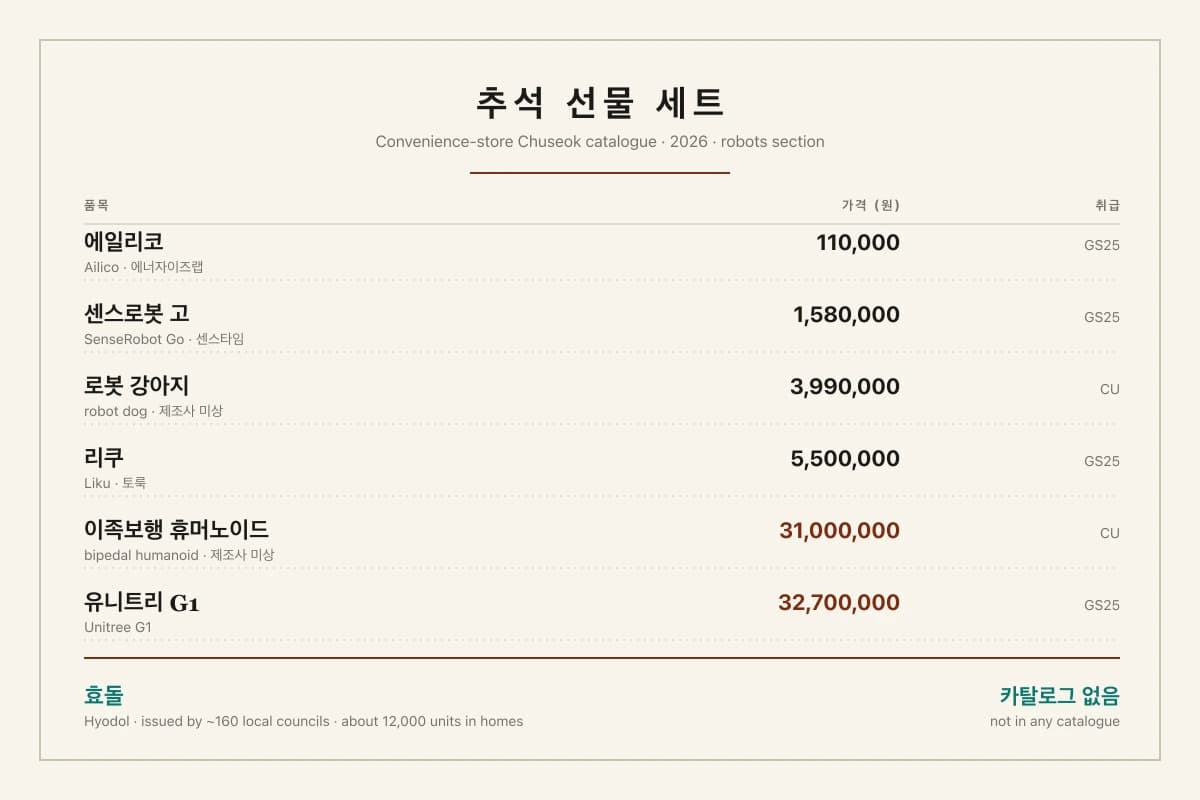
Korea's Convenience Stores Are Selling Humanoid Robots for Chuseok. Neither Chain Expects to Sell One, and Both Have Said So.
CU's holiday catalogue has a bipedal humanoid at ₩31 million, next to the beef and the gold bars. GS25 has an AI companion robot at ₩5.5 million and a keyring that talks back at ₩110,000. We assumed the pitch was companionship for parents you won't be visiting. It isn't — the retailers say plainly these are there to be noticed, not bought. Meanwhile about twelve thousand robots are already in Korean homes, asking elderly residents whether they've taken their medicine, and nobody put those in a catalogue.
The Weekly Dispatch
Korea, curated. Every week.
The best of K-culture, straight from Seoul. Written by people who actually live here.
Free, no spam, unsubscribe whenever.