How Much Money Do You Put in the Envelope? Korean Wedding Cash, Explained
축의금 isn't a gift — it's a reciprocal ledger, recorded by name at the reception desk and repaid to the won at your own wedding. A guide to how much to give in 2026, why ₩50,000 stopped being enough, and the buffet-table math driving the whole system.
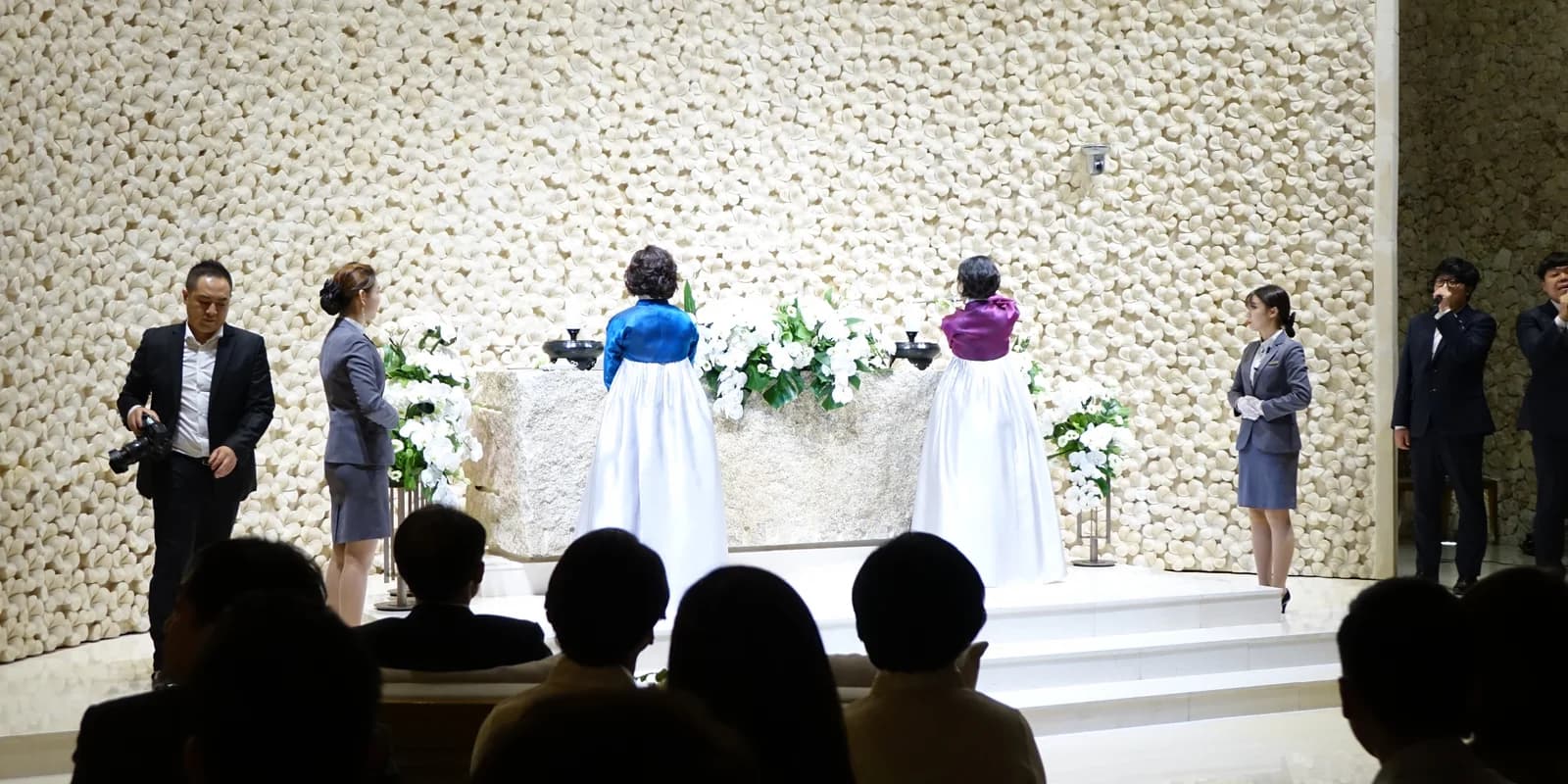
You've been invited to a Korean wedding. Somewhere between "congratulations" and "what do I wear," a more anxious question surfaces: how much cash goes in the envelope, and what happens if I get it wrong?
Here is the number that explains everything else. As of September 2025, the median cost of a single wedding-hall meal in Korea was ₩60,000 — and in Seoul's three Gangnam districts, ₩88,000 (Korea Consumer Agency via Money Today). The old default wedding gift was ₩50,000.
Do the arithmetic and you can see the etiquette shifting in real time: if you show up, eat a ₩60,000 meal, and leave ₩50,000, the couple has lost money hosting you. That single collision — meal cost overtaking the baseline gift — is why the standard number has quietly moved to ₩100,000, and why Koreans now argue about this online constantly.
But the amount is the easy part. The thing foreigners actually miss is what the money is. It isn't a gift. It's an entry in a ledger.
The Amounts (2026)
First, a warning about "averages," because the English-language internet quotes one number — "₩90,000" — without understanding where it comes from or what it measures.
There are really two different figures, and they diverge because they count different things. Payment-app data (every transfer, including small no-show envelopes and broke 20-somethings) lands around ₩90,000–120,000. Survey data on what's appropriate clusters firmly at ₩100,000. Don't conflate them.
Here's what each credible source actually reports:
| Source | Figure | What it measures |
|---|---|---|
| Kakao Pay (Nov 2024) | ₩90,000 average sent | All transfers via the app; skews young |
| NH NongHyup Bank (May 2026) | ₩117,000 average (2025) | Bank transfers; skews older |
| Shinhan Bank (Apr 2024) | ₩100,000 if attending | 10,000-person survey of appropriate amount |
| Incruit (May 2025) | ₩100,000 for a coworker (61.8%) | 844 office workers |
The Kakao Pay series is the source of the "₩90,000" everyone repeats. Its own year-over-year trend is the real story: ₩73,000 (2021) → ₩80,000 (2022) → ₩83,000 (2023) → ₩90,000 (2024) (Etnews). By age, Kakao Pay users send about ₩60,000 in their 20s, ₩100,000 in their 30s–40s, and ₩120,000 in their 50s–60s.
A practical table for 2026, reconciled across all four sources:
- Work colleague you barely know: ₩50,000 is still defensible, but ₩100,000 is now the majority answer (Incruit: 61.8% picked ₩100,000 for a coworker).
- Friend / regular colleague: ₩100,000.
- Close friend, cousin, extended family: ₩100,000–200,000.
- Sibling, very close family: ₩200,000 and up.
- Can't attend, sending anyway: ₩50,000. (You're not eating the ₩60,000 meal, so the meal-subsidy portion drops out — this is the one place ₩50,000 remains firmly correct.)
The "₩50,000 era" isn't fully over — ₩50,000 is still 30–42% of real transfers — but the center of gravity has moved. Incruit's own surveys show the flip: in 2023, a less-close coworker most commonly got ₩50,000 (65.1%); by 2025 that had flipped to ₩100,000 (60.1%), which the pollster attributed directly to inflation (ZDNet Korea).
The Odd-Number Rule
Korean wedding cash goes in odd-numbered 만원 (₩10,000) units: ₩30,000, ₩50,000, ₩70,000. Not ₩40,000 or ₩60,000.
The explanation Koreans give is yin-yang numerology: odd numbers are 양 (陽, yang), auspicious; even numbers are 음 (陰, yin). It's traceable to named authorities — an East Asian numerology scholar laid it out in the Hankook Ilbo back in 2003 — but treat it as folk numerology, not physics.
The important exception: ₩100,000 is always fine, even though 10 is even. It gets read as a "full, complete number" (and, conveniently, 3+7). So the real-world ladder is 3 → 5 → 7 → 10만원, then rising in ₩50,000 steps, with 10 and 20 both accepted despite being even.
In practice, the rule now mostly survives as: avoid ₩40,000 and ₩60,000, and know that ₩100,000 is never wrong.
The Envelope
Cash goes in a plain white envelope (봉투). On the front, the most common inscription is 축결혼 (祝結婚) — "congratulations on the marriage." You'll also see 축화혼 (祝華婚), conventionally used toward the bride's side, and 축성혼 (祝聖婚). Writing it in plain Korean — 결혼을 축하합니다 — is completely acceptable; the hanja is tradition, not a requirement.
On the back, lower-left, you write your name, and your affiliation — "홍길동, ABC회사." The affiliation isn't decoration. It's so the family can tell you apart from the other three Hong Gil-dongs at the reception. Which brings us to the part that actually matters.
The Mechanics: Reception Desk → Ledger → Meal Ticket
At a standard Korean wedding hall (웨딩홀), the flow is fixed:
- 접수대 (the reception desk). There are two — one for the groom's side, one for the bride's — each staffed by a couple of trusted family members or close friends. You hand over your envelope here.
- 방명록 (the guest book), and the ledger. You sign your name. Separately, the person at the desk records your name and the exact amount you gave in a running register, informally the 축의금 대장. This is the step everything else depends on.
- 식권 (the meal ticket). In exchange for your envelope, you're handed a ticket to the buffet. You can eat before, during, or after the ceremony — which, at ~20–30 minutes, is shorter than the meal.
That ledger in step 2 is not administrative housekeeping. It is the entire point.
What the Money Actually Is: A Ledger, Not a Gift
Here is the concept English coverage almost always misses.
축의금 is 부조 (扶助) — mutual-aid money — and 부조 is a ledger system. The amount you give is recorded next to your name, and the family keeps that record. Permanently. When your own wedding comes, or your child's, they consult it and repay you at the appropriate rate. Give ₩100,000 to a colleague today and, years later, you can expect ₩100,000 back when it's your turn. Give ₩50,000 and eat a ₩60,000 meal, and that discrepancy is also recorded.
This isn't folk theory. A University of Seoul study tracking 3,488+ households over a decade found that for every ₩100,000 a family gave out in gift money, it collected back ₩98,800 (Korea Times). The system functions as near-perfect risk-pooling insurance — a decades-long mutual credit account disguised as a series of gifts.
The roots are older than cash. 부조 descends from 품앗이 — traditional village labor exchange — and the Confucian Book of Rites frames courtesy itself as strict reciprocity: to receive without returning is a breach of 예 (propriety). Historically people gave rice, alcohol, noodles, paper, or candles; the shift to cash-at-a-desk became standard only in the 1990s (Dongyang Ilbo).
So when a Korean seems to track wedding-money amounts with unusual precision, they're not being mercenary. They're maintaining an account that will be settled, by name, for the rest of their lives. It's the same instinct behind the precision of Korean age and hierarchy: the relationship is a structure, and the structure is kept in the books.
Modern Friction: Transfers, No-Shows, and Public Feuds
Can you just Kakao Pay it? Yes — mobile and bank transfers are now common and expected, especially among colleagues and for people who can't attend. Kakao Pay's wedding-envelope transfer feature grew 360% between 2019 and 2023 (Kakao Pay). Account numbers printed on invitations, once rare, normalized during COVID. There's live backlash to that — a 2025 survey found 53% of Koreans had seen an invitation with a bank account on it, and invitations bearing only an account number get called out as "turning your kid's wedding into a tax bill" (Chosun Ilbo).
Is this a burden? Openly, yes. A June 2025 Korea Research poll (1,000 adults) found 65% feel economic strain from 경조사 (life-event obligations), 76% give "reluctantly, to maintain the relationship," and the average person attends 6.6 events a year at about ₩560,000 total — rising to 10.3 events for people in their 60s (Hankook Ilbo). And yet 90% still consider showing up a matter of 도리 — duty. Burdened and committed at once.
The public feuds are real, and instructive. Koreans argue about this in exactly the terms you'd expect from a ledger culture:
- An office worker gave ₩50,000 at a work-only colleague's wedding and later heard the colleague had complained that "someone ate a meal worth more than ₩50,000 and left" (Seoul Shinmun).
- A bride vented online that a friend she'd given ₩100,000 returned only ₩50,000 — and brought an uninvited plus-one to the buffet (News1).
- A viral post argued the baseline should rise to ₩150,000 because the poster "didn't want to lose money" at ₩30–40k profit per guest. The dominant reply: "축의금은 축하이지 식대 정산이 아니다" — gift money is congratulation, not settling the meal bill (Asia Economy).
That last exchange is the whole tension in one line. The system is a ledger, but everyone insists it isn't supposed to feel like one.
The Other Envelope: Funerals
The same machinery runs in reverse at funerals. There, condolence money is 조의금 (弔意金) or 부의금 (賻儀金), in an envelope inscribed 부의 (賻儀) or 근조 (謹弔). Same white envelope, same reciprocal ledger, same odd-number amounts (₩30,000 / 50,000 / 100,000) — with two extra taboos: ₩90,000 is avoided (nine is an unlucky number in the 아홉수 superstition) and anything with a 4 is avoided (四 sounds like 死, death) (Goi funeral guide).
The umbrella term for both is 부조금, and Koreans track weddings and funerals in the same mental account. There are even dedicated ledger apps for it. (The funeral has its own full set of rules — the bow sequence, the incense, what never to say — which we cover in the companion guide to Korean funeral etiquette.)
For Foreign Guests
The honest headline: no, you don't get a pass.
- Amount: the same as a Korean guest in your relationship tier. Colleague ₩50,000, friend ₩100,000. Giving less gets noticed — the ledger records everyone identically.
- Cash or transfer: cash in a white envelope is the default; a Kakao Pay or bank transfer is fine, especially if you can't attend.
- Bills: bring crisp, clean notes. (Widely expected; more convention than rule.)
- Dress: no white (that's the bride's), nothing loud or too casual. Navy, burgundy, beige, soft pastels; dark suits for men.
- The ceremony is short. Twenty to thirty minutes, then group photos, with the buffet running independently the whole time. Turning up, paying at the desk, greeting the couple, and eating is a complete and correct wedding attendance. You are not expected to stay for hours.
The Bottom Line
If you remember one thing: ₩100,000 is the safe modern default if you attend, ₩50,000 if you can't. Odd numbers or ₩100,000, white envelope, your name and workplace on the back.
But the reason it feels heavier than a Western wedding gift is that it is heavier. You're not buying the couple a toaster. You're making an entry in a book that will be open at your own wedding, your parent's funeral, and your child's first birthday — a running tab of who showed up, settled quietly across a lifetime. The Koreans arguing online about ₩50,000 versus ₩100,000 aren't being petty. They're auditing the ledger.
The same logic — relationships denominated in reciprocal, socially legible spending — runs at a much smaller scale through the gift calendar that couples keep, from the hundredth day to Pepero Day, which we cover in Korean couple culture, explained.
It runs through the next life event too, with a twist: at a first-birthday party the envelope works the same way, but Korean anti-graft law has ruled that a 돌잔치 is not a 경조사 — the exemption that covers this article's weddings, and funerals, stops short of it.
Two surveys disagreeing about the same envelope is the normal condition of Korean statistics, not an exception. For a case where the disagreement went unnoticed and one number escaped into the world on its own, see the dog-stroller statistic.
All amounts are dated in-text and drawn from the linked institutional sources (Kakao Pay, NH NongHyup Bank, Shinhan Bank, Incruit, the Korea Consumer Agency, and Korea Research); the two payment-app "averages" are reconciled rather than presented as a single figure. The yin-yang explanation for the odd-number rule is presented as the traditional/folk rationale. Reported disputes are real cases with sources; no anecdote is invented. Funeral and first-birthday details are verified where sourced and flagged where convention rather than statute. Images: hero — a Korean wedding-hall aisle, by kallerna, CC BY-SA 4.0 via Wikimedia Commons (cropped); cover — a wedding ceremony photographed from behind the guests, by 최광모, CC0 via Wikimedia Commons (cropped); listing card — ₩50,000 notes and named congratulatory envelopes, by 최광모, CC BY-SA 4.0 via Wikimedia Commons (cropped).
Keep Reading
More Stories
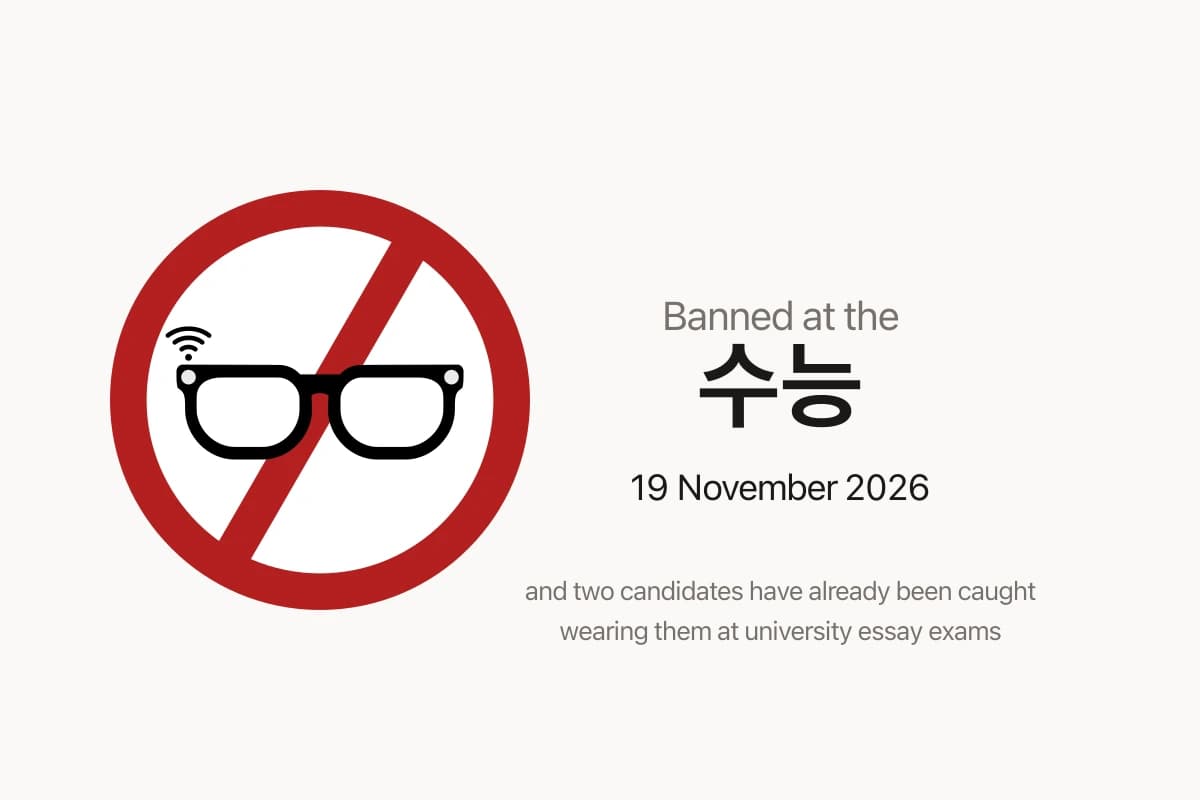
Two Candidates Wore AI Glasses Into Korean University Exams This Month. Five Weeks Later, 550,000 People Sit the 수능
At the University of Seoul on 3 October and at Yonsei a week later, proctors spotted AI smart glasses on candidates sitting essay exams for admission. Both had passed the glasses check in ordinary frames and switched once the exam began. The 수능 on 19 November already bans the devices; the question is whether anyone can see them.
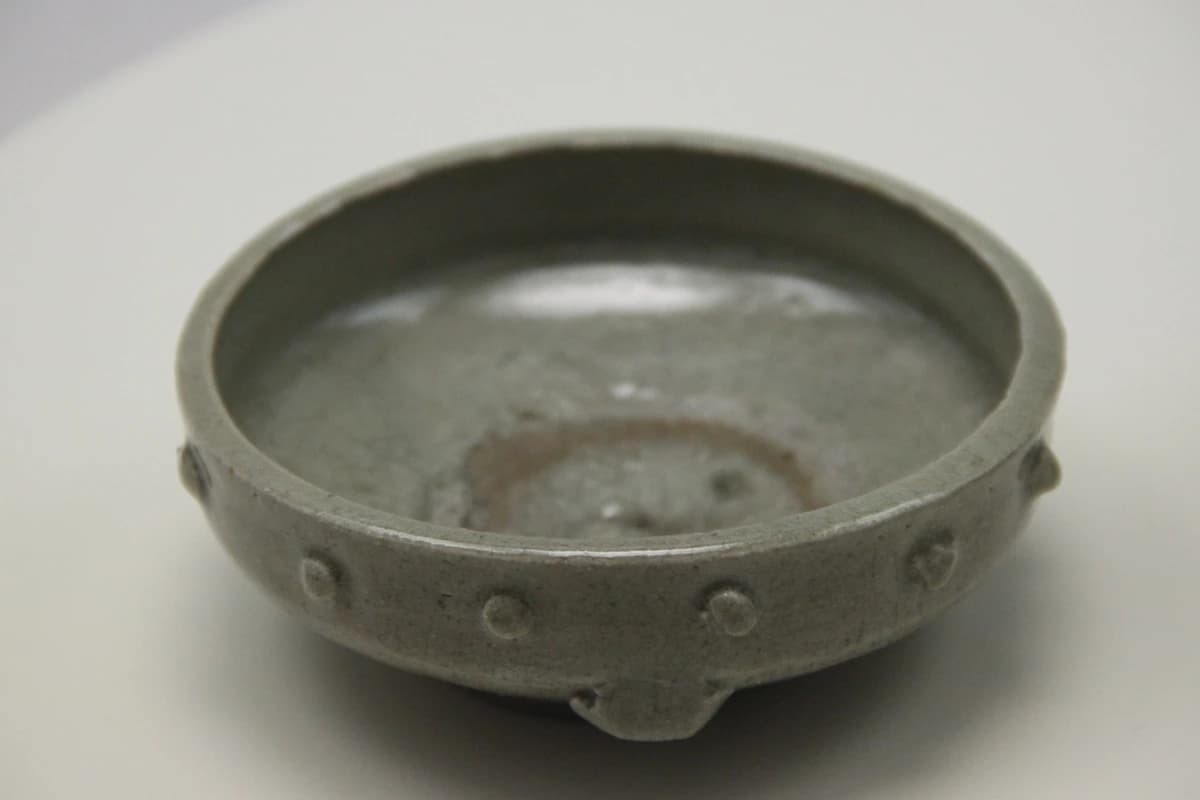
The Fisherman Hid It Under His Floorboards. The Reward He Eventually Got Set Off a Decade of Looting.
Korea marked fifty years of underwater archaeology in Mokpo in September 2026. The official story starts with a net and a report. The documented one starts with six pieces of Chinese porcelain given away as presents, a schoolteacher brother who had to get them all back, and officials who did not want the paperwork. Then the state paid a reward, a diver worked out how much of it went in tax, and for the next ten years people stole the wreck faster than the government could raise it — until the navy's own divers could not find the ship, and the excavation hired the looters.
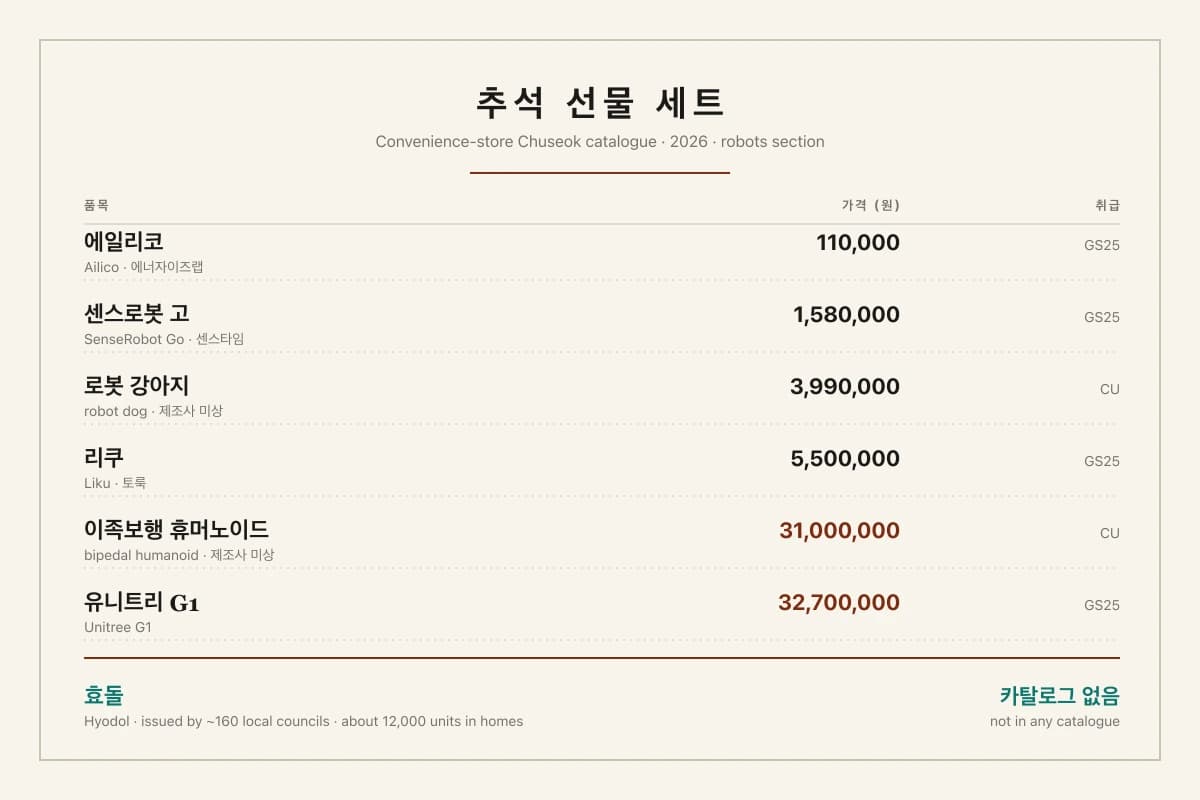
Korea's Convenience Stores Are Selling Humanoid Robots for Chuseok. Neither Chain Expects to Sell One, and Both Have Said So.
CU's holiday catalogue has a bipedal humanoid at ₩31 million, next to the beef and the gold bars. GS25 has an AI companion robot at ₩5.5 million and a keyring that talks back at ₩110,000. We assumed the pitch was companionship for parents you won't be visiting. It isn't — the retailers say plainly these are there to be noticed, not bought. Meanwhile about twelve thousand robots are already in Korean homes, asking elderly residents whether they've taken their medicine, and nobody put those in a catalogue.
The Weekly Dispatch
Korea, curated. Every week.
The best of K-culture, straight from Seoul. Written by people who actually live here.
Free, no spam, unsubscribe whenever.