Korean Honorifics (존댓말), Explained: The Politeness System Every Learner Trips Over
Korean's hardest part isn't the grammar — it's knowing which level of respect you owe whom. A plain-English tour of 존댓말 and 반말: the speech levels, the -시- machinery, the special respect-words, and the social math (yes, including 'how old are you?') behind every single conversation.
Here is the thing that makes Korean genuinely, uniquely hard — harder, in a way, than the alphabet or the grammar. It is not that you must learn how to say "thank you." It is that you must learn four or five different ways to say it, and then — in the half-second before you speak — correctly calculate which one you owe the specific human in front of you, based on their age, their rank, and how close you are. Get the calculation wrong and you haven't made a grammar mistake. You've been rude.
This is the honorific system, 존댓말 (jondaenmal), and it is the social engine running underneath every Korean sentence. Here is how it actually works.
존댓말 vs 반말: Two Ways to Say the Same Thing
Start with the basic split. 존댓말 (jondaenmal), "respect language," is the polite register. 반말 (banmal) — literally "half-speech" — is the casual, intimate one you use with close friends, children, and people clearly younger or more junior than you (90 Day Korean). Every idea in Korean can be dressed in either register.
The crucial point for a learner: the difficulty is not the conjugation, it's the selection. Korean grammar itself explains that which level you use depends entirely on the relationship between the people talking (Wikipedia). Using 반말 with someone who deserves 존댓말 isn't a small slip — it registers as a real social offense, closer to an insult than a typo. It's why two Korean strangers genuinely cannot settle into a comfortable conversation until they've worked out who is older.
The Three Machines of Respect
Korean school grammar splits honorification (높임법) into three separate systems, and seeing them as three distinct machines is the fastest way to stop feeling overwhelmed (Practice Korean):
- Subject honorification (주체 높임법) — you elevate the person doing the action (the -시- infix, the particle 께서).
- Object honorification (객체 높임법) — you elevate the person receiving the action, usually by humbling yourself (special verbs like 드리다, 뵙다).
- Addressee honorification (상대 높임법) — you elevate the person you're talking to, through the sentence's ending. This last one is the "speech levels," and it's the most elaborate of the three.
Let's take them in the order that matters most.
The Speech Levels, From Boardroom to Bestie
Addressee honorification runs through the verb ending. Traditional grammar counts six levels, but a modern learner really needs four (Wikipedia, 90 Day Korean):
- 하십시오체 (hasipsio-che) — formal-polite / deferential. Endings like -습니다 / -습니까. This is the register of news anchors, announcements, the military, customer service, and formal business. It's the Korean you hear at an airport gate.
- 해요체 (haeyo-che) — informal-polite. The everyday workhorse, marked by a friendly -요. This is the polite Korean you'll speak 90% of the time: with colleagues, shopkeepers, acquaintances. If you learn one register well, learn this.
- 해라체 / 한다체 (haera-che) — plain. Endings like -다, -는다. It's the voice of writing, books, newspapers, and narration — and also of speech to very close juniors.
- 해체 / 반말 (hae-che) — casual/intimate. Just drop the -요. For close friends, children, and clearly-younger people.
(Two older levels, 하오체 and 하게체, survive mostly in historical dramas, novels, and the speech of some older men — worth recognizing, not worth mastering.)
The Respect Machine: -(으)시-, 께서, and 님
To elevate the doer of an action, Korean has a beautifully simple tool: the infix -(으)시-. You slot it into the verb — 가다 (to go) → 가시다, 받다 (to receive) → 받으시다 — and it marks respect toward whoever is performing the action (How to Study Korean). It surfaces in the polite request/statement ending -세요 and the formal -십니다. The iron rule: you never attach -시- to your own actions. You don't honor yourself.
Two companions complete the machine. The particle 께서 is the honorific replacement for the subject markers 이/가 — 할아버지께서 주셨어요 ("Grandfather gave it to me") marks the whole sentence as respectful (Migaku). And the suffix 님 attaches respect to a title: 선생님 (teacher), 사장님 (company president), 부장님 (department head), 교수님 (professor). (It attaches to names too — 홍길동님 — and online it stands alone as a way to address a stranger politely.) But the title use points at a deeper habit: Koreans address people by title, not first name. Calling your boss by their bare name is almost unthinkable; you call them 부장님. (The milder 씨, as in "민수 씨," is a polite "Mr./Ms." among equals — but never for a clear superior.)
The Words You Simply Can't Guess
Here's where memorization is unavoidable: for the most respect-laden actions and objects, Korean swaps in entirely different words. Cross-verified across grammar references (How to Study Korean, FluentU):
To elevate the person acting:
- 있다 → 계시다 (to be present)
- 자다 → 주무시다 (to sleep)
- 먹다/마시다 → 드시다 (to eat/drink) — or the very high, older 잡수시다
- 말하다 → 말씀하시다 (to speak)
To humble yourself toward a superior:
- 주다 → 드리다 (to give)
- 묻다 → 여쭙다 (to ask)
- 보다/만나다 → 뵙다 (to see/meet)
And the nouns change too:
- 나이 → 연세 (age), 이름 → 성함 (name), 집 → 댁 (home), 밥 → 진지 (meal), 사람 → 분 (person), 생일 → 생신 (birthday), 말 → 말씀 (words).
That last one, 말씀, is a lovely oddity: it works both directions. It's the honorific for a superior's words — and the humble word for your own, when you say 말씀드리다 ("to humbly tell") to someone esteemed.
Making Yourself Smaller
Elevating others is only half the system; the other half is lowering yourself. Korean linguistics states the principle directly: you show respect partly by humbling your own side (Wikipedia). In practice, that means swapping your own pronouns: 나 → 저 ("I"), 우리 → 저희 ("we/our"). To a superior you don't say 나 or 우리; you say 저 and 저희. Combine that with humble verbs — 제가 말씀드리겠습니다, "I will (humbly) tell you" — and you have the full posture of Korean deference: lift them, lower yourself, in the same sentence.
"How Old Are You?" — The First 60 Seconds
Now the social math. Three dials set the register: age, hierarchy, and closeness (FluentU). And age is the master dial — a single year's gap can decide who speaks formally to whom.
This is why one of the first questions a Korean asks a new acquaintance is "몇 살이에요?" (myeot sarieyo?, "How old are you?"). To a Western ear it can sound intrusive. It isn't. It's the practical, necessary step of gathering the data needed to choose the right forms and titles (COREANLAB). (Politer versions exist: 나이가 어떻게 되세요?; for an elder, 연세가 어떻게 되세요?) If you turn out to be 동갑 (donggap) — the same age — you can agree to drop into 반말 together. If someone is even a year older, they typically earn a kinship title (형/오빠/누나/언니) rather than a bare name. The whole apparatus is the same age-and-rank hierarchy that shapes Korean workplaces — where it meets a formal ladder of job titles that companies have spent 26 years trying to abolish — and, at its worst, curdles into gapjil. Respect language and power are branches of one tree.
Five Mistakes Learners Make (and the Coffee One Koreans Make Too)
- Honoring yourself. 제가 가세요 is wrong — never put -시- on your own action.
- Confusing 드시다 and 드리다. They look alike and do opposite jobs: 드시다 = honorific "eat" (elevates them); 드리다 = humble "give" (lowers you).
- Dropping into 반말 too early — before you've established the other person's age or rank.
- Register whiplash — starting in 존댓말 and sliding into 반말 mid-conversation.
- Reaching for archaic forms — 진지 and 잡수시다 suit a grandparent, but sound bizarre aimed at a 30-something manager.
And the famous one that native speakers commit too: 사물존칭 (samul jonching), "honoring objects." The ubiquitous café line "주문하신 커피 나오셨습니다" — "your coffee has (honorifically) come out" — is technically wrong, because you can't honor coffee; the -시- should attach to a person, not a latte (Namu Wiki). Surveys find most Koreans want it corrected — yet it persists everywhere, proof that even the people who grew up inside this system find its edges genuinely hard.
Which is, in the end, the reassuring lesson. Korean honorifics are a lot — three machines, six levels, a vocabulary of respect-words, and a social calculus running under every hello. But if lifelong native speakers are still tripping over the coffee, a learner is allowed to trip too. Get 해요체 solid, learn 저 and 드리다, ask people their age without embarrassment, and you're already speaking Korean the way Korea actually works. From there it's just practice — the same apps, the same reading of signs, the same slow immersion — until one day the calculation happens on its own.
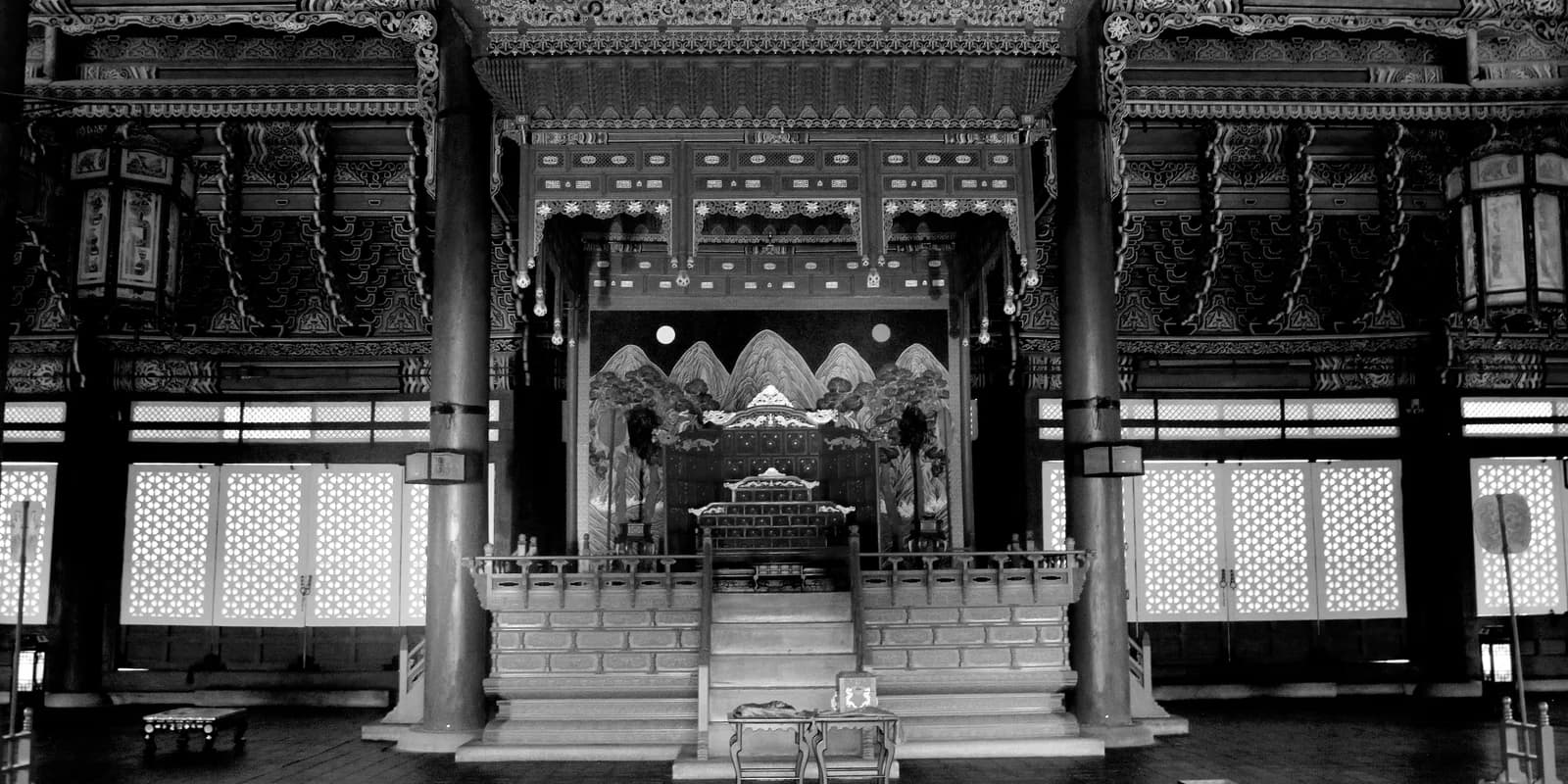
Homepage/hero: the Geunjeongjeon throne hall at Gyeongbokgung Palace, Seoul — photo by Brady Bellini, Wikimedia Commons, CC0. Cover: the royal throne inside Geunjeongjeon — photo by Yuliya Boda, Wikimedia Commons, CC BY-SA 4.0. Listing card: a child in hanbok — photo by Rüveyda Akkaya, Pexels (Pexels License). Palace imagery is illustrative of the tradition and hierarchy the honorific system encodes.


Keep Reading
More Stories
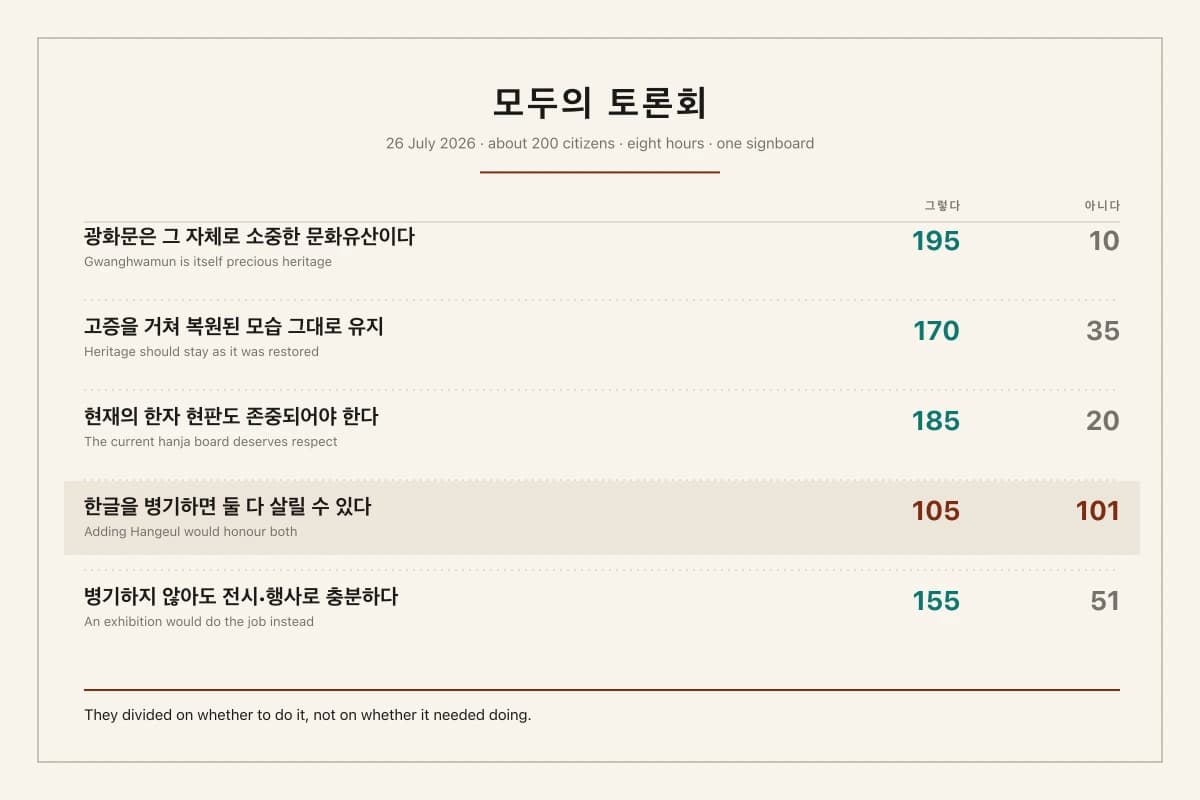
Korea Asked 200 Citizens Whether to Put a Hangeul Sign on Gwanghwamun. They Split 105–101, Then Voted 155–51 That It Is Not Needed.
The government convened its first-ever citizens' deliberation and spent eight hours on a signboard. The panel divided almost exactly in half on whether adding a Hangeul plaque would honour both the heritage and the alphabet — and then, overwhelmingly, said an exhibition would do the job instead. Both answers are coherent, which is the interesting part. The plaque they were arguing about is three years old, and the one before the one before it was in Park Chung-hee's handwriting.
Koreans Have a Word for a Rule Everyone Follows. It Only Ever Gets Used for Rules Not Everyone Follows.
국룰 — gungnul — is Korean internet slang for an unwritten national consensus: the thing everybody does that nobody ever agreed to. It comes from a 2007 shooting game whose players had to invent their own duelling rules because the game had none. And the tell is in which things get called it. Nobody says murder is against 국룰. People say it about which sauce goes with pork belly, and then argue.
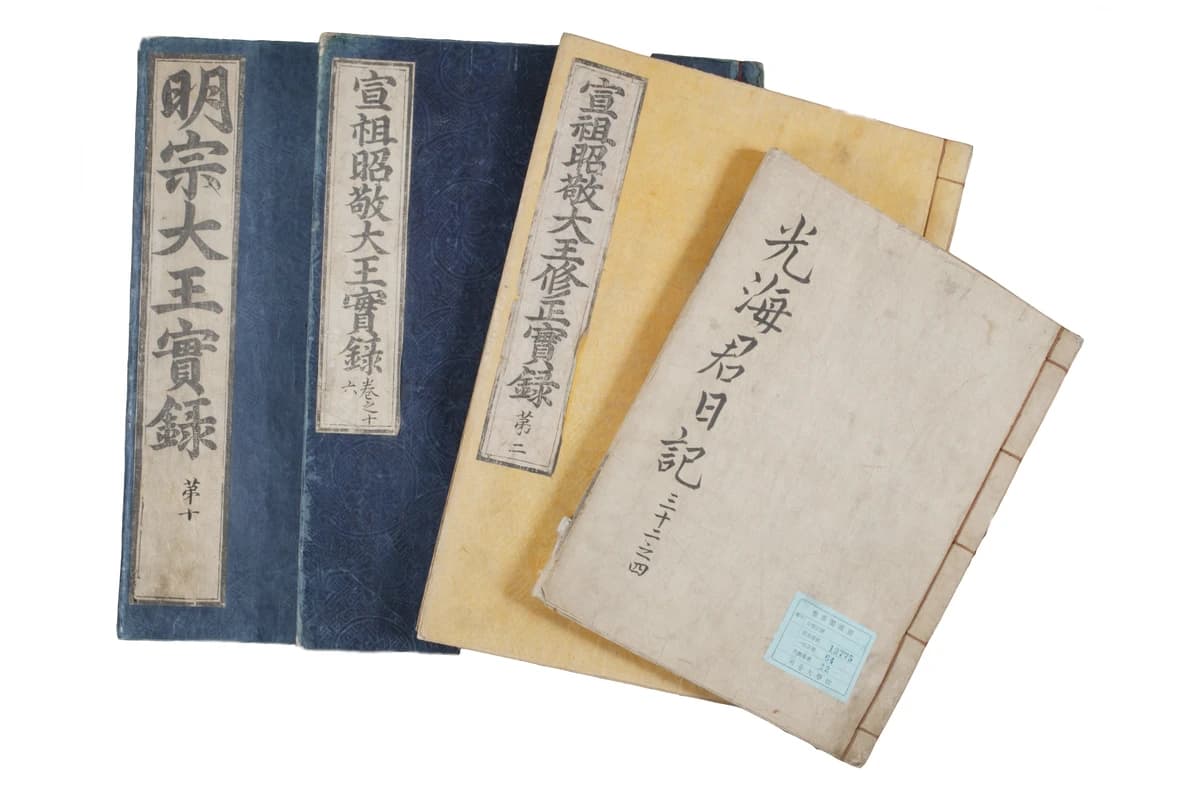
Hangul Day Exists Because a Book Turned Up in 1940. Nobody Can Find the Other Copy.
The date of Korea's alphabet holiday moved four times before a single physical book settled it — and that book arrived missing its first four pages, including King Sejong's own preface, which a calligrapher reconstructed by hand with a typo still in it. A second copy has been in a private house since 2008. The prosecution's own appraisers valued it at over a trillion won. Nobody has seen it since a fire in 2015.
The Weekly Dispatch
Korea, curated. Every week.
The best of K-culture, straight from Seoul. Written by people who actually live here.
Free, no spam, unsubscribe whenever.