How Hard Is Korean to Learn, Honestly? The Timeline Nobody Gives You
You can learn to read Korean by tonight. The US government also rates Korean as one of the five hardest languages on Earth for English speakers. Both things are true — here's the honest timeline, goal by goal, from ordering food to watching K-dramas without subtitles.
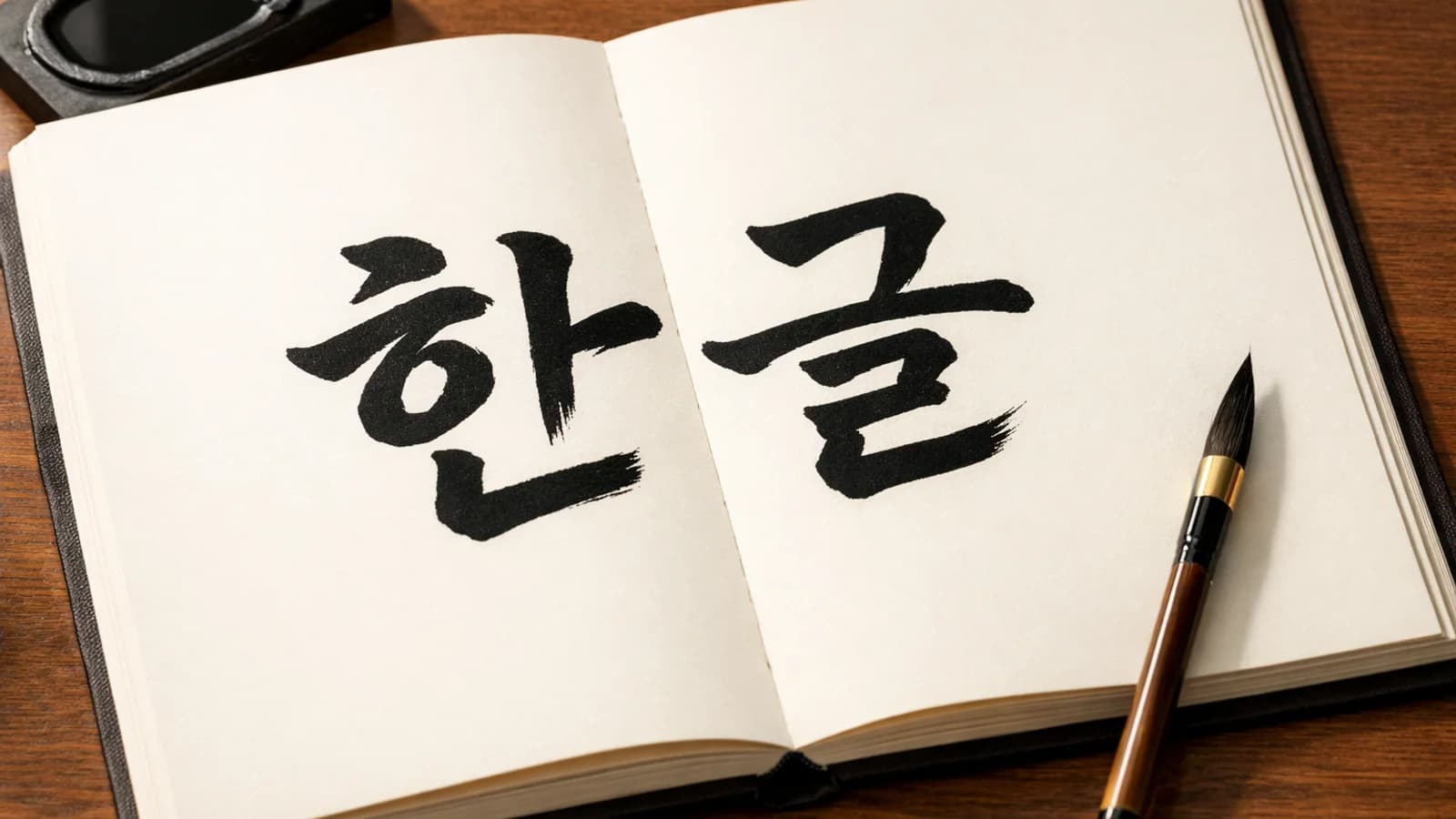
Two facts, both true.
Fact one: the Korean alphabet was deliberately designed, in the 1440s, to be learnable by ordinary people with no education — and it works. You can realistically learn to read Korean this weekend. Not understand it; read it. Sound out a menu, a subway sign, a K-pop idol's name. The scholars who introduced the alphabet boasted that a clever person could pick it up in a morning, and even a slow learner within ten days. Five and a half centuries later, that's still basically accurate.
Fact two: the US State Department's Foreign Service Institute — the school that trains American diplomats in languages full-time — puts Korean in its hardest tier: Category IV, "super-hard languages," alongside Arabic, Mandarin, Cantonese, and Japanese. Just five languages on Earth carry that label. The FSI budgets 88 weeks and 2,200 classroom hours for a diplomat to reach professional working proficiency in Korean. That's more than three times the hours it budgets for Spanish, and roughly double what it gives Russian.
So which is it — the friendliest writing system in Asia, or one of the five hardest languages in the world?
Both. And once you understand why it's both, you can finally answer the question people actually mean when they ask "how hard is Korean": how long will it take me to get to the level I want? That answer isn't one scary number. It's a timeline with exits, and you get to choose yours.
The 2,200-hour number — and what everyone leaves out
The FSI figure gets quoted everywhere, usually as a jump scare. Here's the context that almost never travels with it.
Those 2,200 hours are classroom hours, at the most intensive language school on the planet. The FSI's own description of a typical week: 23 hours in class plus 17 hours of self-study. That's 40 hours a week. Learning Korean is the student's full-time job, in small classes, with professional instructors, for 88 straight weeks — and the target at the end is diplomat-grade proficiency: negotiating, reading policy documents, being interviewed in Korean.
Now do the honest arithmetic for a normal human. At one hour a day — a genuinely committed hobbyist pace — 2,200 hours of equivalent effort takes about six years. Count the self-study hours the diplomats are also putting in and you're past a decade.
If that number just made your soul leave your body, good news: it's the wrong number for you. You are (probably) not trying to become a diplomat. Nobody needs "professional working proficiency" to order naengmyeon, survive a week in Seoul, or follow a K-drama. The 2,200 hours describes the summit. Most of the things people actually want from Korean are base camps, and some of them are shockingly close to the parking lot.
The part that's genuinely easy
Start with the gift: 한글 (Hangul), the Korean alphabet.
Hangul was created in 1443 and introduced to the public in 1446 under King Sejong (세종대왕), with a stated mission that still reads like a public-service announcement: the existing system — borrowed Chinese characters — was too hard for ordinary people, so the court built a new alphabet simple enough for everyone. The modern version has 24 basic letters: 14 consonants and 10 vowels. The consonant shapes even sketch what your mouth is doing when you say them — ㄴ is your tongue touching the ridge behind your teeth, ㅁ is your closed lips.
This is not a writing system you chip away at for years, like Chinese characters or Japanese kanji. It's an alphabet — arguably the most rationally designed one in common use — and it falls in a weekend of honest effort. That single fact changes the entire on-ramp: from day three, you're reading real Korean words off real Korean signs, not staring at romanization.
And the freebies keep coming:
- No tones. Unlike Mandarin, Cantonese, Thai, or Vietnamese, the pitch of a Korean syllable doesn't change its meaning. Your ears get one job, not two.
- No grammatical gender, no articles. Nothing is masculine or feminine; there's no a/an/the to agonize over.
- Verbs don't care who's doing them. In Spanish, one verb explodes into six forms per tense depending on the subject. In Korean, I go, you go, she goes, we go all use the same verb form. Verbs change for politeness and tense — not for person.
- Spelling is mostly phonetic. What you see is, with learnable exceptions, what you say. English's "though/tough/through" hazing ritual has no Korean equivalent.
- Thousands of free vocabulary words. Korean has absorbed a huge layer of English loanwords: 커피 (keopi — coffee), 버스 (beoseu — bus), 컴퓨터 (keompyuteo — computer), 아이스크림 (aiseukeurim — ice cream). Once you can read Hangul, you already "know" more Korean than you think.
This is why the first month of Korean feels better than the first month of French. The on-ramp is real. Enjoy it — and understand what's coming.
The parts that are genuinely hard
Korean's difficulty isn't at the start. It's structural, and it shows up in roughly this order.
1. The word order rewires your brain. Korean is verb-final: subject, object, then verb. "I drink coffee" is built as I coffee drink — and in real sentences, everything that matters (did it happen? will it? is it negated? is it a question?) arrives at the very end. Listening to Korean means holding the whole sentence in your head until the last syllable resolves it. English gives you the verdict up front; Korean makes you wait for it. Your brain does adjust — but it's months of genuine rewiring, not a flashcard you can memorize.
2. Particles. Korean marks a word's role in the sentence by gluing small markers — 조사 (josa) — onto it. The pair that haunts learners: 은/는 versus 이/가, two ways of marking roughly "the thing this sentence is about," whose difference is real but so contextual that learners argue about it for years. You'll use them wrong, be understood anyway, and keep refining the instinct for the rest of your Korean life.
3. Politeness is grammar, not garnish. Korean doesn't have one way to say a sentence; it has several, and the choice is mandatory. The same "Did you eat?" comes out differently to your close friend (반말, banmal — casual speech), a coworker (해요체, haeyoche — everyday polite), and your friend's grandmother (합쇼체, hapsyoche — formal). Getting the level wrong ranges from charmingly foreign to genuinely rude — it's an entire system, and we map it end to end in Korean honorifics, explained. We've written before that no app teaches this well — it's the single biggest gap between app-Korean and real Korean, and it only really clicks through human interaction.
4. Your ears and the written word will disagree. Korean has final consonants — 받침 (batchim) — and a set of systematic sound-change rules, which means words frequently aren't pronounced the way a beginner expects from the spelling: 같이 ("together") is written gat-i but pronounced gachi. The rules are consistent and learnable, but for the first year there's a persistent gap between the Korean you read and the Korean you hear. Add the tense consonants (ㄲ, ㄸ, ㅃ, ㅆ, ㅉ) — sounds English ears genuinely cannot distinguish at first — and listening becomes its own long project.
5. The vocabulary mountain has two slopes. Past the loanword freebies, Korean vocabulary splits into native Korean words and 한자어 (hanja-eo) — words built from Chinese roots. Estimates of the Sino-Korean share vary a lot depending on how you count, but the most-cited figures land around half to 60% of dictionary entries, even though casual speech leans more native. Here's the good news disguised as bad news: the Sino-Korean layer is systematic. Learn that 학 (hak) carries the meaning "study," and you've pre-loaded 학교 (hakgyo — school), 학생 (haksaeng — student), and 대학 (daehak — university). Vocabulary stops being random memorization and starts being LEGO.
6. Real Koreans don't speak textbook. Speech is fast, contracted, slangy, and — outside Seoul — flavored by regional dialects that textbooks don't teach. The gap between "I finished the beginner course" and "I understood what the taxi driver just said" is the most demoralizing stretch of the whole journey. Everyone hits it. It isn't you.
The honest timeline, goal by goal
Here's the table we wish someone had shown us — with the caveat stated plainly: these are honest middle-of-the-curve estimates, not lab results. Learners vary wildly; consistency matters more than talent. Korea's standard proficiency test, the TOPIK (한국어능력시험), runs from level 1 (lowest) to 6 (highest) — TOPIK I covers levels 1–2, TOPIK II covers 3–6 — and we've used its bands as rough anchors.
| Your actual goal | ~30 min/day | ~1 hr/day |
|---|---|---|
| Read Hangul (sound out menus, signs, names) | A weekend or two | A weekend |
| Travel survival (order, shop, taxi, pleasantries) | 2–3 months | 1–2 months |
| Basic real conversation (TOPIK 1–2 territory) | ~A year | 6–9 months |
| Comfortable everyday conversation (TOPIK 3–4) | 2–4 years | 1.5–2.5 years |
| K-dramas without subtitles, mostly (TOPIK 5–6 listening) | The long haul — think 4+ years | 3+ years |
Three honest footnotes to that table:
- The first row is not a typo. Hangul really is that fast, and it's the single highest-return weekend in all of language learning.
- The K-drama row is the cruelest. Drama Korean is fast, emotional, slangy, and often regional. But if K-content is why you're learning, you hold a real advantage: thousands of hours of input you actually enjoy. Watch with Korean subtitles once you're intermediate — your listening will run years ahead of your speaking, and that's normal, not failure.
- If you only need the trip: one phrase plus Hangul covers a shocking amount of a first visit to Korea. Travel Korean is a base camp very close to the parking lot.
What actually makes it faster
Not hacks — just the things that genuinely move the needle, in order of importance.
- Learn Hangul first, before anything else, and never use romanization again. Romanized Korean ("annyeonghaseyo") actively teaches you wrong pronunciation and delays your reading. Every hour spent on it is borrowed from your future self.
- Show up daily, small. Thirty real minutes every day beats a four-hour Saturday binge. Language is a physical skill wearing an academic costume.
- Exploit the structure. The loanword layer and the hanja-root system are Korean's two built-in discounts. Collect roots like 학 the way you'd collect prefixes in English.
- Get human contact early. Apps drill vocabulary; humans teach you politeness levels, speed, and the courage to be bad at something in public. Even one exchange partner changes the slope of the curve.
- Pick tools that respect you. We've ranked the Korean-learning apps honestly — short version: a real curriculum plus brute-force vocabulary review beats gamified streaks, and the apps that feel easiest are mostly teaching you the least.
The honest verdict
Is Korean hard? Here's the answer we'd give a friend over coffee.
Korean has the friendliest first month and the longest road to the summit of any major language an English speaker can pick. The alphabet is a gift. The early grammar is forgiving. The first thousand loanwords are free. And then — somewhere past the beginner glow — the verb-final word order, the politeness machinery, the listening gap, and the hanja vocabulary mountain all show up at once, and the people who treated "learn Korean" as one finish line quietly quit.
The people who stick with it are the ones who chose a specific base camp: read Hangul, survive the trip, hold a conversation, drop the subtitles. Each of those is a real, reachable goal with a real timeline — and each one, conveniently, is the training for the next.
So: how hard is Korean to learn, honestly? Exactly as hard as the goal you pick. The US government's scariest number describes a summit you probably don't need — and the most useful first step is one weekend, 24 letters, and a menu you can suddenly read.
—The Editors
Sources: US State Department / Foreign Service Institute language training timelines (Category IV: 88 weeks / 2,200 class hours; 23 class + 17 self-study hours per typical week); 한글 — Encyclopedia of Korean Culture and Korean Language Study Society (Hangul created 1443, promulgated 1446; 14 consonants + 10 vowels); Sino-Korean vocabulary — Wikipedia (share estimates vary; dictionary-entry figures commonly cited around 57–60%); TOPIK — Namu Wiki (levels 1–6; TOPIK I = 1–2, TOPIK II = 3–6).
Keep Reading
More Stories
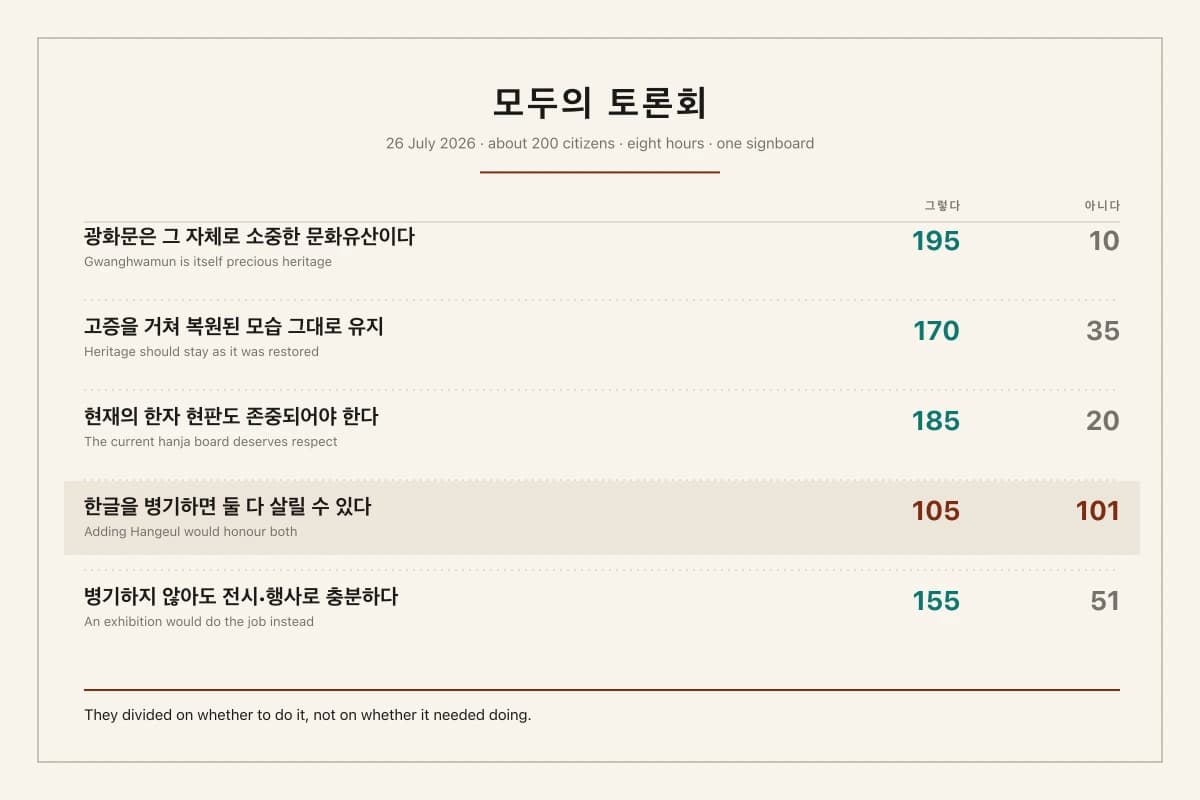
Korea Asked 200 Citizens Whether to Put a Hangeul Sign on Gwanghwamun. They Split 105–101, Then Voted 155–51 That It Is Not Needed.
The government convened its first-ever citizens' deliberation and spent eight hours on a signboard. The panel divided almost exactly in half on whether adding a Hangeul plaque would honour both the heritage and the alphabet — and then, overwhelmingly, said an exhibition would do the job instead. Both answers are coherent, which is the interesting part. The plaque they were arguing about is three years old, and the one before the one before it was in Park Chung-hee's handwriting.
Koreans Have a Word for a Rule Everyone Follows. It Only Ever Gets Used for Rules Not Everyone Follows.
국룰 — gungnul — is Korean internet slang for an unwritten national consensus: the thing everybody does that nobody ever agreed to. It comes from a 2007 shooting game whose players had to invent their own duelling rules because the game had none. And the tell is in which things get called it. Nobody says murder is against 국룰. People say it about which sauce goes with pork belly, and then argue.
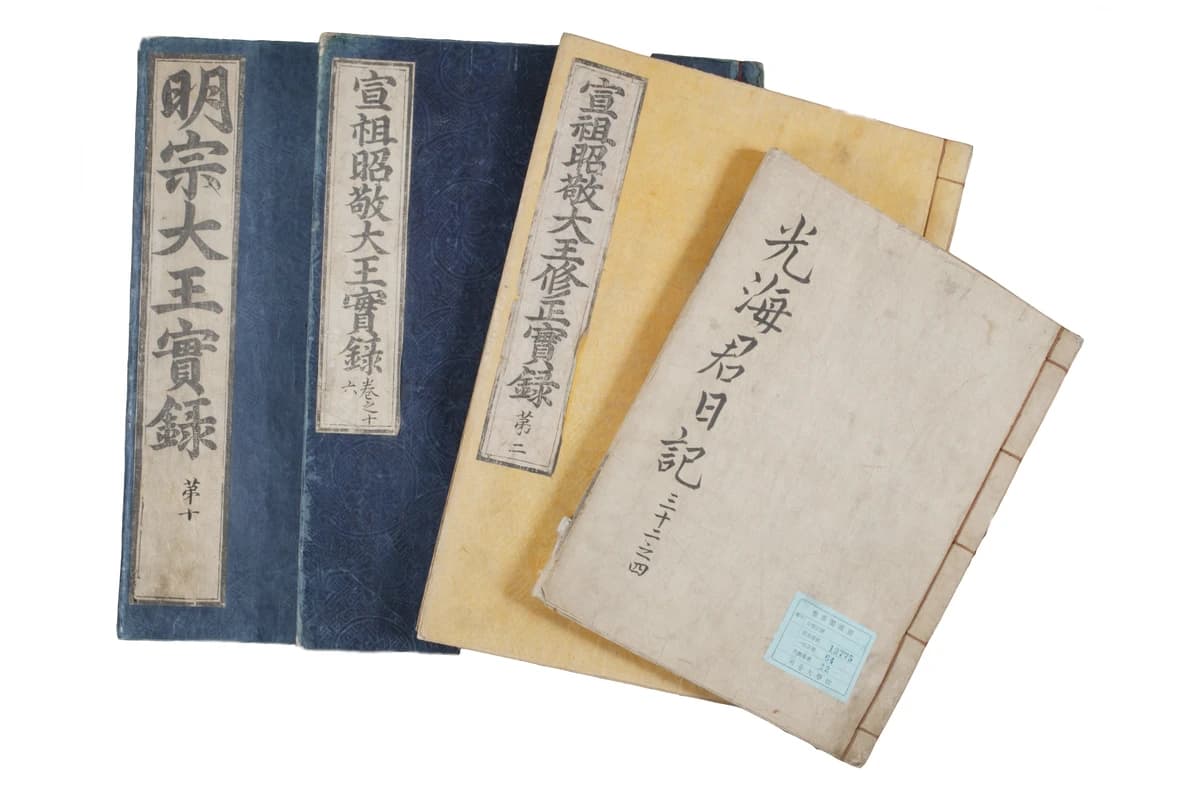
Hangul Day Exists Because a Book Turned Up in 1940. Nobody Can Find the Other Copy.
The date of Korea's alphabet holiday moved four times before a single physical book settled it — and that book arrived missing its first four pages, including King Sejong's own preface, which a calligrapher reconstructed by hand with a typo still in it. A second copy has been in a private house since 2008. The prosecution's own appraisers valued it at over a trillion won. Nobody has seen it since a fire in 2015.
The Weekly Dispatch
Korea, curated. Every week.
The best of K-culture, straight from Seoul. Written by people who actually live here.
Free, no spam, unsubscribe whenever.