Oppa, Unnie, Hyung, Noona: What They Actually Mean
Four little words you hear in every K-drama and every K-pop fancam — and the single rule that decides which one you're allowed to say. A plain-English guide to Korea's older-sibling titles, the famous flirty 'oppa,' and the mistakes that give foreigners away.
There's a moment K-drama fans learn to watch for. For ten episodes the heroine has called the male lead by his name, or by a stiff, polite "Mr. So-and-so." Then, one night, softly, she calls him 오빠 (oppa) — and every Korean viewer in the audience knows exactly what just happened, often before the characters do. A single word just moved the whole relationship.
That word is one of four you hear constantly in Korean — 오빠 (oppa), 언니 (unnie), 형 (hyung), 누나 (noona) — and that fans mix up constantly. They look like a jumble of pet names. They're actually a tidy little system, and once you see the one rule underneath them, you'll never confuse them again. Here's how they really work.
The One Rule That Unlocks All Four
Every one of these four words literally means "older brother" or "older sister." Which one you use depends on two things at once: who you are (your gender) and who you're talking to (are they an older man or an older woman). You do not choose based on your own age alone. You choose based on the pairing.
| The speaker is… | …to an older man | …to an older woman |
|---|---|---|
| A woman | 오빠 (oppa) | 언니 (unnie) |
| A man | 형 (hyung) | 누나 (noona) |
Read it as four plain sentences:
- A woman to an older man → 오빠 (oppa)
- A woman to an older woman → 언니 (unnie)
- A man to an older man → 형 (hyung)
- A man to an older woman → 누나 (noona)
The fastest way to hold it in your head: 오빠 and 형 both mean "older brother"; 언니 and 누나 both mean "older sister." Which half of each pair you land on is decided entirely by your gender. A woman's older brother is her oppa; a man's older brother is his hyung — same person, different word, because a different person is doing the talking.
They All Just Mean "Older Sibling"
The reason this feels strange to English speakers is that we don't do it. We call an older friend by their name. Koreans, in a culture organized around age and seniority, reach for a family word instead — you honor someone older by treating them, linguistically, as your own big brother or sister.
One small etymology note, because language pieces should get this right: of the four, only 형 (hyung) comes from a Chinese character — the hanja 兄, meaning "elder brother." The other three — 오빠, 언니, 누나 — are pure native-Korean words with no hanja behind them. (오빠, fittingly, is thought to trace back to an old word for "a female's brother.") So if you ever see 형 written with a Chinese character and wonder why the others aren't — that's why.
Not Just for Family
Here's the leap that surprises every learner: none of these require an actual sibling. They started as blood-family terms, but in daily Korean they stretch to cover almost anyone older you're close to — an older cousin, a friend two years above you, a senior at university, a boyfriend, a beloved older colleague. Using the title says two things at once: you're older than me, and you're close enough to me to be family. It's respect and warmth in the same breath.
There's an etiquette gate, though. You don't call someone oppa or unnie the moment you meet them — that presumes a closeness you haven't earned yet. Until a real friendship forms, you use their name + 씨 (-ssi), a neutral "Mr./Ms." among peers. You graduate to oppa or unnie once the warmth is actually there. Reaching for the family word too early is like calling a stranger "buddy" — not offensive, just oddly familiar.
It's worth separating these from their more formal cousins, 선배 (sunbae) and 후배 (hubae) — the senior and junior of a school, company, or field. Those are about institutional rank: you'd call the experienced colleague you don't really know sunbae. Oppa/unnie/hyung/noona are personal and affectionate, about age and closeness rather than the org chart. You can have a sunbae you'd never call oppa, and an oppa who has nothing to do with your workplace.
The Famous Flirty "Oppa"
Now the part the K-drama fans actually came for. The single most loaded of these words is 오빠, because it does double duty. It means "older brother" — and, said the right way, it's one of the most common terms of endearment a Korean woman uses for an older boyfriend or husband. In that romantic frame it functions less like "brother" and more like "babe," "honey," "sweetheart."
The magic is in the delivery. Said flatly, oppa is just what you call your older male friend. Said with a little 애교 (aegyo) — Korea's performance of cuteness, a higher pitch, a drawn-out, softly rising "oppaaa~" — it turns unmistakably flirtatious. Same word, completely different signal, carried entirely by tone. That rising-then-falling contour has a name and a technique, and oppa is the word it reaches for most.
This is exactly why that K-drama switch we opened with lands so hard. When the heroine stops using the man's name and starts calling him oppa, Korean audiences read it instantly as the relationship tipping into romance — sometimes several scenes before anyone confesses anything. It's a storytelling shorthand the whole country shares.
One honest caveat, so you don't over-read it: a woman calling a man oppa does not automatically mean she's into him. Most oppas are just older brothers, cousins, and friends. The romance lives in the tone and the context, not in the word by itself. Oppa is a crush signal only when everything around it says so.
Why the Fangirls Yell "Oppa"
Point a camera at a K-pop concert and you'll hear it: a wall of fans calling a male idol 오빠. In fandom the word becomes pure affection and (mostly one-sided) closeness — a way of claiming a warm, familiar bond with someone you've never met. Female fans of a female idol use 언니; by the same gender logic, male fans reach for 형 or 누나.
Fandom even bends the age rule. Strictly, oppa is for someone older than you — but plenty of fans call an idol oppa who is, in fact, younger than they are, because affection outranks arithmetic. (Hence the well-known "noona fan" — an older woman devoted to a younger male idol.) In the stands, the titles are less about age than about love.
The Younger Half: 동생
To make the system feel complete, meet the flip side: 동생 (dongsaeng), "younger sibling," and unlike the other four it's gender-neutral — one word for a younger brother or sister, friend or junior. (If you need to specify, 남동생 is a younger brother and 여동생 a younger sister.)
But here's the asymmetry that tells you everything about Korean hierarchy: you address up with a title, and address down with a name. You call your older friend oppa or unnie — but you call your younger friend by their name, not "dongsaeng." Dongsaeng is how you describe them to someone else ("he's my dongsaeng"), not usually how you call out to them. Respect flows uphill; names flow down.
One Line on the Other Politeness System
If you've read our guide to Korean honorifics, file this distinction away: these four titles are address words, part of Korea's age hierarchy — a different machine from 존댓말 (jondaenmal), the polite verb endings that make up Korea's "speech levels." The two run independently. Close siblings, for instance, will happily speak casual 반말 to each other while still using the respectful title — proof that in Korean you can be intimate and respectful in the very same sentence.
Don't Give Yourself Away
A quick field guide to the mistakes that mark a beginner:
- A man never says "oppa." This is the classic slip. Men use 형 for an older man — full stop. The rule is about the speaker's gender, and it applies to everyone, Korean or not. "Oppa" out of a man's mouth gets puzzled looks.
- Don't jump straight to the title with a stranger. Name + 씨 (-ssi) first; oppa/unnie once you're genuinely friendly.
- Being called "oppa" isn't a confession. For an older male friend it's often just ordinary closeness. Read the tone, not the word.
- Same age? Not one of these. These titles are for someone older — even by a year. A peer your own age is your 친구 (chingu), your friend.
- Spelling varies in the wild. You'll see 언니 as unnie or eonni, 누나 as noona or nuna, 형 as hyung or hyeong. They're the same words — the fan-familiar spellings (oppa / unnie / hyung / noona) are the ones you'll meet most.
That's the whole system: four family words, one rule, and a lifetime of warmth packed into them. Learn the matrix and a wall of K-drama dialogue suddenly makes sense — you'll catch the exact moment the heroine says oppa and know, along with the rest of Korea, precisely what she means. From there it pairs naturally with how hard Korean actually is to learn, the honorific system every learner trips over, the Konglish hiding on every sign, learning to read hangul in an afternoon, and — since your age is only the first thing a new Korean friend will ask — the four-letter MBTI code they'll ask about next. And if you've ever wondered why so many of the people you're addressing are called Kim, there's a reason involving a marriage ban that lasted until 1999. 오빠, 언니, 형, 누나 — now you know who's allowed to say which.
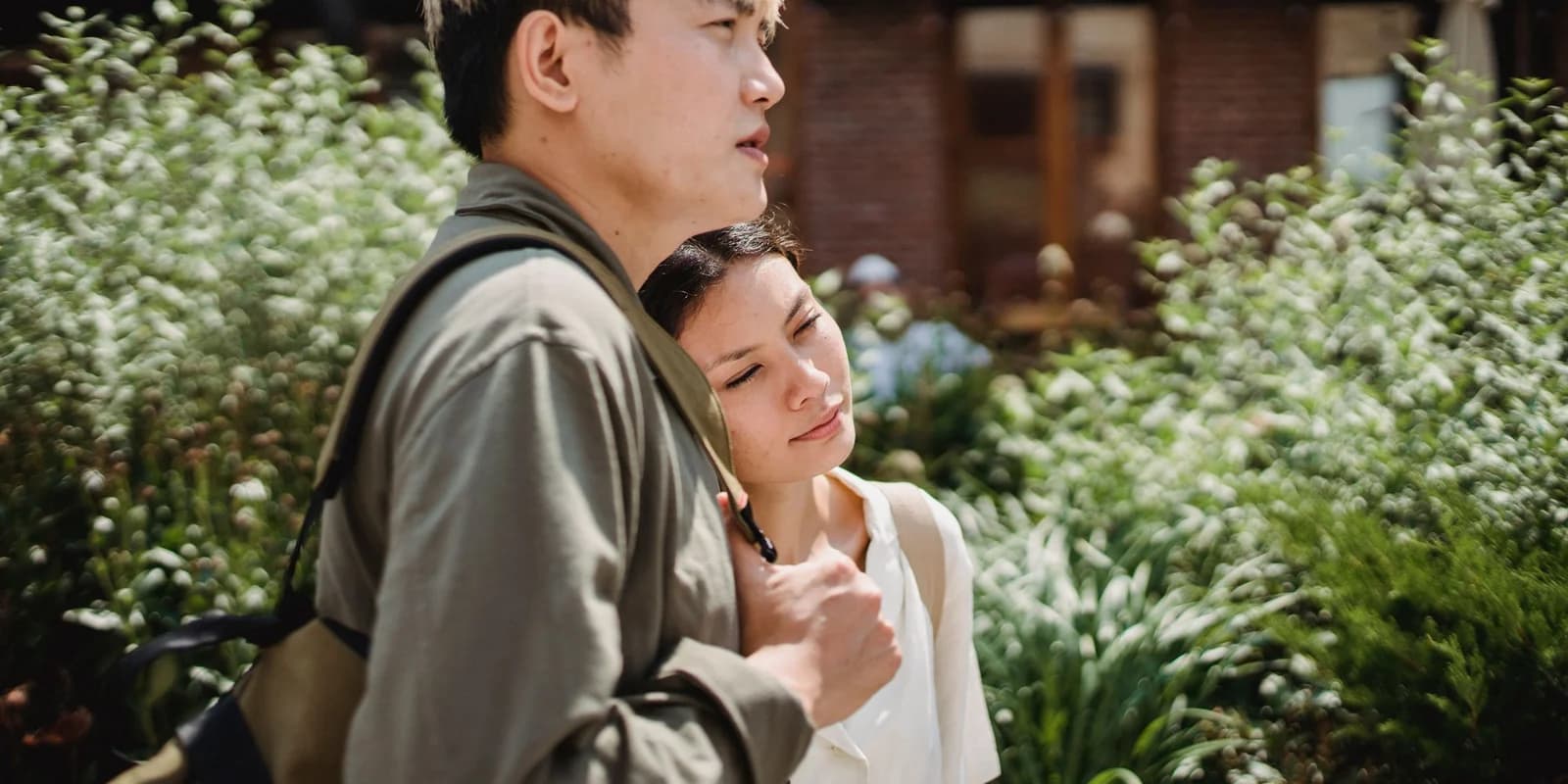
Images are illustrative photographs of everyday life, via Pexels (Pexels License): homepage/hero — two friends laughing, by Allan Mas; cover — a couple in a park, by Samson Katt; listing card — friends over coffee, by Sam Lion. They depict models, not the specific relationships described. Meanings, usage, and etymology are cross-verified across multiple Korean-language references.
Keep Reading
More Stories
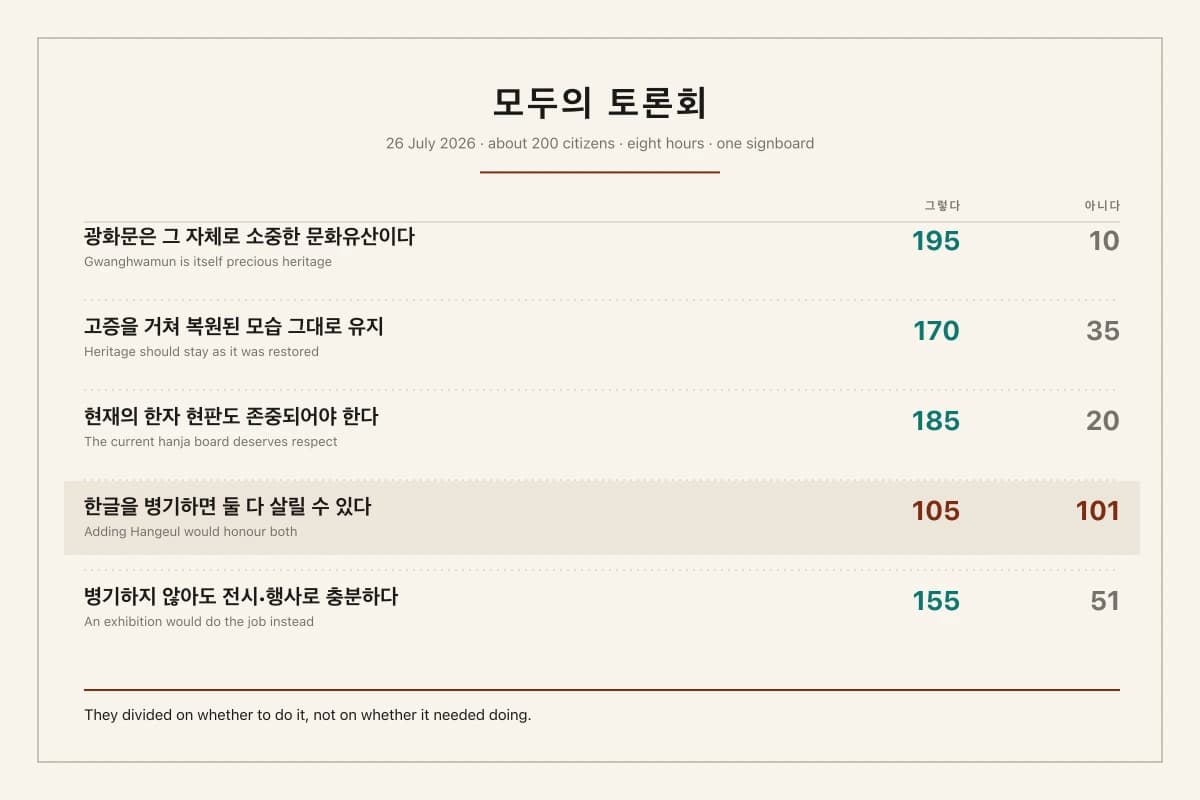
Korea Asked 200 Citizens Whether to Put a Hangeul Sign on Gwanghwamun. They Split 105–101, Then Voted 155–51 That It Is Not Needed.
The government convened its first-ever citizens' deliberation and spent eight hours on a signboard. The panel divided almost exactly in half on whether adding a Hangeul plaque would honour both the heritage and the alphabet — and then, overwhelmingly, said an exhibition would do the job instead. Both answers are coherent, which is the interesting part. The plaque they were arguing about is three years old, and the one before the one before it was in Park Chung-hee's handwriting.
Koreans Have a Word for a Rule Everyone Follows. It Only Ever Gets Used for Rules Not Everyone Follows.
국룰 — gungnul — is Korean internet slang for an unwritten national consensus: the thing everybody does that nobody ever agreed to. It comes from a 2007 shooting game whose players had to invent their own duelling rules because the game had none. And the tell is in which things get called it. Nobody says murder is against 국룰. People say it about which sauce goes with pork belly, and then argue.
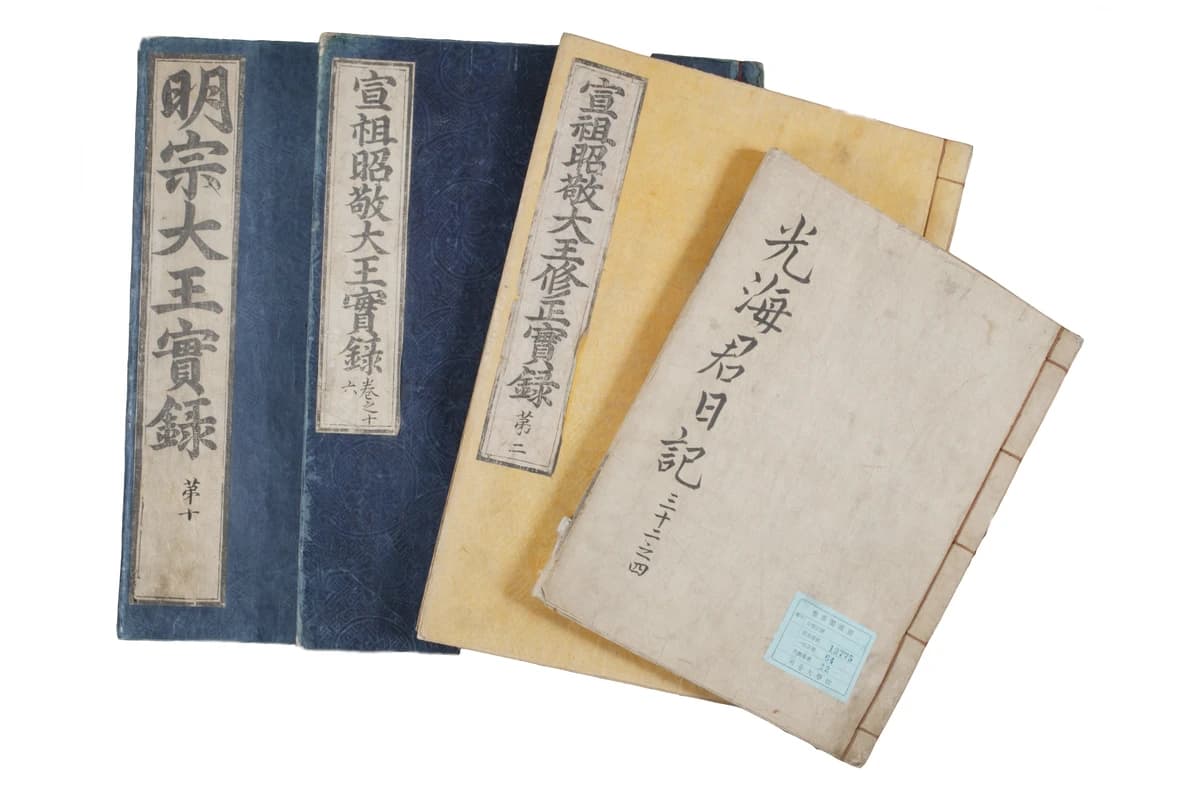
Hangul Day Exists Because a Book Turned Up in 1940. Nobody Can Find the Other Copy.
The date of Korea's alphabet holiday moved four times before a single physical book settled it — and that book arrived missing its first four pages, including King Sejong's own preface, which a calligrapher reconstructed by hand with a typo still in it. A second copy has been in a private house since 2008. The prosecution's own appraisers valued it at over a trillion won. Nobody has seen it since a fire in 2015.
The Weekly Dispatch
Korea, curated. Every week.
The best of K-culture, straight from Seoul. Written by people who actually live here.
Free, no spam, unsubscribe whenever.