Konglish, Explained: The English Words Korea Rewired (and Why 'Fighting!' Means 'You've Got This')
Korea took English, took it apart, and rebuilt it into something new. Here's how to tell true Konglish from a plain loanword — and the everyday words that will quietly baffle you in Seoul, from a 'handphone' to a 'one-room' to the waiter who brings you 'service.'

You are in a Seoul café, and the barista asks for your 핸드폰 to look up your order. Later a friend invites you to their new 원룸, warns you not to touch the 콘센트, and — after dinner — the owner brings out a plate of fruit and beams, "서비스!" Every one of those words came from English. Not one of them means what you'd expect. Welcome to Konglish (콩글리시): English, disassembled and rebuilt by Korea into a vocabulary all its own.
For a learner or a visitor, Konglish is the friendly-looking trapdoor of the Korean language — words that sound familiar enough to lull you, then mean something completely different. This is a field guide to the most useful and surprising ones, and the single distinction that makes the whole thing click.
Konglish Is Not the Same as a Loanword
Start here, because it unlocks everything. Korean is full of ordinary loanwords — English words borrowed with their meanings intact and just a Korean accent applied: 커피 (keopi) is coffee, 택시 (taeksi) is taxi, 버스 (beoseu) is bus, 컴퓨터 (keompyuteo) is computer. Those aren't Konglish. They're just English wearing hangul.
Konglish is the subset Korea changed — English words that Koreans coined, clipped, combined, or bent until they no longer mean what a native English speaker would assume (Wikipedia). A "handphone" isn't a phrase in English. "Service" doesn't mean "free." That gap — between the English you think you're hearing and the Korean meaning actually intended — is Konglish. Keep it in mind and the rest of this guide is just examples.
Why Konglish Exists
Three forces built it, and knowing them helps you guess how a new word was made.
The first is history. Many of the oldest "English" words in Korean actually arrived through Japanese during the colonial era (1910–1945), which had already reshaped them into its own pseudo-English. Several classic Konglish words are really inherited Japanese coinages — 콘센트 (konsenteu), the word for a power outlet, most likely comes from "concentric plug," not "consent," and reached Korean via Japanese (Wiktionary, sljfaq). The second is American contact after the Korean War, which deepened English's footprint (Wikipedia). The third is prestige: in Korean marketing and daily life, English signals youth, sophistication, and modernity — which is why so much Konglish clusters around consumer life, from café menus to apartment listings.
And the machinery itself is simple. Konglish is built three ways: smash two English words together (핸드폰 = hand + phone), chop a long word down (에어컨 from "air con[ditioner]"), or bend the meaning (헬스 = "health," but it means the gym). Once you see the three engines, you can almost predict the results.
The Daily-Life Starter Pack
These are the words you'll meet in your first week, organized by where they'll ambush you.
Tech and home. A 핸드폰 (haendeupon, "hand phone") is a mobile phone. A 노트북 (noteubuk) is not a notebook — it's a laptop. A 콘센트 (konsenteu) is a power outlet (Koreans even nickname the two-holed socket 돼지코, "pig nose"). 에어컨 (eeokeon) is the air conditioner, 리모컨 (rimokeon) the remote control — both clipped in half — and a 셀카 (selka), from "self camera," is a selfie (How to Study Korean).
Housing. A 원룸 (wollum, "one-room") is a studio apartment. An 오피스텔 (opiseutel) — a genuine Korean coinage blending office + hotel — is a small live-work studio unit (Wikipedia). And a 호프 (hopeu, "hof"), a word you'll see glowing on a thousand signs, is a casual draft-beer pub (it comes from the German Hof, not English, but functions as Konglish).
Getting around. An 오토바이 (otobai), from "auto-bike," is a motorcycle; the 핸들 (haendeul) is the steering wheel; the 백미러 (baengmireo, "back mirror") is the rear-view mirror.
Cafés, Convenience, and "Service!"
Korean food and shopping culture has its own dense dialect of Konglish. The most important word to learn is 서비스 (seobiseu): it does not mean "service" in the customer-help sense — it means free, on the house. When a restaurant owner hands you extra banchan or a fruit plate and says "서비스," they're giving you a freebie (How to Study Korean).
A few more that trip people up: 사이다 (saida, "cider") is not alcoholic — it's a clear lemon-lime soda like Sprite (and, in slang, a satisfying, cathartic moment). 치킨 (chikin) almost always means specifically fried chicken, so beloved it has its own pairing with beer: 치맥 (chimaek), a blend of chikin + maekju ("beer") (Wikipedia). And 아이쇼핑 (ai-syoping, "eye shopping") is window shopping — browsing with your eyes, not buying (Wikipedia).
Getting Dressed, Getting Fit
Clothes and bodies have their own set. A 원피스 (wonpiseu, "one-piece") is a dress, not a swimsuit. A 패딩 (paeding, "padding") is a puffer jacket. 스킨 (seukin, "skin") on a cosmetics shelf is facial toner. And 헬스 (helseu, "health") means the gym — a 헬스장 is a fitness center, and "doing health" means lifting weights (How to Study Korean).
Dating, Friends, and Campus Life
Some of the most charming Konglish is social. 스킨십 (seukinsip, "skinship") — physical affection like hand-holding or a hug — is a coined word so useful it has quietly re-entered English (Wiktionary). A 미팅 (miting, "meeting") is not a business meeting; it's a group blind date, usually among university students, while a 소개팅 (sogaeting) is the one-on-one version. To go 헌팅 (heonting, "hunting") is to hit on strangers. And in student life, 오티 (OT) is freshman orientation, while MT ("membership training") is the club or department bonding trip — a coinage no English speaker would ever guess (Wikipedia).
The Cheer That Confuses Everyone: 파이팅
If you learn one Konglish word, make it 파이팅 (paiting) — also spelled and said 화이팅 (hwaiting). It looks like the English word "fighting," and it is — but it is not a call to violence. It's a cheer: "You can do it! / Let's go! / Good luck!" Koreans reinterpreted the stadium shout of "fight!" into an all-purpose word of encouragement (Wikipedia). (The two spellings exist because Korean has no native "f" sound, so English "f" gets approximated with either ㅍ (p) or ㅎ (h) — the same reason coffee is keopi.) Say it to a friend before an exam; it's one of the warmest words in the language.
Konglish Goes Global
Here's the twist that makes Konglish more than a list of funny mistakes: some of it has flowed back into English. In a single update in September 2021, the Oxford English Dictionary added twenty-six words of Korean origin at once — among them skinship, "fighting" as an interjection of encouragement, and, with a certain circularity, Konglish itself (OED, September 2021 update). The borrowed language, reshaped, is being borrowed back — and the word for the reshaping is now in the dictionary too.
For the learner, that's the real lesson under all these examples. Konglish isn't broken English; it's evidence of a language confident enough to make English its own. Master the loanword-versus-Konglish distinction and a wall of neon signage stops being noise and starts being readable. Then keep going: it pairs naturally with how hard Korean actually is to learn, the best apps to learn it, the honorific system every learner trips over, and learning hangul in an afternoon so you can read those signs for yourself. 파이팅.
Homepage/hero: a Myeongdong street, Seoul — photo by Mohammed Mehdaoui, Pexels (Pexels License). Listing card and cover: neon shopfront signage in Seoul — photos by cityintake, Pexels (Pexels License). All show real Korean signage — Konglish in the wild.
Keep Reading
More Stories
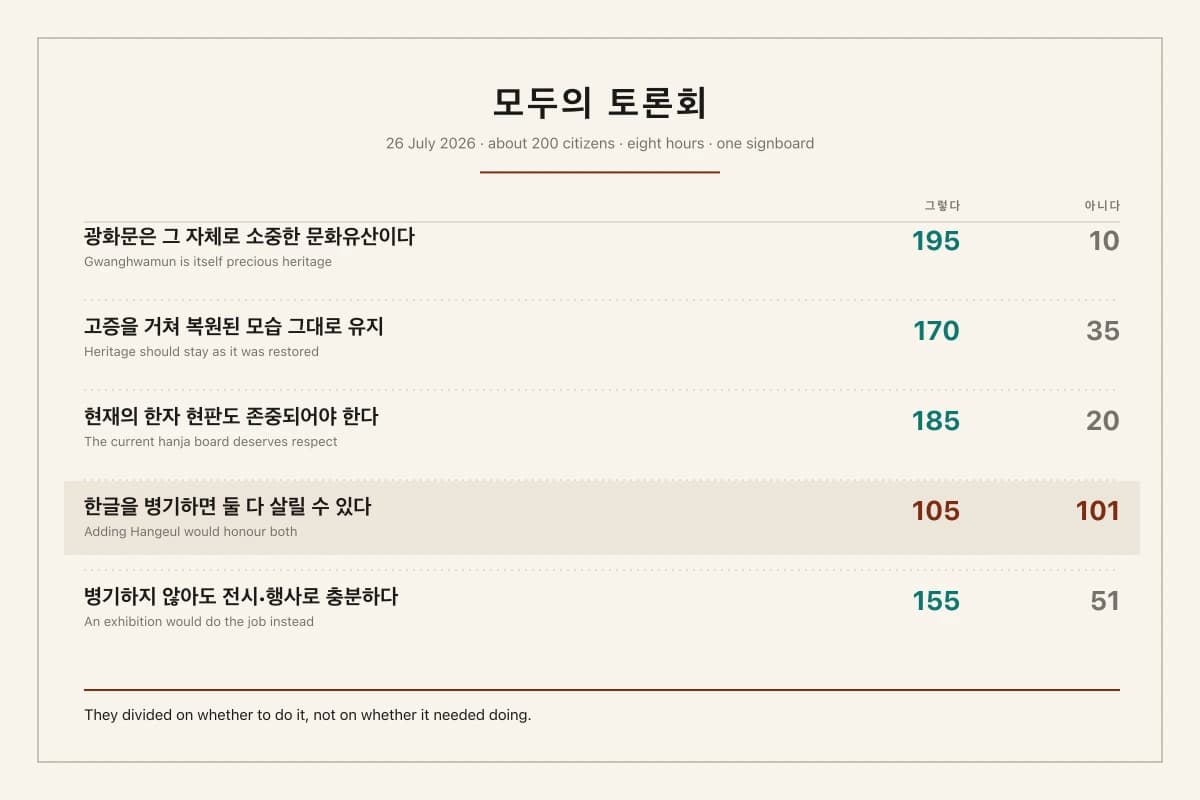
Korea Asked 200 Citizens Whether to Put a Hangeul Sign on Gwanghwamun. They Split 105–101, Then Voted 155–51 That It Is Not Needed.
The government convened its first-ever citizens' deliberation and spent eight hours on a signboard. The panel divided almost exactly in half on whether adding a Hangeul plaque would honour both the heritage and the alphabet — and then, overwhelmingly, said an exhibition would do the job instead. Both answers are coherent, which is the interesting part. The plaque they were arguing about is three years old, and the one before the one before it was in Park Chung-hee's handwriting.
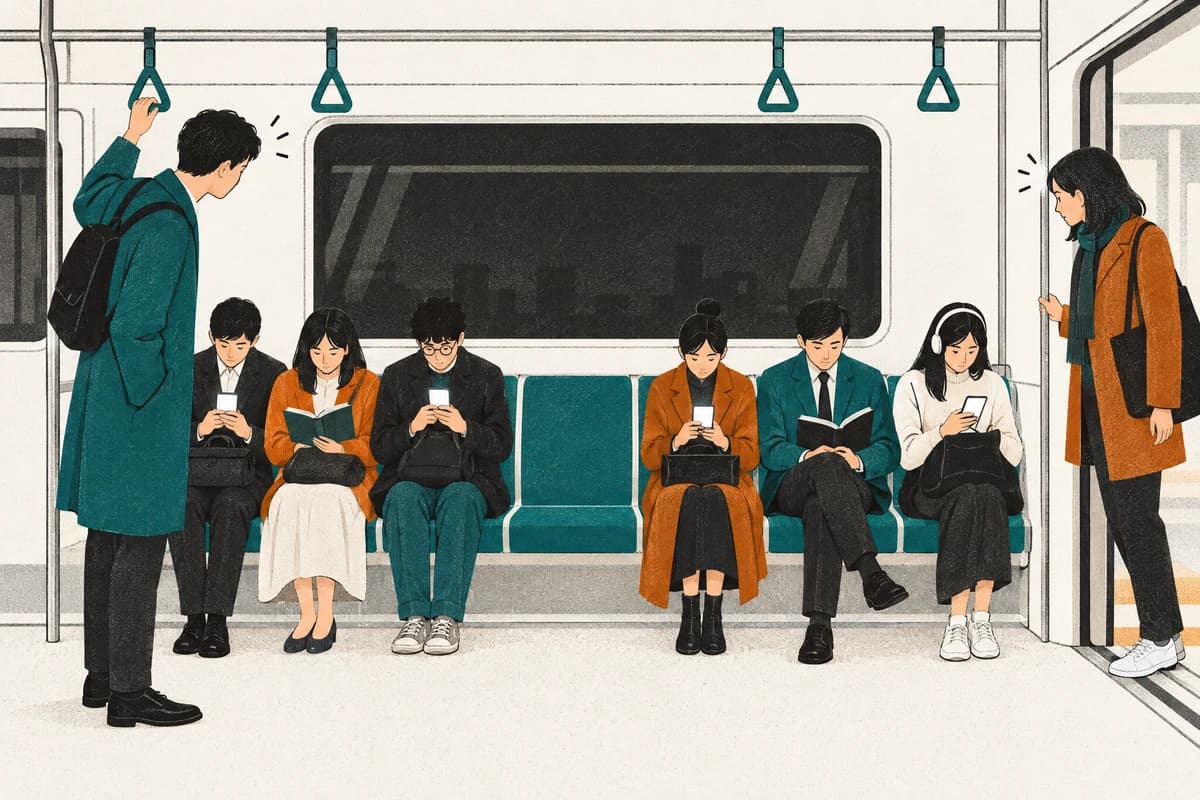
Koreans Have a Word for a Rule Everyone Follows. It Only Ever Gets Used for Rules Not Everyone Follows.
국룰 — gungnul — is Korean internet slang for an unwritten national consensus: the thing everybody does that nobody ever agreed to. It comes from a 2007 shooting game whose players had to invent their own duelling rules because the game had none. And the tell is in which things get called it. Nobody says murder is against 국룰. People say it about which sauce goes with pork belly, and then argue.
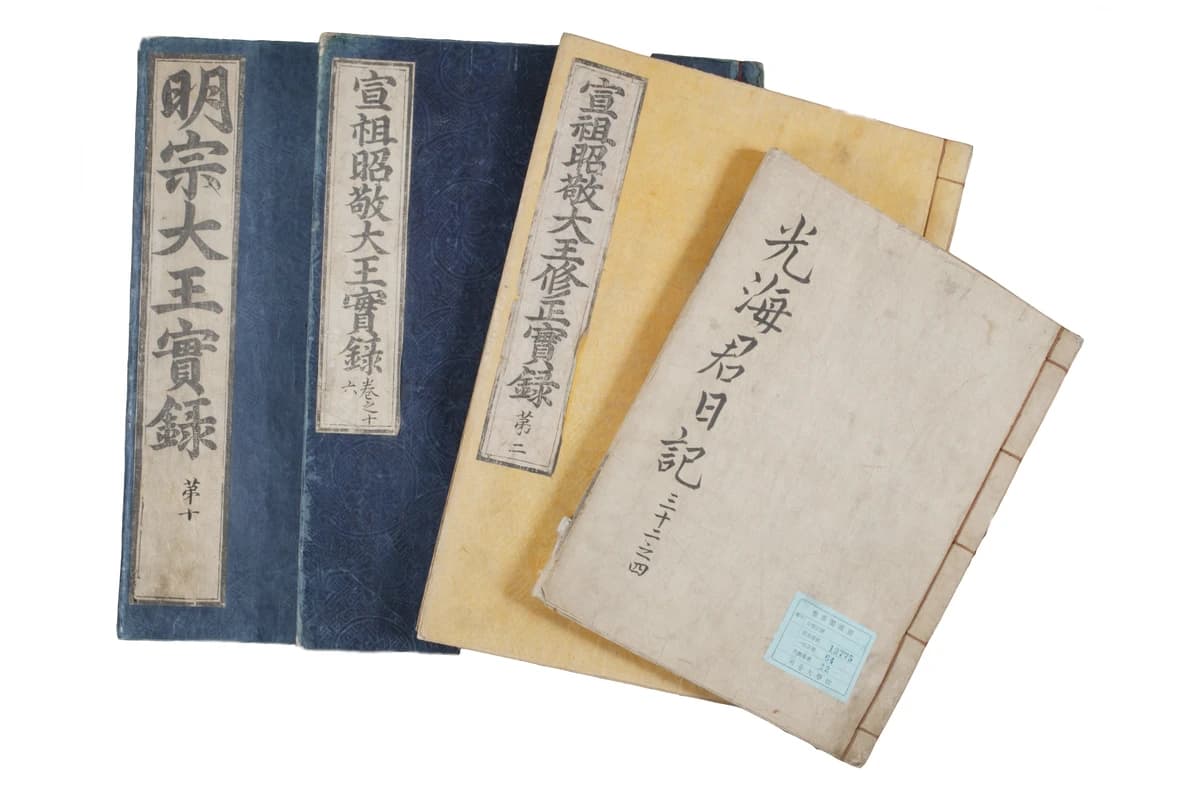
Hangul Day Exists Because a Book Turned Up in 1940. Nobody Can Find the Other Copy.
The date of Korea's alphabet holiday moved four times before a single physical book settled it — and that book arrived missing its first four pages, including King Sejong's own preface, which a calligrapher reconstructed by hand with a typo still in it. A second copy has been in a private house since 2008. The prosecution's own appraisers valued it at over a trillion won. Nobody has seen it since a fire in 2015.
The Weekly Dispatch
Korea, curated. Every week.
The best of K-culture, straight from Seoul. Written by people who actually live here.
Free, no spam, unsubscribe whenever.