Best Apps to Learn Korean, Ranked by Someone Who Lives in Seoul — Expanded & Re-Priced for 2026
We tested every major Korean-learning app — and we live in Seoul, so we can check what they teach against what people actually say on the street. Here's our ranking, freshly expanded and re-priced: what's worth paying for, what's a fine supplement, and what's polished garbage. Every price re-checked.
There are now well over 40 apps that claim to teach you Korean. We've tried most of them. Living in Korea means we can test what these apps teach against what people actually say — on the street, in cafés, in KakaoTalk messages. The gap between "textbook Korean" and "real Korean" — including the everyday Konglish vocabulary apps rarely teach — is enormous, and most apps land firmly on the wrong side.
This is our honest ranking — expanded and fully re-priced this June (we first published it in the spring; a lot has changed since). Want just the verdict? The quick-comparison table is right below — otherwise, read on for the why.
Quick comparison
Prices are USD, as of mid-2026 (apps change these constantly — treat them as a guide, not gospel).
| App | Best for | Price (mid-2026) | Our verdict |
|---|---|---|---|
| Talk To Me In Korean | Structured grammar, beginner → advanced | Free audio; course ~$17/mo (≈ $10/mo billed annually) | ⭐ Start here |
| LingoDeer | Gamified learning with real depth | $14.99/mo or $95.99/yr (lifetime discontinued) | Best gamified option |
| KoreanClass101 | A massive audio/video library | Free tier; $4–$23/mo (frequent steep sales) | Best supplement |
| italki | Real 1-on-1 tutoring | Pay-per-lesson, from ~$5–10+ | Best for speaking |
| HelloTalk | Free language exchange with natives | Free; VIP $6.99/mo | Once you can chat |
| Anki | Vocabulary that actually sticks | Free (desktop/Android); $24.99 one-time (iOS) | Essential add-on |
| Pimsleur | Hands-free audio speaking drills | ~$19.95/mo (7-day free trial) | Good, pricey, narrow |
| Drops | 5-minute visual vocabulary | Free 5 min/day; ~$11/mo | A snack, not a meal |
| Duolingo | Building a daily habit | Free; Super ~$12.99/mo | OK habit, weak Korean |
| Busuu | Budget structured lessons | Free tier; ~$6–15/mo | Decent, shallow for Korean |
| Rosetta Stone | — | Pricey (sold as "lifetime") | Skip it for Korean |
| Babbel | — | — | Doesn't offer Korean at all |
Tier 1: Actually worth paying for
1. Talk To Me In Korean (TTMIK)
Best for: Structured learning from absolute beginner to advanced Price: Free podcast/videos; course subscription about $16.99/month, or roughly $10/month billed annually (~$85–122/yr). (TTMIK raised prices recently — the free audio library is still free.)
TTMIK has been the gold standard for Korean learning since 2009, and for good reason. Their curriculum is built by native Korean speakers who understand exactly where English speakers get confused. The audio lessons are conversational — it feels like learning from a friend, not a textbook.
What sets it apart: The grammar explanations are the best in the business. Korean grammar is genuinely hard for English speakers, and TTMIK breaks down concepts like particles (은/는, 이/가, 을/를) in a way that actually sticks.
The catch: The app interface feels dated next to Duolingo-era apps. The content is excellent; the packaging isn't.
Our verdict: Start here. Seriously. And note the huge free audio library means you can start for $0.
2. LingoDeer
Best for: Visual learners who want gamified learning with actual depth Price: Free trial; $14.99/month or $95.99/year. (Heads up: LingoDeer discontinued its lifetime plan in late 2025 — the old $80 one-time deal is gone, replaced by 3-year and 6-year options.)
LingoDeer does what Duolingo tries to do but gets right. The Korean course was designed by Korean linguists (not crowdsourced), grammar notes appear before each lesson, and the exercises test genuine understanding rather than pattern-matching.
What sets it apart: The writing practice. LingoDeer actually teaches you to write Hangul with proper stroke order, and the sentence-construction exercises build real competence. (If you haven't learned Hangul yet, do that first — it takes about an afternoon.)
The catch: Content thins out around the intermediate level. If you're B1+, you'll need to supplement.
Our verdict: Best gamified option, and leagues ahead of Duolingo for Korean specifically.
3. KoreanClass101
Best for: Intermediate learners who want a massive content library Price: Free tier; Basic $4/mo, Premium $10/mo, Premium+ $23/mo — but it runs near-constant sales that cut those by half or more.
The sheer volume is staggering — thousands of audio and video lessons across every level. The podcast-style format works well for passive learning on commutes, and the cultural notes are genuinely useful if you're planning to visit or live in Korea.
What sets it apart: The dialogue breakdowns. They play a real Korean conversation, then dissect every word, grammar point, and cultural nuance.
The catch: The library is so vast it's easy to get lost, and the constant upsells grate. The "learning path" helps but isn't perfect.
Our verdict: Best as a supplement to TTMIK, not a replacement. Never pay full price — wait for a sale (there's always one coming).
The most underrated tier: actually talking to people
Apps are great for input. They are terrible at making your mouth produce Korean under pressure. These two fix that — and they're the step most app-learners skip for far too long.
4. italki
Best for: Real 1-on-1 lessons with a Korean tutor Price: Pay-per-lesson — the tutor sets the rate. Community tutors often start around $5–10/lesson; certified professional teachers run ~$10–30+/lesson. No subscription.
italki connects you with hundreds of Korean tutors for video lessons you book by the hour. You can pick a structured professional teacher to march through a curriculum, or a cheaper "community tutor" just to talk. For most learners, an hour a week here does more for actual fluency than any amount of tapping.
What sets it apart: It's the most affordable way to get real speaking practice with feedback, short of moving to Seoul. You can find a tutor in your budget and timezone in about ten minutes.
The catch: It only works if you do it. Booking the lesson is the hard part; the lesson itself is always worth it.
Our verdict: The highest-leverage money you'll spend. Add it the moment you can build a basic sentence.
5. HelloTalk
Best for: Free language exchange with native speakers Price: Free with ads; VIP $6.99/month (or ~$45.99/year).
HelloTalk pairs you with native Korean speakers for language exchange — you help them with English, they help you with Korean. The correction feature, where your partner marks up your messages, is incredibly useful.
What sets it apart: Real human interaction, for free. No app replicates the productive panic of trying to express a thought to an actual person and being gently corrected.
The catch: Partner quality varies wildly — some want genuine exchange, others are looking for dating. And you need at least basic Korean to start; day-one beginners will struggle.
Our verdict: Essential once you have basic conversational ability. Pair it with italki: HelloTalk for casual reps, italki for structured feedback.
Tier 2: Good supplements (never your only tool)
6. Anki (with Korean decks)
Best for: Vocabulary memorization via spaced repetition Price: Free on desktop, Android, and web; $24.99 one-time on iOS.
Anki isn't a Korean app — it's a flashcard system. But with the right decks (search "Korean 6000" or "TOPIK vocabulary"), it's the most efficient way to build vocabulary, full stop. The spaced-repetition algorithm shows you each word right before you'd forget it.
What sets it apart: It's the only tool that genuinely makes vocabulary stick long-term. Every serious learner we know uses it.
The catch: Zero hand-holding. You find or build your own decks, and the interface is aggressively utilitarian.
Our verdict: Essential supplement. Not a standalone tool.
7. Pimsleur
Best for: Hands-free speaking and listening drills (commutes, dishes, the gym) Price: ~$19.95/month (Premium, one language); 7-day free trial; lifetime and per-level options exist.
Pimsleur is audio-first: 30-minute lessons that drill you on speaking and recall, out loud, with no screen. For pronunciation and the reflex of producing Korean, it's genuinely effective, and the old-school method has aged better than it has any right to.
The catch: It's pricey, it's narrow (almost no reading/writing or grammar theory), and it tops out well before fluency.
Our verdict: A strong speaking supplement if you have dead time to fill. Not a complete course.
8. Drops
Best for: Visual vocabulary in 5-minute bursts Price: Free (5 min/day); Premium ~$11/month (~$70/yr).
Beautiful design, clever word-association games, and a strict five-minute limit that prevents burnout. Drops does vocabulary only — no grammar, no sentences.
The catch: You'll learn 2,000 Korean words and not be able to form a single correct sentence with them.
Our verdict: A fun vocabulary snack. Never the meal.
9. Memrise & Busuu (the honorable mentions)
Memrise (paid subscription) leans on short video clips of native speakers using words in context — nice for ear-training and vocabulary, light on grammar. Busuu (free tier; roughly $6–15/month) now offers a proper Korean course with a community-correction feature; it's a decent budget, structured option, though its Korean track is newer and shallower than its flagship European languages. Either makes a fine secondary app. Neither replaces TTMIK.
Tier 3: Popular, but not for Korean
10. Duolingo
Best for: Building a daily habit. Not for actually learning Korean. Price: Free with ads; Super ~$12.99/month (~$84/yr); Max ~$168/yr adds short AI chats.
This is controversial, but Duolingo's Korean course is mediocre. The sentences feel artificial, the grammar notes are thin, the romanization breeds bad pronunciation habits, and the gamification optimizes for streaks, not competence. Korean is genuinely hard for English speakers — a different sentence order (SOV), a complex honorific system, particles that don't exist in English — and Duolingo's "match the picture" approach doesn't teach those.
Our verdict: If Duolingo keeps you opening Korean every day, it beats doing nothing. But switch to TTMIK or LingoDeer once you're serious. (Why is Korean this hard, exactly? We broke it down.)
11. Rosetta Stone
Rosetta Stone's image-only "immersion" works for languages close to English. For Korean — where the grammar is fundamentally different and the writing system needs explicit instruction — it's counterproductive. You'll spend months guessing at patterns instead of understanding them. Expensive and wrong for Korean. Hard pass.
And about Babbel…
People search "Babbel Korean" constantly, so let's save you the click: Babbel doesn't offer Korean at all. It's an excellent app for European languages and a few others — Korean simply isn't on its list. Don't go looking.
The realistic learning stack
After watching dozens of people learn Korean in Seoul — successfully and not — here's the combination that actually works:
| Tool | Role | Time |
|---|---|---|
| TTMIK | Core curriculum (grammar + structure) | 20–30 min/day |
| Anki | Vocabulary reinforcement | 10–15 min/day |
| italki or HelloTalk | Real conversation practice | 1–2× per week (italki) + daily reps (HelloTalk) |
| Korean shows with Korean subs | Listening immersion | As much as you want |
That's about 45–60 minutes of intentional study a day, plus passive immersion. At this pace, expect basic conversational ability in 6–9 months and genuine intermediate fluency in 18–24 months. (Want the full timeline, goal by goal? Here's our honest breakdown.)
Frequently asked questions
What's the best free app to learn Korean? TTMIK's free audio library is the best free course, hands down. Pair it with Anki (free on everything but iOS) for vocabulary and HelloTalk's free tier for practice, and you have a genuinely complete, $0 setup. Duolingo and Busuu also have usable free tiers for habit-building.
Best app for absolute beginners? LingoDeer if you want something gamified and visual; TTMIK if you want it explained properly. Either way, learn to read Hangul first — it really does take about an afternoon, and every app gets easier once you can read.
Is Duolingo good for Korean? For building a daily habit, sure. For actually learning Korean — its grammar, honorifics, and sentence structure — not really. Use it as a gateway drug, then graduate to TTMIK or LingoDeer.
What's the best paid app? TTMIK, for most people. If your bottleneck is speaking rather than knowledge, the better spend is an italki tutor by the hour.
Can an app alone make me fluent? No. Apps build your foundation — vocabulary, grammar, reading. Fluency comes from using the language with real people, which is why we keep pushing italki, HelloTalk, and Korean media. The learners who plateau are almost always the ones who never leave the app.
One thing no app teaches well
Korean politeness levels. Every Korean sentence carries a formality register, and using the wrong one ranges from mildly awkward to genuinely offensive. Apps teach one register and move on. Real Korean needs at least three:
- Formal polite (합쇼체) — strangers, elders, professional settings
- Informal polite (해요체) — most daily conversation
- Casual (해체/반말) — close friends, people younger than you
Getting this wrong is the number-one mistake app-educated speakers make in real life. No app handles it well; TTMIK comes closest. For the rest, you need real human interaction — which is exactly why italki, HelloTalk, or actual time in Korea matters so much.
Learning Korean is hard. Anyone who tells you otherwise is selling an app. But with the right tools and realistic expectations, it's absolutely doable. Start with TTMIK, add Anki for vocabulary, book an italki tutor (or find a HelloTalk partner) the moment you can string a sentence together — and start watching Korean shows with Korean subtitles. Skip Duolingo once you're serious, ignore Rosetta Stone, and don't go looking for Babbel Korean.
And once standard Seoul Korean starts to click, the fun really begins — the language splits into regional dialects, and native ears place your accent in under a second.
—The Editors
Prices verified against each app's official pricing pages as of June 2026 (TTMIK, LingoDeer, KoreanClass101, Pimsleur, Drops, HelloTalk, Duolingo, italki). App pricing changes frequently and varies by region and promotion — always confirm the current rate before subscribing.
Keep Reading
More Stories
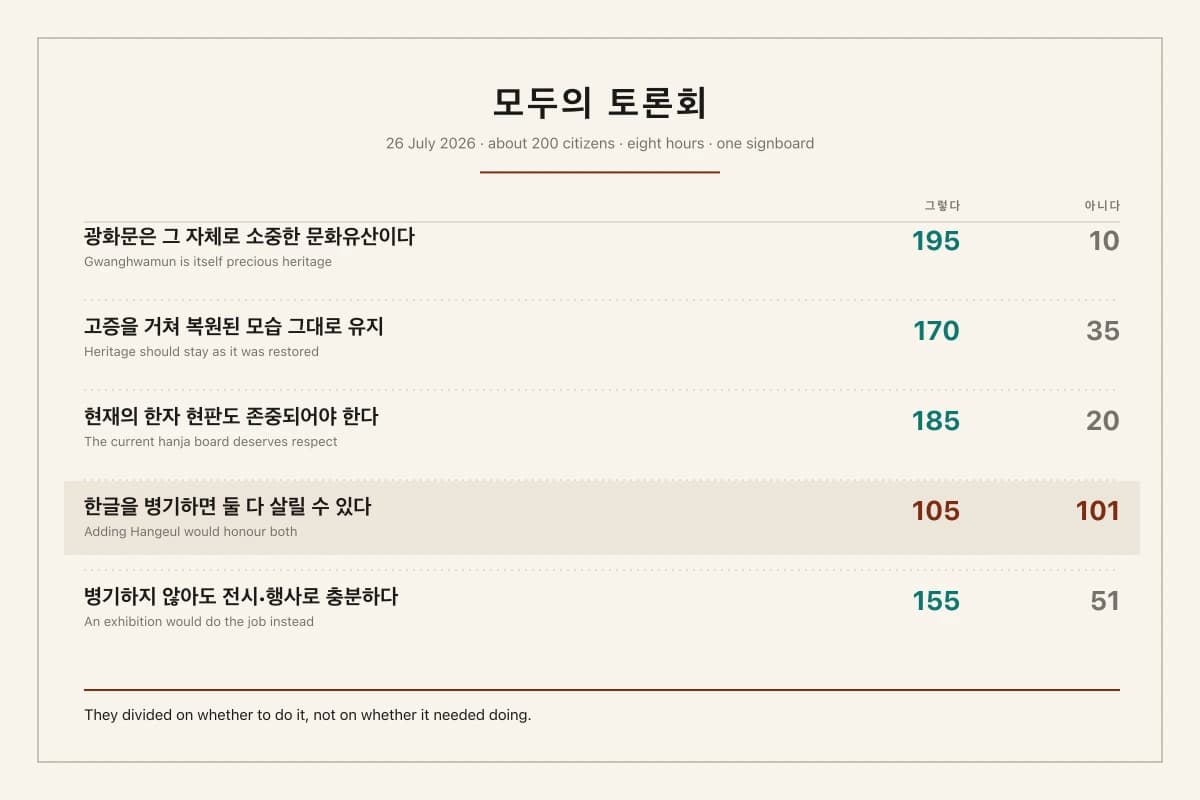
Korea Asked 200 Citizens Whether to Put a Hangeul Sign on Gwanghwamun. They Split 105–101, Then Voted 155–51 That It Is Not Needed.
The government convened its first-ever citizens' deliberation and spent eight hours on a signboard. The panel divided almost exactly in half on whether adding a Hangeul plaque would honour both the heritage and the alphabet — and then, overwhelmingly, said an exhibition would do the job instead. Both answers are coherent, which is the interesting part. The plaque they were arguing about is three years old, and the one before the one before it was in Park Chung-hee's handwriting.

Koreans Have a Word for a Rule Everyone Follows. It Only Ever Gets Used for Rules Not Everyone Follows.
국룰 — gungnul — is Korean internet slang for an unwritten national consensus: the thing everybody does that nobody ever agreed to. It comes from a 2007 shooting game whose players had to invent their own duelling rules because the game had none. And the tell is in which things get called it. Nobody says murder is against 국룰. People say it about which sauce goes with pork belly, and then argue.
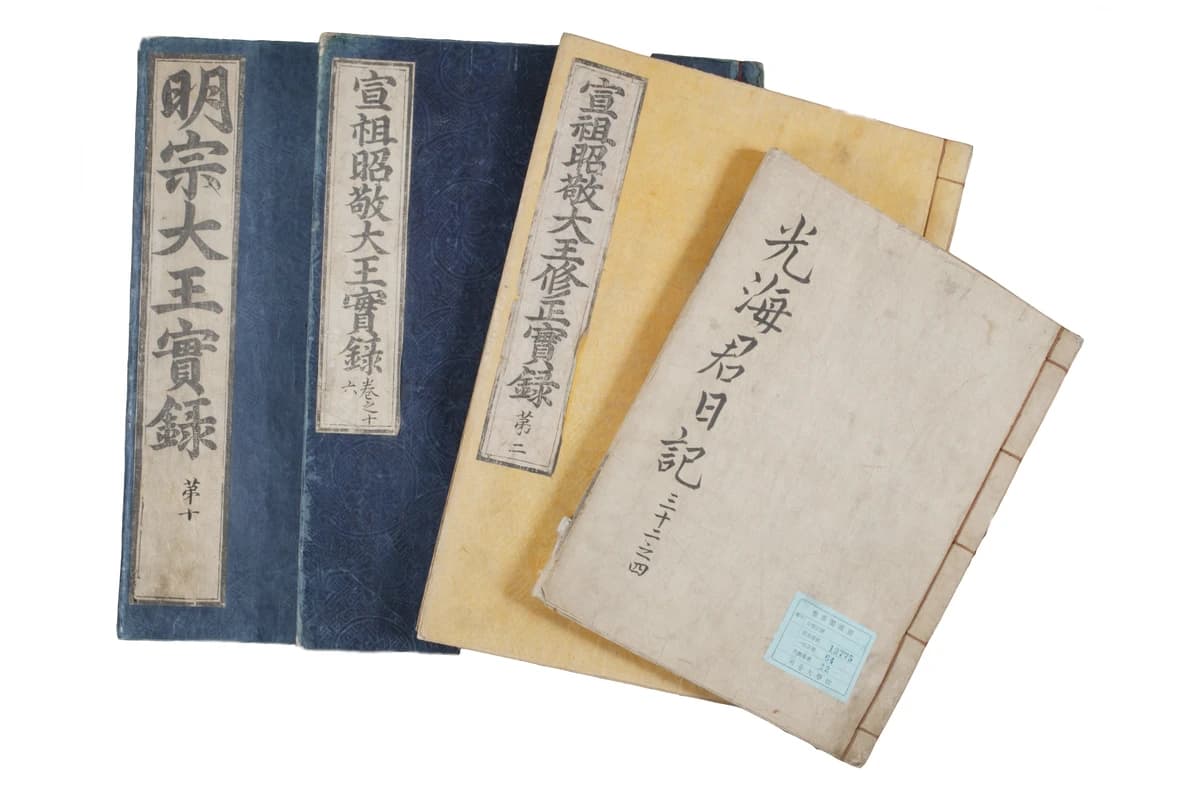
Hangul Day Exists Because a Book Turned Up in 1940. Nobody Can Find the Other Copy.
The date of Korea's alphabet holiday moved four times before a single physical book settled it — and that book arrived missing its first four pages, including King Sejong's own preface, which a calligrapher reconstructed by hand with a typo still in it. A second copy has been in a private house since 2008. The prosecution's own appraisers valued it at over a trillion won. Nobody has seen it since a fire in 2015.
The Weekly Dispatch
Korea, curated. Every week.
The best of K-culture, straight from Seoul. Written by people who actually live here.
Free, no spam, unsubscribe whenever.