aespa's LEMONADE, Honestly: Did SM's Double-Title Gamble Pay Off?
aespa closed May's comeback war on Friday with two title tracks — the G-Dragon-featuring 'WDA' and the synth-bass 'Lemonade.' We promised a verdict once the album landed. Here it is: the double-title bet worked, the reviews are strong, and aespa won the war it was actually fighting — even if it didn't dethrone ITZY's Motto.

Three days ago, we ranked five girl-group comebacks and left one slot deliberately unfilled. aespa's LEMONADE hadn't dropped yet. We wrote, in as many words: we will revisit this properly after Friday.
It's Friday. The album landed at 1 PM Korean time. This is the revisit.
If you read our May comeback-war ranking, you know the setup. Five major releases in twenty-five days. ITZY's Motto took the critical crown. NMIXX's Heavy Serenade came second on artistic security. LE SSERAFIM's BOOMPALA was the month's case study in what goes wrong. And aespa, closing the month, got a provisional #3 with an asterisk: highest commercial ceiling of the five, the only release with active stakes still ahead of it.
The one question we flagged to watch on Friday: could "Lemonade" hold its own against "WDA," which already had a three-week head start?
Here's the honest answer. It's more interesting than yes or no.
They were never fighting
The thing English-language coverage keeps half-missing about this release is right there in the pre-release track's name. "WDA" stands for Whole Different Animal — and that is, almost literally, the relationship between aespa's two title tracks. They are not two contenders for the same crown. They are two animals in two different enclosures.
"WDA (Whole Different Animal)" dropped on May 11 with G-Dragon on the third verse. It is a bass-and-synth-heavy dance track with clear hip-hop bones — dark, high-impact, built around a hook that went viral inside a week. The music video crossed 19 million views in six days. If you've felt a vaguely menacing aespa snippet crawl across your TikTok feed this month without knowing its name, that was WDA doing its job. Member Giselle described it in one word the rest of the press picked up: overwhelming.
"Lemonade," the second title track, dropped with the full album on Friday. It is the opposite register on purpose: an electronic dance song built on a "strong and trendy synth-bass," summer-ready, witty, kitschy. The concept is the Western proverb made literal — if life gives you lemons, make lemonade. Karina's framing at Thursday's press conference: "The trials in your life are the lemons. I want people to get energy from it." Winter's: even when a chaotic situation hits, "the message is about blending it all up and drinking it down with fun."
Giselle drew the contrast cleanly: "WDA is dark and overwhelming. But LEMONADE is witty and kitschy."
That is the whole strategy in one sentence. SM did not stagger a pre-release and a title track and hope one wouldn't eat the other. They released two songs that occupy completely different emotional lanes — the menacing one for the viral cycle, the bright one for the summer-radio cycle — so that "can Lemonade survive WDA's head start" was a question with a built-in answer. They were never drawing from the same pool of attention. The double-title gamble worked because it wasn't really a gamble. It was a coverage map.
The receipts: this is a genuinely good album
It would be easy to wave at the commercial muscle — G-Dragon feature, a freshly announced 2026–27 world tour, double-title saturation — and call the verdict on visibility alone. But the music actually holds up, and we don't do puff pieces, so here are the real numbers.
The Bias List — the same critic who called BOOMPALA's Macarena sample lifeless three days ago — scored "Lemonade" an 8.25 out of 10 (Grade B). That's a high mark from a notoriously tough grader. The praise lands on the production: "an incredibly enjoyable club beat" with "force and energy that's very refreshing," and enough rhythmic variety in aespa's by-now-signature talk-singing "to make the verses ear-catching."
The honest knock is real, and we'll quote it because pretending otherwise would be its own kind of fabrication: the hook, per the same review, is "yet another catchphrase hook that teeters between 'addictive' and 'annoying.'" The critique is that "Lemonade" leans confidently into a trend aespa themselves helped originate — charismatic chant-talking over a club beat — without pushing far past it. Excellent execution of a familiar idea, rather than a new idea.
Korean coverage ran warmer and broader. Star News called LEMONADE "a significant album" and built its review around Karina's own framing — that aespa is moving "from a metallic taste to a sour taste," adding a refreshing, versatile layer on top of the harder sound that defined Armageddon. The Korea Times framed the eleven-track record as a confident, star-studded step up for the sophomore LP.
The deep cuts back the "more mature identity" pitch rather than undercutting it. The collaborations aren't decoration: alongside G-Dragon on WDA, the album pulls in Latin-pop star Becky G and rapper Ty Dolla $ign — and Ningning's carefully-pronounced Spanish-language sections are a real texture, not a gimmick verse. For a group whose entire brand was once the virtual-world conceit, the move toward a grounded, collaboration-forward, genuinely-international record is the kind of second-album reset that raises a ceiling instead of just defending a floor.
The verdict: two scoreboards
So where does LEMONADE land in the final May ranking? Here's the part that needs saying plainly: aespa did not dethrone ITZY's Motto — and it was never trying to.
There are two scoreboards this month, and they have different winners.
On the critical scoreboard — pure craft, songwriting, how-well-will-this-age — Motto is still the release of the month. ITZY's cohesion and the member-individualized solo packaging made it the consensus pick, and an 8.25 title track with a "could've-been-a-knockout-with-stronger-melodies" asterisk doesn't overturn that. Heavy Serenade still holds second on artistic security.
On the commercial-and-visibility scoreboard — the one aespa was actually competing on — LEMONADE is the clear winner of the comeback war. The double-title strategy gave SM two viral cycles instead of one. The G-Dragon feature bought a crossover audience no other release this month could touch. A nineteen-million-view pre-release and a world tour announcement aren't ceiling potential anymore; they're ceiling being cashed in. Of the five May releases, aespa is the only one closing the month with more 2026 momentum than it opened with.
So the final, no-longer-provisional ranking:
- ITZY — Motto. Best release. Critical winner. Will age best.
- NMIXX — Heavy Serenade. Most artistically secure. A project arc, continued.
- aespa — LEMONADE. Highest ceiling, and now the receipts to match. The commercial winner of the month — strong reviews, two lanes covered, the biggest 2026 still ahead.
- BABYMONSTER — CHOOM. Strongest day-one numbers, capped by the originality conversation.
- LE SSERAFIM — PUREFLOW pt.1. Worst reception. The month's cautionary tale.
The honest caveat we owe you: it's still Friday afternoon. First-day sales, the Circle and Melon chart entries, the music-show wins — those land over the weekend and into next week. If the hard numbers come in soft, we'll say so. But the album is in our ears now, and on the evidence available the night it dropped, the double-title bet paid off and aespa closed the comeback war by winning the war it picked.
Update — June 2: the numbers came in (and they didn't come in soft)
We promised that if the hard numbers landed soft, we'd say so. They didn't. Three days on, here's the honest accounting.
Sales. LEMONADE moved 842,534 copies on its first day, per Hanteo Chart — aespa's second-highest career day-one, behind only 2023's MY WORLD (which cleared a million). It debuted at No. 1 on Korea's Circle Retail Album and Hanteo daily charts. The honest footnote: physical sales front-load hard, and by June 1 it had already slid down the daily retail chart. A day-one total is a launch stat, not a staying-power one — the weekly Circle and Melon positions that actually measure endurance post next week, and we'll let those speak for themselves.
Global. This is where the "highest ceiling" call cashed out loudest. LEMONADE hit No. 1 on iTunes Top Albums in at least 19 countries — Japan, Taiwan, Thailand, Nigeria, Colombia, and the Philippines among them — cracked the Top 10 in 38 regions (the U.S., France, Canada, and Australia included), and topped the Worldwide iTunes Album chart. In China it took No. 1 on QQ Music; in Japan, No. 1 on Line Music's album chart.
The honest asterisk. What aespa has not done — at least not yet — is win a music show. The first post-release weekend's trophies went to CORTIS's "REDRED," which swept Music Core and Inkigayo while aespa performed but didn't place. That's the one corner of the visibility scoreboard still blank, and it's exactly why we kept the verdict to "commercial winner" and not "winner, full stop."
So the no-longer-provisional read holds. The double-title bet paid in the currency it was built to earn — raw sales and global reach — and the numbers didn't bend the verdict, they confirmed it. Motto still owns the craft scoreboard; LEMONADE owns the commercial one.
The honest editor's note
A month ago, the framing was 컴백 대전 — comeback war. Five groups, one calendar, one shadow (a BTS comeback drawing all the oxygen in the room — the ARIRANG cycle we flagged in the original ranking). We said the war wasn't over until aespa landed.
It's landed. The war is over. And the satisfying part is that it didn't end with a single winner — it ended with the scoreboard splitting exactly the way the year has been splitting all along: the most consistent A&R pipeline in K-pop (JYP) takes the craft medals, and the group with the highest ceiling and the loudest rollout (aespa, SM) takes the visibility crown. Both are true at once. That's usually how honest accounting goes.
If you stream one song from May, still make it "Motto." If you want to hear what a confident, two-lane, internationally-minded second album sounds like — LEMONADE, start to finish, is the better album.
—The Editors
Cover and card photos: aespa LEMONADE concept imagery via kpopping.com — original photos belong to SM Entertainment. Cropped from originals for editorial use.
Sources: critical review and score from The Bias List; reporting and member quotes from the Korea Times and Star News Korea; WDA chart and view figures via JRL Charts and Billboard; world-tour announcement via Billboard. First-week sales and chart positions were not available at publication; the June 2 update draws first-day Hanteo sales, the career-ranking context, and the global iTunes figures from Soompi (citing Hanteo Chart), and the domestic chart debut from Star News.
Keep Reading
More Stories
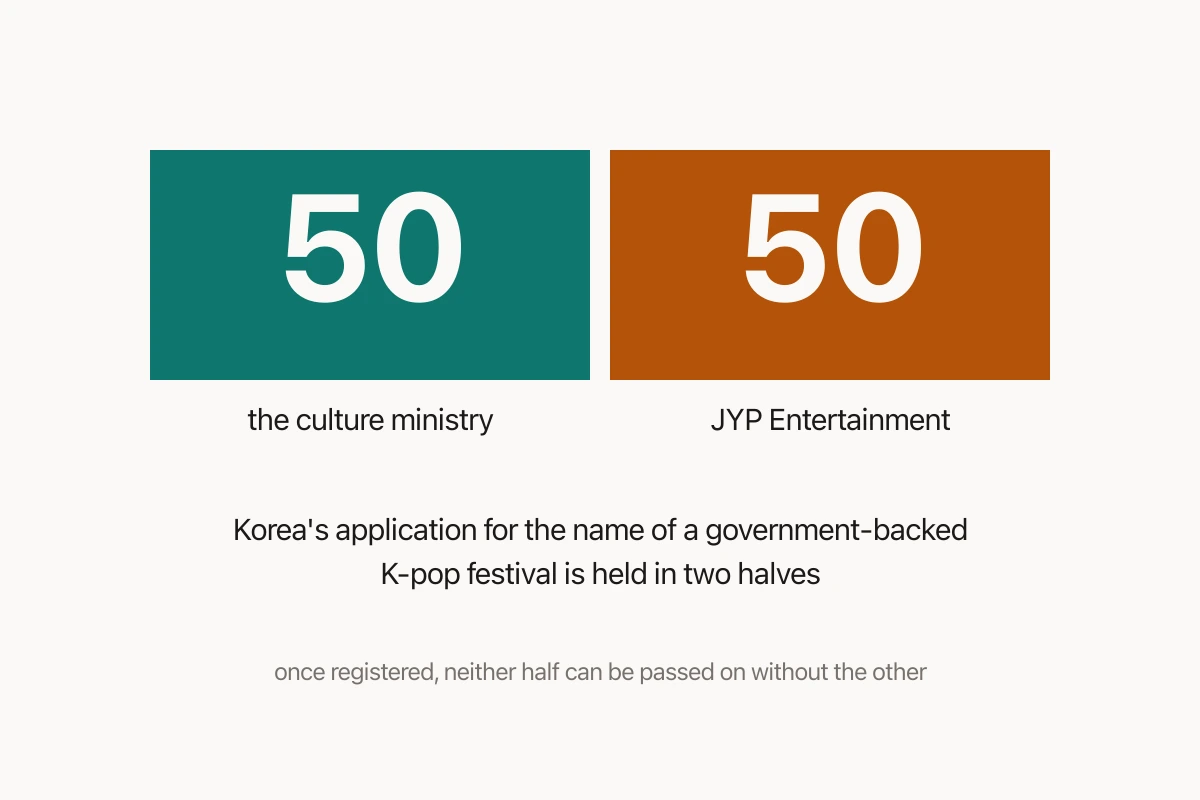
The Government's Giant K-pop Festival Has a Name. Half of It Belongs to JYP — and the Contract Was Too Secret for the Committee Chair to See
FANOMENON is meant to be Korea's state-backed answer to the world's pop festivals, planned for December 2027 by a presidential committee co-chaired by 박진영. His company filed the trademark first. On 7 October, at the National Assembly, a lawmaker put the contract on the big screen, the chair halted the audit, and 박진영 conceded that the way the name was taken was 'not normal'.
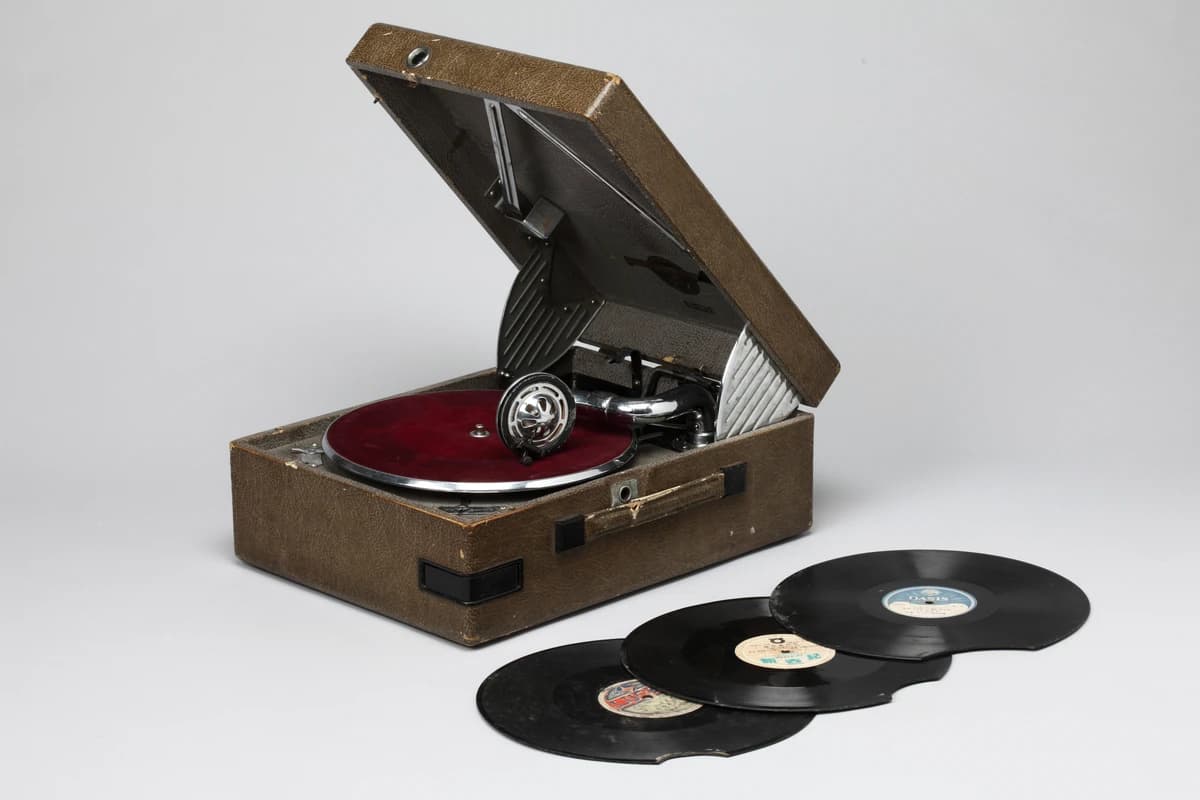
Korea's Most-Streamed Artist Sings a Genre the Country Banned for Two Decades
In 1935 a Korean record company slipped an anti-Japanese line past the colonial censors by submitting it as nonsense that sounded identical when sung. Thirty years later the Korean state banned the same genre for sounding Japanese — using a broadcasters' agreement, a ministry policy measure and three committees, but never once a law. The genre is called trot, and English writing about Korean music has essentially never mentioned it.

NewJeans Is Back — as Four. The Whole ADOR Saga, Explained.
On their fourth anniversary, NewJeans returned in a teaser — as a four-member group, at the very label they spent a year trying to leave, and without founding member Danielle. It's not a victory lap. It's the end of K-pop's biggest idol-versus-agency war, decided by a court. Here's the whole fight, and why the law made it end this way.
The Weekly Dispatch
Korea, curated. Every week.
The best of K-culture, straight from Seoul. Written by people who actually live here.
Free, no spam, unsubscribe whenever.