How K-pop Idols Are Made: The Trainee System, Explained
Behind every polished K-pop debut is a machine most fans never see: the trainee system. Years of dorm life, monthly cuts, no-dating rules, and evaluations that decide everything — and, for most, a debut that never comes. Here's how an ordinary kid actually becomes an idol, and what it costs.

Two true stories, told side by side, are the whole K-pop trainee system in miniature.
In 2011, a shy middle-schooler named Kim Taehyung went to an audition in Daegu — just to keep a friend company. A staffer noticed him in the crowd and asked him to try out. He was the only person picked that day. Years later, as V of BTS, he'd tell the story on American talk shows (Koreaboo).
Meanwhile, a girl named Park Jihyo signed with JYP Entertainment in 2005, at age eight — and then trained for roughly ten years before she finally debuted, in TWICE, in 2015. Somewhere in that decade she got so frustrated with the endless waiting that she briefly ran away (Wikipedia, Koreaboo).
An accident in a hallway and a ten-year grind — both produced global stars. That gap is the story. A K-pop idol is not "discovered" so much as manufactured, through one of the most elaborate talent pipelines on earth. Here's how the machine actually works, stage by stage.
Stage 1: Getting In
There are three doors into the system, and agencies keep all of them open.
Auditions are the front door — held year-round, both as online submissions and as in-person tours that increasingly span the globe. SM Entertainment's recent global audition rounds, for instance, hit cities across Korea plus stops in Thailand, Japan, the US, and Canada, on top of weekly walk-in auditions at its Seoul headquarters (Koreaboo). BLACKPINK's Rosé got in this way: she auditioned at a 2012 YG tryout in Sydney, placed first out of roughly 700 hopefuls, and moved to Korea at fifteen (Rolling Stone). Stray Kids' Bang Chan passed a 2010 JYP global audition in Australia at thirteen (Wikipedia).
Street casting is the second door: agencies send scouts to comb Seoul's busy districts for photogenic teenagers and invite them to a private audition. SM more or less pioneered the systematic version of this decades ago.
Online submissions are the third — a demo, a dance clip, a photo, sent in cold. However you get in, passing the audition isn't the finish line. It's the entrance exam for years of unpaid schooling.
Stage 2: Trainee Life
Once signed, you become a 연습생 (yeonseupsaeng) — a trainee — and your life is restructured around a single goal you're not guaranteed to reach. Trainees typically live together in company dorms and run a punishing daily schedule: vocal lessons, dance practice, rap, sometimes acting, foreign languages (Japanese, English, Chinese, for future overseas promotion), fitness, and media training in how to speak, bow, and behave. Many are still in school, cramming classes around practice-room hours (SCMP).
How long does it last? There's no honest single number — anyone who quotes you a tidy "average" is guessing. The real range is enormous: some idols debut after only months; Bang Chan trained seven years; Jihyo trained about ten. What every trainee shares is the uncertainty — years of total effort with no promised payoff.
And the rules can be severe. JYP's founder Park Jin-young openly enforced a no-dating rule for the first three years after debut — "After that they are free to bring boyfriends over," he said in 2015. Rosé has recounted that male and female trainees "weren't even allowed to look at each other," with separate dining times and manager monitoring. TWICE's Momo said on a variety show she was once told to lose seven kilograms in a single week (SCMP). Phones, diets, and free time are commonly controlled. You are, in effect, an athlete in a very strict academy — one where the sport is fame.
Stage 3: Survive the Evaluations
Effort alone doesn't move you forward; scores do. Trainees face regular monthly evaluations — you perform in front of executives, choreographers, and vocal coaches, and get graded on vocals, dance, rap, and stage presence. Rankings decide who advances toward a debut slot and who stalls. Consistently low scores can get you cut entirely, sent home after years of work.
This is the quiet, brutal fact under the glossy debuts: most trainees never debut at all. Reliable statistics are scarce — the eye-watering figures that circulate online come from industry commentary, not audited sources — but by every account the odds are punishing. A company might carry dozens of trainees for every handful that ever steps onto a stage as a debuted idol. The kids you see debut are the survivors of a years-long tournament most of their peers lost.
Stage 4: The Debut Team — and the Big Four
When an agency finally assembles a group, it's engineered like a roster: a main vocalist, a main dancer, a rapper, a "visual," a leader, each role deliberately filled. Which agency you land at shapes everything, and four dominate — the "Big 3" plus HYBE:
- SM Entertainment (founded 1995) essentially invented the modern, systematic idol-factory model — it even has a corporate term, "Cultural Technology," for it — and produced H.O.T., EXO, Red Velvet, NCT, and aespa.
- JYP Entertainment, founded by singer Park Jin-young, is known for well-rounded training and a strong girl-group record: TWICE, ITZY, NiziU.
- YG Entertainment cultivates a hip-hop, artist-driven identity with fewer but huge acts — BIGBANG, BLACKPINK.
- HYBE — Big Hit renamed itself HYBE in 2021 after BTS conquered the world — is the youngest, built as a house of multiple labels (home to BTS, SEVENTEEN, LE SSERAFIM). We dug into HYBE's power, and its very public fight with NewJeans over control, separately.
The TV-Show Era — and the Scandal
In the 2010s a new idol-making engine arrived: the survival show. Put dozens of trainees on television, let the audience vote, and you build a rabid fanbase before the group even debuts. JYP's Sixteen (2015) assembled TWICE this way; Mnet's blockbuster Produce 101 franchise mass-produced groups like I.O.I, Wanna One, and IZ*ONE from national fan votes; HYBE's I-LAND yielded ENHYPEN. It looked like democracy: the fans pick the idols.
Except, in one infamous case, they didn't. In 2019, viewers noticed suspicious vote tallies in the Produce 101 series, and an investigation followed. The show's director, Ahn Joon-young, and a chief producer were arrested; in a 2020 court ruling, Ahn was sentenced to prison and admitted the vote counts had been manipulated across all four seasons of the franchise — rigging which trainees debuted (Wikipedia, Korea Herald). The group X1, formed from the rigged final season, disbanded. It was a scandal precisely because it violated the promise the format was built on — and a reminder that even "fan-chosen" idols are made by the machine.
The Bill Comes Due
The trainee system runs on a financial model fans rarely see. Agencies front the cost — the lessons, the dorm, the choreographers, the styling — and at many companies that money is treated as a debt to be recouped from your future earnings, but only if you debut and actually make money. Trainees at smaller agencies have reportedly begun their careers already deep in the red (Keens Academy). The exact figures that circulate are industry estimates, not audited numbers — but the structure is real, and it tilts the power sharply toward the company.
That imbalance produced K-pop's most important legal reckoning. In 2009, three members of TVXQ sued SM Entertainment over a thirteen-year contract widely dubbed a "slave contract." In the aftermath, in July 2009, South Korea's Fair Trade Commission issued a Standard Exclusive Contract for pop-culture artists (대중문화예술인 표준전속계약서) recommending a seven-year ceiling on exclusive deals (FTC standard contract, via 정책브리핑).
It is worth being exact here, because almost nothing in English is. That seven years is not a law. It is a standard form the FTC recommends agencies adopt — filed under 행정규칙, administrative rule, not 법률. No Korean statute caps an entertainment contract at seven years, and the form itself allows longer terms where there is 정당한 사유, such as overseas activity. Seven years became the industry default because agencies took up the template, not because a legislature compelled them. (SM long disputed the "slave" characterization, and later court disclosures complicated the picture — but the template stuck.)
And the human cost isn't only financial. Years of surveillance, dieting, isolation from normal teenage life, and the constant fear of being cut take a documented toll on trainees' mental health — a pressure amplified by a legal gray zone in which trainees, often minors, are frequently classified as interns rather than protected employees (Buplr). The shine of a debut stage sits on top of a lot of unglamorous strain.
Can You Do It? (And the Scam Warning)
Here's the genuinely hopeful part: the door has opened wider than ever. The 2020s turned idol-making global. JYP built the Japanese group NiziU and the North American group VCHA through localized auditions and reality shows; HYBE assembled the global girl group KATSEYE; multinational survival shows now recruit and debut non-Korean members openly (The Conversation). You no longer have to be Korean, or even in Korea, to enter the pipeline.
But that openness has drawn predators, so end with the single most useful rule for any aspiring trainee: a legitimate agency never charges you to audition or train. Real companies make their money after you debut, out of your earnings — never from upfront "training course" fees. Demands for money to audition, high-pressure sales tactics, and tiny agencies with barely-there social accounts are the classic red flags of a scam (Koreaboo). If someone asks you to pay for the dream, they are selling you one, not offering it.
That's the trainee system, whole: a pipeline that takes in ordinary kids by the thousands, drills them for years with no promises, cuts most of them, and turns a lucky, gifted, exhausted few into the people the world sings along to. The next time a flawless group debuts looking effortless, remember Jihyo's ten years — and V, who only came to keep a friend company. Behind the effortlessness is the most demanding apprenticeship in modern pop. (Korea runs a comparable machine in sport, though its archery pipeline now has the opposite problem: not too many hopefuls, but too few.) For more on what happens after the debut, see how Korea turned the idol comeback into an art form — and, for what happens when the machine and its stars fall out, the NewJeans–ADOR war that a court had to settle.
Images are illustrative and depict debuted artists, not the trainees named in the text. Homepage/hero: IVE performing at the 2023 World Scout Jamboree K-POP concert — photo by Korea.net / Korean Culture & Information Service, Wikimedia Commons, CC BY-SA 2.0. Cover: TWICE at the Golden Disc Awards — photo by Korea Dispatch, Wikimedia Commons, CC BY 3.0. Listing card: aespa on stage — photo by David Lee, Wikimedia Commons, CC BY 2.0. Named examples, dates, and the Produce 101 case are drawn from the linked sources; contract and cost figures are described as reported, with unverified industry estimates flagged as such.
_performing_at_the_2023_World_Scout_Jamboree_K-POP_Super_Live_Concert.jpg)


Keep Reading
More Stories
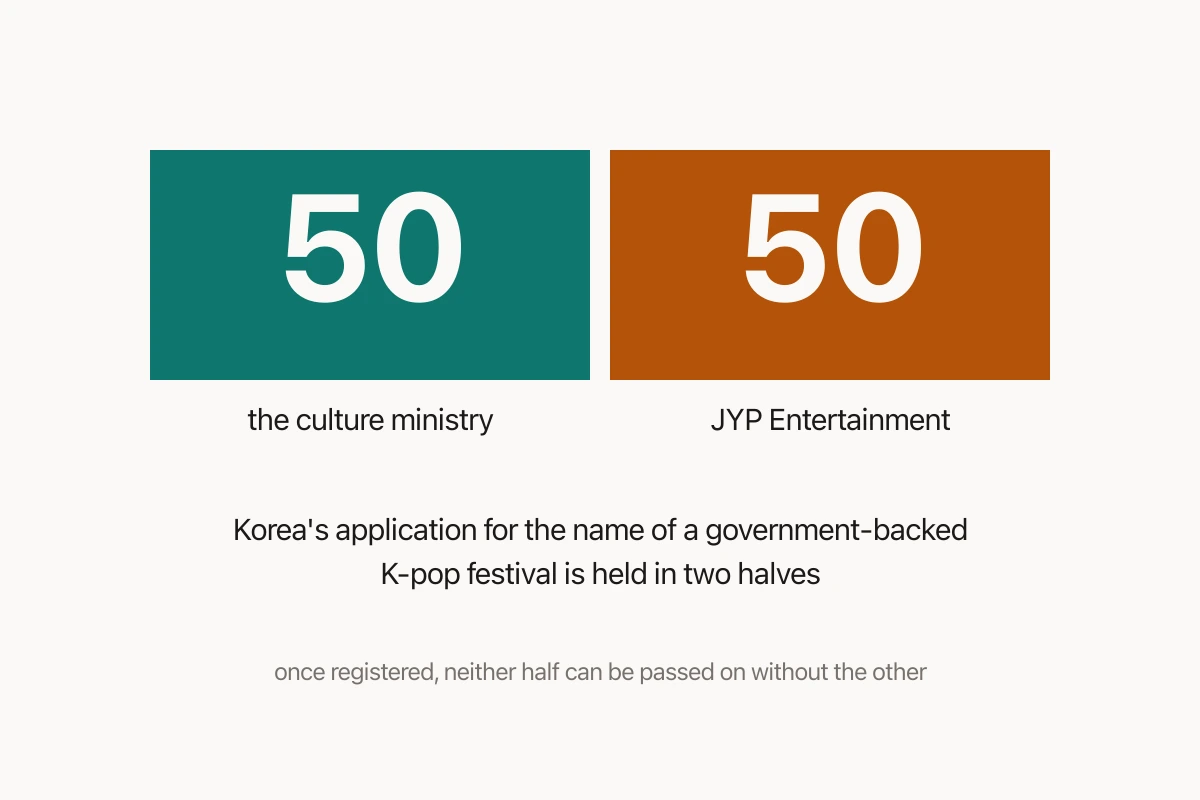
The Government's Giant K-pop Festival Has a Name. Half of It Belongs to JYP — and the Contract Was Too Secret for the Committee Chair to See
FANOMENON is meant to be Korea's state-backed answer to the world's pop festivals, planned for December 2027 by a presidential committee co-chaired by 박진영. His company filed the trademark first. On 7 October, at the National Assembly, a lawmaker put the contract on the big screen, the chair halted the audit, and 박진영 conceded that the way the name was taken was 'not normal'.
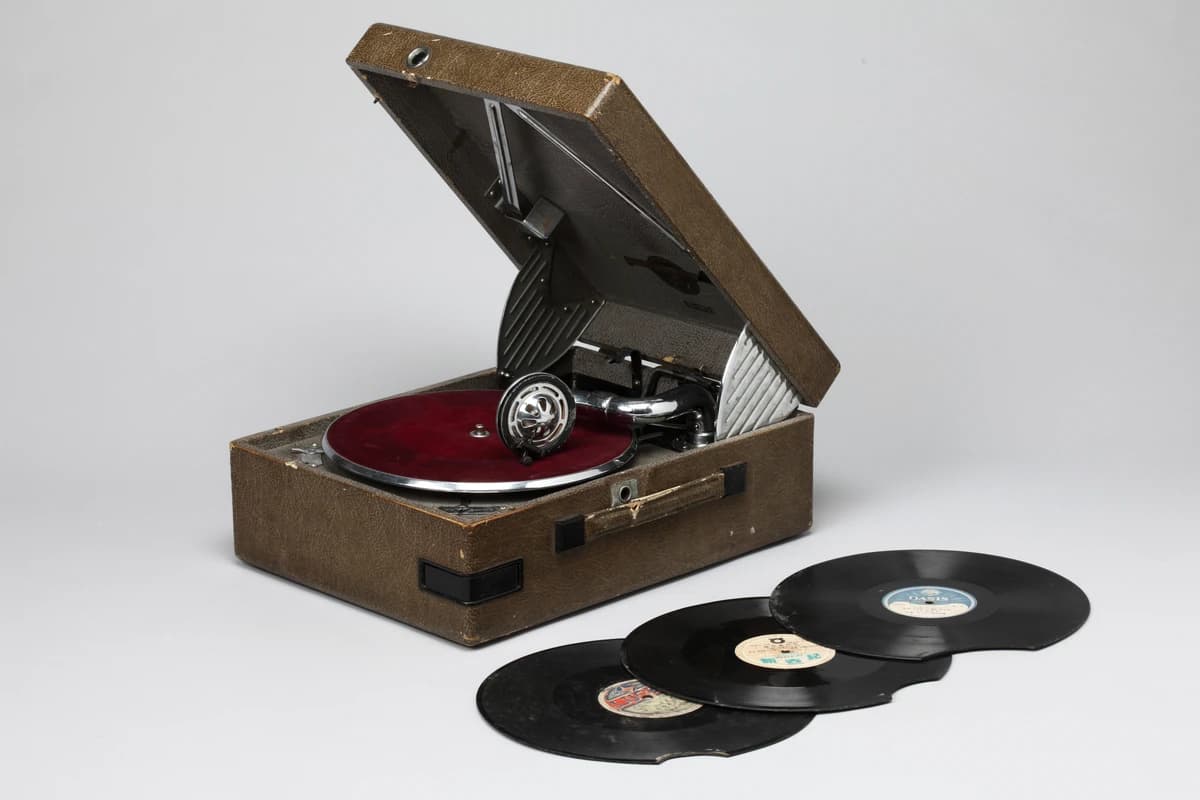
Korea's Most-Streamed Artist Sings a Genre the Country Banned for Two Decades
In 1935 a Korean record company slipped an anti-Japanese line past the colonial censors by submitting it as nonsense that sounded identical when sung. Thirty years later the Korean state banned the same genre for sounding Japanese — using a broadcasters' agreement, a ministry policy measure and three committees, but never once a law. The genre is called trot, and English writing about Korean music has essentially never mentioned it.
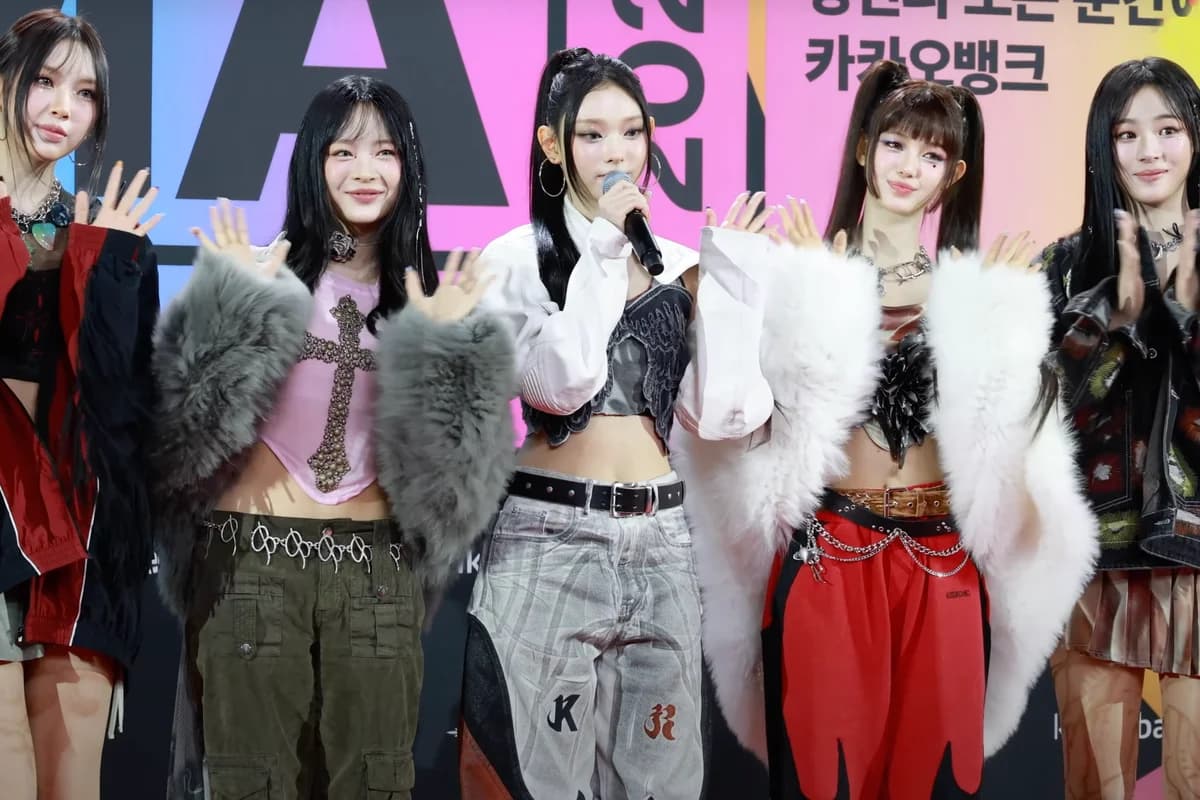
NewJeans Is Back — as Four. The Whole ADOR Saga, Explained.
On their fourth anniversary, NewJeans returned in a teaser — as a four-member group, at the very label they spent a year trying to leave, and without founding member Danielle. It's not a victory lap. It's the end of K-pop's biggest idol-versus-agency war, decided by a court. Here's the whole fight, and why the law made it end this way.
The Weekly Dispatch
Korea, curated. Every week.
The best of K-culture, straight from Seoul. Written by people who actually live here.
Free, no spam, unsubscribe whenever.