Learn Hangul in One Afternoon: How to Actually Read Korean by Tonight
Korean's alphabet was engineered in the 1440s to be learnable in a single sitting — and it still is. Here's the whole system, in the order that makes it click: the easy half first, the one trick that unlocks consonants, and your first real Korean words by the end.
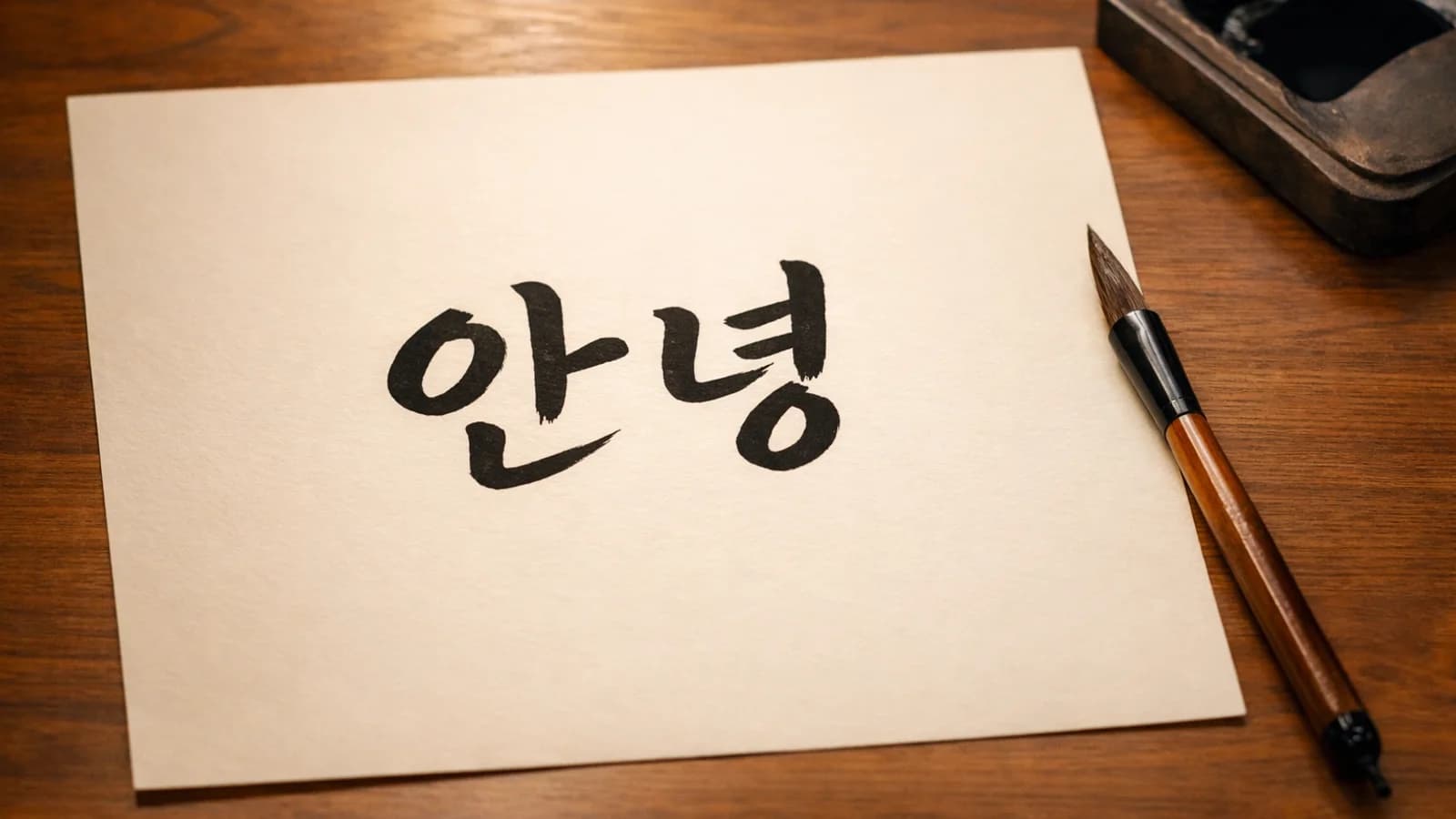
We say it constantly, so here's the proof: you can learn to read Korean today. Not understand it — read it. Sound out a menu, a subway sign, a member's name on a K-pop album. By dinner.
That sounds like a marketing promise. It isn't. It's a design feature. Most writing systems are accidents that piled up over centuries — English spelling is a crime scene. Korean's alphabet, 한글 (Hangeul), was deliberately invented in 1443 and rolled out in 1446 under King Sejong (세종대왕) with one explicit goal: to be simple enough that an ordinary person with no schooling could learn it fast. The scholars who introduced it bragged that a smart person would get it in a morning and a slow one within ten days. Five hundred years later, that's still about right.
Here's the whole thing, in the order that actually makes it stick. Give it an afternoon. We mean it.
The one idea that unlocks everything
Forget how English works for a second. English strings letters in a line: c-o-f-f-e-e. Korean doesn't. Korean packs its letters into little square blocks, one block per syllable.
The word for coffee is 커피 — two blocks, two syllables: keo + pi. Each block is built from 2 to 4 letters stacked into a tidy square. Once you see that — that you're reading blocks, not a stream — everything else is just learning the 24 letters that go inside them.
That's the entire job: 24 letters (14 consonants + 10 vowels), and a simple rule for how they stack. We'll do the letters in the easy order, not the dictionary order.
Step 1: the vowels (the easy half)
Start here, because vowels are almost free. Eight of the ten are a long line with short dashes hung off it — the line tells you the direction, the dash tells you the sound. The other two, ㅣ and ㅡ, are the bare lines themselves: the upright and the flat that everything else is built on.
The vertical vowels (long line stands up tall):
- ㅏ = a (as in "father")
- ㅓ = eo (as in "uh")
- ㅣ = i (as in "ee")
The horizontal vowels (long line lies flat):
- ㅗ = o (as in "oh")
- ㅜ = u (as in "oo")
- ㅡ = eu (a tight "uh" with a flat mouth — the one English doesn't have)
That's six of the ten. The other four are a free bonus, because Korean has a "add a Y" rule: double the little dash, and you bolt a "y" onto the front.
- ㅏ (a) → ㅑ = ya
- ㅓ (eo) → ㅕ = yeo
- ㅗ (o) → ㅛ = yo
- ㅜ (u) → ㅠ = yu
Ten vowels, and you really only memorized six. Take a breath — that was the hard part of the easy half, and you're done with it.
Step 2: the consonants (and the trick nobody tells you)
Here's the part that feels like a cheat code. The consonants weren't drawn at random — their shapes are tiny diagrams of your mouth making the sound. Learn five basic shapes and the rest fall out of them.
The five basic shapes:
- ㄱ = g/k — the back of your tongue rising to the roof of your mouth (look at it from the side).
- ㄴ = n — the tip of your tongue touching the ridge behind your top teeth.
- ㅁ = m — a closed mouth, seen head-on. It's literally a little mouth.
- ㅅ = s — the shape of teeth.
- ㅇ = silent or ng — an open throat. At the start of a block it's a silent placeholder (more on that in a second); at the end it's "ng."
Now the trick: add a stroke to a letter, and you add force or breath to the sound. The whole consonant set is built this way.
- ㄱ (g) + a stroke → ㅋ = k (the same sound, with a puff of air)
- ㄴ (n) → ㄷ = d → ㅌ = t
- ㅁ (m) → ㅂ = b → ㅍ = p
- ㅅ (s) → ㅈ = j → ㅊ = ch
- ㅇ → ㅎ = h
And one stray you just memorize: ㄹ = r/l (a flap somewhere between the two — the sound in the middle of "butter").
That's all 14. You didn't memorize fourteen unrelated squiggles; you learned five shapes and a rule.
(One refinement to file away, not to study today: a few consonants come in a doubled "tense" version — ㄲ kk, ㄸ tt, ㅃ pp, ㅆ ss, ㅉ jj — which sound tighter and harder. You'll meet them naturally. Don't let them slow you down now.)
Step 3: stack them into blocks
Now assemble. The rule for where each letter goes inside the square is almost intuitive once you've met the vowels:
- Every block starts with a consonant, in the first slot.
- A vertical vowel (ㅏ ㅓ ㅣ…) goes to its right. ㄱ + ㅏ → 가 (ga).
- A horizontal vowel (ㅗ ㅜ ㅡ…) goes underneath. ㄱ + ㅗ → 고 (go).
- A final consonant (called a batchim) drops to the bottom. ㄱ + ㅏ + ㅇ → 강 (gang).
"But what if a syllable starts with a vowel sound?" That's what the silent ㅇ is for — it sits in the consonant slot as a placeholder so the block still looks right. ㅇ + ㅏ → 아 (a). ㅇ + ㅏ + ㄴ → 안 (an). The ㅇ makes no sound there; it's just holding the seat.
That's the entire writing system. Consonant, vowel, then an optional consonant or two — packed into a square. There is no more to learn. There's only practice.
Step 4: read your first real words
Here's the reward, and it's genuinely a little magical the first time. Korean borrowed thousands of English words, spelled them in Hangul — the Konglish that's everywhere once you can read it — and now they're sitting on every café and convenience-store sign in the country — waiting for you to decode them. Sound these out, block by block, before you read the answer:
- 바나나 → ba-na-na → banana (yes, really — it even looks the same)
- 카메라 → ka-me-ra → camera
- 피자 → pi-ja → pizza
- 택시 → taek-si → taxi
- 버스 → beo-seu → bus
- 커피 → keo-pi → coffee (the word we started with)
If you just read those, you read Korean. That happened this afternoon. Every one of them used only the letters above, and nothing else.
The honest part: reading isn't understanding
We'd be breaking our own rules if we let you close the tab thinking you now "know Korean." You don't, and the gap is worth naming so it doesn't ambush you later.
- Reading ≠ pronouncing perfectly. When consonants bump into each other across blocks, the sounds shift in regular ways — 같이 is written gat-i but said gachi. The rules are consistent and learnable, but they come after today.
- Reading ≠ comprehension. You can now sound out a whole Korean sentence and understand none of it. That's normal. Decoding is step one of many.
- The textbook Korean you'll learn next isn't quite the Korean you'll hear on the street — especially outside Seoul, where regional dialects reshape the vowels entirely.
- Some of the blocks look confusingly alike, and Korean internet culture noticed. Once you can read them, you can also see them collide — which is the entire basis of 야민정음, the joke spelling that got printed on a real packet of noodles.
- Everything above is documented in exactly one book, and it was lost for four centuries. The reasoning behind these letter shapes survives only in the 해례 section of the 훈민정음 해례본 — a book whose rediscovery in 1940 set the date of Hangul Day, and whose second copy nobody has been able to find since 2015.
None of that diminishes what you did today. Reading is the doorway, and you just walked through it — most learners spend weeks on romanization crutches ("annyeonghaseyo") that actively teach the wrong sounds and delay this exact moment. You skipped the crutch.
Where to go from here
Two honest next steps, no upsell:
- Drill the letters until they're automatic, not just recognizable. Fifteen minutes a day for a week and the blocks stop being a puzzle and start being words. The Korean-learning apps actually worth your time are mostly good at exactly this kind of spaced repetition.
- Get realistic about the road past reading. We mapped the whole thing — how long it actually takes to go from "I can read signs" to "I can follow a K-drama without subtitles" — in How Hard Is Korean to Learn, Honestly?. Reading Hangul was the free gift at the start of that timeline. The rest is the real work — starting with the politeness system woven through every sentence — and it's worth knowing what you signed up for.
But that's tomorrow. Today you did the thing people put off for years and assume is hard: you learned to read an entire language's alphabet between lunch and dinner. King Sejong built it to be exactly this easy. Go read a menu.
—The Editors
Sources: letter inventory and Revised Romanization per Hangul — Wikipedia and the National Institute of Korean Language; Hangul created 1443 / promulgated 1446 under King Sejong per the Encyclopedia of Korean Culture. Every Korean example in this guide was verified character by character.
Keep Reading
More Stories
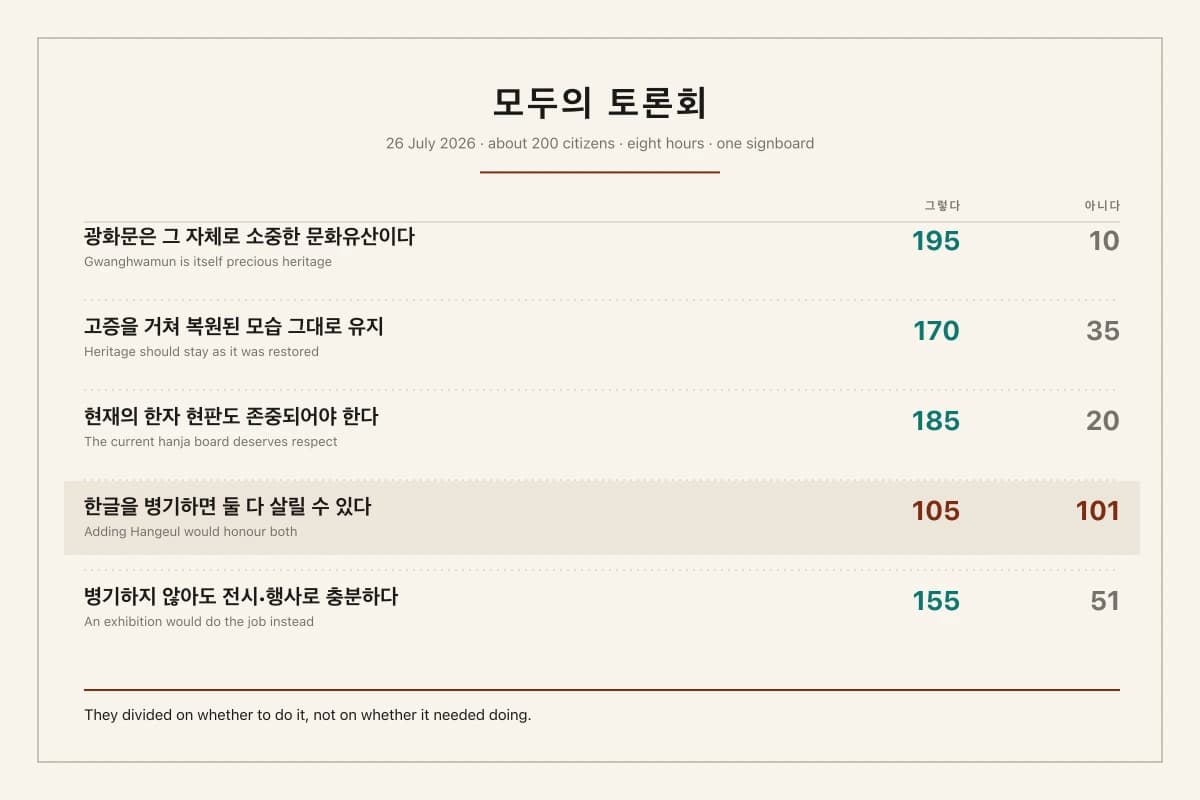
Korea Asked 200 Citizens Whether to Put a Hangeul Sign on Gwanghwamun. They Split 105–101, Then Voted 155–51 That It Is Not Needed.
The government convened its first-ever citizens' deliberation and spent eight hours on a signboard. The panel divided almost exactly in half on whether adding a Hangeul plaque would honour both the heritage and the alphabet — and then, overwhelmingly, said an exhibition would do the job instead. Both answers are coherent, which is the interesting part. The plaque they were arguing about is three years old, and the one before the one before it was in Park Chung-hee's handwriting.
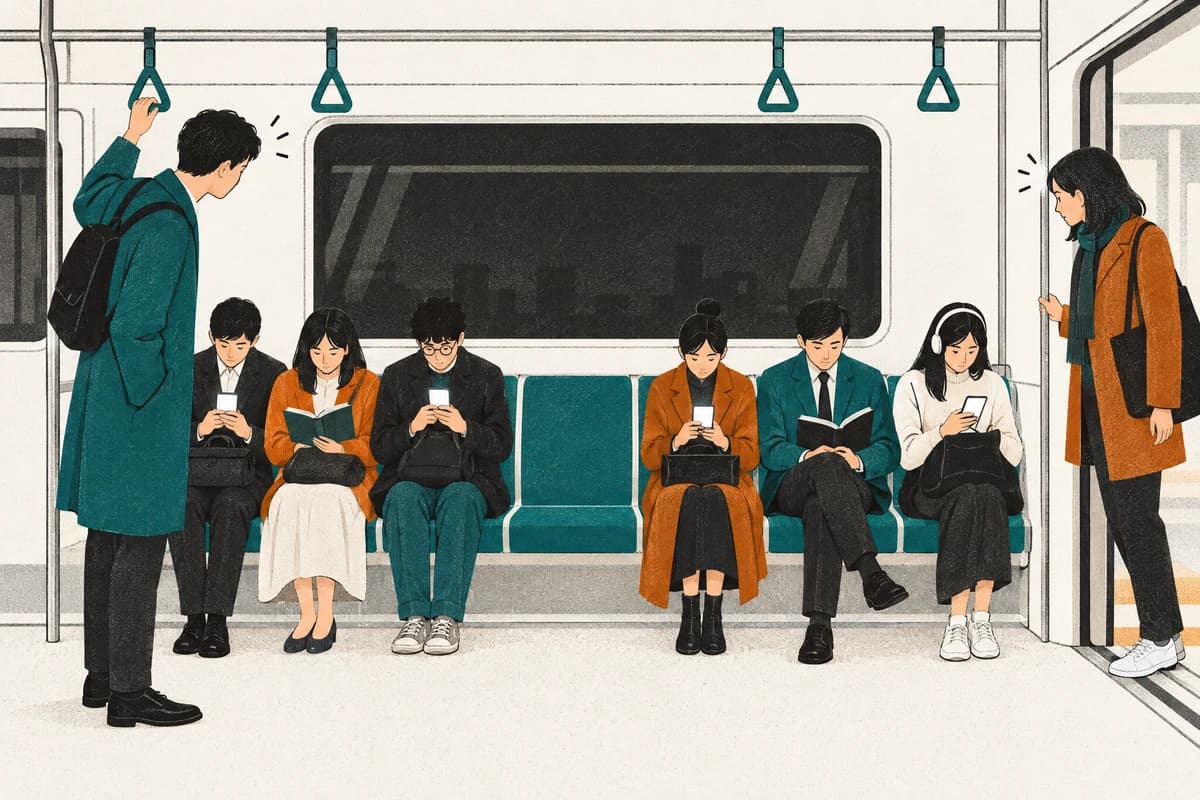
Koreans Have a Word for a Rule Everyone Follows. It Only Ever Gets Used for Rules Not Everyone Follows.
국룰 — gungnul — is Korean internet slang for an unwritten national consensus: the thing everybody does that nobody ever agreed to. It comes from a 2007 shooting game whose players had to invent their own duelling rules because the game had none. And the tell is in which things get called it. Nobody says murder is against 국룰. People say it about which sauce goes with pork belly, and then argue.
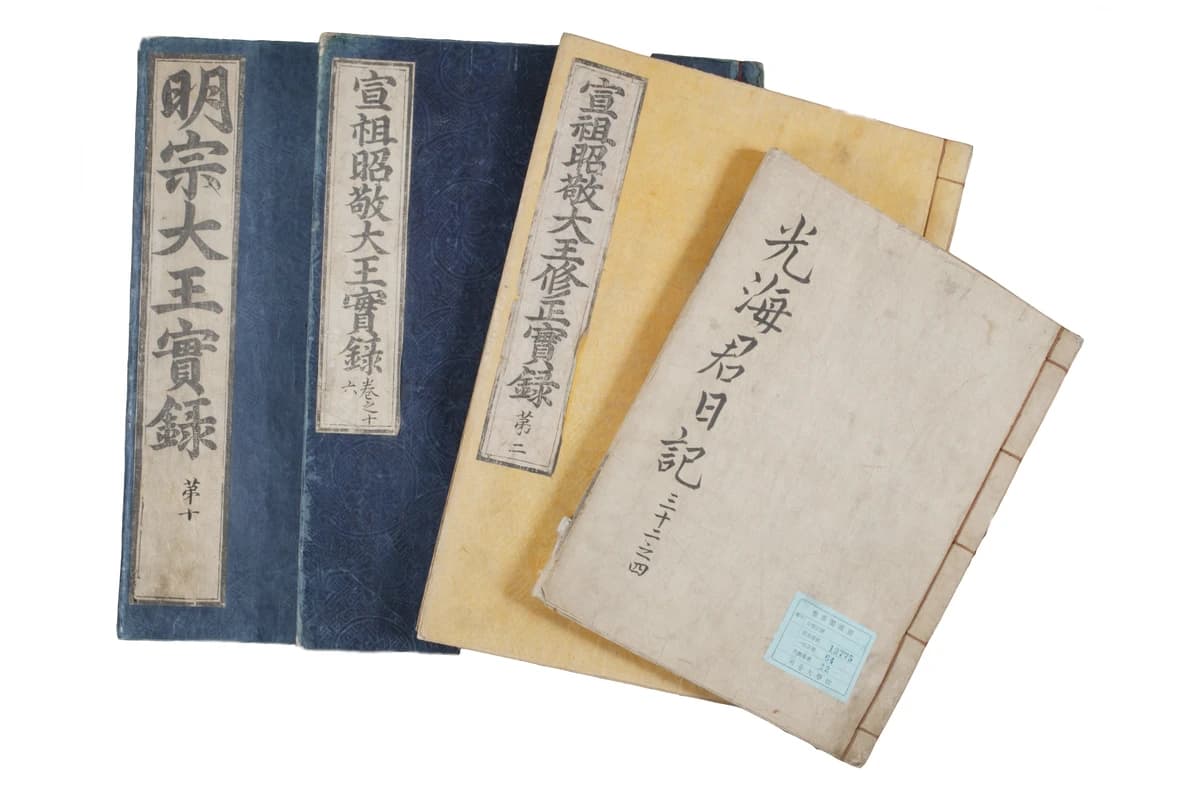
Hangul Day Exists Because a Book Turned Up in 1940. Nobody Can Find the Other Copy.
The date of Korea's alphabet holiday moved four times before a single physical book settled it — and that book arrived missing its first four pages, including King Sejong's own preface, which a calligrapher reconstructed by hand with a typo still in it. A second copy has been in a private house since 2008. The prosecution's own appraisers valued it at over a trillion won. Nobody has seen it since a fire in 2015.
The Weekly Dispatch
Korea, curated. Every week.
The best of K-culture, straight from Seoul. Written by people who actually live here.
Free, no spam, unsubscribe whenever.