Nunchi Isn't a Superpower. In Korean, It's Closer to Survival.
English readers were sold 눈치 as the Korean secret to happiness. But the same word that praises you for reading a room (눈치가 빠르다) is the word for anxiously watching your boss (눈치를 보다), skipping your vacation days, and eating 눈칫밥 — the meal you get on sufferance. A field guide to the half the marketing dropped.
In 2019, a book taught the English-speaking world a Korean word. The Power of Nunchi: The Korean Secret to Happiness and Success pitched 눈치 (nunchi) as a kind of emotional-intelligence superpower — "the art of reading a room" — and the coverage ran with it. NBC called it a "superpower" for hitting your New Year's resolutions. The World Economic Forum and France 24 ran the same happy framing.
None of that is wrong, exactly. But it's half the word.
Because in actual Korean, the same 눈치 that compliments you for being perceptive is the 눈치 you "watch" when your boss hasn't left the office, the 눈치 that keeps you from using your vacation days, and the root of 눈칫밥 — the food you eat on someone else's sufferance. Nunchi is a genuine social skill Koreans prize. It's also a tax that hierarchy levies. The English version sold the skill and quietly dropped the tax.
Here's the whole word.
The Split Screen: One Word, Two Feelings
Start with the dictionary. Korea's standard dictionary, the 표준국어대사전, defines 눈치 in two senses:
- 남의 마음을 그때그때 상황으로 미루어 알아내는 것 — inferring another person's mind from the situation at hand.
- 속으로 생각하는 바가 겉으로 드러나는 어떤 태도 — the outward sign of what someone is inwardly thinking.
Sense 1 is the skill. Sense 2 is the signal you're reading. Neutral enough. The valence lives in the idioms — and the idioms pull hard in opposite directions:
- 눈치가 빠르다 — "quick nunchi" — is defined as catching on to others' feelings unusually fast. It's a straightforward compliment.
- 눈치를 보다 — "to watch someone's nunchi" — means reading another's mood and attitude. And you do it to people who have power over you.
- 눈치가 없다 — "to have no nunchi" — is a social insult: you're the person who didn't notice.
- 눈치가 보이다 — the passive — means to feel watched, self-conscious under someone's gaze.
So the same three-syllable word contains both "you're wonderfully perceptive" and "I feel their eyes on me and I need to make myself smaller." That tension isn't a quirk of translation. It is the word.
The Word Koreans Actually Live: 눈칫밥
If you want the single term that shows where nunchi really sits, it's 눈칫밥 — literally "nunchi rice."
The standard dictionary defines it as "남의 눈치를 보아 가며 얻어먹는 밥": food you get only while carefully watching someone's mood. The idiom 눈칫밥을 먹다 means "기를 펴지 못하고 불편하게 생활하다" — to live cowed and uncomfortable, never able to relax, forever reading the room. The learner's dictionary glosses it, bluntly, as "a meal offered unwillingly."
There is no cheerful reading of 눈칫밥. It's the daughter-in-law in a hostile household, the new hire who doesn't dare leave first, the dependent relative. It's nunchi as the survival skill of someone without power — and it's lexicalized, a fixed word in the national dictionary, which tells you how central the experience is.
Where the "Eye-Measure" Myth Comes From (And Why It's Wrong)
English coverage loves to gloss nunchi as "eye-measure." It's tidy. It's also not what the historical record says.
The word is first attested in 1690, in the 역어유해 (Yeogeo yuhae), a Korean–Chinese glossary of the period. There, the Early Modern Korean form 눈츼 is written with the hanja 眼勢 — 眼 "eye" plus 勢 "force, momentum, posture." The earliest scribes understood it as "the force or set of the eyes" — the look in someone's eyes, their expression — not a measurement.
The "measure" reading is a folk etymology: English writers re-parsed the native suffix 치 as if it were a unit of length. But the 1690 text wrote 勢 — force — not any measure character. (Honesty requires a caveat the marketing never bothered with: Korea's National Institute of the Korean Language notes the origin of that suffix 치 is genuinely unknown — there's no 손치 or 발치. So no one has "decoded" nunchi. What we can say is that its oldest written form meant eye-force, which is precisely what deflates the eye-measure story.)
This matters beyond pedantry. "Eye-measure — the gentle art of gauging a room" sounds like mindfulness. "The force of someone's eyes on you" sounds like what 눈치를 보다 actually describes.
The Receipts: Nunchi as a Workplace Tax
The abstract claim — that nunchi is manufactured by hierarchy — turns concrete the moment you look at Korean labor surveys. The word shows up, by name, as the reason Koreans overwork and under-rest:
- Overtime. In a 2023 JobKorea survey of 862 office workers, one of the top reasons cited for working late was, verbatim, "야근을 당연하게 생각하는 기업 문화와 상사 눈치 보기" — a culture that normalizes overtime, plus watching the boss's nunchi (Seoul Economic Daily).
- Vacation. In a 2020 Now&Survey poll of 1,002 workers, among those who used a fifth or less of their annual leave, the number-one reason for not taking it was "주변의 눈치 때문에" — because of the nunchi of the people around them — at 38%, rising to 48% among women (Now&Survey). A government work-life survey of 22,000 people (KIHASA, 2023) found the same: Koreans were allotted 17 leave days and used under 12, with "상사의 눈치가 보여서" — feeling the boss's eyes — a named cause.
- Parental leave. A 2024 government workplace survey found only 63% of employers said all eligible staff could actually take parental leave, and the top barriers included "사용할 수 없는 직장 분위기" — an atmosphere in which you can't — at 31% (Chosun). That atmosphere is nunchi, institutionalized.
You do not find "emotional intelligence" cited in labor statistics as the reason people skip their holidays. You find nunchi.
But It's Genuinely Prized, Too
Here's where an honest account has to slow down, because the debunk is as incomplete as the hype.
눈치가 빠르다 is real praise, and Koreans mean it. The skill of walking into a room and instantly grasping who's tense, what's unsaid, and what's needed is socially treasured — and Korean psychology backs the upside. A 2013 study that developed a validated nunchi scale found that higher nunchi correlated with higher self-esteem, subjective well-being, and better relationships (Heo & Park, Korean Journal of Counseling). Measured on Koreans, in Korean, by Korean researchers.
So Euny Hong isn't making it up. Nunchi is a teachable social intelligence, and sharp nunchi genuinely helps you. Tellingly, even she concedes the part the headlines dropped — she calls nunchi "a secret weapon of the disadvantaged," something you deploy without privilege or education. That's not a rebuttal of the honest reading. It's the honest reading: nunchi is what people without power use to navigate people with it.
The same 2009 research that anchors the upside also isolates the downside. It splits nunchi into 주는 눈치 (giving cues) and 보는 눈치 (reading cues), and finds that the giving variety uniquely predicts a specifically Korean strain of social anxiety — the fear of being an offense or burden to others (Song & Park). Prized skill and anxiety engine, in the same construct.
The Sister Case: Japan's "Reading the Air"
If you doubt that reading a room can be an obligation rather than a gift, look next door. Japanese has 空気を読む (kūki o yomu) — "read the air" — the near-exact functional twin of nunchi. And it has the insult to match: KY, short for 空気が読めない (kūki ga yomenai), "can't read the air" — used for exactly the socially oblivious person a Korean would call 눈치가 없다.
Two neighboring cultures independently lexicalized the failure to read the room as a social offense. You don't build an insult around failing to do something optional. The reading is expected. A 2020 Korea–Japan study found the same two-factor nunchi structure in both countries' students — the pattern travels (Lee et al.).
This is also where the "emotional intelligence" translation quietly breaks. EI, in the Western self-help sense, is symmetric and self-directed — you read others to connect and to manage yourself. Nunchi is asymmetric and status-indexed: you read upward, and the heaviest idioms (눈치를 보다, 눈치가 보이다, 눈칫밥) sit on self-protective vigilance. English has no lexicalized phrase for "I feel watched and must shrink myself." Korean has several. That gap is the whole story.
So What Is Nunchi, Really?
Both things, at once.
It is a real, prized, teachable social intelligence — the ability to read a room that Koreans admire and that genuinely correlates with well-being. And it is a competence whose sharpness is produced by steep hierarchy: you develop fast nunchi because the cost of misreading a superior is measured in skipped vacations, unspoken overtime, and 눈칫밥. Loosen the hierarchy and the skill would still be nice to have. Keep it tight, and the skill becomes mandatory.
The English-language version kept the flattering half and dropped the load-bearing one. If you're learning about Korea — or working inside it — the useful version is the whole word: nunchi is what you're good at, and also what you're afraid of, and in Korean those have never been two different things.
It pairs naturally with the rest of the machinery Korea runs on relationships: the honorific system that encodes rank into every sentence, the gapjil that happens when someone with power stops caring about your nunchi, and the drinking culture where a lot of that hierarchy gets negotiated after hours. Read the room. In Korea, it was never a suggestion.
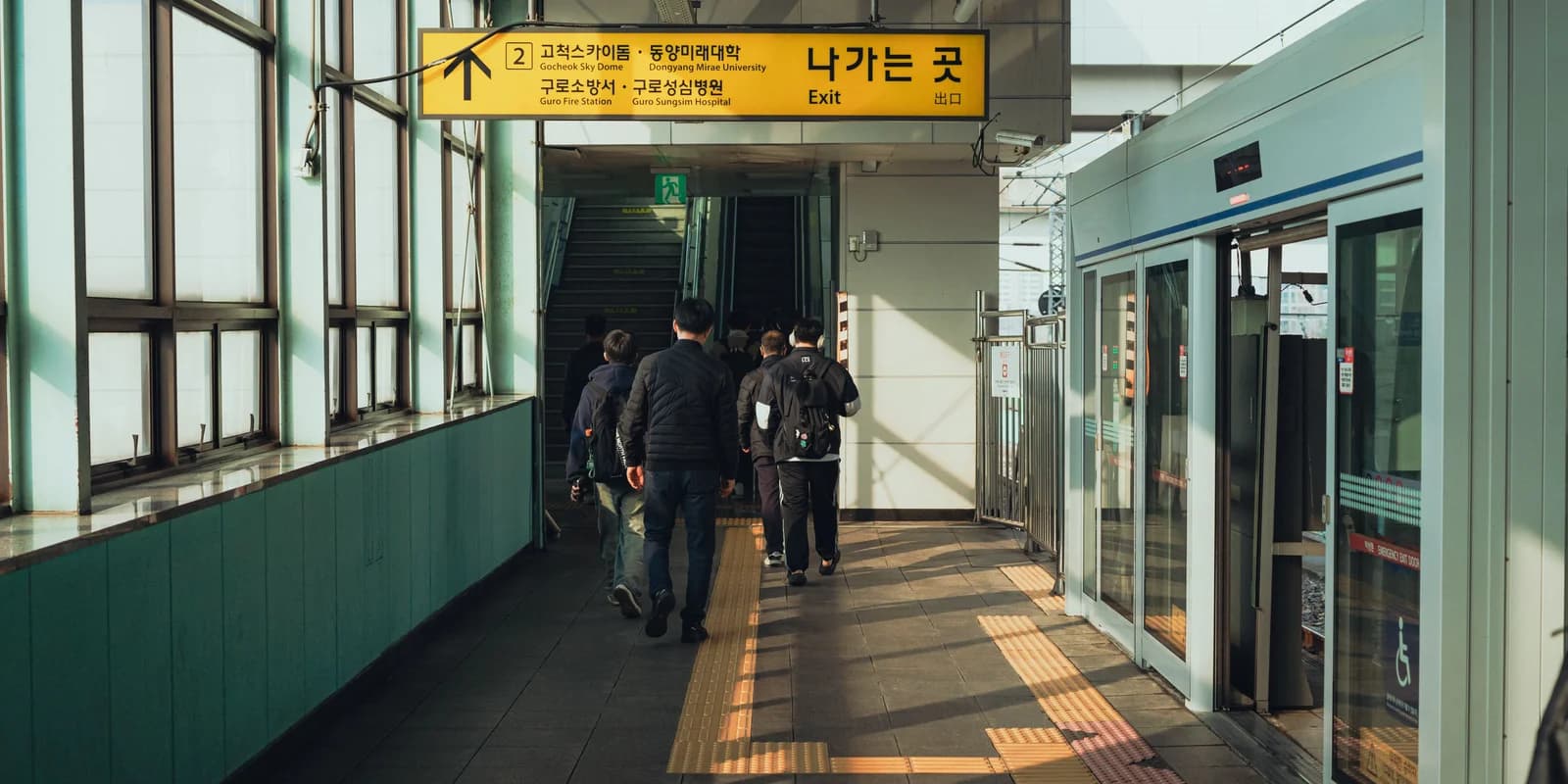
Dictionary definitions are quoted from the 표준국어대사전 (National Institute of the Korean Language). The etymology is from the 1690 역어유해, where 눈츼 is glossed 眼勢 ("eye-force"); we note explicitly that the origin of the suffix 치 is unresolved, and do not claim otherwise. We represent Euny Hong's book fairly — our disagreement is with the "superpower" marketing, not with her claim that nunchi is a real skill, which she herself ties to disadvantage. Workplace figures are dated in-text and drawn from the linked surveys. The negative-default reading of 눈치를 보다 reflects native-speaker usage and the weight of the idioms, not an official ruling. Images: hero — the Gangnam/Teheran-ro office district at dusk, by kallerna, CC BY-SA 4.0 via Wikimedia Commons (cropped); cover — commuters at a Seoul subway exit, by Theodore Nguyen via Pexels (Pexels License); listing card — an AI illustration (generated with Higgsfield, GPT Image 2.5) of an office waiting for the boss to leave; it depicts no real workplace or person.
Keep Reading
More Stories
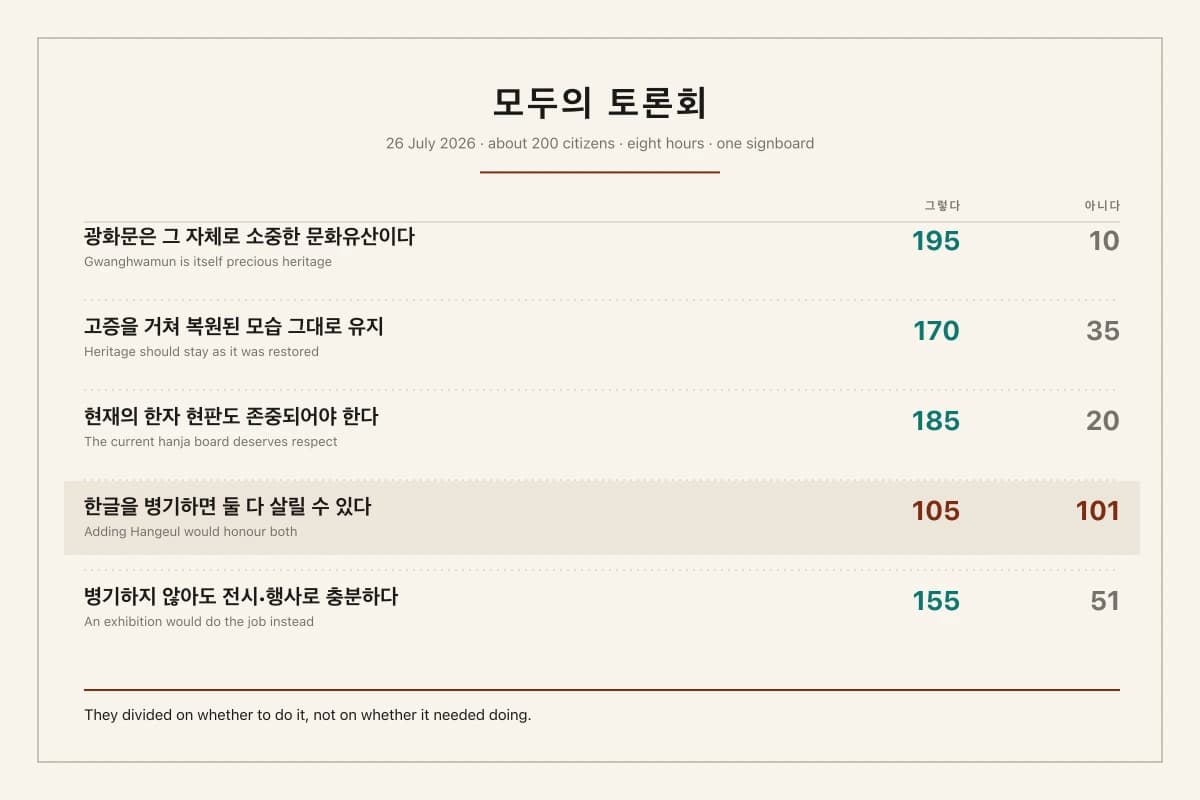
Korea Asked 200 Citizens Whether to Put a Hangeul Sign on Gwanghwamun. They Split 105–101, Then Voted 155–51 That It Is Not Needed.
The government convened its first-ever citizens' deliberation and spent eight hours on a signboard. The panel divided almost exactly in half on whether adding a Hangeul plaque would honour both the heritage and the alphabet — and then, overwhelmingly, said an exhibition would do the job instead. Both answers are coherent, which is the interesting part. The plaque they were arguing about is three years old, and the one before the one before it was in Park Chung-hee's handwriting.
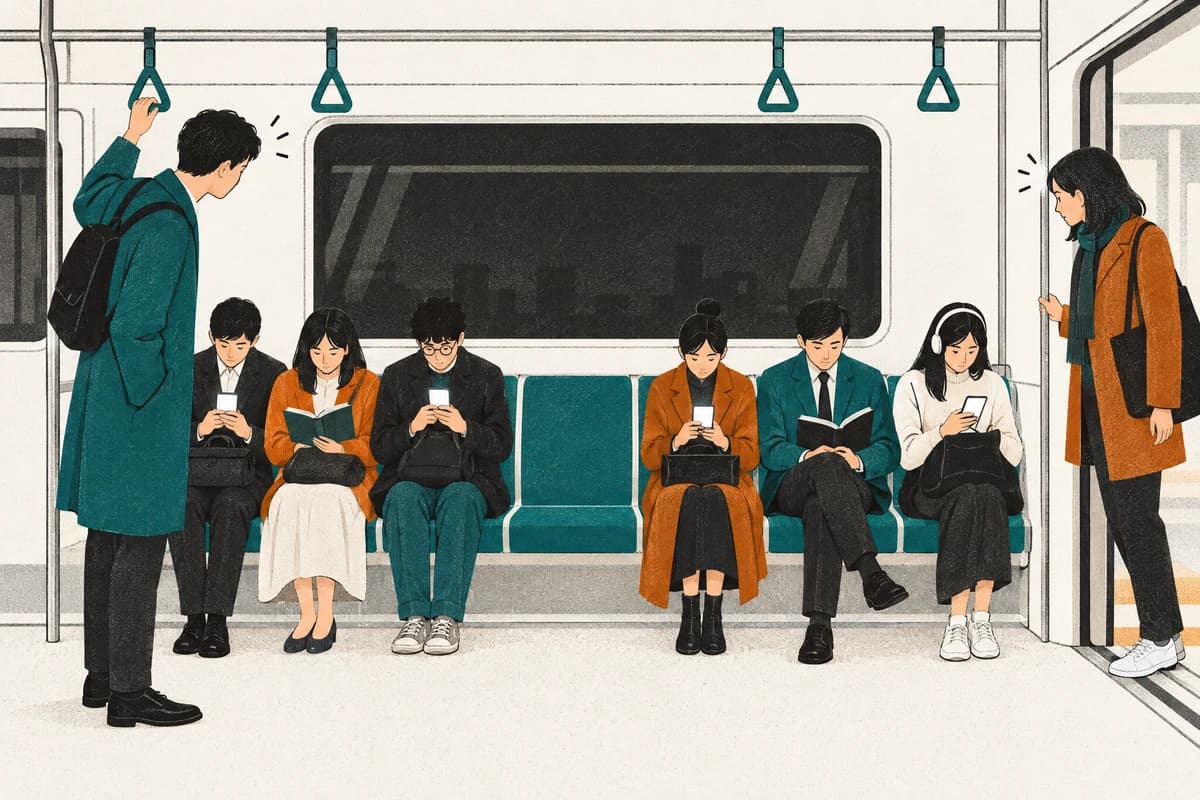
Koreans Have a Word for a Rule Everyone Follows. It Only Ever Gets Used for Rules Not Everyone Follows.
국룰 — gungnul — is Korean internet slang for an unwritten national consensus: the thing everybody does that nobody ever agreed to. It comes from a 2007 shooting game whose players had to invent their own duelling rules because the game had none. And the tell is in which things get called it. Nobody says murder is against 국룰. People say it about which sauce goes with pork belly, and then argue.
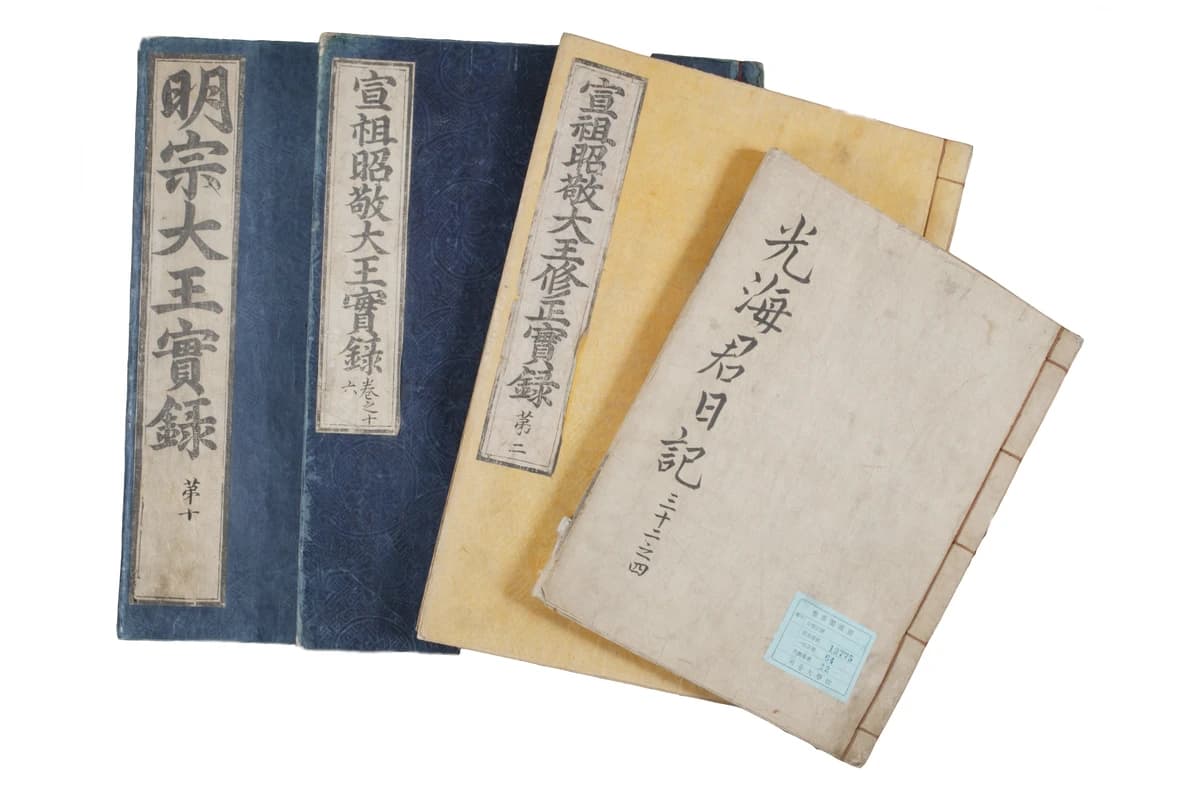
Hangul Day Exists Because a Book Turned Up in 1940. Nobody Can Find the Other Copy.
The date of Korea's alphabet holiday moved four times before a single physical book settled it — and that book arrived missing its first four pages, including King Sejong's own preface, which a calligrapher reconstructed by hand with a typo still in it. A second copy has been in a private house since 2008. The prosecution's own appraisers valued it at over a trillion won. Nobody has seen it since a fire in 2015.
The Weekly Dispatch
Korea, curated. Every week.
The best of K-culture, straight from Seoul. Written by people who actually live here.
Free, no spam, unsubscribe whenever.