Gapjil, Explained: Korea's Power-Trip Problem
From an heiress who turned a plane around over a bag of macadamia nuts to a young firefighter's death over forced work dinners — 갑질 is the one Korean word that explains how power gets abused here, and why the country keeps erupting over it.
This month, the word is everywhere again, and the reason is grim. A government inspection confirmed that a young female firefighter in Gwangju had been forced into unwanted after-work dinners and drinking before she took her own life last October — and that her colleagues had ignored her family's request for a harassment investigation and even released her private counseling records. The president ordered the inquiry himself and vowed to "root out" forced work dinners; the government is now seeking disciplinary action against 17 fire officials. (Korea Herald)
There is a single Korean word for the thread connecting that tragedy to, of all things, an airline heiress who once turned a plane around over a bag of nuts. The word is 갑질 (gapjil), and if you want to understand how power actually works — and gets abused — in Korea, it's the most important piece of vocabulary you can learn.
What 갑질 actually means
The word is built from a contract.
In Korean legal documents, the two parties are labeled 갑 (gap) and 을 (eul) — literally the first two of the old "heavenly stems," used the way English contracts say "Party A" and "Party B." But 갑 isn't neutral: it's the first party, the one with the power — the employer, the client, the buyer, the franchise headquarters. 을 is the one who needs the deal more — the worker, the supplier, the franchisee. (It's the same power gradient that turns nunchi from a social skill into a survival tax: 갑질 is what happens when the person with power stops caring how well you read the room.)
Tack on -질 (-jil), a dismissive little suffix that turns a noun into "the crappy act of doing that thing," and you get 갑질: the things a 갑 does to an 을 because it can. The tantrums, the humiliations, the impossible demands, the "do you know who I am," the errands that were never in the job description. It's power with the safety off.
The concept isn't new — Korea's steep, Confucian-rooted social hierarchy has always run on rank and seniority. But the word went mainstream in the mid-2010s, and it did so because of one spectacularly stupid incident.
The case that made it a household word: "nut rage"
On December 5, 2014, Korean Air Flight 086 was pushing back from the gate at New York's JFK when it abruptly stopped and returned.
The reason: Cho Hyun-ah (Heather Cho) — a Korean Air vice president and the daughter of the airline's chairman — had been served macadamia nuts in first class in the bag instead of on a plate. She erupted. According to the case that followed, she berated the crew, demanded the cabin service chief kneel, struck him with a tablet, and ordered the taxiing aircraft back to the gate to throw him off the plane. A jet with 250 people aboard was reversed because an executive didn't like how her snack was presented. (Wikipedia, NPR)
The country lost it — and not because plane delays are rare, but because 땅콩 회항 ("nut return") was 갑질 distilled to its purest, most absurd form: a powerful person treating employees as props, certain that her rank made it fine. Cho was convicted and jailed. The word 갑질 rode the scandal into everyday speech.
Then the family did it again. In 2018, Cho's younger sister, Cho Hyun-min, was accused of throwing water at an advertising agency manager during a meeting — "water rage," inevitably — and was suspended amid a fresh wave of outrage and renewed scrutiny of the family's long history of treating staff badly. (CNN) Two sisters, two viral 갑질 scandals, one airline. It became the national case study.
It's not just chaebols
Here's the trap, though: if you file 갑질 under "rich-family craziness," you miss the point. The nut-rage stuff is famous because it's extreme. The everyday version is quieter, and it's everywhere.
- At work. The boss who calls at 11 p.m. "just to chat," assigns personal errands, screams in meetings, or makes attendance at his drinking nights mandatory. This is the most common 갑질 by far, and the hardest to escape, because the 을 — you — needs the job.
- From customers. Korea has a brutal version of "the customer is always right": the 갑질 customer (you'll also hear 진상) who screams at a cashier, demands a kneeling apology from a call-center worker, or films a clerk to get them fired. Service and emotional-labor workers absorb an enormous amount of this.
- Up the supply chain. Big companies squeezing small suppliers, franchise HQs bleeding their franchisees — the original, literal 갑 abusing the original, literal 을.
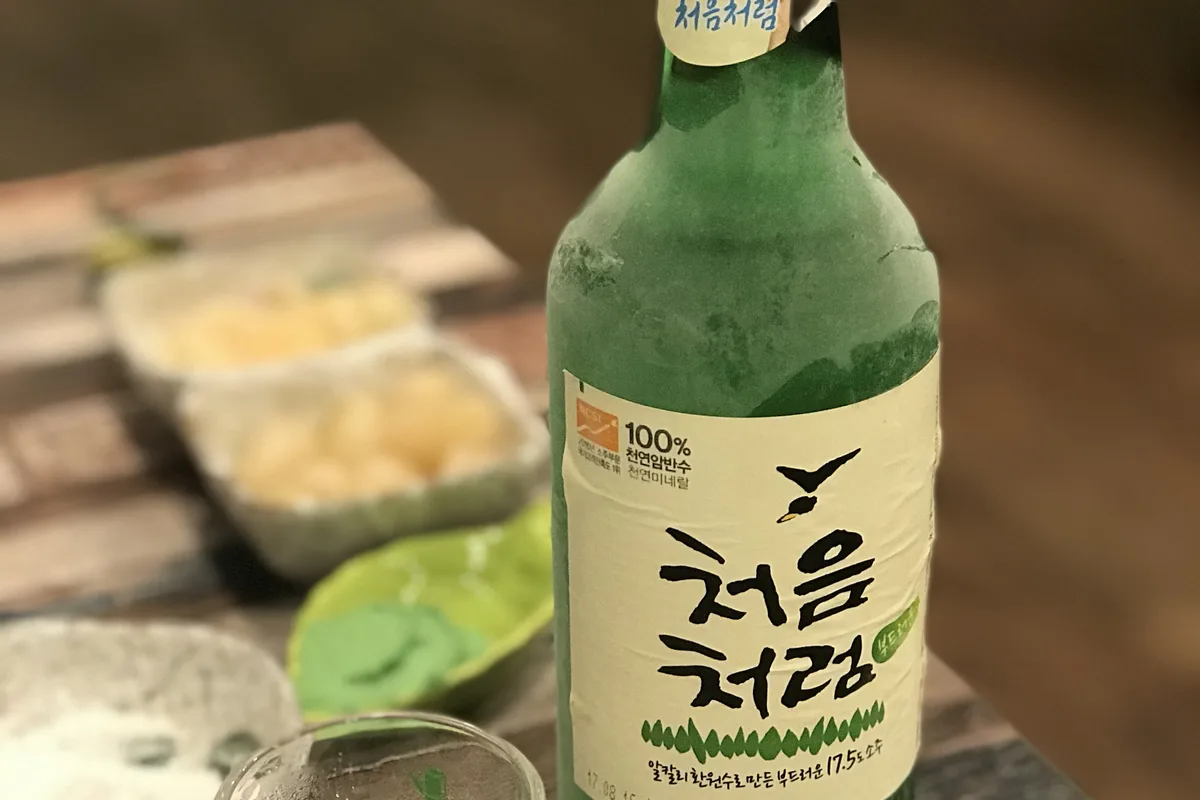
And one vehicle deserves special mention, because it's exactly what surfaced in the firefighter case: the 회식 (hoesik), the company dinner. When attendance isn't optional and a senior keeps your glass full whether you want it or not, the "team bonding" becomes a loyalty test you're not allowed to fail. We wrote about how Korea's drinking culture is changing — and the forced-회식 strain of 갑질 is a big part of why younger Koreans are pushing back on it.
The fightback
Korea has not taken this lying down. Two things, in particular, have teeth.
The first is the law. In 2019, Korea amended its Labor Standards Act with a workplace anti-bullying provision (직장 내 괴롭힘 금지법) that formally bans abuse of power at work. It's imperfect — enforcement is patchy and the burden often still falls on the victim — but it put a legal name on behavior that used to be just "how the boss is."
The second is shame. A civic group called 직장갑질119 (Gapjil 119) runs hotlines and gathers anonymous reports, and Korean media will amplify a well-documented 갑질 case until the offender is publicly disgraced. In a society this conscious of reputation, going viral is its own punishment — sometimes a more effective one than the courts. (Though public shame and permanent disgrace aren't the same thing: Korea also has a well-worn comeback script for the disgraced.)
It's working, slowly. But the problem is sticky: surveys keep finding that 갑질 never really left — it just adapts. (CNN) Which brings us back to Gwangju.
Back to the firefighter
The Gwangju case matters because it's 갑질 at its darkest, and because the system around it failed at almost every step.
What the government's two-week inspection confirmed: the firefighter was pressured into after-work dinners and drinking she didn't want; after her death, the fire station closed its own internal probe in about a week, concluding there was "nothing unusual"; officials ignored her family's request for a harassment investigation; and someone released the content of her private pre-death counseling. A real investigation only began after the case escalated to the national level, pushed into the open by her fiancé, who held a press conference at Gwangju City Hall in June. (Korea Herald, Kyunghyang)
The president's personal intervention — ordering the inspection and publicly targeting forced drinking — is itself a sign of how politically radioactive 갑질 has become. A decade after nut rage made it a punchline, it's a cause a head of state campaigns on. (Specific allegations about individuals' conduct remain under investigation; what's above is what officials have stated.)
Why it persists — and why that's changing
So why does a wealthy, hyper-modern democracy still run on this? Because 갑질 isn't really about bad individuals. It's structural — the dark side of a hierarchy that also gives Korea its speed, its deference, its astonishing coordination. When rank determines who speaks, who pours, who stays late and who goes home, the line between "respect for seniority" and "abuse of position" is thin, and easy for a 갑 to cross. (That rank is not vague, either: Korean companies run a formal ladder of job titles with published waiting times between rungs.) The same hierarchy shows up before anyone has a job — see how it plays out as school bullying (학폭) among students who haven't even entered the workforce yet.
What's actually shifting is the 을 side. Younger Koreans — the same generation walking away from the all-night 회식 and prizing work-life balance — are far less willing to absorb 갑질 as the price of a paycheck. They screenshot the 11 p.m. texts. They report the abusive client. They quit. And when a case is bad enough, they make sure the whole country sees it.
That's the quietly hopeful part of an ugly story. 갑질 hasn't disappeared, and the Gwangju tragedy is proof of how far it can still go. But a country that now has a word for it, a law against it, a hotline for it, and a reflex to drag it into the daylight is a country that has decided this is no longer just "how power works." It's a problem — and Korea, loudly, is treating it like one.
—The Editors
The Gwangju firefighter case — the government inspection's confirmed findings (forced after-work drinking, the ignored harassment-investigation request, the released counseling records, the prematurely closed initial probe), the presidential order, and the disciplinary action sought against 17 officials — is reported by the Korea Herald and Kyunghyang Shinmun; specific allegations about named individuals remain under investigation and are described as such. The 2014 "nut rage" incident (Cho Hyun-ah / Korean Air Flight 086) and the 2018 "water rage" incident (Cho Hyun-min) are documented by Wikipedia, NPR, CBC and CNN. The meaning and origin of 갑질 (갑/을 contract terminology, the -질 suffix), the 2019 workplace anti-bullying law, and the 직장갑질119 group draw on Korea Herald, Wikipedia and CNN reporting.
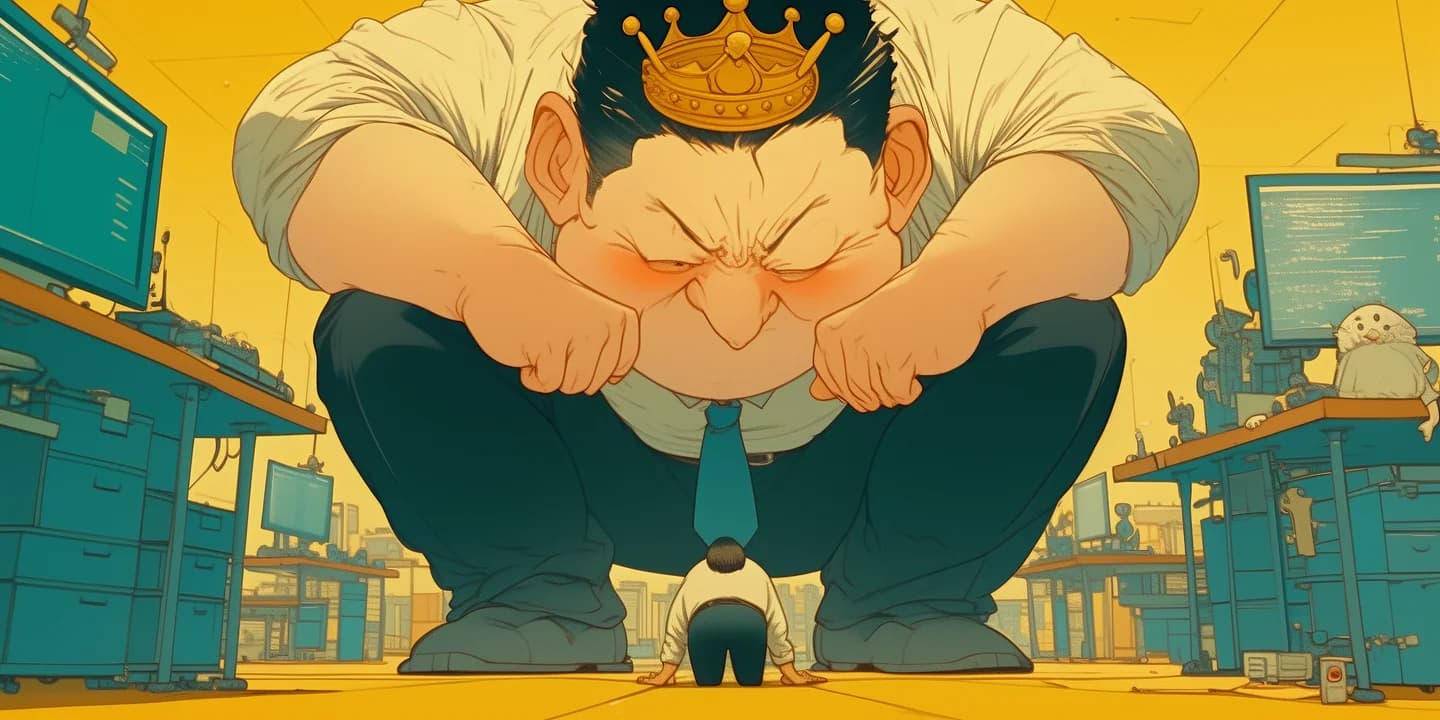
Cover and listing card: original AI illustrations (Midjourney), depicting 갑질 as a crowned, looming boss towering over a bowing employee — satirical, and not a depiction of any real person. In-article photo: a bottle of soju on a restaurant table — photo by gteddy, Wikimedia Commons, CC0.

Keep Reading
More Stories
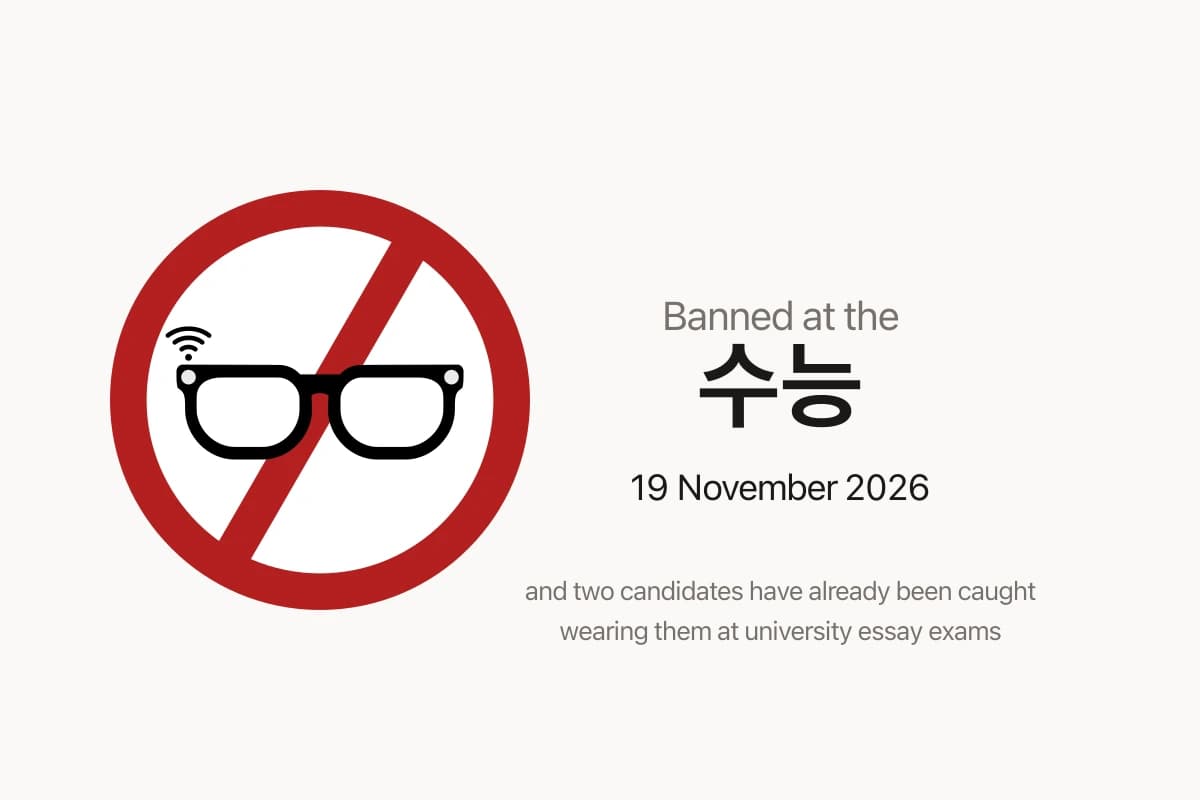
Two Candidates Wore AI Glasses Into Korean University Exams This Month. Five Weeks Later, 550,000 People Sit the 수능
At the University of Seoul on 3 October and at Yonsei a week later, proctors spotted AI smart glasses on candidates sitting essay exams for admission. Both had passed the glasses check in ordinary frames and switched once the exam began. The 수능 on 19 November already bans the devices; the question is whether anyone can see them.
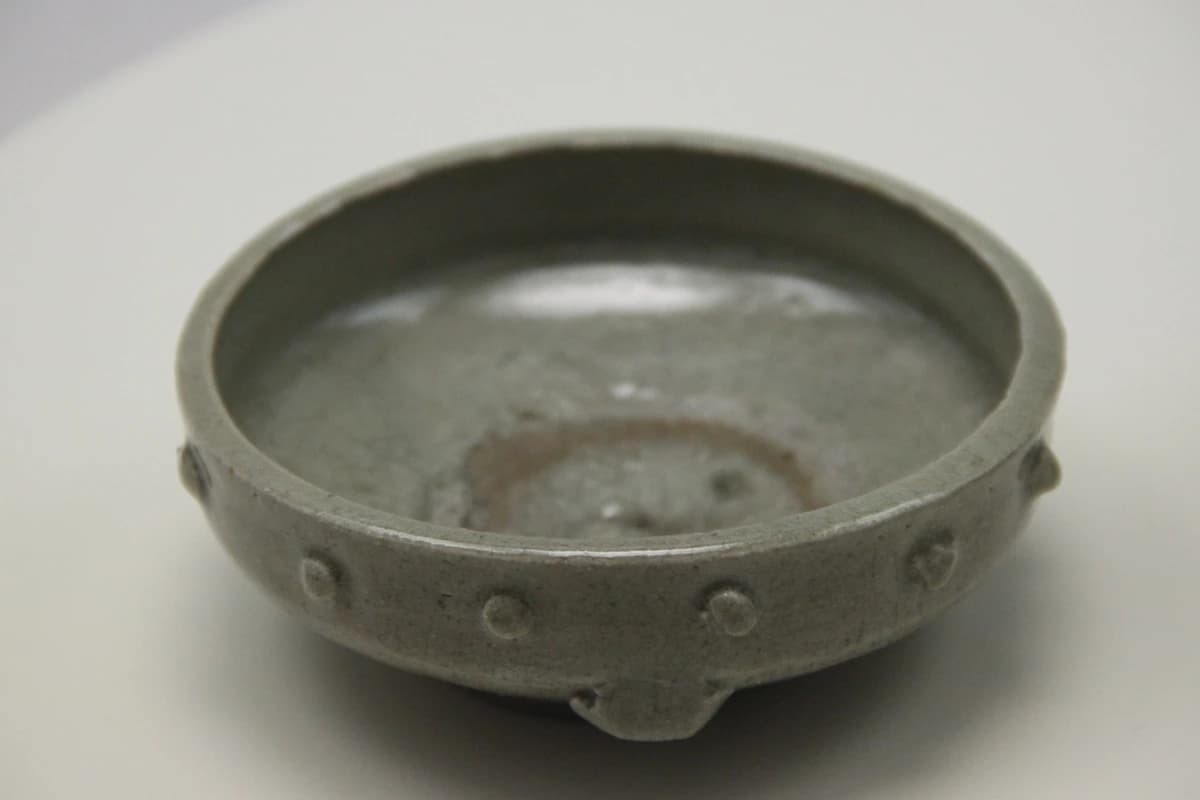
The Fisherman Hid It Under His Floorboards. The Reward He Eventually Got Set Off a Decade of Looting.
Korea marked fifty years of underwater archaeology in Mokpo in September 2026. The official story starts with a net and a report. The documented one starts with six pieces of Chinese porcelain given away as presents, a schoolteacher brother who had to get them all back, and officials who did not want the paperwork. Then the state paid a reward, a diver worked out how much of it went in tax, and for the next ten years people stole the wreck faster than the government could raise it — until the navy's own divers could not find the ship, and the excavation hired the looters.
Korea's Convenience Stores Are Selling Humanoid Robots for Chuseok. Neither Chain Expects to Sell One, and Both Have Said So.
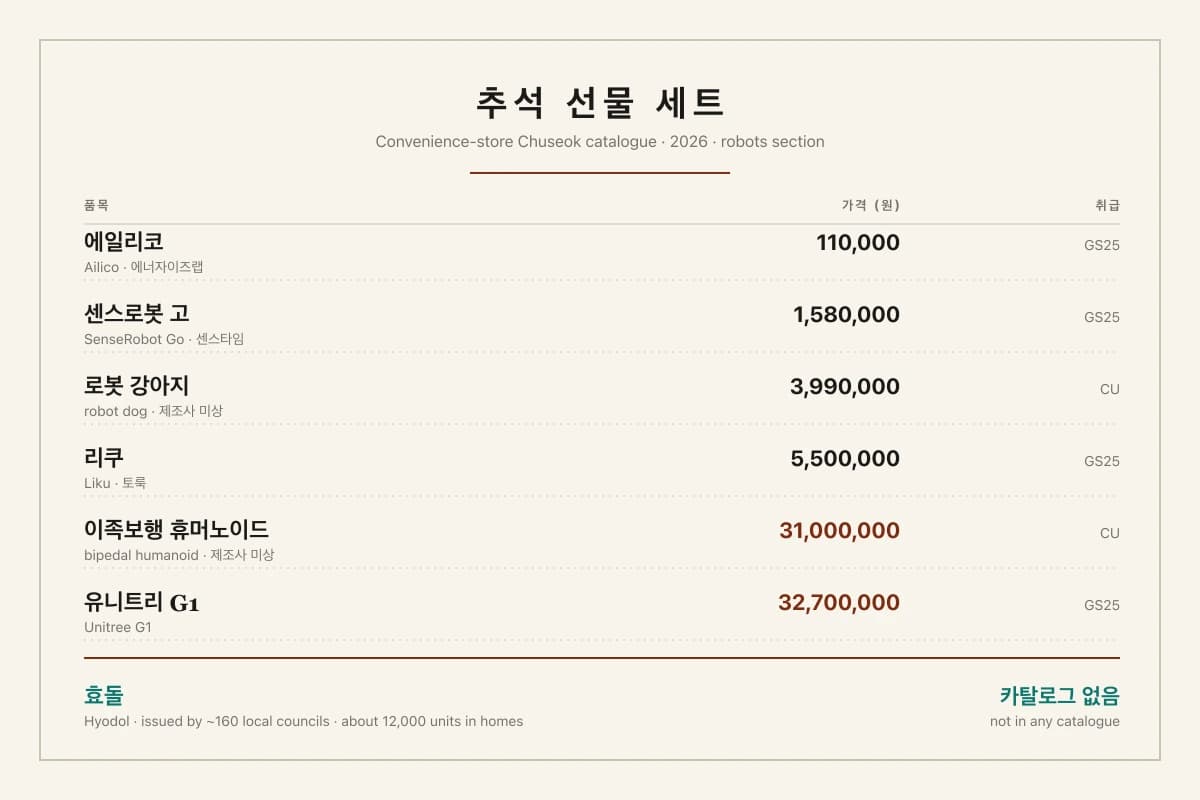
CU's holiday catalogue has a bipedal humanoid at ₩31 million, next to the beef and the gold bars. GS25 has an AI companion robot at ₩5.5 million and a keyring that talks back at ₩110,000. We assumed the pitch was companionship for parents you won't be visiting. It isn't — the retailers say plainly these are there to be noticed, not bought. Meanwhile about twelve thousand robots are already in Korean homes, asking elderly residents whether they've taken their medicine, and nobody put those in a catalogue.
The Weekly Dispatch
Korea, curated. Every week.
The best of K-culture, straight from Seoul. Written by people who actually live here.
Free, no spam, unsubscribe whenever.