Korea's 방 Culture, Explained: Why There's a Private Room for Everything
Sing, game, sweat, sleep, study, or break out of a locked room — in Korea you rent the space by the hour. Walk any city street and the neon is stacked with 방 (bang, 'room') signs. Here's the tour, the prices, and the genuinely interesting reason a whole country built its leisure around renting rooms.
Look up on almost any Korean street and you'll see it: a vertical stack of glowing signs, one business per floor, and a surprising number of them end in the same syllable — 방 (bang). It just means "room." But in Korea, that one word has quietly organized an entire economy of leisure.
Want to sing? There's a room for that. Game? A room. Sweat in a sauna and then sleep over? Read comics until 3 a.m.? Study in silence? Get locked in and solve your way out? Each of those is a room you rent by the hour (or by the song), and there's almost certainly one within a five-minute walk of wherever you're standing.
This is 방 문화 (bang munhwa), "room culture," and once you see it, you can't unsee it. Here's the tour — what each room is, roughly what it costs (as of 2026; prices vary by neighborhood and time of day) — and then the part that's actually fascinating: why a wealthy, modern country runs so much of its social life out of rented rooms.
The rooms, room by room
노래방 (noraebang) — the singing room
The original, and still the heart of it. A 노래방 is a private karaoke room you and your friends pile into, grab the tambourines, and absolutely demolish a few hours of ballads and idol hits. Crucially, it's private — you're not performing for a bar full of strangers, just for each other. That privacy is the whole point.
The modern twist is the 코인노래방 (coin noraebang): a stripped-down, pay-as-you-go version where you feed in coins or cash and get a handful of songs — a few hundred won buys two or three. They're cheap, they're everywhere near universities, and — this is the part foreigners find strange and then love — singing alone is completely normal. Stopping into a coin noraebang by yourself to belt three songs between errands is an ordinary Tuesday here.
The older, plusher 노래방 — a bigger room rented by the hour and split among a group — is more of a night-out affair, and very often the 2차 (icha, "round two") after a company dinner. More on that below.
PC방 (PC bang) — the gaming room
Do not call it an internet café. A PC방 is a low-lit hall of high-end gaming PCs, mechanical keyboards, racing chairs, and triple-digit frame rates — a genuine cathedral of Korean gaming culture, and a big reason Korea produces the world's best esports players — the same culture that gave the world Faker and competitive esports. You pay by the hour (roughly ₩1,000–1,500, often cheaper in 10-hour blocks), and you stay for a League of Legends session that mysteriously eats your whole afternoon. It's also the one room here that became a whole industry — Korea has lost about 70% of its PC방 since 2001 while the business got bigger, which we unpack in the PC방, explained.
The other secret of the PC방 is the food. You order from your seat — 라면, fried rice, 돈까스, a tower of snacks — and a staff member brings it over without breaking your concentration. The 라면 at a good PC방 is a food group unto itself.
찜질방 (jjimjilbang) — the sweating (and sleeping) room
The visitor favorite, and rightly so. A 찜질방 is a 24-hour Korean bathhouse-plus-sauna complex: hot rooms lined with salt or charcoal or jade, cold plunge pools, snack bars selling 식혜 and roasted eggs, and — the magic part — big communal floors where you can simply lie down and sleep. Entry runs about ₩9,000–13,000, and that's not per hour. It's all day, and all night if you want it.
Which is exactly why people do: miss the last subway, pay ₩12,000, sweat, shower, and sleep on a heated floor in your matching 찜질방 pajamas until the trains start again. It's cheaper than a cab home and somehow more wholesome. You'll learn the 양머리 (yangmeori), the folded-towel "sheep head" everyone wears, within about four minutes of arriving.
만화카페 (manhwa café) — the reading-and-lounging room
A 만화카페 (comic café, the cozy modern descendant of the old 만화방) is a hushed warren of cushioned nooks and wall-to-wall comics and webtoons, where you burrow in with a stack of books, a ramyeon, and zero obligation to talk to anyone. Reckon on ₩3,000–4,000 an hour, and many run an unlimited day pass.
The newer ones have quietly become all-in-one hideouts — board games, Nintendo, OTT streaming, free toppings for your noodles — and a lot of them let you sleep over for a flat rate (₩10,000–18,000), which makes them a budget cousin of the 찜질방 for anyone who'd rather doze among the books than on a sauna floor.
스터디카페 (study café) — the focus room
Korea's punishing study culture had to go somewhere, and increasingly it goes to the 스터디카페: silent, individually-lit desks rented by the hour (a few thousand won, cheaper by the day or in time-packages), with free coffee, lockers, and an atmosphere of collective grim determination. It's the productivity room — the place students and remote workers go to not be at home, where the bed and the fridge and the family are all too close.
방탈출 (bang-talchul) — the escape room
Korea took the global escape-room trend and made it a national date night. A 방탈출카페 locks your group into an elaborately themed room — a haunted school, a heist, a horror movie — and gives you an hour to solve your way out. Expect ₩20,000–28,000 a person, less per head if you bring a bigger group. It's the go-to for a couple's date or a friend group looking for something better than another dinner.
And the long tail
The suffix is productive — Koreans will append 방 to almost any rentable activity:
- 멀티방 (multibang): a private room with a games console, a big screen, and karaoke — a mix-and-match hangout.
- 보드게임카페 (board-game café): shelves of games and a host to teach them, ~₩3,000 an hour.
- 파티룸 (party room): a decorated private space you rent for a birthday or a small gathering — Pinterest-pretty, with its own karaoke and barbecue, often ₩30,000+ a head.
- DVD방 (DVD bang): private movie rooms with a couch and a big screen. Once a fixture — and, frankly, one of the few private spaces available to young couples who live with their parents — they've mostly faded out as streaming took over, surviving as 멀티방s.
- 빨래방 (laundromat), 키즈카페 (kids' café), 만화방, 분장실… the list genuinely does not end.
So why does Korea do this?
Here's the actually-interesting part. 방 culture isn't a quirk — it's a rational, even elegant, response to how Korea lives. A few threads:
There's no room at home. Korean cities are among the densest on earth, and most people live in compact apartments, often with family well into adulthood. There is nowhere to put eight friends and a karaoke machine, nowhere to host a game night, nowhere to be loud. So you don't host at home — you rent the room, for two hours, for the price of a couple of coffees, and hand it back. (About the only time that instinct flips is once every four years, when the whole country spills into the streets to roar together for the World Cup.)
Privacy is the product. In a society this crowded and this socially observed, a door that closes is worth paying for. The noraebang's privacy lets you sing badly without an audience; the DVD방 gave couples a place to be alone; the study café gives you a pocket of silence that your shared apartment can't. You're not really renting karaoke or comics. You're renting a room of your own, by the hour.
It's the engine of the night out. Korean socializing runs in rounds — 1차 (dinner) → 2차 (drinks or noraebang) → 3차 (…another noraebang). The 방 is the infrastructure that makes that possible: the 회식 (company dinner) doesn't end at the restaurant, it moves, and it usually moves into a room. (If you want the bigger picture of how Koreans actually socialize and eat versus the tourist version, we corrected a dozen myths here.)
It's cheap, and it's always open. Hourly pricing turns leisure into something you can do on a whim and a student budget — ₩500 to sing, ₩1,000 to game, ₩12,000 to sleep. And in a 24-hour city that never quite powers down, the rooms are open when everything else is closed. The 방 is where the night goes after midnight.
Put those together and 방 culture stops looking strange and starts looking like a solution: a way to buy space, privacy, and a third place — somewhere that isn't home and isn't work — à la carte, by the hour, in a country where all three are in short supply.
A visitor's quick guide
If you're in Korea and want to try one, here's where to start and how not to look completely lost:
- Easiest first room: a 코인노래방. Cheap, low-commitment, no booking, and going alone is normal. Pick songs by number on the remote; English songs are in there.
- Best experience: a 찜질방. Pay at the front, take your wristband (it tracks your snacks; you pay on the way out), shower first, then explore the hot rooms in your issued pajamas. Yes, the bathing areas are gender-separated and nude — that part's not optional, but it's deeply normal and nobody is looking at you.
- For a rainy afternoon: a 만화카페. Shoes off, find a nook, order a ramyeon.
- Etiquette, broadly: shoes off where there's a raised floor, keep your voice down in the quiet rooms (study cafés, comic cafés), clean up after yourself, and don't be shocked when a stranger at the PC방 next to you orders a full meal at 2 a.m. That's the culture working as designed.
A country that builds a room for every mood, opens it 24 hours, and charges by the hour has figured out something the rest of us are still fumbling toward: that sometimes what you need isn't a bigger apartment or a fancier night out. It's just a door that closes, a couple of hours that are yours, and somewhere to put the noise.
—The Editors
Prices are typical 2026 ranges and vary widely by city, neighborhood, brand, and time of day — treat them as ballpark, not gospel. 방 types, etiquette, and the bathing customs described are standard nationwide; the cultural reading draws on Korea's well-documented "bang culture" alongside our own time living here.
Keep Reading
More Stories
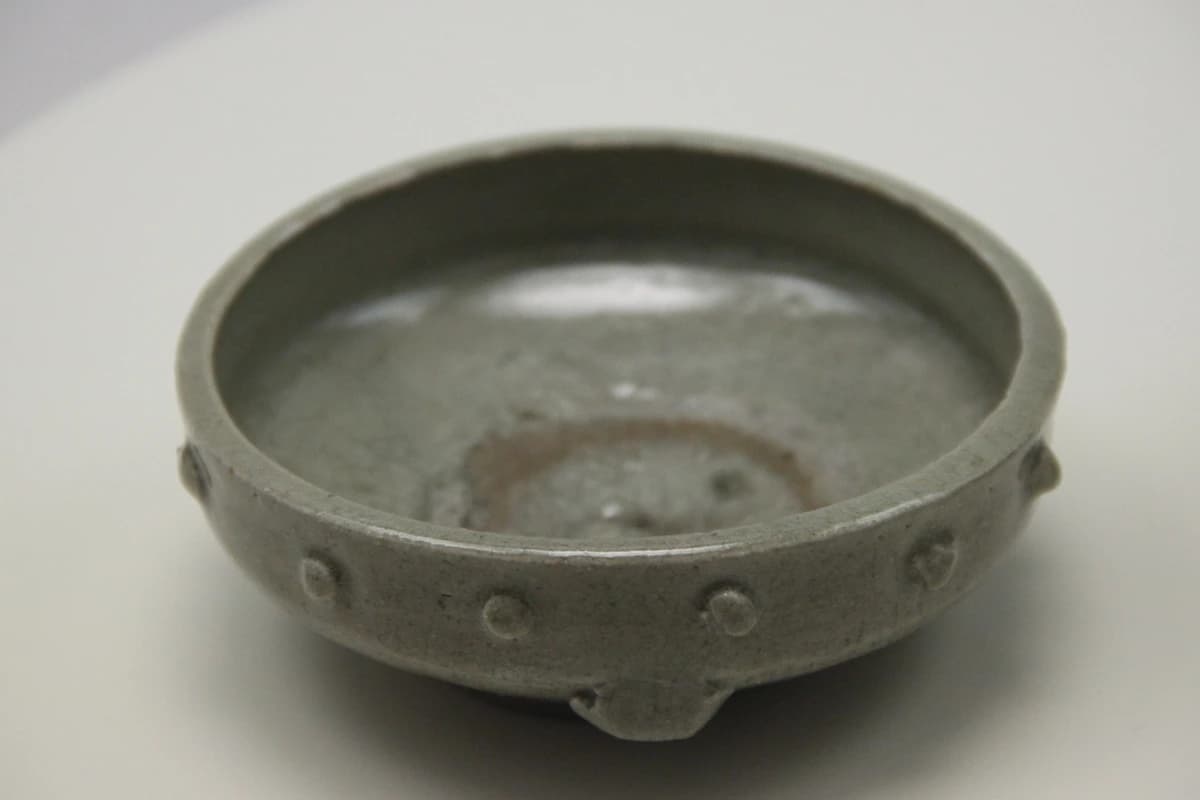
The Fisherman Hid It Under His Floorboards. The Reward He Eventually Got Set Off a Decade of Looting.
Korea marks fifty years of underwater archaeology in Mokpo this month. The official story starts with a net and a report. The documented one starts with six pieces of Chinese porcelain given away as presents, a schoolteacher brother who had to get them all back, and officials who did not want the paperwork. Then the state paid a reward, a diver worked out how much of it went in tax, and for the next ten years people stole the wreck faster than the government could raise it — until the navy's own divers could not find the ship, and the excavation hired the looters.
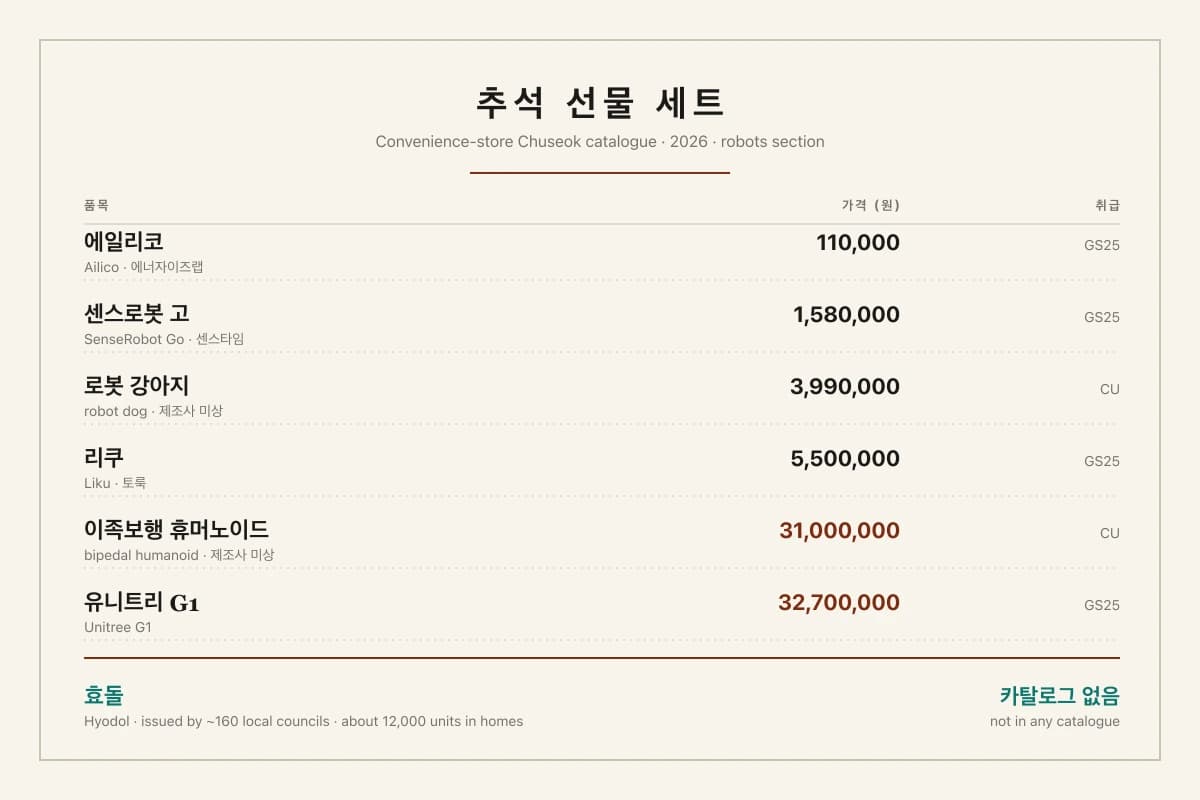
Korea's Convenience Stores Are Selling Humanoid Robots for Chuseok. Neither Chain Expects to Sell One, and Both Have Said So.
CU's holiday catalogue has a bipedal humanoid at ₩31 million, next to the beef and the gold bars. GS25 has an AI companion robot at ₩5.5 million and a keyring that talks back at ₩110,000. We assumed the pitch was companionship for parents you won't be visiting. It isn't — the retailers say plainly these are there to be noticed, not bought. Meanwhile about twelve thousand robots are already in Korean homes, asking elderly residents whether they've taken their medicine, and nobody put those in a catalogue.

The Chuseok Table Rules Your Family Argues About First Appear in Print in 1920 — as an Insult
Red fruit east, white fruit west. Jujube, chestnut, pear, persimmon, in that order. Korean families treat these as ancient Confucian law and fight about them every Chuseok. Scholars who have gone through the ritual classics cannot find them in any of them. What they can find is a 1920 newspaper column using the phrase to mock people who quote rules to seem learned — and a sixteenth-century master who laid his own family's table with six things on it.
The Weekly Dispatch
Korea, curated. Every week.
The best of K-culture, straight from Seoul. Written by people who actually live here.
Free, no spam, unsubscribe whenever.