The Unkillable Demon King Goes to Paris: Faker, Korea, and the Making of a Sport
He is a six-time world champion who once got out of the army by winning a video game. As the Esports World Cup lands in Paris this month — its first-ever edition outside Riyadh — here's why Lee 'Faker' Sang-hyeok is the greatest of all time, and how Korea turned League of Legends into genuine soft power.
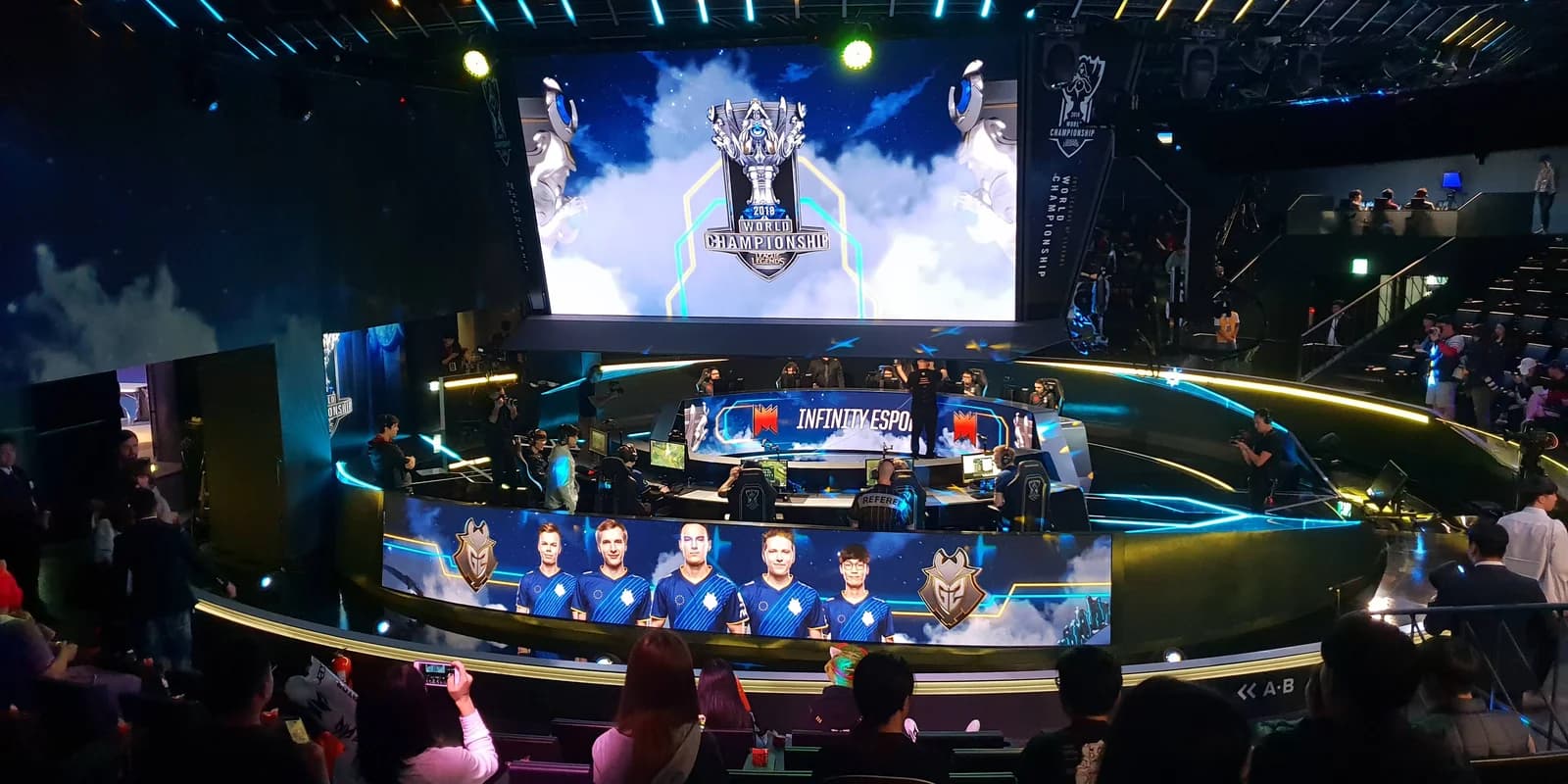
Start with the fact that sounds made up: Lee Sang-hyeok — better known to a global audience as Faker — once secured an exemption from South Korea's compulsory military service by being part of a team that won a video game. It is true, and it is not even the most remarkable thing about him. This month, as the Esports World Cup opens in Paris, the 30-year-old will arrive as a six-time world champion, the most decorated player in the history of the most-played competitive game on earth. To much of the world, esports still sounds like a contradiction. To Korea, it long ago stopped being one. This is the story of the player who proved it — and the country that built the sport around him.
The Peg: A Saudi Tournament in a Paris Hall
The Esports World Cup (EWC) is the largest event in competitive gaming: a multi-week, multi-game festival with a record US$75 million prize pool in 2026, run by the Saudi-backed Esports World Cup Foundation (PR Newswire, Wikipedia). And this year it did something it had never done before: it left home. For the first time in the event's history — and that of its Gamers8 predecessor — the EWC moved out of Riyadh and into Paris, at the Paris Expo Porte de Versailles, running July 6 to August 23 (GamesBeat, Deadline). Organizers relocated it amid regional security concerns in the Gulf; the move is confirmed, though the precise reasons are best treated as reported rather than official.
The piece of it that matters here is the League of Legends tournament, which runs July 15–19 — 16 of the world's best teams playing for a US$2 million prize (Esports World Cup). Among them is T1, the Korean team that is, essentially, Faker's team. And Faker arrives in Paris not as a fading legend but as the reigning champion of the world.
Who Is Faker?
Lee Sang-hyeok (이상혁) was born on May 7, 1996. He made his professional debut for the team then called SK Telecom T1 on April 6, 2013, as a shy, unheralded 16-year-old mid-laner — and within months was dismantling the best players in Korea so completely that opponents gave him a nickname that stuck: the "Unkillable Demon King" (언킬러블 데몬킹) (Wikipedia). In a game defined by split-second decisions and mechanical precision, he combined both at a level no one had seen, and — the truly rare part — kept doing it for over a decade, long after the teenagers he first beat had retired.
He never left. In an industry where players jump teams every season, Faker has spent his entire career at one organization, eventually becoming a part owner of it (Engadget). The loyalty is part of the legend, but the résumé is what ends the argument.
The Record That Ends the Argument
Faker has won the League of Legends World Championship six times — in 2013, 2015, 2016, 2023, 2024, and 2025 — the most in the sport's history (Wikipedia, GosuGamers). He has added two Mid-Season Invitational titles (2016, 2017) for good measure. To grasp the scale: winning "Worlds" once makes you a legend of the game; Faker has done it six times across two decades of the game's meta.
The most recent was the most historic. At Worlds 2025 in Chengdu, China, on November 9, 2025, T1 beat their Korean rivals KT Rolster 3–2 in the final — Faker's sixth title, and T1's third consecutive championship, the first-ever "three-peat" in Worlds history (Korea Herald, Esports Insider). Most athletes are finished at 29. Faker walked off that stage as the best in the world, again.
The Team: From SKT to a Comcast-Backed Franchise
Faker's team has a corporate story that doubles as a story about Korea's chaebol. It began as SK Telecom T1 — an esports team owned by the mobile carrier — and is now T1 Entertainment & Sports, a joint venture in which SK Square holds a majority stake and the American media giant Comcast owns a large minority (Wikipedia). It is the most successful organization in the game, and every one of its six world titles has Faker's name on it. When an American cable conglomerate buys a third of a Korean video-game team, the thing being bought is not nostalgia. It is a genuinely global sport.
The Gold Medal That Beat the Draft
Then there is the army. Every able-bodied South Korean man must serve roughly 18 months of military service — a career-interrupting obligation that has reshaped the lives of K-pop idols and athletes alike. But the law grants an exemption to men who win a gold medal at the Asian Games (CNN).
At the Hangzhou 2022 Asian Games — held in 2023 after a pandemic delay — esports was a full medal sport for the first time, and Korea won League of Legends gold, beating Chinese Taipei in the final on September 29, 2023 (Wikipedia). Faker was on the roster — and here is the twist that makes the story perfect: he was sidelined by illness during the knockout rounds, with a teammate substituting in for the decisive matches. He barely played. He still received the gold medal, and with it, the exemption (Korea JoongAng Daily). The Demon King got out of the army from the bench. It's the very same escape hatch that once saved Son Heung-min's career — gold at the 2018 Asian Games, and two years in uniform waived.
How Korea Built a Sport
None of this happened by accident. Korea has spent two decades constructing the infrastructure of a sport where other countries saw only a pastime. The center of it is LoL Park, Riot Games' purpose-built home for the LCK (League of Legends Champions Korea) — a coliseum-style arena in central Seoul, opened in 2018, reportedly built with an investment around 100 billion won (Wikipedia, esports.net). Around it sits an entire pipeline: the PC-bang culture where talent is discovered, the pro academies, the fan base that treats match days like a national team fixture. Korea builds these machines deliberately in more than one sport — its archery programme has run on the same logic since 1985, and cuts reigning Olympic champions to prove it. Korea did not just produce great players. It built the church they play in.
Soft Power in a Headset
The payoff is a form of national influence that no ministry planned. League of Legends' World Championship finals now draw peak concurrent audiences of six to seven million viewers (excluding mainland-China platforms, per Esports Charts) — figures that put it in the conversation with traditional sporting events: about 6.4 million in 2023, a record 6.94 million in 2024, and 6.7 million in 2025 (Esports Charts). For a country that has spent a generation exporting its culture — its music, its dramas, its food — esports is another channel of the same soft power, and one where Korea doesn't just participate but dominates.
There is a note of realism worth keeping. The 2025 audience slipped slightly from 2024's record, and total watch time fell — a reminder that even a juggernaut can plateau. But the trend line of the last decade is unmistakable: a video game became a spectator sport, and Korea became its superpower.
What's at Stake in Paris
Which brings us back to the hall on the edge of Paris. From July 15, T1 will play with a slightly new-look roster — the celebrated support Keria and jungler Oner still alongside Faker, with Peyz stepping in as the team's new marksman after Gumayusi's departure (Sheepesports). They arrive as world champions, which in this sport paints a target on your back: everyone is trying to beat the team that beat everyone.
We won't tell you who wins, because as we write this it hasn't happened. That is the point of a preview. But whatever the result, the larger contest is already settled. A shy 16-year-old sat down at a computer in 2013 and, over the next thirteen years, did more than win games. He validated an entire sport, exempted himself from an army by playing it, and turned "esports champion" into a phrase Korea says with the same pride as "Olympic medalist." The Demon King goes to Paris. The sport he helped build travels with him.
Homepage/hero: Faker beside the Summoner's Cup at the 2015 League of Legends World Championship — photo by Bruce Liu, Wikimedia Commons, CC BY-SA 3.0. Listing card: Faker at T1's 2023 World Champion ceremony — photo by Dorudoru, Wikimedia Commons, CC BY 4.0. Cover: a League of Legends World Championship stage (2018) — photo by Altostratus, Wikimedia Commons, CC BY-SA 4.0. Event details are as reported ahead of the July 15–19 tournament; no results are predicted.


Keep Reading
More Stories
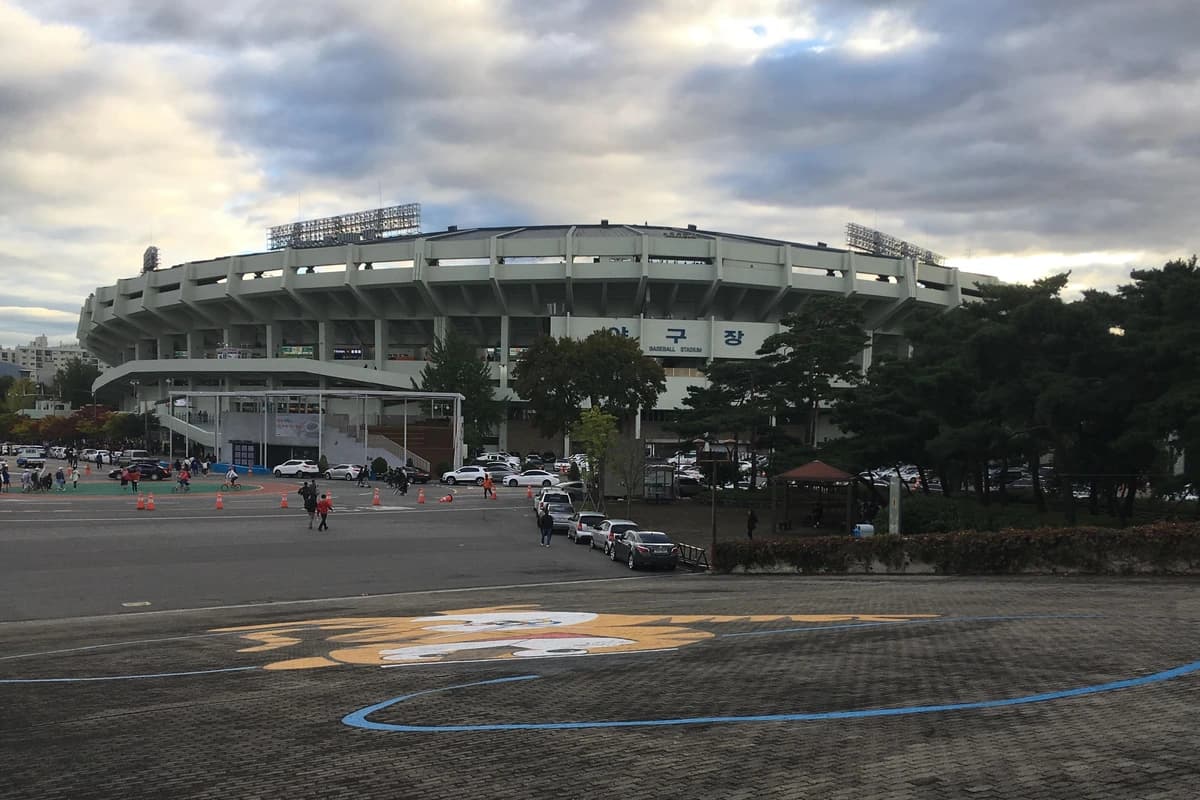
The Lights Went Out at Jamsil on Monday Night. Korea's Most Famous Ballpark Isn't Quite Finished Yet
On 12 October, after the last regular-season game at 잠실야구장, four Doosan legends stood at the bases in the dark and lifted home plate. LG had said its own goodbye five days earlier. The 44-year-old stadium is due to come down for a domed replacement — but the postseason, starting tonight with LG against Doosan, will keep it open for at least two more games.
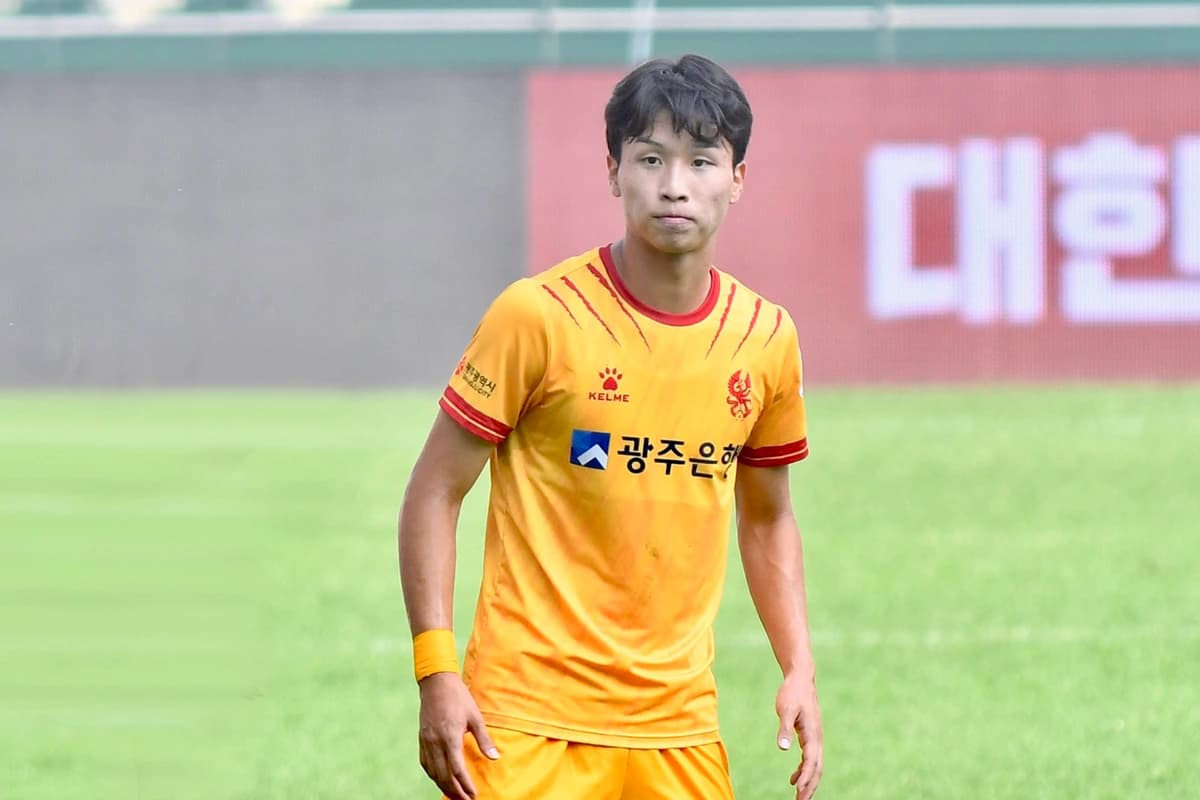
Korea Beat Japan for a Fourth Straight Asian Games Football Gold. Then Its Captain Held Up the Medal and Said, 'I'm Not Going to the Army'
엄지성's 61st-minute goal at Toyota Stadium made Korea the first side to win the men's tournament four times running, and exempted 20 of its 23 players from active military service. Within a day three of them were apologising for saying what the medal was for — and the argument about the exemption itself had started again.
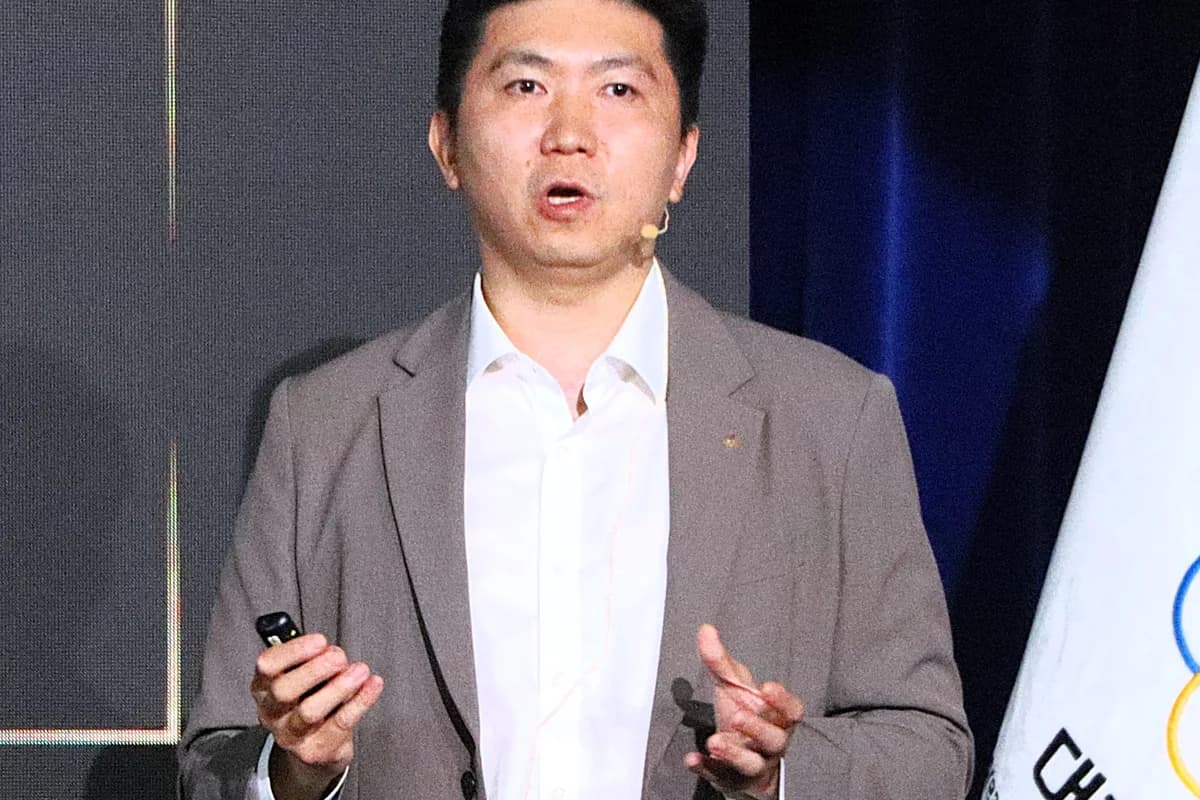
Korea's Sports Chief Gave Japan's Asian Games an F. Then the Organisers Apologised — to Japanese Spectators — for a Sign Saying the Rising Sun Flag Was Banned
The hosts of Aichi–Nagoya 2026 played North Korea's anthem for South Korea's hockey team, introduced Korea as the Republic of China at a medal ceremony, put Hideyoshi on the welcome stage, lost the basketball team's bus before the final, and housed athletes in leaking containers. Then a ballpark sign listed the Rising Sun flag among banned items, and the organising committee said sorry — in Japanese only, to its own crowd — because the flag was 'naturally' allowed. Its own rulebook bans flags that suggest political claims. It chose not to read it.
The Weekly Dispatch
Korea, curated. Every week.
The best of K-culture, straight from Seoul. Written by people who actually live here.
Free, no spam, unsubscribe whenever.