Korea Lost 16,000 PC방 and the Industry Got Bigger: The Gaming Café, Explained
Korea had 23,548 PC방 in 2001 and fewer than 7,000 by 2025 — while the industry's revenue rose 12.8% in a single year. A look at the strangest small business in Korea: one whose price hasn't moved in 25 years, that pays rent to game publishers by the hour, and that operates under a curfew most English coverage thinks was repealed.
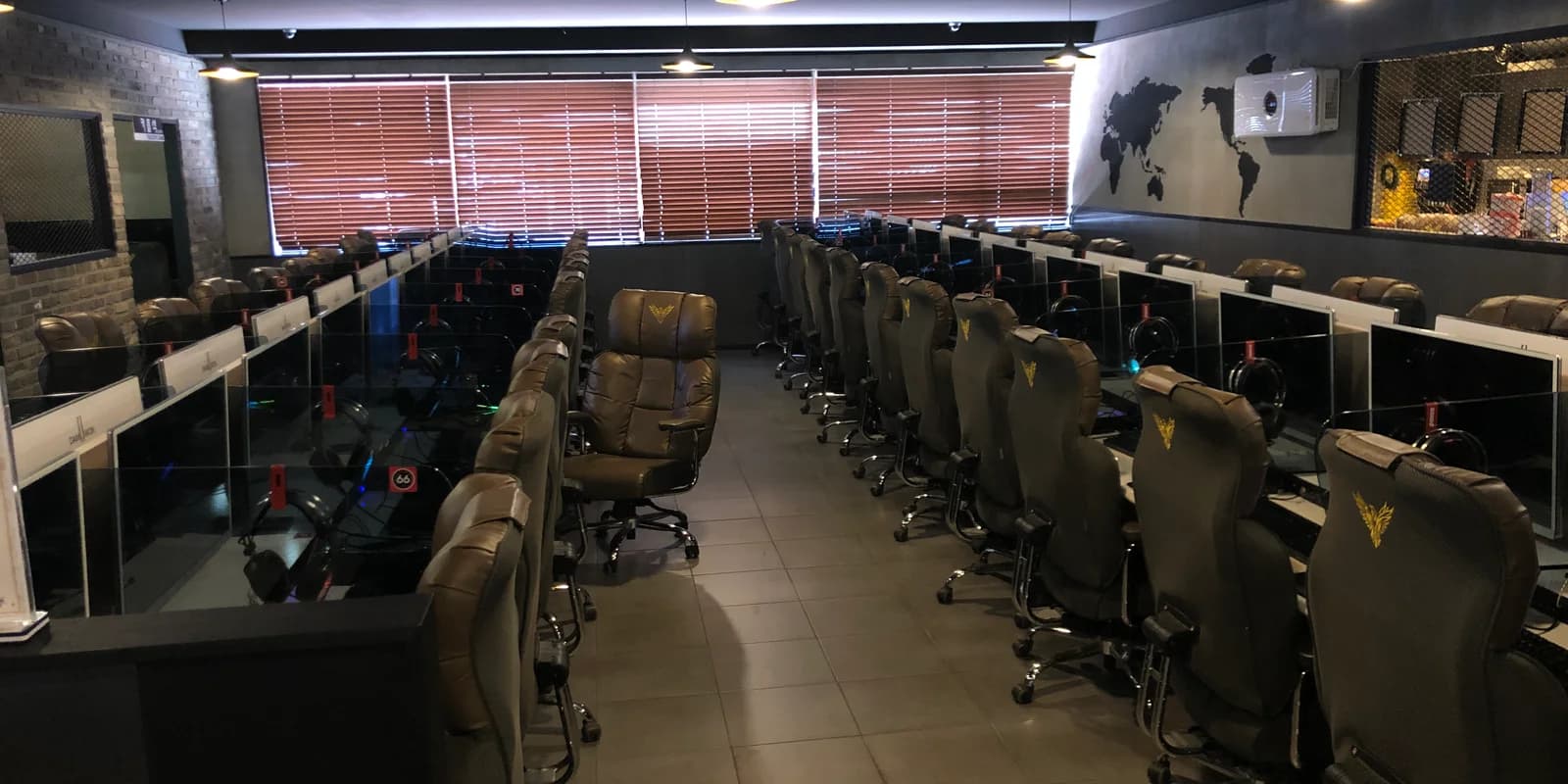
Two facts about the Korean PC방 (PC bang), both true, that appear to contradict each other.
In 2001 there were 23,548 of them. By August 2025 there were 6,983 — a fall of roughly 70% in a quarter-century.
In 2024, PC방 industry revenue rose 12.8%, to about ₩2.26 trillion, growing more than three times faster than the Korean game industry as a whole.
The venues are disappearing and the business is getting bigger. Understanding why requires treating the PC방 as what it actually is — not a Korean internet café, but one of the strangest small businesses in the country: a hardware landlord that pays rent to game publishers by the hour, at a price it has not been able to raise since roughly 1999.
We've walked the whole taxonomy of Korean rented rooms — noraebang, jjimjilbang, study cafés and the rest — in our guide to Korea's 방 culture. This is the one that became an industry.
It Is Not an Internet Café, and That's a Legal Fact
Start with the category error, because Korean law is unusually clear about it.
A PC방 is not licensed as a café or a food business. Its legal category is 인터넷컴퓨터게임시설제공업 — literally "internet computer game facility provision business" — and it is governed by the 게임산업진흥에 관한 법률, the Act on the Promotion of the Game Industry. Opening one requires 등록, registration with your district office, under game law rather than food-service law.
That's not bureaucratic trivia. It's why a PC방 is subject to game-specific youth rules that no café faces, and why the business has a shape with no Western equivalent. An internet café sells you access to a computer. A PC방 sells you access to a computer and is separately billed, by the hour, by the companies whose games you play on it.
Three Origin Stories, and You Need All Three
The standard account is that StarCraft created the PC방. That's a third of the answer.
The format came first. Korean trade history traces an early "electronic café" to 1988 in Hongdae, and an internet café called BNC in Seoul's Seocho district in 1994 — venues that initially sold drinks rather than computer time. The pivot to charging for PC use as the primary revenue came around 1996. So the room existed, and had found its business model, before the boom.
The 1997 crisis supplied the operators. The Asian financial crisis — what Koreans simply call IMF, or 외환위기 — produced mass layoffs, and the newly unemployed poured into small-business start-ups. As one Korean industry retrospective puts it, laid-off workers "jumped en masse into the PC방 business." It was a business you could open with a lease and some machines, at exactly the moment a lot of people needed one.
StarCraft and the absence of home broadband supplied the customers. Blizzard's StarCraft launched in 1998 and became a national obsession — widely reported at around 4.5 million copies sold in Korea against roughly 11 million worldwide, a figure worth attributing rather than stating flatly. Just as important is what Korean homes didn't have. Korea went from about 14,000 households on high-speed internet in 1998 to 10.4 million in 2002. In the years the PC방 exploded, the fast connection was not at home. It was down the street, and it cost about a thousand won an hour.
There's a cultural strand the Korean sources emphasise and English ones tend to skip: gaming in Korea was communal by default. As one account has it, the prevailing attitude was that games were "not something you each play at home, but something you gather to enjoy together." The PC방 wasn't only where the good computer was. It was where your friends were.
Any single-cause version of this story — StarCraft did it, or the IMF crisis did it — is wrong. The three strands are separately documented, and they only work together.
The Collapse, With a Warning About the Numbers
The peak is 23,548 venues in 2001. From there:
| Year | PC방 |
|---|---|
| 2001 | 23,548 (peak) |
| 2009 | 21,547 (last year above 20,000) |
| 2014 | 13,146 |
| 2020 | 11,871 |
| 2023 | 7,773 |
| 2024 | 7,243 |
| Aug 2025 | 6,983 |
A caution that matters, because it's a trap. Korea counts PC방 in at least three different statistical series — the 게임백서 white papers, raw National Tax Service registration data, and older ministry counts — and they disagree by 10–25% in the same year. Two different editions of the same white paper give 2021 as both 9,870 and 9,265. Any tidy year-on-year comparison that mixes series is measuring the accounting, not the industry. The defensible statement is the broad one: from roughly 23,500 at the peak to under 7,000 today.
The Price That Never Moved
Here is the number that explains almost everything else.
In 2024, the national average hourly rate was ₩1,246 for members and ₩1,459 for non-members — medians of ₩1,200 and ₩1,400. In a 2025 trade survey, 39% of operators charged ₩1,000–1,200 an hour.
Korea's GDP per capita has roughly tripled since 2001. The PC방 rate has not moved. A 2016 industry piece noted the rate had been stuck around ₩1,000 an hour for over fifteen years; a decade later it has crept up by a couple of hundred won. The clearest illustration comes from that 2025 survey, which found one shop charging ₩2,000 an hour — and described it as a 1999-era rate. The outlier is the shop charging more, and it's remarkable because it's charging what things cost when the industry was young.
This is a price war that never ended. And a business that cannot raise its core price has to find the money somewhere else — which is where the food, the megastores and the franchising all come from.
The Landlord That Pays Rent
Now the part that has no Western analogue.
Korean game publishers bill PC방 operators per hour of their customers' play. This is not a site licence or a flat fee. The shop buys hours in advance and they are deducted as customers play.
Nexon publishes its price list openly. Its 통합정량 tier — covering all Nexon titles — runs ₩127,000 for 500 hours, ₩243,000 for 1,000, ₩463,000 for 2,000, and ₩879,000 for 4,000, VAT included.
Work that out and it lands at roughly ₩220–254 per hour flowing to a single publisher, against average revenue of about ₩1,246 per hour. Call it 18–20% of gross to one company, before rent, staff, electricity, or a graphics card. Riot runs a comparable programme for League of Legends and VALORANT. Shops implement it as 유료게임 차감 — your clock burns faster while a billed game is open.
So the PC방 is a genuinely three-sided market: it rents hardware to customers, sells them food, and pays a per-customer-hour royalty upstream to publishers. Nexon's own published price table, checkable by anyone, is the artefact that makes this concrete.
The Food Myth
You will read, constantly, that PC방 now make most of their money from food — that gaming is a loss-leader for instant noodles.
The national data says otherwise. The 게임백서 breakdown for 2021 puts time charges at 76.6% of revenue against food and drink at 23.0%, with the rest negligible. The highest regional food share, in Gangwon, was 31.7%.
Food is growing, and at particular venues it genuinely does approach half the take. But nationally the clock is still about three-quarters of the money. The 40–60% figures that circulate are single-venue anecdotes and franchise marketing, promoted into industry fact.
What's true is that the food operation is serious: ordering from your seat, overhead menu screens, a drinks fridge and a snack wall, and a kitchen that will deliver 라면 to your desk without interrupting the game. That's a real business. It just isn't the main one.
The Curfew Everyone Gets Wrong — in Both Directions
This is the correction that matters most, and English coverage misses it twice over.
Korea's 셧다운제 — the Shutdown Law, nicknamed the Cinderella Law — blocked under-16s from online games between midnight and 6am. Passed April 2011, in force from November 2011, administered by the Ministry of Gender Equality and Family, and upheld by the Constitutional Court in 2014.
It was repealed. The government announced abolition in August 2021, the National Assembly passed the repeal that November, and it took effect on 1 January 2022, after ten years. What replaced it is 게임시간 선택제, a voluntary system where a parent and child set time limits together. English-language articles and Wikipedia-derived summaries still routinely describe the shutdown law in the present tense. It has been dead for four years.
But the half that touches PC방 specifically is still law. Under the enforcement decree of the game industry act, under-19s may not enter a PC방 between 22:00 and 09:00 unless accompanied by a parent, guardian, teacher or workplace supervisor. The penalty falls on the operator, not the teenager: business suspension of ten days to six months, and exposure to up to a year's imprisonment or a ₩10 million fine.
So neither "Korea still bans night gaming" nor "Korea repealed its gaming curfew" is right. Korea deregulated the game and kept regulating the room. Walk into a PC방 today and the notice is on the wall.
One more regulatory landmark, because it changed the physical experience completely: PC방 became fully non-smoking in June 2013 under the National Health Promotion Act, with enforcement from that December. The smoke-filled PC방 of memory is specifically a pre-2013 memory.
COVID Did Something Other Than Close Them
In August 2020, the government designated PC방 one of twelve 고위험시설 — high-risk facilities — and suspended their operation nationwide. The industry's grievance, on the record, was that they were designated high risk and shut down repeatedly despite no documented cluster outbreaks originating in them.
The damage was real and measurable: the Seoul Institute found 9.2% of Korea's PC방 closed permanently between 2020 and 2022, a steeper rate than lodging, noraebang or billiard halls. In 2021 alone, 705 shops closed.
But the more consequential effect wasn't the closures. It was that lockdown pushed a generation into buying capable computers for home. KOCCA's own diagnosis of the decline names two drivers: teenagers and twenty-somethings getting used to playing on mobile wherever they are instead of gathering, and a wave of home PC building during the pandemic. The PC방's original advantage — the good machine and the fast line you didn't have at home — is the thing COVID finally eroded.
The kiosk arrived at the same time. By 2021 nearly 54% of shops had unmanned kiosks, and 58% of those had installed them that year.
The Esports Question, Answered Honestly
The tidy story is that PC방 produced Korean esports dominance. We want to be careful here, because the tidy story is more asserted than demonstrated.
What the sources genuinely support: PC방 gave a whole population cheap, universal access to hardware and bandwidth far beyond what a 1998 Korean home had; gaming was culturally communal, so playing in public was the norm rather than the exception; and the venues were a public arena where ability was visible to other people. Those are real preconditions for a mass talent pool, and they're documented.
What we could not verify is a quantified causal link between PC방 density and competitive success — the academic treatments we tried to reach were not retrievable, and the secondary sources asserting it don't meet our standard.
The honest version: the PC방 was the necessary infrastructure — access, a communal norm, and a public stage. The professional apparatus that turned that into medals, the broadcast leagues and corporate teams, was a separate and deliberate construction. For what that apparatus became, see Faker and the making of Korean esports.
One present-tense data point that complicates "young people stopped playing PC games": average daily PC gaming time in Korea rose in 2024, to 117 minutes on weekdays and 191 at weekends, up about 16% year on year.
Fewer, Bigger, Busier
Which returns us to the paradox at the top.
The venue count fell ~70%. Meanwhile:
- Industry revenue grew 6.5% in 2023 and 12.8% in 2024, reaching ₩2.26 trillion.
- PC방 accounted for 8.7% of the entire Korean game market in 2023.
- Shops with 90 or more PCs went from about 30% of those surveyed in 2021 to 47% in 2024.
- Average floor area reached 278.6㎡ — about 84 pyeong.
- Average monthly revenue per shop in 2024 was ₩26 million, with 26.3% clearing ₩30 million.
This is consolidation, not extinction. The marginal twenty-machine shop closed; the survivors got larger, better equipped and busier. The labour data shows the same polarisation — 63.6% remain micro-businesses with fewer than five staff, while the number of shops with ten or more staff more than doubled in a single year.
The emblem of the trend: in October 2025, Nexon — one of the publishers collecting per-hour royalties from every shop in the country — opened its own 177-seat flagship PC방, 메이플 아지트, on the ground floor by Gangnam Station, in a year when more than four hundred shops closed.
Not everyone is thriving. The 2025 white paper found that only 6.3% of operators did a full hardware upgrade in the year and 21% a partial one — roughly seven in ten did nothing at all. About 70% of shops run 노하드 systems, where every machine boots a clean image from a central server with no local hard drive, which keeps maintenance cheap.
What It Adds Up To
The PC방 has spent twenty-five years unable to charge more for its core product, in a country that got three times richer. Everything distinctive about it follows from that constraint: the food menus, the 84-pyeong floors, the kiosks that replaced counter staff, the diskless machines, the seven-in-ten who skipped this year's upgrade — and the consolidation that leaves fewer, larger, fuller rooms.
It is also still a regulated room. Korea's famous gaming curfew is gone; the sign by the door saying nobody under nineteen after ten at night is not. That distinction, invisible in most English writing about Korean gaming, is the whole shape of how the country decided to handle the thing: relax the rules about the game, keep the rules about the place. Which, in a country that rents its citizens rooms by the hour for nearly everything, is about the most Korean answer available.
Venue counts, hourly rates, revenue splits, shop sizes and upgrade rates are drawn from the Korea Creative Content Agency's 『대한민국 게임백서』 series and Korean trade coverage of it, and are dated in-text; where two editions of the white paper disagree we say so rather than choosing silently, and we avoid comparisons that mix statistical series. Publisher billing figures are calculated from Nexon's own published PC방 price list, retrieved July 2026. The shutdown law's enactment, Constitutional Court ruling and 2022 repeal, and the surviving 22:00–09:00 under-19 premises restriction under the game industry act's enforcement decree, are sourced to Korean government and legal-information sources. The permanent-closure rate is the Seoul Institute's. We state explicitly that we could not verify a quantified causal link between PC방 density and Korean esports success, and describe the mechanism rather than asserting causation. StarCraft sales figures are attributed as widely reported rather than stated flatly. Images: hero — T1 Base Camp in Hongdae, an esports-team-branded flagship rather than a typical neighbourhood venue; cover — the aisle of an ordinary PC방 in Gangwon-do, photographed empty mid-morning; listing card — a single station with the venue's Korean-language login screen. All three CC0 via Wikimedia Commons.
Keep Reading
More Stories
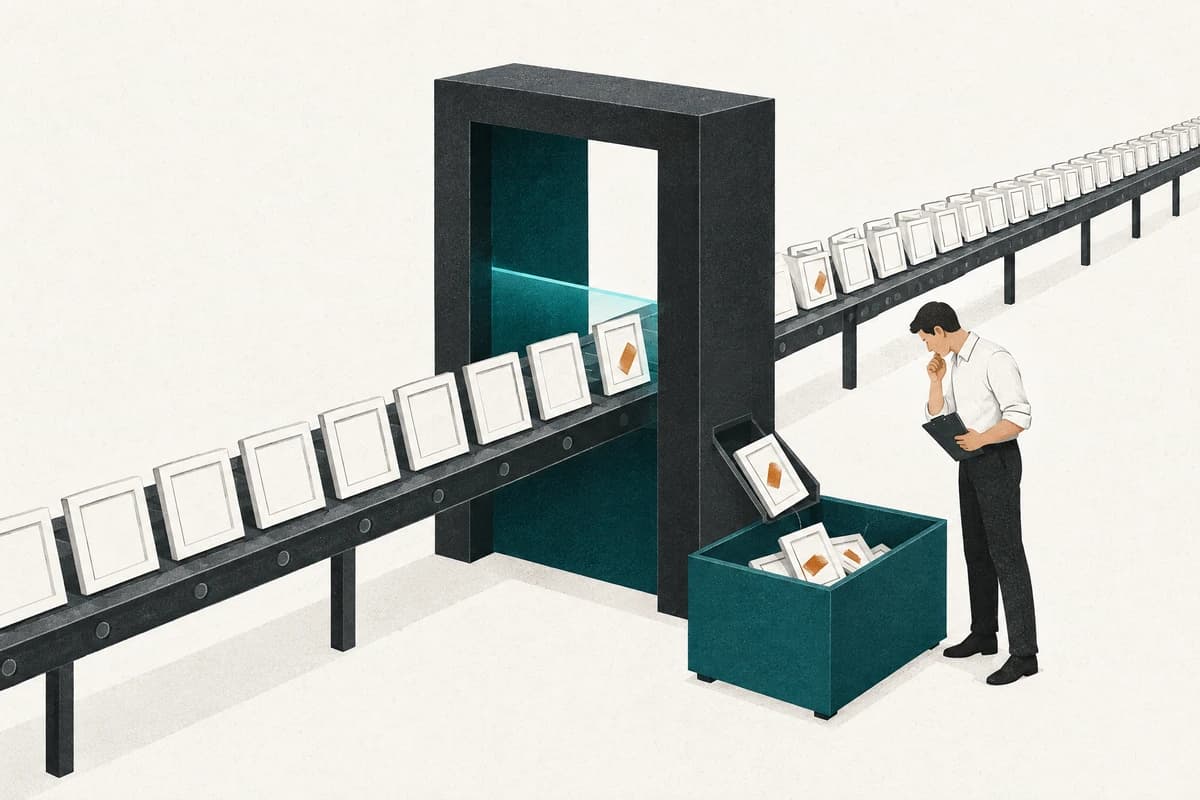
Korea Now Scans Every Image Uploaded to Its Big Forums. The Man Running One of Them Can't Tell You If It Has Ever Worked.
Since 1 July, Korean platforms above a size threshold must run every uploaded image through an AI filter that checks it against a government database of illegal recordings and blocks it before it posts. One operator published his own logs. Over a full year of the earlier video version, 1,615 blocks resolved down to about 33 that might have been real — and he cannot tell you whether any of them were, because keeping the files in order to check them would break a different law.
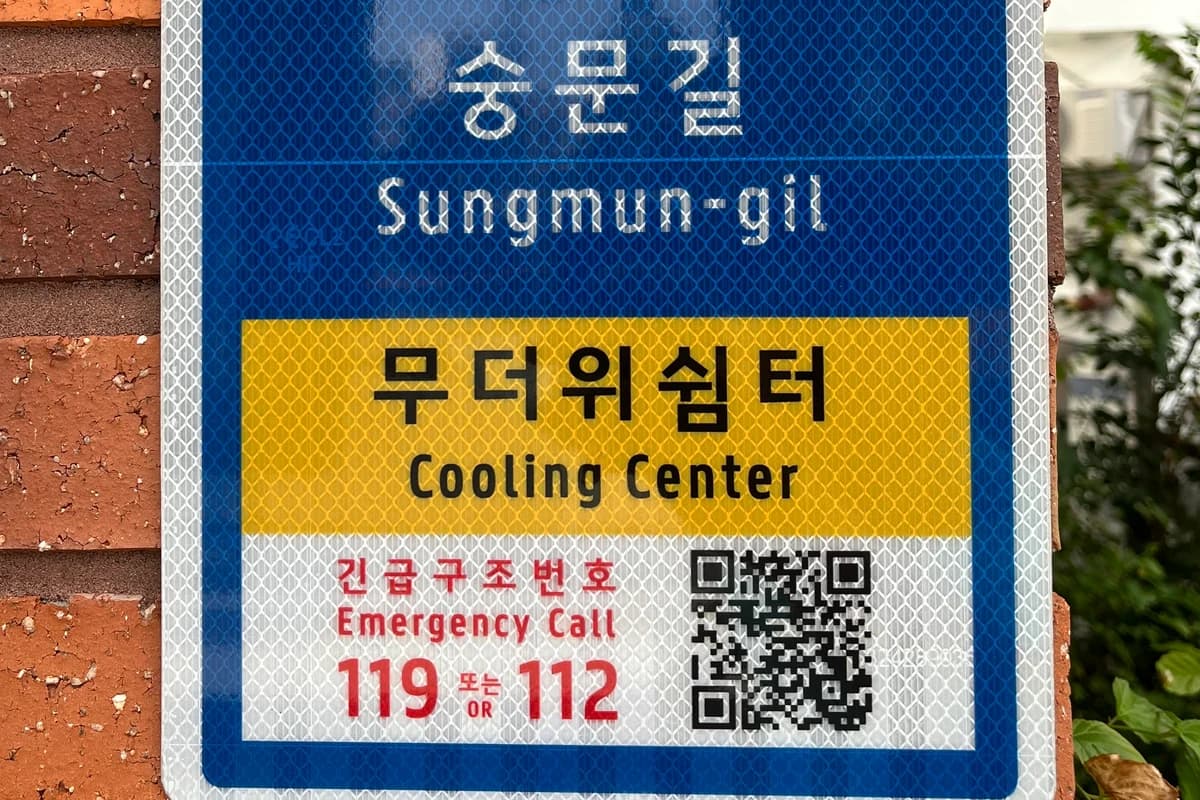
A 23-Year-Old Built an App That Routes You Through Shadows. It Hit No. 1 in a Week.
Yoo Min-jun made it because his walk to campus was unbearable. It calculates the sun's angle and the shadows thrown by buildings and street trees for the minute you'll actually be walking, and tells you which side of the bus to sit on. It cost him about ₩2 million of his own money. Meanwhile the state has 93,375 cooling shelters — and on the hottest Sunday of the summer, four in five of Seoul's were locked.
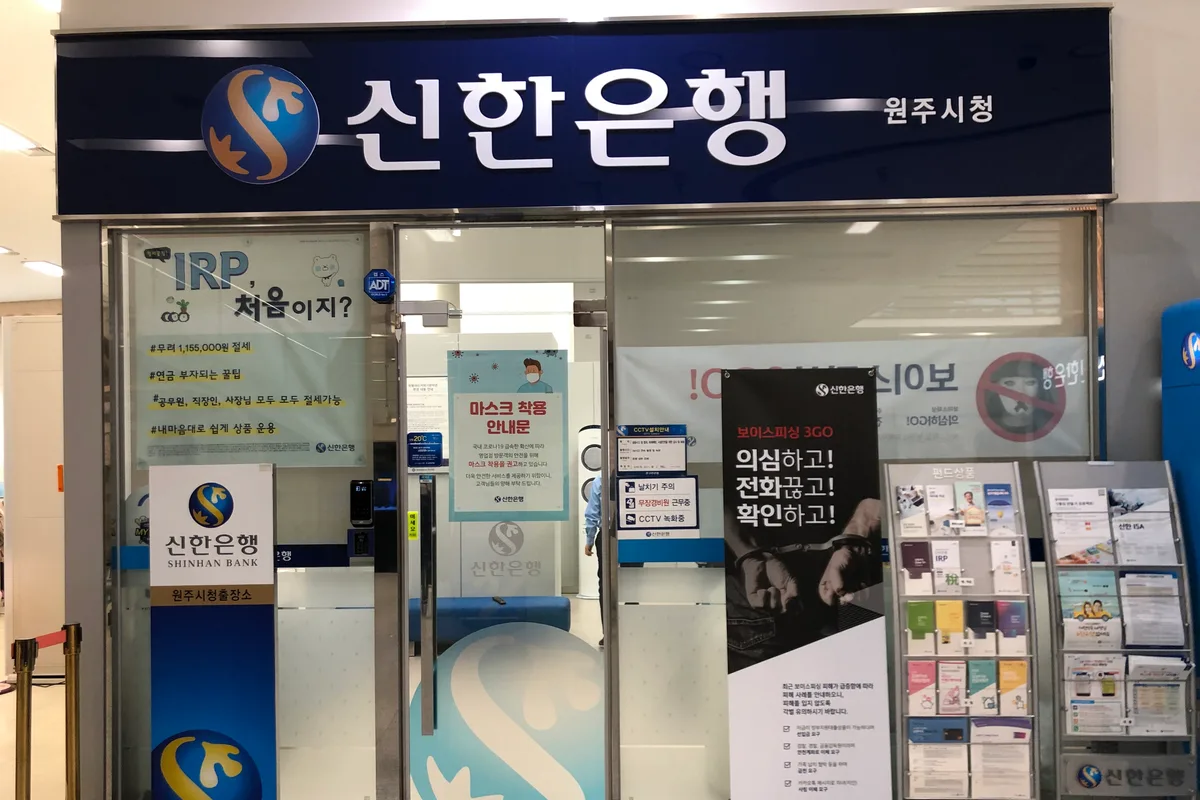
Korea Has Until December to Uninstall Twenty Years of Its Own Banking Software
In October 2025 the government finally ordered the security programs off your computer, and banks have until year-end to comply. Along the way: a cipher whose famous justification expired before it shipped, a mandate that was never in the law everyone blames, and a bank page that still uses a legal term abolished five and a half years ago.
The Weekly Dispatch
Korea, curated. Every week.
The best of K-culture, straight from Seoul. Written by people who actually live here.
Free, no spam, unsubscribe whenever.