The Other Envelope: Korean Funeral Etiquette, Explained
At a Korean wedding you hand over a white envelope of cash. At a funeral you hand over another — and the same lifelong ledger connects them. A careful guide to 조의금: how much to give, the two-bows-then-one, incense or a white chrysanthemum, what never to say, and the word for it that the English internet gets wrong.
We've written about the white envelope of cash you hand over at a Korean wedding. This is the other one.
Because a Korean funeral runs on the same machinery as a Korean wedding — a white envelope, an odd-numbered sum, a name recorded in a ledger, an obligation that will be repaid at your family's turn. The occasions are opposite; the social accounting is identical. Koreans even have one umbrella word for both: 부조 (bujo), mutual-aid money, descended from the old village practice of lending your labor at a neighbor's rites and expecting it back at yours. In the cash economy, money replaced the labor. The ledger stayed.
If you work in Korea, you will attend a colleague's parent's funeral. It's one of the most serious workplace obligations there is. Here's how to do it right — carefully, because this is the one area where getting the details wrong is genuinely painful for the people around you.
A note before we start: we're going to be precise about terms, because the English-language internet is not. One widely-ranking guide calls Korean condolence money "beoseum (보상)" — a word that does not exist, attached to a Korean word (보상, bosang) that actually means "compensation." The real terms are 부의금, 조의금, 부조금. Let's get them right.
The Condolence Money (조의금)
The money is 조의금 (弔意金) — "money expressing grief" — or, interchangeably, 부의금 (賻儀金), "money to help with the funeral." Both are correct. The umbrella term covering weddings and funerals alike is 부조금 (扶助金).
Like wedding money, condolence money follows the odd-number rule. You give odd-numbered units of ₩10,000 — ₩30,000, ₩50,000, ₩70,000 — because odd numbers carry auspicious yang energy, even at a mournful event. ₩100,000 is the standard exception (read as the "full" sum of 3+7), and amounts scale up from there in ₩10,000-multiples.
Two amounts are specifically avoided:
- ₩40,000 — because 4 (四) sounds like 死, death. (This is the same tetraphobia that makes buildings skip the fourth floor — here it's especially charged.)
- ₩90,000 — because of the "아홉수" superstition around the unlucky number nine.
How much, by relationship (these are etiquette conventions from Korean funeral-service guides, not survey figures — there is no official "average"):
- A colleague, or a colleague's parent: ₩50,000–100,000; ₩100,000 is the common default, whether or not you attend.
- A close friend: ₩100,000 is the general standard.
- Someone like family: ₩200,000 and up.
- A student or someone without income: ₩30,000–50,000 is completely fine — the amount matters less than showing up.
The Envelope
Cash goes in a plain white envelope (never black — that's a myth some guides repeat). The front carries a condolence inscription, usually pre-printed; the most common is 부의 (賻儀). You may also see 근조 (謹弔), "respectful mourning"; 조의 (弔意); or 전의 (奠儀), an offering to the deceased. On the back, write your name and affiliation, so the family's ledger can record who came.
That ledger is the point, exactly as at a wedding. The family keeps a record of who gave what, and repays it when your own family holds a wedding or a funeral. The obligation runs both directions, across a lifetime — one envelope goes to the wedding, the reciprocal one comes back at the funeral. There are even smartphone apps now for keeping the 경조사비 ledger.
The Three-Day Funeral (삼일장)
Korean funerals run three days — 삼일장 (三日葬) — counting from the day of death itself.
- Day 1: the body is transferred to a funeral hall (장례식장) and placed in cold storage (안치); the family sets up the 빈소, the mourning room, with a framed portrait (영정) of the deceased.
- Day 2: the encoffining (입관), after the body is washed and shrouded. This is the peak day for visitors — when most people come to pay respects.
- Day 3: the early-morning procession (발인) as the coffin leaves for the crematorium or burial site.
Almost all of this now happens at a professional funeral hall — usually attached to a hospital — rather than a home. That shift happened across the 1980s and 90s as apartment living made home funerals impractical, and it was two deregulations that finished it: in 1993 running a funeral hall went from requiring a licence to merely requiring notification, and in July 1994 an amendment deleted the space requirements — a ceremony room, lavatories, parking — for hospital-attached halls, which is what let hospital mortuaries convert into funeral halls outright. It's why "going to the 장례식장" is simply what paying respects means today.
How to Pay Respects (조문)
This is the part to get right. The sequence, at a traditional (non-Christian) funeral:
- At the entrance, sign the guest book and hand over your envelope.
- Enter and exchange a slight nod with the chief mourner (상주) — the closest family member, who receives guests beside the altar.
- At the altar, offer either incense or a flower — not both:
- Incense (분향): take one stick, light it from the candle, and put the flame out by fanning it with your hand — never by blowing on it with your mouth. Place it in the burner.
- Flower (헌화): a white chrysanthemum (국화), held with the stem in your right hand and your left hand supporting, laid on the altar. (Sources differ on which way the bloom should face; follow the person ahead of you.)
- Bow to the deceased: two full bows (큰절). Then a moment of silence.
- Turn to the chief mourner and exchange one bow (맞절). A brief word of condolence may follow.
Two full bows to the dead, one to the living. Remember it that way.
One subtle detail Korean mourners notice: the formal folded-hands posture, 공수 (拱手), reverses for a funeral. In everyday and celebratory settings, men place the left hand over the right and women the right over the left. At a funeral, it flips: men right-over-left, women left-over-right. You won't be scolded for missing it, but getting it right signals you understand where you are.
What to Wear, and What Never to Say
Dress: men in a black suit, white shirt, and black tie; women in dark, modest clothing. No bare feet (wear socks or stockings), no bright colors, no flashy jewelry or conspicuous makeup. Dark gray or navy is acceptable if you don't own a black suit.
Do not:
- Offer a handshake to the chief mourner. Respond only if they extend a hand first.
- Ask how the person died, or probe the circumstances.
- Reach for consoling clichés. Several land badly in Korean — telling a mourner to stop crying, saying "time heals," saying the deceased is "at peace now," or telling them to move on. The single most-disliked line is a well-meant "그동안 수고 많으셨어요" ("you worked so hard all this time"), which can read as grading their caregiving.
What to say instead is almost nothing. The standard phrase is "삼가 고인의 명복을 빕니다" — "I humbly pray for the deceased's blessings in the next world." (명복, those afterlife blessings, is a term of Buddhist origin, though it's used across faiths; at a Christian funeral, a simple expression of sympathy is better.) Often, silence and a bow say more than any sentence. You are not there to fix anything. You are there to be counted as present.
The Soup, and the Wreaths
If you stay, you'll be fed, and it will almost certainly be 육개장 (yukgaejang) — a spicy red beef-and-vegetable soup. There are three reasons it's the funeral food, and all of them are real: it can be cooked in enormous batches and holds up over three days of continuous guests; the color red is traditionally believed to ward off evil spirits; and a warm bowl of broth is a genuine comfort to people who've traveled far to be there. Eating together in the funeral hall's dining area, after you've paid respects, is part of the ritual, not separate from it.
Outside, you'll pass the tall standing white-chrysanthemum wreaths (근조화환) lining the entrance. Those are almost always sent by companies and organizations, not individuals — the sash carries a condolence phrase and the sender's name. As an individual, your envelope is your contribution; you don't need to send a wreath.
For Foreign Attendees
- Yes, you're expected to go. A colleague's parent's death is exactly the occasion Korean coworkers turn out for. Even a loosely-acquainted colleague typically attends or at least sends money. Skipping it is noticed.
- Bring a white envelope with an odd-numbered amount (₩50,000–100,000 for a colleague; around ₩100,000 for their parent's funeral), name and affiliation on the back. Cash, not card.
- Do the sequence above; when in doubt, copy the person in front of you. Dark clothes. A quiet "삼가 고인의 명복을 빕니다."
- Stay briefly. Paying respects, sharing a short meal if invited, and leaving is correct and respectful. You are not expected to keep vigil.
- If you truly can't attend, send the money by bank transfer with a short condolence message — an accepted and now-common substitute, much as with wedding money.
What happens to the grave afterwards is a separate and stranger story: Korea's Confucian custodians have been simplifying the ancestral rite from the top, cremation has passed 95%, and the state files grave-tending under two different months. We argue that out in why "Korean Thanksgiving" doesn't fit Chuseok.
How Korea Says Goodbye Now
Two numbers capture how fast this is changing.
Korea's cremation rate reached 92.9% in 2023 — up from about half in 2005 — and monthly figures have since climbed past 95%, among the highest rates in the world. Burial, the Confucian norm for centuries, is now the rare exception. In a dense, apartment-dwelling country with little land to spare, the tended family grave has given way to the crematorium and the columbarium.
And the three-day funeral itself is quietly shrinking. A growing number of families now choose 무빈소 (no-visitation) direct cremation — skipping the wake and altar entirely — or a small family-only funeral. Cost is part of it: a full 삼일장 can run ₩10–20 million against a small fraction of that for a direct cremation. But the deeper driver is a values shift among younger mourners away from costly formality and toward something smaller and more private. The envelope economy isn't vanishing — but the scale of the event it attaches to is starting to.
The Point
A Korean funeral asks very little of a visitor, and that's the etiquette's quiet wisdom. You don't need the right words; you need to show up, bow twice, give an envelope, and be recorded as having come. The rest — the soup, the ledger, the reciprocity that will bring someone to your family's funeral years from now — is a system for making sure no one grieves alone and no one is forgotten in either direction.
It's the same envelope as the wedding, and the same book it gets written in. In Korea, showing up is the whole language of care — at the happiest day of someone's life, and at the saddest.
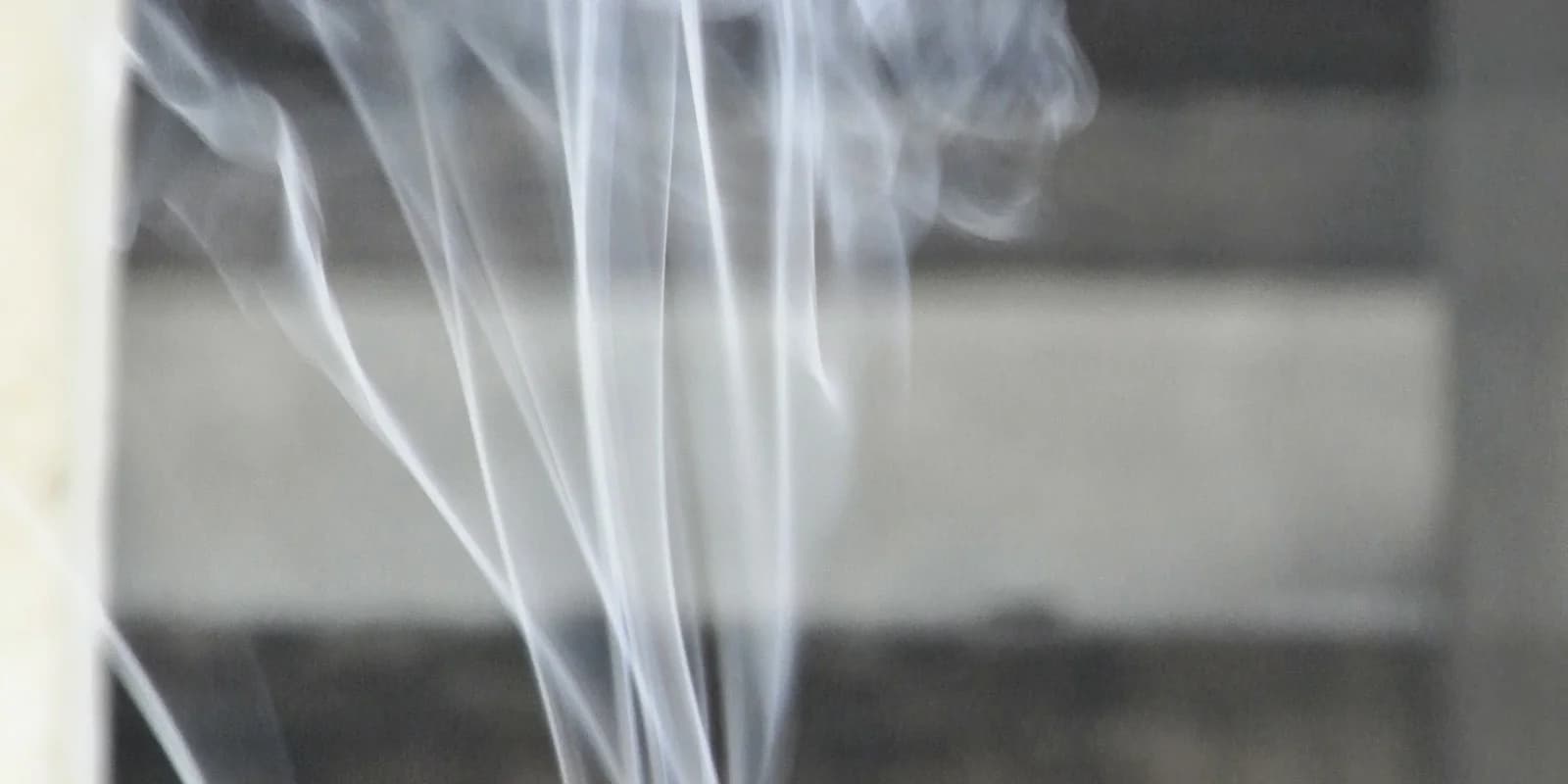
Amounts and etiquette are drawn from current Korean funeral-service guides and are conventions, not survey figures; we give no "average funeral gift" because none is authoritatively surveyed. Korean terms are given with verified hanja; the widely-ranked English claim that condolence money is "beoseum (보상)" is incorrect — 보상 means compensation, and the correct terms are 조의금/부의금/부조금. The cremation rate is the official 2023 annual figure (92.9%), with monthly rates exceeding 95% by 2026. The 공수 mourning-hand reversal and the two-bows-then-one sequence follow authoritative Korean etiquette sources; the direction a chrysanthemum should face varies between authorities and is left open. Handled soberly throughout. Images show the objects of Korean mourning rather than any grieving people, memorial portrait, or funeral scene: hero — a single white chrysanthemum, the Korean funeral flower, by George E. Koronaios, CC BY-SA 4.0 via Wikimedia Commons (cropped); cover — burning incense sticks, by Sneha G Gupta, CC BY-SA 4.0 via Wikimedia Commons (cropped); listing card — white chrysanthemums, by Adbh266, CC BY-SA 4.0 via Wikimedia Commons (cropped).
Keep Reading
More Stories
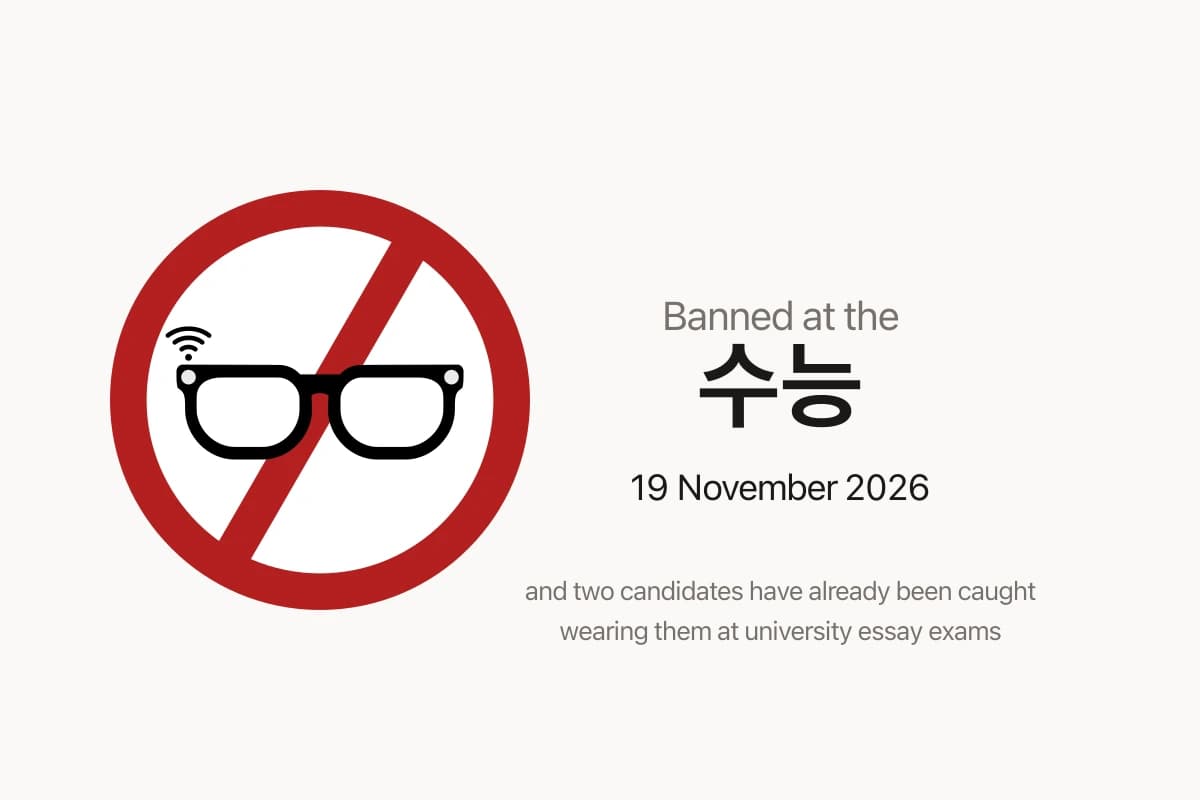
Two Candidates Wore AI Glasses Into Korean University Exams This Month. Five Weeks Later, 550,000 People Sit the 수능
At the University of Seoul on 3 October and at Yonsei a week later, proctors spotted AI smart glasses on candidates sitting essay exams for admission. Both had passed the glasses check in ordinary frames and switched once the exam began. The 수능 on 19 November already bans the devices; the question is whether anyone can see them.
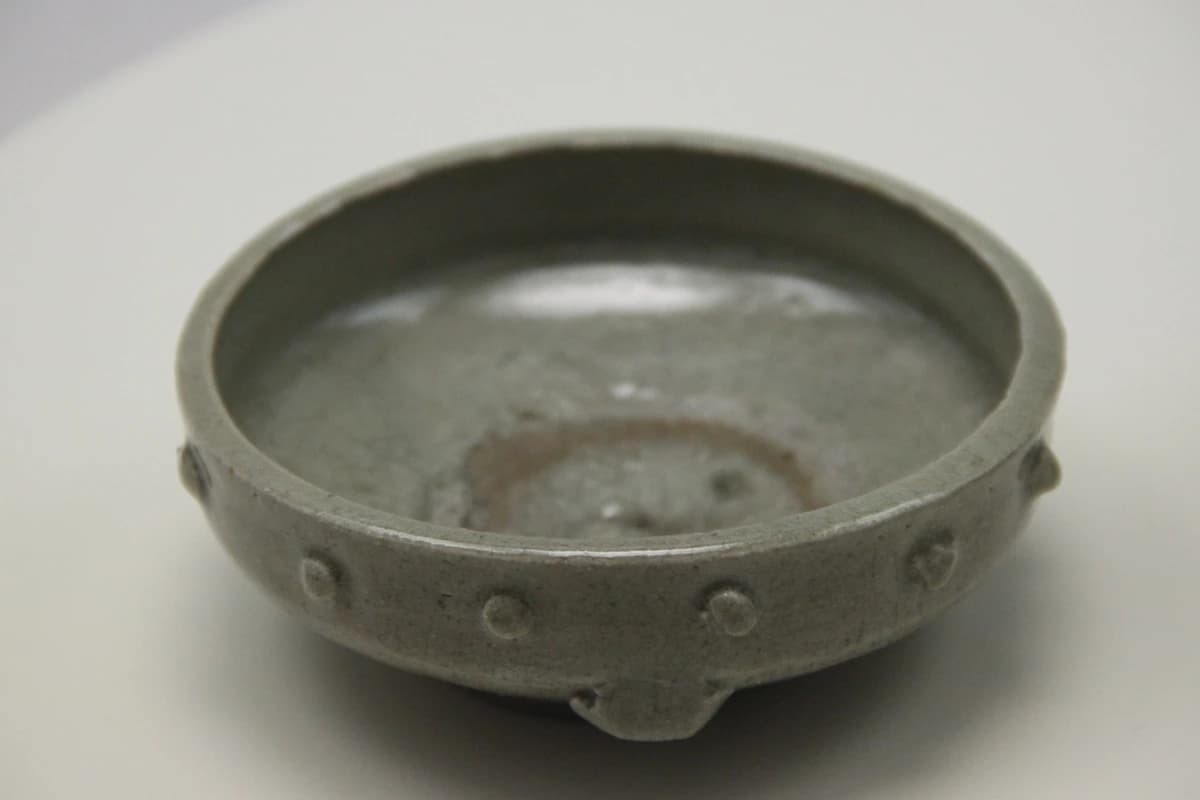
The Fisherman Hid It Under His Floorboards. The Reward He Eventually Got Set Off a Decade of Looting.
Korea marked fifty years of underwater archaeology in Mokpo in September 2026. The official story starts with a net and a report. The documented one starts with six pieces of Chinese porcelain given away as presents, a schoolteacher brother who had to get them all back, and officials who did not want the paperwork. Then the state paid a reward, a diver worked out how much of it went in tax, and for the next ten years people stole the wreck faster than the government could raise it — until the navy's own divers could not find the ship, and the excavation hired the looters.
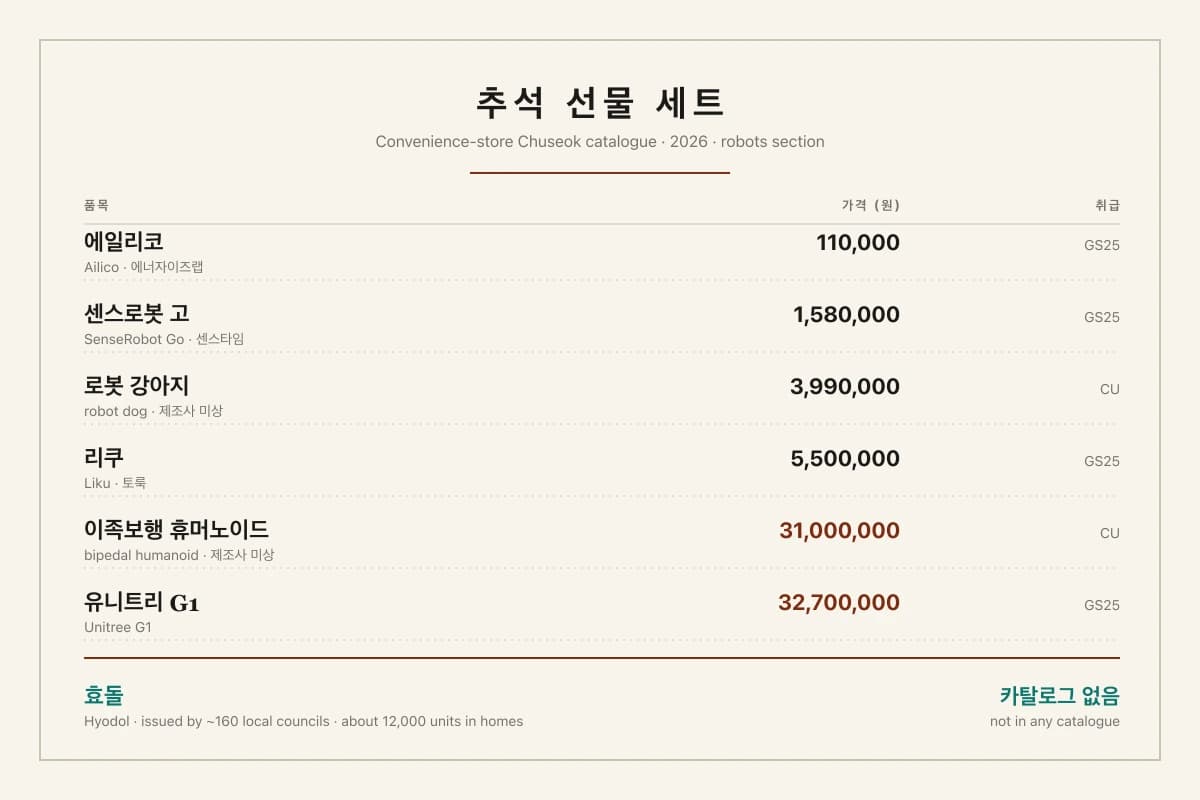
Korea's Convenience Stores Are Selling Humanoid Robots for Chuseok. Neither Chain Expects to Sell One, and Both Have Said So.
CU's holiday catalogue has a bipedal humanoid at ₩31 million, next to the beef and the gold bars. GS25 has an AI companion robot at ₩5.5 million and a keyring that talks back at ₩110,000. We assumed the pitch was companionship for parents you won't be visiting. It isn't — the retailers say plainly these are there to be noticed, not bought. Meanwhile about twelve thousand robots are already in Korean homes, asking elderly residents whether they've taken their medicine, and nobody put those in a catalogue.
The Weekly Dispatch
Korea, curated. Every week.
The best of K-culture, straight from Seoul. Written by people who actually live here.
Free, no spam, unsubscribe whenever.