Korea Files Chuseok Under Two Different Months. 'Korean Thanksgiving' Can't Hold That.
The Korean state's heritage register describes Chuseok through circle dances and rice cakes, and files ancestral grave rites under a different holiday in April. Its disaster-safety calendar treats the weeks before Chuseok as a formal September hazard window, with a brush-cutter injury series to match. Both documents are current. Only one of them looks anything like Thanksgiving.
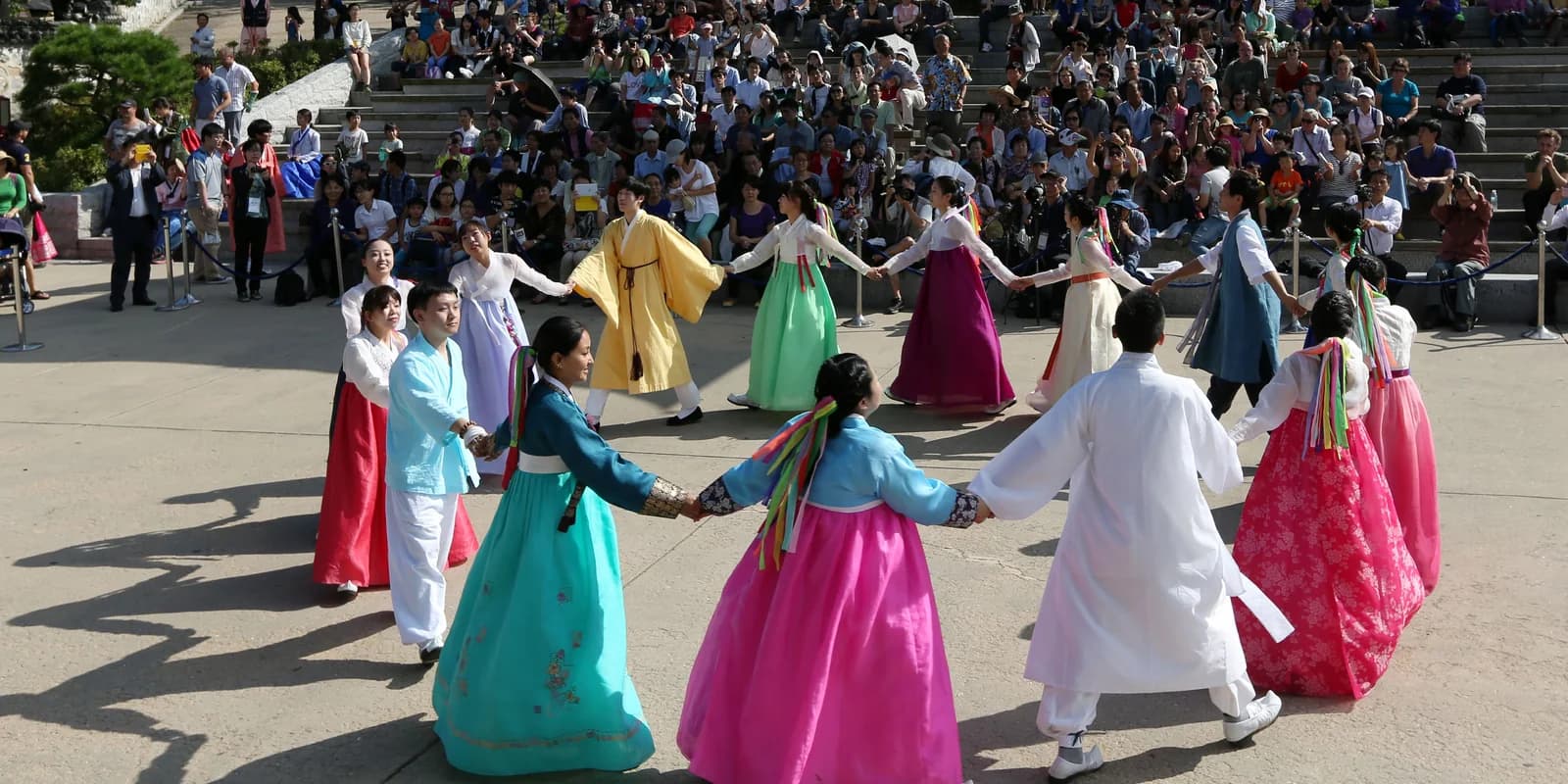
Every English-language guide to 추석 opens the same way. Korean Thanksgiving. Families travel, tables fill, everyone eats rice cakes and possibly wears a hanbok. The comparison is so standard that Korean tourism bodies and Korean English-teaching sites use it themselves, translating outward into the phrase they know will land.
We think it fails, and not for the reason usually given.
The usual objection is a timing quibble — American Thanksgiving comes after the harvest, Chuseok comes before it. True, and not very interesting. The real problem is that the Korean state cannot decide which month this holiday belongs to, and has two current, official, mutually incompatible answers on file. One of them is a list of dances and foods. The other is a disaster-safety schedule.
A phrase that means "the big autumn family dinner" can carry the first document. It cannot carry the second.
The 2026 dates, and the clause nobody reads
추석 2026 falls on Friday 25 September. That comes from the 한국천문연구원's 「2026년 월력요항」, the state almanac published for the official gazette — the authoritative instrument, not an aggregator's guess.
The statutory holiday runs Thursday 24 to Saturday 26 September: Chuseok's eve, the day, and the day after. Sunday the 27th is also a holiday, in its own right as a Sunday. Which is why you will see the break described as three days and as four days, both defensibly, depending on what's being counted. (You will also see "two days," which is simply wrong.)
And there is no substitute holiday. That is the first thing worth sitting with, because it is not an oversight — it is a clause working exactly as written.
Two instruments govern this. The 공휴일에 관한 법률 — an Act, no. 18291, in force from 1 January 2022 — establishes public holidays and hands the substitute-holiday machinery to a Presidential Decree. The decree, 관공서의 공휴일에 관한 규정, contains the rule in its Article 3.
Under it, most holidays earn a make-up day when they land on either a Saturday or a Sunday. 설날 and 추석 earn one only for a Sunday.
So watch what 2026 does with that. 광복절 falls on Saturday 15 August, and the country gets Monday 17 August off. 추석's third day falls on Saturday 26 September, and the country gets nothing. Same decree, same calendar year, opposite outcomes — and the holiday that loses is the largest in the Korean year. 2026's four substitute holidays are 2 March, 25 May, 17 August and 5 October. Not one of them is Chuseok's.
Hold that thought, because the asymmetry turns out to be the smaller of the two filing problems.
Plank one: the heritage file says the graves belong to April
In December 2023, Korea designated 추석 as national intangible heritage — one of five festivals recognised together, the first time Korean holidays had been so designated.
Read what the designation describes. Chuseok appears as the fifteenth day of the eighth lunar month, with customs running from 강강술래, the women's circle dance, to 송편, the stuffed half-moon rice cakes. Dances and food.
The grave rites — 성묘, tending an ancestor's burial mound; 벌초, cutting back the grass on it — are filed principally under a different holiday: 한식, the 105th day after the winter solstice, which falls in April.
This is not a modern administrative quirk. The 한국민족문화대백과사전 records the Joseon-period division cleanly: 설 was 차례 only, 한식 was 성묘 only, and 추석 was both. The grave-visiting holiday, in the tradition's own accounting and in the state's current one, is the spring one.
On this evidence, "Korean Thanksgiving" is defensible. A holiday of dances, rice cakes and a shared meal is genuinely Thanksgiving-shaped.
Plank two: the safety file says the graves belong to September
Now open the other filing cabinet.
The Ministry of the Interior and Safety maintains a rolling calendar of 중점관리 재난안전사고 유형 — hazard types designated for focused management, month by month. For September, two of those types are 예초기 사고 and 벌 쏘임: brush-cutter accidents and wasp stings.
Brush cutters. In September. Because that is when Koreans go up hillsides with blades to clear their ancestors' graves before Chuseok.
This is not a leaflet. It comes with a casualty series. A ministry release drawing on the Korea Consumer Agency's injury surveillance system logged 405 brush-cutter accidents across 2019–2023, of which 143 — 35.3% — happened in September. The injuries are what you would expect from a spinning blade held at ankle height on a slope: 66% to the feet and legs, a quarter to hands and arms, and 82% lacerations, with fractures, amputations and eye injuries in the tail.
Two honest notes on those numbers, because they matter. First, they were published by the ministry; the Consumer Agency supplied the data. Second, the injury-site and injury-type breakdowns sit on slightly different case counts in the agency's own comparable release, and the site percentages sum to 98% rather than 100 — so the residual is unpublished, and we are not going to pretend the last two points exist.
The wasp figures need more care still. The Korea Disease Control and Prevention Agency, in a release distributed at the end of July 2026, reported 3,405 sting cases across 2021–2025, of which 77 were admitted and 15 died, with 71.9% falling in July, August and September and 64.6% of patients male. The seasonal share sum-checks exactly.
But that count comes from the emergency departments of 23 sentinel hospitals, not from the country. A separate national insurance series gives 92,660 sting patients for an overlapping period — a figure twenty-seven times larger, measuring something else entirely. So those 15 deaths are 15 deaths among sentinel-hospital emergency patients, and anyone who prints them as Korea's annual wasp-sting toll has quietly swapped one universe for another. We are telling you this rather than choosing the more dramatic number.
What survives all that hedging is the shape, and the shape is unambiguous: the Korean state schedules a September safety campaign around grave-clearing, and has the injury statistics to justify it. A country that had genuinely moved its grave rites to April would not need one.
Plank three: the custodians dismantled the table, and cited a seventeenth-century source
Here is where the received story really breaks down, because the received story is that tradition is eroding under modern indifference.
On 5 September 2022, the 성균관의례정립위원회 — the ritual-standards committee of the foundation that succeeded Joseon's national Confucian academy — published a standard Chuseok 차례상. Six core items: 송편, 나물, 구이, 김치, 과일, 술. With optional additions, about nine dishes.
It also said, explicitly, that 전 — the fried pancakes that dominate every photograph of a Korean holiday table, and every Korean's memory of a holiday kitchen — are not required, and are not proper rite.
The authority it cited for that is the detail that changes everything. Not modernity, not convenience, not a survey. It cited 『沙溪全書』, the collected works of 사계 김장생 (1548–1631), one of the towering ritual scholars of the Joseon period, on the proposition that oil-fried offerings are contrary to 예. A separate and more general warrant came from 『禮記』: 大禮必簡 — a great rite must be simple.
And then it went further. The committee stated that 홍동백서 and 조율이시 — the arrangement rules that every Korean family recites, red fruit east and white fruit west, jujube-chestnut-pear-persimmon in order — appear in no classical ritual text at all. Put the food where it fits.
The body that speaks for Korean Confucian practice told the country that its Confucian rules are folklore.
This was not a one-off. A 설 standard followed in January 2023, and in November 2023 came recommendations on the ancestral rites proper: the invocation may be written in 한글 rather than classical Chinese; the rite may be held at six to eight in the evening instead of the canonical hour around midnight; the table may be an ordinary family meal, or simply the foods the dead person liked. And the whole family should prepare it — not one woman.
(The press reported that last item as "chicken and pizza on the ancestral table." The committee never said that. It said the foods the deceased enjoyed, which is both more moving and less printable.)
One thing to be precise about: this foundation is a private civic body. It administers the Confucian shrine and anchors the national network of local academies, and it is not the university of the same name. It has no statutory authority over anybody's household rites and cannot compel a single dish. Its whole power is the power to say what the tradition actually requires. Which is exactly why the announcement mattered.
What is actually happening, which is not outsourcing
The tidy version of this article would now argue that Koreans are paying to have their filial duty performed for them. You can, after all, hire someone to mow your ancestors' graves: the agricultural co-operatives have offered 벌초 대행 since 1994, and the forestry co-operatives do too, across hundreds of local branches. There is no national tariff — each branch sets its own — but the range quoted by the central bodies runs from around ₩80,000 to ₩200,000 per grave, by plot size, region and how close a vehicle can get.
We looked at how the providers themselves sell it, and the tidy version does not survive contact with the evidence. Not one of them frames this as relieving you of an obligation. Every one frames it as access: for customers who are too old to swing a brush cutter on a slope, or who live too far from the hometown to make the dates. Given the injury statistics in the section above, that is not marketing. That is a description of the work.
The volumes make the point sharper. The agricultural co-operatives handled about 24,400 graves in 2020, 27,500 in 2021, and 26,100 in 2022 — a rise of roughly 7% across two years, with a fall in the middle, which is not a trend and we won't dress it as one. Against something on the order of twenty million burial mounds in Korean ground, thirty thousand graves a year is about 0.15%.
So delegation is a rounding error. Here is what is not:
Roughly 2.2 million graves in Korea are 무연고 — without a known descendant — covering something like 103 square kilometres. In one survey of twenty-five private cemeteries, 31% of graves were at least ten years behind on their maintenance fees, and two-thirds of those were thirty years or more behind.
And the forestry co-operatives run a GPS grave-history system whose purpose is to prevent 실묘 — losing the grave. The service exists partly because families no longer know where their ancestors are buried.
The behaviour is not outsourcing. It is abandonment, happening quietly, from the bottom, by families — while a fractional minority pays a co-operative to keep one hillside cut.
Meanwhile the graves themselves are going. Cremation ran at 19.1% in 1993 and 52.6% in 2005; it reached 94.0% in 2024 and hit 95.2% in a single month of 2026, a record. Korea is very close to not making new graves at all.
The strongest case against us
An opinion piece that hasn't met its best objection isn't finished, so here is ours, made as well as we can make it.
The state files the grave rites under April because that is where the tradition puts them, and the fourteenth-century division backs it. The rite is not being reduced from above — the Confucian committee says it is being restored, and its case is documentary: the elaborate table is a twentieth-century inflation produced by prosperity and display, and stripping it back is conservatism, not reform. Meanwhile grave-tending is not being outsourced but simply ending, because cremation has all but stopped producing graves. And the rite is not collapsing either: 53% of Korean adults still perform a Confucian 차례, against 35% who perform none — a majority, not a residue, and the sharp break in that series is 2021, the pandemic, rather than any long slide.
Every sentence of that is true. It is a better description of Korean ancestral practice than the one most English coverage offers.
And it does not explain the brush cutters.
If the grave rite had genuinely migrated to April, the interior ministry would not be running a September hazard designation with a lacerations series attached. If Koreans had stopped going up the hillsides, the wasp cases would not cluster in the weeks before Chuseok, in men in their fifties and sixties — the people doing the mowing. The heritage file and the safety file are describing the same practice, and they disagree about what month it happens in.
That is not our inference against the state's. It is one arm of the Korean government against another, both current, both authoritative in their own domain.
Why the phrase matters
None of this is an argument that Chuseok is really about graves and not about a meal. It is both, which is precisely the problem: it is a holiday that two branches of its own government file under two different months, one of them a food-and-dance festival and the other an occupational hazard window.
"Korean Thanksgiving" is a translation that can hold one of those and not the other. It sends an English reader looking for the dinner — and the dinner is genuinely there, and genuinely lovely, and roughly half the story. What the phrase cannot accommodate is a national safety campaign about blade injuries, a Confucian committee overruling everybody's grandmother with a 400-year-old citation, and two and a half thousand square kilometres of graves nobody is coming back to.
We would update this view if the ministry dropped the September designation, or if the co-operative volumes turned out to be a rounding error on a practice that had already ended — in which case the safety file is a legacy artefact and the heritage file is simply right. On the current documents, it isn't.
One practical note, since we have been unromantic throughout. The 벌초 season falls in the weeks before Chuseok, not on it. In 2026 that means the first third of September. If you are in Korea then and you see men loading strimmers into a car boot at dawn, that is the holiday starting — about three weeks before the part with the rice cakes.
Related, and both in our reporting voice rather than this one: what to do at a Korean funeral, and the first-birthday rite and the objects it turns on. The lunar-calendar machinery behind auspicious dates is in Korean superstitions.
Images, cropped by us — all three CC BY-SA, so these crops carry the same terms. Listing card — 송편 in mugwort-green, white and purple at a rice-cake specialist in Jongno, photographed in a shop rather than a family kitchen, by Jeon Han for Korea.net / KOCIS, CC BY-SA 2.0. Cover — 강강술래 at 남산골 한옥마을, Chuseok 2013, also by Jeon Han for Korea.net / KOCIS, CC BY-SA 2.0; note that it shows the circle dance as a scheduled public programme with a banked audience, which is the honest frame for a state-managed heritage item, not a family gathering. Hero — a grass 봉분 with its 호석 kerb, 상석 and 망주석 on a hillside at Ansan, by User:Piotrus, CC BY-SA 3.0. The grass on that mound is visibly ragged, which is the condition the pre-Chuseok 벌초 season exists to fix. No mourner appears in it, and no name on the stele resolves — we checked at eight times magnification of the source file and again on the delivered crop.
Four notes on what we rejected, because on this subject the rejections are the standard. Six photographs of the same Ansan burial ground were discarded for fully legible names on the stelae — these are real dead people with living descendants. One was discarded because the uploader's own credit line reads 「성묘 중 촬영입니다」, taken while grave-visiting: that is a family's private moment. Every royal tomb was discarded as the wrong category of grave — a state-maintained 능 cannot illustrate a commercial grass-cutting trade. And the obvious cover image, a 차례상 at 6000×4000 with no licence obligations at all, was discarded because its camera data reads 19 February 2015 — Seollal, not Chuseok — and there are strawberries on the table. It is a New Year rite circulating as this one.
One gap we could not fill and did not paper over: 벌초 itself is unillustrated. A search of Wikimedia Commons for the term returns no files at all — there is no licence-clean photograph anywhere of grass being cut on a Korean grave, nor of the Korean sickle used to do it. The single most distinctive object in this article, the tool the injury statistics are about, has no picture, and we substituted nothing for it.
This is an Opinion piece: the facts below are checked to the same standard as our reporting, and the argument built on them is ours. Dates: 추석 2026 = Friday 25 September, from the 한국천문연구원 「2026년 월력요항」. Statutory holiday 24–26 September; 2026's four substitute holidays are 2 March, 25 May, 17 August and 5 October, none of them Chuseok's — which is the published outcome, and the reason we can state the Saturday asymmetry even though the decree's own text sits behind a portal our tools cannot read. The instruments are named as an Act delegating to a Presidential Decree, and we describe the substitute rule at the level the published holiday list supports. The heritage designation (December 2023) and its placement of 성묘 and 벌초 under 한식 are from the designation itself; the Joseon-period division of 설 / 한식 / 추석 is from the 한국민족문화대백과사전. The 성균관의례정립위원회 standard (5 September 2022) and the November 2023 recommendations are from the committee's own announcements; the ruling against 전 cites 『沙溪全書』, not 『禮記』 — 大禮必簡 from 『禮記』「樂記」 is a separate and more general warrant, and the two are widely conflated. Brush-cutter figures are a Ministry of the Interior and Safety release on Korea Consumer Agency surveillance data, 2019–2023; wasp figures are a Korea Disease Control and Prevention Agency release, 2021–2025. Deliberately flagged rather than smoothed: the wasp series is a 23-sentinel-hospital sample and a national insurance series gives a figure 27× larger for an overlapping period, so the 15 deaths are not Korea's annual toll; the brush-cutter site and type breakdowns rest on slightly different case counts and the site percentages sum to 98%; and the ministry's own 2025 release switched to a different, much smaller data source, so these series must never be blended. Deliberately omitted: a widely repeated "realistic all-in" price for 벌초 대행, which we could not source and which is contradicted by the only commercial tariff we could read; a "성묘 대행" service in which someone bows on your behalf, which we could not confirm exists as a purchasable product; any claim that 한가위 is the older name rather than the native one; and the household-rite percentages as a trend line, since the discontinuity is the pandemic rather than a slope. The 53%/35% figures are a 2025 한국갤럽 survey reported at second hand, the polling firm's own document being inaccessible to us.
Keep Reading
More Stories

A Portmanteau Walks into a Party: In Defence of the Koreaboo
The word 'koreaboo' travels fast and lands hard — but nobody can define it, nobody who matters invented it, and it applies, with suspicious consistency, almost only to East Asian cultures. Drawing on the Francophile, the Anglophile, and a 1,555-day Duolingo streak, a guest essay on the double standard that calls Western cultural enthusiasm personality and Korean cultural enthusiasm a phase.
Summoned to Testify, Korea's Chief Justice Came, Refused the Oath, Answered Anyway — and Left at Lunch
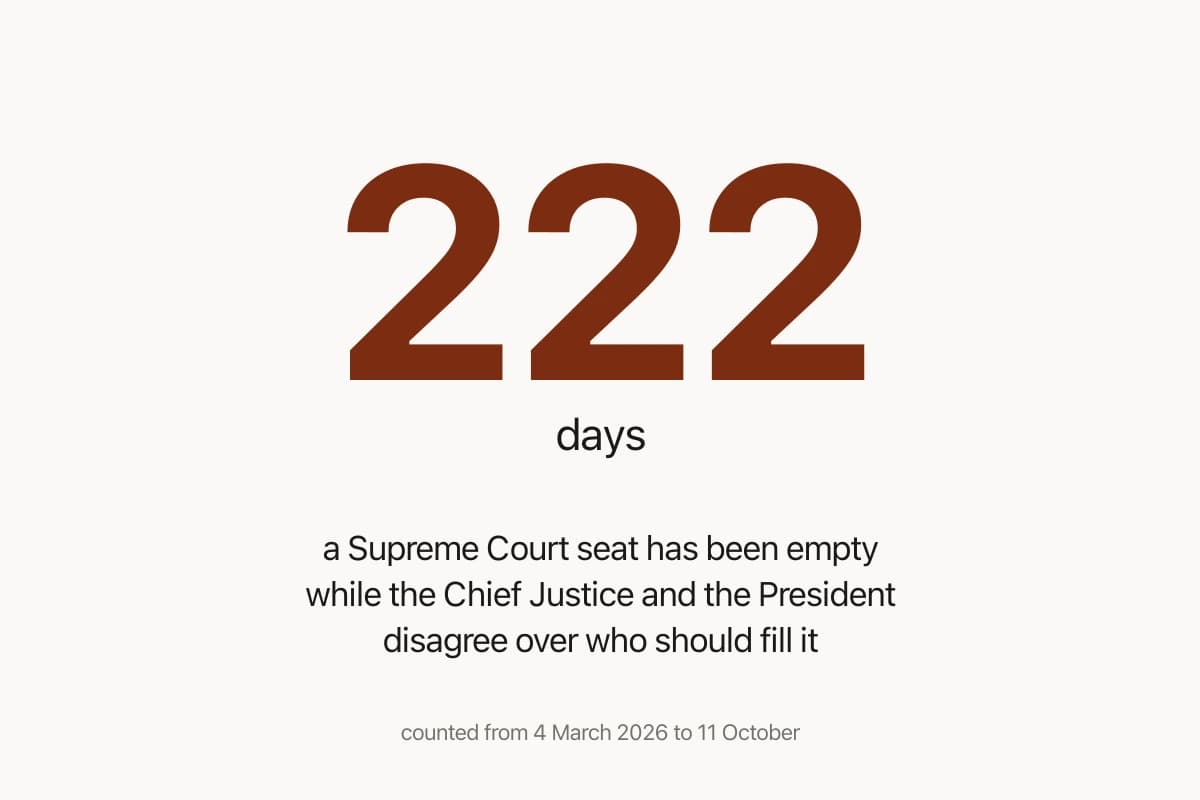
On 6 October 조희대 sat before the National Assembly's judiciary committee for two and a half hours, unsworn, defending a refusal to put forward a second name for a Supreme Court seat that has been empty since March. Then the Chief Justice went, and came back at ten to eleven at night to give closing remarks. Nobody voted to compel a return, and the seat is still empty.
Korea Abolishes Its Prosecution Service on 2 October. One Successor Opens Without a Chief or a Finished Building. The Other Opens With the Same Prosecutors Under a New Sign
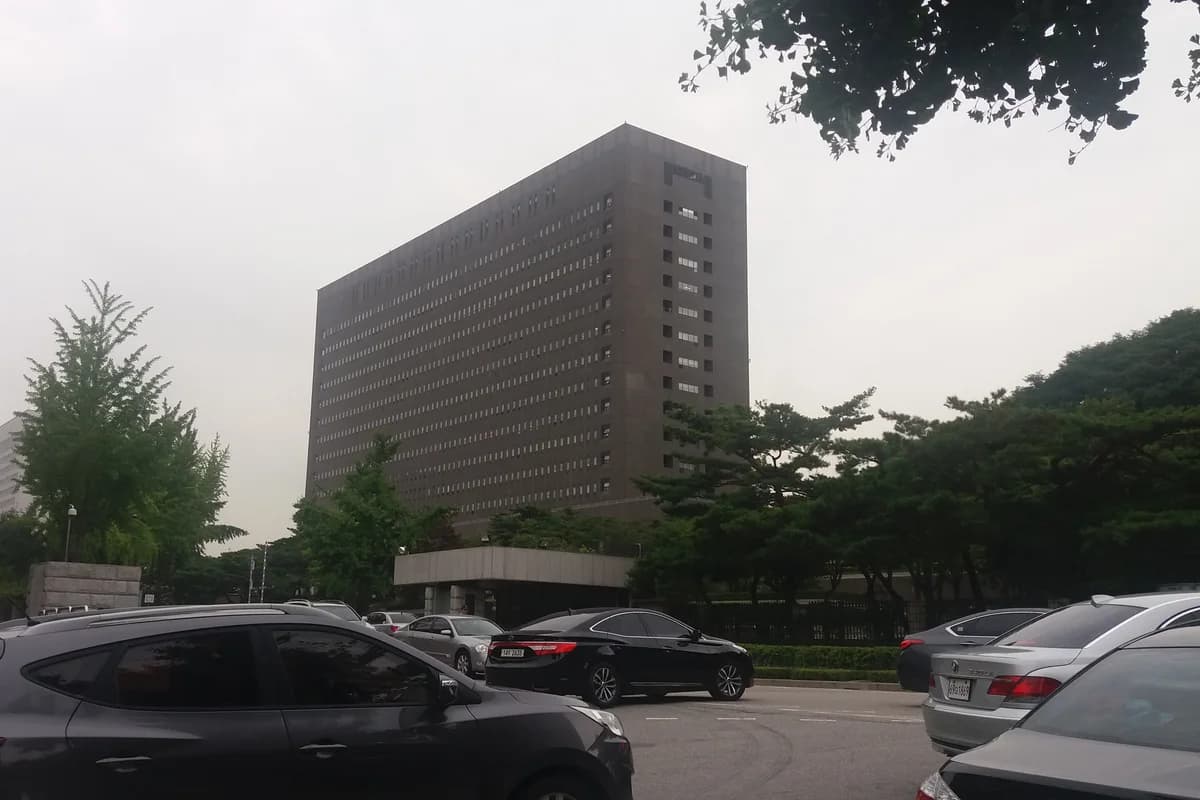
At midnight on 1 October the 검찰청법 is repealed and the institution that has dominated Korean politics since 1948 splits in two: a 공소청 that charges and tries cases, and a 중대범죄수사청 that investigates serious crime. It is the largest change to Korean criminal justice in seventy years, and it begins with acting heads at the prosecution office, the justice ministry and the national police, no head at all at the new investigation agency, seven sets of rules still unpublished, four challenges pending at the Constitutional Court — and the President arguing on X, in the small hours, with his own party about whether a former prosecutor may run the agency that replaces prosecutors.
The Weekly Dispatch
Korea, curated. Every week.
The best of K-culture, straight from Seoul. Written by people who actually live here.
Free, no spam, unsubscribe whenever.