Korean Superstitions, Decoded: Why the 4th Floor Is 'F' and You Don't Write Names in Red
Skipped 4th floors, fan death, no red ink on names, seaweed soup that makes you fail exams. Korea's superstitions look like a random list of don'ts — but most are one of four things: a pun, a funeral rule, a spirit, or a 20th-century newspaper scare. Here's what's real, what's myth, and where each one actually comes from.
Step into an elevator in Seoul and you may find the buttons run 1, 2, 3, F, 5. Ask a Korean friend to write your name and watch them reach past the red pen. Offer a colleague seaweed soup the morning of a big exam and you'll get a horrified look.
Korea's superstitions can seem like a scattershot list of arbitrary don'ts. They're not. Almost every one is a member of one of four families — and once you know the four, the whole system suddenly makes sense. Most Korean superstitions are either a pun, a funeral rule, a spirit, or a 20th-century media scare.
Here's the decoder.
The Four Families
- Homophones (puns). The belief rides on two words sounding the same. This is the biggest family, because Korean — with its layer of Sino-Korean vocabulary — is full of collisions. The number 4, exam foods, pig dreams: all puns.
- Confucian death-rites. Rules about how the dead are named and honored, leaking into daily life. Red ink and (again) the number 4 live here.
- Shamanic / folk cosmology. Pre-modern beliefs about spirits, directions, and fortune. Moving days, whistling at night, leg-shaking.
- Modern media-born. 20th-century inventions amplified by newspapers. Fan death is the textbook case.
Keep those four in mind. We'll tag each superstition as we go.
The Number 4: A Pun About Death
Family: homophone + death-rite.
In Sino-Korean, "four" and "death" sound identical — both are 사 (sa) — even though the underlying characters differ: 四 (four) versus 死 (death). That collision is the entire basis of Korean tetraphobia.
You see it everywhere concrete:
- Elevators label the fourth floor "F" (for "Four") or skip it outright — most visibly in hospitals and funeral halls, where the death association is sharpest.
- Apartment units heavy with 4s (like 404) can sell for less.
- The national railway once skipped locomotive number 4444.
- Gifts aren't given in sets of four.
Note where the avoidance clusters — hospitals and funeral halls — which is your first clue that Korea's "4" phobia is really about 死, death, not the digit. It's worth knowing this is pan-East-Asian: the 四/死 pun works in Chinese and Japanese too, and is actually taken more seriously in China than in Korea. It's real in Korea, but milder than its neighbors'.
Red Ink: The Color of the Dead
Family: Confucian death-rite.
Writing a living person's name in red ink is a genuine taboo — it reads as wishing death on them. Korean teachers avoid writing student names in red; putting a name in red on a gift card is rude.
The verified "why" is the direct line to the funeral hall: red is the color of the dead. The deceased's name was historically recorded in red — on funeral banners and family registers — so putting red on a living person's name inverts the ritual and, in the belief's logic, wishes them into the register of the dead.
This is the tightest link between the superstition list and Korea's actual funeral etiquette: at a Korean funeral, the deceased's name really is the one written in red, and the number funeral halls skip really is 4 (死). Both "superstitions" are just the funeral rules leaking out into daily life.
A caution on origins: you'll read that the taboo began with Joseon-era death registers, or hardened during the Korean War when the names of the dead were crossed off in red. Those are popular explanations, not established history — and English references trace part of the taboo to an older Chinese practice of writing condemned criminals' names in red. So: the death-record logic is solid; the specific origin story is unsettled, and we won't pretend otherwise.
Fan Death: A Belief, Studied
Family: modern media-born. And this is the fun one, so let's be careful with it.
Fan death (선풍기 사망) is the belief that sleeping in a closed room with an electric fan running can kill you. It is physically false — there is no mechanism by which a household fan kills a healthy sleeper. But it's more interesting as a case study in how a modern superstition is born, spreads, and dies than as a thing to laugh at.
The timeline is genuinely instructive:
- 1920s–30s: electric fans arrive in Korea; a 1927 newspaper article titled "Strange Harm from Electric Fans" documents early alarm.
- 1970s: public-health messaging formalizes the fear.
- July 18, 2006: the Korea Consumer Protection Board — a semi-official body — issues a safety alert claiming prolonged fan or air-conditioner exposure causes water loss and hypothermia, citing 20 alleged asphyxiation cases from 2003–2005. Newspapers routinely attributed unexplained overnight deaths to fans.
- 2000s onward: internet skepticism does what 75 years of physics couldn't, and the belief fades — fast — especially among younger Koreans.
The proposed "mechanisms" were always nonsense: that airflow drops your core temperature into hypothermia (not how thermoregulation works in a normal room), or that a closed room's oxygen gets "used up" or "chopped up" by the blades (a fan only moves air around). The one real, narrow caveat — separate from the myth — is that in genuinely extreme heat, above about 32°C, a fan can blow hot air over you without cooling you, which is why heat-safety agencies abroad say don't rely on a fan alone in a heatwave. That's physiology, not the closed-room-at-night story.
The legacy is physical: many Korean fans still ship with timers, a design reflex born of a belief now mostly gone. Fan death is the single most-Googled Korean superstition, and it's the most uniquely Korean thing on this whole list — there's essentially no equivalent anywhere else.
Exam Foods: Slippery vs. Sticky
Family: homophone. And this one only works in Korean.
Before Korea's national college entrance exam (Suneung), the food rules are strict, and they're pure wordplay:
- Never eat 미역국 (seaweed soup) before an exam. Seaweed is slippery, and the verb 미끄러지다 means both "to slip" and "to fail an exam." So the soup makes you slip. "미역국 먹었어" — "I ate seaweed soup" — is a standing euphemism for "I flunked." (The irony: miyeokguk is also the traditional birthday soup, beloved every other day of the year.)
- Do give 엿 (malt taffy) or 찹쌀떡 (sticky rice cake). The verb 붙다 means both "to stick" and "to pass / be accepted." Sticky food means the knowledge — and the acceptance — sticks.
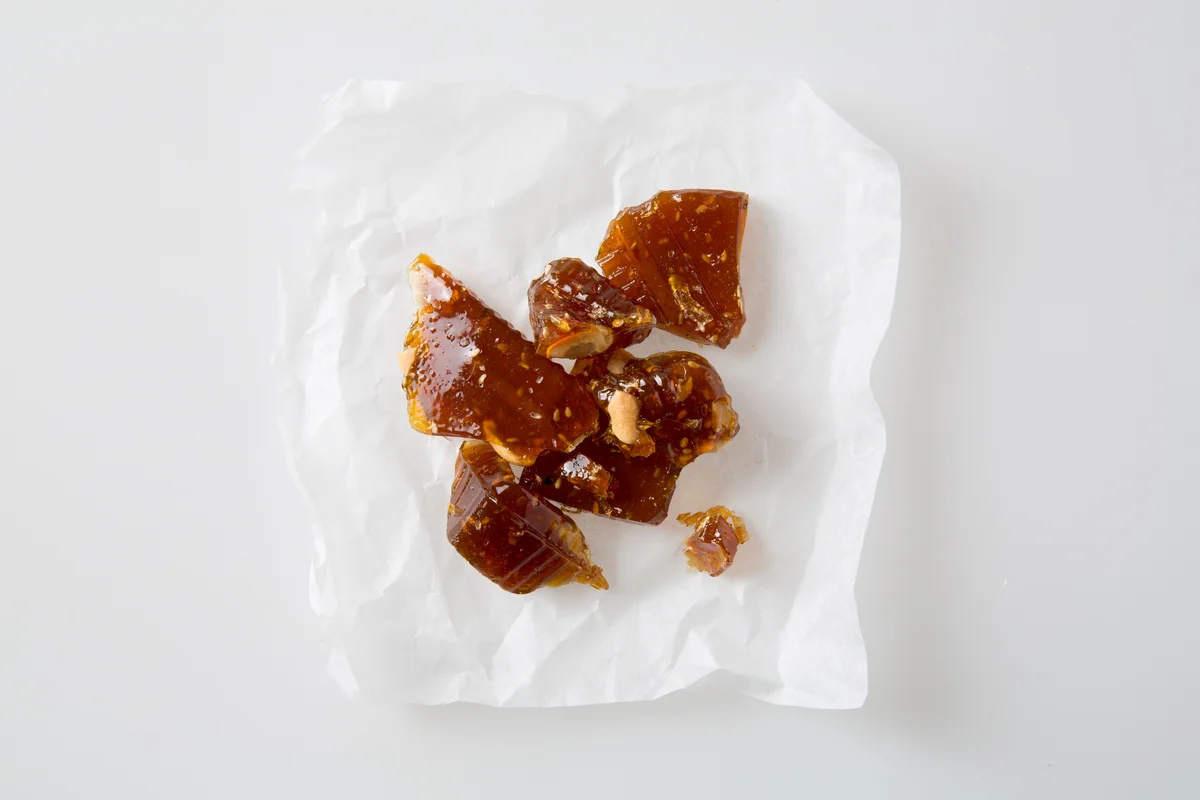
This is Korean superstition at its most characteristic: not spooky, just linguistic. A huge share of these beliefs are, at bottom, puns you can't translate.
Omens: Pigs, Magpies, and Shaking Legs
Family: folk (some with a pun underneath).
- Dream of a pig (돼지꿈) and buy a lottery ticket. A pig dream is a money omen — because the hanja for pig, 豚, is read don, a homophone of the native Korean word 돈, "money." (The National Folk Museum makes exactly this point.) Best versions: a whole herd, or a pig entering your house.
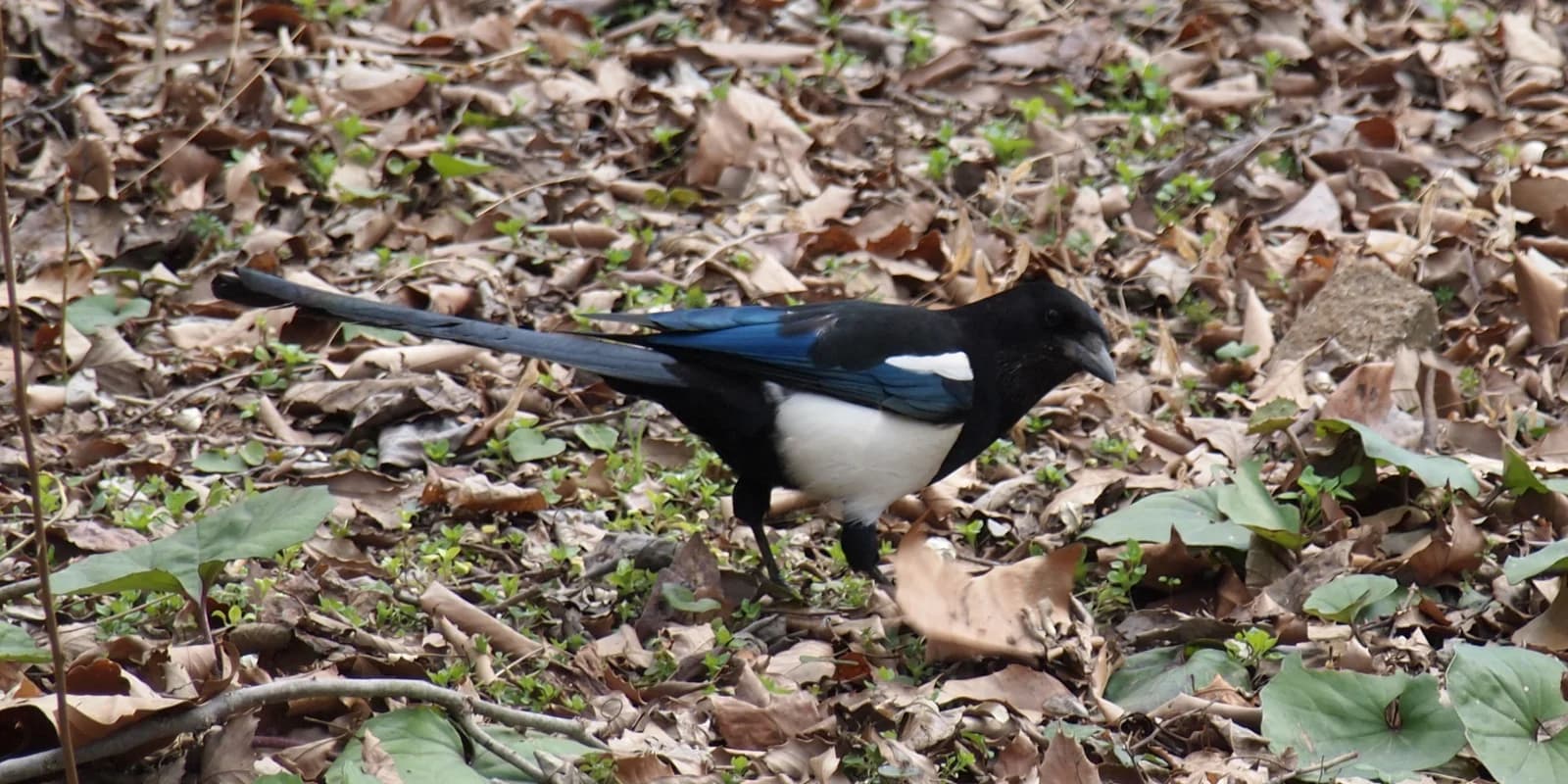
- A magpie (까치) means good news; a crow (까마귀) means bad. The magpie is a beloved, auspicious bird — widely regarded as South Korea's national bird — and its morning call signals a welcome visitor. A crow's caw is the opposite.
- Don't shake your leg — you'll shake out your fortune. The proverb is "다리 떨면 복 나간다": jiggle your leg and your blessings leave. It doubles neatly as a scold against fidgeting.
- Don't whistle at night — it's said to summon snakes and spirits to your home.
Moving Days: The Spirit That Travels
Family: shamanic/folk. And this one is widely misunderstood, so here's the real version.
Koreans schedule big life events — moves, weddings, business openings — on 손 없는 날, "days without 손." The near-universal mistake in English write-ups is to read 손 as the body part "hand." It isn't.
Here, 손 is short for 손님 (sonnim, "guest") — a euphemism for a roaming evil spirit that travels the four cardinal directions and interferes with human affairs. On most days the spirit sits in one direction and causes trouble there; but on lunar dates ending in 9 and 0 it "ascends to heaven" and is absent altogether. Those are the 손 없는 날 — the safe days.
This isn't a museum belief: Korean moving companies still price by it. The auspicious days book up and cost more. (The specific which-direction-on-which-day mapping varies between sources, so we won't hand you a rigid compass table — but the 9-and-0 safe days are consistent.) It is one of the most genuinely Korean items here.
Which of These Are Even Korean?
The single most useful thing this guide can tell you — and the thing the listicles get wrong — is that not all of these are Korean. Some are pan-East-Asian; a few are actually Chinese imports that don't even make linguistic sense in Korean.
| Belief | Verdict |
|---|---|
| Fan death | Uniquely Korean (media-born, 20th c.) |
| Exam foods (미역국 / 엿) | Uniquely Korean (needs Korean puns) |
| 손 없는 날 moving days | Uniquely Korean (Korean folk cosmology) |
| Leg-shaking → fortune leaves | Mostly Korean |
| Number 4 (tetraphobia) | Pan-East-Asian — milder in Korea than China |
| Red ink on names | Pan-East-Asian roots, strongly held in Korea |
| Pig dream = money | Concept shared; the 豚/돈 pun is Korean |
| Magpie good / crow bad | Pan-East-Asian, nationalized in Korea |
| Clock/watch as a gift | Chinese, not Korean — see below |
| Doljabi (first-birthday grab) | Broadly East Asian (Chinese 抓周) |
That clock taboo is the clean tell. Avoiding the gift of a clock comes from Mandarin, where 送鐘 ("give a clock") sounds like 送終 ("attend a funeral"). That pun does not exist in Korean. So where Koreans avoid gifting clocks, they've imported a Chinese superstition whose entire logic evaporated at the border — a small, perfect illustration of how these things travel.
The Point
Korean superstitions aren't a grab-bag of quaint don'ts. They're a surprisingly orderly system, and the order is mostly linguistic: 四 = 死 (four is death), 붙다 (stick is pass), 미끄러지다 (slip is fail), 豚 = 돈 (pig is money). Layer on the funeral rules that leak into daily life (red ink, the skipped 4) and the folk spirits that still set moving dates (손 없는 날), and you've accounted for nearly the whole list.
And like everything, it's fading unevenly. A young Korean will still pick a 손 없는 날 to move — the moving company makes sure of that — but treats the pig-dream lottery ticket as a fun ritual rather than a real tip, and files fan death under "things my grandparents believed." The superstitions that survive are the ones baked into infrastructure: the elevator with no 4, the fan with a timer, the calendar the movers charge by.
Learn the four families, and you can read them all — including the one your Korean friend will deny believing, right before they decline to write your name in red.
Beliefs are described as beliefs, never as fact — fan death in particular is physically debunked and is presented as a cultural case study. The red-ink taboo's death-record logic is given as the verified rationale; its specific dated origins (Joseon registers, Korean War) are flagged as popular explanations rather than established history. The 손 없는 날 direction system varies between sources, so only the consistent 9-and-0 safe-day rule is stated firmly. The uniquely-Korean-vs-shared judgments distinguish language-dependent beliefs (Korean puns) from imported ones (the clock taboo's Mandarin pun). Hanja are given where the homophone is load-bearing. Images: hero — a Seoul elevator panel where the fourth floor is labelled "F," by Nam-ho Park via Flickr, CC BY 2.0 via Wikimedia Commons (cropped); cover — a Korean magpie (까치), the good-news bird, by Kim MyoungSung via Flickr, CC BY 2.0 via Wikimedia Commons (cropped); in-article — 엿, the sticky taffy given for exam luck, by the National Institute of Korean Language (국립국어원), CC BY-SA 2.0 KR via Wikimedia Commons (cropped); listing card — an AI illustration (generated with Higgsfield, GPT Image 2.5) of the fan-death belief, depicting no real person.
Keep Reading
More Stories
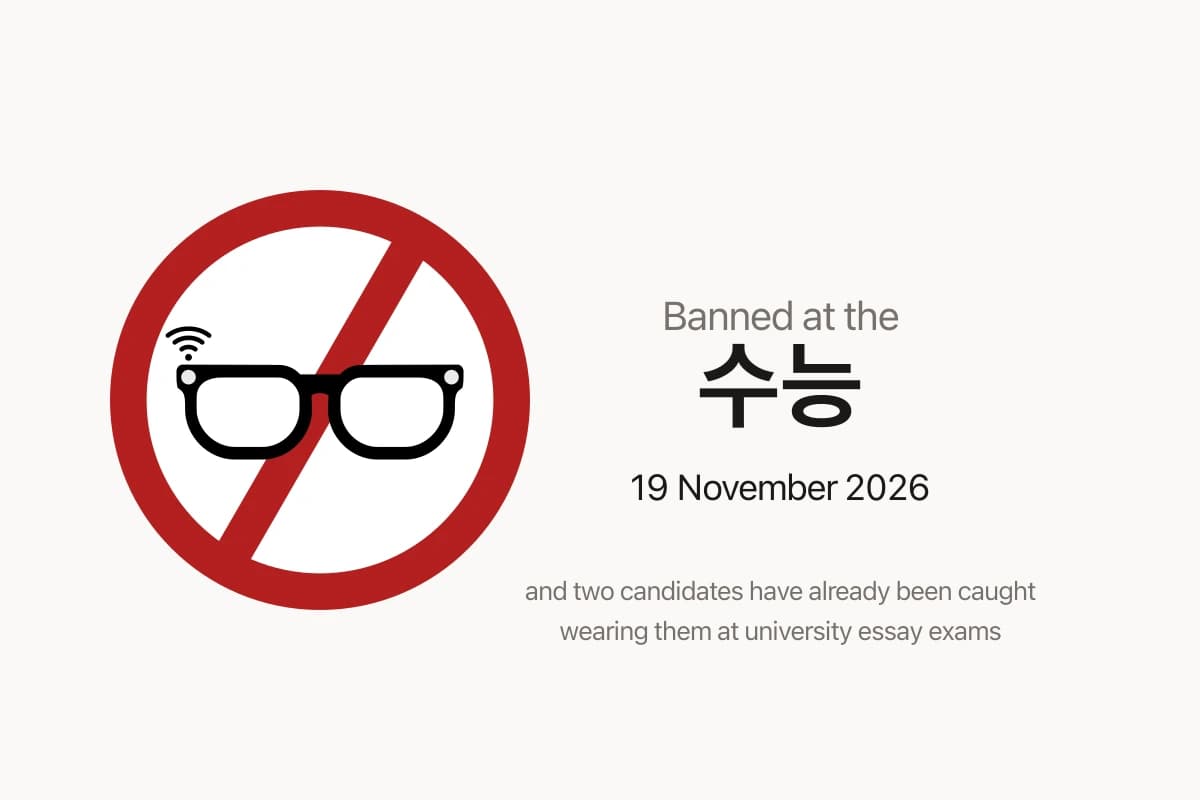
Two Candidates Wore AI Glasses Into Korean University Exams This Month. Five Weeks Later, 550,000 People Sit the 수능
At the University of Seoul on 3 October and at Yonsei a week later, proctors spotted AI smart glasses on candidates sitting essay exams for admission. Both had passed the glasses check in ordinary frames and switched once the exam began. The 수능 on 19 November already bans the devices; the question is whether anyone can see them.
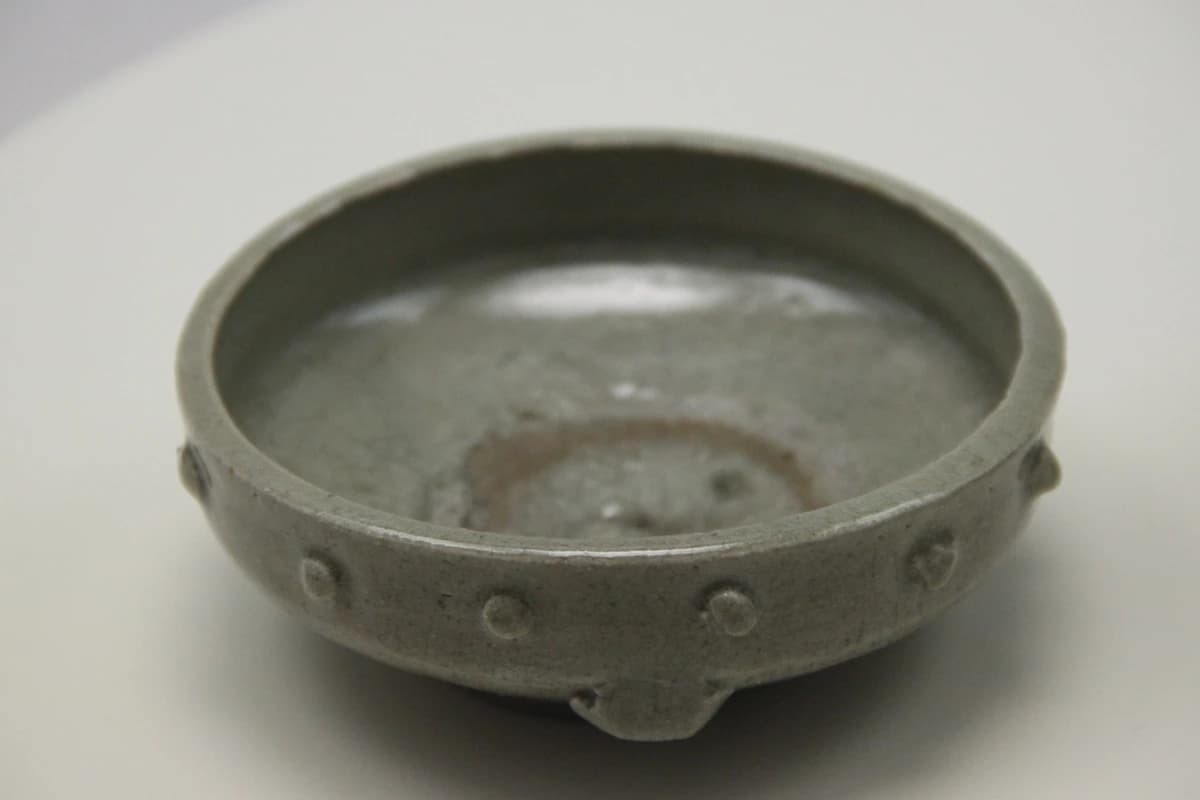
The Fisherman Hid It Under His Floorboards. The Reward He Eventually Got Set Off a Decade of Looting.
Korea marked fifty years of underwater archaeology in Mokpo in September 2026. The official story starts with a net and a report. The documented one starts with six pieces of Chinese porcelain given away as presents, a schoolteacher brother who had to get them all back, and officials who did not want the paperwork. Then the state paid a reward, a diver worked out how much of it went in tax, and for the next ten years people stole the wreck faster than the government could raise it — until the navy's own divers could not find the ship, and the excavation hired the looters.
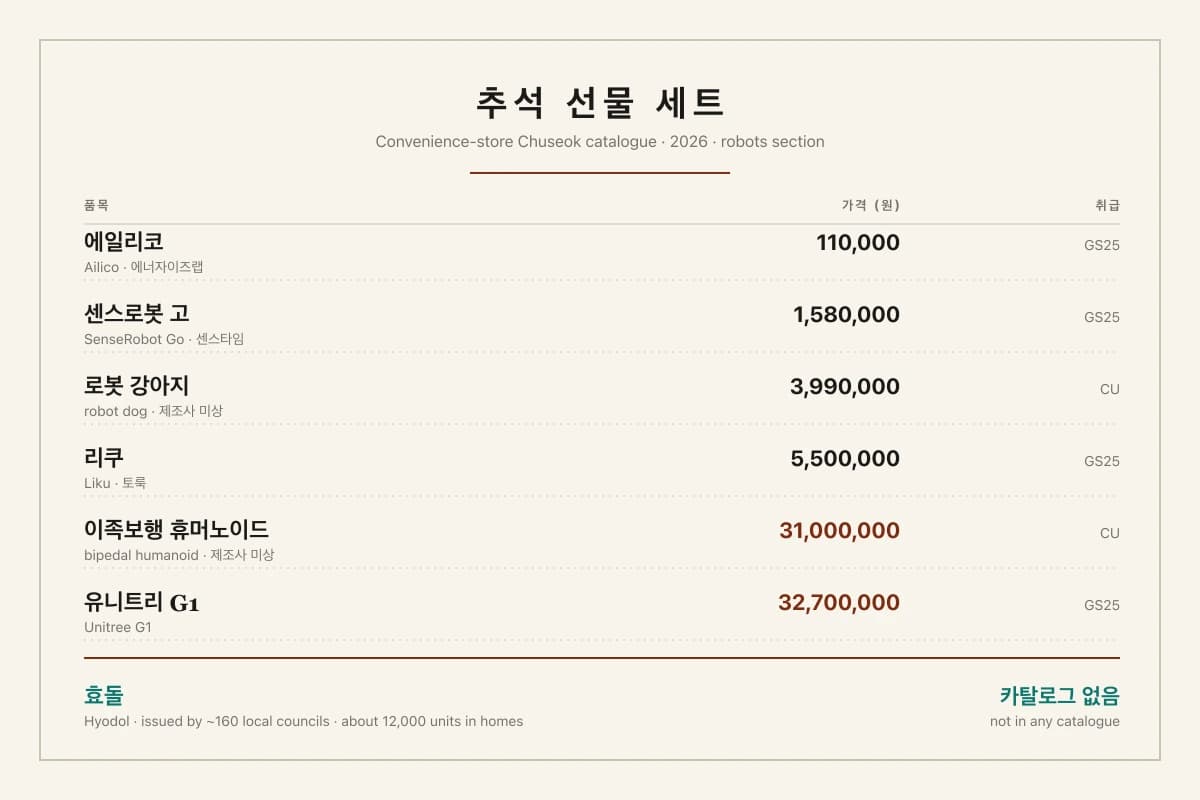
Korea's Convenience Stores Are Selling Humanoid Robots for Chuseok. Neither Chain Expects to Sell One, and Both Have Said So.
CU's holiday catalogue has a bipedal humanoid at ₩31 million, next to the beef and the gold bars. GS25 has an AI companion robot at ₩5.5 million and a keyring that talks back at ₩110,000. We assumed the pitch was companionship for parents you won't be visiting. It isn't — the retailers say plainly these are there to be noticed, not bought. Meanwhile about twelve thousand robots are already in Korean homes, asking elderly residents whether they've taken their medicine, and nobody put those in a catalogue.
The Weekly Dispatch
Korea, curated. Every week.
The best of K-culture, straight from Seoul. Written by people who actually live here.
Free, no spam, unsubscribe whenever.