Two Candidates Wore AI Glasses Into Korean University Exams This Month. Five Weeks Later, 550,000 People Sit the 수능
At the University of Seoul on 3 October and at Yonsei a week later, proctors spotted AI smart glasses on candidates sitting essay exams for admission. Both had passed the glasses check in ordinary frames and switched once the exam began. The 수능 on 19 November already bans the devices; the question is whether anyone can see them.
At half past ten on the morning of Saturday 10 October, on Yonsei University's Sinchon campus, the maths paper of the science-track essay exam began. Fourteen thousand four hundred and fifty-two people had applied for 288 places through that round — about fifty for every seat.
Before the start, staff had checked everyone wearing glasses. One candidate passed that check in an ordinary pair. Then, once the exam was under way, the candidate swapped them for another pair: smart glasses with, as Yonsei described them, "카메라와 배터리가 탑재된" — a camera and a battery built in.
A proctor noticed that the frames looked different. Proctors at Yonsei had been shown photographs of smart glasses and where the camera sits. The proctor alerted the exam's headquarters and took the glasses away. The candidate was allowed to finish, so as not to disturb anyone else, and admitted it afterwards. As of 14 October, Yonsei was still deciding whether to fail the candidate and whether to make a criminal complaint.
It was not the first case. A week earlier it had happened at the University of Seoul.
The University of Seoul, 3 October
On the morning of Saturday 3 October, at the University of Seoul's natural-sciences essay exam, a candidate who had worn ordinary glasses at the ticket check was found wearing smart glasses during the exam. A proctor thought the frames suspiciously thick; the exam's headquarters confirmed what they were. The candidate was removed from the room on the spot and, as 연합뉴스 reported it, barred "향후 3년 동안 시험에 응시할 수 없도록" — from sitting the exam for the next three years. No report says what rule that ban rests on.
Some papers called Yonsei's case the first in university admissions. It was the second. MBC broke the University of Seoul's story only after Yonsei's had run.
We are not describing either candidate. No outlet has reported their age or school, and in a university admissions exam either could be a minor.
What a 논술 is, and why it is a target
These were 논술 exams — written essay papers that some universities set in their early-admission round, the 수시, separately from the national 수능. They are run by each university, in its own buildings, by its own staff. The plan for 2027 admission listed 12,711 places filled through 논술 at 44 universities.
A tutor in 대치동, the Seoul district that is shorthand for the private exam-preparation industry, told 중앙일보 that university essay exams "상대적으로 감독이 느슨할 수 있다" — can be relatively loosely supervised — and that maths and science papers, with answers that come down to numbers, are the easier target. Yonsei did no separate bag search on entry, 한겨레 reported, citing privacy.
Glasses like these are not exotic. Meta's Ray-Ban and Oakley smart glasses went on sale in Korea on 25 May, and Samsung showed its own camera glasses in July, promised for later this year. No report has said what make either candidate was wearing, and we are not suggesting it was any of these.
It had already started elsewhere
The exams that caught people first were not university ones. In May, TOEIC caught two test-takers with AI glasses — three, by 중앙일보's count — and voided their scores with a four-year ban. The national technical-qualification exams caught three more that month, in Seoul, Mokpo and Daejeon, and reported them to the police; a man of forty-something sitting a fire-safety engineering exam became the first to be prosecuted, with a summary indictment from prosecutors in Gwangju. At the end of September the Korean-language proficiency test, TOPIK, set penalties of its own: two years' ban for carrying an AI device, five for communicating with one.
The 수능
The national college entrance exam, the 수능, is on Thursday 19 November. 551,864 people have applied to sit it.
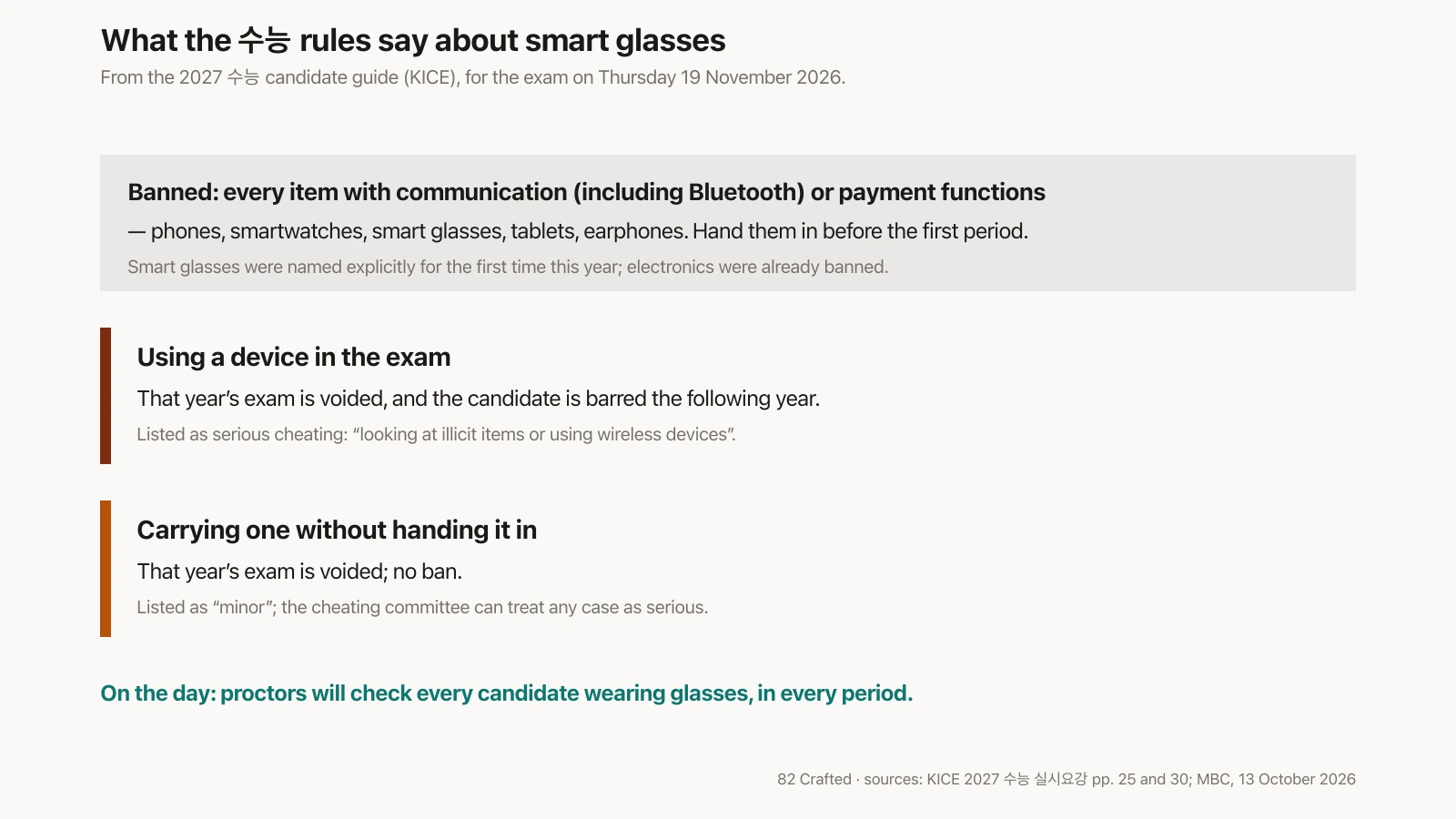
Smart glasses are already banned. The candidate guide published by the exam board, KICE, lists among forbidden items "통신(블루투스 기능 포함)·결제 기능이 있는 모든 물품: 휴대폰, 스마트워치, 스마트 안경, 태블릿, 이어폰 등" — every item with communication, including Bluetooth, or payment functions: phones, smartwatches, smart glasses, tablets, earphones. All electronics were banned before; smart glasses, KICE said in July, were "명시적으로 추가" — added by name. Anyone who brings one must hand it in before the first period.
The penalties are already written down, and they depend on what the candidate does. Using a device — "부정한 휴대물을 보거나 무선기기 등을 이용하는 행위", looking at illicit items or using wireless devices — voids that year's exam and bars the candidate the following year. Carrying one without handing it in is listed as "경미한", minor: that year's exam is voided, with no ban, though the exam's cheating committee can treat any case as serious.
At the Assembly's education audit on 7 October, the minister, 최교진, said the ministry is "1년 후까지 그 자격을 박탈하려고 하고 있다" — seeking to strip eligibility through the following year — which describes the existing rule for use more than a new one. Asked by the Democrat 김문수 whether metal or radio detectors could screen the glasses out, the minister said that "올해는 아직 전파 탐지기를 직접 적용하기는 어렵다" — this year it is still hard to deploy radio detectors directly. Two newspapers have reported plans to roll out more of them; the minister and MBC say not for this exam.
What there will be instead is eyes. Proctors will check every candidate wearing glasses, in every period, MBC reported on 13 October, and the ministry is making a video on what the devices look like and the behaviour that gives them away. Guidance for proctors was due around 15 October. Teachers who will be doing the checking say that, so far, they have been told only "조심하라고" — to be careful.
What it says
Korea has been here before. In 2004, a ring of students in Gwangju cheated on the 수능 by text message, and more than three hundred results were voided; twelve years later, smartwatches went on the banned list and analogue watches became the only kind allowed. Each time, the rule caught up with the device.
This time the rule came first: smart glasses were banned by name in June, months before anyone was caught. What the two cases this month show is the gap that is left — a pair of glasses that looks like a pair of glasses, switched in after the check, found only because one proctor at each university looked twice. On 19 November more than half a million people sit the 수능, and every one of them in glasses will be looked at, period by period. The ban is written. The checking is the hard part.
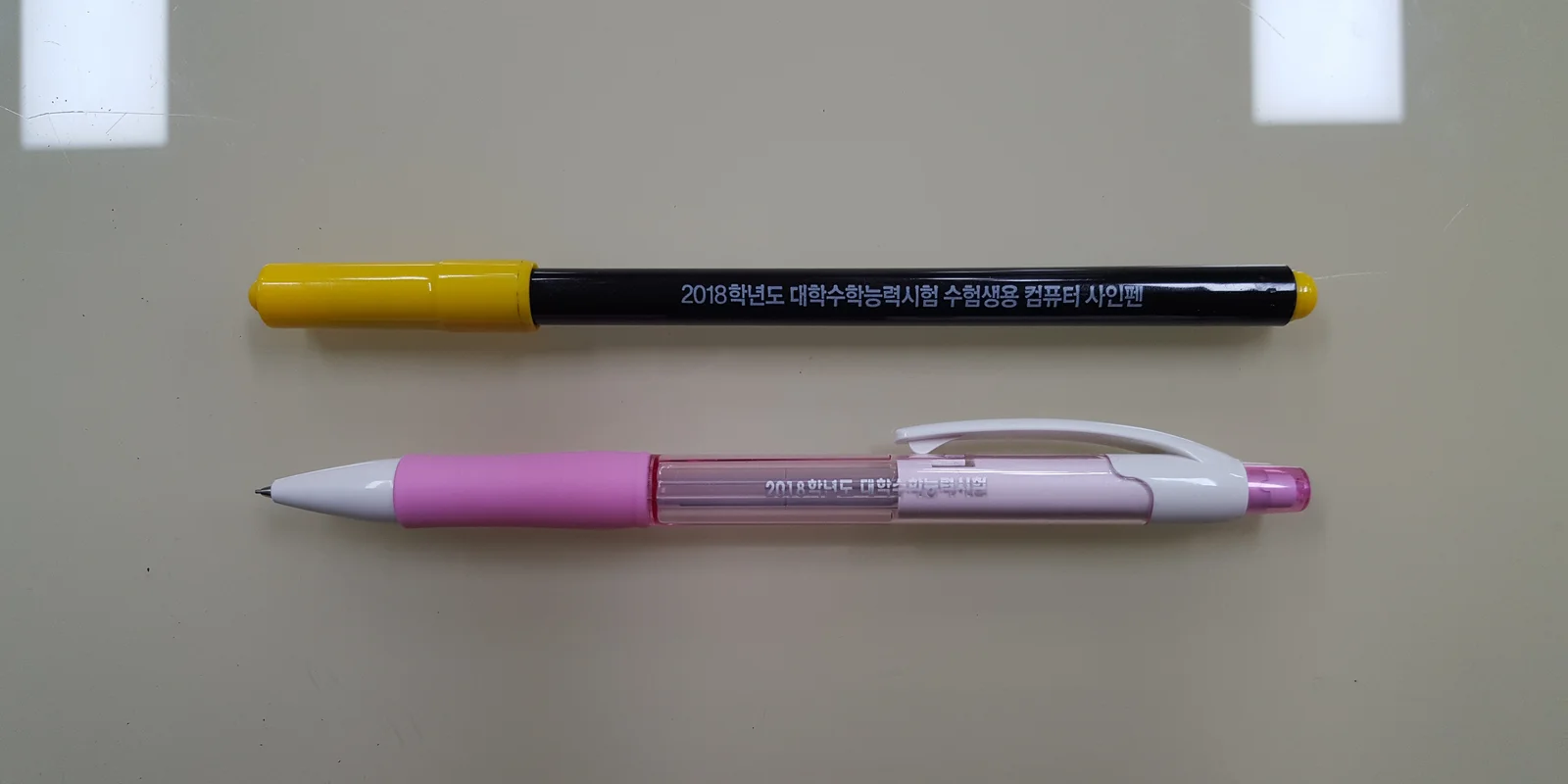
Images. The lead photograph is the computer-marking pen and mechanical pencil from the 2018 수능, sat in November 2017, by the Commons user 고려, CC BY 4.0, cropped. The two graphics are ours: the rules as written in KICE's 2027 candidate guide, and a card built around a public-domain "no smart glasses" sign by Daniel Gibert, via Wikimedia Commons. We have used no photograph of any brand of smart glasses, because no report has said what either candidate wore.
Sources. Yonsei's case is from 연합뉴스, 중앙일보, 한겨레, 뉴스핌 and 한국경제; the University of Seoul's from 연합뉴스, MBC and 주간조선. The rules are quoted from KICE's 2027 수능 실시요강 (pages 25 and 30), and the July addition of smart glasses from 한겨레. The minister and 김문수 are from 뉴시스, 뉴스핌 and MBC; the checking plan and the teachers' union from MBC (13 October). The earlier cases are from 헤럴드경제 (citing the TOEIC committee), 국민일보 (citing the national skills agency), 뉴스핌, 한겨레 and 중앙일보. Applicant numbers from KICE via 베리타스알파; the 논술 places from the 2027 admissions plan as reported by 한국경제. The products from 한국경제 and 경향신문.
Stated rather than smoothed. Outlets differ on whether the Yonsei candidate switched glasses after the exam began or after the papers were handed out, and on whether TOEIC caught two cheats in May or three. The 2004 voided count is 314 in two sources and slightly different in others, so we have said "more than three hundred". The 논술 figure is from the 2027 plan, not the final numbers. Whether Yonsei fails the candidate or goes to the police has not been decided. The minister's wording on penalties describes an aim, not a new rule. The ministry's full cheating-prevention plan for the 수능 had not been published as of 14 October.
Keep Reading
More Stories
The Fisherman Hid It Under His Floorboards. The Reward He Eventually Got Set Off a Decade of Looting.
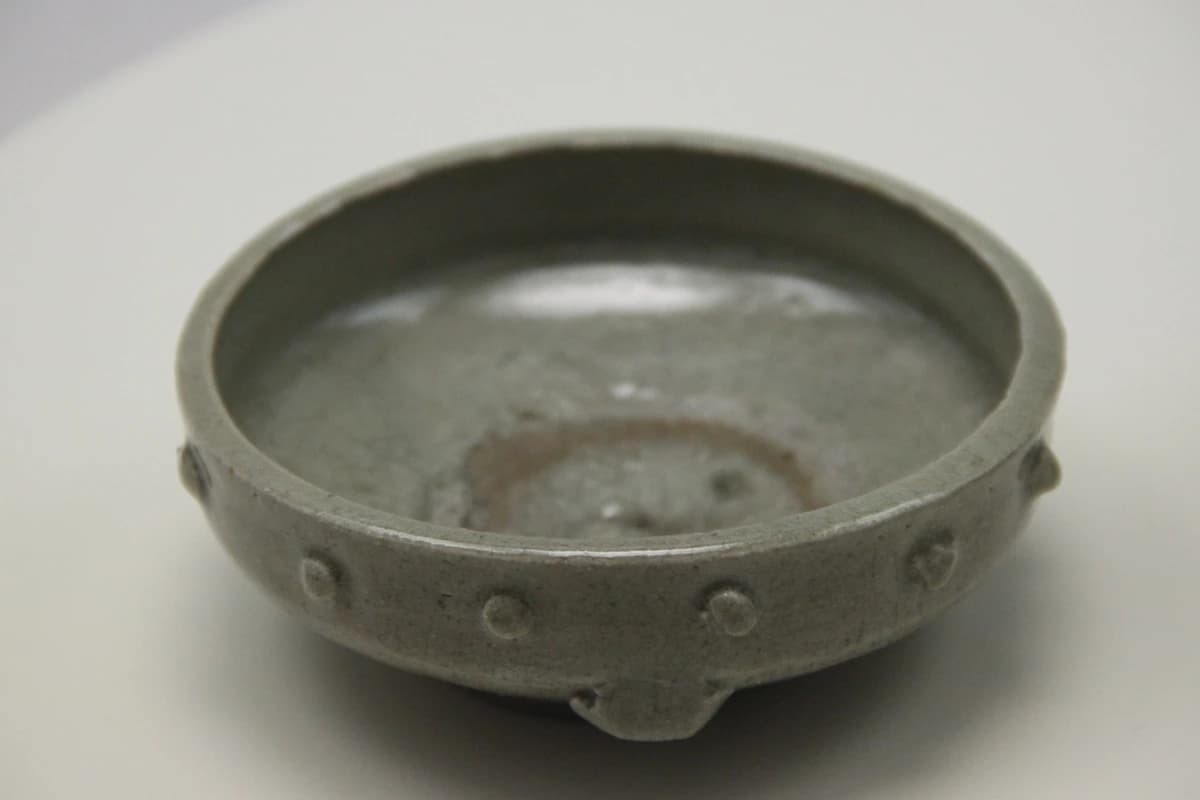
Korea marked fifty years of underwater archaeology in Mokpo in September 2026. The official story starts with a net and a report. The documented one starts with six pieces of Chinese porcelain given away as presents, a schoolteacher brother who had to get them all back, and officials who did not want the paperwork. Then the state paid a reward, a diver worked out how much of it went in tax, and for the next ten years people stole the wreck faster than the government could raise it — until the navy's own divers could not find the ship, and the excavation hired the looters.
Korea's Convenience Stores Are Selling Humanoid Robots for Chuseok. Neither Chain Expects to Sell One, and Both Have Said So.
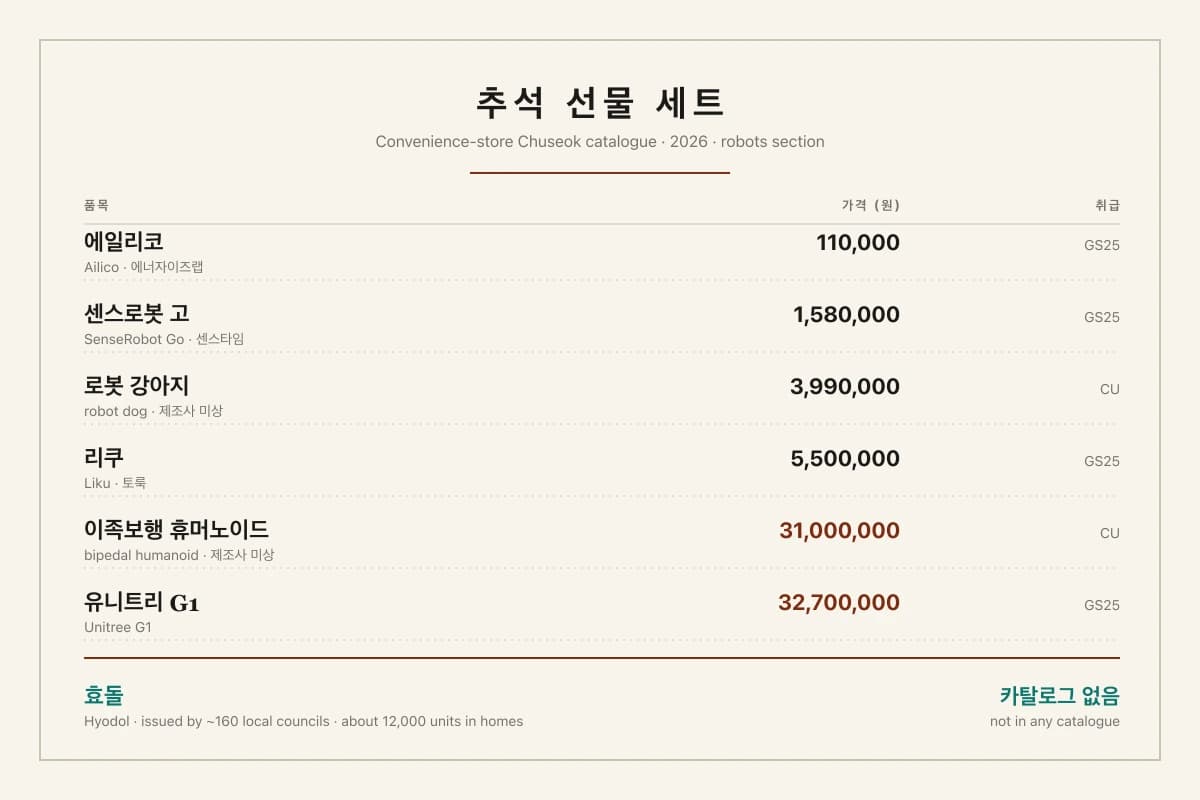
CU's holiday catalogue has a bipedal humanoid at ₩31 million, next to the beef and the gold bars. GS25 has an AI companion robot at ₩5.5 million and a keyring that talks back at ₩110,000. We assumed the pitch was companionship for parents you won't be visiting. It isn't — the retailers say plainly these are there to be noticed, not bought. Meanwhile about twelve thousand robots are already in Korean homes, asking elderly residents whether they've taken their medicine, and nobody put those in a catalogue.

The Chuseok Table Rules Your Family Argues About First Appear in Print in 1920 — as an Insult
Red fruit east, white fruit west. Jujube, chestnut, pear, persimmon, in that order. Korean families treat these as ancient Confucian law and fight about them every Chuseok. Scholars who have gone through the ritual classics cannot find them in any of them. What they can find is a 1920 newspaper column using the phrase to mock people who quote rules to seem learned — and a sixteenth-century master who laid his own family's table with six things on it.
The Weekly Dispatch
Korea, curated. Every week.
The best of K-culture, straight from Seoul. Written by people who actually live here.
Free, no spam, unsubscribe whenever.