Why Korean Students Study So Hard: Suneung and Hagwon, Explained
For one Thursday every November, a country of 51 million rearranges itself around a single exam — planes grounded, the stock market opened late, police sirens carrying stragglers to their desks. Here's what the Suneung is, why the hagwon machine turns a school day into a 16-hour one, and what all that pressure costs.
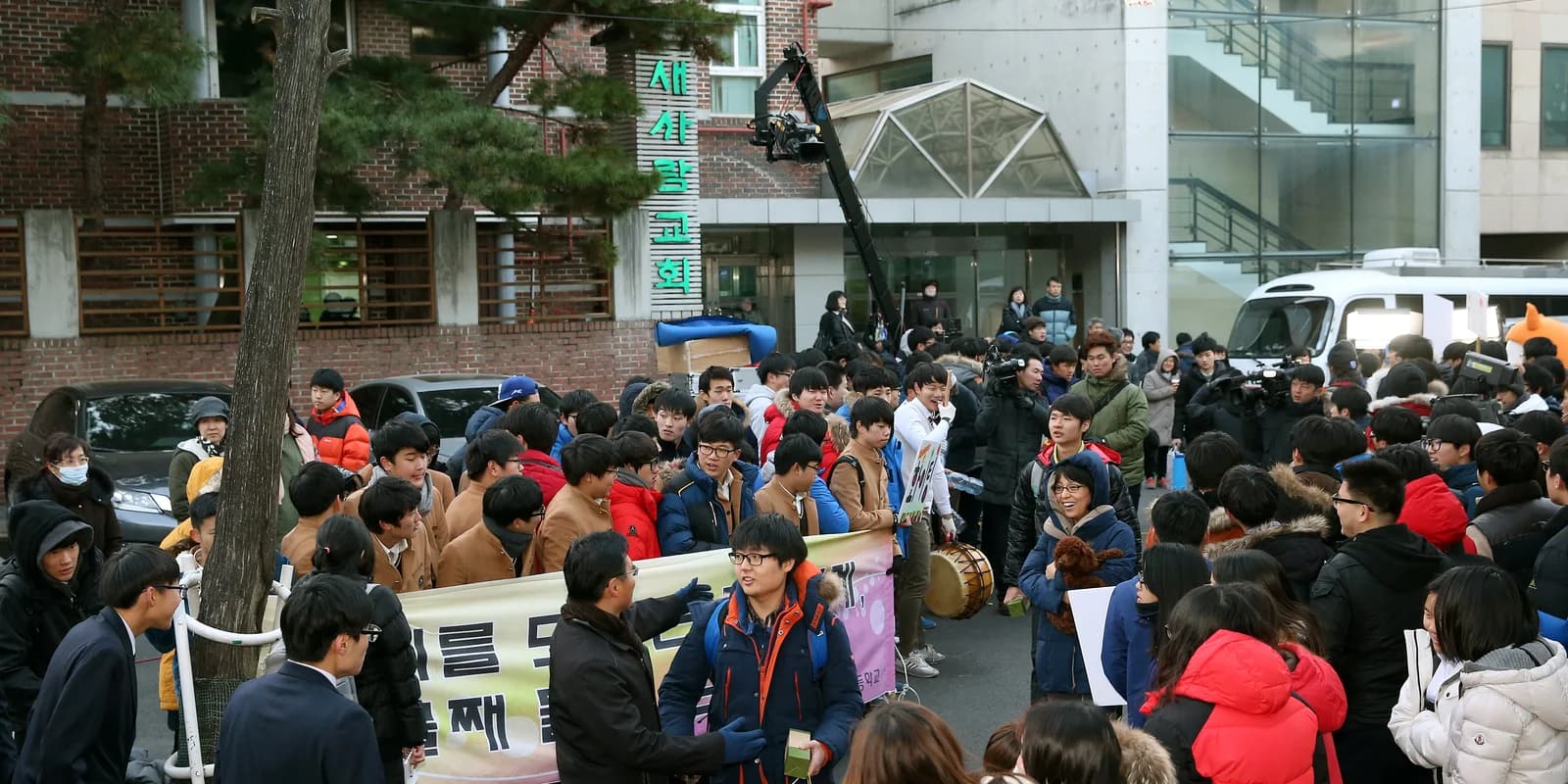
On one Thursday in mid-November, South Korea holds its breath. The stock market opens an hour late. Government offices and big companies push back their start times to clear the roads. For 35 minutes in the early afternoon, the country grounds its aircraft so engine noise won't disturb a listening test. Thousands of police cars and fire trucks stand by to rush latecomers to their desks, sirens blaring. Outside the gates, younger students scream encouragement at the seniors filing in.
All of it is for one exam: the 수능 (Suneung). To understand why a single test can freeze a modern nation of 51 million, you have to understand what it decides — and the vast, exhausting machine that Korean students run through to prepare for it. Here's how it works, and what it costs.
What the Suneung Actually Is
The Suneung — formally the College Scholastic Ability Test (대학수학능력시험), and often called the CSAT in English — is Korea's national university-entrance exam. It is held once a year, on a single day, for about eight hours, covering Korean, math, English, Korean history, an elective subject block, and an optional second foreign language (Wikipedia). Roughly 450,000 to 500,000 students sit it each year — a pool swelled by 재수생 (jaesusaeng), students who already graduated and are retaking the exam to chase a better score (Wikipedia).
One test, one day, once a year — and for the "regular admission" track, it is the single biggest factor in which university a student can attend. That concentration of stakes into one sitting is the whole reason for the national ritual around it, and for everything students do to prepare.
Why It's So Hard: SKY and the Sorting Machine
The exam is brutal because the reward is enormous — and permanent. At the top of the Korean university hierarchy sit three schools, known by the acronym SKY: Seoul National (서울대), Korea (고려대), and Yonsei (연세대) universities. Getting into one requires scoring in roughly the top 1–2% of all test-takers (Wikipedia).
And a SKY degree doesn't just open a door — it shapes a life. These universities have long dominated the upper reaches of Korean society: government, big-company leadership, law, and elite alumni networks that follow graduates for decades (as an illustration, as of 2010 nearly half of high-ranking government officials were SKY graduates). It even influences marriage prospects. In a society where status and hierarchy run deep, the Suneung is the great sorting machine — a single number, taken at eighteen, that assigns you a rung. No wonder families treat it as life or death.
The Hagwon Machine
Which brings us to why a Korean student's day can stretch to 16 hours. Regular school isn't nearly enough in this competition, so after it ends, students head to 학원 (hagwon) — private, for-profit cram academies — and study late into the night. As of 2020, Korea had roughly 74,000 hagwons (Wikipedia).
The epicenter is 대치동 (Daechi-dong), a district in Gangnam packed with over a thousand academies stacked in commercial towers — the "mecca" of Korean private education, where families pay for the country's most sought-after instructors. To rein in the arms race, the government imposed a 10 p.m. curfew on hagwon instruction for minors. In practice, it leaks: academies reclassify late hours as "self-study supervision" or shift students to online live classes that run past midnight, and studies have found the curfew didn't meaningfully cut total study hours — it just pushed them somewhere harder to see (Wikipedia).
The scale of spending is staggering. In 2024, Korean families spent a record ₩29.2 trillion (about US$20 billion) on private education for school-age children — a fourth straight record — with 80% of all students taking some form of private tutoring, according to Statistics Korea and the Ministry of Education (Korea Times, Korea Herald). This is 교육열 (gyoyugyeol), "education fever" — and it kept breaking records even as the number of children shrank.
The Cost
A country can't run its children this hard without a bill coming due, and it does, on two levels.
The first is personal. Korean high-schoolers routinely sleep under six hours a night — well below their peers in the US, France, or Germany — and many run 12- to 16-hour days across school, hagwon, and self-study (Korea Herald, The Diplomat). The mental-health toll is real and, by most measures, worsening: rising rates of reported depression and, tragically, suicidal thinking among adolescents, with exam stress repeatedly named as a driver. Suicide is consistently reported among the leading causes of death for Korean youth.
The second cost is national, and it may be the most important sentence in this whole story. The country that studies hardest also has the lowest birth rate on Earth. Korea's fertility rate fell to 0.75 in 2024 — the world's lowest, and far below the 2.1 needed to hold a population steady (NBC News). This isn't just correlation. A peer-reviewed 2024 study in the American Economic Review modeled the "status competition" baked into Korean education and estimated that Korean fertility would be roughly 28% higher without it (AER). When raising a child means committing to a 16-hour-a-day, $20-billion-a-year competition, a lot of people quietly decide not to. The exam pressure and the collapsing birth rate are branches of the same tree — as are the hovering "monster parents" the system produces and the pressure-cooker schools it runs through.
Can't They Fix It?
They've tried. In 2023, the government moved to strip so-called "killer questions" (킬러 문항) — ultra-hard, beyond-the-curriculum problems — out of the Suneung, arguing they unfairly rewarded expensive tutoring, and paired it with a crackdown on hagwon. Officials even framed easing the pressure as, in part, a birth-rate measure (Korea Herald, CNN).
It hasn't gone smoothly. The November 2025 exam — a later sitting under the no-killer-question policy — was judged so difficult that the head of the testing institute resigned and the agency issued a formal apology (CNN). And the curfew, as noted, mostly relocated the studying rather than reducing it. That's the deep trap of the system: as long as one exam sorts an entire life, squeezing the pressure in one place just makes it bulge somewhere else. You can reform the test. Reforming what the test means — a whole society's idea of who gets ahead — is a far harder exam to pass.
And the sorting instinct doesn't graduate with you. The same test-raised generation that grew up ranked by the Suneung went on to adopt a four-letter personality exam for everything else — proof that in Korea, even getting to know someone comes with a score.
Exam-day logistics, the ₩29.2 trillion (2024) private-education figure, the 0.75 fertility rate, and the reform timeline are drawn from the linked sources and dated in-text; "12–16 hours" is the upper end of a study day, not the median. SKY leadership figures are a 2010 illustration. Mental-health trends are described directionally, as reported. Images: homepage/hero — students cheering on Suneung exam day; cover — the crowd outside an exam hall — both by Korea.net / Korean Culture & Information Service (Republic of Korea), CC BY-SA 2.0. Listing card — Yonsei University, by Christian Bolz, CC BY-SA 4.0.
.jpg)
.jpg)

Keep Reading
More Stories
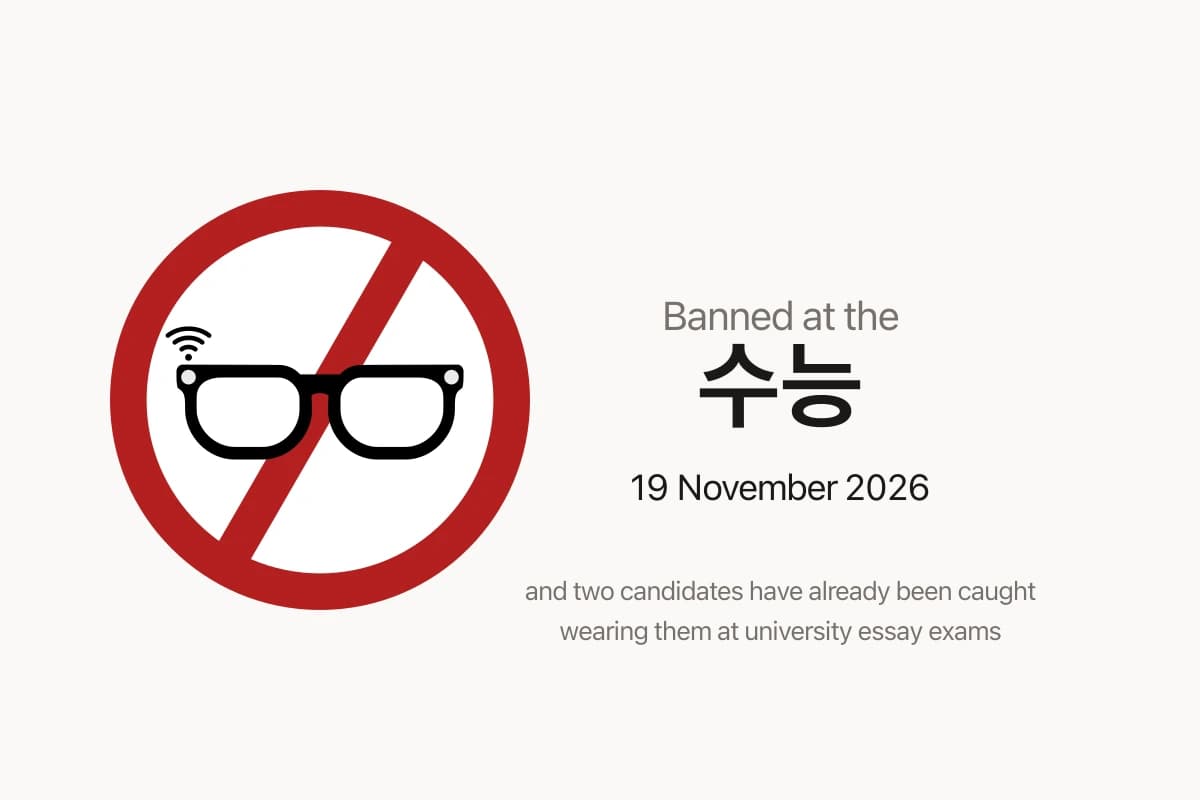
Two Candidates Wore AI Glasses Into Korean University Exams This Month. Five Weeks Later, 550,000 People Sit the 수능
At the University of Seoul on 3 October and at Yonsei a week later, proctors spotted AI smart glasses on candidates sitting essay exams for admission. Both had passed the glasses check in ordinary frames and switched once the exam began. The 수능 on 19 November already bans the devices; the question is whether anyone can see them.
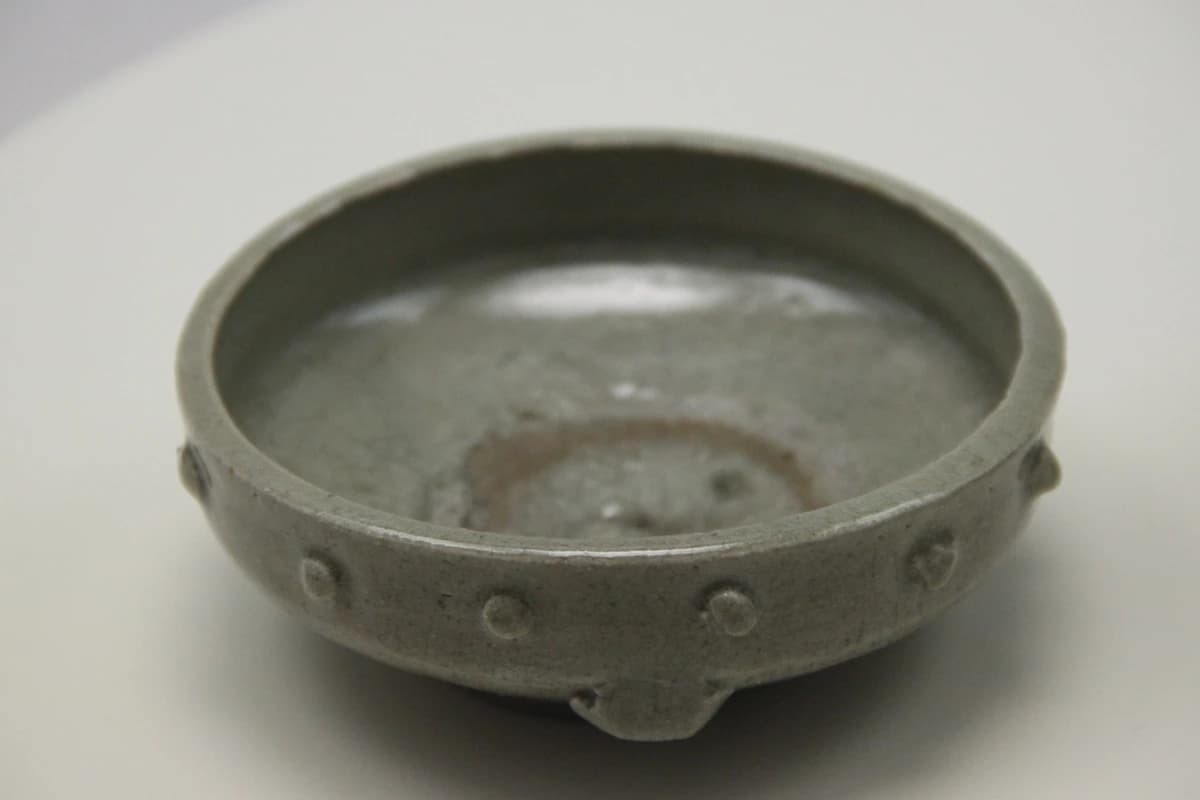
The Fisherman Hid It Under His Floorboards. The Reward He Eventually Got Set Off a Decade of Looting.
Korea marked fifty years of underwater archaeology in Mokpo in September 2026. The official story starts with a net and a report. The documented one starts with six pieces of Chinese porcelain given away as presents, a schoolteacher brother who had to get them all back, and officials who did not want the paperwork. Then the state paid a reward, a diver worked out how much of it went in tax, and for the next ten years people stole the wreck faster than the government could raise it — until the navy's own divers could not find the ship, and the excavation hired the looters.
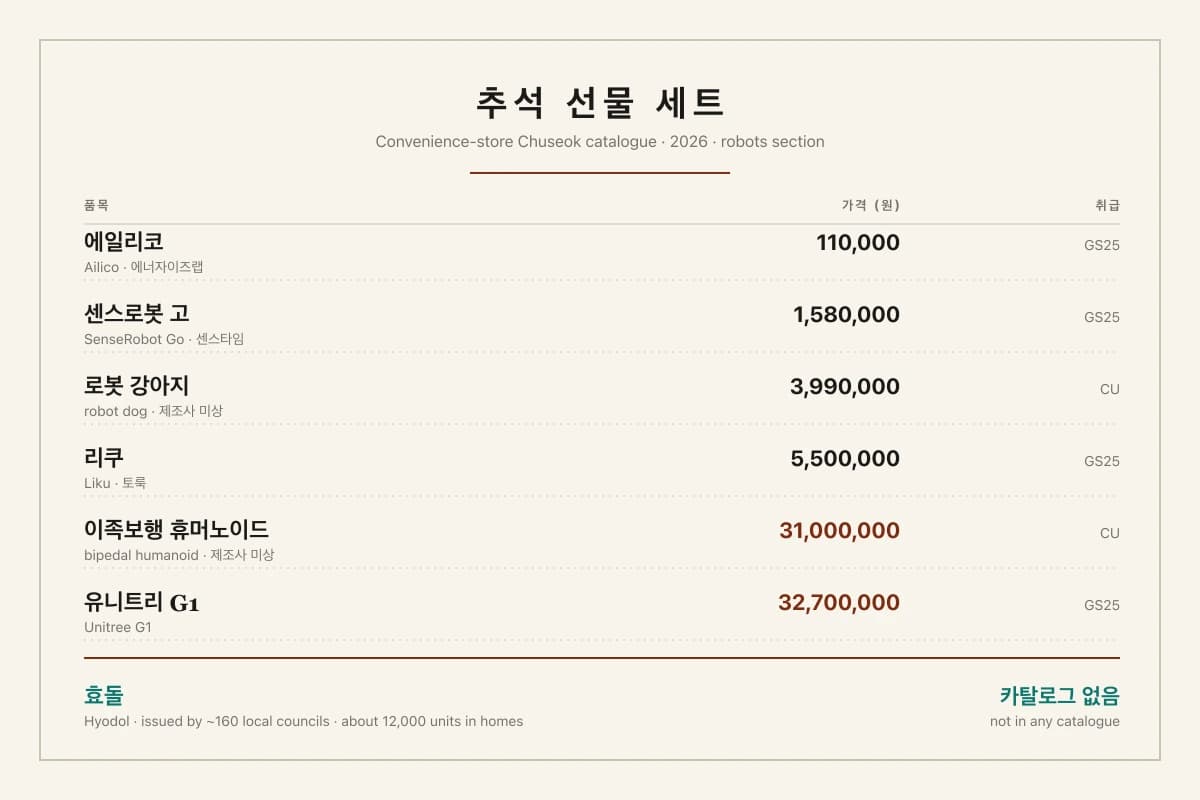
Korea's Convenience Stores Are Selling Humanoid Robots for Chuseok. Neither Chain Expects to Sell One, and Both Have Said So.
CU's holiday catalogue has a bipedal humanoid at ₩31 million, next to the beef and the gold bars. GS25 has an AI companion robot at ₩5.5 million and a keyring that talks back at ₩110,000. We assumed the pitch was companionship for parents you won't be visiting. It isn't — the retailers say plainly these are there to be noticed, not bought. Meanwhile about twelve thousand robots are already in Korean homes, asking elderly residents whether they've taken their medicine, and nobody put those in a catalogue.
The Weekly Dispatch
Korea, curated. Every week.
The best of K-culture, straight from Seoul. Written by people who actually live here.
Free, no spam, unsubscribe whenever.