Korean Stationery, Honestly: What to Buy at Artbox, Morning Glory & Beyond
In Korea, a stationery shop isn't an errand — it's a destination. Multi-floor temples of cute pens, planners, stickers and character goods, all built on a decades-deep obsession with 문구 (munggu) and a living hobby called 다꾸. Here's what the shops actually are, why Koreans love them this much, and what's genuinely worth buying — for yourself or as the best cheap souvenir you'll bring home.
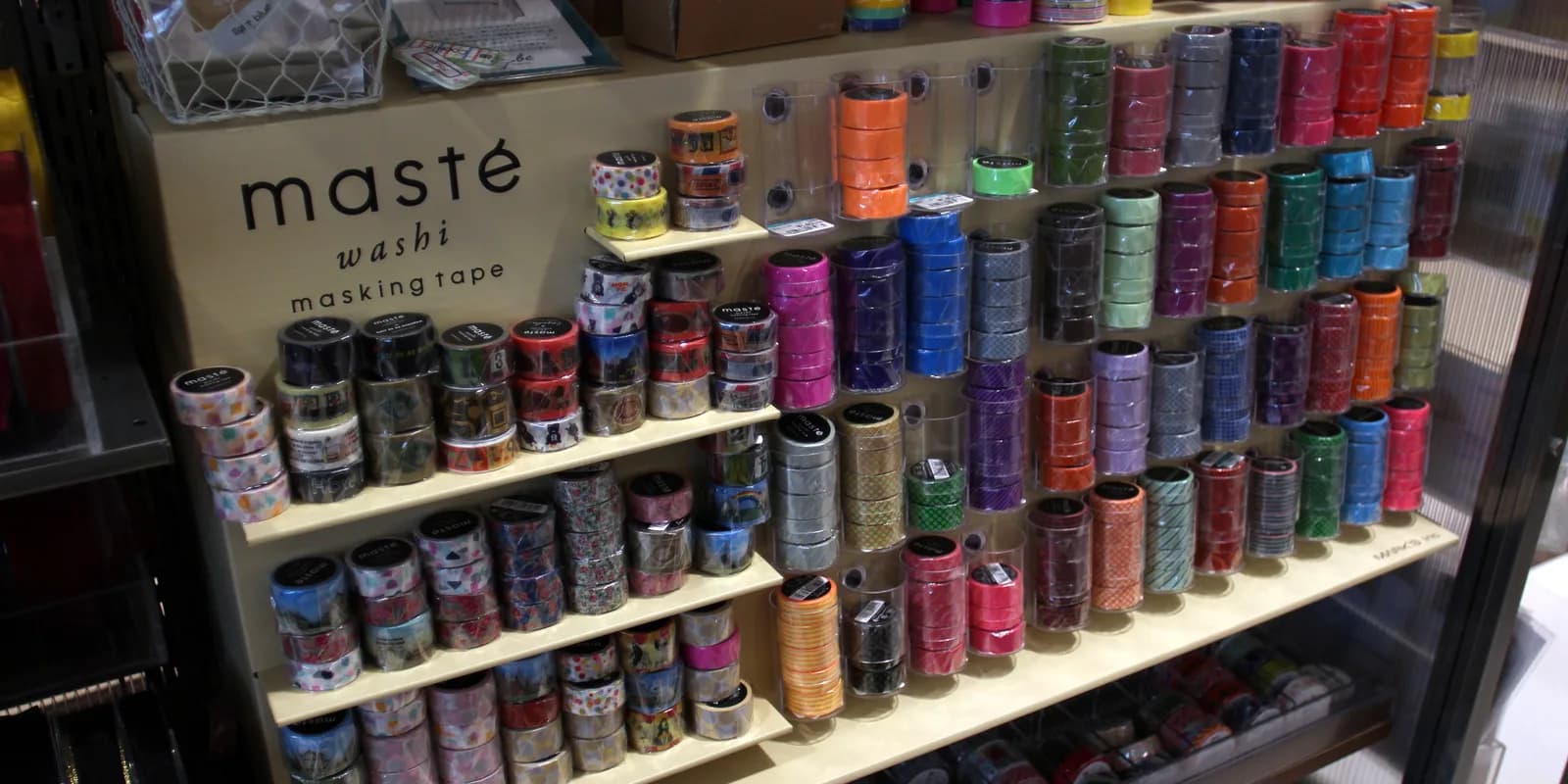
Walk into an Artbox or a Kyobo bookstore's stationery hall in Seoul and your first instinct is wrong. You brace for the mild boredom of an office-supply aisle, and instead you get something closer to a candy store: walls of gel pens in every color, planners stacked like paperbacks, whole sections devoted to stickers and masking tape, cartoon characters grinning off pencil cases and mugs. In Korea, stationery — 문구 (munggu) — is not a chore category. It's a genuine pleasure, a hobby, and, for a visitor, one of the cheapest and most delightful souvenirs you can carry home.
This is a guide to that world: what the shops actually are, the hobby at the center of it, and — honestly — what's worth buying. No sponsored picks, no discount codes. Just the stuff that's genuinely good.
Why a Stationery Shop Is a Destination, Not an Errand
Korea has a long-running love affair with cute lifestyle goods — the culture Koreans half-jokingly call 팬시 (pancy), a Konglish take on "fancy," meaning small, adorable, well-designed things. Pens, notebooks and planners sit right at the heart of it. The result is that a Korean stationery shop is browsed the way other people browse a bookstore or a record shop: slowly, for fun, with no particular thing you came to buy.
The good news for a tourist is that this is a low-stakes, high-delight outing. You don't need to understand Korean, and you don't need a budget. Ten thousand won — under ten dollars — buys a genuine, unmistakably-Korean object that beats a fridge magnet every time.
Meet the Shops
Artbox (아트박스) is the one you'll see everywhere. It started in 1984 as part of Samsung Publishing and became an independent company in 1986, aimed squarely at people in their teens and twenties (Wikipedia). It sells far more than stationery — pens and planners, yes, but also pajamas, mugs, phone cases and soju glasses — which is why it's usually compared not to other stationery brands but to Daiso, Korea's ultra-budget everything-store. Artbox has grown past 180 stores and even opened a branch in Vancouver (Wikipedia). Think of it as the cute-everything chain.
Morning Glory (모닝글로리) is the heritage name — a Korean stationery maker founded in 1981 that turned notebooks, pencil cases and pens into an export business, opening its first overseas store in Los Angeles in 1994 and reaching some twenty countries (Wikipedia). If Artbox is where you browse, Morning Glory is a brand whose notebooks you'll actually keep.
Kyobo Book Centre (교보문고) is Korea's largest bookstore chain, and its flagship — in the basement of the Kyobo Building at Gwanghwamun — is a stationery pilgrimage in its own right, organized into sections with dedicated stationery, accessories and cafés (Wikipedia). Its stationery-and-music arm, 핫트랙스 (Hot Tracks), is one of the best places in Seoul to find cute goods from small independent creators (Seoul Insiders' Guide).
And then there are the character flagships. Kakao Friends — the merchandising arm of KakaoTalk, the app that runs Korea — runs multi-floor stores stocked with everything from stationery to plush dolls of its characters (Ryan, Apeach, Muzi and friends), sometimes with a café on top (VisitKorea). Line Friends does the same for its cast (Brown, Cony, Sally), and its BT21 line — a 2017 collaboration with BTS — is a magnet for K-pop fans (PR Newswire).
다꾸, Explained: Korea's Diary-Decorating Hobby
To understand why Koreans buy so many stickers, you have to know about 다꾸 (dakku). The word is a contraction of 다이어리 꾸미기 — "decorating a diary" — and it means exactly that: not just recording your schedule, but turning your planner into a tiny personal art project with stickers, masking tape, colored pens and tear-off memo notes (Namu Wiki, SBS Korean).
It was big in the 1990s, faded as calendars went digital, and then came roaring back around the pandemic — analog comfort in a locked-down year — spreading from schoolkids to a whole generation of twenty- and thirty-somethings as a small, satisfying way to make something by hand (SBS Korean). The hobby is deep enough to have its own slang — 떡메 (tteongme) for the thick tear-off memo pads people cut up for decoration, for instance — and its own thriving corners of Instagram and dedicated shops around Hongdae and Yeonnam-dong (Korea Times). Once you know 다꾸 exists, the wall of stickers finally makes sense.
What to Buy #1: Pens — and the Legendary Monami 153
Start with pens, because Korea does pens exceptionally well and they cost almost nothing. A good Korean gel pen runs somewhere around ₩1,500 in-store — a fraction of what you'd pay to import the same pen abroad — so this is the rare case where buying a small pile is the smart move.
The one to know is the Monami 153, Korea's most iconic pen. Monami was founded in 1960 and took its name from the French mon ami, "my friend"; the 153 ballpoint has been in continuous production since 1963, and the name is pure origin story — it was the company's third product, and originally sold for 15 won (Wikipedia). Billions have been sold, and in 2009 it was recognized as a design that shaped everyday Korean life (Wikipedia). It's the pen every Korean grew up with — a perfect, near-free souvenir with a real story behind it.
What to Buy #2: The 다꾸 Starter Kit
If you want to actually try the hobby — or just bring home the most Korean thing in the shop — assemble a small 다꾸 kit:
- A planner or diary. These range from simple dated diaries to premium planners; a nice one from Kyobo's Hot Tracks can run around ₩50,000, but you don't need to spend that to start. It's the perfect "new-year ritual" gift.
- Masking tape and sticker seals. This is the soul of it. Individual sheets of stickers are pocket change; a real haul at Artbox adds up fast (₩30,000 disappears quickly once you start). Washi-style masking tapes come singly or in boxed sets.
- A notebook. Korean-made notebooks — Morning Glory is the name to look for — sit in a comfortable ₩5,000–12,000 range and are genuinely well-built.
(Prices here are rough, in-store, and as of 2026 — they vary by shop and item.)
What to Buy #3: Character Goods & Pouches
This is the quintessential gift buy, and the "cute tax" is real but forgivable. Pencil cases, pouches, plush dolls, mugs and phone charms from Kakao Friends, Line Friends and BT21 are instantly recognizable and travel well. If there's a K-pop fan in your life, a BT21 pouch — each character designed in collaboration with a BTS member — is close to a guaranteed hit. These are the items that photograph well and unmistakably say "Korea."
Cute Desk Stuff & Small Gifts Under ₩10,000
For the low-budget, high-charm zone, this is Artbox and Daiso territory: memo pads, pen holders, tiny organizers, sticky notes shaped like everything imaginable. A single Monami 153, one sheet of Korean stickers, or a small character pouch each makes an inexpensive gift that feels considered rather than last-minute. You can furnish an entire desk's worth of small delights for the price of one airport keychain.
What It Says About Korea
There's something telling in how seriously Korea takes its stationery. This is a country that turned messaging into a national app, skincare into a global export, and studying into a competitive sport — and the same instinct for making everyday things beautiful, functional and a little bit fun shows up in a ₩1,500 pen. The stationery shop is where Korea's love of design meets ordinary life, cheaply and without pretension.
So skip the generic souvenir aisle. Spend twenty minutes in an Artbox, buy a planner and a fistful of stickers, and you'll come home with something a Korean twenty-something would actually recognize — which is a far better souvenir than a magnet, and usually cheaper too.
Prices are approximate, in-store, and as of 2026; they vary by store and item. This is an editorial guide — 82 Crafted earns nothing from it and links to no sellers; everything here is a genuine recommendation.
Homepage/hero: the Kyobo Book Centre flagship at Gwanghwamun, Seoul — photo by Hnc197, Wikimedia Commons, CC BY-SA 2.5 (cropped). In-article hero: a washi masking-tape display wall — photo by Bex Walton, Wikimedia Commons, CC BY 2.0. Listing card: a decorated diary spread (다꾸) with washi tape, stickers and colored pens — photo by Nea.salo, Wikimedia Commons, CC BY-SA 4.0.

.jpg)

Keep Reading
More Stories
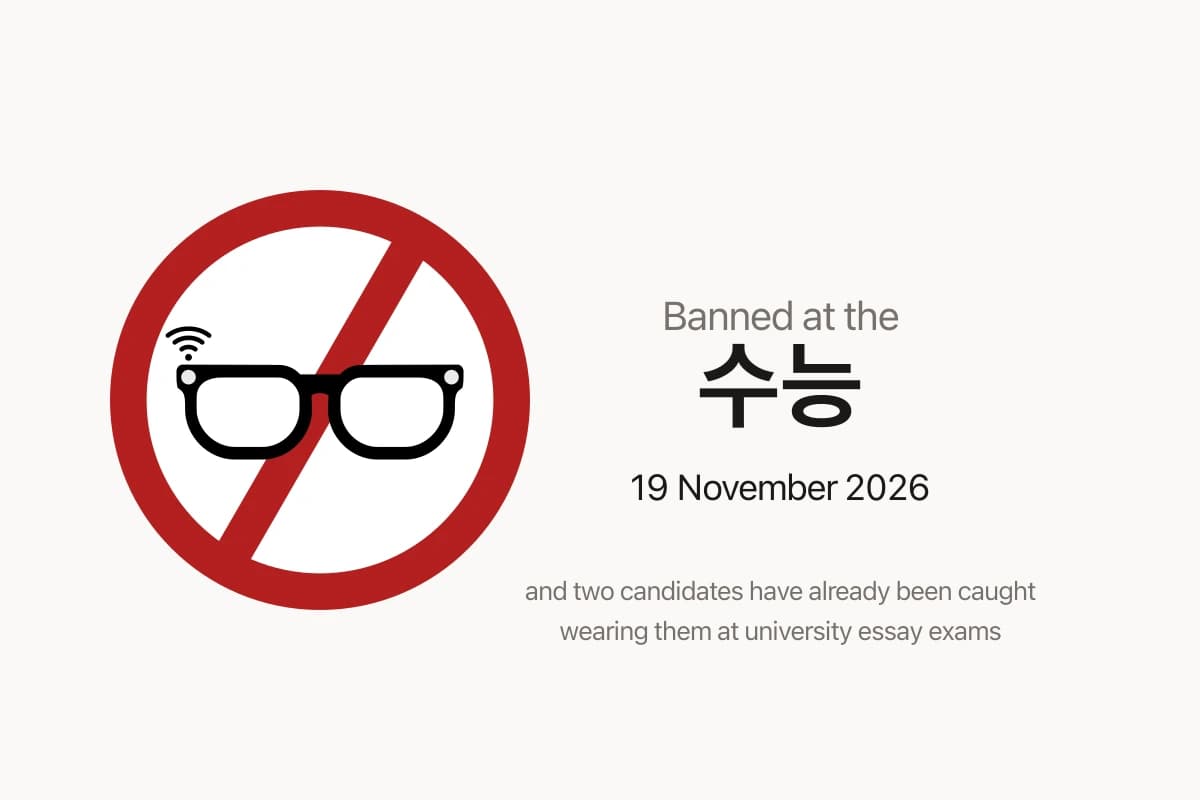
Two Candidates Wore AI Glasses Into Korean University Exams This Month. Five Weeks Later, 550,000 People Sit the 수능
At the University of Seoul on 3 October and at Yonsei a week later, proctors spotted AI smart glasses on candidates sitting essay exams for admission. Both had passed the glasses check in ordinary frames and switched once the exam began. The 수능 on 19 November already bans the devices; the question is whether anyone can see them.
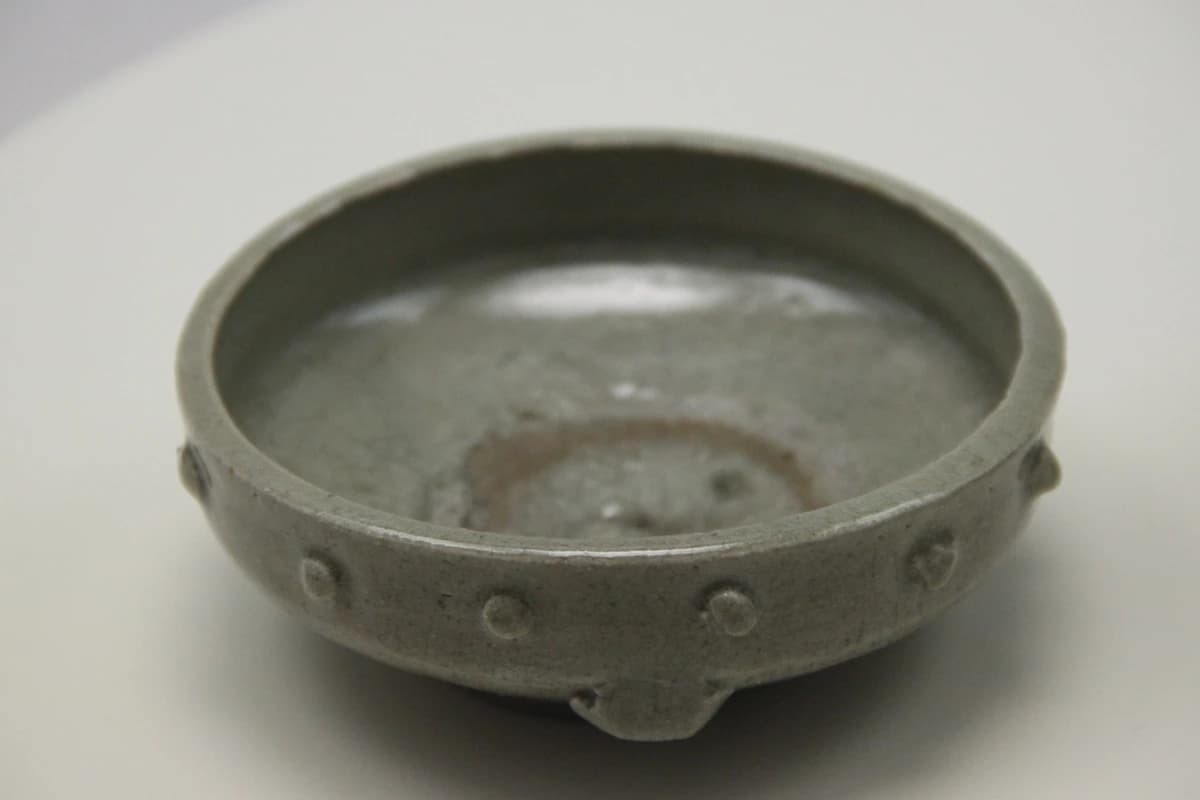
The Fisherman Hid It Under His Floorboards. The Reward He Eventually Got Set Off a Decade of Looting.
Korea marked fifty years of underwater archaeology in Mokpo in September 2026. The official story starts with a net and a report. The documented one starts with six pieces of Chinese porcelain given away as presents, a schoolteacher brother who had to get them all back, and officials who did not want the paperwork. Then the state paid a reward, a diver worked out how much of it went in tax, and for the next ten years people stole the wreck faster than the government could raise it — until the navy's own divers could not find the ship, and the excavation hired the looters.
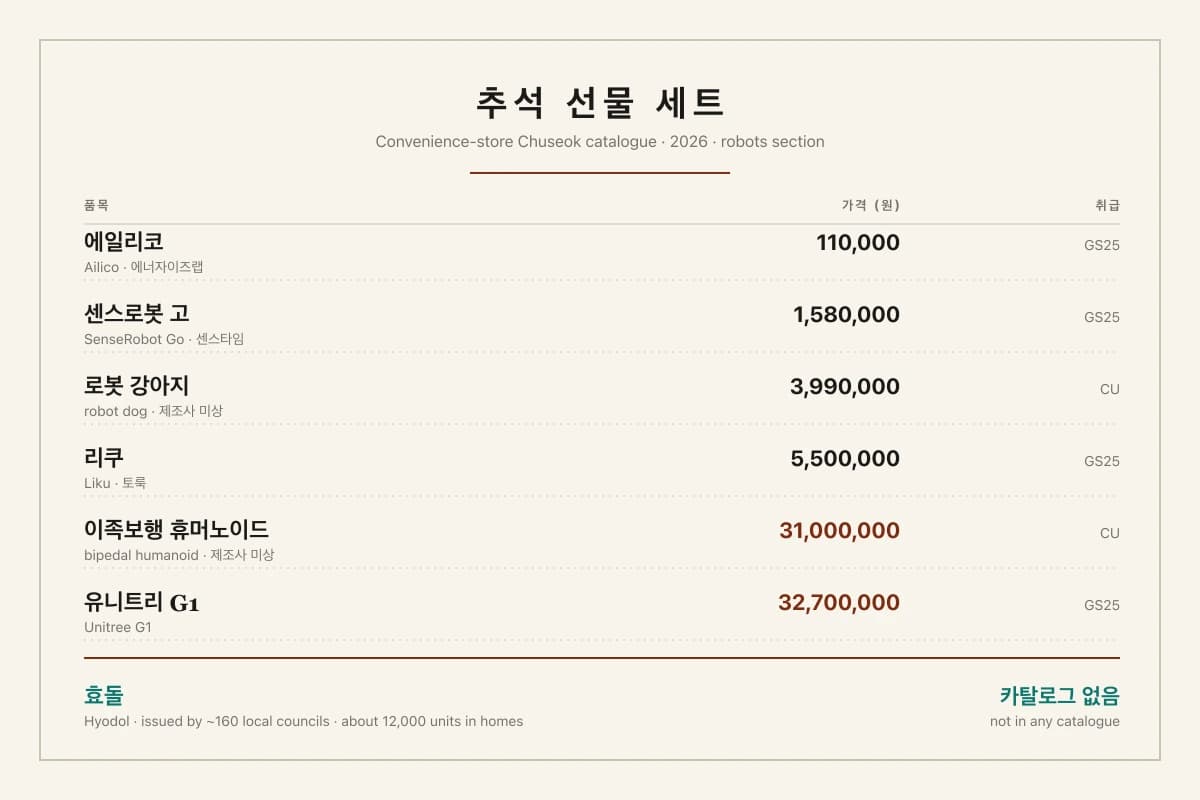
Korea's Convenience Stores Are Selling Humanoid Robots for Chuseok. Neither Chain Expects to Sell One, and Both Have Said So.
CU's holiday catalogue has a bipedal humanoid at ₩31 million, next to the beef and the gold bars. GS25 has an AI companion robot at ₩5.5 million and a keyring that talks back at ₩110,000. We assumed the pitch was companionship for parents you won't be visiting. It isn't — the retailers say plainly these are there to be noticed, not bought. Meanwhile about twelve thousand robots are already in Korean homes, asking elderly residents whether they've taken their medicine, and nobody put those in a catalogue.
The Weekly Dispatch
Korea, curated. Every week.
The best of K-culture, straight from Seoul. Written by people who actually live here.
Free, no spam, unsubscribe whenever.