KakaoTalk, Explained: The App That Runs Korea
One free green-bubble messenger became the plumbing of Korean daily life — your taxi, your bank, your coffee gift, your login. Then a fire in a single basement in Pangyo switched it all off, and a country of 50 million discovered how much of itself runs through one company's servers.

Open a Korean person's phone and you will find, somewhere near the bottom of the screen, a small yellow icon with a brown speech bubble. Tap it, and you have opened the single most important app in the country — the one that carries their group chats, splits their dinner bill, hails their taxi, holds their bank account, and sends their mother a birthday coffee. It is called KakaoTalk (카카오톡), and it is used by something like nine in ten South Koreans.
In most of the world, messaging, payments, banking, taxis and gift-giving are separate apps made by separate companies. In Korea, one free chat app quietly swallowed all of them. Koreans have a nickname for it — 국민 메신저, the "national messenger" — and the label is only half a joke. KakaoTalk isn't just popular. It has become something closer to public infrastructure, owned by a private company. And in October 2022, the country found out exactly what that means.
The Green Bubble That Ate a Country
Picture an ordinary Tuesday in Seoul. You wake up and check your group chat on KakaoTalk. A friend has sent you a 기프티콘 — a mobile gift voucher for a Starbucks latte — right inside the chat window, because it's your birthday. You tap a taxi home from a late meeting through Kakao T. You split the bill with a colleague using KakaoPay. Your salary sits in a KakaoBank account. The little cartoon characters you send instead of words — a peach, a radish, a grumpy rabbit — are Kakao's own emoticons. You have touched a single company a dozen times before lunch, and barely noticed.
That saturation is the whole story. KakaoTalk launched on March 18, 2010, months after the iPhone first reached Korea, and it spread with startling speed (Wikipedia, Forbes). Today it reaches an estimated 90 to 95% of the population, with monthly active users hovering around 48 million in a country of roughly 52 million — a 2023 survey found 87% of Koreans on it, rising to about 97.5% of people in their twenties (Statista, Wikipedia). For practical purposes, if you live in Korea, you are on KakaoTalk. Being the rare holdout is like refusing to have a phone number.
From a Free Chat App to a National Habit
The man behind it is Kim Beom-su (김범수), often "Brian Kim" in English — a former CEO of the web giant NHN who left to chase mobile. His company, founded in 2006, was renamed Kakao and shipped KakaoTalk as a free messenger just as Koreans were buying their first smartphones (Wikipedia, Forbes). The timing was everything: it arrived before WhatsApp or LINE could establish themselves in Korea, and free texting at a time when carriers charged per message did the rest.
In 2014, Kakao pulled off the move that turned a chat app into a conglomerate: it merged with Daum, one of Korea's original web portals, in a deal that briefly called the company "Daum Kakao" before it settled on simply Kakao, headquartered on the island of Jeju (Wikipedia). Overnight, the messenger had a portal, a news service, and the ambitions to match.
The Super-App: One Login, All of Life
Here is the part foreigners find hard to believe. KakaoTalk is not really a messaging app anymore. It is a doorway to a stack of services that, in most countries, you'd never expect one company to run:
- KakaoPay — mobile payments, launched September 2014. You scan, split, and transfer money without leaving the chat.
- KakaoBank — a full internet-only bank, no branches, opened to enormous demand.
- Kakao T — taxi-hailing and mobility, launched in 2015 as "Kakao Taxi" and rebranded in 2017 (Wikipedia). It became so dominant that by 2022 it reportedly handled the overwhelming majority of app-based taxi calls in the country.
- KakaoTalk Gift (선물하기) — the in-chat gifting culture. In 2025 alone, Koreans sent an estimated 190 million-plus gifts through it — on the order of half a million a day — from a catalogue of hundreds of thousands of products; the single most-gifted item is a Starbucks e-voucher (Korea Herald, Korea Times).
- Emoticons, KakaoMap, business channels, Melon (music), Kakao Webtoon, Kakao Games — and on, and on.
The technical term is a "super-app," and the West keeps trying to build one. Korea already has it, and it grew out of the app people were already using to say 하이 (hi) to their friends. One login, verified once, quietly became the key to a person's money, movement, and social graph.
This is also, not coincidentally, a very Korean outcome. A dense, high-trust, tech-forward society with a strong preference for homegrown products was the perfect soil for a single domestic app to become universal — the same instinct that gives Korea its own walled-garden internet, its own dawn-delivery shopping empire, and its own physical culture of 방 rooms for everything.
The Money and the Muscle
All of that daily habit turned into serious money. In 2021, Kakao took two of its arms public in quick succession. KakaoBank listed in August 2021 with an opening-day valuation around 33 trillion won, briefly making it one of the most valuable financial firms in the country (Stock Analysis). KakaoPay followed in November, raising roughly $1.3 billion and more than doubling on its trading debut (Bloomberg, Nikkei Asia).
What had started as a free messenger was now a sprawling group of subsidiaries — Kakao Mobility, KakaoPay, KakaoBank, Kakao Entertainment, Kakao Games — spanning finance, transport, media and gaming. (Kakao's own digital certificate is now one of the most widely held in the country — a direct beneficiary of the dismantling of the old 공인인증서 regime.) In other words, Kakao had become a new-economy version of the thing Korea already knew intimately: a chaebol, a conglomerate with its fingers in everything. (Valuations have since come well off those 2021 highs — market caps move constantly.)
October 15, 2022: The Day Korea Went Dark
Then came the fire.
On the afternoon of Saturday, October 15, 2022, at around 3:30 p.m., a fire broke out in a basement battery room of the SK C&C data center in Pangyo — the tech district south of Seoul sometimes called Korea's Silicon Valley. Kakao attributed the blaze to a lithium-ion battery; SK Group, which operated the center and made the batteries, disputed responsibility (Korea Herald, Data Center Dynamics).
What happened next was, for Korea, unprecedented. KakaoTalk went down. So did Kakao T, so taxis couldn't be hailed. So did KakaoPay and KakaoMap and KakaoBank and the Daum portal and the Melon music service. For roughly half a day — accounts vary from about ten to eleven-plus hours — a huge share of the country simply could not do the small digital things it did without thinking (Korea Times, Data Center Dynamics). Tens of millions of users were affected. People couldn't message family, pay for things, or get home.
The severity had a specific, damning cause: Kakao had concentrated too many core functions — including the login and verification systems that gate every other service — in that one center, without an adequate backup site to fail over to (Korea Herald). One basement, and the connective tissue of a nation seized up.
When Convenience Becomes Dependence
The political reaction told you how big this was. President Yoon Suk-yeol publicly took "heavy responsibility" for the disruption and put the Science and ICT Ministry in charge of crisis management. Founder Kim Beom-su and Kakao's leadership were summoned to a National Assembly audit; co-CEO Namkoong Whon resigned to take responsibility. Kakao later paid out roughly 27.5 billion won in compensation and gave away free emoticons to soothe furious users (Korea Times, The Register).
But the deeper lesson wasn't about one company's disaster recovery. It was about a bargain the whole country had made without ever quite deciding to. Convenience had, over a decade, curdled into dependence. When texting your friends, moving your money, and calling a cab all run through the same private servers, a fire in a basement stops being a corporate IT problem and becomes a national one. Korea had let a single app become infrastructure — and infrastructure, it turned out, was owned, not public.
The Antitrust Reckoning
The fire also poured fuel on a debate that was already smoldering: is one company simply too central? Korea's antitrust regulator, the Fair Trade Commission, has repeatedly gone after Kakao's dominance — in 2023 it fined Kakao Mobility a reported 72.4 billion won for rigging its taxi-dispatch algorithm to favor its own franchise cabs over rivals (KoreaTechToday, PYMNTS).
The founder himself has been in the crosshairs. Kim Beom-su was indicted in 2024 over alleged stock-price manipulation tied to Kakao's bruising 2023 takeover battle with HYBE over the K-pop agency SM Entertainment — then acquitted in October 2025 (Korea Herald, Forbes). The pattern — a homegrown giant grown so large that its every move is a competition question, and a founder shuttling between indictment and acquittal — will feel familiar to anyone who has read about Korea's older family conglomerates.
What KakaoTalk Says About Korea
It's tempting to read the KakaoTalk story as a cautionary tale, and it partly is. But it's also a genuinely Korean success — the rare case of a mid-sized country building its own digital backbone rather than importing one, and building it so well that global rivals never got a foothold. (Even LINE, the messenger that conquered Japan and much of Southeast Asia, is Korean-owned — through Naver — it just grew abroad rather than at home.)
What KakaoTalk really reveals is a national temperament: high-trust, high-density, impatient with friction, and loyal to what's homegrown. Koreans handed a private company the keys to their daily lives because it was convenient, and it was convenient, right up until the morning it wasn't. The country is still deciding how it feels about that — proud of the yellow bubble, and quietly aware of how much rides on it. Which is, in the end, the same complicated relationship Korea has with all its giants: it built them, it depends on them, and it isn't entirely sure it likes needing them this much.
Figures for user counts, market share and market value are 2022–2025 snapshots and move constantly. Court outcomes described are matters of public record; the cause of the 2022 data-center fire remained contested between the companies involved, and is described here as each party characterized it.
Cover: Pangyo Techno Valley cityscape — photo by Imtotallykorean, Wikimedia Commons, CC BY-SA 4.0. Listing card: Kakao shared bikes in Anyang — photo by Sikander Iqbal, Wikimedia Commons, CC BY-SA 4.0. Homepage/hero: commuters on their phones on the Seoul Metro (illustrative) — photo by Marc Smith, Wikimedia Commons, CC BY 2.0.


Keep Reading
More Stories
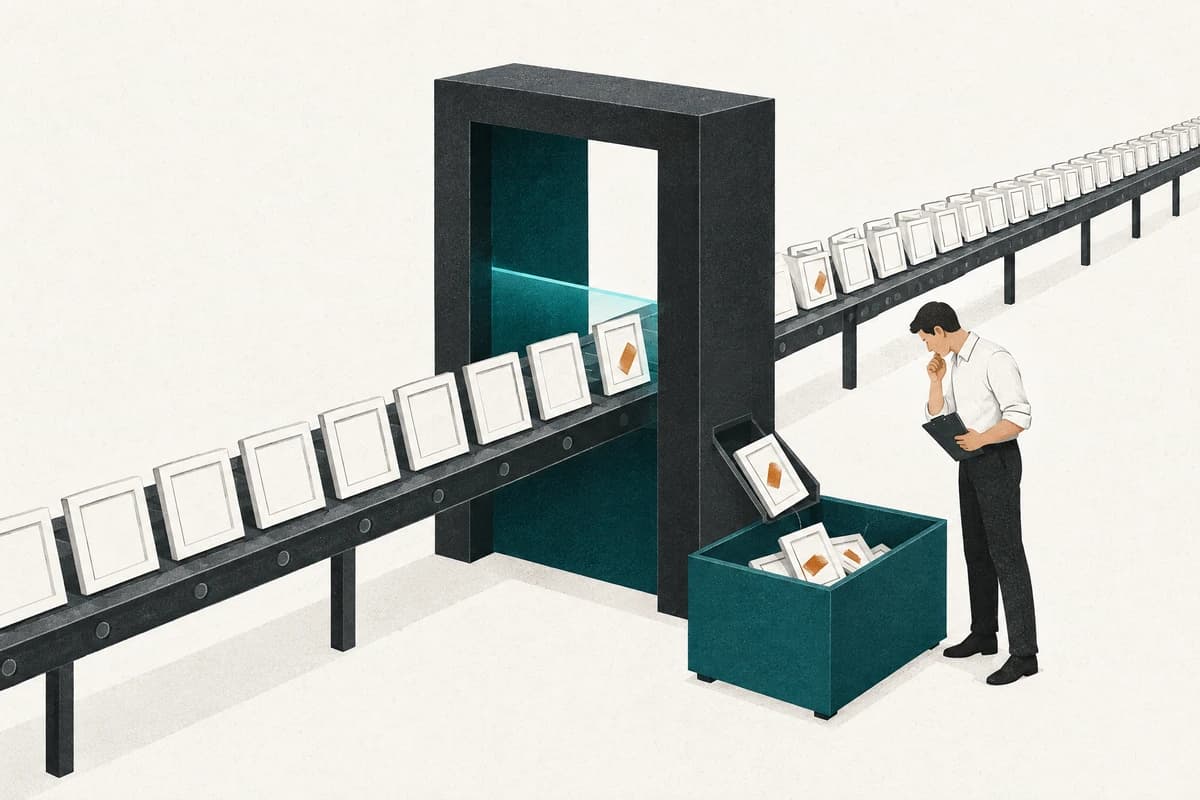
Korea Now Scans Every Image Uploaded to Its Big Forums. The Man Running One of Them Can't Tell You If It Has Ever Worked.
Since 1 July, Korean platforms above a size threshold must run every uploaded image through an AI filter that checks it against a government database of illegal recordings and blocks it before it posts. One operator published his own logs. Over a full year of the earlier video version, 1,615 blocks resolved down to about 33 that might have been real — and he cannot tell you whether any of them were, because keeping the files in order to check them would break a different law.

A 23-Year-Old Built an App That Routes You Through Shadows. It Hit No. 1 in a Week.
Yoo Min-jun made it because his walk to campus was unbearable. It calculates the sun's angle and the shadows thrown by buildings and street trees for the minute you'll actually be walking, and tells you which side of the bus to sit on. It cost him about ₩2 million of his own money. Meanwhile the state has 93,375 cooling shelters — and on the hottest Sunday of the summer, four in five of Seoul's were locked.
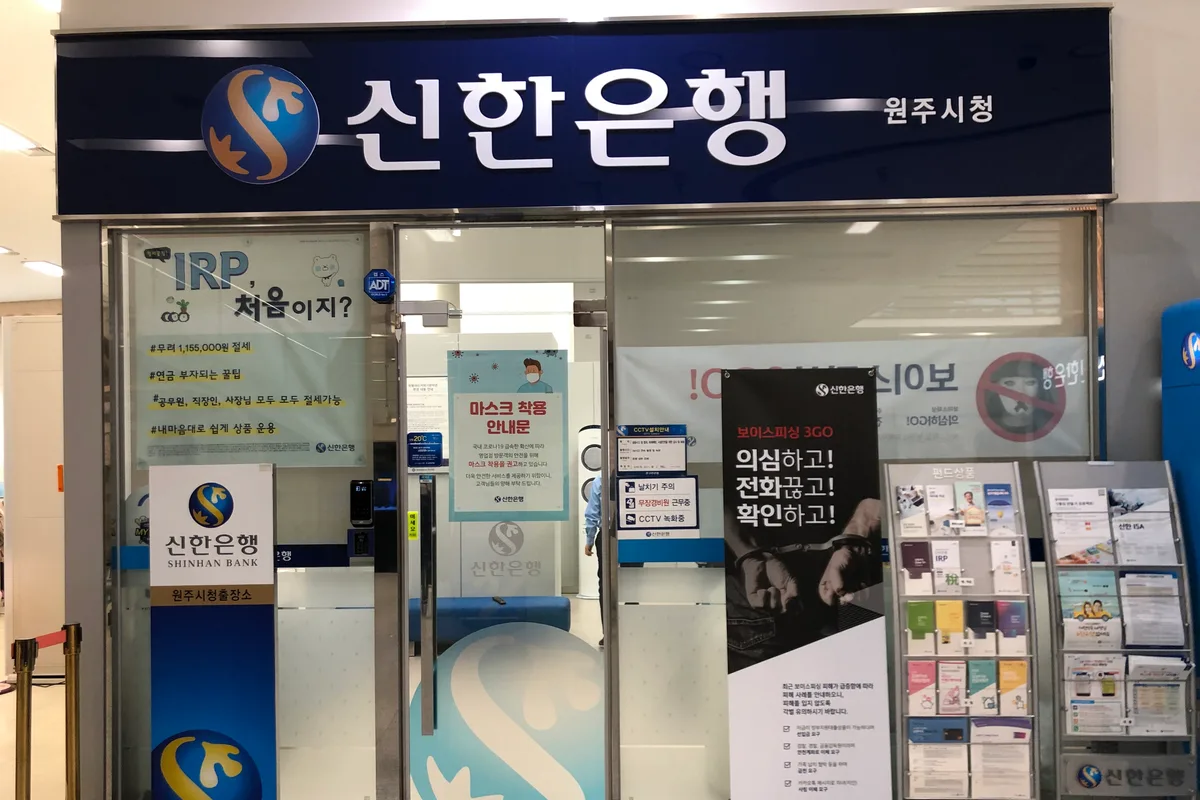
Korea Has Until December to Uninstall Twenty Years of Its Own Banking Software
In October 2025 the government finally ordered the security programs off your computer, and banks have until year-end to comply. Along the way: a cipher whose famous justification expired before it shipped, a mandate that was never in the law everyone blames, and a bank page that still uses a legal term abolished five and a half years ago.
The Weekly Dispatch
Korea, curated. Every week.
The best of K-culture, straight from Seoul. Written by people who actually live here.
Free, no spam, unsubscribe whenever.