The House of Samsung: Korea's Uncrowned Royal Family
South Korea abolished its monarchy over a century ago — then grew a new royal house inside a company. Across three generations the Lee family has controlled roughly a fifth of the national economy from a sliver of direct ownership, moved between prison cells and presidential pardons like a dynasty between exile and restoration, and paid the largest inheritance-tax bill in the country's history. This is how a Daegu grocer's line became the household nobody elected but everybody lives inside.
Koreans have a half-joking name for their own country: 삼성공화국 — the "Republic of Samsung." It captures a real and slightly uncomfortable fact. You can be born in a Samsung hospital, grow up in a Samsung-built apartment, carry a Samsung phone, insure your life with a Samsung policy, and shop at a store a Samsung affiliate supplies — all without ever choosing the family whose name is on it. Korea got rid of its kings in the early twentieth century. Then it grew a new royal house inside a corporation.
That house is the Lee family. For three generations they have steered the country's largest chaebol — and, through it, close to a fifth of the national economy — while owning only a sliver of it outright. Their marriages, feuds, convictions and funerals are covered like the affairs of a dynasty, because that is more or less what they are: Korea's uncrowned royal family. Here is how the house was built, and who lives in it now.
Gen 1: The Grocer Who Founded a Dynasty
The dynasty starts with dried fish. On March 1, 1938, in the southern city of Daegu, Lee Byung-chul (이병철) founded a small trading company called Samsung Sanghoe with about 30,000 won, dealing in dried fish, groceries and noodles (Wikipedia, Facts and Details). The name Samsung means "three stars" (삼성) — a founder's wish, the story goes, for a company that would be big, strong and enduring like the stars.
From that trading firm Lee built outward for decades — into sugar refining, textiles, insurance, retail, and finally, in 1969, the business that would eclipse everything else: Samsung Electronics. But the most dynastic drama of his life wasn't a business deal. It was the question of who would inherit.
By Confucian tradition the empire should have passed to Lee's eldest son, Lee Maeng-hee. It didn't. A 1966 scandal — a Samsung subsidiary was caught trying to smuggle saccharin — sent his second son to jail and briefly forced the founder himself to step back; the eldest son fell out of favor amid the fallout (Facts and Details). When the dust settled, it was the third son, Lee Kun-hee, who was designated heir, taking over about two weeks after his father's death in 1987. The passed-over brothers didn't vanish — their lines founded other conglomerates (Lee Maeng-hee's became CJ Group) — so that even Korea's other chaebol branch off the same family tree.
Gen 2: "Change Everything Except Your Wife and Children"
Lee Kun-hee (이건희) became chairman on December 24, 1987, and spent the next three decades transforming a solid Korean manufacturer into a global titan. He is remembered for one line above all.
In June 1993, alarmed that Samsung was churning out high-volume, mediocre goods while rivals like Sony pulled ahead, Lee summoned some 200 executives to Frankfurt and delivered what became known as the Frankfurt Declaration, launching a quality-first overhaul he called "New Management." His instruction, in the wording Samsung itself preserves: "If you are to change, change completely… Change everything except your wife and children" (The Korea Herald).
He meant it literally. In 1995, after defective phones he'd handed out as gifts embarrassed him, Lee had roughly 150,000 phones and other devices — around $50 million worth — piled in a factory yard in Gumi, smashed with hammers, and set on fire in front of 2,000 workers (KED Global, Android Authority). It was theater, and it worked: over the following years Samsung Electronics became the world leader in memory chips, then displays (where LG is its perennial rival), then smartphones — the empire behind why Korea makes the world's memory chips, a crown it now trades back and forth with its closest rival, the House of SK. By his death he was worth roughly $21 billion, the richest person in Korea (Wikipedia).
The Crimes and the Pardons
Here the dynasty's darker pattern comes into view — the one that makes Koreans' feelings about Samsung so tangled.
Lee Kun-hee was convicted twice: of bribery in 1996 and of tax evasion in 2008. He was pardoned both times, in 1997 and 2009, and served no prison time in either case (Wikipedia). His son would later walk a strikingly similar path. This is the "too big to jail" dynamic Koreans know well: a conviction for the head of a national-champion company has repeatedly turned out to be a way station on the road to a presidential pardon, justified out loud by the firm's importance to the economy. It is the gapjil-adjacent grievance at the heart of the chaebol debate — the sense that the most powerful families answer to a softer version of the law.
Gen 3: The Heir Who Says the Dynasty Ends With Him
Lee Jae-yong (이재용) — "Jay Y. Lee" in the West — was born in 1968, studied East Asian history at Seoul National University and took an MBA at Japan's Keio University. He inherited not just the company but the legal saga (Wikipedia).
His was the defining Korean corporate scandal of the 2010s. Convicted of bribing then-President Park Geun-hye and her confidante to smooth a 2015 merger that tightened his grip on Samsung, he was sentenced to two and a half years in January 2021, paroled that August, and pardoned by President Yoon Suk Yeol in August 2022 — the government citing Samsung's importance to the national economy (NBC News). A separate stock-manipulation and accounting-fraud case over the same merger ended in acquittal, upheld by the Supreme Court on July 17, 2025, closing a nearly decade-long ordeal (UPI). He had been named Executive Chairman of Samsung Electronics in October 2022.
And then he said something a Korean chaebol heir had never quite said. In a rare televised apology in May 2020, Lee Jae-yong pledged that he would not hand management of the company to his children — that the family's dynastic succession would end with him (The Korea Herald). Whether he keeps that promise is one of the open questions of modern Korean capitalism. For now, the third king says he intends to be the last.
The Daughters of the House
The Lee dynasty is not only its sons. Lee Kun-hee's daughters run substantial pieces of the empire.
Lee Boo-jin (이부진), born in 1970, has led Hotel Shilla — Samsung's luxury-hospitality arm — since 2010, and is so often compared to her father in style and business instinct that Koreans nicknamed her "Little Lee Kun-hee." By 2026, Forbes estimated her fortune at around $15 billion, making her one of the richest people in the country (Forbes via Wikipedia). Her younger sister Lee Seo-hyun (이서현), a Parsons-trained designer, built her career in Samsung C&T's fashion division and chairs the Samsung Welfare Foundation. In the Republic of Samsung, even the branches of the family that don't run the flagship run empires of their own.
The $8 Billion Goodbye
When Lee Kun-hee died in 2020, the family confronted a bill fit for a dynasty. His estate — shares, real estate and one of the world's great private art collections — was worth around 26 trillion won, and the inheritance tax on it came to roughly 12 trillion won (about $8 billion), reported as the largest inheritance-tax bill in South Korean history (The Korea Herald).
The reason it was so large is itself the story of Korean capitalism: the country taxes inherited controlling stakes at a punishing rate — a top rate around 50%, plus a surcharge for control — precisely to make dynastic succession expensive. The family paid it in six installments over five years, completing the payments in May 2026, largely without dumping their core holdings — Lee Jae-yong leaned on dividends and loans, while his mother and sisters sold selected stakes and pledged shares (The Korea Herald). They also donated more than 23,000 artworks, including national treasures, to the state. The dynasty paid the largest death duty in the nation's history — and kept control anyway.
The Republic of Samsung
Step back and the scale is genuinely hard to hold in your head. The Samsung Group accounts for something on the order of a fifth of South Korea's GDP — figures range from "roughly 20%" to the low-20s% depending on the year and how you count — and its flagship's exports alone are a meaningful slice of everything the country ships abroad (Facts and Details). No single family controls anything comparable in a peer developed economy.
That control was cemented by financial engineering as much as by products. The pivotal move was the 2015 merger of Cheil Industries and Samsung C&T — the deal that tightened Lee Jae-yong's grip on the group by giving the family firm control of the entity that held Samsung Electronics. The US hedge fund Elliott Management fought it, arguing the terms shortchanged shareholders; Korea's National Pension Service cast the swing vote in favor, a decision that later helped send a president to prison and, in a 2023 international arbitration ruling, ordered Korea to pay Elliott about $108.5 million (NPR). The lesson Koreans drew was the familiar one: for the House of Samsung, control is engineered, and the country's own institutions tend to help.
What Comes After the Last King?
So Koreans live with a contradiction they've stopped expecting to resolve. Samsung is the pride of the nation — the firm that made "Korea" mean cutting-edge technology, that built the chips inside the world's AI boom, that dragged a poor country to the technological frontier in two generations. And Samsung is the emblem of everything Koreans resent about concentrated dynastic power — the pardons, the engineered succession, the sense of a family above the ordinary rules.
Lee Jae-yong's promise to end the dynasty, if kept, would make him a genuinely unusual figure: a king who dissolves his own crown. If broken, it would confirm what critics have said all along — that the house always finds a way to pass the keys down the bloodline. Either way, the Republic of Samsung isn't going anywhere soon. Korea built this house, depends on it, resents it, and can't quite imagine the skyline without it. The wealth clan endures — and the country, for now, still lives inside it.
Ownership stakes, wealth estimates and GDP/export shares are 2024–2026 snapshots and move constantly. Convictions, pardons and court outcomes described are matters of public record; where the family's intentions (such as the succession pledge) are statements rather than settled facts, they are described as such.
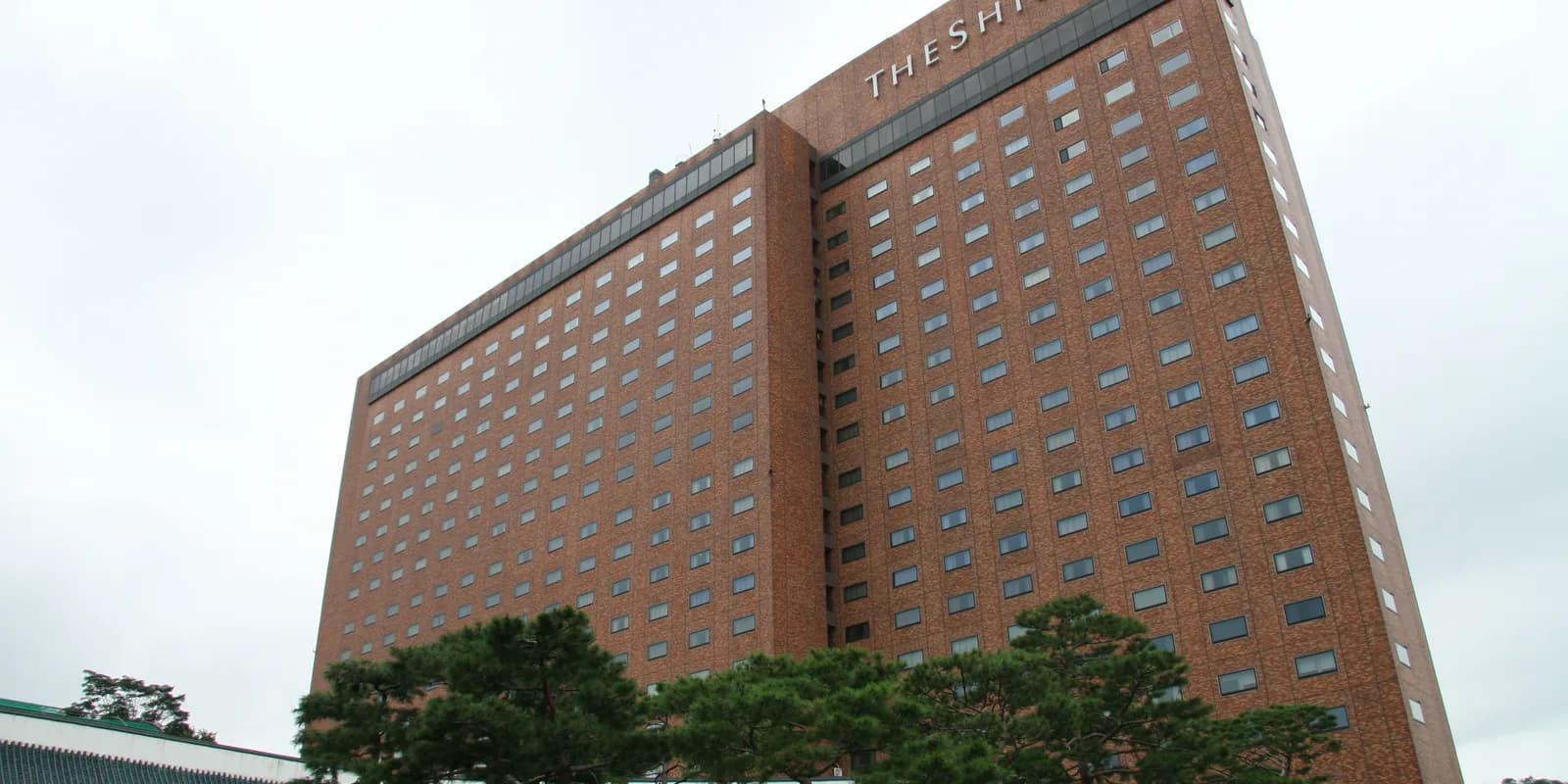
Cover: The Shilla Seoul hotel — photo by Maris Teteris, Wikimedia Commons, CC BY 3.0. Listing card: Lee Jae-yong in 2016 — photo by KBS, Wikimedia Commons, CC BY 3.0. Homepage/hero: Seocho Samsung Town headquarters — photo by Oskar Alexanderson, Wikimedia Commons, CC BY-SA 2.0.


Keep Reading
More Stories
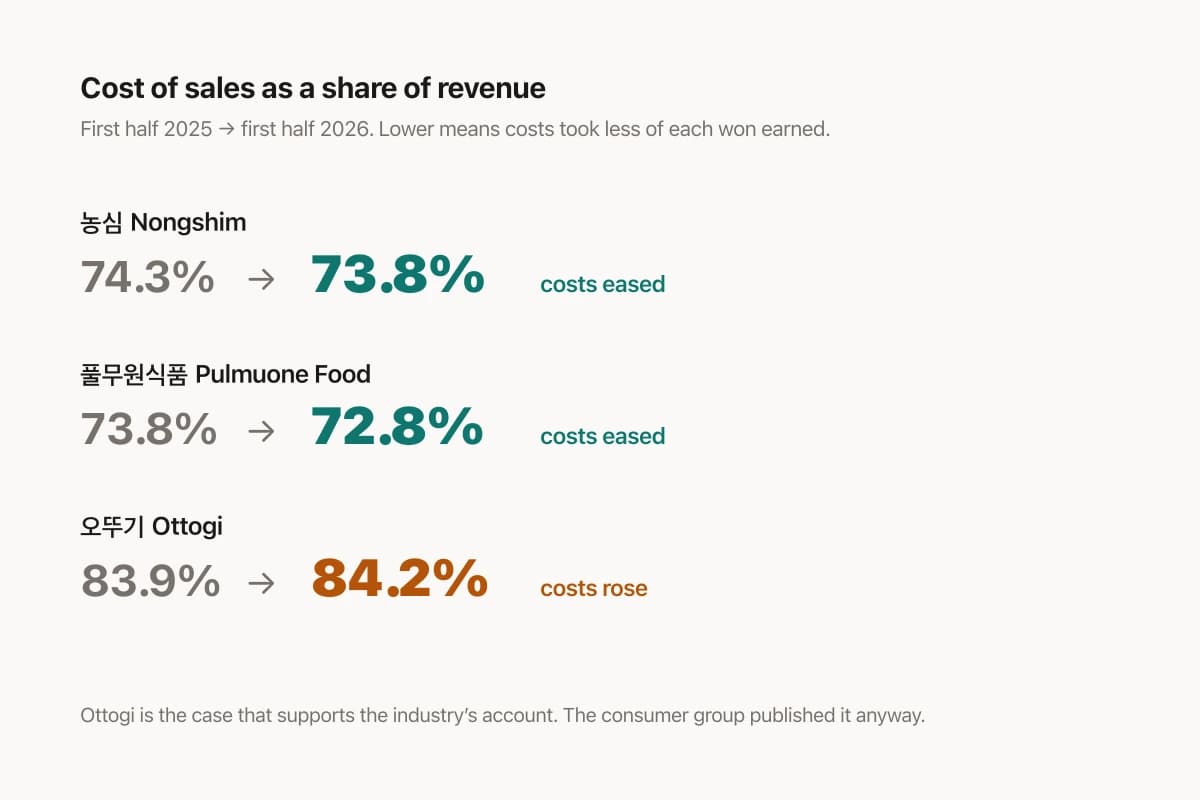
In April, Nongshim Cut Prices to Help With Inflation. In August It Raised Them, Using the Same Sentence.
Korea's biggest noodle company cut sixteen products in the spring, framed as joining the government's price-stability drive. Four months later it raised forty-three, framed as joining the government's price-stability drive. The products it cut are precisely the ones it left alone in August — and its own filings show the cost pressure it blames has not yet reached its margins. The awkward part is that the cost pressure is real.
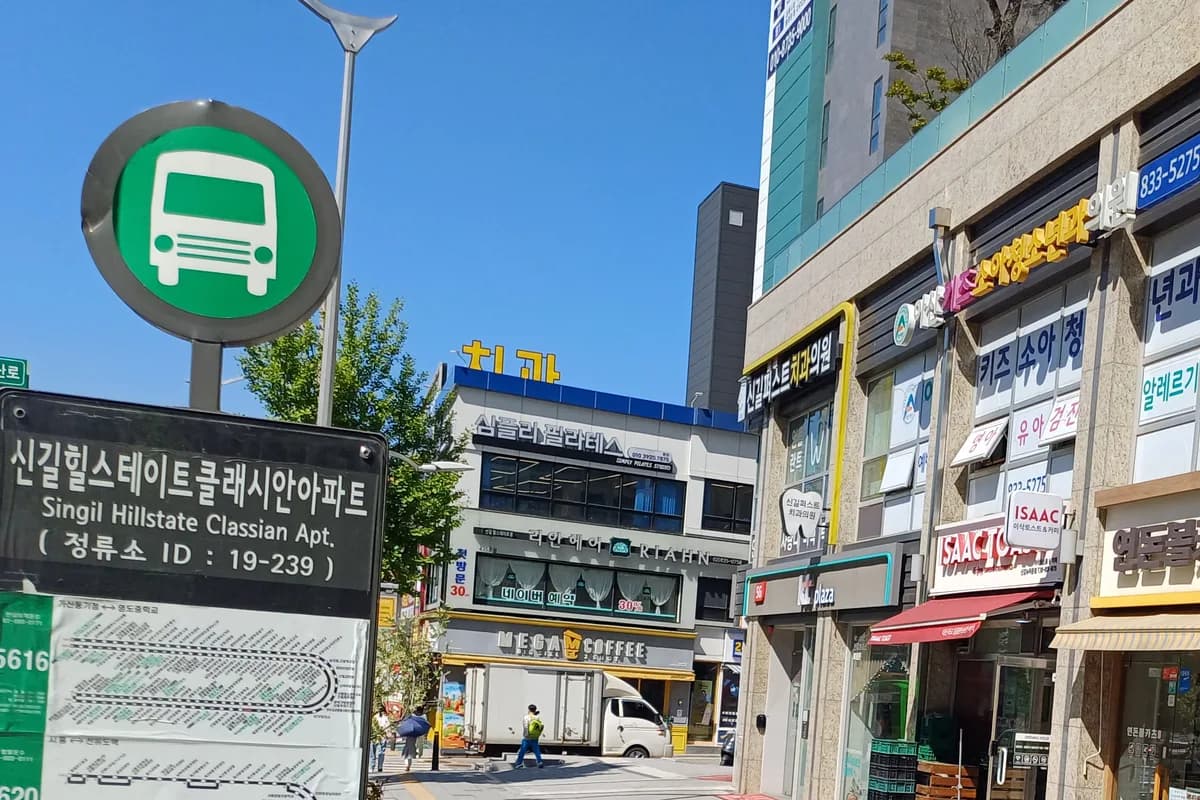
Korea's Longest Apartment Name Is 25 Characters — Seven Longer Than the Joke
Everyone says the names got long so mothers-in-law couldn't find the address. Twenty years of Korean and English coverage repeat that, and not once does anyone say it in the first person. Here is what actually happened: a decoder ring for 센트럴 and 포레, a Swedish word from a company with no Swedish business, and a 2021 study showing the thing residents vote hardest for doesn't work.
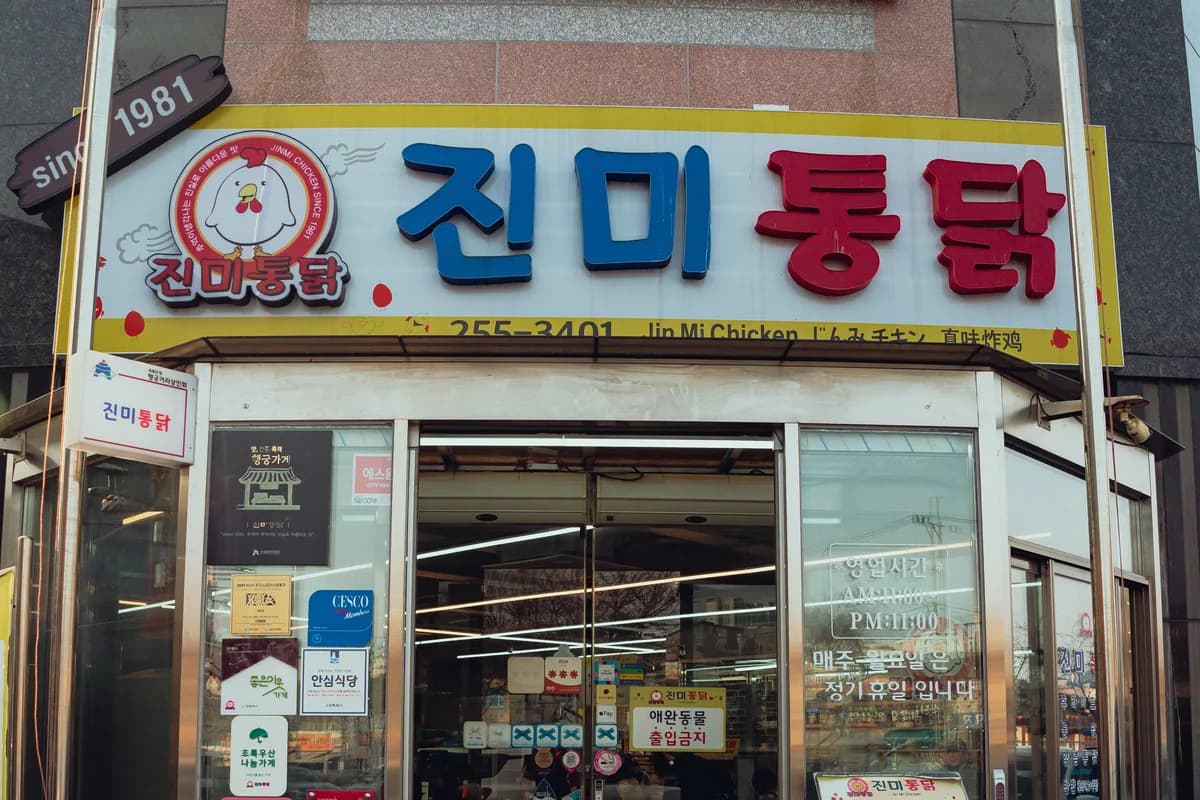
Korea Has Fewer Chicken Shops Than McDonald's Has Restaurants — the Famous Claim Was Counting Beer Halls
The number everyone quotes comes from a 2019 bank report whose own footnote says it includes 호프/통닭 licences and differs from the official count. On the like-for-like series the comparison is now the wrong way round. Four government bodies count Korean chicken shops four ways, two of them moving in opposite directions in the same year — and a decree amended last week finally requires the shops that closed to appear in the revenue forecast you're handed before you sign.
The Weekly Dispatch
Korea, curated. Every week.
The best of K-culture, straight from Seoul. Written by people who actually live here.
Free, no spam, unsubscribe whenever.