Korea's Birthrate Is Quietly Rising — and the 'Extinction' Story Just Got Complicated
For years, South Korea has been the world's cautionary tale: the lowest fertility rate on Earth, a nation supposedly headed for extinction. Then something odd happened. Births have risen for 22 straight months, the fertility rate ticked up two years running, and the doom narrative suddenly needs an asterisk. Here's what actually changed — and why a country can make more babies and still shrink.
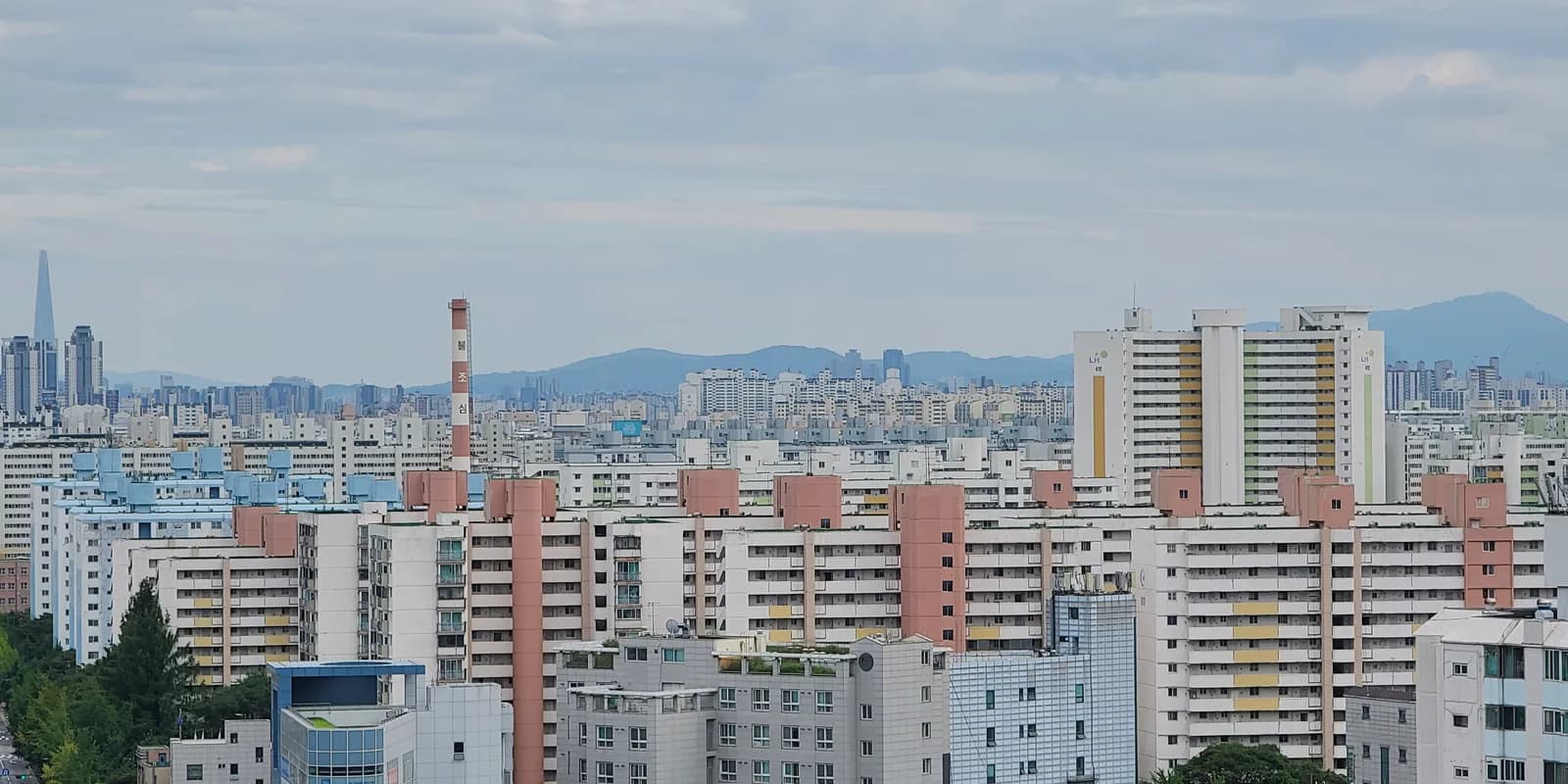
For the better part of a decade, South Korea has held a grim title: the country with the lowest birthrate in the world, so low that demographers used it as shorthand for national extinction. The fertility rate — the average number of children a woman is expected to have — fell year after year, past 1.0, past 0.8, to a low of 0.72 in 2023, when the replacement level needed just to hold a population steady is 2.1. Elon Musk tweeted about it. Think tanks modeled the year Koreans would disappear.
And then, quietly, it turned around. In 2024 the fertility rate rose for the first time in nine years. In 2025 it rose again. Births have now increased year-on-year for 22 straight months. The most-doomed population on the planet is, for the moment, having more babies — and the tidy "extinction" story has become a much more interesting one.
The Number That Surprised Everyone
Start with the figures, because they're genuinely striking. Korea's total fertility rate rose to 0.75 in 2024 — the first annual increase since 2015 — and then to 0.80 in 2025, a second straight rise (Korea.net, The Conversation). The number of babies born in 2025 jumped roughly 6.5% — the biggest annual increase since 2007 (Korea.net).
The momentum has, if anything, accelerated into 2026. The first quarter of the year saw births climb 14.8% — the fastest quarterly rise since records began in 1981 — and the monthly fertility rate briefly touched 0.99 in January 2026, the highest monthly reading Korea has ever published (Korea JoongAng Daily, Seoul Economic Daily). The most recent official data, for April 2026, showed births up 18% year-on-year (Seoul Economic Daily). (All of these figures move — Korea's statistics agency releases them monthly, so treat any single number as a snapshot.)
For a country whose birthrate had only ever gone down, two years of up is not noise. It's a trend.
Wait — Isn't Korea Supposed to Be Going Extinct?
The "extinction" framing was never wrong, exactly. It was oversimplified. A fertility rate of 0.8 is still catastrophically low — barely more than a third of replacement level — and it remains the lowest in the world. The reason the doom narrative took hold is that Korea hit the demographic wall first and hardest, which makes it the world's canary for every aging society behind it: Japan, Italy, China, and eventually much of the West are all watching to see what Korea does next.
What the extinction story got wrong was treating the decline as a law of nature — a one-way slide with no floor. The last two years suggest there is a floor, and that policy and circumstance can move the number back up. That doesn't cancel the crisis. But it complicates the fatalism.
What Actually Changed: The Wedding Boom
The single biggest driver is not, at first glance, about babies at all. It's about weddings.
In Korea, births and marriages are tightly linked — the share of children born outside marriage is very low, so the marriage rate is a leading indicator for the birthrate, usually by a year or two. And marriages have surged: 2024 saw marriages jump 14.9%, the largest increase since records began in 1970, and they've now grown for nine straight quarters (CNN, Korea JoongAng Daily).
A big part of that is timing. Weddings that were postponed during the COVID years — when ceremonies were restricted and plans went on hold — came flooding back once life reopened, and those delayed marriages are now producing delayed babies (Korea JoongAng Daily). The rebound is concentrated exactly where you'd expect: among women in their early-to-mid thirties, the cohort catching up on postponed family plans.
What Actually Changed: Cash, Leave, and the Echo Boom
Two other forces are pushing in the same direction.
The first is demographic luck. The slightly larger generation born between 1991 and 1995 — the "echo boom," children of Korea's postwar baby boomers — has now moved into peak childbearing age. More women in the prime years mechanically means more births, independent of anyone's choices (Korea JoongAng Daily).
The second is money and policy. Korea has thrown enormous sums at the problem — more than 360 trillion won (around $270 billion) on low-birth programs since 2006 — and recent years added concrete perks: a roughly 2-million-won ($1,500) cash grant per birth since 2022, additional grants for newlyweds, and expanded paid paternity leave (Al Jazeera, Korea JoongAng Daily). Whether cash alone moves the needle is hotly debated — but at least one analysis, from the Korea Institute for Health and Social Affairs, found the 2024 rebound was driven more by a higher share of thirty-something women choosing to have a child than by the size of the cohort alone (Korea JoongAng Daily). If that holds, it's the more hopeful reading: not just more women of the right age, but more of them saying yes.
Seoul vs. Sejong: A Tale of Two Birthrates
The rebound is not evenly spread, and the map tells its own story about why Koreans hesitate. The lowest birthrate in the country is in Seoul — around 0.58 — the densest, most expensive, most career-competitive place to live (CNN, Statista). The capital concentrates the very pressures that make young Koreans delay: brutal housing costs, the ferocious competition of the education system, and jobs that punish time away.
Meanwhile the strongest performer has been Sejong, the purpose-built administrative city full of government workers with stable jobs, cheaper housing, and family-friendly infrastructure. The gap between the two is, in miniature, the whole Korean fertility problem: babies follow security, and security is exactly what a hyper-competitive capital is short on.
The Catch: A Country Can Grow More Babies and Still Shrink
Here is the part the celebratory headlines skip. Korea's population is still shrinking — and will keep shrinking for a long time even if the birthrate keeps rising.
The reason is arithmetic. A fertility rate of 0.80 is still far below the 2.1 needed to hold steady, and Korea's population is now old enough that deaths outnumber births every single month. The country has recorded natural population decline — more deaths than births — for 78 consecutive months, since late 2019 (Seoul Economic Daily, CNBC). More babies than last year is not the same as enough babies.
And the long-range forecast still points down. The official projection — made before this rebound — has Korea's population falling from a peak of about 51.8 million toward 36.2 million by 2072, with the share of people over 65 climbing from roughly a fifth to nearly half (Korea Times). The rebound may push that revision higher, but it doesn't reverse the direction. You can bail faster and the boat can still be sinking.
Is This the Floor, or a Head-Fake?
So which is it — a genuine turning point, or a temporary blip that flatters the data?
The honest answer is that demographers don't yet know, and many are cautious. The echo-boom bump is temporary: the number of women in prime childbearing years is projected to start shrinking again after around 2029, which would pull births down even if the rate holds (Korea JoongAng Daily). And the deep structural reasons young Koreans gave for not having children — unaffordable housing, precarious careers, a punishing work-and-education culture — have not disappeared. A wedding rebound and a cash grant can bring forward the babies people were already going to have; sustaining the rate means convincing people who weren't planning to.
One thing the debate does not need is worse evidence. The most-quoted statistic in foreign coverage of Korean fertility — that more strollers are sold for dogs than for babies — turns out to be one retailer's category ratio over nine months, published without a total and accompanied, in the same release, by data pointing the other way.
Still, the last two years have done something the previous decade of hand-wringing could not: they've shown the number can go up. For a country that had come to treat its own decline as destiny — and for the many aging nations watching Korea as their own preview — that alone is a genuinely new chapter. Korea isn't out of the woods. But it's the first hard evidence that the woods might have an edge.
Fertility, birth, marriage and population figures are 2024–2026 snapshots released monthly by Korea's statistics agency and move constantly; treat any single number as a dated point. Long-range projections predate the current rebound and may be revised.
Cover: Apartment complexes in Nowon-gu, Seoul — photo by Ox1997cow, Wikimedia Commons, CC BY-SA 3.0. Listing card: a kindergarten in South Korea — photo by Choi Kwang-mo, Wikimedia Commons, CC0. Homepage/hero: a young family with a toddler in a Seoul park — photo by Daniel Andrew Szpunar, Wikimedia Commons, CC BY-SA 4.0.


Keep Reading
More Stories
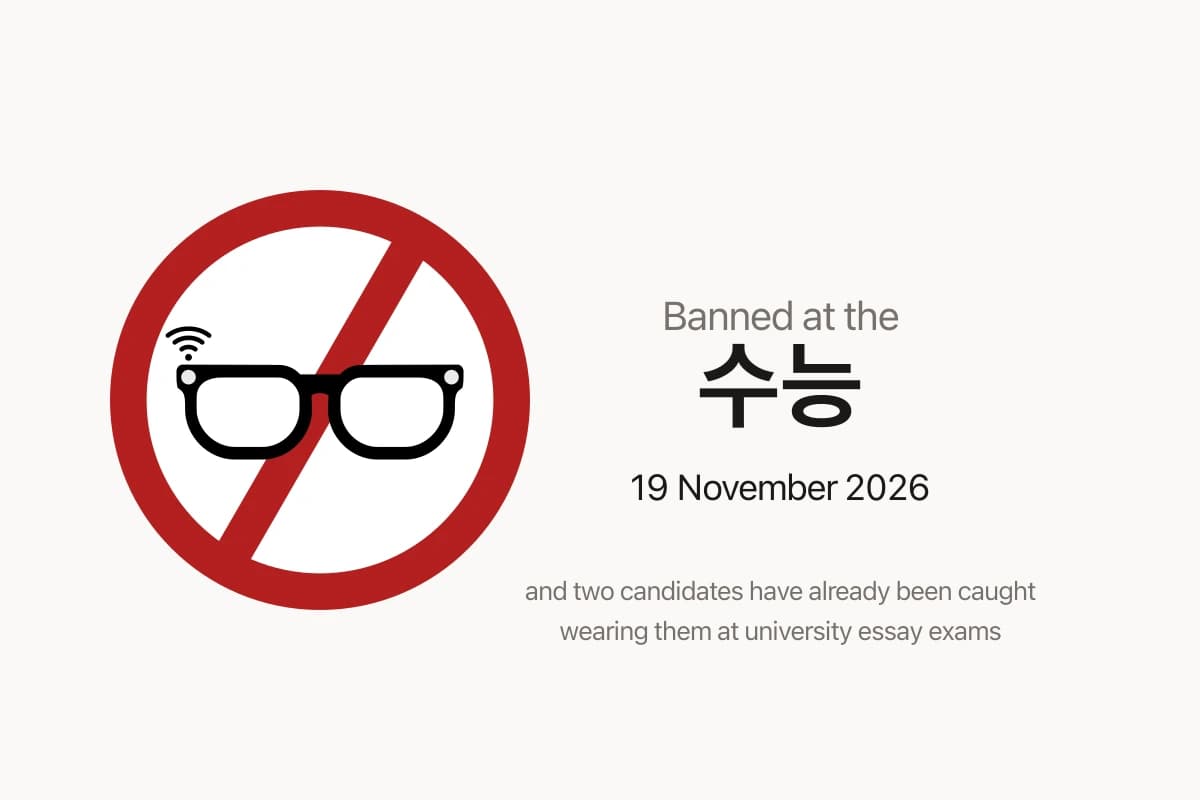
Two Candidates Wore AI Glasses Into Korean University Exams This Month. Five Weeks Later, 550,000 People Sit the 수능
At the University of Seoul on 3 October and at Yonsei a week later, proctors spotted AI smart glasses on candidates sitting essay exams for admission. Both had passed the glasses check in ordinary frames and switched once the exam began. The 수능 on 19 November already bans the devices; the question is whether anyone can see them.

The Fisherman Hid It Under His Floorboards. The Reward He Eventually Got Set Off a Decade of Looting.
Korea marked fifty years of underwater archaeology in Mokpo in September 2026. The official story starts with a net and a report. The documented one starts with six pieces of Chinese porcelain given away as presents, a schoolteacher brother who had to get them all back, and officials who did not want the paperwork. Then the state paid a reward, a diver worked out how much of it went in tax, and for the next ten years people stole the wreck faster than the government could raise it — until the navy's own divers could not find the ship, and the excavation hired the looters.
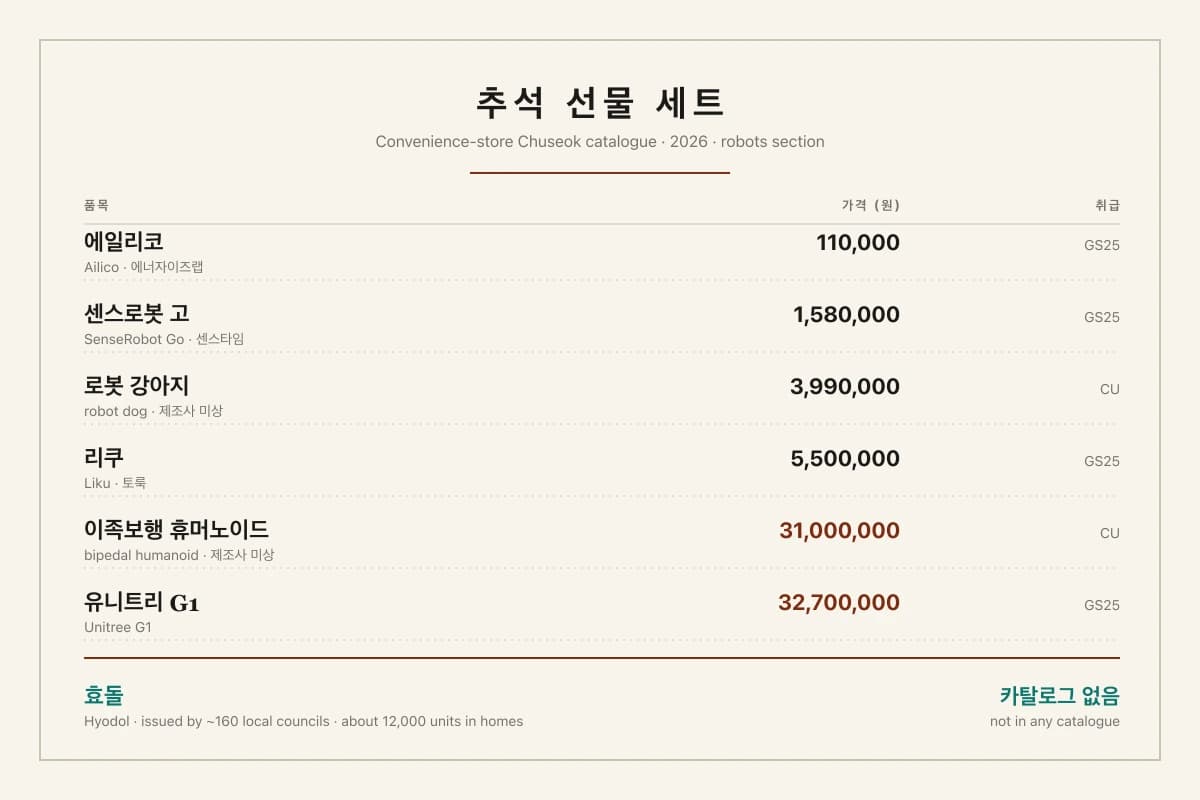
Korea's Convenience Stores Are Selling Humanoid Robots for Chuseok. Neither Chain Expects to Sell One, and Both Have Said So.
CU's holiday catalogue has a bipedal humanoid at ₩31 million, next to the beef and the gold bars. GS25 has an AI companion robot at ₩5.5 million and a keyring that talks back at ₩110,000. We assumed the pitch was companionship for parents you won't be visiting. It isn't — the retailers say plainly these are there to be noticed, not bought. Meanwhile about twelve thousand robots are already in Korean homes, asking elderly residents whether they've taken their medicine, and nobody put those in a catalogue.
The Weekly Dispatch
Korea, curated. Every week.
The best of K-culture, straight from Seoul. Written by people who actually live here.
Free, no spam, unsubscribe whenever.