Solo Travel to Korea, Honestly: A First-Timer's Survival Guide (2026)
Korea is one of the easiest countries in the world to travel alone — and one of the most misunderstood. Here's the real safety math, the 혼밥 culture that makes solo eating normal, and a 5-day plan that doesn't feel like punishment.
The night before her flight, a Threads post we saw this week:
"Planning my first solo trip 🥴 ... Starting with the states then I'm going to slowly plan my first international trip. I'm scared as hell."
Six replies under it said the same thing in different orders: should I do it alone? Will I look weird eating by myself? Is Korea safe at night for a woman? What if nobody speaks English? The fear was real and specific. The replies were vague and useless.
So here's the honest version, written from Seoul, for anyone who's getting close enough to book a flight but hasn't quite let themselves yet.
The math: Korea is one of the world's easiest solo trips
Two numbers worth tattooing on the inside of your wrist before you read anything else.
Numbeo's 2026 Crime Index puts Seoul at 24.22. London is 55.15. New York is 47.61. Paris is 56.5. Mexico City is 67. Seoul scores lower than essentially every city Western solo travelers consider routine.
The country as a whole ranks #8 on the Global Solo Female Travel Safety Index for 2026, with an aggregate safety rating of 4.7 out of 5 (source: Travel Ladies safety community). Violent crime against tourists — armed robbery, mugging, assault — is rare to the point of being unusual. Petty theft happens in tourist-crowded areas like Myeongdong and Namdaemun (anywhere with bags of shopping looks the same to a pickpocket), but the country-level baseline is closer to Tokyo or Singapore than to most Western capitals.
The most reassuring data point is also the most boring: women walking alone at night is normal here. Korean women take the subway home at midnight by themselves all the time. They walk between subway exit and apartment building. They sit in 24-hour convenience stores eating ramen alone at 2 a.m. The subway cars are surveilled, well-lit, and continuously used. You will not stand out doing any of this.
The two specific cautions that do matter:
- Drink-spiking in nightlife districts. Itaewon and parts of Hongdae have the same problem every global nightlife district has. Watch your drink, don't accept open drinks from strangers, leave with someone trusted (hostel friends, your hotel staff sending you a verified taxi). This is a global travel rule, not a Korea-specific one — but it's the one place the broader "Korea is safe" statement has texture.
- Traffic. Korean drivers are aggressive, especially around quick-turn intersections in places like Gangnam. Cross at the painted lines, wait for the green man, don't be the foreigner who learned the hard way that scooters drive on the sidewalk in Korea.
That's the safety section. It is much shorter than the section other guides give it, because the answer is: yes.
The cultural lever you didn't know was here: 혼밥
If safety is what stops people from booking, then "I'll feel weird eating alone" is what stops them from enjoying it. This is the Korea fear that's most wrong.
혼밥 (honbap — honja "alone" + bap "meal") is so culturally accepted in modern Korea that it's a marketing demographic. According to recent dining surveys, 26.9% of weekday lunches and 25.7% of weekday dinners in Korea are eaten alone. A 2023 Dongguk University study found that one in two Koreans in their 20s and 30s eats at least one meal solo every single day. The trend has its own subculture and slang — solo-everything practitioners get called 혼족 (honjok, "the alone tribe"), and the word has positive, not pitiful, connotations.
Restaurants have responded. Single-portion 김밥 spots, individual hot pots (모듬샤브샤브 set for one), single-grill 1인 삼겹살 (sam-gyeop-sal-for-one) bars, ramyun shops with bar-counter seating designed for solo diners. Many of the most-Googled Korean food experiences — 떡볶이 (tteokbokki) snack-bars, fish-cake (오뎅) stands, gimbap chains like Kimbap Heaven, all of Olive Young and convenience-store food — were essentially built for one person.
Where solo eating is easy: bar-seat ramyun (라멘), gimbap chains, convenience-store hot-bar dining (CU and GS25 both have melamine counters by the window), single-portion bibimbap, basically any restaurant with stool seating along a window or counter.
Where solo eating is still a little awkward (not unwelcome, just less designed for it): traditional Korean BBQ that requires a minimum two-person grill order, some bossam and jokbal (boiled-pork) places where portions start at "small" = 2 people. You can absolutely sit down solo at these spots — the staff won't blink — but you'll either over-order or get gently steered toward the menu's smaller half. Skip those for the first night. There's a Pojangmacha (포장마차) tent or a 김밥천국 always within a block.
The toolkit before you land
Things to download and prepare before your flight, in priority order.
1. Map apps that aren't Google. Google Maps doesn't work properly in Korea — Korean government restrictions block detailed street routing. The two apps every Korean uses instead:
- Naver Maps (English supported, walking directions, transit, has English UI) — install this first
- KakaoMap (similar to Naver, slightly cleaner UI, better for some bus routes) — install this second
Install both. Switch between them when one disagrees about a place. Per Visit Seoul's navigation guide, Naver Maps has the best English support for first-timers.
2. Kakao T for taxis. The Korean equivalent of Uber. Set it up with a credit card before arrival. Verified drivers, fixed fare, route on screen — never flag a taxi on the street if you have Kakao T working. Required: a phone number Kakao T accepts (most international numbers work, sometimes US numbers stall — back-up plan: ask your hotel front desk to call you a taxi).
3. T-Money card at any 7-Eleven, GS25, CU, or Ministop after you land. ₩4,000 for a basic card (character editions are ₩5,000), then top up ₩10,000–30,000 to start. Pays for subway, buses, and most convenience stores. Subway base fare is ₩1,550 per ride, raised from ₩1,400 in June 2025. T-Money also works in Busan, Daegu, and Daejeon.
4. Save 1330 as a phone contact. +82-2-1330 is the Korea Tourism Organization's 24/7 English hotline. Free if you call from a Korean SIM, low international rate otherwise. They translate in real time, help with directions, mediate restaurant misunderstandings, and assist in actual emergencies. We've sent readers to this number for everything from "I lost my T-Money on the subway" to "what's this rash?" It works.
5. One Korean phrase that solves 80% of language moments. "영어 가능해요?" (Yeong-eo ganeung-hae-yo? — "Do you speak English?"). Korean service workers under 40 mostly understand basic English. Asking in Korean first is the small social gesture that opens the conversation. Want more than one phrase before you fly? Here are the Korean-learning apps actually worth your time.
6. Cash, but not too much. Korea is overwhelmingly card-friendly. Even pojangmacha tents take cards via Kakao Pay. ₩100,000 in cash for small markets and emergency taxi pickup is plenty for the trip. Don't carry the giant Western-tourist wad.
Where to stay (Seoul specifically)
For a solo first-timer, three neighborhoods do most of the work.
Hongdae (홍대). Best general pick. Hostels start around ₩25,000-40,000/night, design-y boutique hotels around ₩100,000-150,000. The neighborhood is busy until late, well-lit, walkable, has the biggest concentration of solo-friendly cafés in Seoul, and the subway home runs until ~1 a.m. The nightlife caveat applies after midnight — choose your bars, don't accept open drinks, don't wander into the back-alley club blocks alone.
Insadong / Bukchon area (인사동 / 북촌). Quieter, more traditional. Mid-range hotels around ₩120,000-200,000/night. Daytime energy is hanok villages, tea houses, palaces. The neighborhood goes to sleep by 10 p.m., so this is the pick if you want solo days that end with reading a book in bed, not bar-hopping.
Itaewon (이태원). Most international. Highest English fluency among staff. Easy access to embassy area. Hostels and hotels run mid-range. The nightlife caveat is loudest here — the international party district has a real drink-spiking problem and the back streets feel different after 2 a.m. Day Itaewon is great, late-night Itaewon as a solo female traveler is the one place we'd say consider not.
Busan if you're adding a second city: Haeundae (해운대) is the easy pick — beach + walkable + safest of the Busan beach neighborhoods.
Skip: Gangnam unless you have a specific reason (it's a business district, sterile, expensive, no walkable solo charm), and the lower-rated guesthouses in Yongsan train station vicinity (some are fine, some have hygiene issues — read recent reviews).
A solo-friendly 5-day Seoul itinerary
Day 1 — Reset. Land, drop bags at the hotel, take the subway one stop. Walk Insadong's main street, drink a ssanghwa-tea (쌍화차) at any 전통차 (traditional tea) house. End the day at a 찜질방 (jjimjilbang — Korean spa-bathhouse). Not Dragon Hill Spa or Siloam Sauna — both have permanently closed, whatever older guides tell you. Sparex Dongdaemun is the dependable 24-hour choice, and any neighbourhood place with the ♨ symbol works: ₩15,000–25,000 entry, and the heated floors deal with jet lag and intimidation in the same evening. You'll wear matching pajama-shorts they hand you. Everyone does. It is not weird.
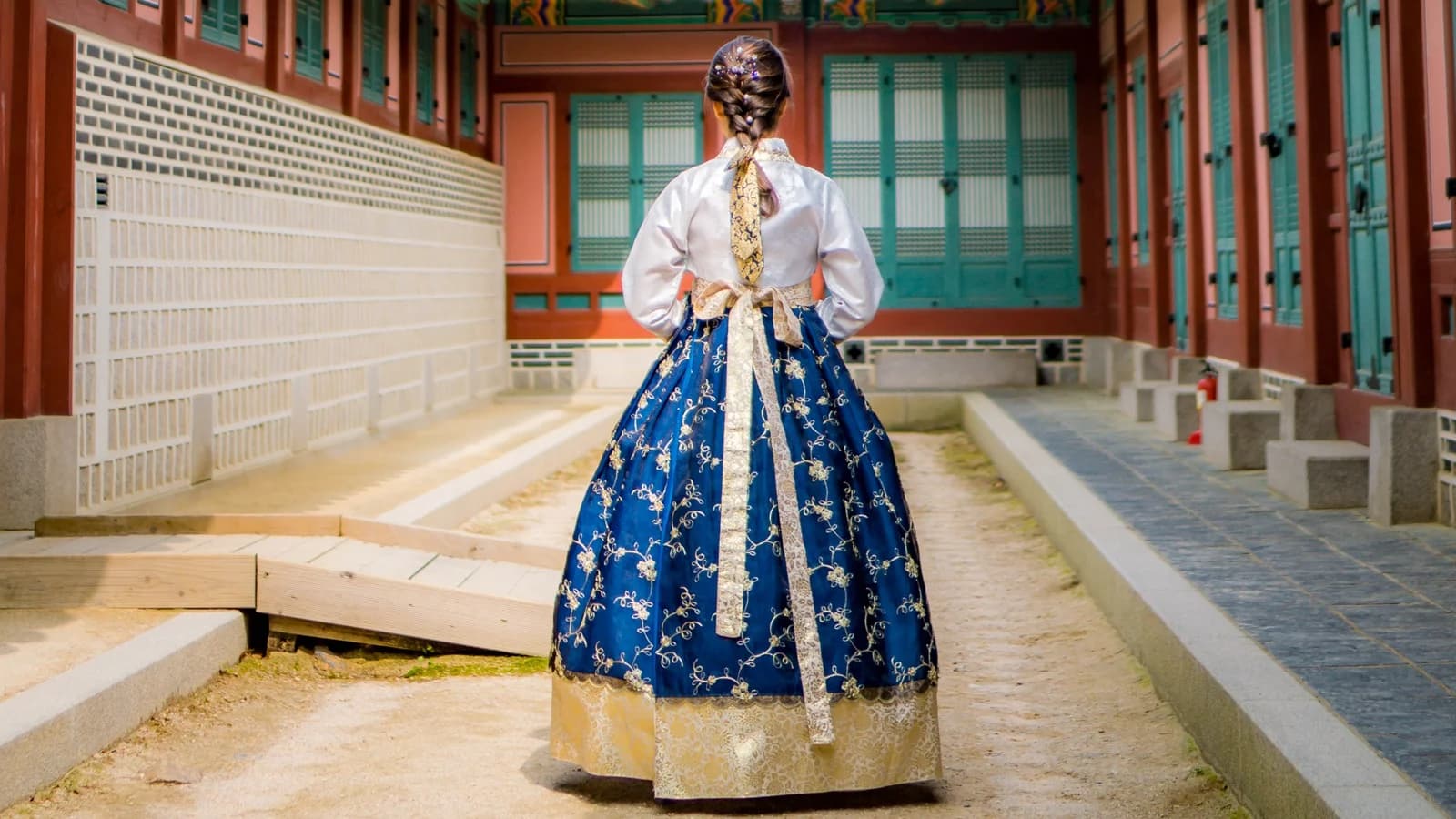
Day 2 — The classic Korea morning. Gyeongbokgung Palace (경복궁) opening hour, before the tour buses. ₩3,000 entry, free if you wear hanbok rented from any shop near the palace gate (~₩15,000-30,000 for half a day — single-person bookings are normal). Walk to Bukchon Hanok Village immediately after — narrow streets, traditional rooftops, twenty cafés where solo seating is the default. Eat solo lunch at any 김밥천국 (gimbap-cheonguk) chain — single-portion, walk in, point at menu, eat at the bar.
Day 3 — Daytime Hongdae + evening Han River. Hongdae's daytime is browsing-friendly — indie bookstores, music shops, fashion boutiques. Find one of Seoul's many book cafés (북카페) — solo seating, expected behavior is "you read for 2 hours, you order one drink." Sunset on the Han River at Yeouido Park (여의도공원) — rent a bicycle for ₩3,000/hour, ride along the river, end at one of the riverside convenience stores. Korean evening tradition: instant ramen + beer on the grass, watching the bridges light up. The 편의점 사장님 (convenience-store owner) will heat your ramen in the microwave. Sit at a riverside table. This is one of the best solo evenings available anywhere in Asia.
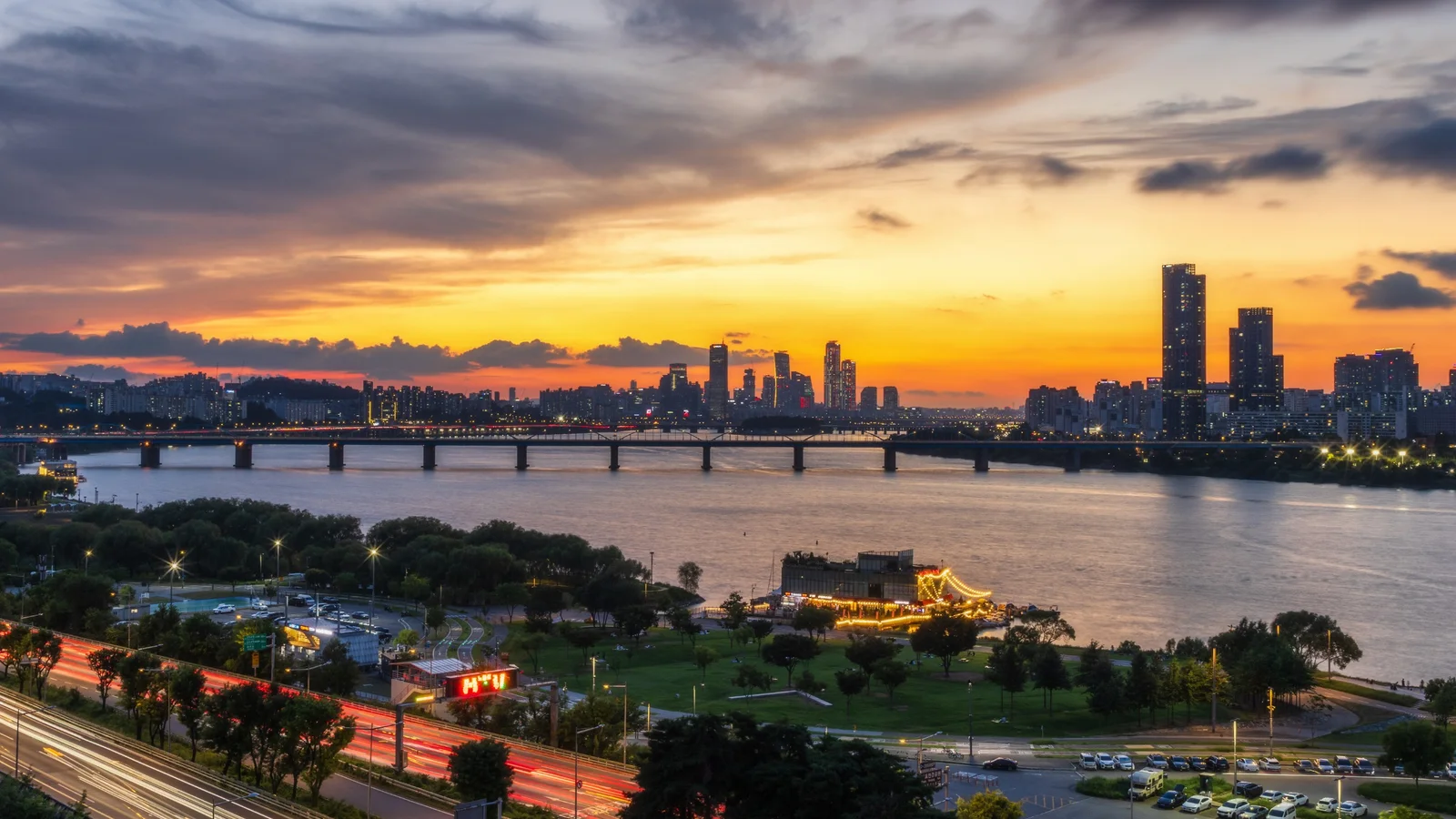 Sunset over the Han River with the Yeouido skyline. ⓒ Korea Tourism Organization Photo korea — Jeong Kyujin. Licensed under KOGL Type 1.
Day 4 — Day trip for social option. Two good picks here: a DMZ tour (group bus tours leave from Lotte Hotel daily, ₩80,000-130,000) or Suwon Hwaseong Fortress (수원화성, UNESCO World Heritage, 40 min subway from Seoul, free entry, bus tour optional). Tours give you scheduled human contact without forcing it — the bus does the navigation, you decide how much to chat with seatmates.
Day 5 — Itaewon, shopping, departure. Daytime Itaewon brunch (you have your pick of international cafes), final souvenir shopping at the Olive Young store on the main strip, then Incheon Airport via the AREX express train from Seoul Station (~₩9,500, 43 minutes, beats the bus).
What to skip on your first solo trip
- Flagging street taxis after 11 p.m. Especially in Itaewon and Gangnam. Some drivers target tourists with rigged meters or detour routes. Use Kakao T. Always.
- Back-alley Hongdae clubs after 1 a.m. alone. The main strip is fine. The interior club blocks past Mapo Police Station are where the drink-spiking complaints concentrate.
- The 24-hour PC방 (PC-bang). Internet cafés are technically open all night and used by some travelers as a cheap stay. Avoid as a solo female after midnight — they're not unsafe so much as they're a male-dominated unsupervised social space that gets weird.
- Booking the cheapest "homestay" via international platforms. Some "homestays" in Yongsan and parts of Mapo are sublet rooms with no formal hospitality license. Stick with hostels and hotels listed on Booking, Yeogi, or Naver Hotel — these are vetted by Korean tourism regulators.
The mindset shift
Korea isn't a country you have to be brave to visit alone. It's a country that was structurally built — by demographic, by culture, by infrastructure — to support a solo traveler doing exactly what you'd do anyway.
When you sit at the bar-counter at a ramyun shop with your phone face-down and read your book, no one is staring at you. When you walk back to your hostel at midnight in Hongdae, you're surrounded by other Korean women doing the same walk back to their apartments. When you call 1330 because you can't read the menu, an actual person in actual real time helps you.
The fear is the loudest part of the decision. The trip itself is one of the quietest, kindest solo experiences this part of the world offers.
Book the flight.
Cover photo: A solo traveler in hanbok walking the courtyard at Gyeongbokgung Palace, Seoul. ⓒ Korea Tourism Organization Photo korea — Pham Tuyen. Licensed under KOGL Type 1.
Keep Reading
More Stories
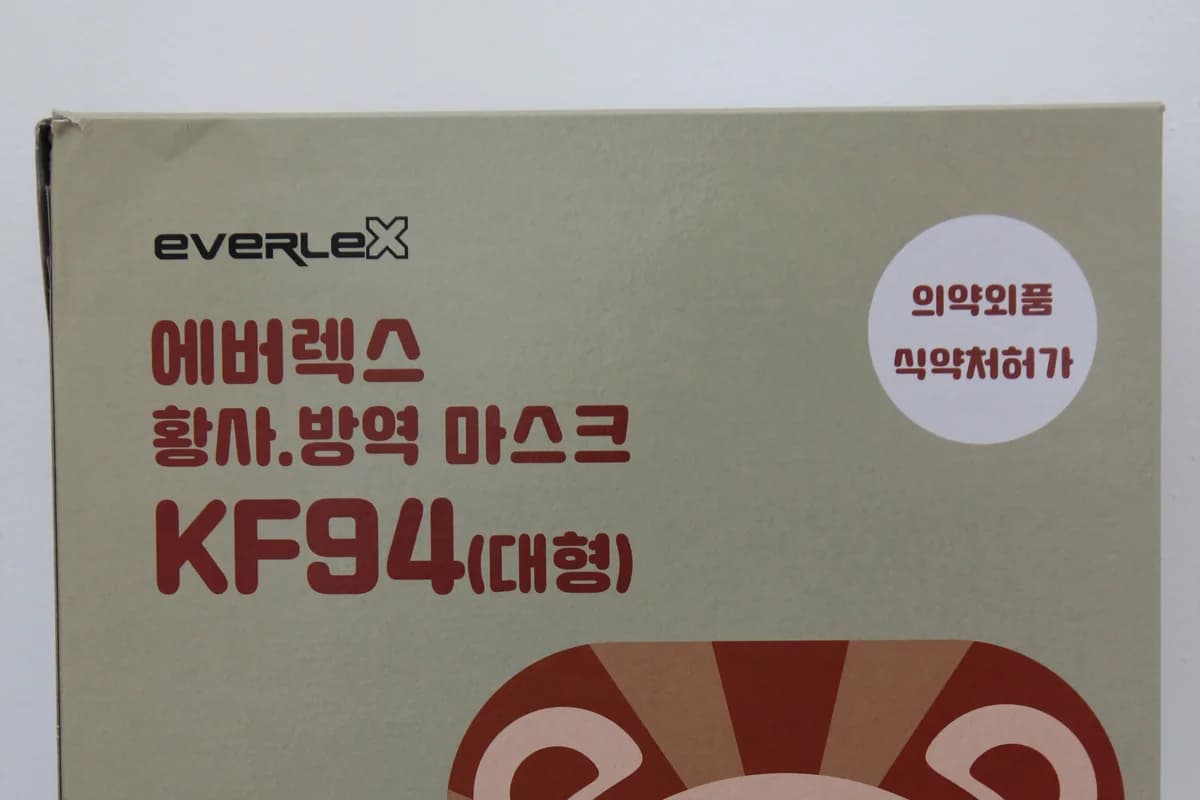
황사 Is Not 미세먼지: What Korea's Air Quality Alerts Actually Mean
English coverage treats yellow dust and fine dust as the same problem. Korea's own forecasters subtract one from the other before publishing. A guide to the two seasons, the alert thresholds, what KF94 actually certifies, and why 'it all comes from China' is a number swap.
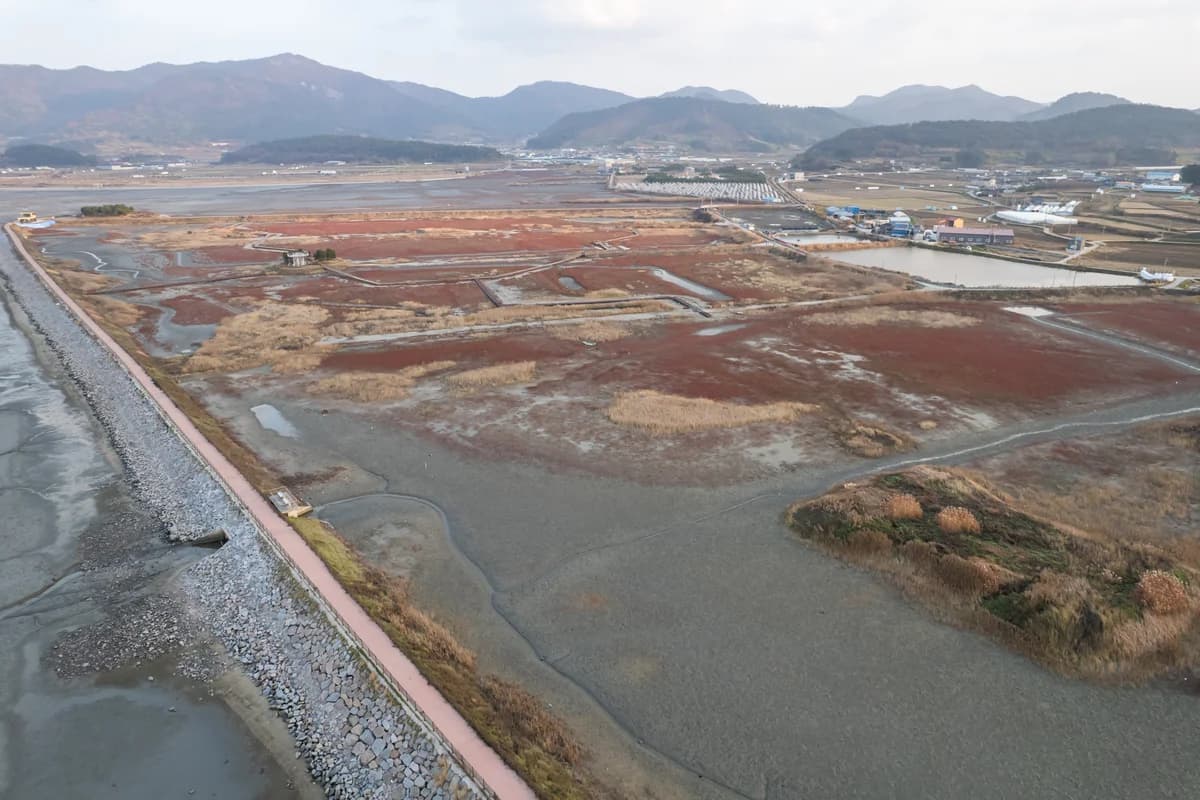
The Mud Korea Decided to Save: Getbol and the UNESCO Vote in Busan
The least Instagrammable thing Korea could nominate — a coastline of mud — is a UNESCO World Heritage site, and on July 25, 2026, in the one year Korea controlled the room, it was made bigger. A guide to getbol: the flats that feed millions of migrating birds, the women who ride wooden sleds across them, and why a country that once paved its tidal flats now enshrines them.
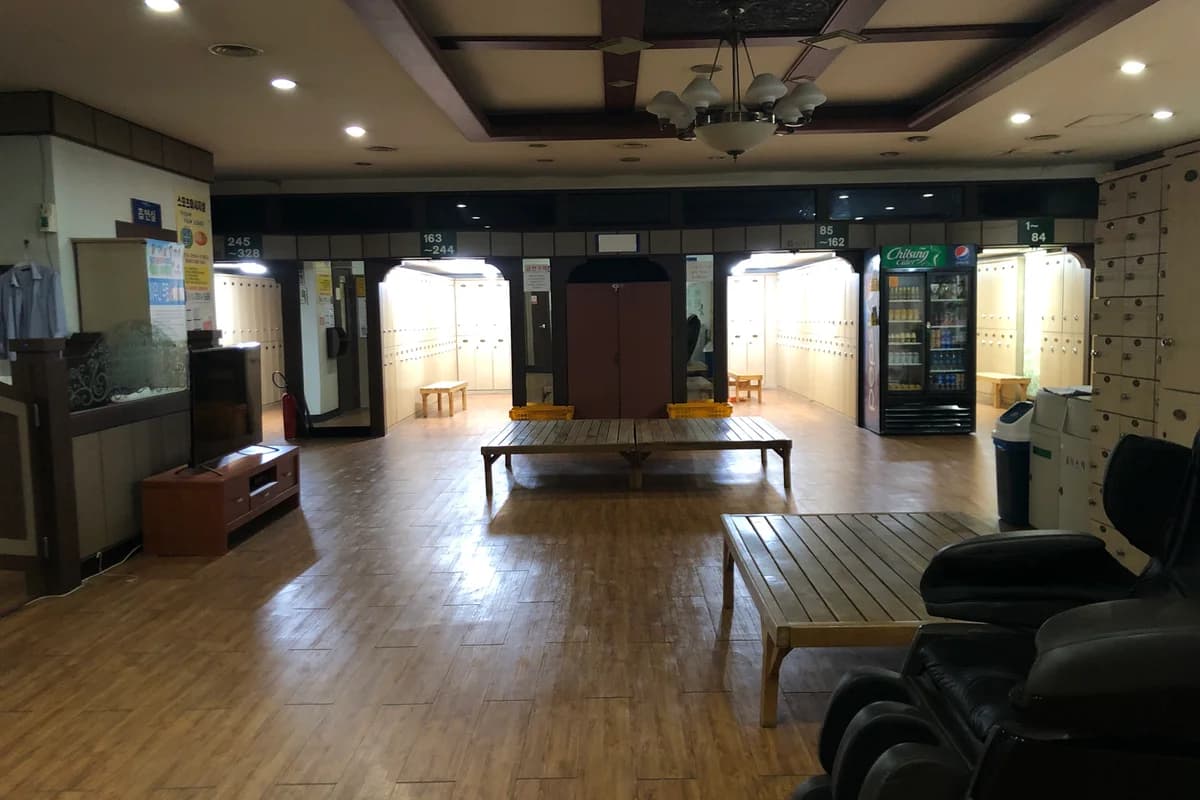
Jjimjilbang for First-Timers: How Korea's Bathhouses Actually Work
Yes, the bath part is fully nude. No, nobody cares. A step-by-step guide to the Korean spa-sauna-sleepover — the sheep-head towel, the scrub that removes a layer of you, which famous venues have quietly closed — and why the neighborhood bathhouse is disappearing even as the tourist jjimjilbang thrives.
The Weekly Dispatch
Korea, curated. Every week.
The best of K-culture, straight from Seoul. Written by people who actually live here.
Free, no spam, unsubscribe whenever.