Is Daejeon Worth Visiting? The Honest Guide to Korea's 'Most Boring' City (2026)
The English-language guide to a city Koreans love to dunk on. Eight honest reasons to spend a Daejeon day — including the bakery that's worth taking the KTX for.
If you spend any amount of time on Korean social media, you'll eventually run into the meme: 노잼도시 — no-jam city, "no-fun city" — and the city that gets tagged with it more than any other is Daejeon.
This isn't a foreigner stereotype. Koreans started it. The Daejeon city government, faced with the meme spreading faster than they could refute it, eventually leaned into it — running festivals with names like "From No-Fun to Fun." There's even an academic paper on KCI that studied how the "Snoozefest Daejeon" reputation got built on Korean blogs through text-mining and semantic-network analysis. The label has, by now, been studied harder than most Daejeon attractions.
So yes — Daejeon, Korea's fifth-largest city, the geographic and rail center of the country, home to KAIST and the largest concentration of government research labs in Korea, has a brand problem.
This guide is the second in our city-by-city Korea series — and unlike the Seoul guide, it isn't a "first time in" piece. Daejeon is a day trip, not a destination. It's roughly 50 minutes from Seoul Station on the KTX, and the right way to do it is to leave Seoul before 8 a.m. and be back for dinner. Eight things that earn the trip — including one bakery worth the round-trip ticket by itself.
One thing before we start. When Koreans call Daejeon "boring," they don't mean bad. They mean it's not Seoul: no marquee landmarks, no Hongdae nightlife, no palace selfies. What it has instead is real-Korean texture — a bakery older than most Seoul neighborhoods, a 1,000-year-old hot springs district, the country's smartest engineering campus, and a forest that turns the kind of orange that gets photo contests won. That texture is the entire point of going.
How to actually get there
Two stations, one decision.
KTX from Seoul Station, Gyeongbu line, about 50 minutes to 1 hour 10 minutes depending on the train. Cost is around ₩24,000 each way for an adult; book a few days ahead via the Korail website for the time slot you want. KTX is the right answer for the day-trip pacing — slower options technically exist but eat into the day enough that they're hard to recommend.
You'll arrive at one of two stations. Daejeon Station (Gyeongbu line) is the older, central one — closest to Sungsimdang and the kalguksu alley. Seodaejeon Station (Honam line) is in Oryu-dong and connects you faster to the western suburbs (KAIST, Yuseong, Jangtaesan). Pick whichever matches your first stop, then take the city subway (Line 1) or a cab between sites — both are short rides.
Skip a hotel. The trip works better as a daylight raid.
The eight reasons
1. Get to Sungsimdang before the line forms
Of every reason to go to Daejeon, the strongest single one is a bakery founded in 1956 in front of the city's main train station.
Sungsimdang (성심당, "Sacred Heart Hall") started as a tent selling 300 steamed buns a day, with the founder giving roughly a third of them away to the homeless and orphans of post-war Daejeon. Seventy years later, it is the single highest-grossing non-franchise bakery in Korea — 2024 revenue was ₩193.76 billion (about $132.7 million). It baked the bread for Pope Francis's 2014 visit. Korean food TV crews film there constantly.
The signature items: the fried soboro (a deep-fried crumb-topped roll filled with red bean), the chive bread (부추빵 — savory, briny, doesn't sound like it should work, does), and the cod-roe baguette (the third pull from the rack for most regulars). All baked from scratch on-site; some of the slow-bread items use a 16-hour fermentation.
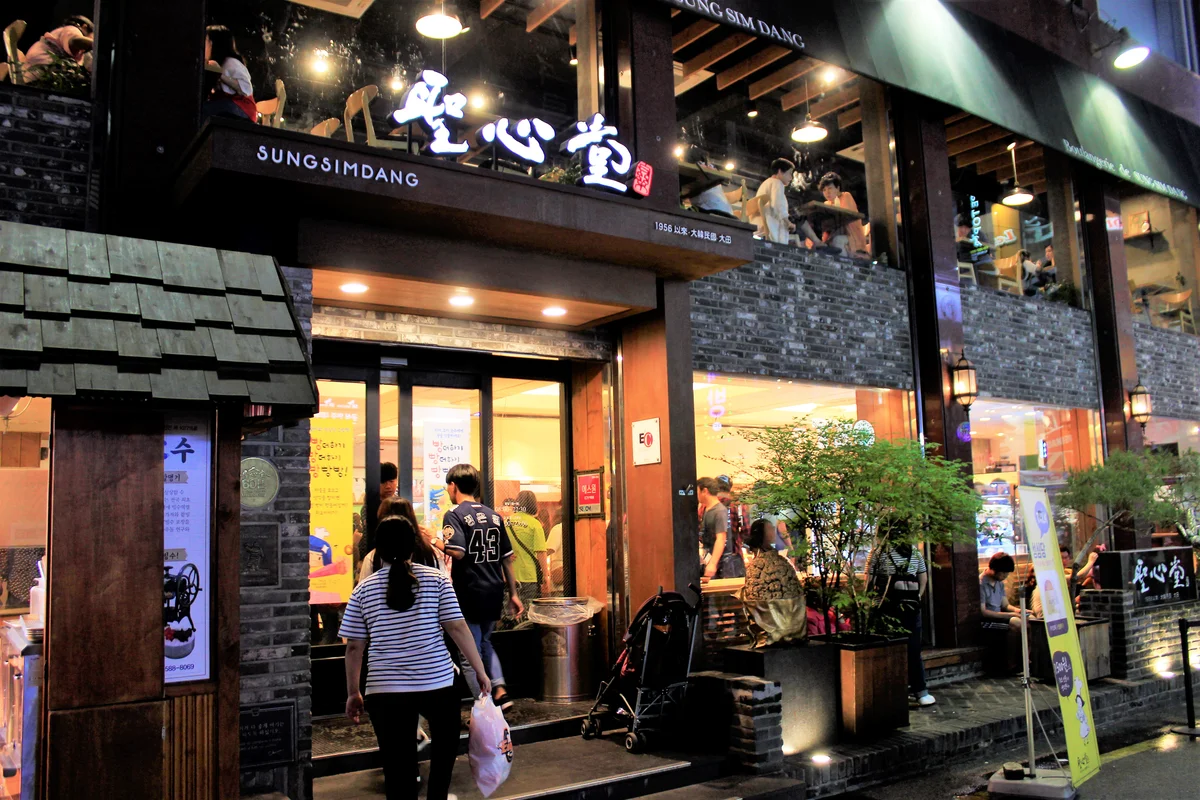 Sungsimdang head store, Eunhaeng-dong (Jung-gu), Daejeon — the only branch with the full menu. Photo by Trainholic, 2019. Licensed under CC BY-SA 4.0 via Wikimedia Commons. Cropped from original.
Now the catch. Sungsimdang lines on a normal weekend are commonly two to three hours long, and worse on Korean public holidays. The bakery has multiple branches in Daejeon — the original head store in the Eunhaeng-dong neighborhood, the DCC convention center branch, and the Lotte Department Store branch (open 8 a.m. to 10 p.m.) — and the head store has the most complete selection.
The move: go on a weekday and avoid the lunch peak. The bakery is pumping out fresh bread all day, including weeknight evenings — you don't have to be there at opening to eat well. Buy too much. Eat half there with a coffee from one of the cafes nearby, take the rest with you for the train home.
The Cake Boutique seasonal calendar. A few doors from the head store, Sungsimdang runs a separate Cake Boutique focused on whole cakes — and its 시루 ("siru") series is what locals plan their trips around. The cake is a soft sponge with cream and a "bomb" of fresh seasonal fruit piled on top, and the fruit rotates with the calendar:
- 딸기시루 (strawberry siru) — late December through April
- 망고시루 (mango siru) — April through July
- 생귤시루 (mandarin siru) — July through October
Each is sold only at the Cake Boutique, in limited daily counts. The season transitions get covered in Korean blog posts and Instagram queues like minor news events. If you're going for a specific siru, check the Sungsimdang Cake Boutique Instagram for that day's stock before you walk over.
Yeotmatsomssi: the 2nd-floor restaurant across the street. Across from the head store, on the second floor of its own building, sits Sungsimdang Yeotmatsomssi (옛맛솜씨) — the company's traditional-Korean-confection room. The interior is styled to evoke a 1970s Korean tea house. The menu runs to jeon-byeong, manju, sticky rice cakes, yakwa, yugwa, and shaved-ice bingsu in flavors like Bomun-san green tea, pumpkin, and black sesame. The company says Yeotmatsomssi was the first place in Korea to commercially package bingsu, in 1983. It's the closest thing the bakery has to a sit-down meal — and an obvious move when the head-store line is too long.
2. Walk Hanbat Arboretum
A short cab or subway ride from Government Complex station gets you to Hanbat Arboretum — at 387,000 square meters (96 acres), the largest manmade urban arboretum in Korea. It hosts roughly a million visitors a year and contains 1,787 plant species; the East Garden alone is laid out as 19 separately themed sections.
The history is a small piece of urban-planning poetry: the arboretum sits on the parking lots of the 1993 Daejeon Expo. After the Expo ended, the city converted the asphalt back to forest. The result is a green block roughly the size of New York's Madison Square Park, eight times over, in the middle of a science city.
Entry is free. Plan two hours. The Magnolia Garden, the Medicinal Herbs Garden, and the Rock Garden are the highlight sections, but the real value is the lake at the center with skyline visible behind the pavilions — the most photographed Daejeon view that isn't a Sungsimdang queue.
3. Soak your feet at Yuseong Hot Springs (free)
In the western Yuseong district, a 20-minute cab ride or a subway connection from Daejeon Station, sits a public outdoor foot-bath complex opened by the city in October 2007. Mildly alkaline silicate water drawn from 215 to 450 meters underground fills four shallow stone pools (about 25 cm deep) that can hold up to 200 people at once.
The whole thing is free. Bring a towel. Roll your jeans up. Sit there for 20 minutes with locals — mostly elderly Korean couples and the occasional university student between classes.
The springs themselves have over a thousand years of recorded use; Joseon-dynasty kings Taejo and Taejong are both known to have visited for the waters. The annual Yuseong Hot Springs Cultural Festival runs in May, with extra street food and outdoor performances; if you're picking dates, that weekend is the upgrade.
4. Eat your way down Daeheung-dong's kalguksu alley
Daejeon claims more than 1,700 kalguksu (knife-cut noodle) restaurants citywide and runs an annual kalguksu festival. The cultural hub for the dish is the Daeheung-dong (대흥동) area in Jung-gu — a walkable cluster of small, mostly family-run shops with handwritten menus, in the same neighborhood as Ureul Park.
The two citywide-famous individual restaurants are spread across other parts of Daejeon. Daeseon Kalguksu (대선칼국수) — established 1954, two years older than Sungsimdang — has its main store in Dunsan, near the Government Complex. Their signature is a clam-based broth finished with crown-daisy greens and perilla-seed powder, hearty and savory in a specifically-Daejeon way that's worth the visit on its own. The other locals' favorite is OC Kalguksu (오씨칼국수), where you'll need to take a number ticket at peak times.
If you want a non-noodle Daejeon classic, the Seonhwa-dong food street near Jung-gu Office is famous for duruchigi (a spicy stir-fried pork dish) and someori haejang-guk (ox-head hangover soup). Worth wandering even if you don't sit down.
5. See Hanbit Tower at Expo Science Park
Daejeon hosted the 1993 World Expo ("Taejon Expo '93") on a riverside site that, after the event, became Expo Science Park. The lasting symbol is Hanbit Tower — a 93-meter observation tower modeled on a traditional Korean astronomical observatory, designed to evoke a "ray of light connecting present and future."
The tower is open daily 9 a.m. to 9:30 p.m., free admission, with exhibition halls, cafes, and a 360-degree observation deck on the upper level. Sunset is the move; the Daedeok Innopolis research-cluster skyline catches the last light cleanly. Around the base, the Expo Bridge (twin arches, multi-colored LED lighting at night) is the second-best photo spot in town after Hanbat Arboretum.
6. Walk through KAIST and meet the duck pond
The Korea Advanced Institute of Science and Technology is what every Korean parent and most international press call "Korea's MIT." The Daejeon campus has been the institution's main home since 1984, when KAIST moved south from Seoul to anchor the new Daedeok Innopolis research city.
The campus is generally open to the public during normal daytime hours. The walk that's actually worth doing: head for the duck pond (오리연못) near the main entrance. Real ducks (and geese) live there; one Korean professor, Kwang-Hyung Lee, brought the founding flock in 2000, and Samsung Electronics gifted five more ducks in December 2022 to commemorate a research partnership. The pond is shaped, intentionally, like a duck.
Add a coffee from the open-ground-floor cafeteria of the Hong & Park KI Building and you've got a low-effort 90 minutes of "this is what a Korean engineering campus looks like" — for free.
7. Drive 30 minutes west to Jangtaesan in November
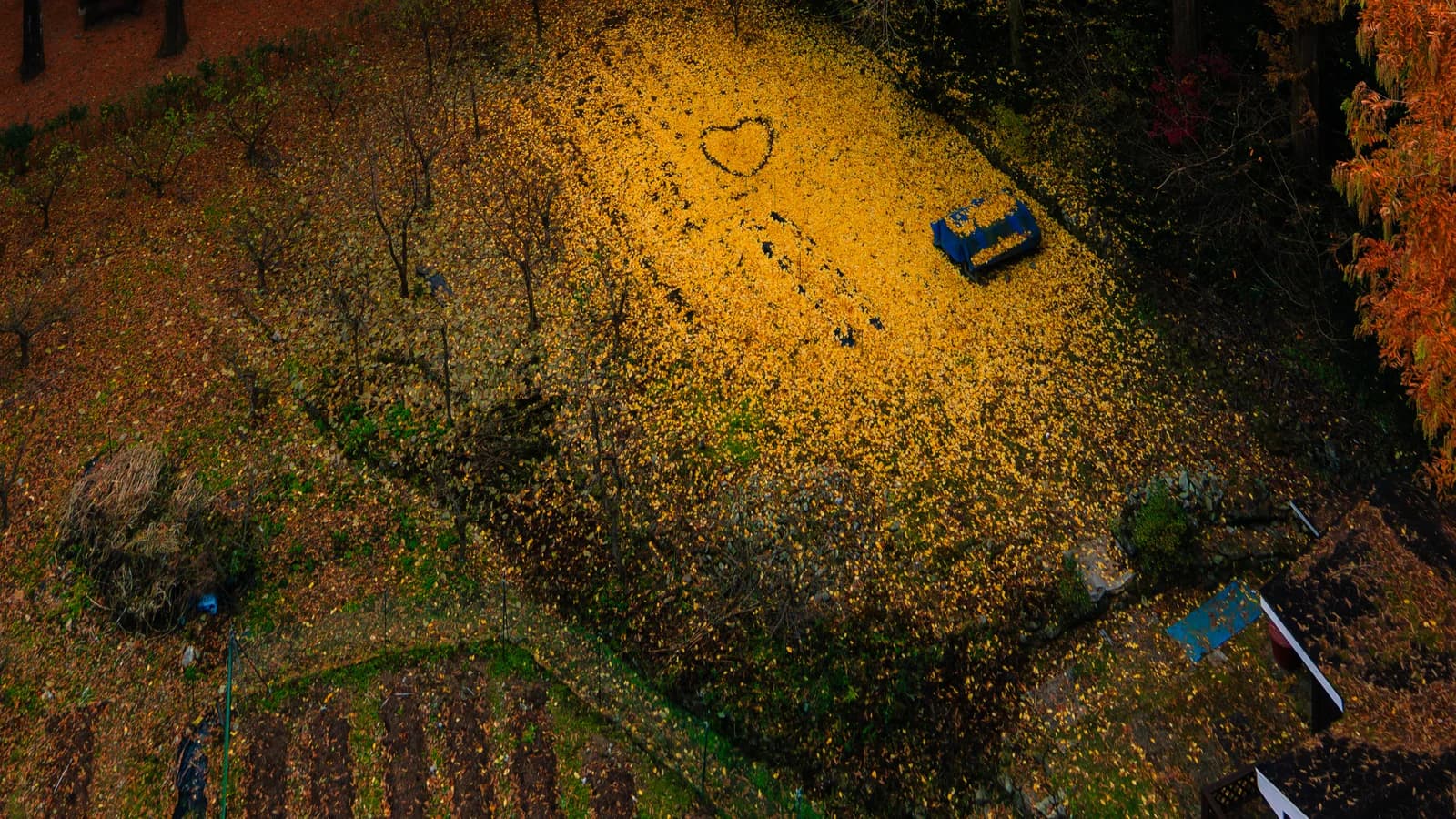
The cover photo for this guide is Jangtaesan Recreational Forest in Seo-gu, west Daejeon. The shot is by Kim Eun-ju and won an Honorable Mention in the 2025 Korea Tourism photography contest. It's the kind of place that explains why "boring city" is the wrong frame for Daejeon: a metasequoia forest 30 minutes from the train station that turns the kind of orange that gets photo prizes. Visit in mid-November for peak foliage. Sneakers work; trail shoes are unnecessary.
If autumn isn't your season, the Gap River walking paths through central Daejeon are an excellent low-key swap — flat, easy, beautiful at sunset, and the most low-stakes hour of nature you can have in the city without queueing for anything.
8. Catch the late KTX home with leftover Sungsimdang
The closing move on a Daejeon day trip is the train back. Catch the 8 or 9 p.m. KTX from Daejeon Station, eat the second half of the chive bread and the cod-roe baguette you've been carrying since morning, watch the Korean countryside disappear behind you in a blur, and arrive at Seoul Station around 10 p.m.
You'll have done in 14 hours what most Daejeon-skeptical Koreans assume takes a long weekend. You'll also have answered the "is Daejeon worth visiting" question for yourself — which, given how many Koreans will dunk on the city the next time the topic comes up, is a small piece of useful authority.
Common day-tripper mistakes
- Don't try to stay overnight. There are perfectly good hotels in Daejeon — Lotte City, Solaria — but sleeping there means you've spent your time on something Seoul does better. The KTX is the answer.
- Don't go on a public holiday. Sungsimdang queues on Chuseok or Lunar New Year run to hours, not minutes. Yuseong's foot bath is wall-to-wall. Hanbat is mobbed. Pick a weekday if you can.
- Don't try to fit it all in. Eight items is the available list, not the required list. Pick three or four. Walk between them. The city is pleasant when you're not racing through it.
- Don't skip Sungsimdang because the line looks long. The line moves faster than you'd expect; the bakery is set up to process customers in big batches. If the head-store wait is unworkable, the DCC convention-center branch is also in Daejeon and considerably less busy.
- Don't expect the English signage you got in Seoul. Outside the train station and KAIST, you're in a Korean city. Naver Map and Naver Papago are essential. Same setup as Seoul; lower English baseline.
Practical tips
Money. Cards work everywhere except a few of the older kalguksu shops in Daeheung-dong, where some places remain stubbornly cash-only. Pull ₩50,000 out of an ATM at Daejeon Station before you start.
Subway. Daejeon has one subway line (Line 1). It runs east-west across the city through the central neighborhoods you'll need (Daejeon Station, Government Complex, Yuseong Hot Springs). Tap on with the same T-money card you used in Seoul.
Cabs. Cheap, plentiful, English-instruction-friendly via the Kakao T app. Most short cross-city rides land somewhere around ₩6,000 to ₩9,000.
Best time of year. Late September through early November for the autumn foliage at Jangtaesan. May for the Yuseong Hot Springs Festival. Sungsimdang is the same year-round; the line is shorter on weekday winter mornings.
Weather. Slightly milder than Seoul in winter, slightly hotter in summer. Plan for the Seoul climate and you'll be fine.
The one-sentence take
Daejeon isn't a destination; it's a really good 14-hour break from Seoul, anchored on a bakery that earns the train ride and a forest that earns the camera roll, with a thousand-year-old hot spring and a duck pond you didn't expect filling out the day.
The "boring city" label was always more about what Daejeon isn't than about what it is. Spend a day there. Decide for yourself.
Next in our city series (coming as the series rolls out):
- Busan — Korea's beach city, second-largest, K-drama backdrop, BIFF
- Jeju Island — honeymoon, hiking, beaches
- Gyeongju — Silla-dynasty UNESCO sites
- Jeonju — hanok village + food
Already published:
- First Time in Seoul: 15 Things You Actually Need to Do — the city-series flagship
- Pyeongchang Summer Things to Do — the alpine day trip from Seoul
- 12 Things Tourists Get Wrong About Korea — the broader cultural-context piece
Cover photo: Winter Morning at Jangtaesan Mountain, Jangtaesan Recreational Forest (Seo-gu, Daejeon), November 2024. ⓒ Korea Tourism Organization Photo korea — Kim Eun-ju. 2025 Korea Tourism photography contest, Honorable Mention. Licensed under KOGL Type 1.
Keep Reading
More Stories
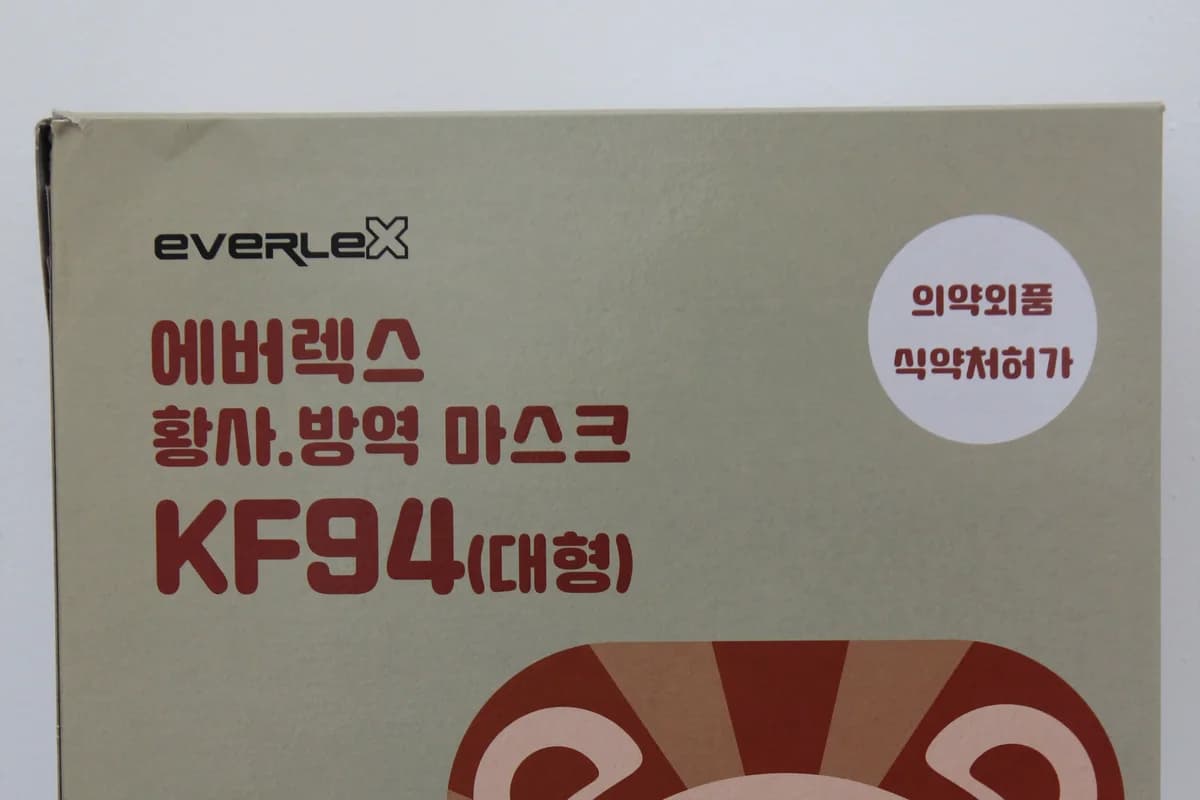
황사 Is Not 미세먼지: What Korea's Air Quality Alerts Actually Mean
English coverage treats yellow dust and fine dust as the same problem. Korea's own forecasters subtract one from the other before publishing. A guide to the two seasons, the alert thresholds, what KF94 actually certifies, and why 'it all comes from China' is a number swap.
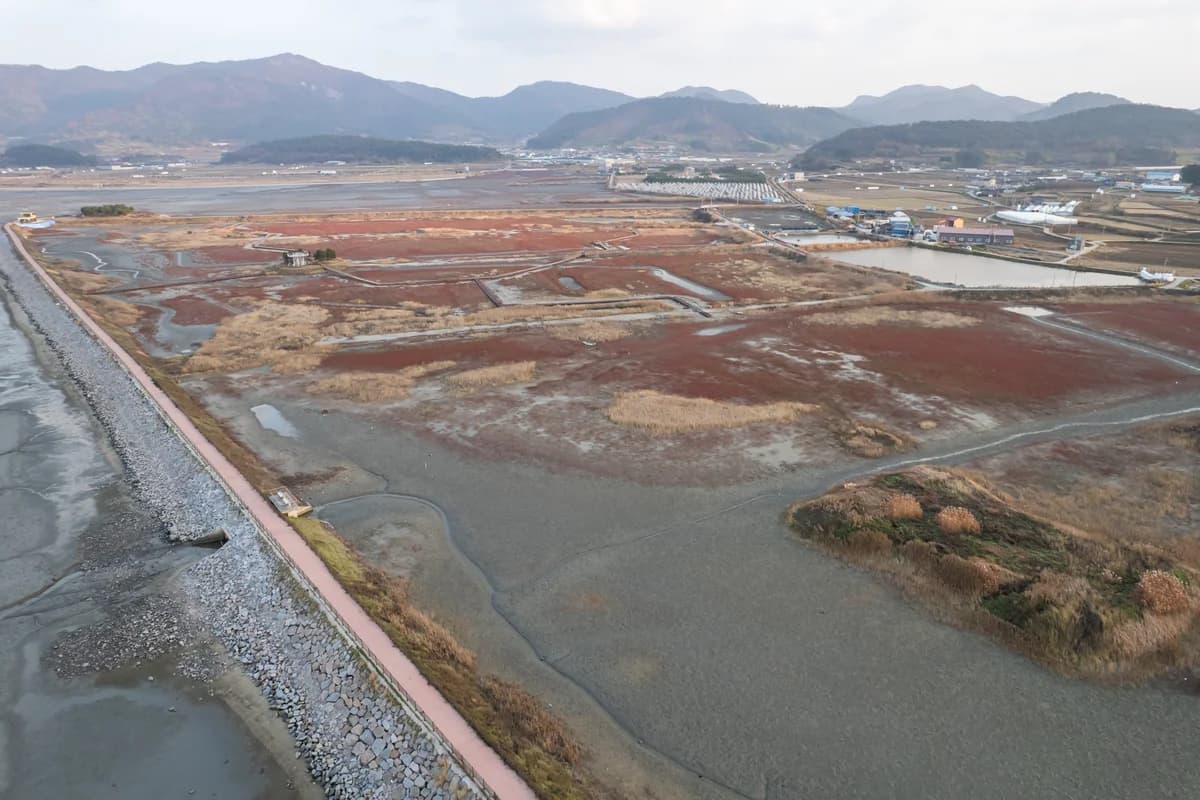
The Mud Korea Decided to Save: Getbol and the UNESCO Vote in Busan
The least Instagrammable thing Korea could nominate — a coastline of mud — is a UNESCO World Heritage site, and on July 25, 2026, in the one year Korea controlled the room, it was made bigger. A guide to getbol: the flats that feed millions of migrating birds, the women who ride wooden sleds across them, and why a country that once paved its tidal flats now enshrines them.
Jjimjilbang for First-Timers: How Korea's Bathhouses Actually Work
Yes, the bath part is fully nude. No, nobody cares. A step-by-step guide to the Korean spa-sauna-sleepover — the sheep-head towel, the scrub that removes a layer of you, which famous venues have quietly closed — and why the neighborhood bathhouse is disappearing even as the tourist jjimjilbang thrives.
The Weekly Dispatch
Korea, curated. Every week.
The best of K-culture, straight from Seoul. Written by people who actually live here.
Free, no spam, unsubscribe whenever.