Korean Convenience-Store Food: What to Actually Grab (CU vs GS25 vs 7-Eleven)
In Korea, the 편의점 (convenience store) isn't a sad backup — it's a real meal, on every corner, 24 hours a day, with a microwave and a seat. Here's what to actually grab, the golden combos Koreans swear by, the differences between the big chains, and how to eat like you've done it before.
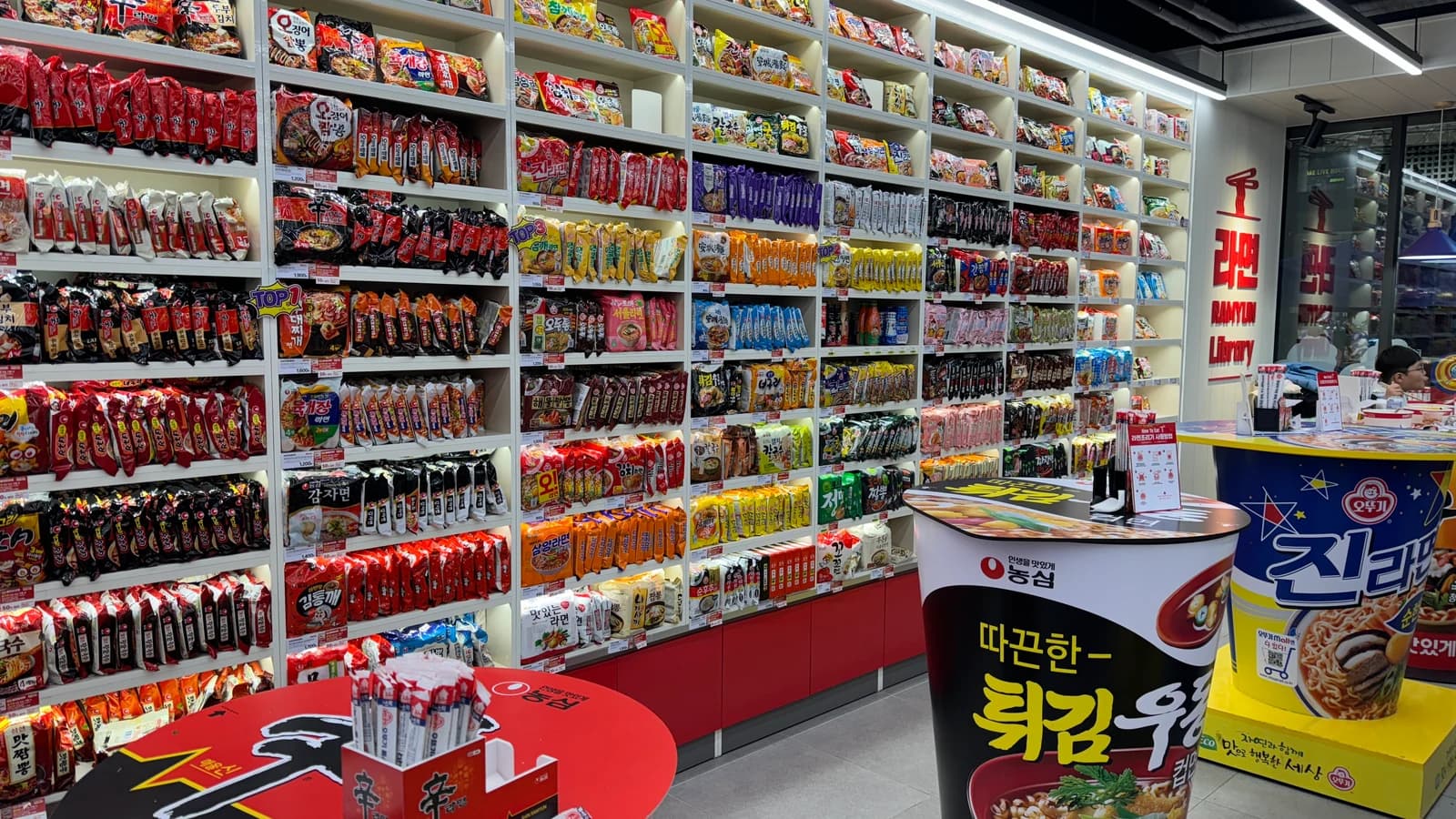
In a lot of countries, "I had dinner at a convenience store" is a confession. In Korea, it's a perfectly good Tuesday.
The Korean 편의점 (pyeonuijeom, convenience store) is one of the small quiet miracles of daily life here: open 24 hours, on basically every corner, and stocked with genuinely good, genuinely cheap food you can heat up and eat right there, at a little counter by the window, on a hot-water-and-microwave setup that turns a ₩1,500 bag of noodles into a hot meal in three minutes. There are more than 53,000 of them across a country of 51 million people — one of the densest convenience-store networks on earth — and Koreans treat them less like a corner shop and more like a shared, all-hours dining room.
So if you're visiting (or you've just moved here and the fridge is empty), here's the honest field guide: what to actually grab, the DIY combos locals swear by, how the big chains differ, and how to do the whole thing without looking lost.
First: why Korean convenience stores are different
Three things separate a Korean 편의점 from the gas-station shop in your head:
- It's built to be eaten in. Most stores have a counter or a few tables, a microwave, and a hot-water dispenser for instant noodles. Buy, heat, sit, eat. Nobody blinks.
- The food is genuinely good — and constantly reinvented. This isn't a wall of chips. It's fresh 도시락 (dosirak, lunchboxes), rice triangles, hot snacks, and a relentless churn of new and collaboration products. A decade ago the chains started putting famous chefs' and actors' names on their lunchboxes — most famously chef Baek Jong-won's boxes at CU in the mid-2010s — and the quality arms race never really stopped.
- The deals are aggressive. 1+1 (buy one, get one) and 2+1 (buy two, get one) tags are everywhere, the discounts rotate weekly, and there's an entire local sport built around stacking them.
Put together, it means you can eat a hot, complete, satisfying meal for ₩4,000–6,000, at 3 a.m., 200 meters from wherever you are. That's the magic.
The starter pack: what to actually grab
If it's your first time, build a tray from this list and you cannot go wrong.
삼각김밥 (samgak-gimbap) — the triangle rice ball
The icon. A triangle of rice wrapped in seaweed with a filling tucked in the middle — 참치마요 (tuna-mayo) is the undisputed classic, but 전주비빔, 김치, and spicy versions all deliver. They're around ₩1,000–1,500, and they exist to be the thing you eat while deciding what else to eat.
The one trick: there's a numbered plastic wrapper. Pull tab ① straight down the middle to split it, then pull ② and ③ out from each side. Get it right and the seaweed wraps the rice perfectly crisp; get it wrong and you're picking plastic out of your dinner. Everyone fails it once.
컵라면 (cup noodles) — at the hot-water station
Pick a cup, peel the lid halfway, fill it to the line at the hot-water dispenser, wait the four minutes the world's most agonizing little timer demands, and you have a hot bowl of noodles for around ₩1,500. 신라면 (Shin Ramyun) is the safe spicy default; 육개장 사발면 is the comfort pick; and 불닭볶음면 (Buldak / Hot Chicken Flavor) — Samyang's 2012 creation that launched a thousand "Fire Noodle Challenge" videos — is for people who want to suffer a little.
도시락 (dosirak) — the microwave lunchbox
This is the convenience store flexing. A full tray — rice, a protein, a few 반찬 (side dishes) — that you microwave for 90 seconds into a legitimately good meal for ₩4,000–6,000.
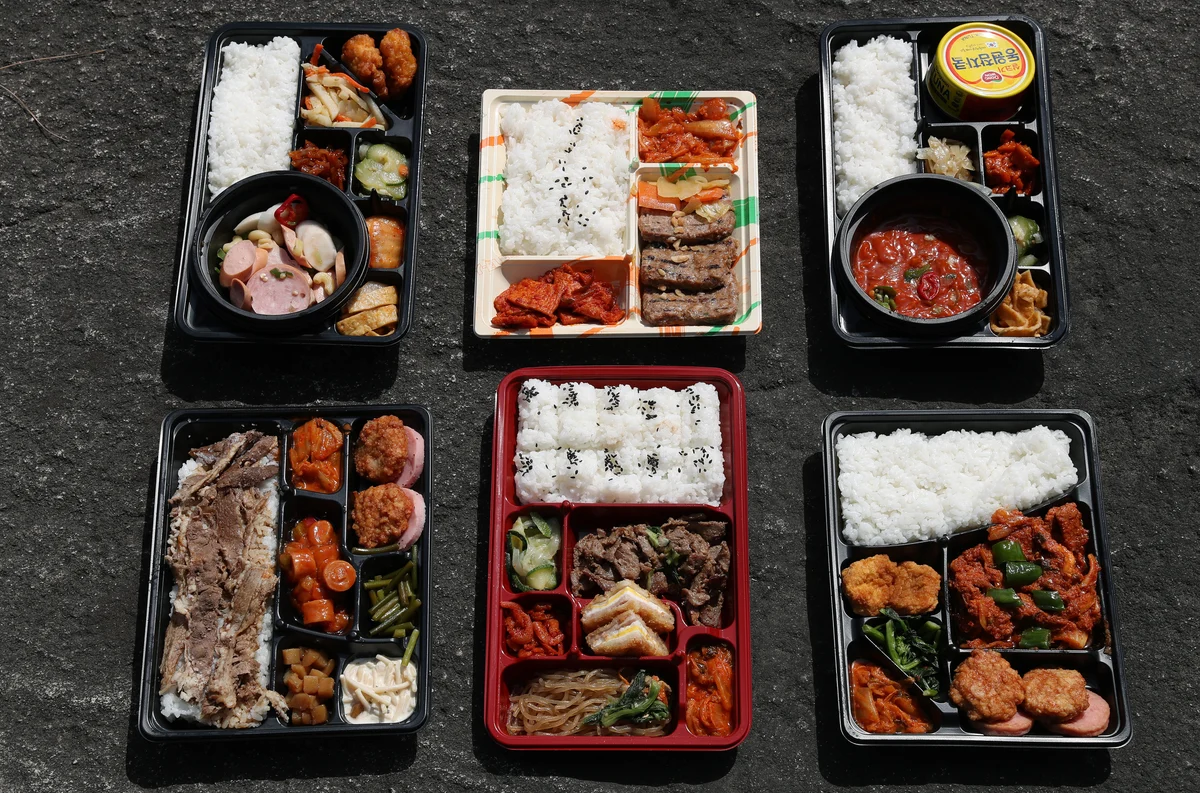
There's a word you'll hear attached to these: 혜자스럽다 (hyeja-seureopda), Korean slang for "way more generous than it has any right to be." It comes directly from the beloved actress Kim Hye-ja (김혜자), whose warm, motherly image was put on GS25's 김혜자 도시락 — a lunchbox so packed for the price that her name became the adjective for value itself. The line was retired for years and recently made a triumphant return, which tells you how much affection Koreans have for it. If you see it, get it.
The supporting cast
- 핫바 (hot bar) — a hot fish-cake or sausage sausage-on-a-stick by the register. ₩1,000-ish, weirdly satisfying.
- 연세우유 크림빵 (Yonsei Milk Cream Bread) — CU's runaway hit since early 2022: a soft bun split open and over-stuffed with real cream. The kind of thing that goes viral for the cross-section photo alone.
- 바나나맛우유 (banana-flavored milk) — Binggrae's dumpy little pot-shaped bottle is a national institution. Non-negotiable.
- Ice cream — 메로나 (melon), 월드콘, 죠스바. Pulled from a chest freezer, eaten on the walk out.
- The snack aisle — at minimum, find a bag of 허니버터칩 (Honey Butter Chip), the sweet-savory potato chip that triggered a genuine national shortage when it launched in 2014.
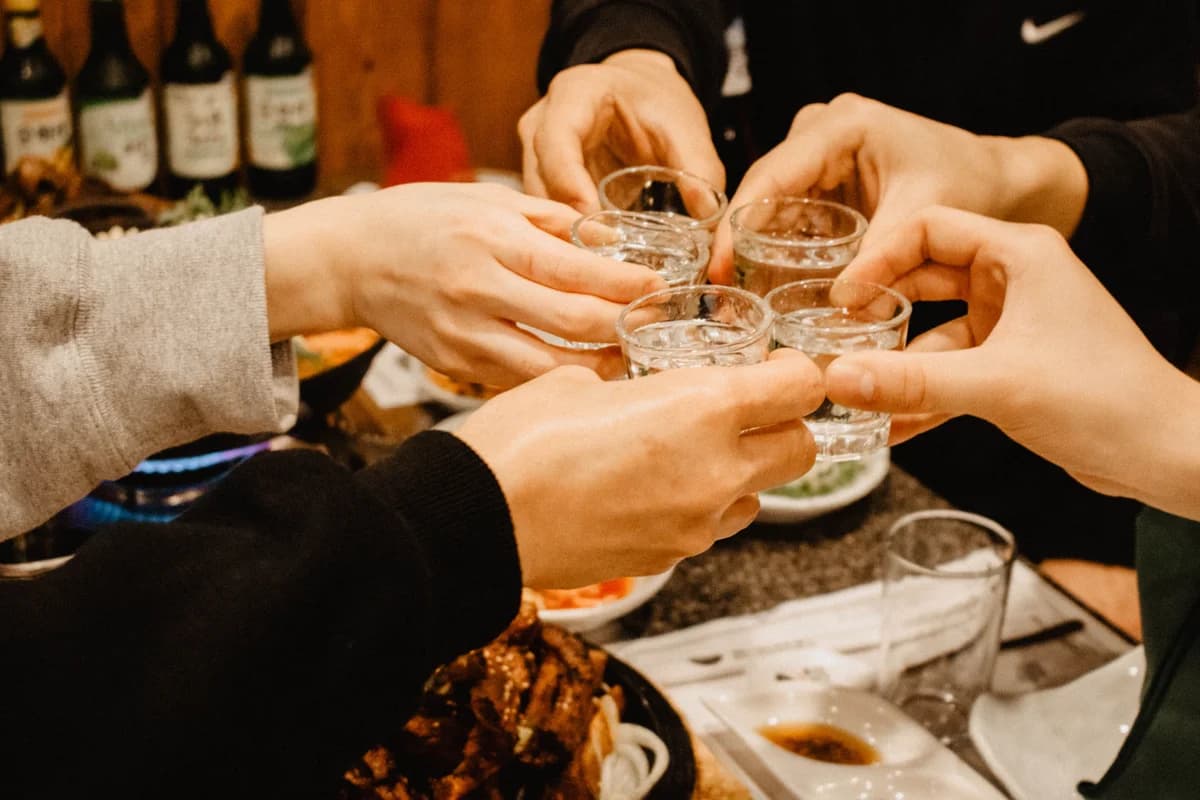
- The drinks wall — canned coffee (레쓰비, 칸타타), vitamin drinks (비타500), energy tonics (박카스), 식혜 (sweet rice punch), and — yes — beer, makgeolli, and soju, including the celebrity sojus that periodically sell out (GS25's exclusive 원소주 being the famous one).
The golden combos (꿀조합)
Here's where it gets fun, and where you graduate from tourist to regular. Koreans don't just buy convenience-store food — they assemble it. The DIY recipe, called a 꿀조합 (kkul-johap, "honey combo"), is a national hobby with endless YouTube tutorials and recipe books. A few legends:
- 짜파구리 (Chapaguri) — combine a pack of 짜파게티 (Chapagetti, black-bean noodles) with 너구리 (Neoguri, spicy seafood noodles). You may know it as the "ram-don" from Parasite — it became a global obsession after the film, and you can build it from two cups at any 편의점.
- 라볶이 (rabokki) — instant noodles plus the cup-tteokbokki, microwaved together into a spicy, chewy, carb-on-carb masterpiece.
- 콘치즈 (corn cheese) — a cup of corn, a slice of cheese, ten seconds in the microwave. Absurdly good.
The rule is simple: anything plus cheese, anything plus the spicy noodle sauce, anything plus the microwave. Experiment shamelessly. The whole point of the format is that mistakes cost a dollar.
CU vs GS25 vs 7-Eleven — does it matter?
A little. There are four chains worth knowing, and they're not identical:
- CU (씨유) and GS25 (지에스25) are the two giants, neck and neck, and between them they own most corners. GS25 is the home of the 김혜자 도시락 and tends to win the celebrity-collab game (it had the 원소주 exclusive). CU counters with hits like 연세우유 크림빵 and a deep bench of its own lunchboxes.
- 7-Eleven (세븐일레븐) is the big international name, and as of 2024 it absorbed Ministop, so you'll see fewer of those around now.
- emart24 (이마트24) rounds out the four, often a touch more grocery-leaning.
Honestly? For a visitor, the differences are small and the fun is in comparing. Each chain runs its own deals and its own exclusive products, so if you're staying a while, it's worth being a little promiscuous about which door you walk through.
How to actually do it
A quick etiquette-and-mechanics rundown so your first time is smooth:
- Heat your own food. The microwave and hot-water dispenser are self-service and free. Lids: peel halfway, heat, re-cover to steam. Chopsticks, lids, and napkins are by the counter.
- Eat in or take out. If there's seating, you're welcome to use it — that's what it's for. Tidy up after yourself; bins are usually split for recycling.
- Paying. Card works everywhere, contactless and foreign cards almost always fine. No tipping — it isn't a thing in Korea, here least of all.
- The deals are real. If a tag says 1+1 or 2+1, grab the extra — it's genuinely free, and you can mix flavors within the same promotion.
- It's open. Always. 24 hours, holidays included. The convenience store is the reliable last light on after a long night out — which, if you've read about Korea's all-hours 방 culture, fits the pattern exactly.
The great democratic dining room
What makes the Korean convenience store special isn't any single product — it's what it represents. It's where a student eats dinner for the price of a coffee, where office workers grab a 혜자 lunchbox at their desk, where friends assemble a 4 a.m. 라볶이 after the bars, and where a traveler with no Korean and a tired phone can still get a hot, real, satisfying meal at any hour.
It's the most honest, least pretentious food in the country, and it's everywhere. If you want the wider picture of how Koreans actually eat — versus the tourist version — we corrected a dozen myths here, and we got into what Koreans really reach for at 2 a.m. too. But honestly, the fastest way to understand everyday Korea is to walk into the nearest 편의점, heat something up, and pull up a stool by the window.
—The Editors
See also: how the convenience store became Korea's default boknal meal — a ₩2,000 samgyetang rice ball now competes with an ₩18,154 restaurant bowl.
Store counts (53,000+ across the four major chains as of end-2025) per Korea's Ministry of Trade, Industry and Energy data; the 2024 absorption of Ministop into 7-Eleven and the chains' relative scale cross-checked against Korean industry reporting. Product histories — GS25's 김혜자 도시락 and the origin of "혜자스럽다," CU's 연세우유 크림빵 (2022), 허니버터칩 (2014), 불닭볶음면 (Samyang, 2012), 짜파구리 and its Parasite fame, and the GS25 원소주 exclusive — verified against Korean press and primary platform sources. Prices are typical 2026 ranges and vary by item and promotion.
Cover: the instant-noodle wall of a Korean convenience store — photo by lazy fri13th, Wikimedia Commons, CC BY 2.0. In-article photo: convenience-store 도시락 (lunchboxes) — Korea.net / Korean Culture and Information Service, Wikimedia Commons, CC BY-SA 2.0.
.jpg)

Keep Reading
More Stories
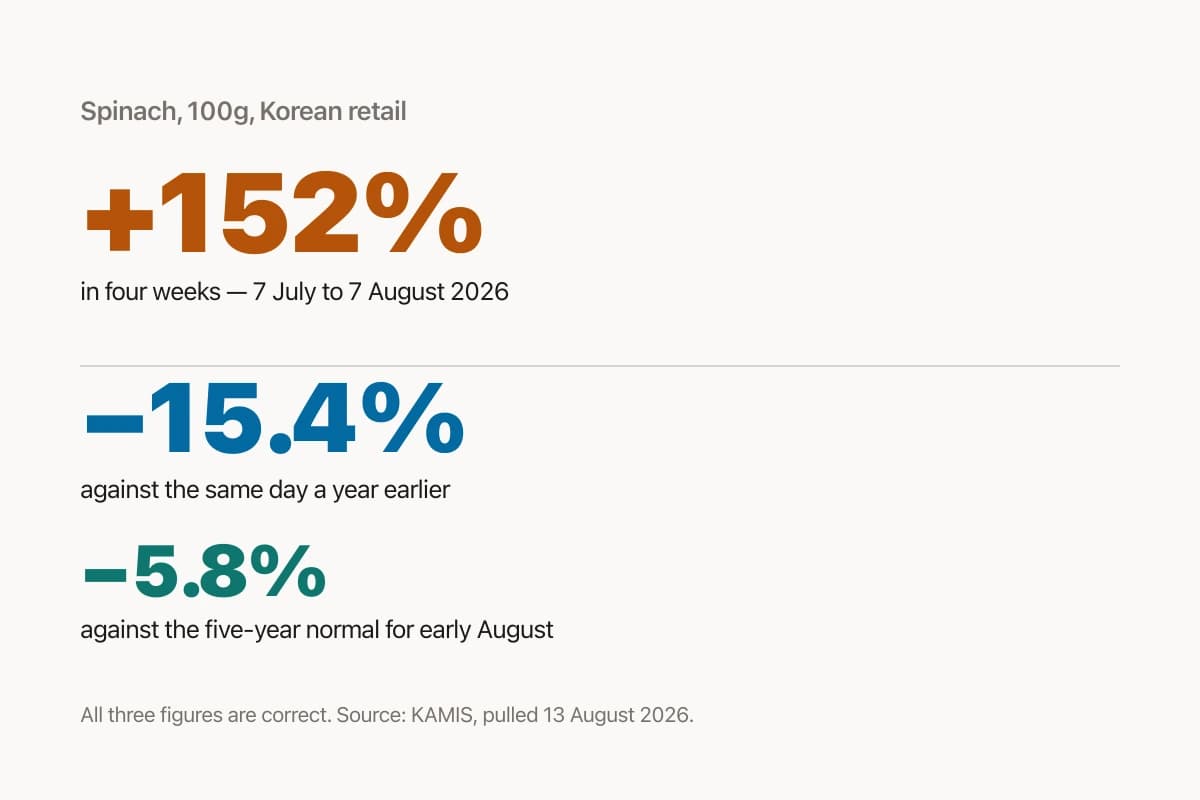
Spinach Is Up 152% in a Month. It's Also Cheaper Than It Was Last August.
Korean vegetable prices produced a genuinely alarming number this month: spinach at ₩1,978 per 100g on 7 August, up from ₩784 four weeks earlier. Both figures are real and we pulled them ourselves. But spinach is currently 15% cheaper than it was a year ago and below the five-year normal — and the agriculture ministry has taken the unusual step of asking people to stop making the comparison that produced the headline.
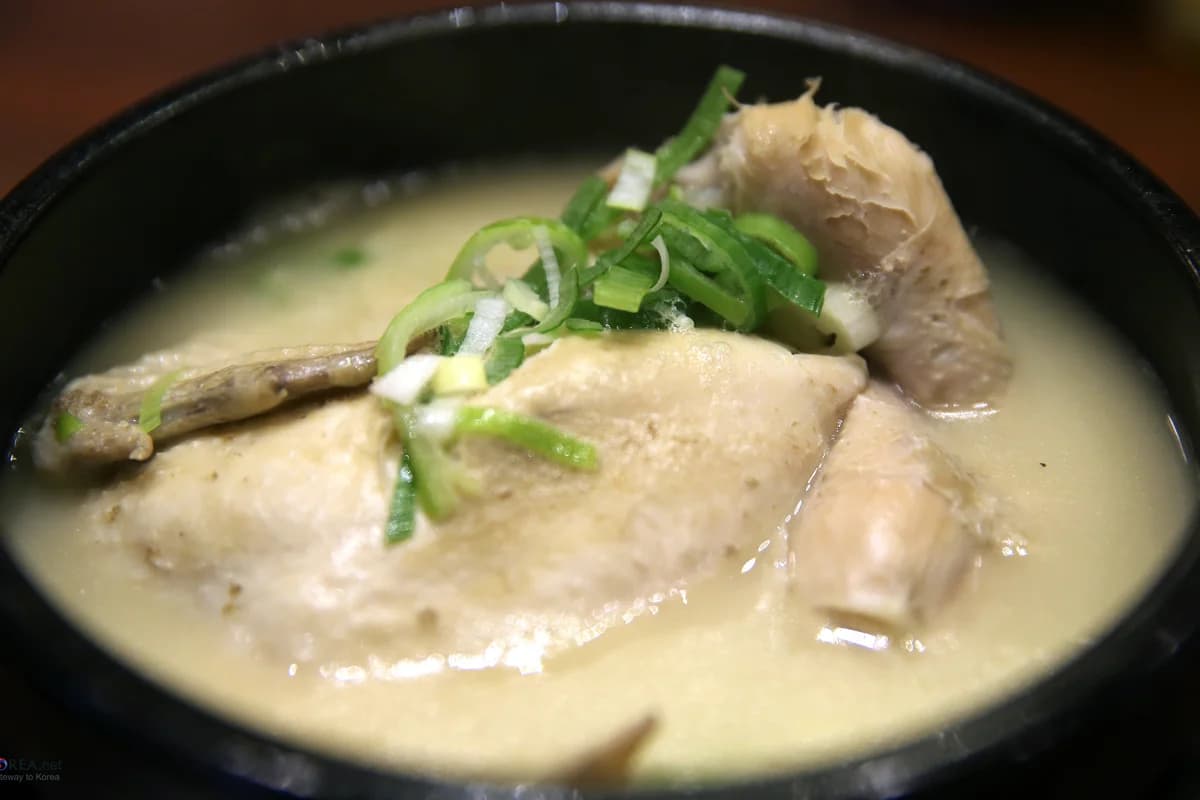
The ₩18,154 Bowl: How Korea's Hottest-Day Ritual Got Priced Out
On the hottest days of the year, Koreans queue for boiling chicken soup. But samgyetang now costs ₩18,154 in Seoul — while the same ingredients run ₩8,800 at a market. Jungbok falls on July 25. A guide to boknal, the logic of fighting heat with heat, and why the convenience-store version isn't the end of a tradition.
What Is Soju? Korea's Green-Bottle Spirit, Explained
It's the best-selling spirit brand on Earth, and most people outside Korea couldn't pick it out of a lineup. A field guide to soju: what's actually in the green bottle, how a 1965 rice ban created the modern version, why it's suddenly conquering export markets — and how to drink it like you know what you're doing.
The Weekly Dispatch
Korea, curated. Every week.
The best of K-culture, straight from Seoul. Written by people who actually live here.
Free, no spam, unsubscribe whenever.