Tteokbokki, Explained: Korea's Most-Loved Street Food
Chewy rice cakes in a glossy, sweet-and-spicy red sauce — you've seen it in every K-drama, and it's the snack Koreans crave more than almost any other. Here's what tteokbokki actually is, the surprising story of how a postwar street stall invented it, the rosé-and-cheese boom taking over now, and where to eat the best of it.
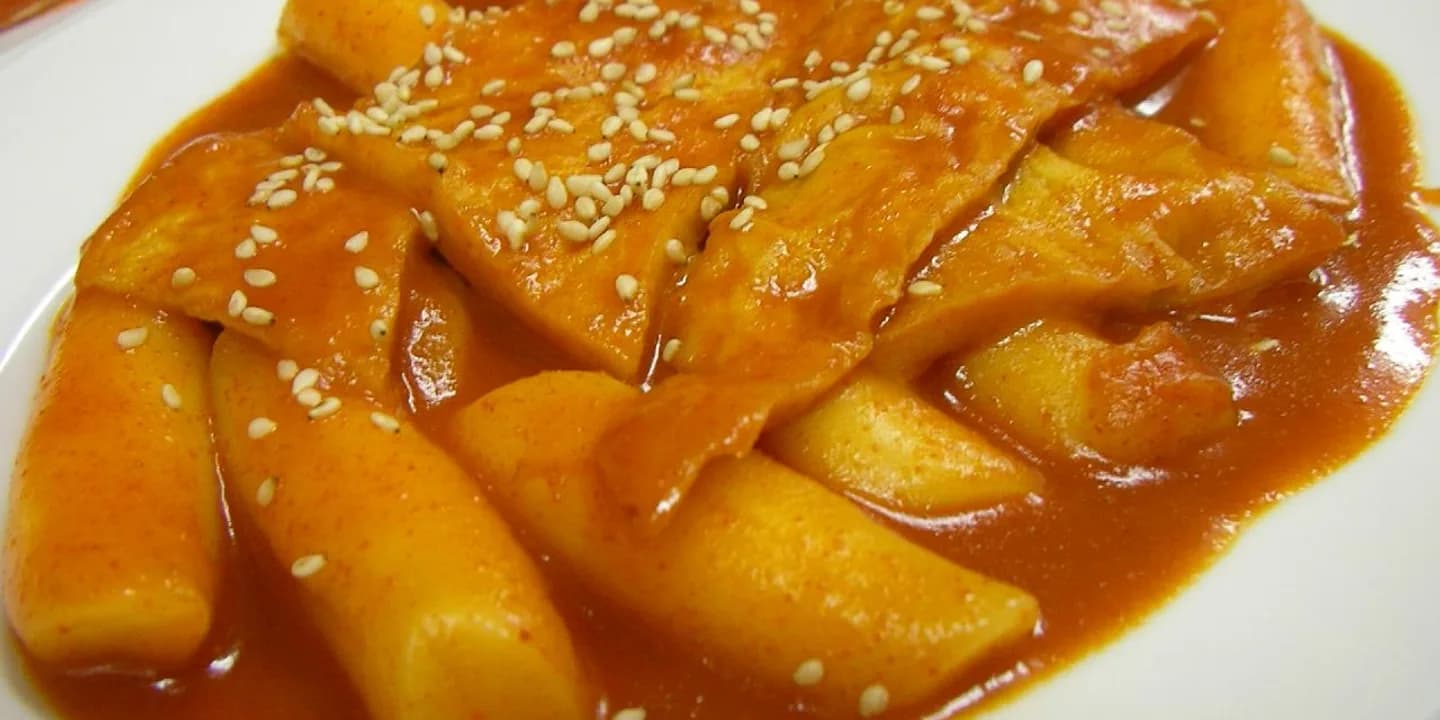
There's a smell that means "after school" to almost everyone who grew up in Korea: garlicky, sweet, and sharp with red pepper, drifting out of a steamy little snack shop. It's the smell of tteokbokki (떡볶이) — finger-thick rice cakes simmering in a glossy scarlet sauce until they turn chewy and the sauce goes thick enough to coat a spoon.
If you've watched any Korean drama, you've seen it: a pot of red rice cakes shared straight from the pan, usually by people having the kind of conversation that needs comfort food. Tteokbokki is Korea's most beloved street snack — cheap, spicy, faintly addictive — and the dish more Koreans would name as their guilty-pleasure comfort food than almost anything else. Here's what it actually is, where it came from (more recent than you'd think), the wild new versions taking over, and how to eat the best of it.
What tteokbokki actually is
At its core, tteokbokki is three things: the rice cakes, the sauce, and the stuff you throw in with them.
The rice cakes are 가래떡 (garae-tteok) — smooth, cylindrical logs of pounded rice, sliced into short pieces about the size of your thumb. Rice cake sounds bland, and plain it more or less is; the magic is entirely in the texture. Good tteok is 쫄깃 (jjolgit) — that springy, chewy, slightly stretchy bite that Korean food prizes and English doesn't really have a word for. Undercook it and it's hard; overcook it and it goes to mush; get it right and it's the whole point.
The classic sauce is built on 고추장 (gochujang), Korea's fermented red-chili paste, loosened with water or stock and sweetened with sugar or syrup, sometimes with a little 고춧가루 (gochugaru, chili flakes) for extra heat. It's sweet first, then spicy — a balance that's much more approachable than the color suggests.
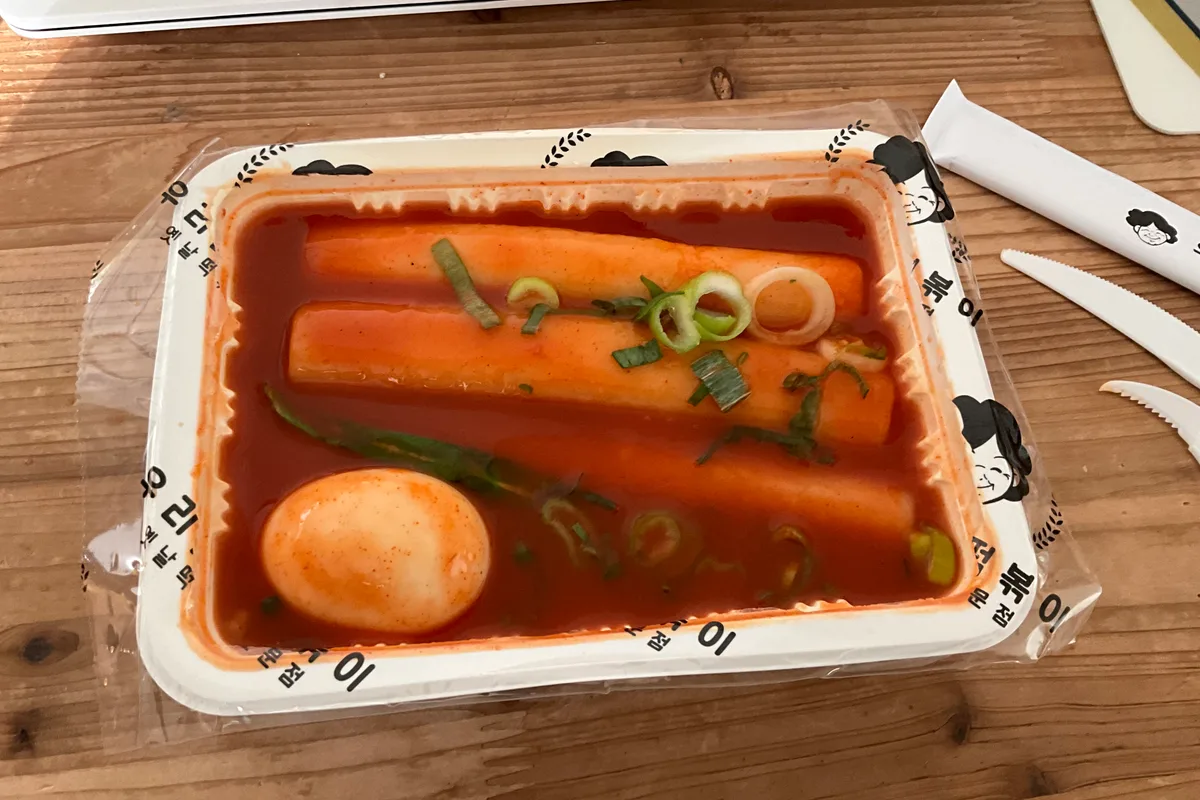
And then the add-ins, which turn it from a snack into a meal: flat sheets of 어묵 (eomuk, fish cake), scallions, and very often a boiled egg rolling around in the pot soaking up sauce. From there it's endlessly customizable — ramen noodles, dumplings, boiled eggs, a fistful of mozzarella.
The surprising history: royal court to postwar stall
Here's the twist most people don't know: the fiery red tteokbokki everyone thinks of is barely seventy years old.
The original tteokbokki was an aristocrat's dish. 궁중떡볶이 (gungjung-tteokbokki), "royal court tteokbokki," was a mild, soy-braised stir-fry served in the Joseon palace — white rice cakes tossed with sirloin, sesame oil, soy sauce, scallions, pine nuts, and toasted sesame. No chili at all. It's closer to japchae than to the street snack, and you can still order it today as a gentler, old-fashioned alternative. (Wikipedia)
The version that conquered the country was invented on the street, in the hungry years right after the Korean War. As the story goes, in 1953 a woman named Ma Bok-rim (마복림) was at the opening of a Chinese restaurant when a piece of rice cake fell into a bowl of black-bean jjajang sauce. She tried it, liked it, and started experimenting — eventually seasoning the tteok with gochujang instead. She set up a stall in the Sindang-dong neighborhood of Seoul, with a charcoal briquette stove and a tin pot, and the dish caught fire. (Food Republic) That accidental-drop tale is more folk legend than court record, but the credit is real: Ma Bok-rim popularized gochujang tteokbokki, ran her Sindang-dong restaurant for decades, and passed the recipe to her daughters-in-law before she died in 2011, at 91. Her family still cooks it in the same alley.
That's the whole arc in one dish: a delicate palace recipe, reinvented by a street vendor with cheap chili paste into the food a broke, rebuilding country could afford to love. It's been the people's snack ever since.
The 분식 world it lives in
Tteokbokki almost never travels alone. It's the anchor of 분식 (bunsik) — literally "flour food," the whole category of cheap, fast Korean snack-food that fed generations of students on their way home from school. A proper 분식집 (bunsik-jip) order is tteokbokki plus its lifelong companions: 김밥 (gimbap), 순대 (sundae, blood sausage), 튀김 (twigim, tempura-fried veg and squid) for dunking into the leftover sauce, and a paper cup of fish-cake broth. It is the after-school meal, the cheap date, the study-break reward — food tied less to fine dining than to being fifteen and hungry with a little pocket money.
The new wave: rosé, cream, cheese
For decades tteokbokki barely changed. Then the 2020s turned it into a playground.
- 로제떡볶이 (rosé tteokbokki) is the one that went viral — gochujang sauce cut with cream into a blushing pink that's rich, mild, and hugely approachable, essentially where spicy Korean rice cakes meet Italian rosé pasta. It's now on nearly every menu. (Wikipedia)
- 크림떡볶이 (cream tteokbokki) goes further, dropping most of the heat for a milky, carbonara-adjacent sauce.
- 라볶이 (rabokki) throws a packet of ramyeon noodles into the pot — the single best upgrade for about a dollar.
- 기름떡볶이 (gireum-tteokbokki), "oil tteokbokki," is the old-Seoul outlier: instead of a wet gochujang sauce, the rice cakes are stir-fried in oil with chili flakes, soy, and sugar until slightly crisp. Drier, smokier, less sweet.
- Cheese is the great modern add-on: a blanket of mozzarella melted over the top, or the Instagram-famous "cheese waterfall (치즈 폭포)" you pull up in long strings.
How spicy is it, really?
Honestly? The everyday version is friendlier than it looks — sweet enough that most first-timers are fine, warm rather than punishing. Tteokbokki's default heat is comfort-food heat.
The exception is the franchise that built a brand on pain. 엽기떡볶이 (Yupdduk) — the country's most famous spicy-tteokbokki chain — serves its rice cakes under a swirl of melted mozzarella in a bowl big enough for three or four, and lets you dial the spice up through tiers that top out at genuinely brutal. The upper levels are a rite of passage and a minor internet sport; order the mildest "착한맛 (chak-han-mat, 'nice flavor')" tier if you value your evening, and build up from there. (Korea Times) A glass of the barley tea or a side of fried stuff to dunk takes the edge off. If you like heat, this is the deep end; if you don't, the neighborhood 분식집 pot is where you belong.
Where to eat the best of it
Sindang-dong Tteokbokki Town (신당동 떡볶이 골목). The pilgrimage site — the Jung-gu alley where Ma Bok-rim started, now an official government-designated "Food Theme Street" (since 2013) lined with vendors cooking market-style tteokbokki in enormous pots. Sindang is the home of 즉석떡볶이 (jeukseok-tteokbokki) — the "cook-it-at-your-table" style, where you get a wide pan of raw rice cakes, fish cake, ramen, dumplings and egg over a burner and simmer it yourself as it thickens. (VisitSeoul)
Tongin Market (통인시장), Jongno. Famous for oil tteokbokki — the drier, stir-fried old-school version. Tongin is also the market with the fun brass-coin "lunchbox café" system, so it's a good stop for more than one snack.
Yupdduk (엽기떡볶이) for the spicy-and-cheesy franchise experience, with locations all over the country. Geudongne Tteokbokki (그동네떡볶이) in Hongdae for the social-media cheese-waterfall version. And honestly, any decent 분식집 or a red-tented pojangmacha street stall will do you right.
And at home. You don't need Korea. Tteokbokki is one of the easiest Korean dishes to make — rice cakes, gochujang, sugar, fish cake, water, done in fifteen minutes. Or take the shortcut every Korean student knows: the instant cup-tteokbokki from the convenience store, microwaved at 11 p.m., which is its own small, perfect genre.
Why Koreans love it this much
It's worth asking why this — a bowl of chewy rice and chili paste — became the thing a whole country reaches for.
Part of it is simple: it's cheap, it's fast, it's warm, and the spice gives you that small endorphin lift that reads as stress relief after a hard day. But most of it is memory. Tteokbokki tastes like being a kid — like the walk home from school, the shared pot, the friend you split it with because neither of you had enough for a full order. Korea has turned it into rosé and cream and cheese-topped spectacle, and those are genuinely delicious. But the reason it never gets old is that under all of it, it still tastes like home.
—The Editors
Sourcing: the royal-court origin (궁중떡볶이) and the 1953 Sindang-dong story crediting Ma Bok-rim with popularizing gochujang tteokbokki — including her passing the recipe to her daughters-in-law before her death in 2011 at 91 — are documented by Wikipedia and Food Republic; the "accidental jjajang drop" is the popularly told account rather than verified record. Sindang-dong Tteokbokki Town's government "Food Theme Street" designation (2013) and the 즉석 (cook-at-table) style are per VisitSeoul; the variety descriptions (rosé, cream, rabokki, oil/gireum, cheese) draw on Wikipedia; the notes on Yupdduk and Geudongne and the Seoul best-of picks draw on the Korea Times. Dish components and 분식 context are standard Korean food knowledge.
Cover: classic tteokbokki — photo by jetalone, Wikimedia Commons, CC BY 2.0. In-article photo: tteokbokki with rice cakes and egg — photo by Kimseoeun, Wikimedia Commons, CC0. Listing card: Sindang-dong Tteokbokki Town, where Ma Bok-rim's stall began — photo by the Seoul Institute (서울연구원), Wikimedia Commons, CC BY 4.0.


Keep Reading
More Stories
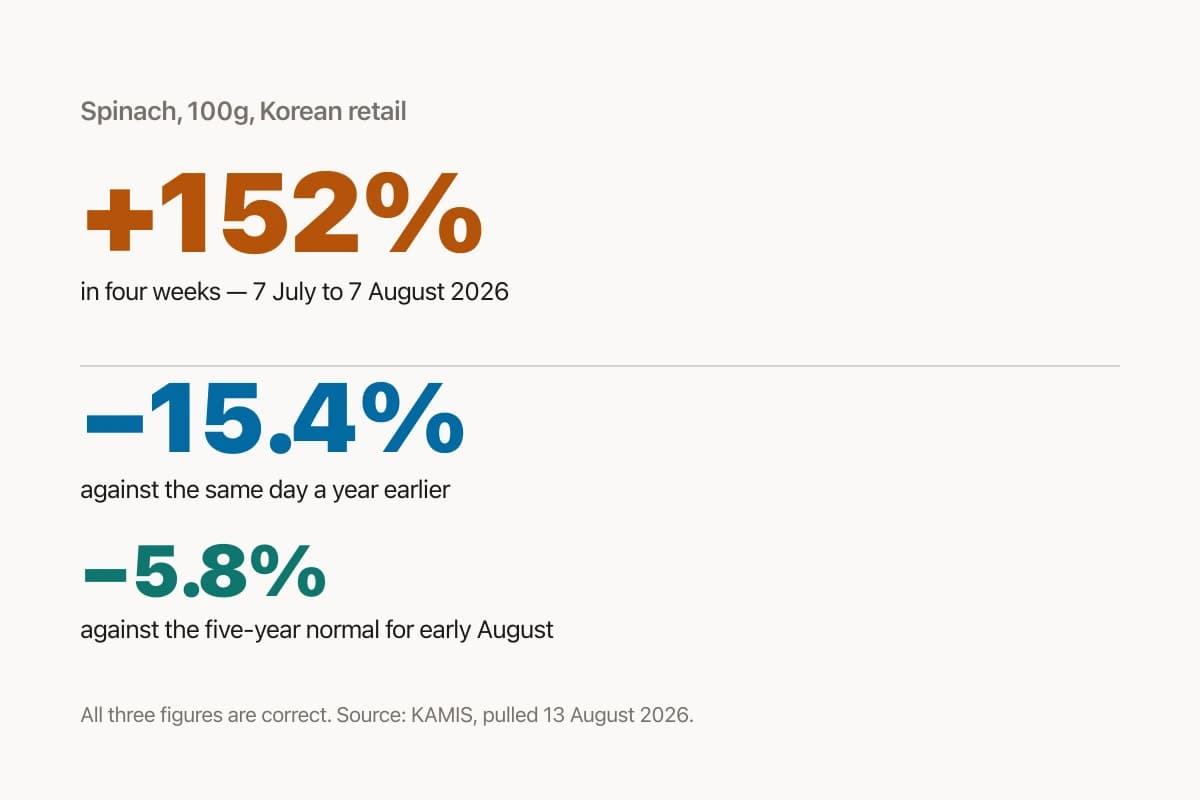
Spinach Is Up 152% in a Month. It's Also Cheaper Than It Was Last August.
Korean vegetable prices produced a genuinely alarming number this month: spinach at ₩1,978 per 100g on 7 August, up from ₩784 four weeks earlier. Both figures are real and we pulled them ourselves. But spinach is currently 15% cheaper than it was a year ago and below the five-year normal — and the agriculture ministry has taken the unusual step of asking people to stop making the comparison that produced the headline.
The ₩18,154 Bowl: How Korea's Hottest-Day Ritual Got Priced Out
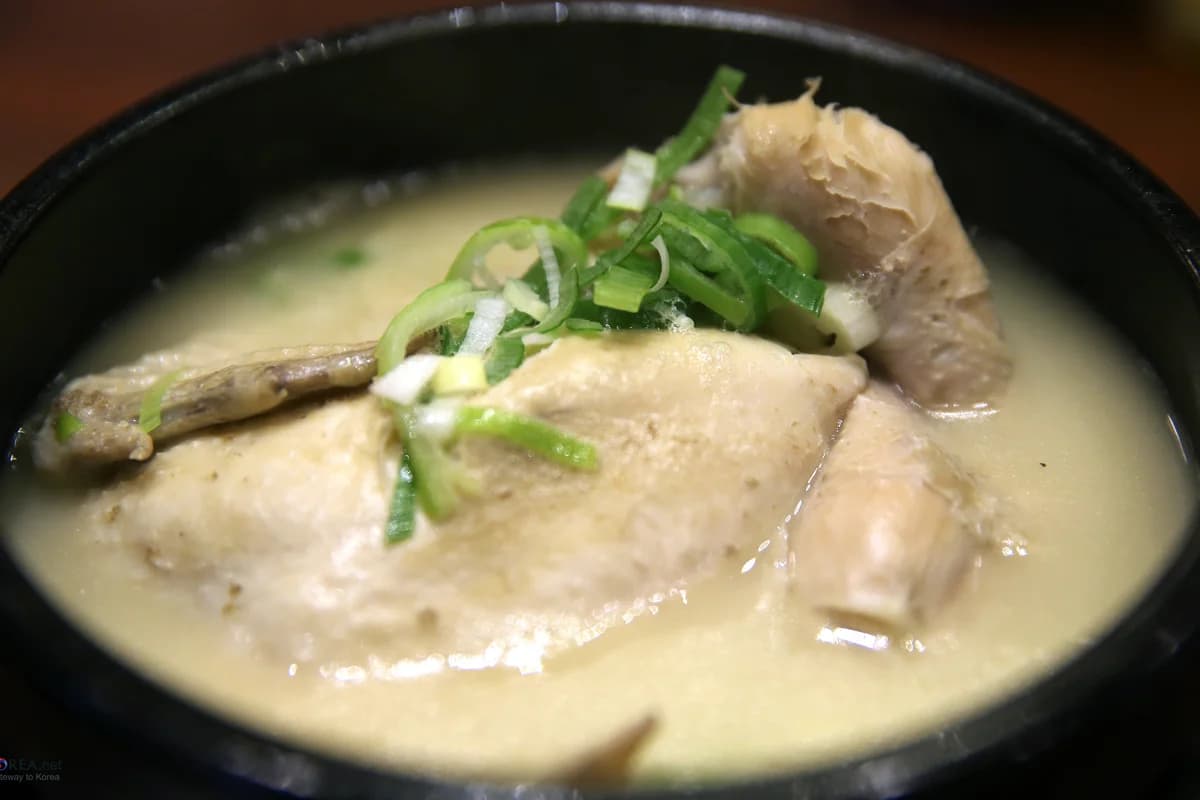
On the hottest days of the year, Koreans queue for boiling chicken soup. But samgyetang now costs ₩18,154 in Seoul — while the same ingredients run ₩8,800 at a market. Jungbok falls on July 25. A guide to boknal, the logic of fighting heat with heat, and why the convenience-store version isn't the end of a tradition.
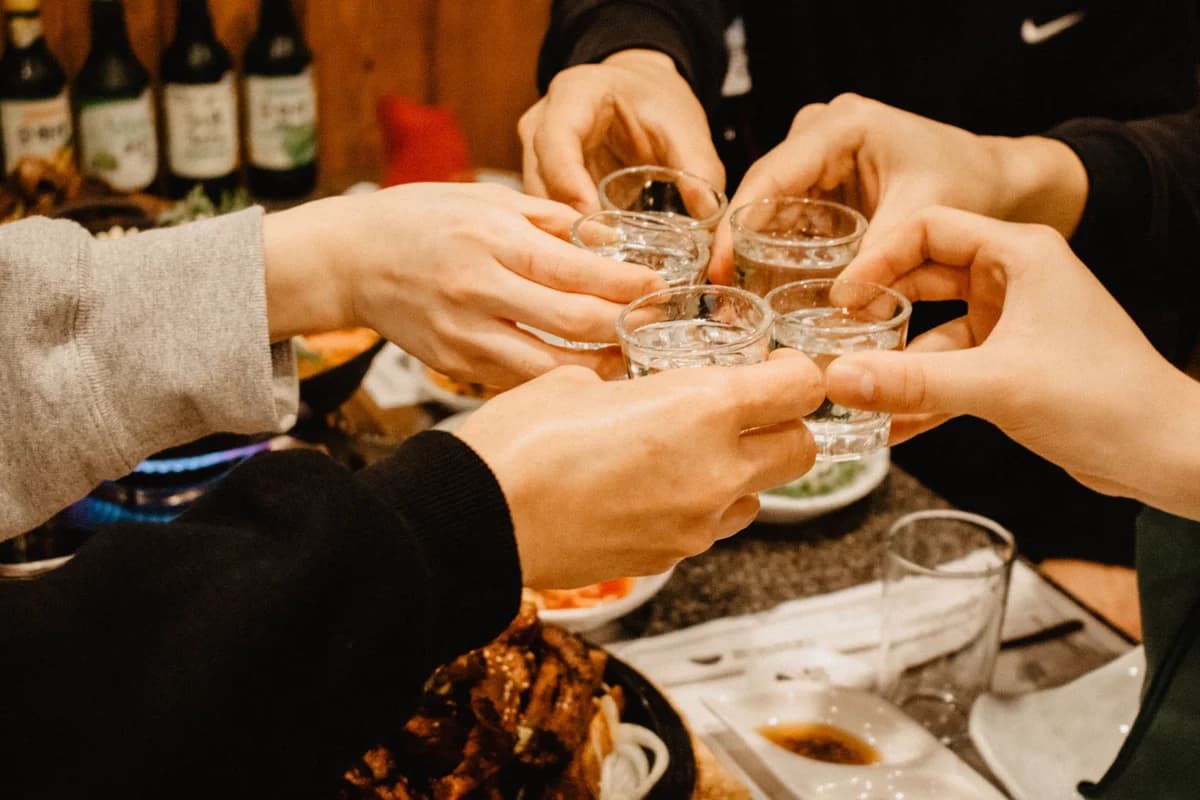
What Is Soju? Korea's Green-Bottle Spirit, Explained
It's the best-selling spirit brand on Earth, and most people outside Korea couldn't pick it out of a lineup. A field guide to soju: what's actually in the green bottle, how a 1965 rice ban created the modern version, why it's suddenly conquering export markets — and how to drink it like you know what you're doing.
The Weekly Dispatch
Korea, curated. Every week.
The best of K-culture, straight from Seoul. Written by people who actually live here.
Free, no spam, unsubscribe whenever.