What Is Soju? Korea's Green-Bottle Spirit, Explained
It's the best-selling spirit brand on Earth, and most people outside Korea couldn't pick it out of a lineup. A field guide to soju: what's actually in the green bottle, how a 1965 rice ban created the modern version, why it's suddenly conquering export markets — and how to drink it like you know what you're doing.
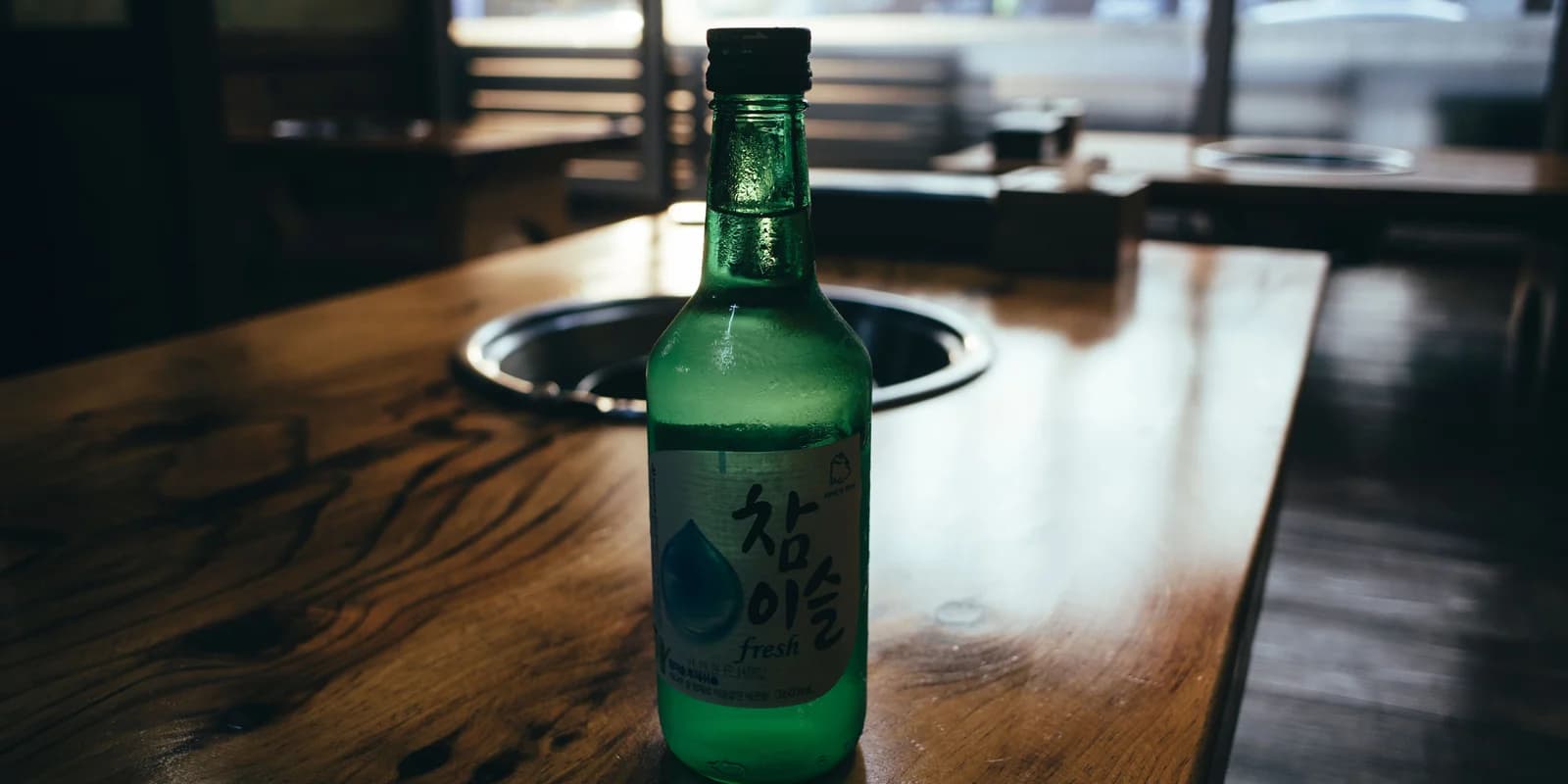
Here's a pub-quiz question that reliably stuns people: what is the best-selling spirit brand in the world? Not Smirnoff. Not Johnnie Walker. Not Bacardi. It's Jinro (진로) — a Korean soju label that has topped the global sales chart for 25 consecutive years, moving 94.5 million nine-liter cases in the latest count (Korea Herald, Korea JoongAng Daily, June 2026). The planet's most-purchased liquor comes in a small green bottle, and most of the world has never knowingly tasted it. Like kimchi, it's one of those things Korea treats as furniture and everyone else treats as exotic. Here's the whole story.
The One-Sentence Definition
Soju (소주) is Korea's national spirit: a clear liquor, usually around 16–20% alcohol, drunk neat from small glasses over food, whose name literally means "burned liquor" — a reference to distillation (Wikipedia). It's stronger than wine, gentler than vodka, and cheaper than both: a bottle runs about ₩2,000 at a convenience store and ₩5,000–6,000 at a Seoul restaurant (Korea Times, 2025 reporting). That price is not an accident. It's the product of sixty years of policy, and it's the first thing to understand about soju.
There Are Actually Two Sojus
Korean law and Korean drinkers both recognize a split that the export market flattens (Wikipedia, Namu Wiki):
- 희석식 소주 (huiseok-sik, "diluted" soju) — the green-bottle standard. Neutral spirit is distilled to near-pure alcohol in industrial column stills (typically from sweet potato or tapioca), then cut with water and a touch of sweetener. Clean, faintly sweet, deliberately neutral. This is the overwhelming majority of what Korea drinks — on the order of 99% of sales.
- 증류식 소주 (jeungnyu-sik, "distilled" soju) — the traditional article: fermented rice or grain, pot-distilled once, bottled at anywhere from the mid-20s to 45% alcohol. Aromatic, expensive, and until recently nearly extinct.
If you've only had the green bottle, you haven't tasted what soju was for most of its history. Which raises the obvious question: what happened?
How Soju Got This Way
Distilling arrived in Korea the way a lot of things did in the 13th century — with the Mongols, who had picked up arak distillation from the Persian world and brought the technique during their invasions of Goryeo-era Korea (Wikipedia, The Sool Company). For centuries, soju meant pot-distilled rice liquor, with the town of Andong (안동) — still famous for its namesake soju — as a spiritual home.
Then came the pivot that created the modern drink. In 1965, with the country short on food, the government's Grain Management Law banned distilling liquor from rice. Distillers switched overnight to diluting imported neutral spirit, and the soft, sweetened, low-cost soju in the green bottle became the national default (Wikipedia, Hana Makgeolli). The restrictions eased in the 1990s, but by then an entire country had grown up on the diluted style, and habits — plus a price point under ₩2,000 — are hard to beat.
The traditional style never fully died, though, and it's now in open revival: Andong soju heritage distillers, the sleek rice-soju brand Hwayo (화요), and HiteJinro's own oak-rested Ilpum Jinro (일품진로) are selling the premium, pot-distilled version to a generation curious about what their grandparents' soju tasted like (Hwayo, Jinro).
Why the Bottle Is Green
The green bottle is younger than you'd guess. Soju bottles were clear until 1994, when a green bottle launched to signal "clean and eco-friendly" — and every competitor promptly copied it (Korea Times). The color then got institutionalized: in 2009, Korea's soju makers and the Ministry of Environment signed a voluntary agreement standardizing the bottle so that any company could wash and refill any other company's empties — one shared bottle design, circulating through the whole industry (Korea Times). It's one of the quieter feats of Korean pragmatism: fierce commercial rivals, one communal bottle. (The truce cracked in 2019 when Jinro's retro "Jinro Is Back" launched in clear glass — a small scandal in the recycling world.)
How Koreans Actually Drink It
Soju is a social, food-attached drink — ordered for the table, poured into shot-sized glasses, and almost never drunk alone at a bar counter the Western way. Three etiquette rules do most of the work, and they're really one rule — drinking is something you do for each other (Wikipedia):
- Pour and receive with two hands, especially with someone senior.
- Never pour your own glass — watch your companions' glasses and refill them; they'll do the same for you.
- Turn slightly away from elders when you drink. Old-fashioned, but noticed.
The natural habitat is the pojangmacha (포장마차) — the tented street bar, a fixture since the 1950s, where soju meets anju (안주), the food you're all but required to order with it (Wikipedia). If the orange-tent-and-green-bottle scene looks familiar, that's because K-dramas have exported it to the world, frame by frame. We've written about how Korea's drinking culture is changing — younger Koreans drink less, and lighter — which is exactly why mainstream soju has drifted down from the 20%+ of a generation ago to around 16–17% today (Wikipedia). For the full picture of what gets eaten alongside, see what Koreans actually eat at 2am.
The Brands, Decoded
Two national giants dominate the fridge at every convenience store (Korea.net):
- 참이슬 (Chamisul) — HiteJinro's flagship and the country's best-seller, strongest in the Seoul metro area.
- 처음처럼 (Chum Churum) — the Lotte-family challenger; the name means "like the first time."
But soju is also quietly regional — many provinces still drink local: 좋은데이 (Good Day) and 대선 (Daesun/C1) in the Busan–Gyeongnam southeast, 참 (Charm) around Daegu, 잎새주 (Yipsejoo) in the Jeolla southwest, 한라산 (Hallasan) on Jeju. Ordering the local bottle is a small, appreciated gesture when you travel — a green-bottle version of ordering the regional wine.
The Export Boom
For decades soju barely traveled; now it's Korea's fastest-moving liquid export. HiteJinro ships to 91 countries (Korea Herald, 2026), and the growth engine is — to purists' mild horror — fruit soju: the 12–13% peach, green-grape, and yogurt-flavored bottles that dominate overseas Asian marts and TikTok alike, reported at roughly $96 million in exports in 2024, nearly half of all soju shipped abroad (Wikipedia). In the US, Lotte's soju volumes reportedly grew ~700% in a single year after a national distribution deal (The Spirits Business, May 2025). And in a first for the industry, HiteJinro is building its first overseas soju plant in Thai Binh, Vietnam — under construction now, slated for completion in late 2026 (Korea Herald, VIR). The green bottle is going global on purpose.
Where to Start
If you're new: order a Chamisul or Chum Churum with Korean barbecue and drink it the table way — small pours, two hands, food always in play. If straight soju reads as harsh, fruit soju is the honest gateway, and nobody serious will judge you. And when you want to understand what the fuss was about, spend real money once on a pot-distilled bottle — an Andong soju or a Hwayo — and taste the 700-year-old drink hiding behind the ₩2,000 one. The world's best-selling spirit turns out to be two drinks wearing one name: a cheap, brilliant piece of social infrastructure, and a heritage liquor climbing back from a 1965 law. Both are worth knowing.
Sales rankings, prices, export figures, and plant status are dated in-text and drawn from the linked sources; the exact timing of the rice-distilling ban's repeal is described as "the 1990s" because sources conflict on the year; per-capita consumption statistics are omitted as outdated. Fruit-soju export figures are as reported by the cited sources. Images are real, license-clean photographs of Korean soju: homepage/hero — a Jinro pour by Karlis Dambrans, CC BY 2.0, via Wikimedia Commons (cropped); cover — a Chamisul bottle at a Korean BBQ table, by makafood, via Pexels (Pexels License); listing card — friends toasting with soju glasses, by Mizzu Cho, via Pexels (Pexels License).

Keep Reading
More Stories
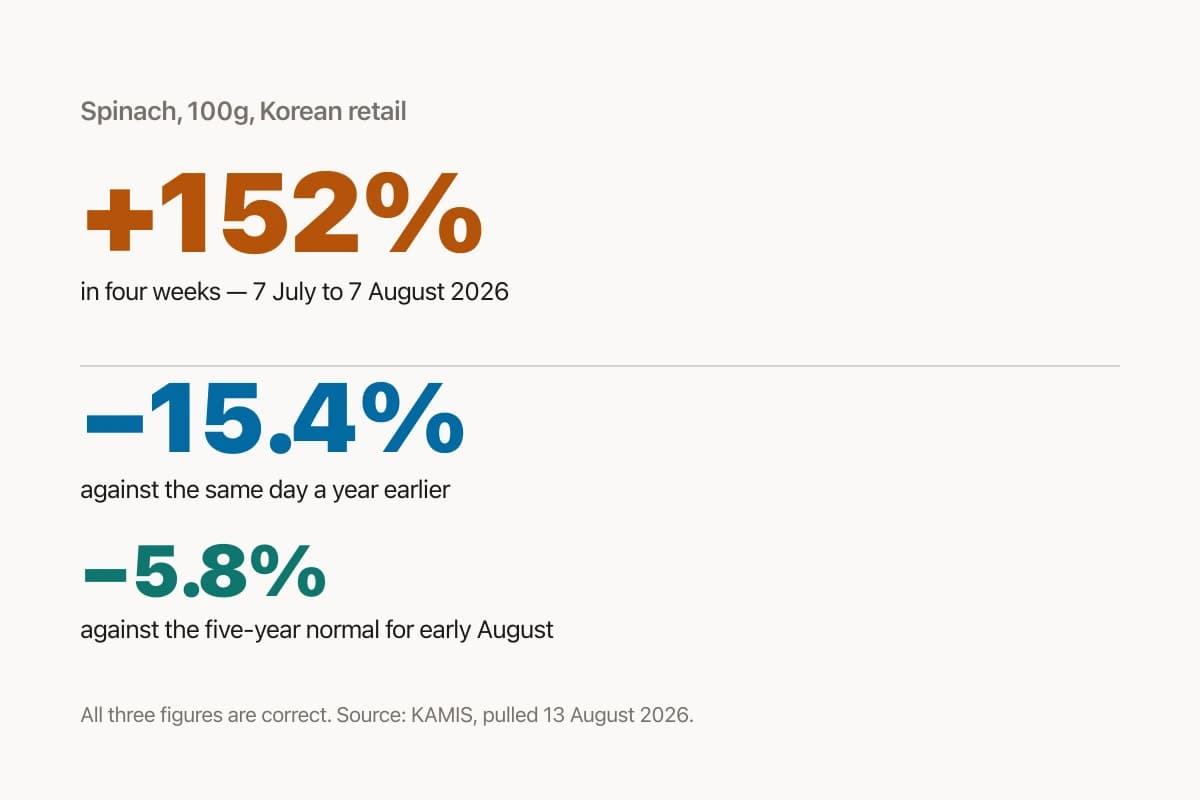
Spinach Is Up 152% in a Month. It's Also Cheaper Than It Was Last August.
Korean vegetable prices produced a genuinely alarming number this month: spinach at ₩1,978 per 100g on 7 August, up from ₩784 four weeks earlier. Both figures are real and we pulled them ourselves. But spinach is currently 15% cheaper than it was a year ago and below the five-year normal — and the agriculture ministry has taken the unusual step of asking people to stop making the comparison that produced the headline.
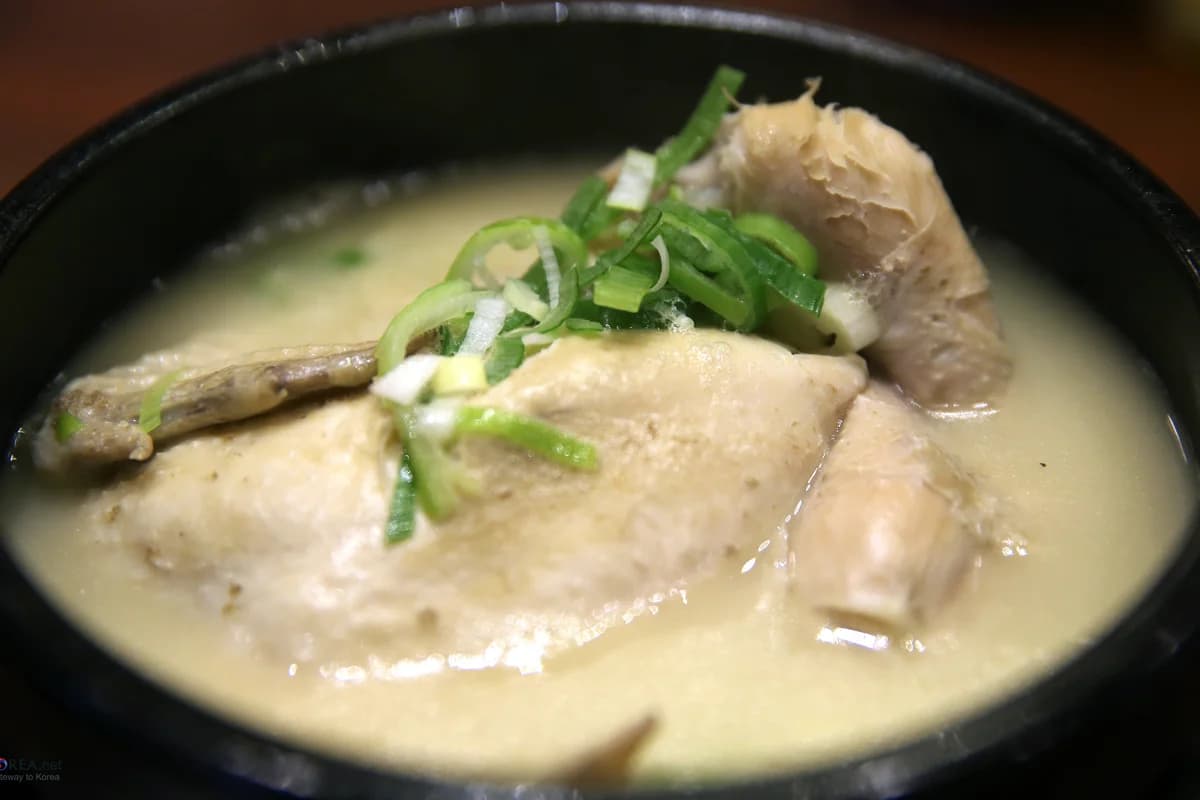
The ₩18,154 Bowl: How Korea's Hottest-Day Ritual Got Priced Out
On the hottest days of the year, Koreans queue for boiling chicken soup. But samgyetang now costs ₩18,154 in Seoul — while the same ingredients run ₩8,800 at a market. Jungbok falls on July 25. A guide to boknal, the logic of fighting heat with heat, and why the convenience-store version isn't the end of a tradition.
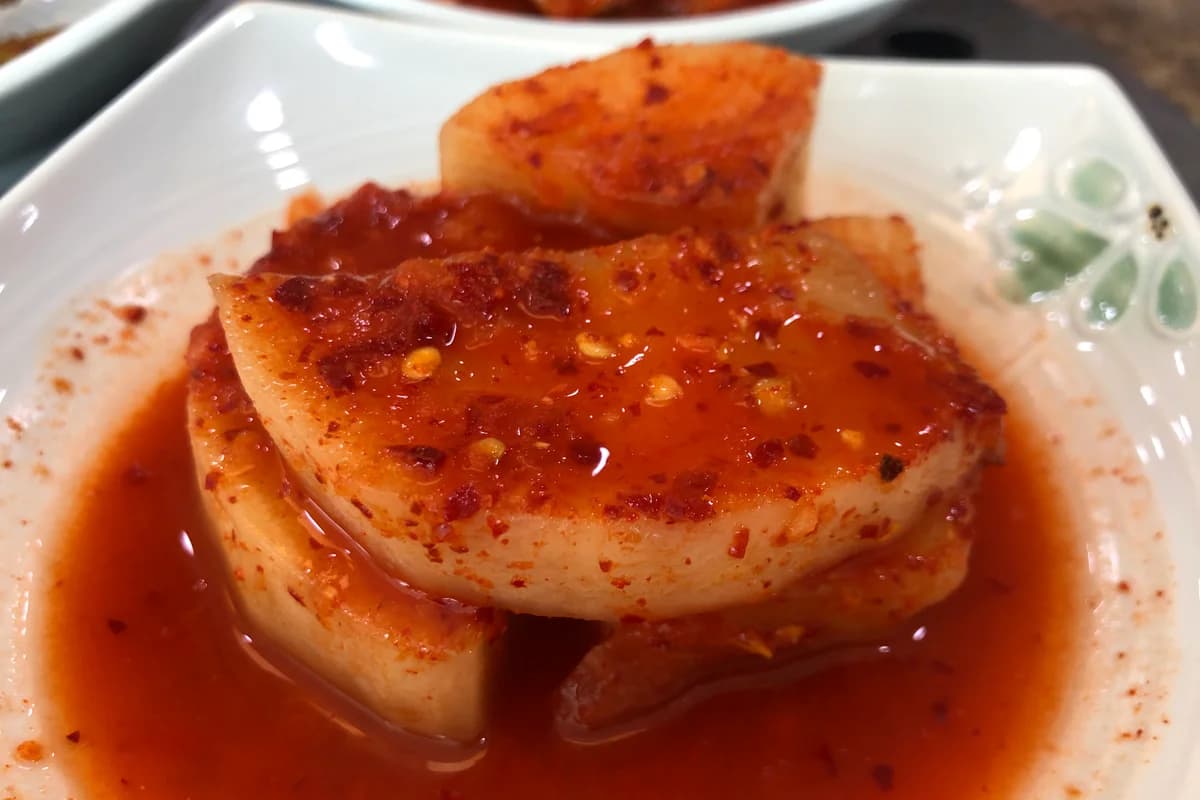
What Is Kimchi? Types, Taste, and How Koreans Actually Eat It
It's the little red side dish that appears at nearly every Korean meal — and it's a lot more than 'spicy cabbage.' A field guide to what kimchi actually is, the varieties beyond the famous one, why it gets funkier with age, and how Koreans really eat it.
The Weekly Dispatch
Korea, curated. Every week.
The best of K-culture, straight from Seoul. Written by people who actually live here.
Free, no spam, unsubscribe whenever.