Why Korea Makes the World's Memory Chips
Almost every phone, laptop, and AI data center on earth runs on memory chips — and roughly two-thirds of them come from two Korean companies you already know. Here's how a country the size of Indiana got a chokehold on the stuff that makes the AI boom possible, told the Korean way: a state, a chaebol, and a bet-the-company gamble that started in 1983.
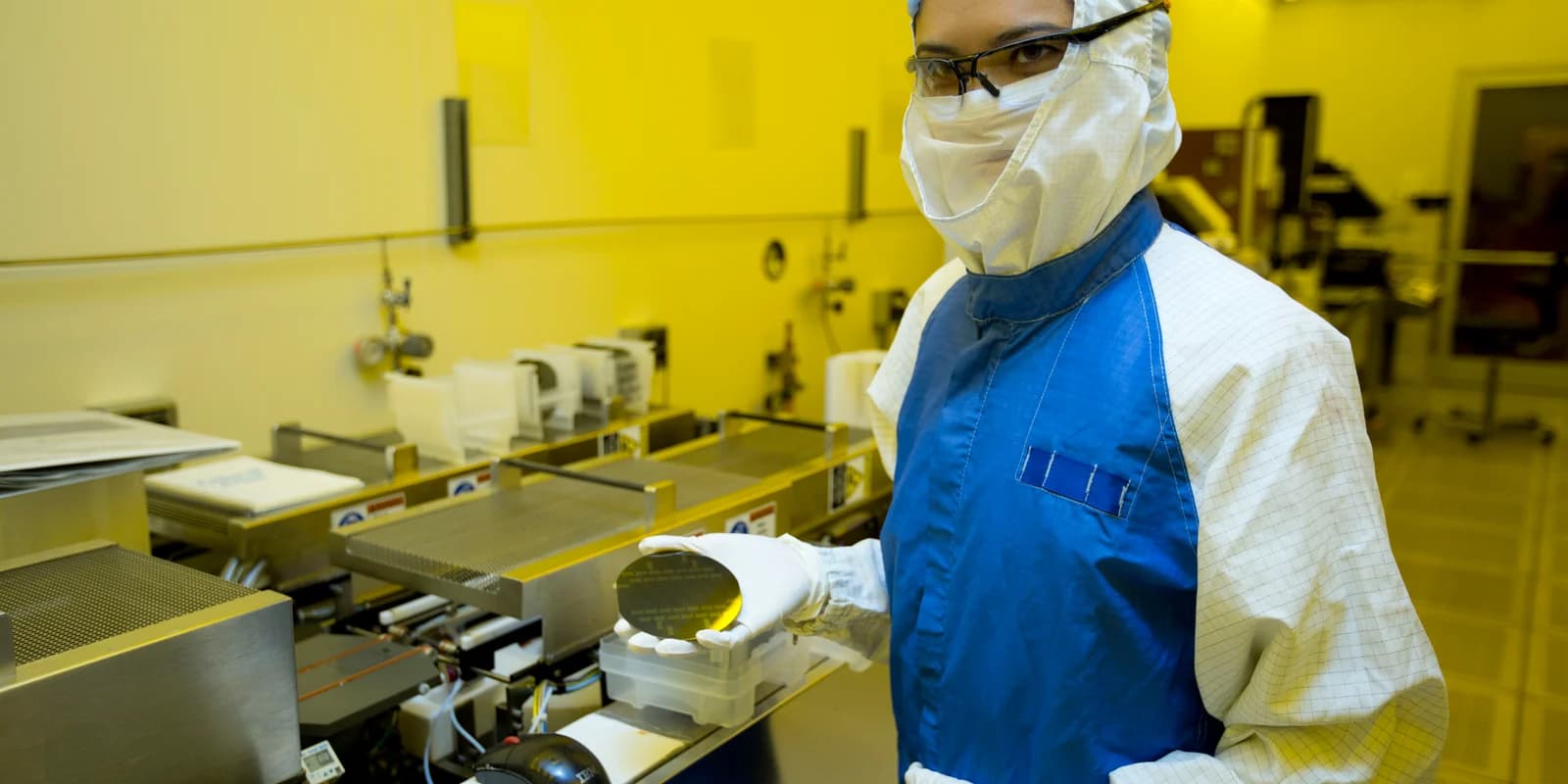
Here is a fact that sounds made up: the artificial-intelligence boom — the one reshaping the global economy, minting trillion-dollar companies, and eating every headline — runs on a component that mostly comes from two companies in one small country. Not America. Not China. Korea.
The component is memory — the chips that store data — and roughly two-thirds of the world's supply is made by Samsung and SK Hynix. Nearly every smartphone, laptop, and AI server on the planet has Korean memory inside it. When Nvidia builds the GPUs that train ChatGPT-style models, the ultra-fast memory stacked next to the processor is, more often than not, made in Korea.
How does a country roughly the size of Indiana, with no oil and no natural-resource windfall — one of the poorest places on earth as recently as the 1960s — end up holding a chokehold on the single most important commodity of the AI age? The answer is one of the most Korean stories there is: a government, a family conglomerate, and a bet so large it should have bankrupted everyone who made it. Here's how it happened — and why it's still happening.
First: which chips we're actually talking about
"Korea makes the world's chips" is the kind of thing people say, and it's wrong. Korea does not make the world's chips. It makes the world's memory chips — and the distinction is the whole story.
Broadly, there are two families of chip:
-
Logic chips — the ones that think. The processor in your phone, the CPU in your laptop, Nvidia's AI accelerators. These are designed by companies like Apple, Qualcomm, and Nvidia, and physically manufactured mostly by Taiwan's TSMC, the contract-manufacturing ("foundry") giant that holds around 70% of that market. Samsung has a foundry too, but it's a distant second at roughly 7%. (Tom's Hardware) In logic, Korea is a runner-up.
-
Memory chips — the ones that remember. DRAM (the fast, temporary working memory your device uses while it's running) and NAND flash (the storage that holds your files when the power's off). This is Korea's kingdom.
The AI twist is a special kind of memory called HBM — High Bandwidth Memory — DRAM stacked into towers and wired for enormous speed, so it can feed a hungry AI processor fast enough to keep up. HBM is the bottleneck of the entire AI build-out, and it is overwhelmingly Korean. Keep that split in mind — memory, not logic — and everything else makes sense.
The chokehold, by the numbers
Start with DRAM, the workhorse. Between them, Samsung and SK Hynix control somewhere around two-thirds of the global DRAM market — the combined share has hovered near 67–70% through 2025 and into 2026, with the American firm Micron a distant third. (Counterpoint Research)
For decades the pecking order was simple: Samsung first, everyone else fighting for scraps. Then the AI boom scrambled it. In early 2025, SK Hynix overtook Samsung to become the world's No. 1 memory maker — the first time in history anyone had knocked Samsung off the top. (S&P Global) Samsung has since clawed the DRAM lead back. (TechTimes) The two now trade the crown — but the crown never leaves Korea.
In HBM, the AI memory, it isn't even close. SK Hynix holds roughly 60% of the HBM market and is Nvidia's key supplier; Nvidia alone reportedly accounted for about 27% of SK Hynix's revenue in the first half of 2025. (TrendForce, Astute Group) When people say the AI boom is "sold out," they often mean this literally: SK Hynix has said its output was spoken for well in advance.
Now zoom out to the country. Semiconductors are Korea's single biggest export, around a fifth of everything it ships abroad — and in the peak AI-demand months of 2025 that share spiked far higher. (U.S. ITA) Riding the chip surge, Korea's total exports crossed $700 billion for the first time in 2025. (KED Global) This is not an industry the country happens to have. It is, to a striking degree, the country's economic spine.
The 1983 gamble that started it all
Rewind to February 1983. Samsung was known for cheap TVs and microwaves. Its founder, Lee Byung-chul, then in his seventies, made an announcement from Tokyo — later called the "Tokyo Declaration" — that Samsung would enter the DRAM business and take on the Japanese and American giants who owned it. (Wikipedia)
It looked delusional. The technology gap was more than a decade. DRAM was brutally cyclical, capital-devouring, and dominated by Japan Inc. at its fearsome peak. Samsung was, in chip terms, a nobody.
What happened next is the part that still stuns people. Samsung shipped its first 64-kilobit DRAM within about ten months. It launched a 1-megabit chip in 1986, 4-megabit in 1988, 16-megabit in 1990, and a 64-megabit DRAM in 1992 that beat Toshiba, NEC, and Hitachi to market. That year, Samsung overtook Toshiba to become the world's largest DRAM maker — and by 1993 its DRAM revenue exceeded that of all Japanese semiconductor makers combined, ending Japan's long reign over memory. (Wikipedia) A decade behind to first place, in ten years.
That leap wasn't luck. It was the chaebol model doing exactly what it's built to do: a single family with absolute control over a sprawling conglomerate, willing to pour money into a business that lost cash for years, backed by a government that treated export champions as national projects. No public shareholders could veto it. No quarterly panic could stop it. It was a bet the whole house could make at once — the same concentrated, top-down power that, in other contexts, curdles into the gapjil and dynastic drama Koreans complain about. Here, aimed at a factory, it built an empire.
The chicken game
To understand why only Korea (and one American survivor) is left standing, you have to understand how the memory business kills its own.
Memory is a commodity: a gigabit of DRAM is a gigabit of DRAM, so makers compete mostly on price and scale. That creates a savage cycle. When demand is high, everyone builds new factories; the new supply floods the market; prices crash; the weakest players bleed out. The Korean move — pioneered here and run for decades — was counter-cyclical: keep investing hardest precisely when prices were collapsing and rivals were retreating, absorbing years of losses to add capacity that would bury the competition. The industry nickname is the "chicken game." Korea kept its foot on the gas when everyone else swerved.
The body count tells the story. Germany's Qimonda went bankrupt in 2009. Japan's Elpida — the last Japanese DRAM maker standing, itself a merger of survivors — went bankrupt in 2012 and was bought by America's Micron. (Computerworld) A field that once held dozens of memory makers collapsed to three, which today control about 90% of DRAM. Two of those three — Samsung and SK Hynix — are Korean. (The Memory Guy) Korea didn't just enter the game. It outlasted everyone who taught it.
SK Hynix: the underdog that read the future
If Samsung is the story of concentrated power, SK Hynix is the story of survival and a very good guess.
It began in 1983 as Hyundai Electronics, spent the rough post-1997-crisis years drowning in debt, was renamed Hynix in 2001, and limped along for over a decade under creditor control — Korea's perennial No. 2, always rumored to be for sale. In 2012, the SK Group bought it for about $3 billion and renamed it SK Hynix. (Wikipedia) It was not, at that point, anyone's idea of a future kingmaker.
Then came the bet that changed everything. Back in 2013, SK Hynix co-developed the world's first HBM with the American chip designer AMD, and put it into mass production in 2015. (Wikipedia) For years HBM was a niche — exotic, expensive, a solution in search of a problem. SK Hynix kept refining it anyway, generation after generation, while the market shrugged.
Then ChatGPT happened, the AI arms race exploded, and it turned out every AI accelerator on earth needed exactly the fast, stacked memory SK Hynix had spent a decade perfecting. The perennial No. 2 was suddenly sitting on the most sought-after chip in the world — which is how, in 2025, it briefly became No. 1. A patient bet on an unglamorous technology, held long enough to meet its moment: it's the whole Korean chip story in miniature.
So — why Korea?
Pull the threads together and the answer isn't "cheap labor" or "good engineers," though the engineers are excellent. It's a specific, hard-to-copy combination:
- The state and the chaebol, rowing together. For decades the Korean government picked strategic industries and threw the full weight of policy, financing, and national attention behind the conglomerates chasing them. Chips were the ultimate national project.
- Bet-the-company patience. Family-controlled chaebol could eat a decade of losses to win a market — a time horizon few public, shareholder-driven Western firms could stomach. The Tokyo Declaration and the HBM bet are the same move, 30 years apart.
- A whole society pointed at one goal. Elite engineering talent, a culture that prizes technical mastery and national achievement, and an economy willing to organize itself around export champions. When Koreans say the country "runs on Samsung," they aren't only joking about the stock market.
It is, in other words, less an industrial policy than a national temperament: concentrate resources, commit totally, and outlast everyone. It's the same instinct behind a lot of what this site writes about — the intensity is just usually pointed at a test, a debut, or a comeback rather than a wafer.
The flip side
A chokehold is a wonderful thing to have and a nervous thing to be. Three companies controlling 90% of a commodity the whole world needs is, by definition, close to an oligopoly — and in 2026, with memory prices at record highs on AI demand, the three giants (Samsung, SK Hynix, and Micron) were hit with lawsuits alleging they coordinated to keep prices high. The companies deny it; the cases are unproven. (Tom's Hardware) But the accusation is a sign of the position Korea now occupies: powerful enough to be feared.
And the chokehold is not guaranteed forever. China is pouring state money into its own memory champion, CXMT, explicitly to break the Korean-American grip — the same fast-follower playbook Korea itself ran on Japan in the 1980s. (SemiAnalysis) The country that dethroned an empire knows better than anyone how it's done.
The bottom line
For forty years, Korea's answer to "what should a resource-poor country bet on?" has been the same: the chips that remember. It looked reckless in 1983 and merely lucrative in 2013. In the AI era, it looks like prophecy. The next time you unlock your phone, open a laptop, or type a question into an AI that answers in seconds, there's an excellent chance the part quietly holding it all in mind was made — like so much of the modern world's hardware, and almost none of its credit — in Korea.
Market-share figures move quarter to quarter; the numbers here reflect 2025–2026 reporting and the leadership between Samsung and SK Hynix trades back and forth. The price-fixing lawsuits mentioned are allegations that had not been proven at the time of writing.
Keep Reading
More Stories
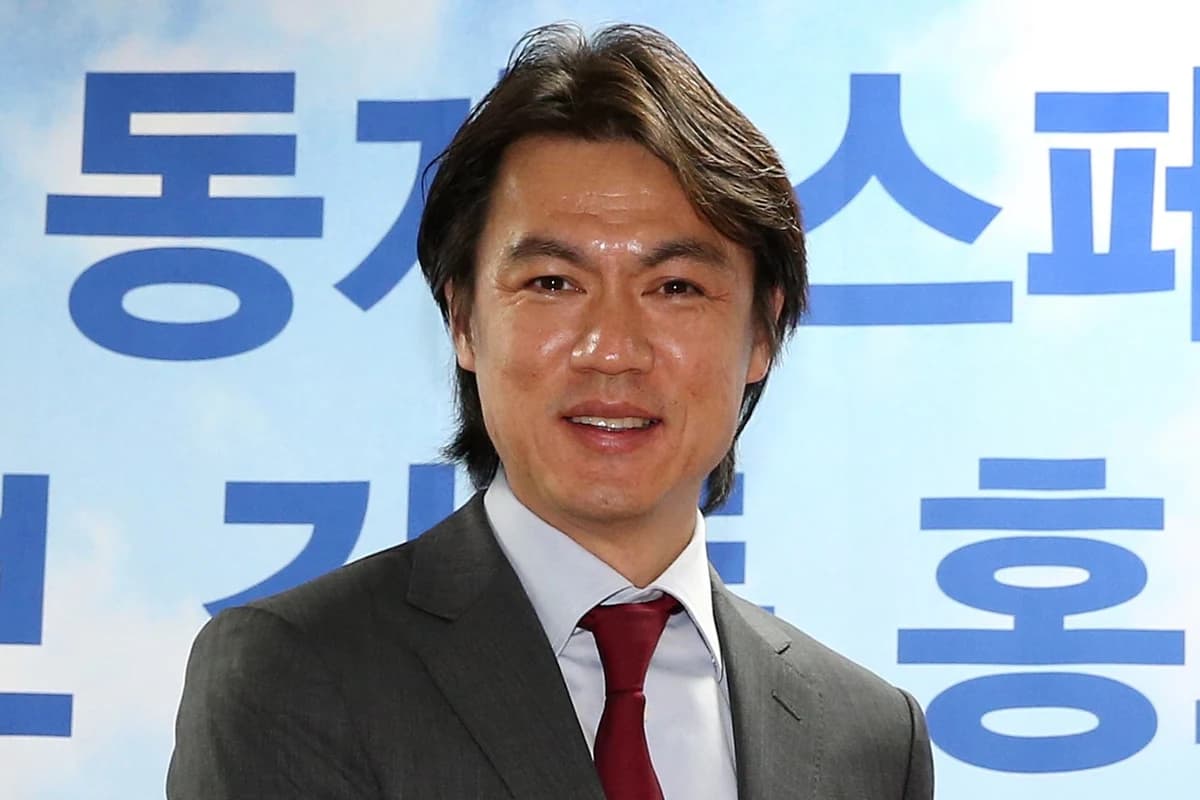
From 2002 Hero to 'Incapable': Why Korea Turned on Hong Myung-bo
Twenty-four years ago he was the captain who took Korea to the World Cup semifinals — the first Asian ever to win an individual award at the tournament. This summer, after the worst World Cup result in his country's history, he resigned as its coach while the President of Korea called him 'incapable' and ordered an investigation into how he ever got the job. The rise and ruin of Hong Myung-bo, explained.

Gapjil, Explained: Korea's Power-Trip Problem
From an heiress who turned a plane around over a bag of macadamia nuts to a young firefighter's death over forced work dinners — 갑질 is the one Korean word that explains how power gets abused here, and why the country keeps erupting over it.
Call 119 for a Paper Cut: How Korea's 'Monster Parents' Broke the Classroom
A parent wrote the teacher's exam for her. Another demanded she kneel for refusing to fetch coffee. Sixty percent of Seoul's elementary schools quietly killed the sports-day podium. Behind the absurd is something far darker — a complaint culture that has hounded Korean teachers out of the profession, and in the worst cases to their deaths. Here's how the classroom broke.
The Weekly Dispatch
Korea, curated. Every week.
The best of K-culture, straight from Seoul. Written by people who actually live here.
Free, no spam, unsubscribe whenever.