China's Unofficial Ban on Korean Culture Has Seemed to Ease Before. The New Trade Deal Leaves Out the Concerts
On 18 November Seoul and Beijing said the services and investment talks that follow their free trade agreement were substantially concluded. Korean films and games get treatment as good as other foreigners', joint productions widen to dramas and variety, and entertainment shares jumped. Concerts are not in it. The ban has seemed to ease before, with a game licence in 2020, a film in 2021 and a drama in 2022, and the concerts never came back.
On Wednesday 18 November, at a summit at the Kylin Villa (치린산장) in Shenzhen, held during APEC, President 이재명 and President Xi Jinping announced the result their negotiators had been working towards since 2018. The talks on services and investment that follow up the two countries' free trade agreement were over.
Not quite over, though, and the word both governments chose says so. Seoul's term is 실질타결, and China's English readout says "substantially concluded". It means the negotiation has finished, but officials are still finishing some technical wording at working level. There is no final text. Nothing has been signed, and nothing is in force.
The road here was long. The original agreement came into force in December 2015, and these follow-up talks began in March 2018. Formal talks then stalled for more than four years. In January 2026 the two leaders agreed to aim for progress within the year, and five formal rounds followed: the 13th in Beijing in January, through to the 17th in Seoul in October. The trade ministers met in Shanghai on 4 November. Korea's trade minister is 김정관, of the Ministry of Trade, Industry and Resources (산업통상부). The summit itself lasted about 35 minutes, the leaders' third meeting after Gyeongju in November 2025 and Beijing in January 2026.
What the deal opens
Korean entertainment shares jumped on the hope that China's unofficial ban on Korean culture, known in Korea as the 한한령 and in English as the Hallyu ban, was coming to an end. The deal does open real things.
Films and games. China commits to treat Korean films, games and some other content no worse than any third country's: most-favoured-nation treatment, or MFN. It also commits not to discriminate against Korean films and online games when it pre-screens them. The ministry says China has never put commitments like these in a trade deal before.
MFN is easy to misread. It means as good as other foreigners, not as good as Chinese content. Chinese screening still applies, as Bizhankook points out. Yonhap's English service notes that it is unclear which sectors beyond films and games the non-discrimination rule reaches.
Joint productions. An annex widens co-production from films alone to dramas, animation, variety and documentaries. That matters more than it sounds. Co-productions count as Chinese content and so escape import quotas, according to Yonhap's English service citing the culture ministry, and an official at Cheong Wa Dae (청와대, the presidential office) said much the same to MT. Korean dramas themselves get no explicit MFN commitment.
Everything else, more briefly:
| Sector | What China committed to |
|---|---|
| Tourism | Korean travel agencies set up in 23 designated Chinese areas may sell outbound trips to people living in China |
| Retail | Korean chains running 30 or more stores may operate without a Chinese joint-venture partner |
| Legal | Korean law firms may partner with Chinese firms from Tianjin, Qianhai and Hainan, not just Shanghai |
| Construction | Old limits on which projects Korean firms may join are removed |
| Finance | Future MFN: anything China later opens to a third country also applies to Korea |
| Investment | A negative list (everything open unless listed), a ratchet (no going back on easing), a ban on forced technology transfer, and investor–state dispute rules that now cover the stage before an investment is made |
Korea, for its part, made commitments in legal, retail and audiovisual services, including film screening, within current Korean law.
Where the shares went
The moves were large, and they came in different sessions, which some reports run together. We keep them apart.
| Session | Stock | Move | Source |
|---|---|---|---|
| 18 Nov, regular | SM | Closed at ₩87,900, up about 14%, before the deal was announced | Etoday |
| 18 Nov, after-hours (Nextrade) | SM | Reached ₩99,900, up 29.91% on the 17 November close, the daily maximum | fnnews, Sedaily, Etoday |
| 18 Nov, after-hours (Nextrade) | Studio Dragon | Hit its limit | fnnews, Sedaily, Etoday |
| 19 Nov, regular | HYBE | Up 13.69%, to ₩189,400 | Newsis, Etoday |
| 19 Nov, regular | SM | Up 8.19%, to ₩95,100 | Newsis, Etoday |
| 19 Nov, regular | Studio Dragon | Up 29.96%, to ₩30,800 | CNBC; price data |
| 19 Nov, regular | CJ ENM | Up 26% early in the day | CNBC |
Newsis alone reports that the entertainment index rose 9.39% on 19 November. SM's regular-session rise on 18 November came before the announcement, on expectation; the after-hours jump came after it.
The brokers were cooler than the buyers. NH Investment & Securities told CNBC that the deal does not address concerts or drama distribution. Brokers at Daol and Sangsangin, quoted by Newsis, expect any concert revenue in the fourth quarter of 2027 at the earliest.
On 20 November the whole KOSPI opened 4.08% lower, according to a Newsis flash report, which is the only figure we have for that day. (Our October piece covers the market's autumn.)
The record of false dawns
Korean headlines on the deal mostly asked whether the ban would lift rather than saying that it had, at YTN, MBC and Bizhankook among others, and several put the concert caveat in the headline itself: fnnews said K-pop concerts were not yet in, and MK asked whether they would unlock. In English, the Korea Herald, Yonhap's English service and the Korea Times covered the deal and its gaps within two days. What we can add is the record, because the ban has seemed to ease before.
It grew out of Seoul's 2016 decision to deploy THAAD. China has never formally acknowledged it, according to the Korea Herald and Yonhap's English service, so it has no official start date: there was never an official order. In August 2016 Variety reported a ban on Korean TV and blocked co-productions, while noting that some called the report fake. What followed, by Yonhap's English account, was that Korean dramas, variety shows and films were shut out of Chinese TV, licensed streaming and cinemas. New Korean games got no licences (판호) from March 2017, and sales of group tours to Korea were banned in 2017.
Since then:
| Date | What seemed to ease | Sources |
|---|---|---|
| 2 Dec 2020 | Com2uS's Summoners War got a game licence, the first for a new Korean game since March 2017 | Bizwatch, Asiae |
| 3 Dec 2021 | Oh! Moon-hee opened in Chinese cinemas, the first Korean release there since The Assassination (2015) | Variety, MT |
| Early Jan 2022 | Mango TV streamed Saimdang, the first officially released Korean drama in six years | Variety only |
| Late Dec 2022 | Seven Korean games got licences, and Asiae asked whether that signalled the end of the 한한령 | Asiae only |
| 10 Aug 2023 | China reopened group tours, but on a list of 78 countries, so not a Korea-specific gesture | Seoul Shinmun, Aju |
The 2022 drama rests on Variety's report alone. We found no Korean source to confirm it.
Through all of it, one thing has not moved. There has been no large-scale K-pop concert on the mainland since the ban, according to Herald Business and Yonhap's English service. Only limited fan meetings and signing events were held, and several in 2025 were cancelled or postponed. Herald Business reports that a non-commercial Korean play ran in Beijing in October 2025, which is not the same thing.
Because China never acknowledged the ban, each of these could only ever be read as a sign. Game licences, a film, a drama and a tour list each looked like a thaw, and on 18 November 2026 a senior presidential official, speaking in Shenzhen, still described the ban's effects as something Korean companies feel.
What it does not open
Concerts and live performance. The trade ministry's release never uses the words 한한령, 공연 (performance) or K-pop. Neither the release nor any official summary mentions concerts or other live shows.
The presidential office spoke about this in Shenzhen on 18 November, and its remarks are worth setting out point by point.
- The policy chief, 하준경, called the deal the summit's main economic result, citing MFN and better protection for investment. MK dates this briefing 19 November; fnnews and VOP say it was the night of 18 November, local time.
- A senior official, speaking unnamed, said the 한한령 is hard to call an official Chinese measure, though Korean companies feel its effects, and called the MFN commitment some progress against it.
- On concerts, the same official said nothing in the deal obliges either country to approve the other's singers' concerts, and added that nothing says they will not be permitted either. The official presented the deal as a new channel for negotiating approvals.
- China, the official said, treats big fan gatherings differently, so Seoul will start with formats China finds less burdensome.
- And China had insisted on keeping culture out of the talks, which the official gave as the reason they stalled for so long.
The leaders' own words were general. 이재명 proposed expanding cultural exchanges step by step, allowing for regional differences and sensitive sectors, according to the Korea Herald, citing the security adviser 위성락. China's readout promises only step-by-step exchanges of a kind it judges useful. Neither text mentions Korean content specifically.
Our reading: a ban that was never imposed
This part is our inference, not the presidential office's. Nobody there said it.
A ban that China never officially imposed cannot be lifted by a treaty. A trade agreement can bind China on what is written down in it: MFN for films and games, non-discrimination in screening, co-productions counted as Chinese. It has nothing to say about a restriction that, officially, does not exist. The official's own remark, that the 한한령 is hard to call an official measure, points the same way, and so does the description of concert approvals as something to negotiate rather than something owed.
What to watch
- Signing. The ministry says it will run a legal review to fix the text, then move to formal signing and the steps that bring the deal into force, quickly, but it gave no dates (the release; YTN). Cheong Wa Dae says signing may take several months and that Seoul will try to bring it forward (fnnews, Newspim).
- Entry into force. No date has been given by either side.
- The non-discrimination rule. Which sectors beyond films and games it covers is still unclear.
- The first concert. The test of the ban is a large-scale K-pop concert on the mainland. Seoul says it will start with formats China finds less burdensome, and the brokers quoted by Newsis do not expect concert revenue before the fourth quarter of 2027.
What it says
The deal is real, and it is a trade deal. For films and games it puts commitments on paper that, by the ministry's account, China has not put in a trade agreement before, and it widens co-production beyond films. That is more than any of the earlier signs offered, each of which was a game licence or a handful of them, a single release, a single stream or a place on a long list.
But the record should make anyone careful about reading it as the end of the ban. Since 2020 the ban has seemed to ease more than once, and each time the concerts stayed away. This time they are not even in the text, and Seoul's own officials say so. The share prices told a bigger story than the document does.
The honest measures are two dates nobody has yet named: the day the deal is signed, and the day a large-scale K-pop concert goes ahead on the mainland. We will add to this record when either comes.
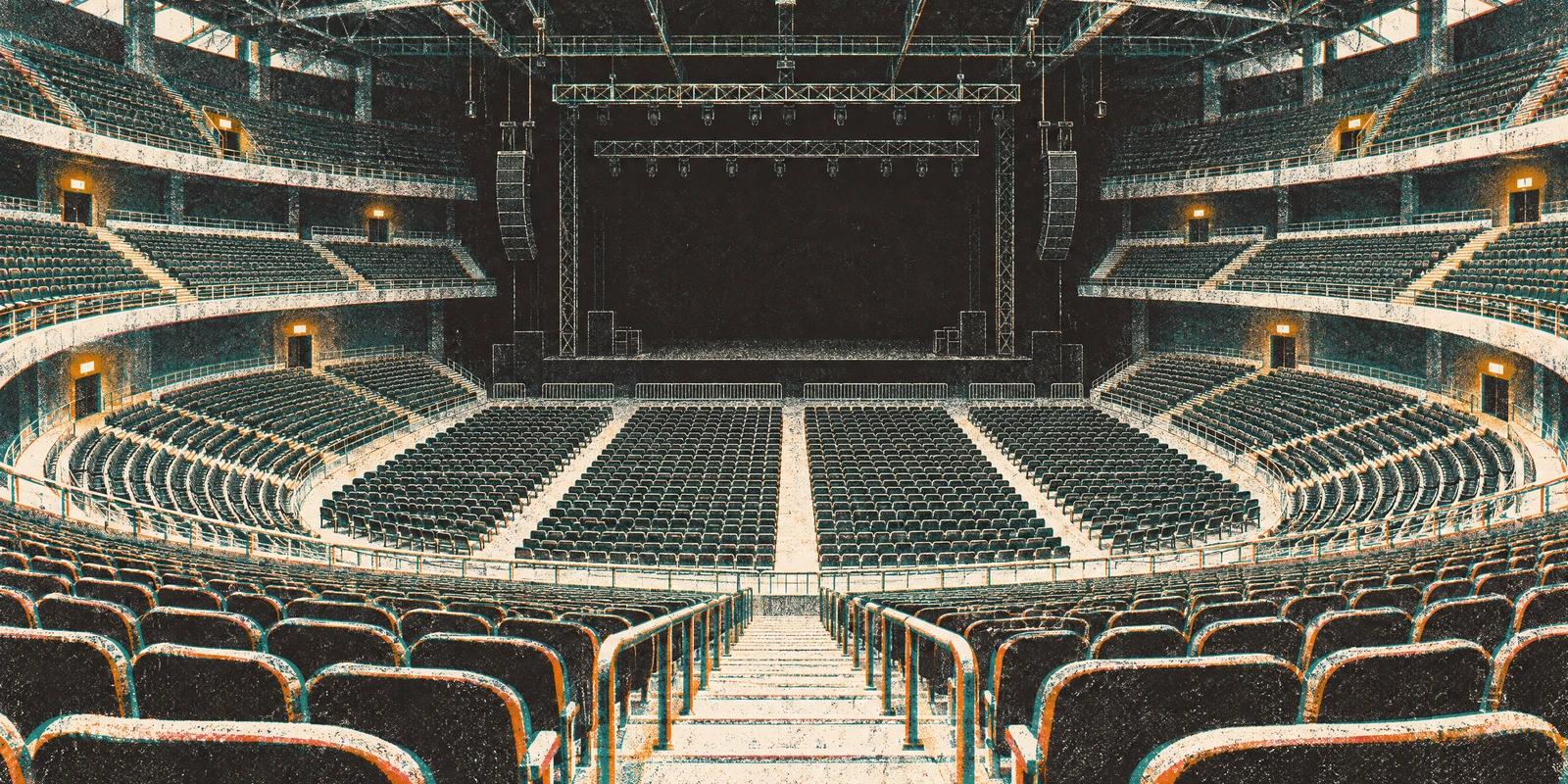
Images. The cover, listing and homepage images are AI illustrations (generated with Higgsfield, GPT Image 2.6): an empty concert arena with the stage lights off and rows of empty seats, film reels and a game controller on a wooden table, and dawn over a container port with ships at anchor. They depict no real person, place or event. We found no recent, freely licensed photograph of the deal, and we do not show real people in AI images.
Sources. The deal, its terms and its history are from the Ministry of Trade, Industry and Resources' release of 18 November (also on korea.kr), with YTN, MBC, Bizhankook and the Korea Herald; the limits of MFN and co-production from Bizhankook, Yonhap's English service and MT. The summit is from Aju, the Korea Herald and China's readout via gov.cn and Xinhua. The presidential office's remarks are from fnnews, VOP, MK, MT, Newspim and the Korea Herald; the next steps from the release, YTN, fnnews and Newspim. The ban's origins and scope are from the Korea Herald, Yonhap's English service and Variety (2016); the record from Bizwatch and Asiae (games, including the late-2022 licences), Variety and an MT column (film), Variety (drama), Seoul Shinmun and Aju (tours), and Herald Business and Yonhap's English service (concerts and fan events). Market figures are from Etoday, fnnews, Sedaily, Newsis and CNBC. The coverage is from YTN, MBC, Bizhankook, fnnews and MK, and in English from the Korea Herald, Yonhap and the Korea Times.
Stated rather than smoothed. The 2022 drama release rests on Variety alone, and the seven game licences of late 2022 on Asiae alone. How many times the ban has seemed to ease depends on what is counted, so we give no number; the 2023 tour reopening was not specific to Korea. Variety's 2016 report noted that some called it fake. MK dates 하준경's briefing 19 November; fnnews and VOP put it on the night of 18 November, local time. The 9.39% index rise and the 20 November KOSPI opening each come from Newsis alone, and Newsis mixes after-hours and regular-session figures, so we have kept the sessions apart. We found no source on whether the National Assembly must approve the deal, so we say nothing about it. That a ban never officially imposed cannot be lifted by treaty is our own inference; the presidential office did not say it. We have not counted fan meetings, signing events or a non-commercial play as concerts. We could not read Reuters or the South China Morning Post on the deal.
Keep Reading
More Stories
JTBC, the Channel That Bought the Olympics, Is Now for Sale Through a Korean Court
On 9 November the broadcaster published a sale notice from inside court rehabilitation: new shares and bonds, letters of intent by 4 December, a preferred bidder in January. Its group defaulted on ₩20.6 billion in June. Nobody has been named as a buyer, and nobody has said what happens to the newsroom or to the rights to the next three Olympics.
The Power Company Has Started Cutting Off Homeplus. The Hypermarkets Are Already Closed. The Small Shops Inside Are Not
On 28 October KEPCO cut the electricity at Homeplus's Namyangju Jinjeop building, and at least ten more closed Homeplus stores have had warnings. Homeplus says it cannot pay the power bills at stores it no longer runs. Gyms, cafés, clinics and pharmacies are still trading inside them. The same week the chain postponed most of its staff's August wages, cancelled a redundancy scheme about 400 people had signed up for, and dropped the deadline for its own sale.
A Year After Lotte Card, Korea's Banks, a Broker, an Insurer and Bithumb Have All Been Hacked in Six Weeks
Since late September, attackers have got into 신한, KB and 하나 banks, savings banks, a P2P lender, 대신증권, 미래에셋생명 and the crypto exchange 빗썸, usually through a side system built for convenience. The regulators counted sixteen firms and about 100,000 records on 14 October, and more have come forward since. Nobody official has said who did it. A year ago, after Lotte Card, the government promised this would not happen again.
The Weekly Dispatch
Korea, curated. Every week.
The best of K-culture, straight from Seoul. Written by people who actually live here.
Free, no spam, unsubscribe whenever.