The House of Hyundai: The Family That Built Korea
If the Lees of Samsung are Korea's uncrowned royalty, the Chungs of Hyundai are the dynasty that showed up in work boots. Founder Chung Ju-yung was a runaway farm boy who took money from his father's cow — and whose companies then poured the country's expressways, welded its ships, and built its first car. This is the story of Korea's self-made empire, the feud that shattered it, and why there are so many Hyundais.
There are two great royal houses in the story of modern Korea, and they could not be less alike. One is the House of Samsung — polished, elite, a dynasty of boardrooms and semiconductors. The other showed up in work boots. If the Lees of Samsung refined Korea's image, the Chungs of Hyundai poured its foundations: the expressways, the shipyards, the first car most Koreans ever owned. Their founder didn't inherit a trading company; he ran away from a farm with money taken from his father's cow. And the company he built carries that DNA in its very name — 현대 (Hyundai) means, simply, "modern times."
This is the story of Korea's self-made empire — how a poor boy from a village that is now in North Korea built the country's physical backbone, why his sons went to war over the wreckage of his throne, and why the word "Hyundai" today is stamped on cars, ships, elevators and department stores that have almost nothing to do with one another.
The Boy Who Sold His Father's Cow
Chung Ju-yung (정주영) was born on November 25, 1915, the eldest son of a poor farming family in Tongchon, a county in what is now North Korea (Wikipedia). He was supposed to inherit the farm. Instead, as a teenager, he kept running away toward Seoul — and one of those escapes was famously funded by money taken from the sale of one of his father's cows. His father dragged him home more than once, but the boy kept leaving.
He made it to Seoul for good around 1933 and worked his way up from the bottom: dock laborer, then a clerk at a rice shop he eventually took over, then an auto-repair garage in 1946, and finally, in 1947, a construction company — the ancestor of Hyundai Engineering & Construction (Wikipedia, Facts and Details). That 1947 founding is the one that plants Hyundai alongside the other family empires — LG was founded the very same year — drafted into the chaebol system.
What Chung had instead of money or connections was a philosophy that hardened into legend. His most-quoted line, a rebuke to anyone who told him something was impossible, is remembered across Korea as "이봐, 해봤어?" — "Hey — did you even try?" It is the whole Hyundai spirit in three words: not brilliance, not polish, just the refusal to accept that a thing can't be done before attempting it.
The Bulldozer Builds a Country
That refusal turned Hyundai into the muscle behind the "Miracle on the Han." When the government wanted infrastructure, Hyundai built it — fast. It completed the Gyeongbu Expressway, the Seoul–Busan artery that stitched the country together, in 1970, reportedly ahead of schedule, and built dams and power plants besides (Wikipedia).
Then came the gamble that made Hyundai global. In 1976, Hyundai won the contract to build the Jubail Industrial Harbor in Saudi Arabia — a job worth somewhere around $930 million, at the time one of the largest construction contracts in the world and, by common reckoning, close to a quarter of the entire Korean government's annual budget (KED Global). To pull it off, Hyundai fabricated enormous steel structures back home in Ulsan and floated them thousands of miles across the ocean to the Persian Gulf. It was exactly the kind of thing sober engineers said couldn't be done — which is precisely why Chung did it.
A Shipyard on an Empty Beach
The most Hyundai story of all is how it got into shipbuilding, and it starts with a banknote.
Trying to raise money for a shipyard that did not yet exist, and turned away by lenders, Chung is said to have won over a British lender by pulling out a Korean 500-won note — which bore an image of the geobukseon (거북선), the armored "turtle ships" Admiral Yi Sun-sin used to smash the Japanese navy in the 1590s. The pitch: Koreans were building ironclad warships centuries before the West, so financing a modern shipyard was hardly a stretch (Korea Times). The details of that meeting have been polished by decades of retelling — but the loan was real, and so was what came next.
In 1972, Hyundai broke ground on an empty beach in Ulsan and did something audacious: it built the shipyard and its first two supertankers at the same time, constructing the dry docks around the hulls as they took shape. It delivered the first ship in 1974 — from a yard that hadn't existed when the keel was laid (Korea Times). By 1983, Hyundai Heavy Industries was the largest shipbuilder in the world (Wikipedia). Today, under the name HD Hyundai, it still is.
The Pony
For all the roads and ships, the thing that put Hyundai in ordinary Korean lives was a small, boxy car called the Pony. Unveiled as a concept in Turin in 1974 and launched for sale in December 1975, the Pony was the first mass-produced, Korean-made car — its body styled by the Italian designer Giorgetto Giugiaro, its engine sourced from Mitsubishi, its ambition entirely Korean (Wikipedia, Hyundai Motor Group). Exports began in 1976, first to places like Ecuador — a national milestone for a country that had been one of the world's poorest a generation earlier.
From that cheap, cheerful export, Hyundai climbed for half a century. Today the Hyundai Motor Group — Hyundai, Kia and Genesis combined — is the third-largest automaker on earth by sales, a spot it first reached in 2022 (around 6.85 million vehicles) and held through 2023 (about 7.3 million), behind only Toyota and Volkswagen (CNBC, KED Global). The boxy Pony's descendants are now electric: the group launched IONIQ as a standalone EV brand in 2020, and the Ioniq 5 was named 2022 World Car of the Year (Electrek).
The War of the Princes
If the family had a fatal flaw, it was the same one that haunts every dynasty: succession. Chung Ju-yung had many sons, and as he aged, the question of who would inherit the empire curdled into open conflict. In March 2000, the feud burst into public view in a power struggle the Korean press named 왕자의 난 — the "War of the Princes." The fight was mainly between the elder Chung Mong-koo (정몽구) and the younger Chung Mong-hun (정몽헌) (Facts and Details).
The empire did not pass to one heir. It shattered into pieces, each taken by a different branch of the family — which is why, to this day, the many "Hyundais" are legally separate companies that happen to share a name:
- Hyundai Motor Group went to Chung Mong-koo — today Korea's second-largest business group.
- Hyundai Heavy Industries (shipbuilding, now HD Hyundai) went to another son, Chung Mong-joon, spun off in 2002.
- Hyundai Department Store Group (retail) went to yet another branch.
- The rump Hyundai Group — including the inter-Korean projects — went to Chung Mong-hun, who died by suicide in 2003 amid an investigation into secret cash transfers to North Korea (Wikipedia).
So the single most useful thing to know about Hyundai is this: when people list Korea's "Big Four" chaebol, the "Hyundai" they mean is Hyundai Motor Group specifically — one fragment of the founder's empire, with no corporate connection today to the shipbuilder or the department stores that carry the same proud name.
Hyundai Now
The house that runs the cars is now in its third generation. Chung Euisun (정의선), the founder's grandson and Chung Mong-koo's son, became chairman of Hyundai Motor Group in October 2020 (Hyundai). Under him the group has pushed hard beyond cars — buying a controlling stake in the American robotics firm Boston Dynamics in a deal that closed in 2021, and planning a Global Business Center in Gangnam on a former power-company site it bought in 2014 for 10.55 trillion won (about $10 billion) — the largest land deal in Korean history (Wikipedia).
And the family carries the chaebol pattern that Koreans know well from the Lees. Chung Mong-koo — nicknamed, like his father, "the bulldozer" — was convicted of embezzlement and breach of trust in 2007 for a share deal that benefited his son; his three-year sentence was suspended in favor of community service and a roughly $1 billion donation, and he was pardoned by the president in 2008, the government citing his importance to the economy (Wikipedia). Conviction, then clemency, then back to the throne: it is the same rhythm that plays across every one of Korea's great business houses, the House of SK included.
What the Chungs Say About Korea
There is a coda that captures the whole family in one gesture. In 1998, an aging Chung Ju-yung loaded 1,001 cattle into trucks and drove them, in two convoys across the Demilitarized Zone, as a gift to North Korea — the land of his birth (Korea Herald, Washington Post). The number was deliberate. As a boy he had taken a single cow from his father to fund his escape to Seoul; now he was repaying it, with interest, and one extra to begin again. The runaway farm boy, one of the richest men in Asia, driving cattle home. (He even ran for president in 1992, founding his own party and finishing third — because, of course, why not try?)
That is the Chung myth, and its appeal is obvious: where the Lees inherited polish, the Chungs made themselves, and made a country in the process. But the self-made story has the same ending as the inherited one — a family empire, a bruising succession, convictions dissolved by pardons, and a nation that depends on companies it doesn't control. Korea built two royal houses in a single century, one refined and one in work boots. It is proud of both, wary of both, and, either way, still living inside what they built.
Financial figures, rankings and stakes are 2022–2026 snapshots and move constantly. Several of the founder's most famous anecdotes have been burnished by decades of retelling; where the popular version outruns the documented record, this account keeps to the record. Convictions and pardons described are matters of public court record.
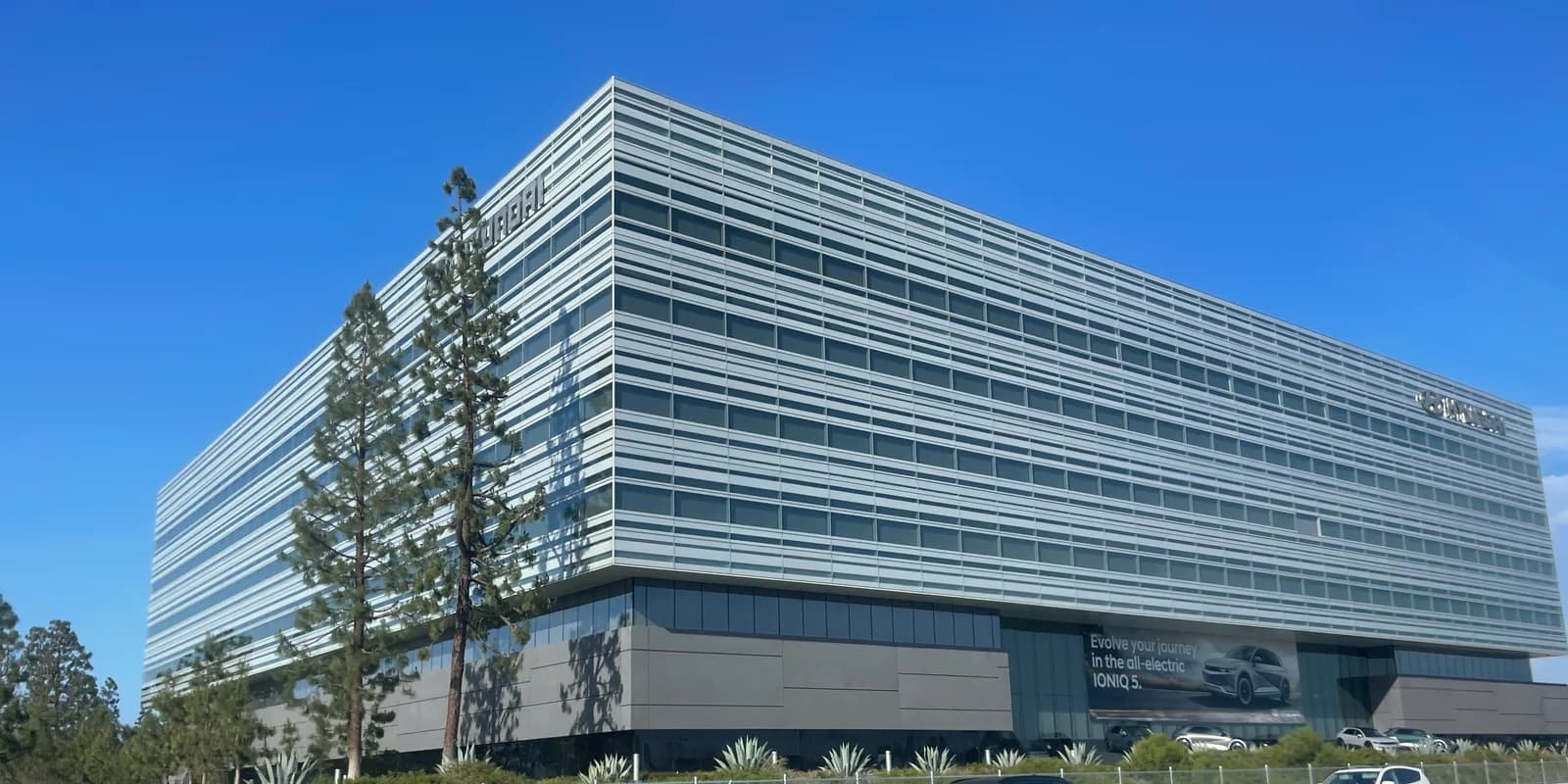
Cover: the Hyundai Motor Group headquarters building — photo by DigitalIceAge, Wikimedia Commons, CC BY 4.0. Listing card: the first-generation Hyundai Pony, Korea's first mass-produced car — photo by Riley, Wikimedia Commons, CC BY 2.0. Homepage/hero: the Hyundai shipyard in Ulsan with its HYUNDAI goliath cranes — photo by Wvdp, Wikimedia Commons, CC0.

.jpg)

Keep Reading
More Stories
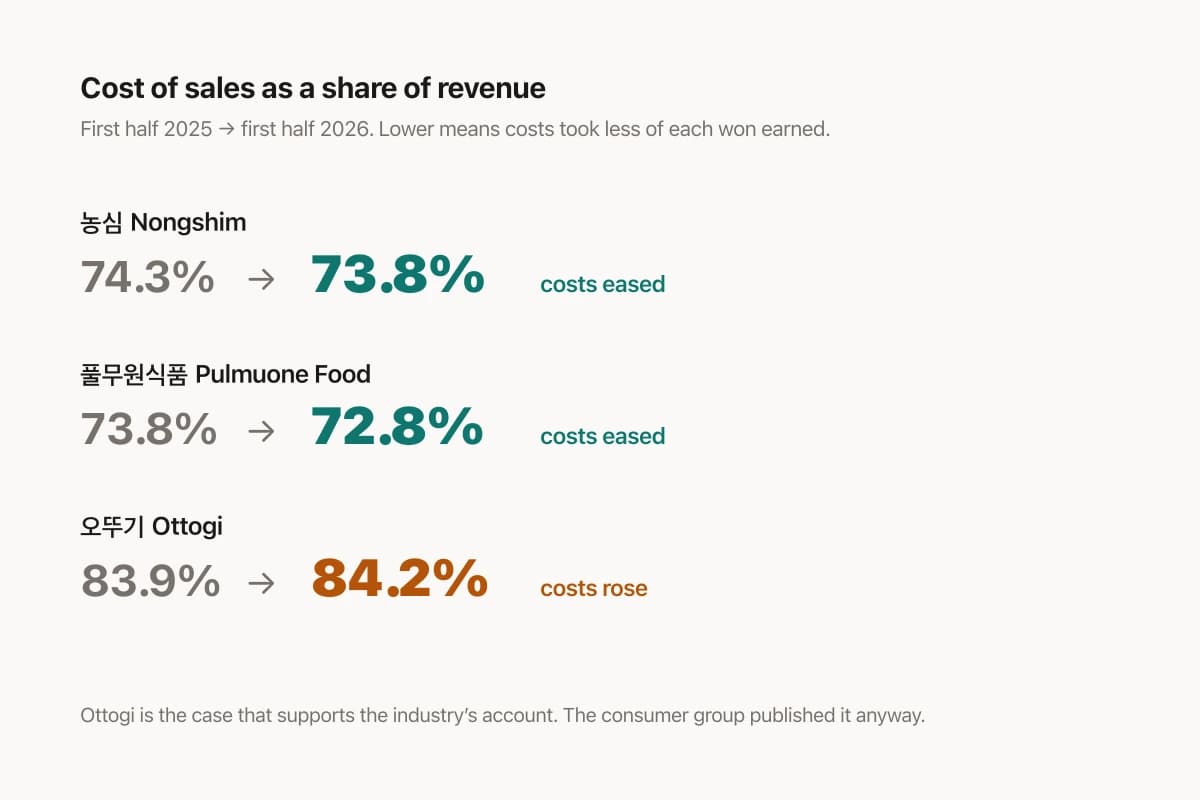
In April, Nongshim Cut Prices to Help With Inflation. In August It Raised Them, Using the Same Sentence.
Korea's biggest noodle company cut sixteen products in the spring, framed as joining the government's price-stability drive. Four months later it raised forty-three, framed as joining the government's price-stability drive. The products it cut are precisely the ones it left alone in August — and its own filings show the cost pressure it blames has not yet reached its margins. The awkward part is that the cost pressure is real.
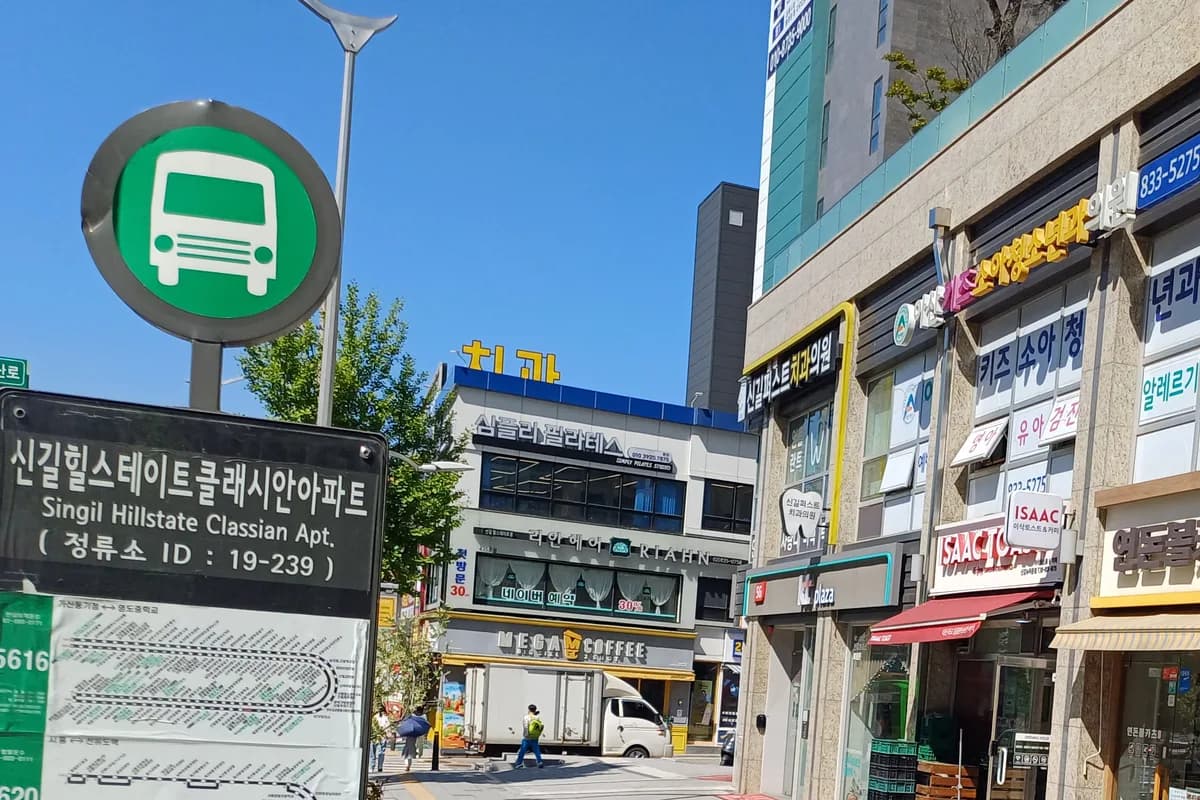
Korea's Longest Apartment Name Is 25 Characters — Seven Longer Than the Joke
Everyone says the names got long so mothers-in-law couldn't find the address. Twenty years of Korean and English coverage repeat that, and not once does anyone say it in the first person. Here is what actually happened: a decoder ring for 센트럴 and 포레, a Swedish word from a company with no Swedish business, and a 2021 study showing the thing residents vote hardest for doesn't work.
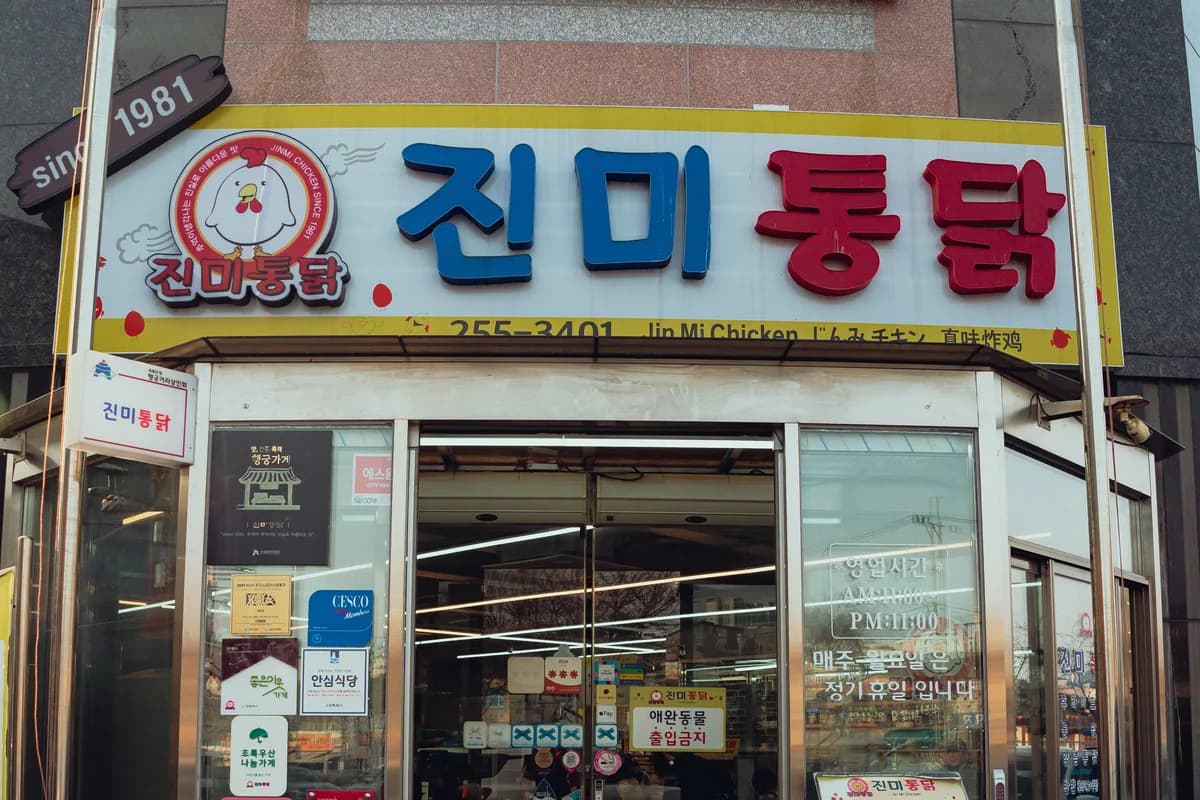
Korea Has Fewer Chicken Shops Than McDonald's Has Restaurants — the Famous Claim Was Counting Beer Halls
The number everyone quotes comes from a 2019 bank report whose own footnote says it includes 호프/통닭 licences and differs from the official count. On the like-for-like series the comparison is now the wrong way round. Four government bodies count Korean chicken shops four ways, two of them moving in opposite directions in the same year — and a decree amended last week finally requires the shops that closed to appear in the revenue forecast you're handed before you sign.
The Weekly Dispatch
Korea, curated. Every week.
The best of K-culture, straight from Seoul. Written by people who actually live here.
Free, no spam, unsubscribe whenever.