Agent Kim Reactivated: The 'Korean Taken' That Went No. 1 in 79 Countries
An ordinary office manager reactivates a buried black-ops past to find his kidnapped daughter — and became 2026's biggest global K-drama, the first Korean show in two years to crack a 20% rating while topping Netflix in 79 countries. Here's why the least prestige-coded formula on Earth out-traveled the auteur dramas — and the old controversy its success dragged back into the light.
The prestige era of Korean television taught the world to expect its exports to be elevated: the Cannes-coded class parables, the slow-burn auteur pieces, Parasite and Squid Game. So the most-watched Korean drama of 2026 is a small joke at that reputation's expense. It's about a mild-mannered office manager — a 부장 (bujang), the archetypal middle-aged Korean salaryman — who turns out to be a decommissioned special agent, and who reactivates every lethal skill he'd buried when his teenage daughter is kidnapped.
It is, unapologetically, a Korean Taken: the Liam-Neeson template of an ordinary dad with a terrifying past hunting the people who took his child. And it worked spectacularly — the first Korean drama in two years to break a 20% national rating, and a No. 1 hit on Netflix in 79 countries. The show is called Agent Kim Reactivated (Korean title 김부장, Kim Bujang — literally "Manager Kim"), and its runaway success is a lesson in what actually travels. It also, less happily, dragged an old and unresolved controversy back into daylight.
What It Is, at a Glance
Agent Kim Reactivated is an SBS Friday–Saturday drama that premiered on June 26, 2026, running 10 episodes to a July 25 finale, and streaming internationally on Netflix — though it's worth being precise: it's an SBS drama licensed to Netflix, not a Netflix Original (Korea JoongAng Daily, Korea Herald).
The lead is So Ji-sub, playing an unassuming manager and single father whose old life as an elite operative comes roaring back when his daughter is abducted. For So Ji-sub it's a homecoming: he framed the role as returning to SBS, the network he's made most of his career with, after more than a decade away (Korea JoongAng Daily). The show leans into a comic-thriller register — an ordinary man in an office cardigan who happens to be able to kill you with a stapler.
The Numbers That Made It a Phenomenon
The ratings climb was almost vertical. It opened at 9.5% — already the highest premiere of any 2026 miniseries — then jumped to 15.7%, 18.8%, and hit 21.6% by its fourth episode (with a peak minute of 25.1%), making it the first Korean drama in roughly two years to clear the symbolic 20% line (Soompi, allkpop).
Then it went global. For the tracking week of June 29–July 5, it was No. 1 on Netflix's Non-English Global Top 10 with roughly 10.5 million views, No. 1 in 11 countries and charting in the Top 10 across 79 countries (Korea Herald, Korea JoongAng Daily). It did this in a quiet summer, with no blockbuster marketing push behind it — which is exactly the interesting part.
Why This Formula Travels
Here's the thing prestige TV can make you forget: the stories that cross borders most easily are the ones that need the least translation. Parasite is brilliant and it asks the viewer to travel — to read subtitles, to catch the class satire, to do a little cultural homework. Agent Kim Reactivated asks for none of that. A father, a missing child, a countdown: there is no culture on Earth that doesn't already understand that story instantly.
What Korea did was take the most legible action template in existence and tune it Korean. The texture is unmistakably local — the salaryman archetype, Seoul's neon underworld, the specific choreography of Korean screen fights — but the emotional engine is universal. Prestige dramas make critics travel. A Korean Taken makes everyone travel. That's the quiet strategic lesson of 2026: Korea has learned to weaponize the familiar, not just the exotic.
The Webtoon It Came From
Like a huge share of Korean television now, the show didn't start as a script. It's adapted from the Naver webtoon 김부장 ("Manager Kim"), serialized since 2021 (Wikipedia, Namu Wiki). The salaryman-as-secret-weapon idea has real webtoon pedigree: the Manager Kim character first appeared as a bodyguard inside "Lookism" (외모지상주의), the hugely popular webtoon built by creator Park Tae-jun and his studio, and belongs to the shared "universe" spun out of it.
One detail matters for what comes next: Park Tae-jun built the universe, but he did not personally write "Manager Kim." The adapted webtoon is set in his world but drawn and scripted by others — a distinction that becomes important the moment the controversy enters.
The Controversy the Success Revived
As the ratings climbed, so did an old accusation — and this is where care is required, because what follows is contested.
As the drama became a hit, long-standing allegations against Park Tae-jun and his studio resurfaced online. Critics have alleged that his earlier webtoon "Lookism" contained hidden imagery they interpret as referencing the 2009 death of former President Roh Moo-hyun — reading a stray timestamp as an allusion to the date, and a background sign as an allusion to the place. Some critics linked those alleged references to Ilbe, a Korean far-right online community (Korea Herald, ZAPZEE).
These are interpretations and accusations by online critics, not established facts, and the creator has firmly rejected them. Park Tae-jun has denied the claims, saying he is "not the kind of person who would do something like that with a photo of the deceased, nor would I have the nerve" (ZAPZEE). Roh Moo-hyun, who served as Korea's president from 2003 to 2008 and died in 2009, remains a revered figure to many Koreans, which is precisely why any suggestion of mocking imagery lands so hard — and why the accusation, true or not, refuses to fade.
The result was a genuinely divided audience. Some online communities called for a boycott; the drama kept climbing anyway. And many viewers pushed back on the boycott logic itself, noting that Park didn't write the adapted webtoon and that punishing the show's cast and crew for an unproven claim about a different creator's earlier work seemed unfair (ZAPZEE). The cleanest way to hold it: the show's commercial record is a fact; the imagery accusations about the source creator are contested allegations he denies. They shouldn't be blurred into one.
Should You Watch It?
If you want the honest recommendation: yes, with clear eyes. Agent Kim Reactivated is not trying to be Parasite, and its 10-episode length gives the Taken formula room the 90-minute films never had — time to build the people around Kim rather than just the body count. It's a well-made, propulsive, deeply universal thriller that happens to be Korean, which is exactly why it traveled.
It's also a useful marker of where Korean TV is going. The auteur wave proved Korea could make the world's best prestige drama. This proves it can also make the world's most efficient crowd-pleaser — and that, commercially, the crowd-pleaser might be the more powerful export. Korea spent years teaching the world to read subtitles. Now it's discovering the reach of a story that needs none.
Ratings, view counts and chart positions are early-July 2026 figures and shift as the show's run continues. The controversy described involves contested allegations about the source webtoon's creator, who denies them; nothing here should be read as an established finding.
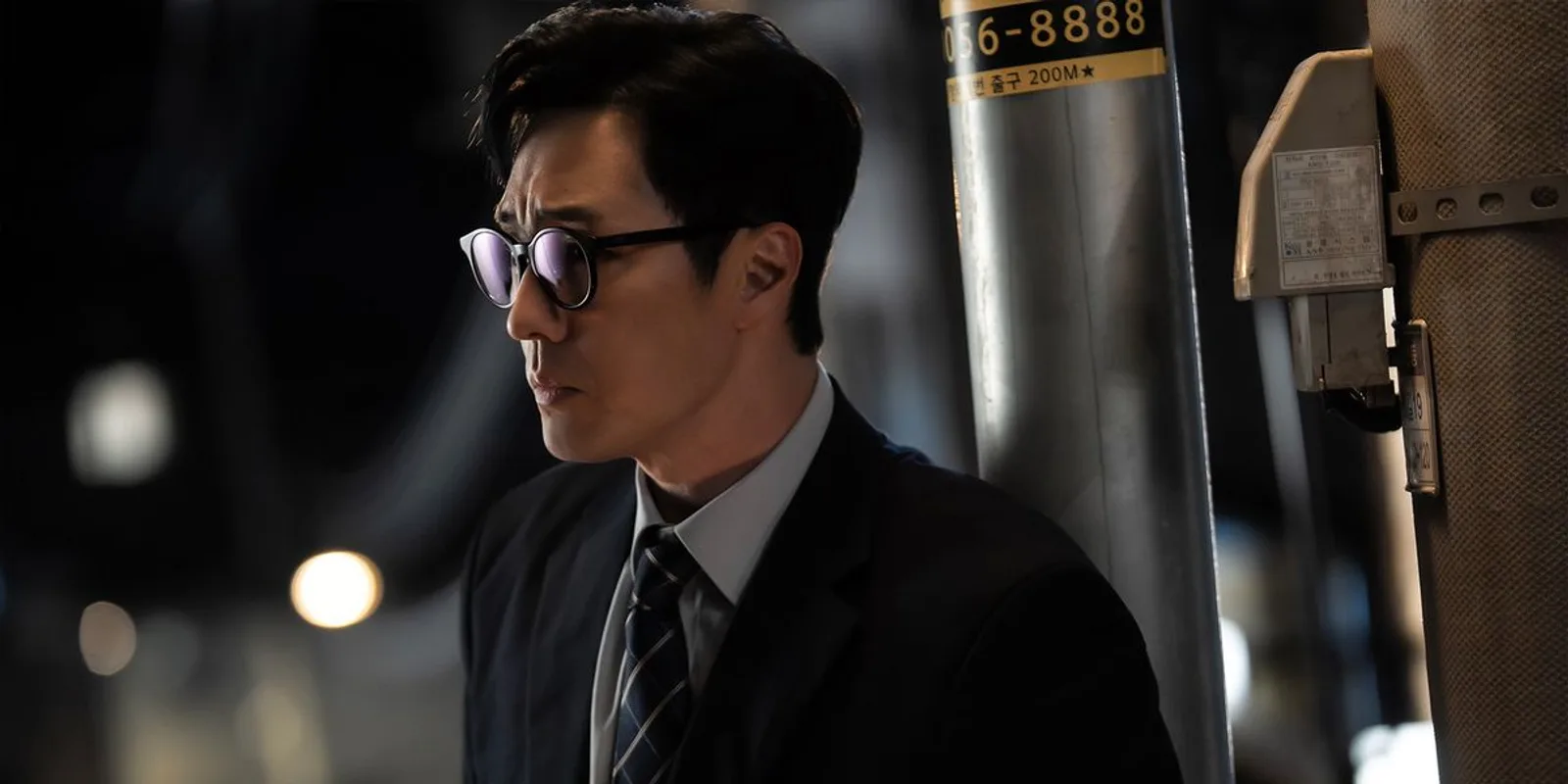
Images are official promotional stills for Agent Kim Reactivated (김부장). Homepage/hero: So Ji-sub as Kim in a fight stance. In-article: So Ji-sub as the mild-mannered "Kim" on a night street. Listing card: the character key art. © SBS / Netflix, used for editorial coverage of the series.
Keep Reading
More Stories

Korea's 《야구여왕》 Built a Women's Baseball Team Out of Olympians, Lost 36–0, and Now Has to Win 60 Per Cent or Be Disbanded
채널A's sports-variety series is managed by Choo Shin-soo on his days off, captained by an Olympic handball medallist, and has a catcher who kept goal for the unified Korean ice hockey team at PyeongChang. On 17 September a 22-year-old golfer — drafted 115th by New York in America's new women's professional league, and never signed — caught for the first time, hit her first home run and closed out the game. The team is 5–2. The sport it plays has thirty elite women registered in the entire country.
Netflix's 《스캔들》 Is Officially a Remake of the 2003 Film. Its Director Says He Went Back to the 1782 Novel Instead.
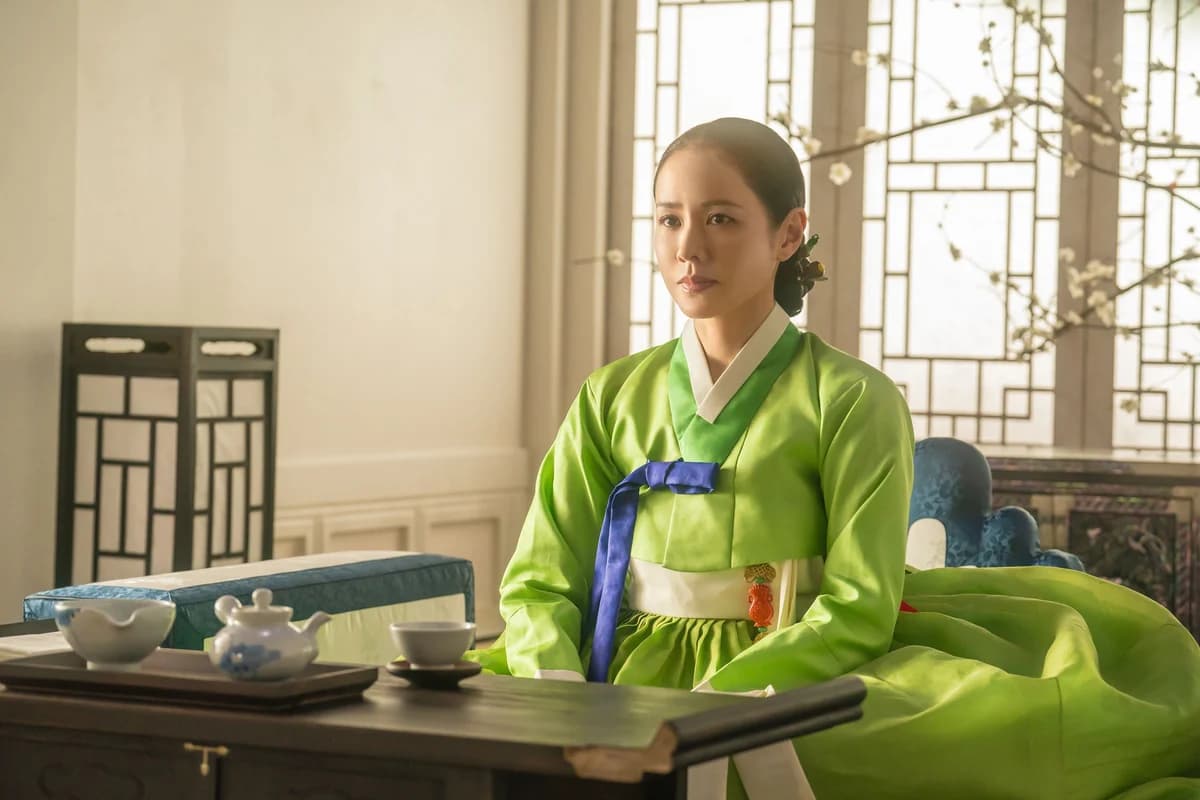
All eight episodes drop at 17:00 KST on 18 September, with Son Ye-jin as the widow who runs the game, Ji Chang-wook as the rake she runs it with, and Nana as the woman they wager on. Netflix's own announcement credits Lee Jae-yong's 《스캔들-조선남녀상열지사》 as the source. Jung Ji-woo told the press conference he didn't start from that film at all, but from Laclos — and rewrote the relationships until, he says, 'a great deal changed.' Here is what is known the day before, and what has been said about it that isn't quite true.
Korea's No. 2 Streaming Service Is One Almost Nobody Watches. It Just Made the Biggest Show on Korean Television.
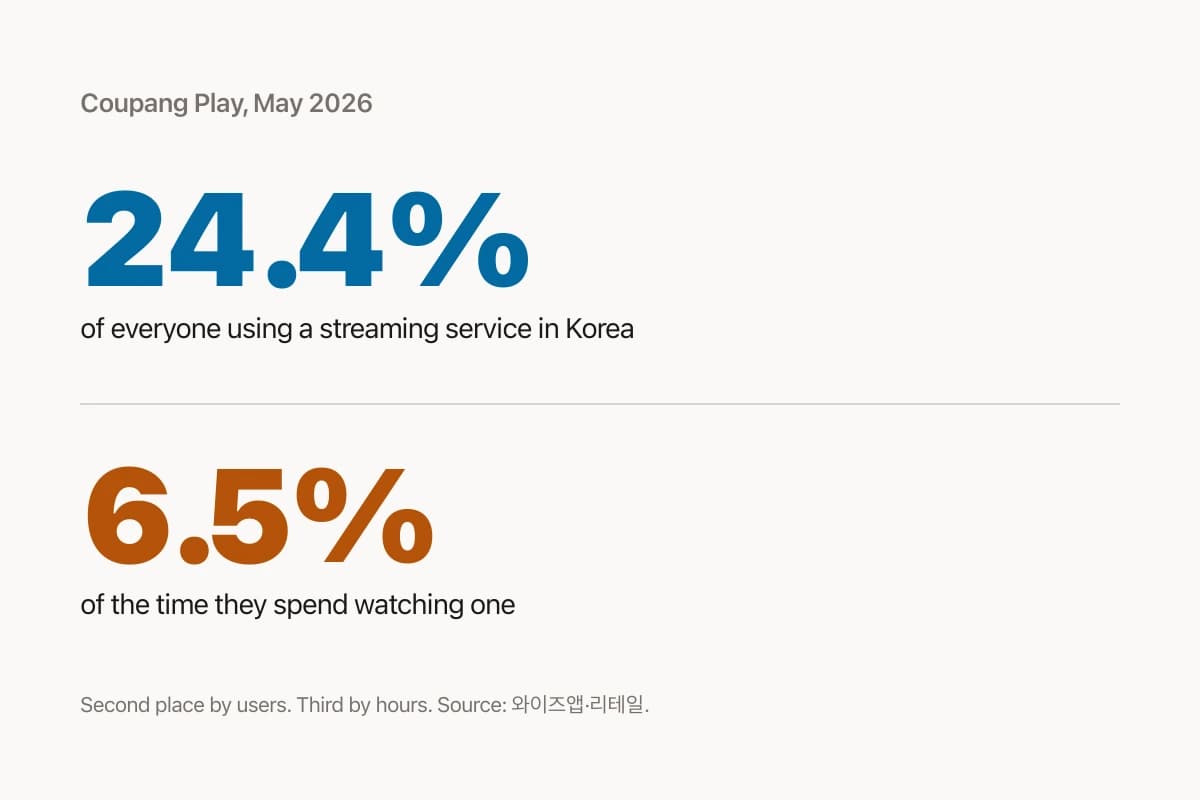
Coupang Play has a quarter of Korea's streaming users and six and a half per cent of its viewing time — the signature of a service people are subscribed to rather than watching. Then Kim Hye-soo and Cho Yeo-jeong turned up in a black comedy produced by the Squid Game director's studio, and it became the most-watched thing the platform has ever made. It is free to watch in Korea, licensed to Viu everywhere else, and the Western press that decides which Korean shows go global still hasn't looked at it.
The Weekly Dispatch
Korea, curated. Every week.
The best of K-culture, straight from Seoul. Written by people who actually live here.
Free, no spam, unsubscribe whenever.