The First AI-Assisted Song to Top Melon Names No Composer. Its Makers Say Suno Made the Melody
머무르's 《꿈꾸던 어른이 되었나요?》 reached No. 1 on Melon's Top 100 on 13 November and has led the chart since. Melon's credit line names 머무르 as lyricist and lists no composer, and the artist's note discloses only a voice generated with Suno. The two songwriters behind the project have told interviewers that Suno generated the melody, the arrangement and the voice from their lyrics, which they then reworked. No release form in Korea asks about any of that. The songwriting royalties are frozen, and KOMCA's members meet on 30 November to discuss the rules.

At 5pm on Friday 13 November, Melon's Top 100 had a new song at the top. It was 《꿈꾸던 어른이 되었나요?》, whose title asks, roughly, whether one has become the adult one dreamed of. The act is called 머무르, and the voice on the record was generated with Suno, an AI music tool.
It is the first AI-assisted song to top Melon's Top 100. No outlet we read names an earlier case, and none disputes the claim. The song has led Melon since.
What AI-assisted means here is the real story. Melon's own page tells listeners one thing about who made the song. The two people behind it have told interviewers something larger. No release form in Korea has a place to record the difference.
How it got there
머무르 is an AI-artist project run by 글로리웨이브, which is 이용석 (Martin East) and 최성혁 (비트자루). Both have written and produced ballads for about ten years, for 황치열, 길구봉구 and 김준수.
The song came out on 23 June 2026, filed on Melon under rock and metal. Its climb was slow. It spread as background music in short videos, reached No. 1 on YouTube's daily music-video chart on 2 September, was No. 2 on YouTube Music by mid-October, and reached No. 2 and No. 3 on Melon in October.
Genie got there first. On Genie's own daily chart the song was No. 2 on the days we checked in the first week of November, and No. 1 on every day we checked from 8 November, five days before Melon. We found no news report of that. At 5pm on 25 November it was still No. 1 on Genie's real-time chart, and Genie's own counter showed 371 hours at the top. That order fits the argument of our explainer on Melon and Genie, that Genie's listeners are older and lean towards ballads. Melon's listener figures for the song, reported by Yonhap, put people in their 30s at 36% and people in their 40s at 30%.
Melon is harder to move. Newsis says its Top 100 blends the last 24 hours of plays with the last hour, which makes it hard for a fandom to push a song up in a short burst. We found no accusation of chart manipulation. When we checked at 5pm on 25 November, the song was No. 1 on Melon's hourly chart, ahead of RESCENE's 'With' and A2O's 'NEON'. It was also No. 1 on the daily chart for 24 November and the weekly chart for 16 to 22 November.
It is not No. 1 everywhere. On Bugs at the same hour it was No. 2, behind BIGBANG's '기립 (GiiiRIP)'. On the Circle digital chart, which counts all platforms, it was No. 3 for the week of 8 to 14 November, behind 'With' and 'NEON', the two songs that have led Circle every week this month. The next week's chart is due on Thursday 26 November.
There is a precedent of a kind. 조선힙합's 「마음의 숲」, made with Suno for both the composition and the vocal, entered Melon's Top 100 on 6 September, the first AI track to do so. It peaked at No. 89.
What the label says
Melon's album page carries a note from the artist. It says the vocal was generated with Suno, and that the planning, the lyrics and the overall direction of the production were done by 머무르. It calls AI a modern instrument and a partner in turning the artist's ideas into reality, but names no other task the AI did. It says nothing about the melody.
Melon's credit line lists 머무르 as lyricist (작사) and leaves the composer (작곡) and arranger (편곡) lines empty; Genie's song page also names only a lyricist. Read together, the credit and the note tell a listener that a person wrote the words and a machine sang them, and say nothing about who wrote the tune. The note also carries a line from 머무르: "I believe that even when the tools change, the story does not."
Nobody was asked for more. 헤럴드경제 reports that the forms used to release a song in Korea have no box for declaring AI use, and a platform official told Dailian the same.
What the makers say
In interviews with Newsis and AI Times, and in 한국경제's reporting, the team has described a different division of labour.
- People wrote the lyrics.
- Suno generated the melody, the arrangement and the vocal.
- The team picked the takes it liked, edited Suno's melody and chords in its own software, and fed the result back through Suno's cover function.
- It rewrote syllables where the AI's Korean pronunciation was awkward, and finished the track in production software.
That account is not on Melon's page. The team has not hidden it, though, and has been open about its views. In the Newsis interview, the two said that AI lowers the technical barrier but deciding what to say is still a human job, and that judging all music made with AI the same way ignores how varied production really is. They also said they understood listeners who refuse AI vocals. To AI Times, they argued that the field needs standards that measure human contribution rather than a yes-or-no on AI, and said they plan to add live instruments and human singers.
The press has split along the same line as the page and the interviews. 한국일보 and 헤럴드경제 mention only the vocal. Newsis, 국민일보, 뉴스1, 주간경향 and 한국경제 say the AI did the melody or the composition too. In English, JoongAng Daily described the song as composed and sung entirely by AI, while its own report credits people with the lyrics.
Who gets paid
A song earns in two ways: for the recording, and for the words and music. Only one of those is working.
The recording still earns, through distribution and through neighbouring rights, the payments owed for a recording itself. The Korea Herald explained this for AI tracks in general, and AI Musicpreneur for this one. So it is wrong to say that nobody is paid.
The songwriting side is frozen. The song is not registered with KOMCA, the society that collects songwriting royalties, so it earns nothing for its lyrics, composition or arrangement, according to Newsis, 헤럴드경제 and JoongAng Daily.
The reason is KOMCA's own rules. Since March 2025, according to 주간경향, it has registered only works declared free of AI, and put any work that discloses AI use on hold. In August 2026 it adopted a rule to register the human share of AI-assisted works. It dropped that rule after 22 days, following criticism in the National Assembly and a request from the culture ministry for public debate, as 헤럴드경제, the Korea Herald and Dailian reported. 헤럴드경제 alone reports that KOMCA has received 892 applications involving AI and registered none of them.
The system depends on people declaring. 헤럴드경제 reports that KOMCA filed a complaint in October 2025 against people it suspected of mass-producing songs with AI and registering them, and that investigators dropped the case in July 2026 for lack of evidence that the music was AI-made. 주간경향 alone reports that four registrants whom KOMCA suspected drew ₩16.3 billion in 2024–25. It remains a suspicion, not a finding.
What comes next
KOMCA's hearing. Its members meet at 2pm on Monday 30 November, at the Conrad Seoul in Yeouido, for a hearing on rules for managing music made with AI, according to 디지털데일리 and 헤럴드경제. The chair, 이시하, is due to present on four questions:
- how much human contribution counts
- the criteria for registration
- collection and payout
- checks against false declarations
헤럴드경제 alone reports that GEMA, Germany's music-rights society, will present its own cases by video, and that KOMCA will send the results to its board and the culture ministry and use them at a third National Assembly forum, after two in September and October. The hearing does not itself decide the rules.
The record industry. On 24 November the record-industry body 한국대중음악산업협회 (대음협), chaired by 우승현, published three principles:
- Responsible AI training. Commercial training needs the rights holders' permission first, and agreed payment. The body opposes a blanket exemption for text-and-data mining.
- Protecting artists. Stop unauthorised AI copies of artists' faces and voices.
- Fair distribution and payouts. Separate purely generated tracks from AI-assisted ones, and label the purely generated ones. Stop floods of uploads and fake streams from shrinking existing rights holders' payouts.
A survey in September lay behind them. Fourteen of the twenty companies in 대음협's AI working group replied, and together they had 83.4% of 2025's Circle top-100 album sales. None of the reports we read names the fourteen. 대음협's members, as 한국경제 lists them, include Kakao Entertainment, which runs Melon, and KT Genie Music.
Melon itself has not moved. According to 헤럴드경제, it will not decide on its own which songs count as AI-made, and will publish a policy once there is a wider agreed standard. 뉴스1 reports that it adds no AI labels today. We found no separate statement from Kakao.
The government. The science ministry, which runs the AI Basic Act, is considering widening the duty to label AI content, 뉴스1 reported. Today the duty falls on AI providers; it could be extended to people who use AI tools, and bills are already before the National Assembly. ZDNet reports that the ministry will hold a public hearing in December on a plan to improve the act, including who must label. None of this is specific to music.
What people make of it
Critics in the press take different angles.
- 박희아, in 한국일보, says listeners can no longer tell AI music from human music, that standards for detecting it need to be concrete, and that banning AI from music alone is hard to justify.
- 김헌식, in 국민일보, says listeners care more about how finished and relatable a song is than about whether AI made it.
- 하재근, also in 국민일보, calls this a transition phase, in which young creators and session staff could lose work.
- 김성환, speaking to the South China Morning Post, says the key question is whether the original idea came from a person.
Listeners are split between finding comfort in the song and preferring human singers, according to Topstarnews, 한국경제 and the SCMP's street interviews. The actor 공유 sang it at a fan meeting. We found no named Korean singer or songwriter on the record about it.
One line is worth keeping clear. PLAVE, which won one of this year's TOP10 prizes at the Melon Music Awards, is a virtual idol group, but its members are human singers performing through motion capture, as the SCMP notes. 머무르's voice comes from Suno.
What it says
This is not a story about a chart being gamed. The song climbed for nearly five months, topped Genie first, and has drawn no accusation of manipulation that we could find. Listeners chose it.
The problem is the label. Melon credits 머무르 with the lyrics, lists no composer, and discloses only the voice. The team's own account is that Suno made the melody and the arrangement as well, which the team then reshaped. Nothing on the page is false, but it gives a smaller picture of the machine's part than its makers do, and no release form asks for more. To the team's credit, it has said more in interviews than any form required.
The money will not sort itself out soon. KOMCA pays nothing to people who declare AI, in a system that relies on declarations, and the 30 November hearing will only feed a board, a ministry and another forum. 대음협's principles would label only tracks generated entirely by AI, as distinct from AI-assisted tracks that a creator substantially made, and it is not clear which side of that line this song falls on: people wrote the words, but by its makers' account Suno made the tune. A box on the release form with separate lines for lyrics, melody, arrangement and voice would cost little, and it would answer the question this credit line leaves open.
Images. The cover, listing and homepage images are AI illustrations (generated with Higgsfield, GPT Image 2.6): an empty vocal booth with a microphone and headphones, and a waveform glowing on a laptop in the control room; studio headphones and a speaker on a desk under an abstract waveform; and a night city of apartment blocks, with waveforms rising from lit windows into one large waveform. They depict no real person, studio or recording. There is no photograph because 머무르 is an AI-voiced project with no performer to photograph, and we found no freely licensed image of the team.
Sources. The chart positions are from Melon's, Genie's and Bugs's own chart pages, checked on 25 November, and from Circle's chart data. The first No. 1 is from Newsis, Herald Business, Star News and AI Musicpreneur; the run on Melon from 한국경제 and 국민일보; the YouTube positions from JoongAng Daily, Dailian, the Korea Times and AI Times; the listener figures from Yonhap; 「마음의 숲」 from the Korea Herald and Dailian. The disclosure and credits are from Melon's song and album pages and Genie's song page. The team and its account are from interviews with Newsis and AI Times, and from 한국일보 and 한국경제. Royalties and KOMCA's rules are from Newsis, 헤럴드경제, JoongAng Daily, 주간경향, the Korea Herald, Dailian and AI Musicpreneur. The hearing is from 디지털데일리 and 헤럴드경제; 대음협's principles and survey from 디지털데일리, 세계일보, 한국경제 and 헤럴드경제; Melon's position and the release forms from 헤럴드경제, 뉴스1 and Dailian; the government's review from 뉴스1 and ZDNet. Reaction is from 한국일보, 국민일보, the SCMP (read through Malay Mail's reproduction), Topstarnews, 한국경제 and Newsis.
Stated rather than smoothed. 국민일보 says the song has held No. 1 on Melon without a break since 13 November. The record is less tidy. AI Musicpreneur, alone, saw 'With' back at No. 1 at midnight on 14 November; 한국경제 counted four daily No. 1s as of 18 November; and we could not reach Melon's daily charts for 18 to 23 November. So we say the song has led Melon since 13 November, and give no count of straight days. Genie's positions are from Genie's own pages, and we found no report of them. Outlets qualify the first in different ways, as AI-assisted, AI-sung, or composed and sung by AI; we use the narrowest. Newsis's opening line calls it the first AI-made song to top any domestic chart, which Genie's chart contradicts. Every Melon song page heads its credit box 작사 / 작곡, whatever the box contains; on this song's page the only entry is 머무르, as lyricist, and the composer and arranger lines are empty, so we do not say Melon credits anyone with the music. The 892 applications, GEMA's part in the hearing and where its results go rest on 헤럴드경제 alone, and the ₩16.3 billion suspicion on 주간경향 alone. The point that the recording still earns comes partly from the Korea Herald's general account of AI tracks. We could not confirm whether 글로리웨이브 has applied to KOMCA, or the song's current place on YouTube Music. English editions of Korean outlets, most of them machine-translated, broadly agree with the Korean reports. We have left out single-source items about other AI tracks.
Keep Reading
More Stories

BTS Won the Same Two Grand Prizes at MAMA as at the MMA. Song of the Year Went Another Way
All four grand prizes at the 2026 MAMA Awards in Osaka on 20 and 21 November went to acts under HYBE. BTS took Artist of the Year, and Album of the Year for 'ARIRANG', as at the Melon Music Awards a week earlier. Song of the Year went to CORTIS's 'REDRED', not IVE's 'BANG BANG'. The two shows count different things, and neither publishes its scores. Here are the winners, both formulas, and a year-by-year count of MAMA's grand prizes since 2018.
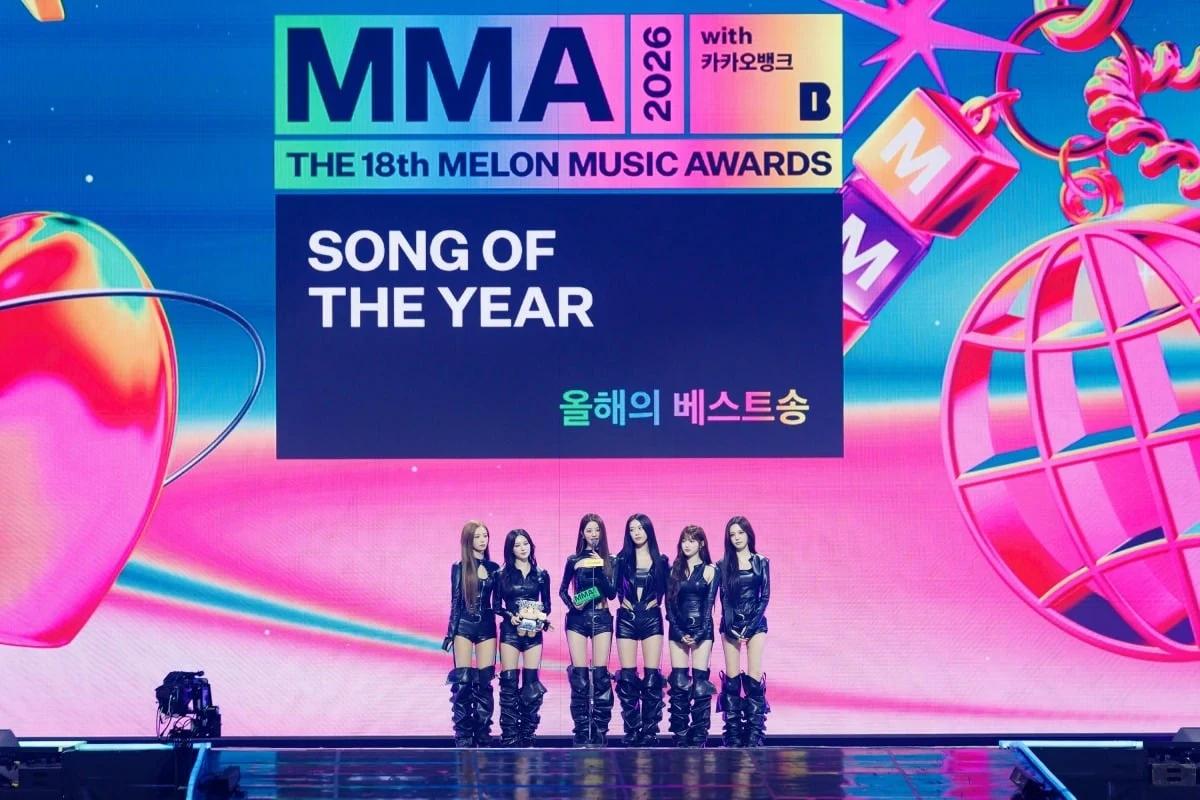
BTS, IVE, aespa and CORTIS Split the Melon Music Awards' Grand Prizes. What a Korean 'Daesang' Is
Four acts took the five grand prizes at the 18th Melon Music Awards on 14 and 15 November: BTS won two, IVE, CORTIS and aespa one each. Here is the full list, a plain guide to what a daesang is and how Melon says winners are chosen, and the rest of the award season, which continued with MAMA in Osaka on 20 and 21 November.
The Government's Giant K-pop Festival Has a Name. Half of It Belongs to JYP — and the Contract Was Too Secret for the Committee Chair to See
FANOMENON is meant to be Korea's state-backed answer to the world's pop festivals, planned for December 2027 by a presidential committee co-chaired by 박진영. His company filed the trademark first. On 7 October, at the National Assembly, a lawmaker put the contract on the big screen, the chair halted the audit, and 박진영 conceded that the way the name was taken was 'not normal'.
The Weekly Dispatch
Korea, curated. Every week.
The best of K-culture, straight from Seoul. Written by people who actually live here.
Free, no spam, unsubscribe whenever.