Three Soldiers Were Wounded by a Mine Ten Metres from the Line. It Took the Military Seven Days to Say It Was Probably North Korean, and a Front Page to Make It Admit What Its Own Men Had Reported
On 21 September, eighteen Korean soldiers cutting a new path through the DMZ for a UN Command inspection walked into two mine blasts a minute apart. During the evacuation, its own men reported that an object in the ground looked like a North Korean mine. The military said nothing of that for a week, refused to say it when asked, and confirmed it the morning a newspaper printed it. The opposition says the silence protected the President's speech at the UN; the President calls that a baseless conspiracy theory; a member of his own party told the cabinet to 'come down, we'll go in'. The record does not settle the motive. It settles the timeline, and the timeline is bad enough.
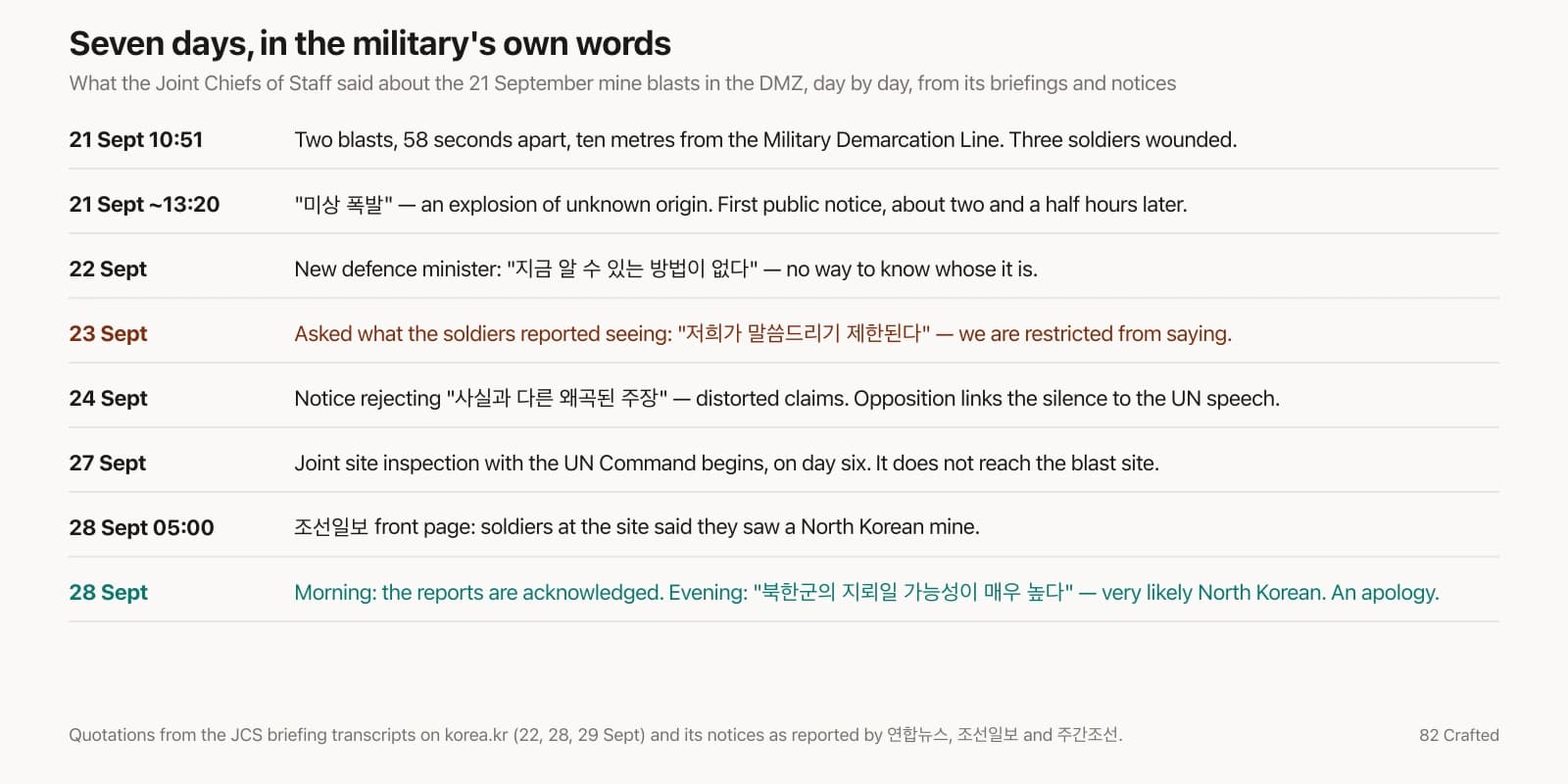
At 10:51 on the morning of Monday 21 September, in the western sector of the Demilitarized Zone, a mine exploded under a party of eighteen Korean soldiers. Fifty-eight seconds later, a second one did. A listening post on a guard post 800 metres away recorded both.
The eighteen were not on patrol. They were cutting a new route — about 200 metres of it, through ground that the Joint Chiefs of Staff say nobody had walked in fifty years — so that the UN Command could inspect a patch of terrain, ten metres or so away, where satellite imagery in the second half of 2025 had shown changes consistent with North Korean troops laying mines. The party had judged itself close to the Military Demarcation Line and had begun to withdraw when the first blast came.
Three career soldiers were wounded, two of them seriously. A medical evacuation helicopter, which needs the UN Command's approval to enter the DMZ, was requested at 10:59, approved at 11:38, and went in at 11:40. In the minutes between, one of the engineers, kneeling and probing an escape route with a hand pick, found something else in the ground about a metre from the first crater, buried five to ten centimetres deep: square, brown, smooth, plastic.
That is what the military knew, from its own men, on the first day. What follows is what it said.
Seven days, in the military's words
Monday 21 September, about 13:20. Two and a half hours after the blasts, the Joint Chiefs issued a first notice. Three 간부 — career soldiers — had been wounded by an "미상 폭발", an explosion of unknown origin, south of the MDL on the western front. Asked about the delay: the soldiers' safety had come first, and the evacuation had been under way. In a background briefing later that day it allowed that a mine was likely and that "폭발물 종류와 매설 주체는 조사가 필요하다" — the type of device, and who laid it, needed investigation. Asked whether the site was the suspected North Korean mine-laying area that an opposition lawmaker had named, it said the site was "거리가 떨어져 있다" — some distance from it. The President, that evening, sent a message wishing the wounded a quick recovery and used the word 지뢰, mine, without qualification.
Tuesday 22 September. The new Minister of National Defence, 강신철, took office and, speaking to reporters at the ministry, said this:
"우리 것이든 북한 것이든, 누가 심었는지, 매설한 것인지 유실된 것인지 지금 알 수 있는 방법이 없다."
"Whether it's ours or North Korea's, who laid it, whether it was planted or drifted — there is no way to know right now."
The Joint Chiefs' spokesman said the site was close to the MDL and that a joint site inspection with the UN Command was scheduled "다음 주 초" — early the following week.
Wednesday 23 September. At a background briefing a reporter asked whether the soldiers had said anything about whose mine it looked like. The answer, as reported by 조선일보 and recapped in the Joint Chiefs' own later transcript: "저희가 말씀드리기 제한된다." We are restricted from telling you.
That same night, in New York, the President addressed the UN General Assembly.
Thursday 24 September. The Joint Chiefs issued a notice rejecting "사실과 다른 왜곡된 주장" — distorted claims contrary to fact — and said the UN Command "적극 공감" with putting safety before speed. The same day the opposition's spokesman asked in a statement whether a North Korean finding would be "부담스러운" to the President's peace agenda, and 한동훈 staged a one-man protest outside the ministry.
Friday 25 September. A senior presidential official, travelling with the President in Mexico City, told reporters there was "추호라도" — not the slightest — cover-up, and that the delegation had received only basic facts. The chairman of the Joint Chiefs visited the division; the inspection was brought forward from the 29th to the 27th.
Saturday 27 September. About forty personnel from the Joint Chiefs and the UN Command went in from 09:00. They did not reach the blast site and stopped for the day.
Monday 28 September, 05:00. 조선일보's front page: "[단독] 폭발 현장 장병들 '北 목함지뢰 봤다'" — soldiers at the blast site said they saw a North Korean wooden-box mine.
Monday 28 September, morning briefing. A reporter cited the front page. The Joint Chiefs' operations chief acknowledged, for the first time, that the reports existed: "형상은 목함지뢰와 유사하고 재질은 플라스틱으로 보였다는 취지의 진술도 있고 또 다른 인원은 다른 종류로 추정되는 진술도 있었기 때문에 그런 부분을 말씀드렸던 겁니다" — there were statements that it looked like a wooden-box mine but seemed to be plastic, and other personnel had described a different type, which was why they had said what they said. The forensic result from the National Forensic Service arrived at 16:04.
Monday 28 September, evening. After a briefing rescheduled several times through the day, the deputy chairman of the Joint Chiefs, Lieutenant General 권대원, who heads the task force, read the interim finding at the ministry in Yongsan:
"이번 지뢰 폭발 원인은 북한군의 지뢰일 가능성이 매우 높다고 판단하였습니다."
"We judge it very likely that the cause of this mine explosion was a North Korean mine."
TNT, brown matter, no steel fragments. He apologised — "국민 여러분께 심려를 끼쳐드린 점에 대해 송구스럽게 생각합니다" — and added, conditionally, that if the final investigation found the mines were laid by North Korean troops, all responsibility lay with the North. The object the engineer found was, on the basis of his statement, "북한군 목함지뢰의 형태와 유사한 갈색의 수지반보병지뢰로 추정됩니다" — presumed to be a brown plastic-cased anti-personnel mine of the wooden-box type. Other soldiers who saw it, the operations director said, described it differently: some said red, some said brown, some said 목함지뢰.
And the location moved. On day one the site had been "some distance" from the suspected North Korean ground. On day eight it was "MDL 남쪽 10여 m" — ten-odd metres south of the line — and ten-odd metres from that ground. The explanation, given the next day: poor communications and GPS error.
Tuesday 29 September, morning. The presidential office issued an unsigned notice: the site inspection "대통령의 유엔연설과 전혀 관련이 없다" — had nothing whatever to do with the UN speech — and was planned "순전히 군사적 판단에 의해", by purely military judgement. At the cabinet meeting the President said security had no ruling and opposition side, and that he hoped nobody would endanger it by "근거 없는 음모론을 부추기면서" — stirring up baseless conspiracy theories. At the Joint Chiefs' briefing the spokesman then said the timing of the inspection and the announcement was "대통령 유엔총회 연설 등 정치적 고려와는 전혀 무관합니다" — unrelated to political considerations such as the UN speech. A reporter's reply is in the transcript: "청와대 페이지를 그대로 읽으셨네요?" — you just read the presidential office's page, didn't you?
The Assembly's defence committee summoned the minister for that afternoon.
What the speech did and did not say
The opposition's theory needs the speech to be about sanctions. It was not.
The President spoke on the afternoon of 22 September, New York time — the small hours of the 23rd in Korea, about forty hours after the blasts. The official text, as published, contains no reference to the explosion and no reference to sanctions. Its sentence on the North is this: "우선 북측의 핵·미사일 능력 고도화를 중단시키고, 중기적으로 축소를 거쳐 장기적으로 핵 없는 한반도를 향해 나아갈 수 있을 것으로 생각합니다" — first halt the advance of the North's nuclear and missile capability, reduce it in the medium term, and move in the long term toward a peninsula without nuclear weapons.
The idea that sanctions might be traded for a freeze is real, and it is the President's — but he said it to the New York Times, in an interview published the day of the blasts, not to the General Assembly. So when 배준영 of the opposition asked on Facebook whether the military's silence was connected to a UN speech "유엔에서 북한에 대한 제재 완화를 역설하는데" — in which the President pressed for sanctions relief — the premise was wrong. That does not dispose of the question. It means the question has to be asked about a week, not a speech.
The argument, from three sides
장동혁, the opposition leader, escalated on consecutive days, and every escalation was conditional. On the 26th the President was "대한민국 안보의 목함지뢰". On the 27th: "만약 이 대통령이 고의로 현장조사를 지연시켰다면 이는 명백한 이적행위다" — if the President deliberately delayed the inspection, it was plainly aiding the enemy, an offence outside presidential immunity. On the 28th: "만약 이재명 대통령이 사고 은폐를 지시했다면 이야말로 탄핵 사유다" — if he ordered a cover-up, that is grounds for impeachment. He also said the military had refused a UN Command inspection, which nothing on the record supports; the Joint Chiefs' notice of the 24th has the UN Command agreeing that safety came first.
The sharper voice came from inside the governing party. 박지원, on Facebook on the 26th, addressed not the generals but the cabinet — "총리 이하 전 정부 인사들", everyone from the Prime Minister down — and told them to stop hiding behind the President:
"왜 닥치고 설명 못하는가 … 그렇게 하려면 다 내려오라. 우리가 들어가겠다."
"Why can't you just explain it? … If that's how you're going to do it, all of you come down. We'll go in."
And the President's line, on the 29th, was that the conspiracy theories were baseless. He may be right about the motive. He is not the one who can settle it, because the question is not about him; it is about what the Joint Chiefs held and when.
What is actually established
Strip away the motive and the record shows three things, none of which depends on anyone's intent.
The military had the reports early and withheld them. The engineer's discovery was on the 21st, during the withdrawal. By the 23rd at the latest — the day it said it was "restricted" from answering — the Joint Chiefs held statements including one describing a plastic object shaped like a North Korean mine. Its later defence was that the statements conflicted. Conflicting statements are a reason to say "our men reported seeing an object; their descriptions differ; we are investigating." They are not a reason to say nothing, and then to confirm the reports on the morning a newspaper prints them. Whether the chain of command had the reports on the 21st, or only by the 23rd, is the question the defence committee said it would put to the minister.
The inspection took six days, and the reasons given are institutional. Everyone in the party had been hospitalised and some were needed as guides; the ground was an unmapped minefield; the corps commander had been removed from his post in August over a separate matter, and the acting commander proposed the 29th. The UN Command agreed. None of that is sinister. All of it is a description of a command that was not ready.
The location changed. "Some distance from the suspected area" on day one became "ten metres from it, ten metres from the line" on day eight. GPS error in a communications dead zone is a plausible explanation and it is also the whole problem: for a week the public was told the soldiers had not been where they were.
The 2015 comparison, done honestly
Everyone in Korea is thinking of August 2015, when two staff sergeants lost their legs to North Korean wooden-box mines at a gate near a guard post in the same western sector. The comparison the opposition wants is "then we spoke; now we hid." The dates do not support it. In 2015 the blast was public within three hours, and the North was named six days later, on 10 August. This time the blast was public within two and a half hours, and "very likely North Korean" came seven days later. On disclosure of the finding, the pace is nearly identical.
Where 2015 differs is in everything else. The joint inspection went in on day two, not day six. The soldiers' accounts were not withheld. And the mines were at a gate the soldiers used daily, which is why the finding then was "planted, deliberately, to kill our men," and why loudspeakers, artillery and an August agreement followed. The Joint Chiefs made that contrast themselves on the 29th: "2015년 목함지뢰 도발은 우리 장병이 매일 드나드는 통문 앞뒤에 심은 것이어서 의도가 명확했다 … 이번 지역은 50여 년간 사실상 가지 않은 곳이라 아군 병력을 노렸다고 보기에는 제한이 있다" — the 2015 mines were at a gate our soldiers used every day, so the intent was clear; this ground had not been visited in fifty years, so it is hard to say our troops were the target.
Which brings up the thing the foreign wires got wrong. AFP and AP wrote that North Korea had "recently planted" the mines. The Joint Chiefs never said that. Its finding is that the mines were very likely North Korean. Whether the two that exploded were laid or washed downhill along a stream, whether they are new or decades old, whether the North laid them on ground it considers its own — every one of those is, in the military's own words, undetermined, pending the object still in the ground. "Whose" is answered, provisionally. "How it got there" and "why" are not.
Update, 1 October: planted, a year or more ago — and, on Armed Forces Day, "an unforeseen accident"
Three days moved this story further than the previous seven.
29 September, the defence committee. Asked by 유용원 whether the mine found at the site had been laid or had drifted there, the minister, 강신철, answered in one word: "매설" — laid. With several mines found together in a small area, he said, drifting was very unlikely; at least four had been found within one or two metres of each other — the two that exploded, the one the soldiers saw on the day, and one more found during the third joint inspection with the UN Command. Asked by 천하람 whether the cause could now be confirmed as a North Korean mine, he said "그렇다". And he dated them: there was no trace of a mine line, he said, and they had been buried well before the North's visible mine-laying of September 2025; the deputy chairman of the Joint Chiefs said field experts judged them at least a year old. "정전협정 위반은 명백하고 북한에 책임이 있기 때문에 상응하는 조치를 해 나갈 것" — a clear armistice violation, North Korea's responsibility, and corresponding measures, which he declined to describe on operational grounds. What none of the coverage of the session we have read reports is an answer to the question this piece is about: when the chain of command learned what the soldiers had seen.
30 September. The Joint Chiefs' head of operations, Lieutenant General 강현우, and the UN Command called the North's mine-laying near the line a "명백한 정전협정 위반"; the UN Command said it had found one North Korean anti-personnel mine on the southern side of the line and had concluded that a violation had occurred. North Korea answered through 김여정: "이번 사건은 명백한 자작극… 우리 군인들은 단 한 번도 국경선을 넘어선 적이 없다. 이것은 명백히 트집 잡기이고 도발" — a plain self-staged farce; our soldiers have never once crossed the border; this is fault-finding and provocation. The governing party's leader, 김민석, condemned both the violation and the denial. The President visited the wounded at the Armed Forces Capital Hospital. A cross-party resolution condemning the North failed — over, the governing party says, the opposition's demand to add a review of humanitarian aid. And the foreign affairs committee met without the governing party or the foreign and unification ministers, who stayed away for want of an agreement on the agenda; 권영세, a former unification minister, said it was "이 대통령과 정부여당이 이러고 있으니까 음모론이 생기는 것" — conspiracy theories arise because the President and the governing party behave like this.
1 October, the 78th Armed Forces Day, at 계룡대. The President said:
"얼마 전 비무장지대에서 불의의 사고로 부상을 당하신 우리의 장병들을 생각하면 지금도 마음이 아프다."
"When I think of our soldiers who were wounded in an unforeseen accident in the DMZ not long ago, it still pains me."
He went on to promise "실질적인 조치" to lower military tension and to call on the North to join "단절된 대화를 복원하는 길" — the road to restoring broken dialogue. The phrase he used for the blast, 불의의 사고, is the language of a mishap. Two days earlier his defence minister had told the Assembly the mines were laid by North Korea in breach of the armistice. Both statements are now on the record, from the same government, in the same week.
Two corrections to what we wrote above follow from this. We said "planted" was not the Joint Chiefs' finding; it is now the minister's. But the foreign wires' "recently planted" is still wrong: the military's own judgement is that the mines are a year old or more.
Sources for this update: 뉴스핌 (29 September) for the committee exchange; 머니투데이 (30 September) for 강현우, the UN Command and 김여정; 데일리안 (30 September) for the foreign affairs committee and the failed resolution; 파이낸셜뉴스 (1 October) for the Armed Forces Day speech, read in full.
What it says
The most damaging thing in this story is not the week. It is the sentence on the 23rd — we are restricted from telling you — followed by the sentence on the 28th, which was the same information, released the morning it stopped being a secret. A military that will not say what its own soldiers saw until a newspaper says it first has told the public something about itself that no finding about the mine can undo. The opposition has turned that into a theory about a speech, and the theory is wrong on its central fact. The government has turned it into a theory about conspiracy theories. In between are three wounded men, an unmapped minefield, an acting corps commander, a satellite image that had been sitting in a file for a year, and a demarcation line that turned out to be ten metres away.
Images. The DMZ photograph is a view from 도라전망대 in 파주, June 2024, by the Commons user Dwxn, CC BY-SA 4.0, licence verified on the file page — a different stretch of the line from the blast site, and captioned as such. The minister is 강신철 in August 2025, then deputy commander of the ROK-US Combined Forces Command, a US Army photograph in the public domain (Sgt. Ashton Smith), with full camera data. The photograph of the President is of the cabinet meeting of 12 May 2026, Korea.net, CC BY-SA 4.0, used whole and uncropped as Korea.net's terms require; it is not the meeting of 29 September. The timeline is ours. We have used no imagery of the blast site, the craters or the rescue, though the Joint Chiefs released some.
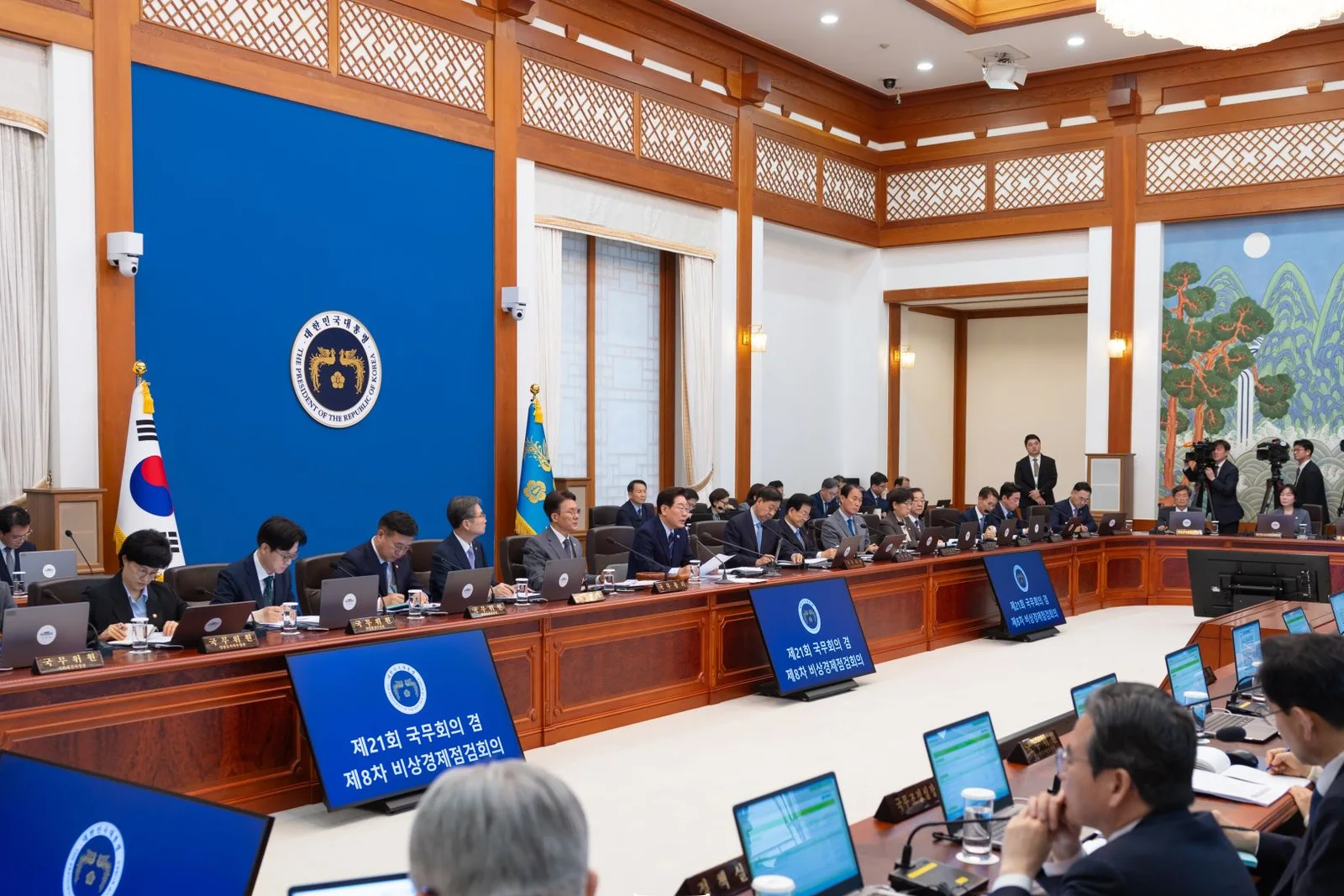
The cabinet meeting of 12 May 2026. Republic of Korea / 청와대 (Korea.net), CC BY-SA 4.0.
Sources. The timeline is built from the Joint Chiefs of Staff's own briefing transcripts as published on 정책브리핑 (korea.kr) for 22 September, both briefings of 28 September and 29 September, quoted verbatim; the UN speech from its official text on the same site; the first-day notice and background briefing from 연합뉴스 and 뉴스핌 (21 September); the minister's remarks from 뉴시스 (22 September); the 23 September exchange from 조선일보 (29 September) and the Joint Chiefs' own recap; the 24 September notice from 주간조선 and 한겨레; the Mexico City remarks from 연합뉴스 (25 September); the reasons for the inspection date from 뉴스핌 (29 September); the front page from 조선일보 (28 September); the presidential notice and cabinet remarks from 경향신문, 뉴시스 and 뉴스1 (29 September). Political reaction: 뉴시스 and 조선비즈 (26 September), 프레시안 and 한겨레 (27 September), 미디어펜 (28 September), 주간경향 (26 September) for 박지원. The New York Times interview via 한겨레 (22 September); 뉴시스 (23 September) on what the speech omitted. 2015: 연합뉴스 of 4 and 10 August 2015. Wire copy: AFP via Al Jazeera and AP (28 September).
Stated rather than smoothed. We say "three soldiers" and not "three officers": the military's word, 간부, covers officers and non-commissioned officers, and its own account includes a sergeant. We have not printed the wounded men's roles or their injuries beyond the official "two serious, one light", because the roles identify them. The engineer's description of the object is the Joint Chiefs' hedged summary of his statement, not a quotation from him. We have written "about two and a half hours" for the first notice, from 연합뉴스's contemporaneous report, where 조선일보 wrote three and a half. We have not called the exploded mines 목함지뢰, because the Joint Chiefs corrected that word to 수지반보병지뢰 — plastic-cased — and has not said what the two that exploded were. The President's cabinet remarks are quoted from 뉴시스 and 뉴스1; the official transcript was not yet posted when we wrote, and one word may differ. The defence committee's questioning of the minister on the afternoon of the 29th had not taken place; we will add what it establishes. And a claim in some coverage that the Joint Chiefs' late-night briefing was timed to pre-empt the cabinet meeting is a reporter's question, not a finding, and is left as one.
Keep Reading
More Stories
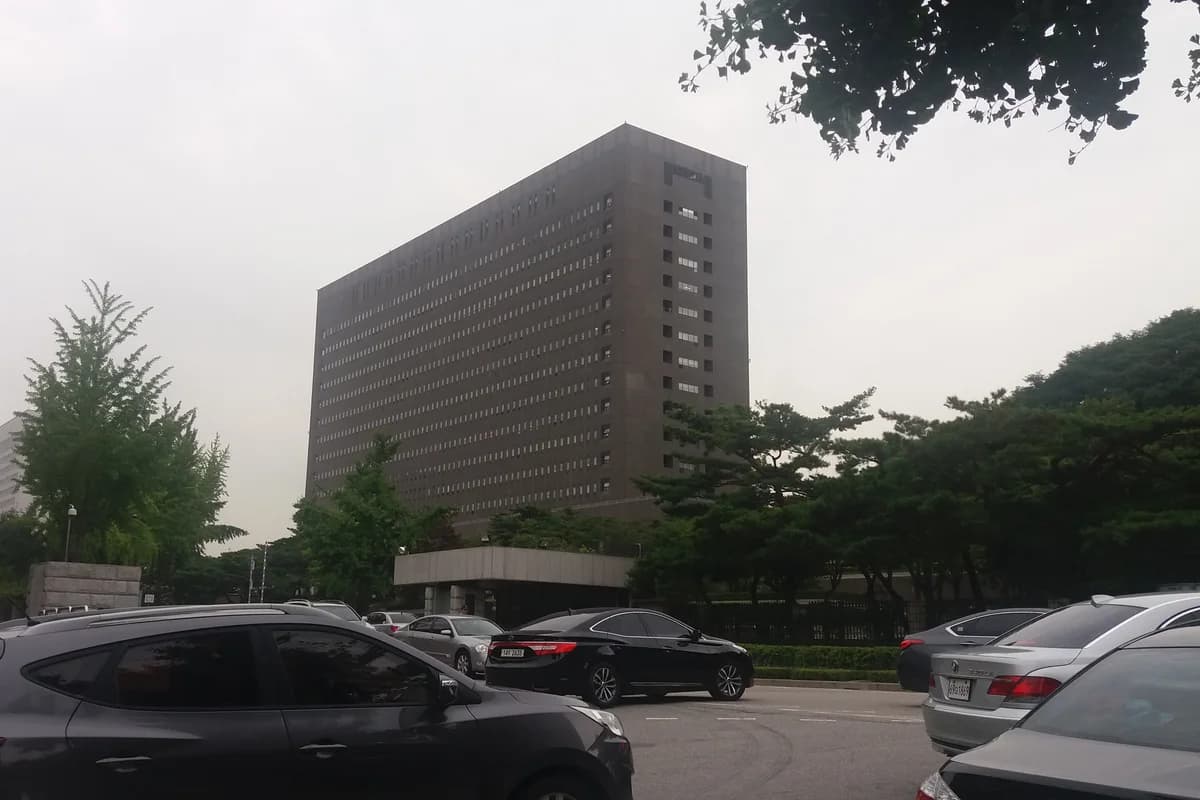
Korea Abolishes Its Prosecution Service on 2 October. One Successor Opens Without a Chief or a Finished Building. The Other Opens With the Same Prosecutors Under a New Sign
At midnight on 1 October the 검찰청법 is repealed and the institution that has dominated Korean politics since 1948 splits in two: a 공소청 that charges and tries cases, and a 중대범죄수사청 that investigates serious crime. It is the largest change to Korean criminal justice in seventy years, and it begins with acting heads at the prosecution office, the justice ministry and the national police, no head at all at the new investigation agency, seven sets of rules still unpublished, four challenges pending at the Constitutional Court — and the President arguing on X, in the small hours, with his own party about whether a former prosecutor may run the agency that replaces prosecutors.

Korea Gave Artists a Cut of Every Resale, Then Left the Percentage Blank. The Right Also Dies Forty Years Before the Copyright Does.
In July 2027 Korean artists gain a legal claim on the resale of their work. The statute says they may claim 'an amount according to a rate prescribed by Presidential Decree.' No such decree exists, and none is drafted. The law leaves two blanks, not one — it has not said which artworks are covered either. And the clause granting the right is word-for-word the copyright term clause with the number changed from seventy to thirty.

Korea Added Two Public Holidays This Year and Gave Both of Them Saturday Protection. Chuseok Still Does Not Have It.
Chuseok's last day falls on a Saturday, and Monday is a normal working day. Eight days later National Foundation Day also falls on a Saturday, and everyone gets the Monday off. Same collision, two different answers — because the decree sorts holidays into three tiers, and the only two in the middle tier are Seollal and Chuseok. The government rewrote that exact clause in April to protect the two holidays it was adding. It left the biggest one where it was.
The Weekly Dispatch
Korea, curated. Every week.
The best of K-culture, straight from Seoul. Written by people who actually live here.
Free, no spam, unsubscribe whenever.