A Forged Tally Sheet Is an Alleged Crime. It Is Not a Stolen Election
On 10 November Korea's election special counsel raided two election commissions over a tally sheet for one polling station. The counsel itself says the result and the winner were unchanged. The opposition leader 장동혁 says the count was stolen. The record supports a serious investigation, and not that claim.
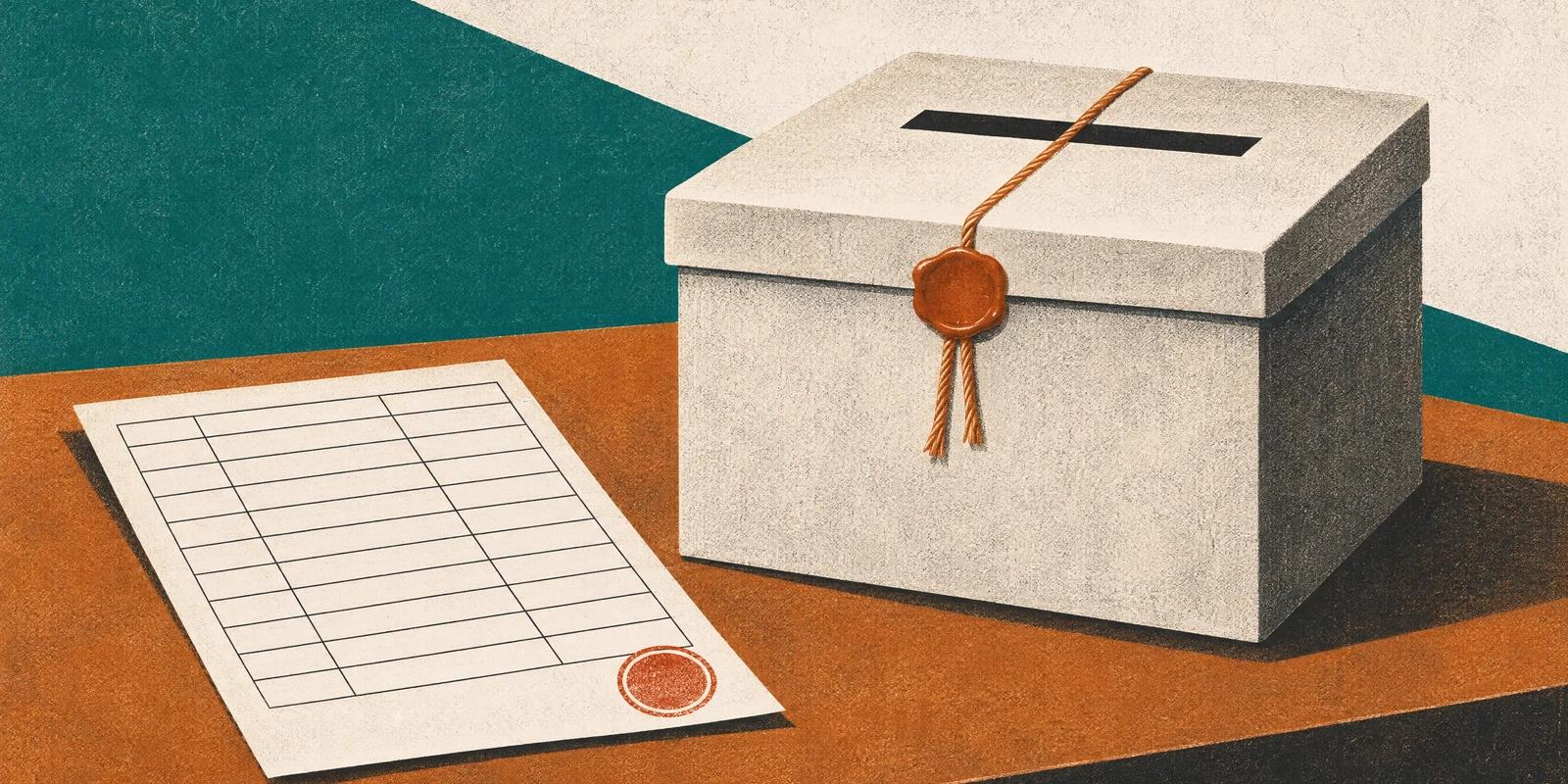
On Tuesday 10 November investigators searched the election division of the Gyeonggi provincial election commission and the Gwangju-si commission. Eleven staff took part: one prosecutor, eight investigators and two forensic investigators. The suspected offences are forging and using an official document, and breaching the election law.
The team belongs to a special counsel, and the document at the centre of it is a single tally sheet (개표상황표) from one polling station in 초월읍, in the 3 June race for Gyeonggi education superintendent. The same day the leader of the opposition People Power Party, 장동혁, called it confirmed count fraud. The special counsel's own account says something narrower.
This piece sets out what has been alleged, what has been found, and why those are different things.
The special counsel and its clock
The counsel is 이태한, appointed by President 이재명 on 18 August. The Korean Bar Association recommended 이태한, a former senior prosecutor who is now a partner at the firm 법무법인 동인 and a non-standing member of the Anti-Corruption and Civil Rights Commission.
The law behind the team was passed by the National Assembly on 30 July. Its long official title concerns the ballot shortage and other alleged violations of citizens' right to vote at the ninth local elections. After 20 days of preparation, the team investigates for 90 days. Two extensions of 30 days each are allowed, for 170 days at most. The team was formally launched on 7 September, and its first raids came on 17 September.
The first investigation period expires on 5 December, and the team plans to ask for an extension. With both extensions the latest possible end is 3 February 2027, though 연합뉴스 says early February.
The scope is twelve allegations, among them the shortage itself, falsified turnout statistics, junkets, hiring favours and no-bid contracts. The team is short-staffed. Its quota is 166 people, but it has 18 seconded prosecutors against a quota of 20, and the 중수청 (serious crimes investigation agency) sent one investigator of the ten requested.
No one has been arrested or indicted. As of 8 to 9 November no arrest warrants had been sought, and 노태악 had not been questioned in person.
What the 10 November raid is about
The figures at the station are not disputed. After the 3 June vote the result for 초월읍 polling station 9 was entered under station 2, so the published figures for station 2 duplicated those of station 9. On 11 June the Gyeonggi commission apologised and corrected the figure. It said it had no excuse and would recheck its systems, and it blamed the entry on a clerk's wrong station number.
The published figures for 안민석 and 임태희 at the station had been 582 and 668. The corrected figures were 798 and 869. 안민석 won the race and 임태희 was the incumbent.
The correction also covered a second station, 금광2동 station 3, where the commission blamed a mismatch between A and B ballot types. Across the two stations the margin narrowed by 47 votes, from 379,039 to 378,992. The 47 is the total for both stations, not for 초월읍 alone.
What the special counsel now alleges is about what happened next. Its suspicion, reported by 동아일보 and TV조선, is that a Gwangju-si commission official knew of the error but did not correct it through official channels. Instead the official made a new tally sheet to hide it, and may have stamped commissioners' seals in the signature boxes without their authority. The team is examining whether others in the commissions joined a cover-up.
Sources differ over who made the original entry. The commission's June account and 동아일보 say a counting clerk did. 중앙일보 implies it was the official now under investigation. We follow the first, because the allegation concerns the concealment and not the keying.
On the result, the special counsel's position is plain. Forgery was found at one station only, and it did not affect the result or who won. Separately, 헤럴드경제, YTN and 시사저널 report the team saying that the concealment made the count differ from reality. Both statements fit together. The published figure for the station was wrong until June, and the certified outcome did not change.
We found no response from the National Election Commission or the Gyeonggi commission to the raid.
Records allegedly altered at 40 or more stations
Here the story is more serious, and we should say so plainly.
In a separate strand, the team says unnumbered ballots were used at about 140 polling stations. It says records at 40 or more of those stations were altered afterwards on the National Election Commission's instruction, for example by adding serial numbers or adding notes that shortages had been foreseen. About ten election officials have been booked as suspects (입건), for dereliction of duty and for falsifying and submitting official documents. Booking is not a charge, and nobody has been tried.
The team also reports false voter-turnout entries at 36 local commissions. That figure comes from 더팩트, and 연합뉴스 confirms the allegation but not the number.
If proved, it would be a cover-up of records by the body that runs Korea's elections, on the commission's own instruction. That is grave. It is also a different thing from changing who won.
The ballot-counter firms
On 9 November the team raided the offices of two suppliers of ballot-paper counters (투표지 계수기), and the homes of their operators. The suspected offence is collusion in breach of the Fair Trade Act.
According to 노컷뉴스 and TV조선, the National Election Commission rented counters from the two firms on no-bid contracts for about ten years, paying about ₩17.5 billion. The team will check whether commission staff took part.
These are machines that count sheets of paper, not the vote-sorting machines that conspiracy theories focus on. The allegation is about competition and procurement. It is not about tampering with counts.
What 장동혁 says
On 10 November 장동혁 posted on Facebook that count fraud had been confirmed in the Gyeonggi race and that concealment and forgery had changed the count. The post said 100 votes had also vanished at Olympic Park in Seoul, and that this was only the first case, with the commission's theft of votes still to come out.
The post invoked 1960. In 시사저널's report, 장동혁 wrote “3·15 부정선거, 주범은 사형을 선고받았다” (the 3·15 rigged election: the ringleader was sentenced to death), a reference to the rigged election of that year. In a second post 장동혁 renewed calls to abolish early voting and bring in hand counting.
The claim of 100 vanished votes is 장동혁's alone. 뉴시스 reports, without naming a source, that one district had fewer physical ballots than its election-day count, but no official result of the Olympic Park verification has been published.
The claim that fraud was confirmed does not match the special counsel's statement that the result and the winner were unaffected. A tally sheet the special counsel suspects was remade to hide a corrected error is an alleged offence by an official. The special counsel says it did not affect the result or who won, and no court has found otherwise.
The party's chief spokesman 박충권 voiced serious concern about how far the problem might extend. That is a statement about the investigation, not about the result.
What the Democrats say
The Democratic deputy spokesman 안태훈 said on 10 November that the commission's explanation of a simple input error had been overtaken. A cover-up of a mistake would be a grave crime, 안태훈 said, and the special counsel must find who forged the sheet and why. The party, 안태훈 added, would build safeguards.
The newspaper 경향신문 argued in an editorial that the counsel had not uncovered any new error, since the figures were corrected right after the election, and that the question is whether crimes were committed during the correction. It called 장동혁's stance an irresponsible fuelling of conspiracy theory. That is an editorial position and we label it as one.
At the end of October the party's floor leader 한병도 asked 장동혁 to pledge to accept the findings. Democrats on the Interior committee told 장동혁 to wait for the investigation and the forensic results.
The Olympic Park deadline
The counting centre, the Olympic Park handball arena, had been blockaded for about five months until 29 October. Sources give 145, 146 or 148 days. Public verification of about 2.47 million Songpa ballots took place there on 28 and 29 October, and ballots were moved out on 29 October.
The team took 13 of 433 boxes with disputed ballots and sent them, with equipment, to the National Forensic Service and the prosecution service for analysis. No official result has been announced.
Tents and protesters remain; about 50 were present on 10 November, a count from one source, 한겨레.
The deadline of 12 November is a notice, not an eviction. The arena operator 한국체육산업개발, a subsidiary of the 국민체육진흥공단 (sports promotion foundation), asked for self-removal by that date. If it is missed, the foundation says it may seek an injunction and bill removal costs. 한겨레 reports that the operator plans two or three more notices and then a request for police help, and a foundation official said the deadline could be extended.
Update, 16 November: another raid, about a security score
On 12 November the special counsel searched the National Election Commission's servers, its information-security department and two security contractors. The team said it was investigating suspected false official documents. The allegation, as YTN reported it, is that a 2022 security self-assessment, carried out through a contractor, was altered and reported to the National Intelligence Service as 100 points, and that when the NIS re-checked the system the following year it scored 31.5. YTN alone reports that the counsel has statements that superiors gave improper instructions. This is a separate allegation about record-keeping. It is not about any vote count, and no court has ruled on it.
Sources for this update: YTN and 천지일보 (12 November). The 12 November raid is from YTN and 천지일보.
What it says
An election is not stolen by a forged document unless the document changes who won. On the record we have, the special counsel says it did not.
That does not make the case small. An official who allegedly hid a corrected error behind a remade tally sheet, and a commission that allegedly ordered records at 40 or more stations changed after the fact, are the kind of conduct that wrecks trust in a count. If these allegations are proved, those responsible should face the law, and the commission should answer for it.
Our June piece, Korea Ran Out of Ballots, argued that rigging is silent and that the shortage was loud. We have added a dated update to that piece, because an alleged cover-up of records is a fair challenge to part of the argument. It does not change the other part. Nothing the special counsel has put forward shows the winner of any race was altered.
장동혁 is entitled to demand the whole truth and to call for reforms. Presenting the investigation as proof that votes were stolen goes beyond what its own investigators say. The way to settle it is the one already under way: an independent counsel, forensic analysis of the contested ballots, and findings published in full. Those who want a trusted count should wait for them.
Images. The cover, listing and homepage images are AI illustrations (generated with Higgsfield, GPT Image 2.6): a single tally sheet with an official seal beside a sealed ballot box, an empty counting hall with long tables under fluorescent light, and a magnifying glass over stacks of blank ballot papers. They depict no real document, place or person. We did not use a photograph because the only recent freely licensed one we found is two months old, was taken elsewhere, and shows identifiable people.
Sources. The special counsel's appointment, scope and timetable are from iNews24, SBS Biz, 더팩트, 뉴시스, 투데이신문 and 세계일보. The 10 November raid and the tally sheet are from 헤럴드경제, YTN, 동아일보, TV조선, 중앙일보, 매일신문 and 시사저널. The altered records and booked officials are from 경향신문's English edition, KBS, 내일신문 and 더팩트. The late-October exchanges are from fnnews, 뉴스1 and 프레시안. The team's quota of 166 and the "early February" end date are from 연합뉴스. The counter firms are from 노컷뉴스, TV조선, 세계일보 and The Public. 장동혁's posts are from 시사저널 and 매일경제; the Democrats' response is from YTN; the editorial is from 경향신문. Olympic Park is from 뉴시스, 더팩트, 경향신문, 시사저널 and 한겨레.
Stated rather than smoothed. Sources disagree on who made the original entry error, and on the length of the blockade. We found no National Election Commission response to the 10 November raid, and did not check for one to the 12 November raid. The superiors' instructions rest on YTN alone. The 36 commissions with false turnout entries and the 50 protesters rest on a single source each. The 100 vanished votes is 장동혁's claim and is not verified. We left out the death of a commission employee after questioning, because it rests on one source. We left out a penalty range quoted by one broadcaster, which we could not check against the statute. 임태희's election appeal of 16 June has no outcome that we could find.
Keep Reading
More Stories

김건희's Four-Year Sentence Is Final, and So Is the Acquittal Over 명태균's Polls
On 19 November the Supreme Court's full bench upheld 김건희's convictions over Deutsche Motors shares and Unification Church gifts, making four years in prison and a ₩50 million fine final. It also upheld the acquittal over 명태균's polls, by 10 votes to 2. Many Korean headlines carried that acquittal. 연합뉴스's English headline left it out.
Supreme Court Sets Aside 한덕수's 15-Year Term but Finds Insurrection After Martial Law Was Declared
On 19 November the full bench sent 한덕수's case back to the Seoul High Court, which will set a new sentence. Urging a cabinet meeting before martial law was declared could not be proven to be insurrection, it held; what 한덕수 did after the declaration was, and the false-document and perjury convictions stand. Detention was renewed, so there was no release. The ruling, the dissent, and how the case got there.
A Governor Called the Fire Service a Budget Straw. The Row Is Really About Who Pays for Korea's Firefighters
On 13 October Gyeonggi's governor, 추미애, told a National Assembly audit that firefighting was draining the province's finances. Three apologies later, the argument underneath has not gone away: firefighters became national civil servants in 2020, but provinces still pay almost nine-tenths of the bill. On 8 November the ruling party and the government said they would review about ₩2 trillion. Nobody has said over how long, or where it comes from.
The Weekly Dispatch
Korea, curated. Every week.
The best of K-culture, straight from Seoul. Written by people who actually live here.
Free, no spam, unsubscribe whenever.