Korea's Sports Chief Gave Japan's Asian Games an F. Then the Organisers Apologised — to Japanese Spectators — for a Sign Saying the Rising Sun Flag Was Banned
The hosts of Aichi–Nagoya 2026 played North Korea's anthem for South Korea's hockey team, introduced Korea as the Republic of China at a medal ceremony, put Hideyoshi on the welcome stage, lost the basketball team's bus before the final, and housed athletes in leaking containers. Then a ballpark sign listed the Rising Sun flag among banned items, and the organising committee said sorry — in Japanese only, to its own crowd — because the flag was 'naturally' allowed. Its own rulebook bans flags that suggest political claims. It chose not to read it.
On the evening of 18 September, before a men's hockey group match between Korea and Bangladesh at a ground in Gifu prefecture, the public-address system played the national anthem of the Democratic People's Republic of Korea. Bangladesh's anthem followed, as scheduled. Korea's own played only as the two teams were already shaking hands. Korea won 5–0, and the head of its delegation, 이상현, sent the organisers a formal letter that night demanding an explanation, an apology, an investigation and a guarantee it would not happen again. Two officials came to the Korean team office at about nine o'clock and apologised in person.
That was the fourth day of the Aichi–Nagoya Asian Games. It was not the first thing that had gone wrong, and it was a long way from the last. By the time the head of the Korean Sport and Olympic Committee, 유승민, sat down with Korean reporters at the main media centre on 24 September, he had a grade ready: "ABC 등급을 매기자면 F급" — if you graded it A, B, C, it would be an F.
This is what he was grading.
The list
15 September. At the port ceremony for the cruise ship that would house athletes, a Nagoya tourism troupe — the 名古屋おもてなし武将隊, six costumed "warlords" who work out of Nagoya Castle — performed as the city's three great unifiers: 오다 노부나가, 도쿠가와 이에야스, and 도요토미 히데요시, the man who launched the invasions of Korea in 1592. The Korean committee wrote to the Olympic Council of Asia and the organisers the next day. The organisers' first reply, to 연합뉴스: the performance had no intention of supporting any historical figure or delivering any historical message. A photo spot with the same three figures was listed in the Games' cultural programme for 22 September; when a Japanese broadcaster went to the park that day, the troupe was performing without Hideyoshi, and the city said he had never been scheduled.
16 September. 채널A reported that the container housing at the port — a separate pier from the ship — was leaking after rain. The organisers confirmed leaks, blockages and noise complaints on 27 September and said they considered they had responded adequately. The football team's bus had gone to a baseball ground on the 15th; the baseball federation hired its own shuttle; the baseball squad, according to MBC, had not been told its training time or venue even the day before, and found an indoor facility itself.
18 September. The anthem. On 22 September the organisers called it "あってはならない重大なミス" — a grave mistake that must never happen — and sent a letter of apology in the name of the committee's president, who is the governor of Aichi. The cause, given the next day: a private contractor had every participating country's anthem on one device and sent the wrong file. The fix: only that day's anthems on the device, and a double check.
19 September. At the women's handball match against Hong Kong, no anthems were played for either side, without explanation. The same happened at a men's handball match between Kuwait and Iran.
20 September. At the medal ceremony for the men's modern pentathlon team event, the announcer introduced the gold medallists, Korea, as the Republic of China, then corrected himself. No apology has been found for that one. The same day, the bus for the men's basketball team's morning practice before the final against Japan never arrived, and practice was cancelled. Korea won the final anyway. The organisers later called the bus "명백히 조직위원회의 실수" — plainly their mistake.
23 September. The official results site listed a Korean swimmer as a bronze medallist in a relay he had not swum. On 28 September, after the men's 4×100 metre relay final, it listed fourth-placed Thailand as the bronze medallists in a race Korea had finished third in a national record. It was corrected, the Korean coaches said, after a considerable time and without explanation.
24 September. 유승민's F. He added that if such issues kept happening it amounted to "심각한 무능" — serious incompetence — and that it was not appropriate for the organising committee to keep making excuses. At the committee's own briefing that day, its accommodation official said the problems were not of a scale to affect the Games, and that they were making "일본답게 신속한 대응" — a swift response, in the Japanese way. Two days earlier the committee had put out an English statement blaming the cruise-ship delays on "incomplete documentation submitted by some delegations."
25–28 September. Swimmers who swam only the heats of medal-winning relays got no medal, and certificates were digital only; the Korean committee announced it would make medals of identical specification itself. A skateboarding gold medallist applied to exchange a scratched medal; three esports gold medallists reported surface damage; a Chinese esports medallist's discoloured medal was replaced the same night. The organisers said all 7,000 medals had been made by the Osaka mint and checked twice.
None of this is malice. All of it is the same thing: an organisation that did not have the systems, and said so once, on 24 September — "少し勉強が足りなかった部分はある", there were areas where we had not done our homework — before going back to blaming delegations.
The sign
Then came the one that was not an accident in the same way.
On 26 September, for the Chinese Taipei–Japan baseball game at the Okazaki ballpark, signs went up at the entrances showing two flags with the words "the above flags may not be brought in", in Japanese, English and Chinese. One was Taiwan's. The other was the Rising Sun flag — the 욱일기, the ensign of the Imperial Japanese Army and Navy, which in Korea and much of Asia is read as the flag of the occupation.
The Taiwanese flag on that sign was, in the organisers' terms, legitimate: their published rules prohibit the flag of any country or region not participating in the Games, and Taiwan competes as Chinese Taipei. Taiwanese press reported that the sign followed a dispute the day before, when staff had stopped fans' "Taiwan" towels and flags at the Chinese Taipei–China game. The Rising Sun flag was, in the organisers' terms, a staff error.
The signs came down on the 27th. On the morning of the 28th the organising committee posted an apology on its website. It was in Japanese only. It was addressed to "観客の皆様" — the spectators. It said:
"しかしながら当然、旭日旗は持ち込み禁止の対象ではなく、現場の誤った認識により掲示したものであり、観客の皆様に不快な思いを抱かせる結果となったことを、深くお詫び申し上げます。"
"Naturally, however, the Rising Sun flag is not subject to the ban; the sign was put up through a mistaken understanding on site, and we deeply apologise for having caused spectators discomfort."
And it promised to make sure every venue understood the flag's treatment so that nothing similar happened again.
Two things should be said precisely about that, because the Korean press has been imprecise in one direction and the temptation is to be imprecise in the other.
First: this is not the Japanese state. The organising committee is a public-interest foundation chaired by the governor of Aichi, with the mayor of Nagoya as his deputy. What it wrote does match the Japanese government's published position — the foreign ministry's page on the flag says it is not a political or discriminatory statement — but the committee was speaking for itself, and it was answering a backlash from Japanese users online at the flag having been listed at all. Nobody in Korea had protested the sign. The one prominent Korean who noticed it, the Sungshin University professor 서경덕, had called it, on the 28th, a useful precedent for keeping the flag out of stadiums. On the 29th he called the apology "자국내 여론을 잠재우기 위한 조직위의 꼼수" — a trick to quiet domestic opinion. Taiwan's papers complained that the apology did not mention their flag at all.
Second, and this is the sharp edge: the committee had a rule it could have used, and chose the word "naturally" instead. Its own list of prohibited items and acts, published in August, bans flags and banners that display or evoke political, ideological or religious claims — "政治的、思想的若しくは宗教的な主義、主張…を表示し、連想させ". Whether the Rising Sun flag evokes a political claim is precisely the question every Korean spectator would answer one way and the committee answered the other, in a single adverb, in a notice its Korean visitors could not read. The anthem was incompetence. The sign was incompetence. The apology was a decision.
Who protested, and who did not
Every formal Korean protest at these Games has come from the sports committee and its delegation — the letter over Hideyoshi, the letter over the anthem, the grade. The culture minister, 최휘영, was in Nagoya for the opening on 18 and 19 September, met Japan's sports agency chief, and said nothing about any of it. We searched for statements from the culture ministry, the foreign ministry and the presidential office on the anthem, the performance and the flag, and found none.
The Japanese response has been more mixed than a Korean reader might expect. The anthem error was reported straight, with the wire service noting that a strong Korean reaction was to be expected. Several Japanese outlets have been harder on the organisers than the Korean ones: one ran the phrase "史上最悪" — worst in history — from readers; another asked why a French contractor, rather than a major Japanese agency, was running the operation; a third called the whole thing "ポンコツ運営", junk management. On the other side, 産経's Seoul columnist dismissed the Hideyoshi protest as the usual anti-Japanese nitpicking, and observed that Korean media had misidentified which performer was Hideyoshi. On the flag, no Japanese outlet we found criticised the committee for allowing it. The backlash there was against the sign.
Where Korea stands, on the medals
Under all of this, the Games are going well for Korea. At the start of 29 September it sat third with 21 gold, 26 silver and 44 bronze, behind China on 132 golds and Japan on 41, against a target set in Seoul on 3 September of forty to forty-five golds and a third-place finish. The baseball team beat Japan in the rain for a fifth straight gold; the men's basketball team beat Japan in the final without a morning practice; archery and taekwondo, Korea's two reliable gold mines, were still to come.
Which is the strange shape of it. Korea is having a good Games, in a country that is running a bad one, and the thing it will remember is a sign at a ballpark that came down with an apology to somebody else.
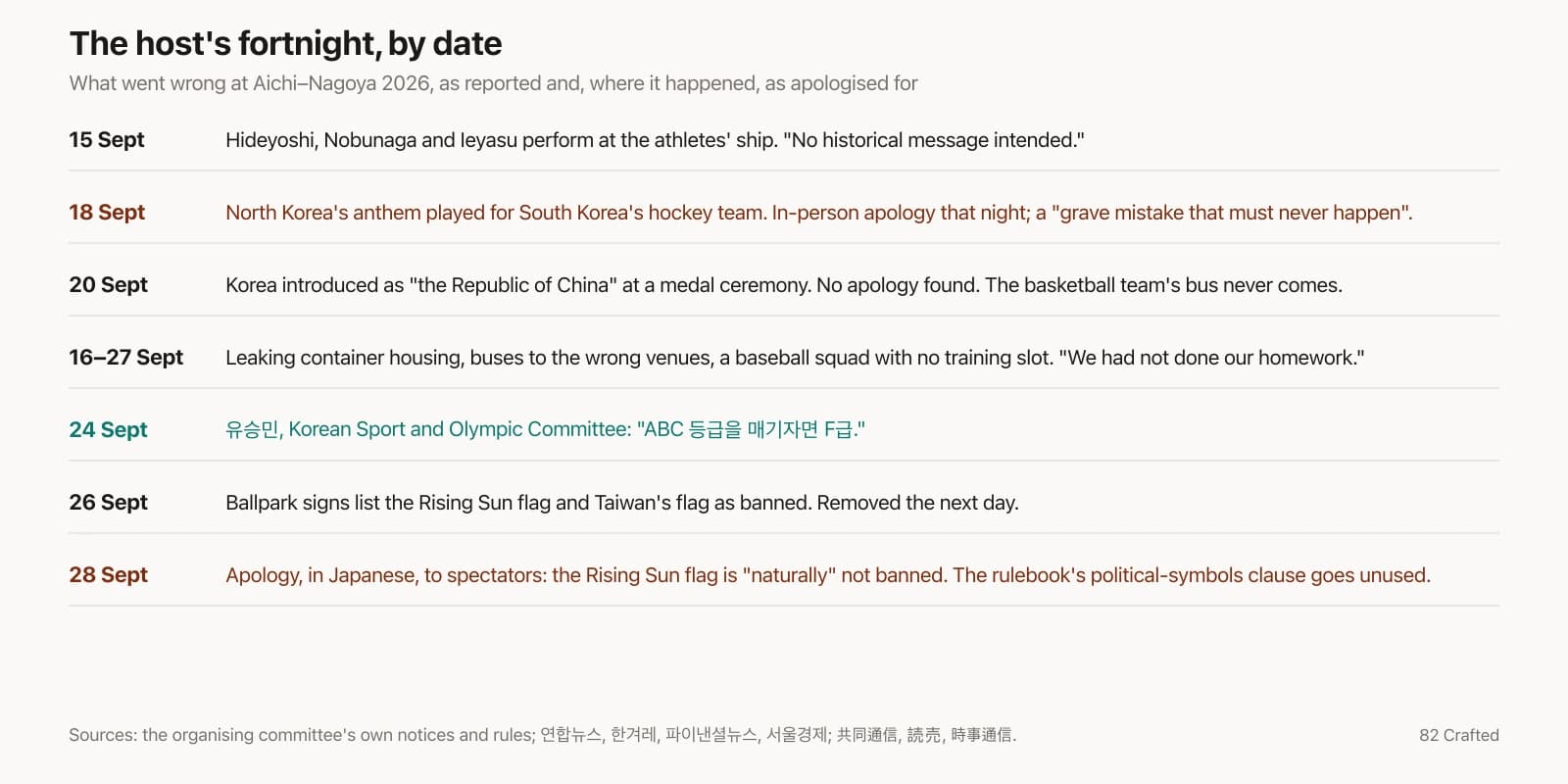
Images. The portrait is Toyotomi Hideyoshi, painted in 1600 and held by the Osaka City Museum of Fine Arts, in the public domain. The photograph is 유승민, president of the Korean Sport and Olympic Committee, in July 2025, by the Commons user Trainholic, CC BY-SA 4.0, licence and camera data verified on the file page. The third image is ours, a list of the incidents by date. There is no licence-clean photograph of the sign, the ceremony or any venue at these Games; the organisers' terms forbid reuse of their imagery, and we have not used it.
Sources. The anthem: 한겨레 and 매일경제 (19 September), 共同通信 (18 and 22 September), 東海テレビ and メ〜テレ (23 September). Hideyoshi: 연합뉴스 (16–17 September), 時事通信 (17 September), 読売 and 毎日 (23–24 September), the cultural programme's own listing and CBC (22 September). The "Republic of China" announcement: 日刊スポーツ (20 September), 이투데이 and 세계일보 (23 September). Logistics: 채널A (16 September), MBC (19 September), 데일리안 (23 and 28 September), the organising committee's English statement of 22 September and 時事 (24 and 27 September). 유승민: 파이낸셜뉴스 and 국제신문 (24 September). The results errors and medals: 서울경제 (26, 28 and 29 September), RONSPO (27 September). The sign and apology: the organising committee's Japanese notice of 28 September, read in full; 読売, 共同, スポニチ (28 September); 서울경제 and 노컷뉴스 (29 September); 聯合報 and 自由時報 (28 September). The rules: the committee's prohibited-items and prohibited-acts notices dated 24 August 2026. The Japanese government's position: the foreign ministry's page on the flag. Japanese reaction: J-CAST (27 September), 東スポ, 産経. Medal table: 이투데이 (29 September); target: 한국일보 (3 September).
Stated rather than smoothed. An early draft of this piece said the organisers had apologised "to the people who wanted to bring the flag in", and that the apology stated Japanese government policy. Neither is right and both have been removed: the apology was addressed to spectators generally, and the committee is a foundation, not the state, though its line matches Tokyo's. We have written that the Hideyoshi photo spot was listed, not that it was held, because the one report from the site found no Hideyoshi. We have not written that the organisers "banned" the flag, because a venue sign is not a rule. We have not quoted the committee's letter to the Korean committee, because it has not been published; what exists is an official's spoken summary of it. The anthem apology that Korean headlines rendered as "거듭 죄송" — repeatedly sorry — does not appear in any Japanese report we opened. And a much-quoted line, "if Japan is going to be petty, we'll make them ourselves", is a newspaper's headline about the medals, not something the Korean committee said.
Keep Reading
More Stories
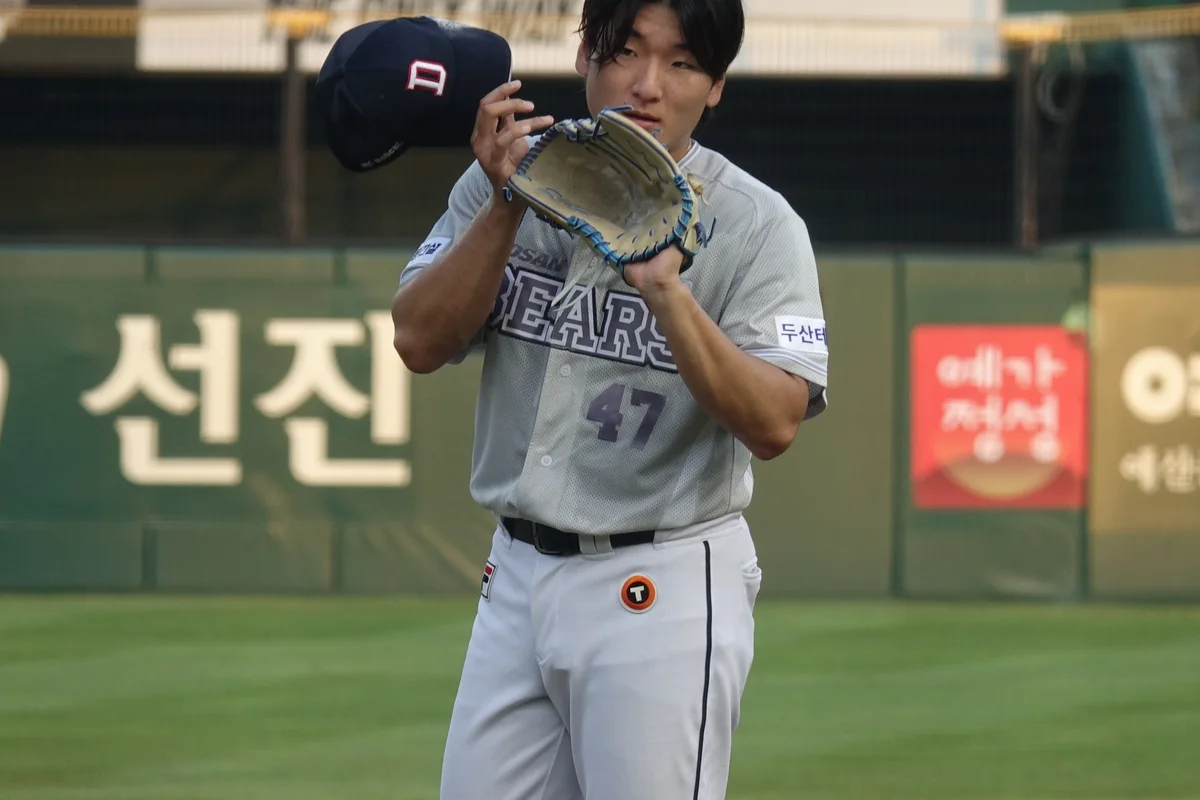
Korea's Pros Lost 0–5 to Japan's Company-League Players, Then Beat Them 3–1 in the Rain for a Fifth Straight Asian Games Gold
Two days before the final, Korea's all-professional squad was shut out by a Japanese side of corporate-league employees, its first Asian Games loss to Japan in twenty years. Then it rained on Toyohashi with no reserve day, Gwak Bin threw 111 pitches through it, and Kim Do-young — a week after breaking his nose, hitting .250 for the tournament — chopped an infield single off the third baseman's glove in the eighth. Sixteen players walked off the field with their military service converted into 34 months of baseball. Korean coverage calls that an exemption. It isn't, and a former defence-committee lawmaker spent Monday arguing it shouldn't exist at all.
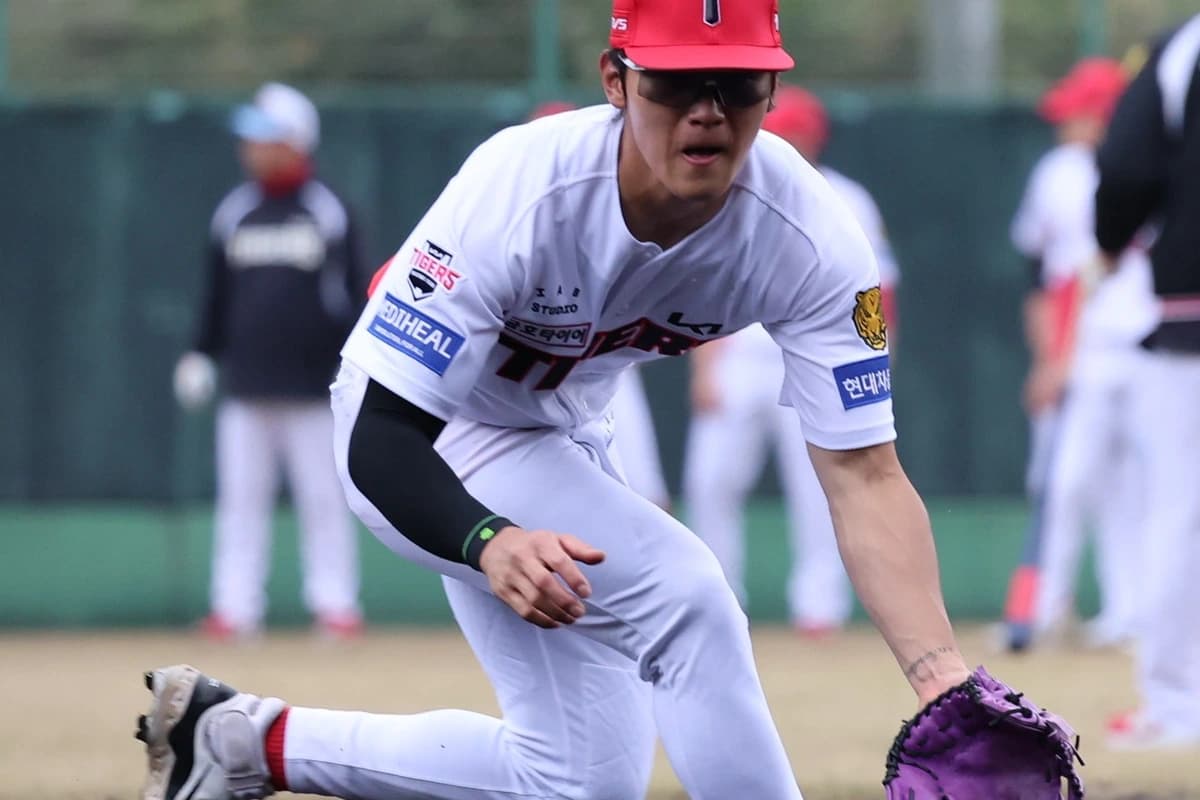
Kim Do-young Missed One Record by a Day and Set Another by Nine, With a Broken Nose in Between
He hit his fortieth home run on 8 September — one day after the window to become the youngest ever had closed. The next night his own bunt attempt broke his nose. He had surgery that night, came back four days later wearing a face guard, and drove in his hundredth run to become the youngest player in Korean baseball history to a 40–100–100 season, beating a 1999 mark by nine days. Then he reported to the national team. The league he leaves in fourth place does not stop while he is gone.
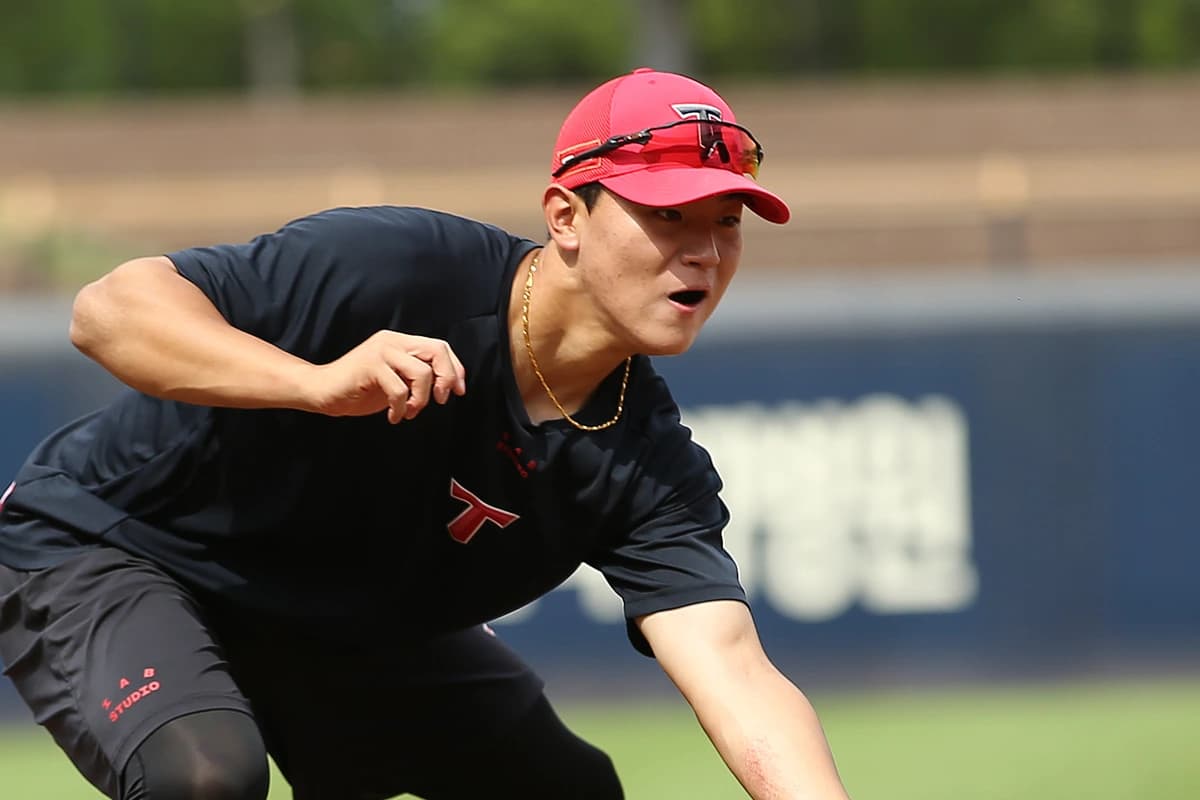
Kim Do-young Went 4-for-4 on the Last Possible Day and Missed the Record by One Home Run. He Says He Could Not Carry the Crown.
He hit his 39th on 26 August with Yankees and Rangers scouts in the stand, needing one more before he turned older than Lee Seung-yeop was in 1999. Then somebody checked the record-holder's birthday and found a lunar date, a week of games was cancelled for heat, four more were rained off, and the deadline arrived anyway. On the last day he could still have beaten it, Kim went four-for-four — four singles, nothing over the fence — and afterwards said the thing nobody expected him to say out loud.
The Weekly Dispatch
Korea, curated. Every week.
The best of K-culture, straight from Seoul. Written by people who actually live here.
Free, no spam, unsubscribe whenever.