Korea Beat Japan for a Fourth Straight Asian Games Football Gold. Then Its Captain Held Up the Medal and Said, 'I'm Not Going to the Army'
엄지성's 61st-minute goal at Toyota Stadium made Korea the first side to win the men's tournament four times running, and exempted 20 of its 23 players from active military service. Within a day three of them were apologising for saying what the medal was for — and the argument about the exemption itself had started again.
Walking through the mixed zone at Toyota Stadium on Saturday night, after the medal ceremony and past the broadcast cameras, the captain, 이기혁, held up his gold medal and said: "저 군대 안 갑니다." I'm not going to the army.
He had reason to be pleased. Earlier that evening he had been, by his own account, nine days from enlisting. The squad had kept reminding him: "기혁이 형 오늘 금메달 못 따면 9일 뒤 입대다" — if we don't win gold today, 기혁, you go in nine days — and, as KBS reported his words, they played desperately for it.
They won. Korea beat Japan 1–0 in the men's football final of the Aichi–Nagoya Asian Games on 3 October, the fourth consecutive title for Korea and the first time any team has won the event four times running. The gold carries, under Korean law, an exemption from active military service for the players who have not yet served — 20 of the 23. By Sunday three of them had apologised for how plainly they had said so and the Korea Football Association had apologised on their behalf; by Monday politicians from three parties were arguing about whether the exemption should exist in its current form at all.
The match
The only goal came in the 61st minute. 양민혁 won the ball back from Japan's 佐藤海宏 on the right and crossed; the Japan goalkeeper 荒木琉偉 got a hand to it; 엄지성, 24, of Swansea City and one of Korea's over-age players, took the loose ball, cut back once and finished with his left foot. "골대가 비었기 때문에… 왼발도 자신 있기 때문에," he said afterwards — the goal was empty after the keeper's punch, and he trusts his left.
It was his fourth goal of the tournament, with four assists, top of both lists in five games. In the 79th minute 石井久継 hit the right post for Japan. The crowd was 30,086, a sell-out.
Japan had come with a deliberately young side: an all-under-21 squad with no over-age players at all, a choice Number Web described as fighting, by design, "with a side two years younger". Its manager, 大岩剛, said only that it was a bitter game to lose.
Four in a row
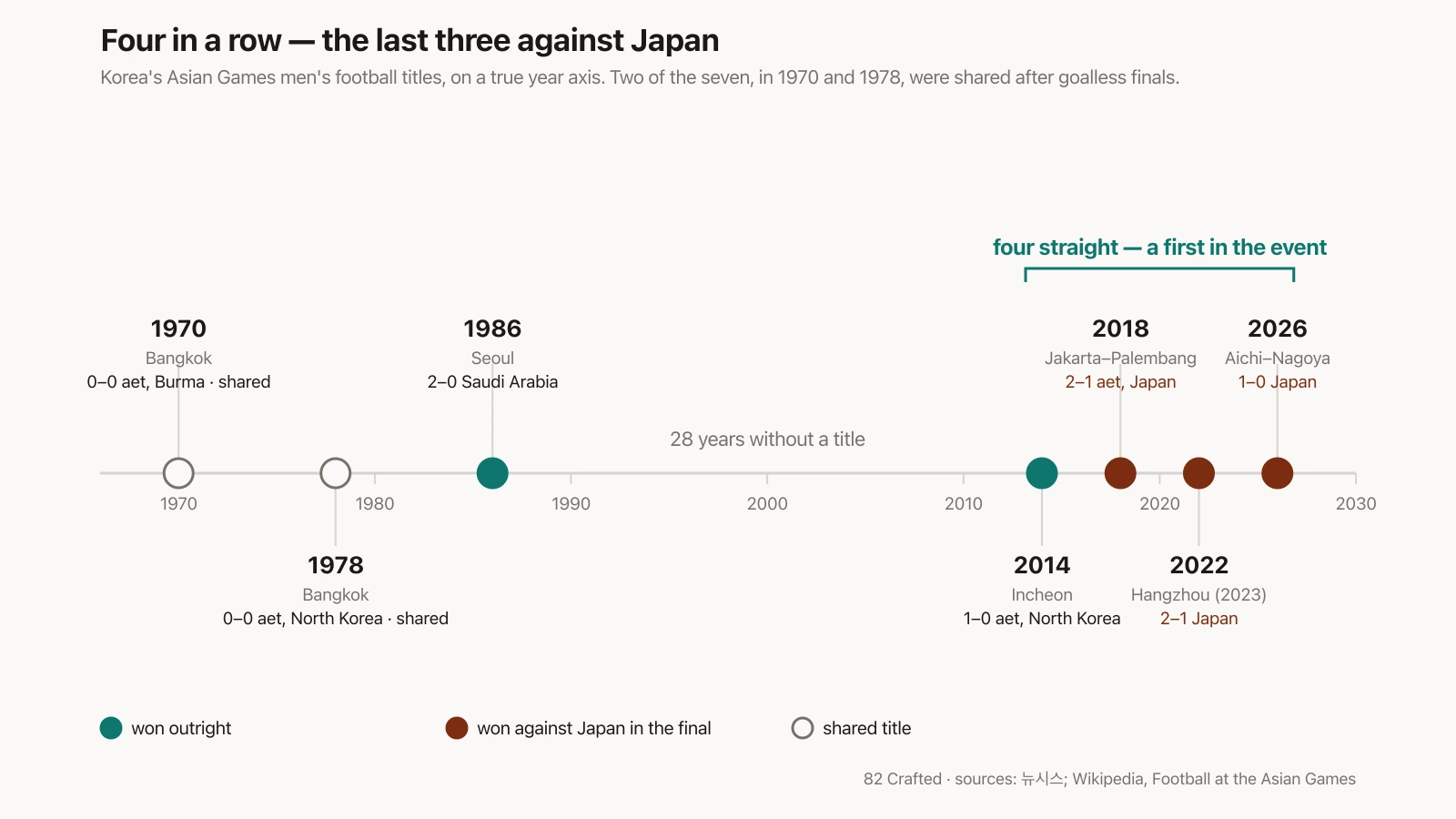
Korea now has seven Asian Games men's football titles, two of them shared after goalless finals in 1970 and 1978. After 1986 there were none for twenty-eight years. Then Incheon in 2014, Jakarta–Palembang in 2018, Hangzhou in 2023 and Aichi–Nagoya in 2026 — and the last three finals were all against Japan: 2–1 after extra time in 2018, 2–1 in Hangzhou, 1–0 on Saturday.
In the women's final the night before, Japan drew 2–2 with North Korea after extra time and won 5–3 on penalties, its third straight title.
What the medal is worth
Korean men must serve in the military, and an Asian Games gold is one of the few routes out of active duty. We explained how the system works when the baseball team won gold last week: winners become 예술·체육요원 — arts and sports personnel — who do three weeks of basic training and then 34 months of alternative service inside their sport, including 544 hours of public service, instead of enlisting.
Of this squad, 20 players qualify. The other three — 김준홍, 이승원 and 이영준 — had already finished their service with 상무, the Armed Forces Athletic Corps, which 스포츠경향 noted makes this the first Asian Games squad to include three men already discharged.
So the gold was worth, very concretely, twenty men's careers uninterrupted. Everyone in the team knew it. The trouble started when they said it.
What they said
이기혁 said it to the cameras, medal in hand: "저 군대 안 갑니다."
양민혁, on loan at Westerlo from Tottenham, said it at greater length to reporters in the same mixed zone, asked how a medal felt:
"사실 이런 메달이나 트로피는 정말 중요하지 않았다고 생각한다. 정말 저희가 보상받는 것은 군 면제라는 보상이 있으니까, 그것 하나만 보고 경기를 했던 것 같다."
Honestly, I don't think medals or trophies really mattered. The reward we get is the exemption, and I think that's the one thing we played for.
박승수, 19, of Newcastle, said it without words. He posted a photograph of himself in the locker room wearing a 전역모 — the cap Korean soldiers are given on discharge — and then deleted it; a video of him saluting the stands in the same cap went round anyway. He said afterwards that a fan had given him the cap.
The apologies
By the time the team landed at Incheon on 4 October the apologies were written. 이기혁 posted one and bowed to the press at the terminal:
"순간의 행복, 도파민, 흥분감으로 인해 병역 혜택에 초점을 맞춘 발언과 행동으로… 국방의 의무를 다하고 계신 팬들한테… 너무 죄송하고"
…remarks and actions focused on the exemption, out of the happiness, the dopamine and the excitement of the moment… I am deeply sorry to fans who are doing their national service.
박승수: "국방의 의무를 수행하고 계신 분들을 조롱하거나 그 노고를 가볍게 생각하는 마음은 결코 없었습니다" — he never meant to mock those doing their service, or make light of it. 양민혁 said his meaning, that the exemption was one of several motivations, had come across wrongly.
The Korea Football Association apologised too, for "일부 선수들의 경솔한 언행과 인터뷰" — some players' careless words and interviews — that had disappointed and hurt citizens and serving soldiers, and promised the squad more conduct and ethics training.
The argument that came back
The politicians did not agree on what the problem was.
안철수, of the People Power Party, went at the players: "국가를 욕보이고 군대를 혐오하는 국가대표에게 군 면제는 가당치도 않다" — an exemption is out of the question for national players who shame the country and despise the army — and set the remarks beside last month's mine blast in the DMZ, which we covered here.
나경원, of the same party, went the other way entirely: "선수를 탓할 일이 아니다. 솔직함은 제도가 만든 것" — don't blame the players; the system made them this candid. She proposed an exemption earned on "국제대회 누적 성적", cumulative international results, rather than a single podium.
From the governing Democratic Party, 김병주 said the arts-and-sports exemption needed overhauling. 이기인 of the Reform Party weighed in as well. The split ran through the parties, not between them.
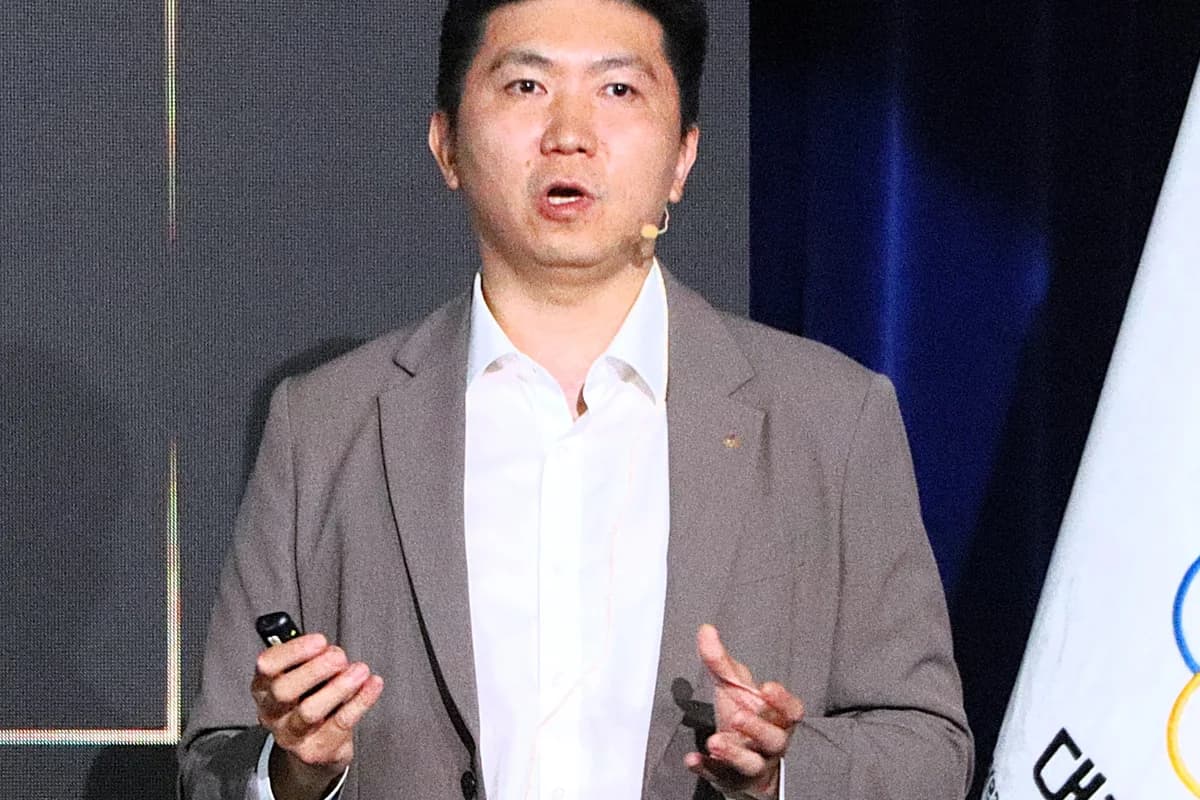
The head of the Korean Sport & Olympic Committee, 유승민, at his closing press conference in Nagoya on 4 October, was careful: the players' posts could be read as self-expression, "한편으로는 국민 정서에 맞지 않는 발언이 나오는 경우도 있다" — but there are also cases of remarks that don't sit with public feeling — and controlling every off-the-cuff remark, he said, was practically impossible.
And the flag
There was one more thing about the night, and it was not the players' fault. During the medal ceremony, as the Korean anthem played, the flags of Japan and China went up and the 태극기, in the centre, stalled below the top. The crowd booed. It reached the top only after the anthem had finished.
The flags were being raised by soldiers of the Japan Ground Self-Defense Force's 10th Division. 産経 reported that the knot on the halyard may have been tied in the wrong place and caught on the pulley; the division referred questions to the organisers. On the morning of 4 October the organising committee posted an apology — "国旗が適切に掲揚されない事案が発生しました", an incident in which a national flag was not properly raised; the cause under investigation; deep apologies to those concerned. It was in Japanese only, and it did not name Korea.
If that sounds familiar, it is the same shape as the organisers' apology over a Rising Sun flag sign earlier in the Games. Videos alleging that the rope was handled deliberately circulated in Korea over the weekend; the organisers say they are still investigating, and we have seen nothing that settles it. 이기혁 put it mildly: if it was intentional, that's really not good — "태극기도 하나 제대로 펼쳐주지 못한 것은 아쉽다", a shame they couldn't raise one 태극기 properly.
What it says
The coach, 이민성, who is leaving the job, said the Asian Games is in the end a tournament about results, and that the team had achieved its purpose. He named 양현준, the injured wildcard, as his most valuable player. 김은중 takes the under-23 side on to Los Angeles 2028.
The purpose was a gold medal, and the gold medal was worth twenty exemptions, and everyone from the coach to the teenager in the discharge cap knew it. What got punished this weekend was not the motive. It was the candour — and 나경원's point, from the party that was angriest, is that a system which settles a young man's military service on a single tournament is going to produce players who say so on camera. The next chance to see whether anyone changes it is the next Games. The players who would have to answer for it then are, for now, not going to the army.
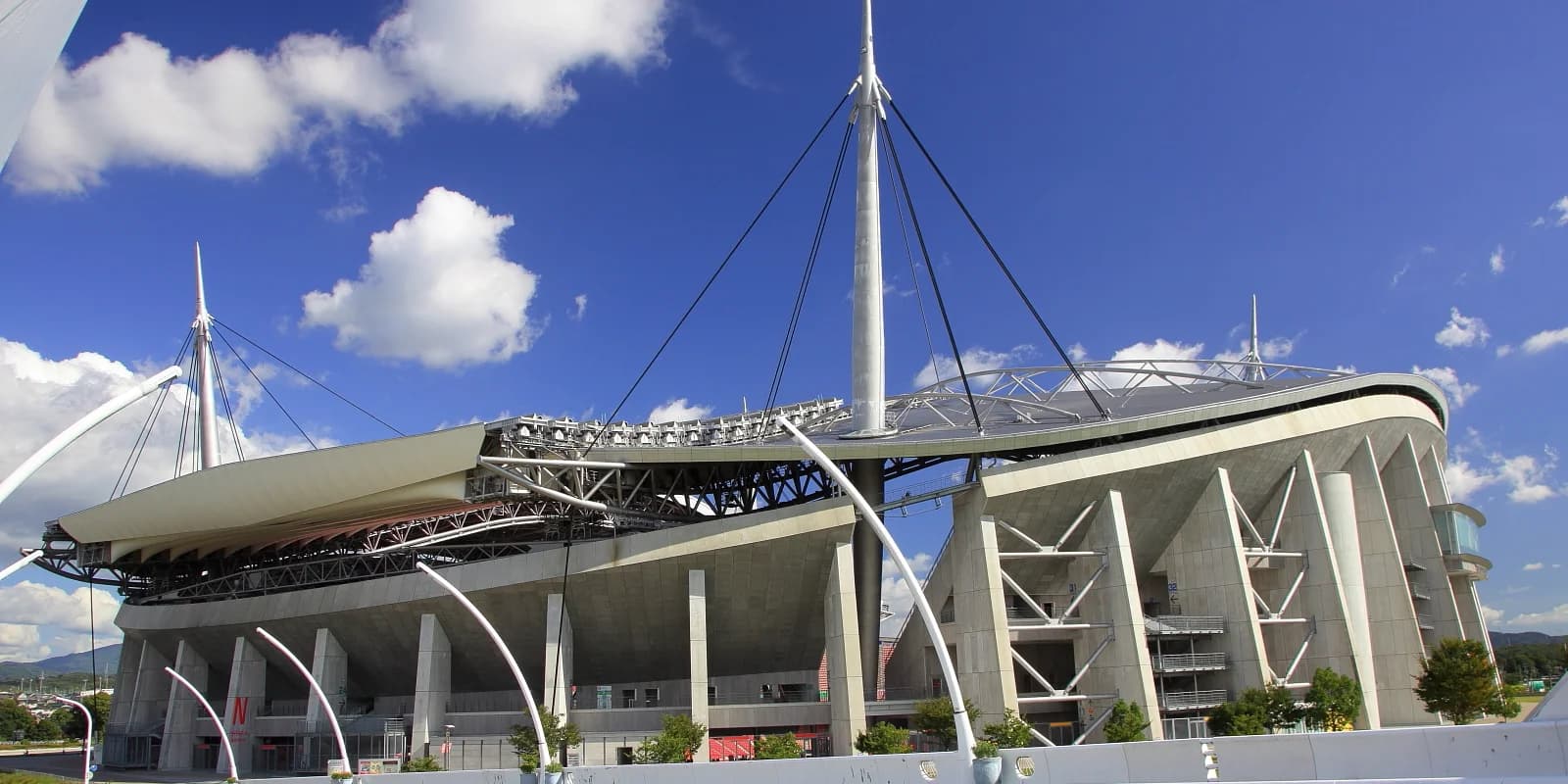
Images. The cover is Toyota Stadium from the Toyota Ōhashi bridge in 2011, by the Commons user Tomio344456, CC BY-SA 3.0, cropped; Japan's freedom of panorama covers buildings. The listing card is 엄지성 playing for 광주 FC in September 2023, by the Commons user Explicit, CC BY-SA 4.0, cropped; it is not from the final, of which we found no licence-clean photograph. The chart is ours. We decided against the one licence-clean photograph of 이기혁 we found, in which he is lifting his shirt, as the wrong picture to run beside an apology.
Sources. The match, the goal and the attendance are from 뉴시스, Korea Times and, in Japan, 中日スポーツ, ゲキサカ, Soccer Magazine and FOOTBALL ZONE; Japan's squad policy from Number Web and NHK. 이기혁's "nine days" is from KBS; the mixed-zone remarks from 한국일보, 스포츠경향, 스타뉴스 and, for 양민혁, OSEN via 머니투데이; 박승수's photograph from 서울신문 and his explanation from OSEN. The apologies are from 마이데일리, 파이낸셜뉴스, 뉴시스 and SPOTV; the KFA statement from 뉴시스 and OSEN. The politicians are quoted from 서울신문, 한국일보, wikitree and 머니투데이; 유승민 from 스타뉴스. The flag from 日刊スポーツ, 한국일보, MBC, 産経, and the organising committee's own notice of 4 October. The service terms are from 서울신문; the three 상무 veterans from 스포츠경향.
Stated rather than smoothed. The flag failure's cause is not established: "may have" is 産経's, and we have not printed the claim that it was deliberate. We do not give 이기혁's age, which outlets report differently, or the date of 안철수's post, which they also disagree on. Some coverage has the goal in the 64th minute or earlier; the match log has it in the 61st. 나경원 has been reported as attacking the exemption alongside 안철수; she said the opposite about the players. A quotation attributed to Japan's Olympic Committee president about "causing athletes trouble" was about transport and accommodation, given before the final, not about the flag.
Keep Reading
More Stories
Korea's Sports Chief Gave Japan's Asian Games an F. Then the Organisers Apologised — to Japanese Spectators — for a Sign Saying the Rising Sun Flag Was Banned
The hosts of Aichi–Nagoya 2026 played North Korea's anthem for South Korea's hockey team, introduced Korea as the Republic of China at a medal ceremony, put Hideyoshi on the welcome stage, lost the basketball team's bus before the final, and housed athletes in leaking containers. Then a ballpark sign listed the Rising Sun flag among banned items, and the organising committee said sorry — in Japanese only, to its own crowd — because the flag was 'naturally' allowed. Its own rulebook bans flags that suggest political claims. It chose not to read it.
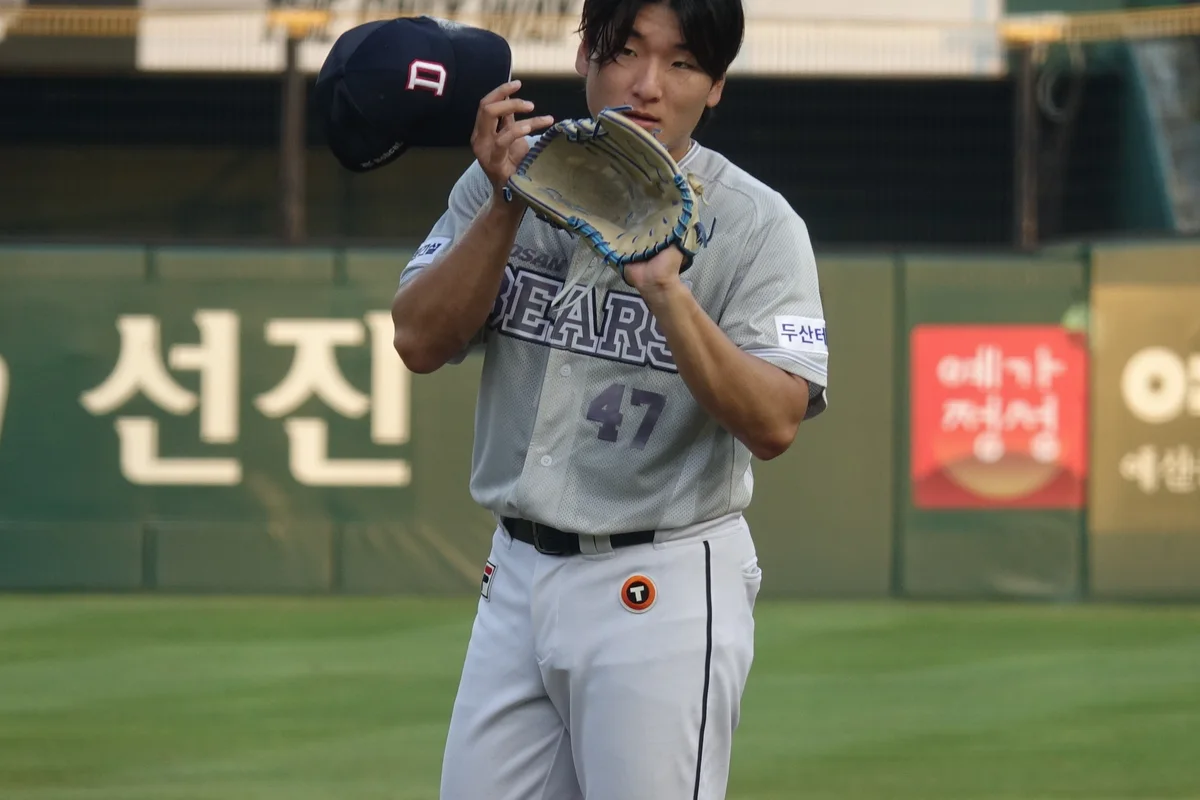
Korea's Pros Lost 0–5 to Japan's Company-League Players, Then Beat Them 3–1 in the Rain for a Fifth Straight Asian Games Gold
Two days before the final, Korea's all-professional squad was shut out by a Japanese side of corporate-league employees, its first Asian Games loss to Japan in twenty years. Then it rained on Toyohashi with no reserve day, Gwak Bin threw 111 pitches through it, and Kim Do-young — a week after breaking his nose, hitting .250 for the tournament — chopped an infield single off the third baseman's glove in the eighth. Sixteen players walked off the field with their military service converted into 34 months of baseball. Korean coverage calls that an exemption. It isn't, and a former defence-committee lawmaker spent Monday arguing it shouldn't exist at all.
Kim Do-young Missed One Record by a Day and Set Another by Nine, With a Broken Nose in Between
He hit his fortieth home run on 8 September — one day after the window to become the youngest ever had closed. The next night his own bunt attempt broke his nose. He had surgery that night, came back four days later wearing a face guard, and drove in his hundredth run to become the youngest player in Korean baseball history to a 40–100–100 season, beating a 1999 mark by nine days. Then he reported to the national team. The league he leaves in fourth place does not stop while he is gone.
The Weekly Dispatch
Korea, curated. Every week.
The best of K-culture, straight from Seoul. Written by people who actually live here.
Free, no spam, unsubscribe whenever.