The 8 Best Gukbap in Seoul, Honestly: Gomtang, Seolleongtang and Haejangguk
Eight Seoul soup houses for gukbap (국밥, rice in soup), from a 1904 seolleongtang room to a Bukchon pork-rice bowl. What to order at each, what the bowls cost on 16 November 2026, and why none of them is a 24-hour place any more.
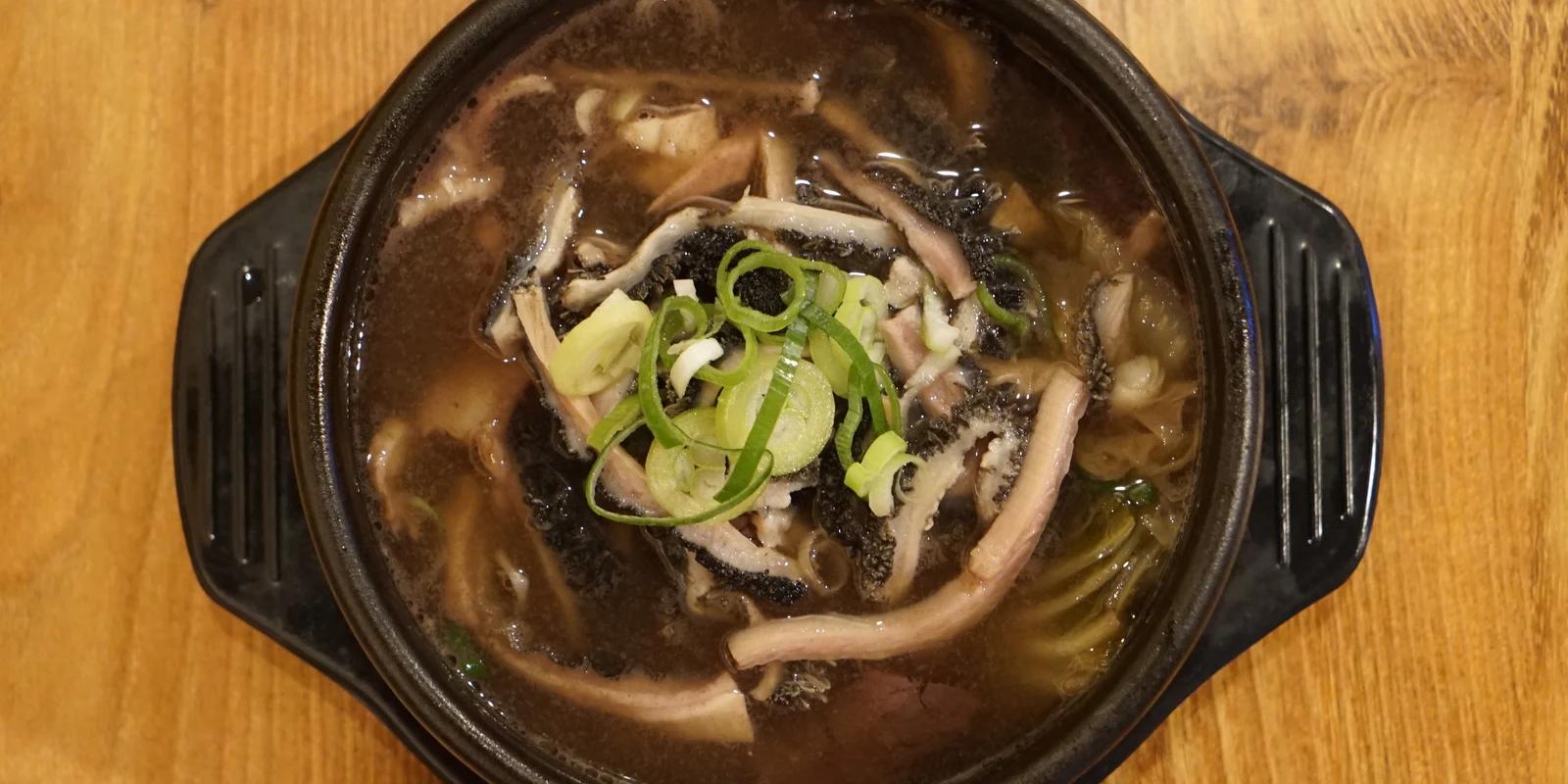
Cheongjinok, on the old haejangguk (해장국, hangover soup) alley in Jongno, was once open around the clock. According to the restaurant's own history, it went 24 hours a day in 1982, after the night curfew ended. On 16 November 2026 we checked its official site and its Naver listing, and both show a morning opening and a late-evening close. It is a useful place to begin, because it tells you what has changed in Seoul's soup houses and what has not.
What has not changed is the bowl: rice, broth, meat, and a table of kimchi. What has changed is the price. Of the bowls we could price that day, on Naver and on ANAM's own menu, none cost less than ₩11,000; we could not read Daesungjip's menu. The cheapest we found was at Kyewol, a chicken gomtang house we add at the end. Gukbap is still the sensible meal in Seoul, but it is no longer the pocket-change meal.
The list below is built from the Michelin Guide, Blue Ribbon, Seoul City's heritage register and dated magazine coverage. Eight places, ordered from the strongest evidence to the weakest.
How to read this list
We started from the Michelin Guide Seoul & Busan 2026. Of its 51 Seoul Bib Gourmands (the guide's good-value award), eight carry a cuisine label we count as gukbap-family (our grouping, not Michelin's): dwaeji-gukbap, gomtang, seolleongtang or doganitang. Five of them are in the eight below: Okdongsik, Mapo Ok, Hapjeongok, ANAM and Daesungjip, which Michelin labels doganitang. A sixth, Kyewol, is the ninth place we add at the end, and we explain at the foot of the page why we left out the other two. We then checked each place against the 2027 edition of the Blue Ribbon Survey (a Korean restaurant guide), Seoul's Future Heritage list of old restaurants, and press such as GQ Korea, Esquire Korea, Vogue Korea and Elle Korea. We could not open Blue Ribbon's own site, so its status here comes from the "Blue Ribbon Seoul 2027" badges on Catch Table (a booking and waiting app, and Blue Ribbon's official partner). Ribbon counts were not visible.
The soups differ, and the names are not interchangeable. Using the Encyclopedia of Korean Culture and the Standard Korean Language Dictionary:
- 국밥 (gukbap) is rice served in soup.
- 곰탕 (gomtang) is a soup of beef and beef offal.
- 설렁탕 (seolleongtang) is a long-simmered soup of beef head, feet, meat, bones and offal. The encyclopedia records a popular story that the name comes from a royal farming rite, but presents it as one theory among several.
- 돼지국밥 (dwaeji-gukbap) is rice in a broth made from pork and pork bones.
- 도가니탕 (doganitang) is a soup made by boiling ox-knee cartilage for a long time.
- 해장국 (haejangguk) is a soup eaten to settle the stomach after drinking. The encyclopedia describes the Seoul style as beef-bone broth with doenjang (soybean paste), bean sprouts, radish, cabbage and seonji (congealed blood).
Gomtang and seolleongtang are close cousins, and plenty of Seoul menus blur them. Do not worry about the line. Order the house name.
Practical notes. Hours and closing days change, so check the venue's Naver Map or Kakao Map listing before you go. None of these places is open 24 hours now. Prices are the ones on Naver menus on 16 November 2026, unless we say otherwise, and they may have moved since. Where we give a founding year, at least two sources agree.
1. 옥동식 (Okdongsik), Seogyo-dong
Mapo-gu, Seogyo-dong, Yanghwa-ro 7-gil 44-10. Known for: clear pork gomtang. Price: ₩14,000 to ₩19,000 (Naver and Catch Table, November 2026).
Okdongsik makes 돼지곰탕 (dwaeji-gomtang, pork gomtang), a clear broth built on Jirisan Berkshire-K black pork. The venue's own site spells the dish "Dweji Gomtang". Order that, and add the kimchi mandu (dumplings).
It is first because the evidence is the broadest. It holds a 2026 Bib Gourmand from Michelin, carries the 2027 Blue Ribbon badge on Catch Table, and has been profiled by GQ Korea (December 2022), Vogue Korea (January 2024) and Elle Korea (January 2026). Elle's profile says the chef-owner appeared on Culinary Class Wars 2, the Netflix cooking competition. The restaurant opened in 2017, according to Elle and the official site. Catch Table runs a remote queue for it and it showed an average of about 17 teams waiting, so join the queue before you leave the house. It closes on 1 January only.
2. 마포옥 (Mapo Ok), Yonggang-dong
Mapo-gu, Yonggang-dong, Tojeong-ro 312. Known for: clear seolleongtang with thick brisket. Price: 한우 양지탕 ₩19,000; 명품 양지탕 ₩26,000; 차돌탕 ₩33,000 (Naver, November 2026).
Mapo Ok serves Mapo-style seolleongtang. The broth is clear rather than milky, and the beef on top is cut thick. Order the 양지탕 (brisket soup) or the 차돌탕 (a soup of 차돌, fatty brisket).
It has a 2026 Bib from Michelin, the 2027 Blue Ribbon badge, a place on Seoul's Future Heritage list of old restaurants, and write-ups in GQ Korea and Diningcode (2018). The founding year depends on whom you ask: Michelin, GQ and Diningcode say 1949, while Seoul's Future Heritage list says 1950. We give both. It is also the most expensive way to eat on this list, once you go past the plain brisket bowl.
3. 하동관 (Hadongkwan), Myeongdong
Jung-gu, Myeongdong 1-ga, Myeongdong 9-gil 12 (main branch). Known for: clear hanwoo gomtang. Price: 곰탕 ₩19,000; 25공 and 30공 bowls ₩25,000 to ₩30,000 (Naver, November 2026).
Hadongkwan makes a clear gomtang from hanwoo (Korean beef), with several cuts of meat in the bowl. Order the 곰탕. It was founded in 1939, according to Michelin, Sidae (February 2026) and GQ Korea.
A correction to a common claim: it is not a 2026 Bib. GQ lists it as a Bib in the 2023 guide, but Michelin lists it in 2026 only as a Selected restaurant. It also carries the 2027 Blue Ribbon badge. You pay in advance, tables are shared, and Michelin notes that it closes when the day's broth runs out. It is closed on Sundays, according to Michelin and Naver.
4. 이문설농탕 (Imun Seolnongtang), Jongno
Jongno-gu, Gyeonji-dong, Ujeongguk-ro 38-13. Known for: seolleongtang, the oldest name here. Price: 설농탕 ₩15,000 to ₩18,000; 한우설농탕 ₩20,000; 도가니탕 ₩18,000 to ₩21,000 (Naver, November 2026).
Imun is the oldest restaurant on this list. Michelin, Seoul's Future Heritage list and Esquire Korea (August 2024) all give 1904 as the founding year. Order the 설농탕 (the house spelling of seolleongtang) or the 도가니탕.
It is a Michelin Selected restaurant for 2026, not a Bib, and it carries the 2027 Blue Ribbon badge. One detail is disputed. Michelin's 2023 feature on old restaurants says it opened in Gongpyeong-dong and moved in 2011, while Esquire and Diningcode give Gyeonji-dong as the original site. We list the current address and leave the history there. Naver spells the name 이문설렁탕, so search for that spelling on Naver.
5. 합정옥 (Hapjeongok), Hapjeong
Mapo-gu, Hapjeong-dong, Yanghwa-ro 1-gil 21, 2nd floor. Known for: rich gomtang with broth-warmed rice. Price: 곰탕 ₩12,000; 특 ₩14,000 (Naver, November 2026).
According to Michelin, Hapjeongok began from a recipe that the owner's father-in-law cooked at home. The gomtang has a rich broth and is served with rice warmed in it. The menu also lists 속대국 (sokdaeguk, a soup of cabbage and soybean paste).
It has a 2026 Bib, the 2027 Blue Ribbon badge and a GQ Korea write-up. It closes on Sundays, and Michelin says reservations are by phone. At ₩12,000 it is one of the cheaper bowls here.
6. 안암 (ANAM), Bukchon
Jongno-gu, Jae-dong, Bukchon-ro 5-gil 10. Known for: clear dwaeji-gukbap. Price: 안암국밥 ₩12,000 without coriander or ₩13,000 with; 특 ₩16,000 to ₩17,000 (official menu, read November 2026, undated).
ANAM serves a pork soup. The broth is clear, made with Spanish Duroc back ribs and neck, and lifted with a chilli and kale oil. Coriander is optional, which is why the menu has two prices. Order the 안암국밥. It has a 2026 Bib from Michelin and a Vogue Korea feature (January 2024). We found no founding year.
One warning. The restaurant is in Bukchon, at 북촌로5길 10. If you search "안암 국밥" on Naver, you will get unrelated gukbap shops in Anam-dong, Seongbuk-gu, near Korea University. Search for the address, or for the English name, and use the Bukchon listing. We also could not find ANAM on Catch Table, and a blog's closing day for it contradicted a Naver snippet, so we give no closing day.
7. 대성집 (Daesungjip), Haengchon-dong
Jongno-gu, Haengchon-dong, Sajik-ro 5. Known for: milky doganitang. Price: unconfirmed.
Daesungjip makes 도가니탕 (ox-knee soup) with a milky broth. GQ Korea says it began as a haejangguk house. Order the 도가니탕 and the 수육 (boiled sliced meat). It has a 2026 Bib from Michelin, where the cuisine label is doganitang, and the 2027 Blue Ribbon badge.
We could not read its Naver menu, so we give no price. We also do not give a founding year: blogs say anything from 60 to 70 years and we could not pin it down. Be careful with the name. A separate shop, 대성도가니탕, sits at Yeongcheon Market, and it is not this one.
8. 청진옥 (Cheongjinok), Cheongjin-dong
Jongno-gu, Cheongjin-dong, Jongno 3-gil 32. Known for: Seoul-style beef haejangguk. Price: 해장국 ₩12,000; 특 ₩15,000 (Naver, November 2026; the official menu also gives ₩12,000).
Cheongjinok makes the Seoul style of haejangguk, with hanwoo tripe and seonji, on the old Cheongjin-dong haejangguk alley. Order the 해장국. Its official site and Seoul's Future Heritage list both give 1937 as the founding year. The official history adds that it opened as 평화관 and took its present name in 1945, but that detail comes from one source.
It is not in the 2026 Michelin guide. It is here on the heritage list, the 2027 Blue Ribbon badge, Diningcode (2018) and its own history. It is the only one of the eight without a Michelin listing, and the second oldest after Imun. And, as the opening says, it is no longer a 24-hour house.
A ninth place also qualifies. 계월 (Kyewol) in Seongsu-dong has a 2026 Bib and an Esquire Korea write-up (July 2026). It makes a clear chicken gomtang, with low-temperature chicken breast: order the 백곰탕 (clear) or the 홍곰탕 (spicy). Naver puts it at ₩11,000 to ₩12,000. It is the cheapest bowl we found.
How to choose
If you want one bowl to understand the form, go to Okdongsik for the modern clear pork gomtang, or to Hadongkwan for the classic hanwoo one. They are the cleanest way to taste the difference between a chef-owner's modern house (opened 2017) and a gomtang institution that dates from 1939, and both are well documented.
If you want age, Imun (1904) and Cheongjinok (1937) are the old names, and soup houses make up at least 11 of the 50 restaurants on Seoul's heritage list. For a cheaper bowl, Hapjeongok, at ₩12,000, is the pick. For something that will not feel like a classic, ANAM in Bukchon is the one that reads as a restaurant first. For Michelin-backed noodles, see our guide to naengmyeon in Seoul, and for the other cold-weather bowl, our list of mandu and dumpling houses.
Go early, and expect to wait at Okdongsik, where Catch Table runs a queue, and at Hadongkwan, where Michelin notes queues. For more on how Seoul diners choose an everyday meal, see our piece on where locals actually eat in Seoul.
—The Editors
Photos. The cover, listing and homepage photo is Cheongjinok's own picture of its 해장국, published on its official website to show the dish and used here to illustrate our coverage; it is cropped from the original. The bowls under Okdongsik, Hadongkwan and ANAM are the restaurants' own Instagram posts, embedded as Instagram publishes them (Hadongkwan's is from 2020; the account has not posted since). We found no official photos for the other four and have used none of the many customer photos online.
Sources. Awards and listings: the Michelin Guide Seoul & Busan 2026 (Bib Gourmand list and restaurant pages) and Michelin's August 2023 feature on old Seoul restaurants. Blue Ribbon status: the "Blue Ribbon Seoul 2027" badges on Catch Table. Heritage: Seoul's Future Heritage restaurant list (Seoul Media Hub, 2021). Press: GQ Korea (December 2022), Vogue Korea (January 2024), Esquire Korea (August 2024, July 2026), Elle Korea (January 2026), Sidae (February 2026) and Diningcode (2018). Soup definitions: the Encyclopedia of Korean Culture and the Standard Korean Language Dictionary. Prices, closing days and queue counts: Naver Map listings and Catch Table, read on 16 November 2026, plus ANAM's official menu.
Stated rather than smoothed. We left out 능동미나리 (Neungdong Minari) and 곰탕랩 (Gomtang Lab), two 2026 Bibs that we could confirm only through Michelin. Daesungjip's price and founding year are unconfirmed, so the ₩11,000 floor excludes it. Hadongkwan's Blue Ribbon badge is matched to the Myeongdong main branch from the order of Catch Table's search cards. Okdongsik's queue figure is Catch Table's average. and ANAM has no founding year or closing day here. Mapo Ok's founding year is 1949 or 1950 depending on the source. Imun's original address is disputed. Blue Ribbon 2027 status is read from Catch Table badges only. Prices may have changed since 16 November 2026.
Keep Reading
More Stories
The 8 Best Jjajangmyeon and Jjamppong Houses in Seoul, Honestly (2026)
Black-bean noodles and spicy seafood noodle soup at old Seoul houses, several founded by 화교 (ethnic Chinese) families. Eight chosen for heritage and fair prices, plus one place to go if you want Chinese cooking beyond the noodles.
The 8 Best Kalguksu (Knife-Cut Noodle Soup) in Seoul, Honestly
Two Bib Gourmand houses, a 서울미식 100선 pick, a market stall and a 1960s seafood shop. Eight places for kalguksu (칼국수, hand-cut noodle soup) in Seoul, what to order, what the 2026 prices look like, and the sujebi shop we kept out of the ranking.
The 8 Best Ramen in Seoul, Honestly: Japanese-Style Bowls, From Hapjeong to Myeongdong
Eight Seoul shops for Japanese-style ramen, not Korean instant ramyeon: four 2026 Bib Gourmands, a former Bib in Myeongdong, and three west-Seoul favourites. What to order at each, with sourced prices, plus two alternates for a long queue.
The Weekly Dispatch
Korea, curated. Every week.
The best of K-culture, straight from Seoul. Written by people who actually live here.
Free, no spam, unsubscribe whenever.