Waterbomb: Korea's Least Modest Party, and the Argument It Starts Every July
Waterbomb Seoul runs July 24–26 — nine hours a day of K-pop, EDM and 30,000 people shooting each other with water guns. It's also the subject of an annual Korean debate about bodies, water and who gets scrutinised. A guide to what actually happens, what it costs, and the 300-ton statistic that isn't true.
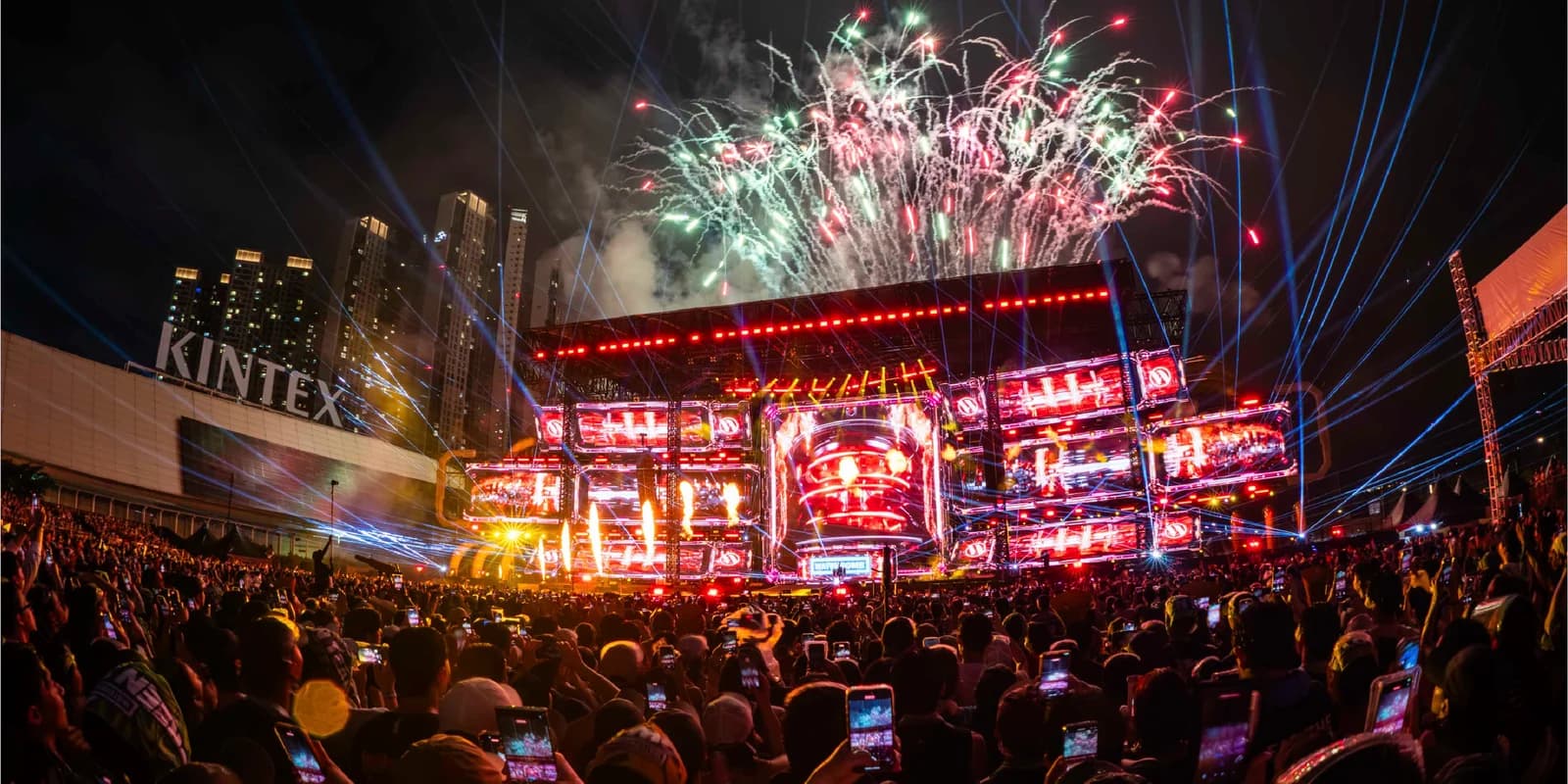
Every July, Korea holds a large outdoor music festival at which the audience shoots the performers with water guns, the performers shoot back, and cannons on the stage fire water into a crowd of tens of thousands. Then, reliably, the country spends a fortnight arguing about it.
Waterbomb Seoul 2026 runs Friday 24 to Sunday 26 July. Here's what it actually is, what it costs, how to survive it, and why the argument is more interesting than the fancams.
The Basics, Verified
Dates: 24–26 July 2026, one nine-hour session per day.
Venue: the KINTEX Outdoor Global Stage — which is in Goyang, Gyeonggi Province, not Seoul, despite the name. It's been outside the city since 2024. Address: 경기 고양시 일산서구 대화동 2700.
Tickets: ₩165,000. Confirmed on both the official shop and Interpark as "Phase 7." Tickets sell in numbered waves and the price steps up as each wave sells out — so the ₩121,000 and ₩143,000 figures floating around English aggregators are earlier phases, not current. Refunds and cancellations are prohibited.
Age: 19+, strictly. Interpark's notice specifies anyone born on or before 31 December 2007. Physical government ID is required at the gate. No ID, no entry, no same-day refund. If you're visiting Korea, that means bringing your actual passport to a water fight.
Start time: not yet published. As of writing, Interpark says only "상세 타임테이블은 추후 공지됩니다" — the timetable is forthcoming. Korean blogs claiming 1 p.m. are guessing. Check the official Instagram before you travel.
The 2026 lineup was announced around 8 July and is roughly three times longer than the headline names suggest, including a second "Tropical Stage" and a deep bench of local DJs. The headliners:
- Fri 24 July — Diplo, TAEMIN (태민), Simon Dominic (사이먼 도미닉), CHANGMO (창모), Lee Youngji (이영지), KISS OF LIFE, KickFlip
- Sat 25 July — Jay Park (박재범), KARINA of aespa (카리나), NGHTMRE, SHOWNU × HYUNGWON of MONSTA X, BIBI (비비), Loco, GRAY, H1GHR MUSIC, Billlie
- Sun 26 July — J.Y. Park (박진영), ZICO (지코), SUNMI (선미), TAEYONG (태용), RIIZE (라이즈), MADDIX, H1-KEY, 82MAJOR
Sister events follow: Waterbomb Busan on 8 August and Waterbomb Sokcho on 22 August.
What Actually Happens
It's a music festival with a water fight running through it — not a water park with a soundtrack. Acts alternate with DJ sets from early afternoon into the night with essentially no gaps, and the great majority of performers are Korean. It's built for the domestic market with a few international headliners bolted on.
The team system is baked into your ticket. You buy either a Green Team (그린팀) or a Yellow Team (옐로우팀) ticket — a separate product on every ticketing platform, not a wristband you pick up on the day. (The colours have changed: it was Blue vs Red in 2015–16.)
"WATERBOMB TIME" (워터밤 타임) is the signature segment, run between sets. Since 2025 there's a dedicated MC; camera crews film the crowd and project it live; a scoring system judges which team is going harder, and a winner is declared each round. Prizes arrive by KakaoTalk. The last round of each day names an MVP, who receives what the organisers call a legendary water gun.
The stage is built to be out of range. Modern Waterbomb stages are deliberately deep — deep enough that crowd water jets can't reach the DJ booth. Since 2025 the stage floor carries a non-slip coating, artists are briefed on a designated safe zone, and all performers are issued goggles to prevent eye injury.
You bring or buy your own water gun, and you fill it on site. Both manual and automatic types are sold at the venue. Your ticket includes a team towel.
No outside liquids. At all. Not even bottled water — staff can't visually verify what's in a container, so nothing liquid comes through the gate. Water guns must enter empty and be filled from taps inside. Since 2025, any water-throwing implement that isn't a regulation water gun is banned outright.
There are referees. Introduced in 2025, 심판관 circulate the site policing conduct and can sanction attendees. They exist because of years of complaints about people aiming at faces and eyes, and below the waist.
And one number that reframes the whole event. According to Interpark's booker data, the 2026 audience is 74.5% female and 25.5% male — 49.5% in their twenties, 31.3% nineteen, 15.5% in their thirties.
Whatever assumptions you brought about who this festival is for, the booking data doesn't support them.
How Big Is It, Really
This is where published claims and official data diverge sharply, so here are both.
KOPIS, the Korean government's performing-arts box-office database, recorded 29,631 attendees for Waterbomb Seoul 2024 and 26,619 for 2025. That 2025 figure made it the fifth-largest music festival in Korea by attendance, behind the Busan International Rock Festival (41,105), Seoul Jazz Festival (40,081), Grand Mint Festival (30,783) and Beautiful Mint Life (29,073).
The organiser's own 2024 claim was around 75,000 for Seoul and 200,000 nationwide. The gap is generally attributed to overseas sales, complimentary tickets and on-site sales that KOPIS doesn't capture.
We're giving you both because we can't reconcile them, and because a two-and-a-half-fold discrepancy is itself worth noticing.
The growth story is real regardless. Waterbomb began on 1 August 2015 in a car park at the Jamsil sports complex, produced by the Seoul company (주)메이드온 (MADE ONE Corp.). It became the first Korean festival to run a multi-city domestic tour inside a single year, reached nine Korean cities by 2023, then consolidated back to three from 2025. Internationally it launched in Japan and Thailand in 2023, added Hong Kong, Dubai and Singapore in 2024, and ran a 2025 tour taking in Manila, Hainan, Bali, Macao and Ho Chi Minh City.
The Argument
Every year, the same debate. It's more sophisticated in Korean than the English coverage suggests, and the best single piece on it is a column by 이진송, publisher of the quarterly 계간 홀로, in 경향신문 on 19 July 2025.
She opens by listing the recurring controversies flatly: 물 낭비, 일회용 물총 쓰레기, 성희롱과 안전 문제 — water waste, single-use water-gun trash, sexual harassment and safety.
Her central observation is an internal comparison. When EXO's KAI displayed his physique at Waterbomb 2025, she notes, no one tried to wrap him up and protect him. Same festival, same water, entirely different scrutiny — and the thing that gets problematised is only ever the female body.
She then refuses both of the easy positions. Drawing on 김주현's 2009 monograph 외모 꾸미기 미학과 페미니즘, she lays out three stances: 미적 금욕주의 (aesthetic asceticism — cover up, refuse the gaze), which she criticises for leaving the contemptuous premise intact; 도취적 나르시시즘 (intoxicated narcissism — more objectification equals more power), which she criticises for producing a hierarchy among women; and 저항적 나르시시즘 (resistant narcissism), which she offers as the more interesting alternative.
Her sharpest point is about the incentive structure: there really are voices telling female entertainers that if they want to break out, they should expose themselves at Waterbomb — trading on a myth that one performance can make a career.
And her closing distinction is the one worth carrying: a woman who displayed her appeal on the Waterbomb stage has not thereby consented to violence or exploitation.
The case everyone means is 권은비 (Kwon Eun-bi). Her 2023 Waterbomb performance made her the year's breakout story and earned her the label 워터밤 여신 — "Waterbomb goddess." The fancams went global and her 2022 single 〈Underwater〉 re-entered the charts, the phenomenon Koreans call 역주행.
The detail that gets lost: Kwon has said the viral clips overshadowed something she'd actually planned. She had prepared custom hand fans for attendees carrying imagery from her Glitch promotions, and described deciding to be bold in order to fit the festival's theme. That's a performer describing a deliberate artistic choice and then watching the internet keep exactly one frame of it.
In 2026 she is not on the Waterbomb Seoul lineup, and Korean coverage framed the announcement precisely that way — MyDaily headlined it "권은비 없는 '워터밤 서울' 라인업." The article gives no reason for her absence and does not say she was dropped or declined. Neither will we.
One correction while we're here: the other name often attached to this discourse, 전소미 (Jeon Somi), made her Waterbomb debut in 2025, not 2023. English write-ups routinely get this wrong.
The organisers' 2025 countermeasures — referees, non-slip staging, mandatory goggles, banned implements, safe zones — are real, and they address harassment and injury. They don't address the argument about image and exposure, and the organisers haven't publicly engaged with it.
The Water
Now the statistic you've probably seen, which is wrong.
Waterbomb does not use 300 tons of water. That number belongs to PSY's Summer Swag (싸이 흠뻑쇼), a different soaking concert series — PSY said on a variety show that his shows spray roughly 300 tons of drinking water. In June 2022, during a severe drought in which the Soyang riverbed was exposed, the actor 이엘 posted that she wished "Waterbomb's 300 tons of concert water" could be poured into the Soyang River instead. The number has been attached to Waterbomb ever since.
It was never Waterbomb's figure.
What's the real number? Nobody will say. Korean reporting only ever says 수백 톤 — hundreds of tons — unquantified. When TenAsia put the question to the organisers in June 2024, the response was: "행사를 진행할 때마다 많은 것을 고려하고 있기는 하지만, 지금으로서는 아무 말씀도 드릴 수 없다" — we consider a lot of things each time, but we can't say anything right now.
That non-answer, on the record and dated, is more informative than any estimate we could construct. For contrast, Korean theme parks do disclose their sourcing: Seoul Land pre-fills from the municipal supply; Everland draws mostly from an on-site reservoir, treats it at its own plant, reuses spent water for toilets and irrigation, and scales its water festival down during droughts.
The hardest fact in this section: Waterbomb Gwangju 2023 was cancelled because of drought. Scheduled for 8 July, it was called off on 28 June, about ten days out, with organisers citing the water shortage and a wish to join Gwangju's conservation campaign. The context: Gwangju had faced its worst drinking-water crisis since the 1992–93 rationing, with the Dongbok Dam reservoir at 18.28% and the Juam Dam at 20.26% in March 2023 (한국경제, 세계일보). Ticket-holders were reportedly furious at the late notice.
Korea's water position is genuinely tighter than it looks. Average annual precipitation is about 1,299.7mm, roughly 1.6× the world average of 813mm. But divided by population, Korea's annual per-capita precipitation total is about 2,546 m³ against a world average of 15,044 m³ — roughly one-sixth. Only about a quarter of annual rainfall is usable, and it arrives unevenly by season and region.
Named critics, on the record. The Belgian-Korean broadcaster and environmental campaigner 줄리안 (Julian Quintart) posted against the festival in June 2024, targeting both water use and single-use LED invitations. 이미경, CEO of the Korea Green Foundation, backed him: "기후 재난이 이어지는 가운데, 관성적으로 실행했던 일들과는 결별할 때가 왔다" — as climate disasters continue, it's time to part with things we've done out of habit. She called for a green guideline for summer festivals.
The counter-view, also on the record: farmers hit by the same drought told TenAsia that cancelling water festivals isn't a real fix — reservoir dredging and water-supply development matter more. And an August 2024 estimate put Waterbomb's economic impact above 10 billion won, though the outlet reporting it doesn't name the body behind the number.
The Festival That Died
Here's the context that makes Waterbomb's rise legible.
Korea used to have a free one. The 신촌물총축제 (Sinchon Water Gun Festival) filled Yonsei-ro in Seoul with thousands of people and their water guns — a district-run street festival, all ages, no ticket.
It's essentially gone. The last Yonsei-ro edition appears to be 6–7 July 2019. COVID cancelled 2020 and 2021; Seodaemun-gu cancelled 2022; by 2023 it had been relocated to a park in Mapo-gu and rebranded. We found no 2026 edition.
So in the same decade that Korea's free public water festival was cancelled out of existence, its private, ticketed, 19-plus, ₩165,000 counterpart expanded to nine countries.
The survivor is 보령머드축제 (Boryeong Mud Festival), whose 29th edition runs 24 July – 9 August 2026 at Daecheon Beach — overlapping Waterbomb's opening weekend. It's municipal, all-ages, and family-facing. That's the alternative if the Waterbomb model isn't for you.
If You're Going
Getting there. KINTEX is in Goyang. The GTX-A express line now serves KINTEX station and does Seoul Station to KINTEX in about 16–17 minutes for roughly ₩4,200 — the station exit puts the venue in view. The old route (Line 3 to Daehwa, then walk) took closer to an hour with transfers. Leaving after nine hours alongside tens of thousands of people, budget accordingly.
What to wear. Everything you bring gets wet — treat that as certain. Choose fabrics that don't get heavy when soaked. Footwear: aqua shoes or strapped sandals, never flip-flops — they come off in a crowd. A hat and sunglasses help while you queue in real heat. Some people wear goggles, and having watched the organisers issue them to performers, that's not paranoid.
Phones. A waterproof pouch (방수팩) means you can still shoot and stay reachable.
Two queue traps. First, the luggage check: everyone retrieves at once when the last set ends. Collect before the final act, or use a coin locker at the station instead. Second, food and lockers run through a pre-registration system called 퀸즈스마일 (Queen's Smile) — book ahead, because popular food trucks sell out on advance orders alone.
Changing rooms are communal marquees, not booths. The practical advice from Korean attendees: arrive already dressed in what you're willing to soak, and minimise your time in them.
Resale. The official channel is 이터널에디션즈 (Eternal Editions / EE Market), linked from the Waterbomb site, with a 10% seller commission. Korea has an aggressive scalping problem around this event; use the official route. (The same problem, and the same defences, apply to buying K-pop concert tickets in Korea generally.)
Rain. No published rain policy exists, and the official shop states refunds are prohibited. We're not going to guess for you — on the Gwangju precedent, cancellation happens over water supply rather than weather. Check official channels.
Manners. Don't aim at faces or eyes. Don't aim below the waist. The referees exist because enough people did both.
The Thing Worth Noticing
Korea is a country with strong public-modesty norms and an idol industry built on near-total image control. It also runs its biggest summer event on soaked clothing, 4K fancams and a stage-mounted water cannon.
Both of those are true, and the collision produces an argument every July that is genuinely more thoughtful than the event's reputation implies — one that cites feminist aesthetics, distinguishes objectification from reification, and notices out loud that the man who took his shirt off at the same festival got no scrutiny at all.
Meanwhile the actual environmental question — how much water does this use — has a simple answer that nobody will give.
If you go: bring your passport, wear shoes that stay on, and fill your gun inside the gate.
Dates, prices, venue and lineup are as published by the official shop, Interpark and Korean media as of mid-July 2026, and were re-verified before publication; lineups change and the daily timetable had not been released. Attendance is given from both the government KOPIS database and the organiser's own claim, which differ substantially. The 300-ton water figure is attributed to PSY's Summer Swag, not Waterbomb, and no verified figure for Waterbomb's consumption exists. We do not speculate on why any performer is or isn't on the 2026 lineup. Images are official festival material published by the organiser and are used here for editorial coverage of the event, credited to the rights-holder: hero — water cannons and pyrotechnics over the crowd at the Seoul venue; cover — the main stage at KINTEX, Goyang; listing card — the official Waterbomb Seoul 2026 key art. All: © (주)메이드온 MADE ONE Corp. / WATERBOMB — official festival material (cropped). In keeping with what this article is about, we deliberately declined the organiser's promotional photographs that centre performers' bodies.
Keep Reading
More Stories
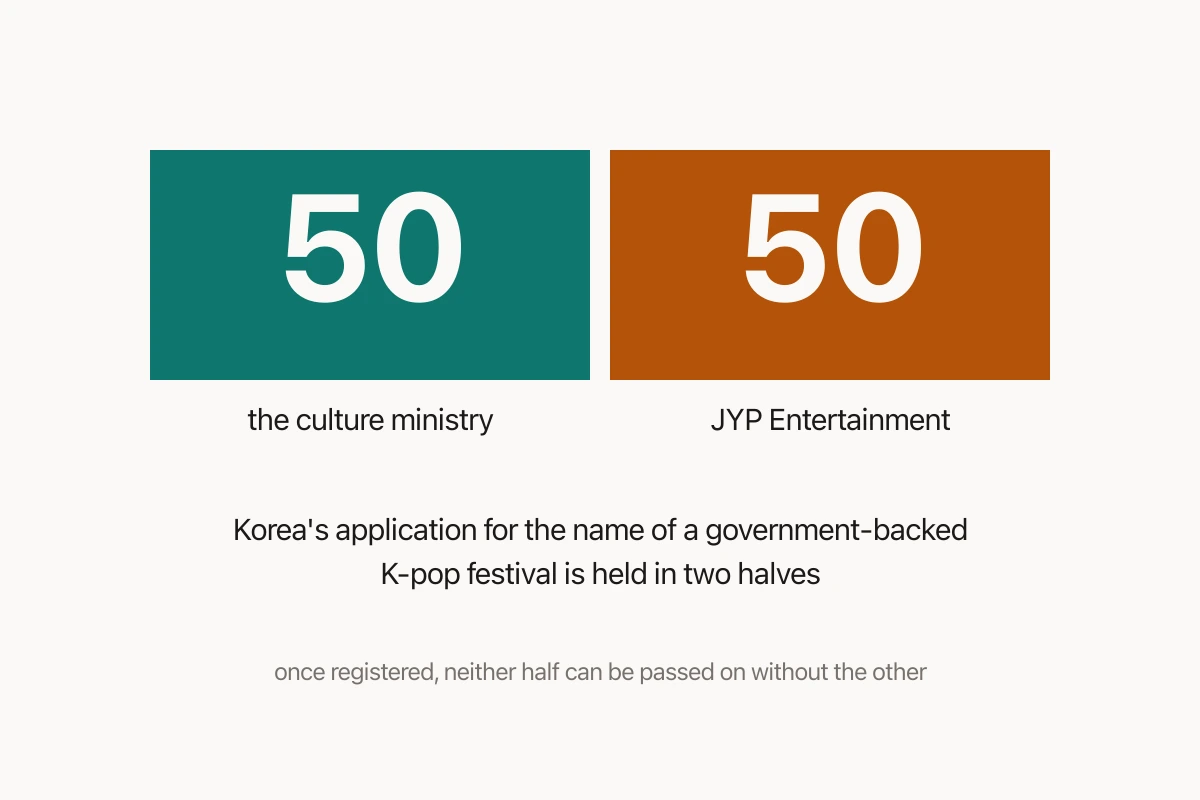
The Government's Giant K-pop Festival Has a Name. Half of It Belongs to JYP — and the Contract Was Too Secret for the Committee Chair to See
FANOMENON is meant to be Korea's state-backed answer to the world's pop festivals, planned for December 2027 by a presidential committee co-chaired by 박진영. His company filed the trademark first. On 7 October, at the National Assembly, a lawmaker put the contract on the big screen, the chair halted the audit, and 박진영 conceded that the way the name was taken was 'not normal'.
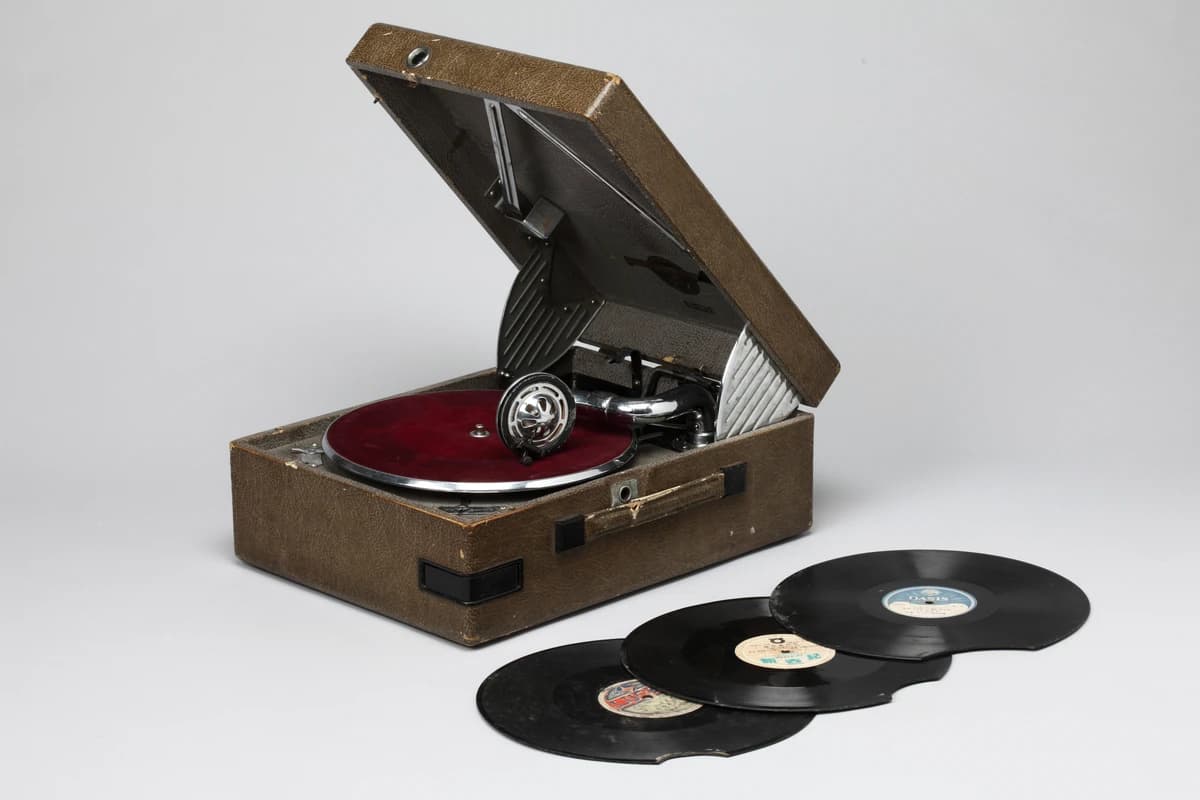
Korea's Most-Streamed Artist Sings a Genre the Country Banned for Two Decades
In 1935 a Korean record company slipped an anti-Japanese line past the colonial censors by submitting it as nonsense that sounded identical when sung. Thirty years later the Korean state banned the same genre for sounding Japanese — using a broadcasters' agreement, a ministry policy measure and three committees, but never once a law. The genre is called trot, and English writing about Korean music has essentially never mentioned it.

NewJeans Is Back — as Four. The Whole ADOR Saga, Explained.
On their fourth anniversary, NewJeans returned in a teaser — as a four-member group, at the very label they spent a year trying to leave, and without founding member Danielle. It's not a victory lap. It's the end of K-pop's biggest idol-versus-agency war, decided by a court. Here's the whole fight, and why the law made it end this way.
The Weekly Dispatch
Korea, curated. Every week.
The best of K-culture, straight from Seoul. Written by people who actually live here.
Free, no spam, unsubscribe whenever.