NewJeans Is Back — as Four. The Whole ADOR Saga, Explained.
On their fourth anniversary, NewJeans returned in a teaser — as a four-member group, at the very label they spent a year trying to leave, and without founding member Danielle. It's not a victory lap. It's the end of K-pop's biggest idol-versus-agency war, decided by a court. Here's the whole fight, and why the law made it end this way.
At midnight on July 22, 2026 — NewJeans' fourth debut anniversary — the group's label, ADOR, dropped a teaser package called "2026 Summer of NewJeans" with no advance notice. A set of short films, some photos, a signal that one of K-pop's biggest groups was coming back.
Two things about it stopped fans cold. It featured four members — Minji, Hanni, Haerin, Hyein — not five. And it came from ADOR, the label the members had stood up at a press conference eighteen months earlier to announce they were leaving.
This isn't a comeback story. It's the ending of the most consequential idol-versus-agency fight in recent K-pop history — a fight that ran through boardrooms, police stations, and three separate courtrooms, and that ended not in reconciliation but in a final court ruling. If you lost the thread somewhere in 2024, here's the whole thing, and — more importantly — why Korean law made it end the way it did.
A note before we start: this is a live dispute involving real people and ongoing litigation. Everything below is dated, every accusation is attributed to whoever made it, and where something isn't officially confirmed, we say so.
What's Actually Confirmed (and What Isn't)
Let's be precise, because the internet already isn't.
Confirmed: ADOR released the teaser on July 22, 2026. It features four members. Danielle is not among them — ADOR terminated her exclusive contract on December 29, 2025.
Not confirmed: There is no comeback single title and no release date. As of the teaser drop, ADOR described the films as content "for fans to celebrate NewJeans' fourth debut anniversary" and characterized talks over Minji's return only as proceeding "in a positive direction" — so even Minji's re-signing is inferred from her appearance in the teaser, not formally announced. Anyone telling you the single drops on a specific date, or that Minji has officially re-signed, is ahead of what ADOR has actually said.
It's also the group's first on-camera content together since the Japanese single "Supernatural" (June 21, 2024) — a gap of more than a year.
To understand how a group ends up returning to a label it sued, you have to go back to the spring of 2024.
How the War Started
NewJeans debuted on July 22, 2022 under ADOR, a sublabel of the K-pop giant HYBE. The group — Minji, Hanni, Danielle, Haerin, Hyein — was the creation of Min Hee-jin (민희진), ADOR's CEO and the creative force behind the group's understated, Y2K-tinged sound and styling. NewJeans became one of the defining acts of K-pop's "fourth generation" almost immediately.
Then, in April 2024, it blew up.
- On April 22, 2024, HYBE announced an audit of ADOR and demanded Min step down, alleging she was scheming to take the sublabel independent.
- On April 25, HYBE reported Min to police for alleged breach of trust. That same day, Min held a tearful, now-famous press conference in which she denied everything and counter-alleged that HYBE's other sublabel had copied NewJeans with its new group ILLIT.
Note the shape of that: HYBE alleged, Min denied and counter-alleged. Nearly every claim in this saga is a contested allegation, not an established fact — which is exactly why it took courts to sort out.
Over the following months the conflict escalated. A court initially blocked HYBE from using its shares to force Min out at a May 2024 shareholder meeting. But on August 27, 2024, ADOR's board replaced Min as CEO anyway, appointing Kim Ju-young; Min stayed on as an internal director and kept producing NewJeans, calling it a "unilateral dismissal." On November 20, 2024, she resigned entirely, alleging she was being punished for whistleblowing.
Eight days later, the members made their move.
The Members Walk — and the Rebrand
On November 28, 2024, all five members held an emergency press conference and declared their exclusive contracts with ADOR terminated, effective the next day. Their argument, in essence: the person they'd signed to work with — Min — had been forced out, so ADOR had broken the relationship of trust the contract depended on. ADOR rejected the grounds and insisted the contracts were still valid.
In February 2025, the members rebranded as NJZ and lined up independent activity, including a slot at ComplexCon Hong Kong. This is where it went from a corporate dispute to a genuine test of Korean entertainment law — because ADOR went to court to stop them.
The Rulings That Decided Everything
There were two separate legal tracks. Keeping them apart is the key to understanding the outcome.
Track one — the injunction (can they work independently now?). On March 21, 2025, the Seoul Central District Court granted ADOR's injunction, barring the members from independent activities — ads, performances, composing — outside ADOR while the main case was decided. NJZ performed a new song, "Pit Stop," at ComplexCon on March 23 and announced a hiatus. On April 16, 2025, the court rejected the members' objection to that injunction. (Reporting put the penalty for violating it at roughly ₩1 billion per unauthorized activity — a figure worth confirming, but the deterrent was plainly enormous.)
Track two — the main lawsuit (are the contracts valid at all?). This is the one that mattered. On October 30, 2025, the court ruled that the exclusive contracts remain valid through 2029, rejecting the members' core argument. Its reasoning, per reporting: Min's dismissal "does not in itself mean that a managerial vacuum was created or that ADOR became incapable of fulfilling its contractual obligations." In plain terms — you signed with the company, not with one executive, and her departure doesn't free you from the deal.
Then the decisive, quiet move: on November 14, 2025, the members let the appeal deadline pass without appealing. That made the October 30 ruling final.
And that single fact explains the four-member teaser. Once the contracts were confirmed binding through 2029 and the members chose not to appeal, the only lawful path forward was back at ADOR. The reunion isn't a change of heart. It's what the law left standing.
Members returned in phases through late 2025 — Haerin and Hyein first (announced November 12), then Hanni. Minji's return has been described by ADOR as progressing "positively." And on December 29, 2025, ADOR terminated Danielle's contract and announced it would pursue damages — a separate, still-active matter we'll treat carefully below.
Why This Matters Beyond NewJeans
Here's the part a chart recap can't give you, and the reason this case will be cited for years.
K-pop has a long, ugly history of what Korean critics call 노예계약 (noye gyeyak) — "slave contracts": management deals with punishing lengths, heavy penalties for leaving, and lopsided profit splits. The landmark fight was in 2009, when three members of TVXQ (동방신기) sued SM Entertainment over a thirteen-year contract. Public outrage followed, and Korea's Fair Trade Commission responded that year with a Standard Exclusive Contract for pop-culture artists that recommended capping exclusive contracts at seven years, after which an artist can opt to walk away.
NewJeans signed around 2022 — so their seven-year term runs to roughly 2029, squarely the standard length. And they tried to exit early, on the grounds that their producer had been ousted. The court's answer was, essentially: that's not enough. Even a spectacular executive blowup at your label does not, by itself, let you tear up a valid exclusive contract before its term.
That's the precedent. Not a verdict on who was the villain — the court didn't crown anyone right — but a clear signal about how high the bar is for idols to unilaterally walk away mid-contract. For every group watching, and every agency, the NewJeans ruling drew the line in a place the industry will be arguing about for a long time. It sits alongside the trainee system and the machinery behind a girl-group comeback as one more piece of how K-pop's business actually works underneath the music.
On Danielle, and on Minji
Two people in this story deserve careful, narrow treatment.
Danielle. ADOR terminated her contract on December 29, 2025, citing a breakdown of trust, and said it would pursue damages in connection with the dispute. That is the extent of what has been officially stated. Reporting indicates the damages action targets a family member and Min Hee-jin rather than Danielle personally — but the details are unsettled, and it would be wrong to characterize her motives or imply any wrongdoing. A founding member of a group this beloved leaving it is a genuinely sad thing, and it doesn't need embellishment. We'll report what's confirmed and nothing more.
Minji. She appears in the teaser, which is the strongest signal yet that she's returning. But ADOR has stopped short of confirming a re-signing, so we describe her as appearing in the return content — not as officially back — until the label says otherwise.
What Comes Next
As of late July 2026: four members, a teaser, and no announced single or date. The HYBE–Min disputes rumble on in parallel — including a separate court order in February 2026 for HYBE to pay Min roughly ₩25.5 billion (about US$18 million) on a share-sale option, which HYBE is appealing.
But the core question — can NewJeans exist, and where? — has an answer now, and a court wrote it. NewJeans exists, as four, at ADOR, through 2029.
It is a strange, bittersweet kind of comeback: a group returning not because the fight was won, but because it was finished. The music, when it comes, will be the easy part. The hard part already happened in a courtroom in Seoul — and it quietly rewrote how much freedom a K-pop idol actually has.
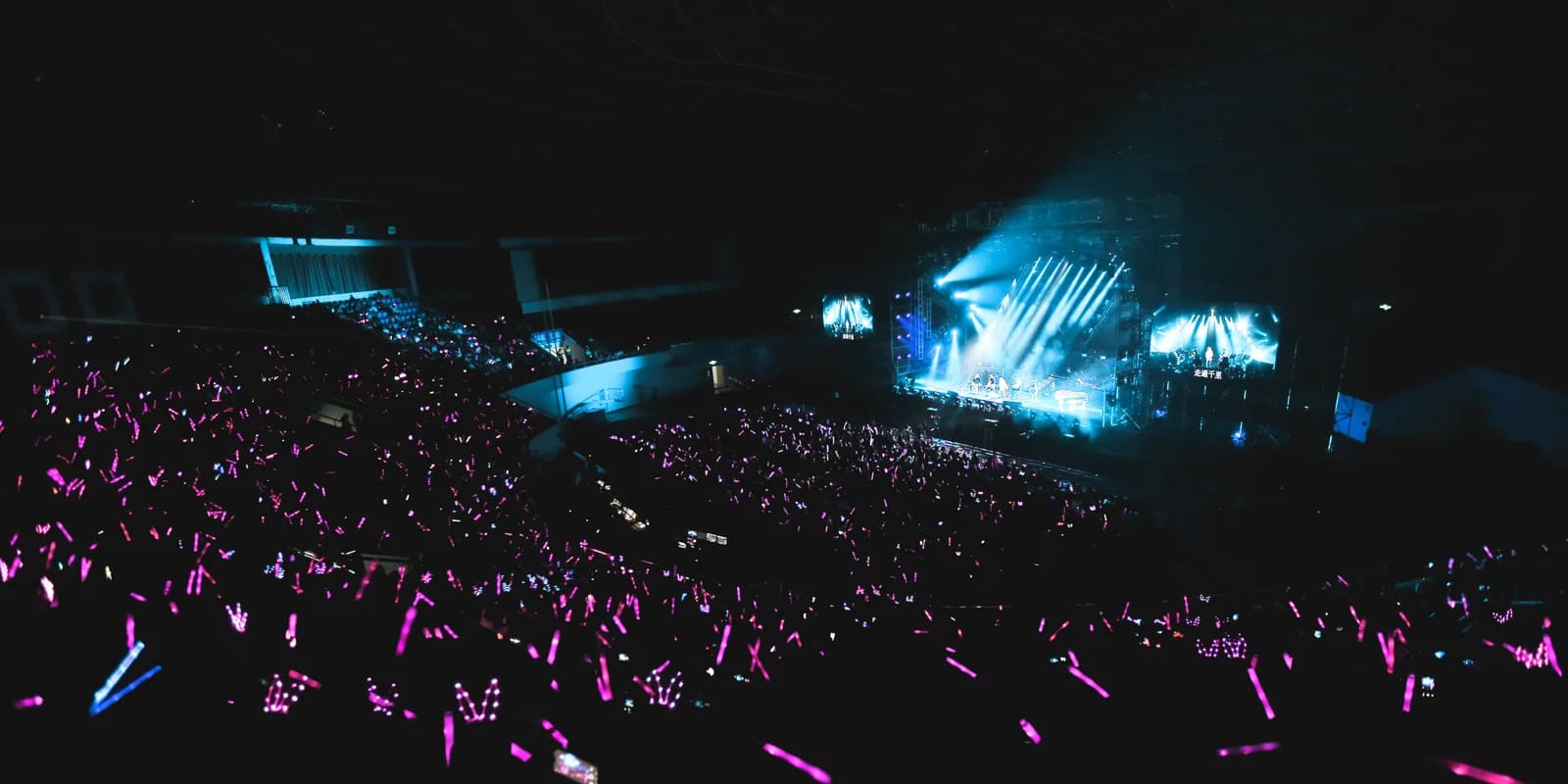
This is a developing story; all dates are given explicitly and all facts are current as of late July 2026. Every accusation between HYBE, ADOR, and Min Hee-jin is attributed to the party that made it and should not be read as established fact; the court rulings are reported as rulings. No comeback single or release date had been announced at publication, and Minji's re-signing had not been formally confirmed by ADOR — we describe only what was officially stated. Danielle's departure is reported strictly as stated by ADOR, without characterization. The FTC standard contract is a recommended template (a seven-year cap), not an absolute legal ban. Figures marked approximate (the per-activity penalty, the won-to-dollar conversion) should be treated as reported rather than exact. Images: hero and listing card — NewJeans at the 2023 Melon Music Awards, i.e. the original five-member lineup, by TenAsia, CC BY 3.0 via Wikimedia Commons (cropped); these are dated 2023 photographs shown to illustrate the group's history, not its current four-member form, as no free-licence four-member photograph yet exists. Cover — a K-pop concert crowd with light sticks, by Teddy Yang via Pexels (Pexels License), used to illustrate the fandom/industry context rather than a specific performance.
Keep Reading
More Stories
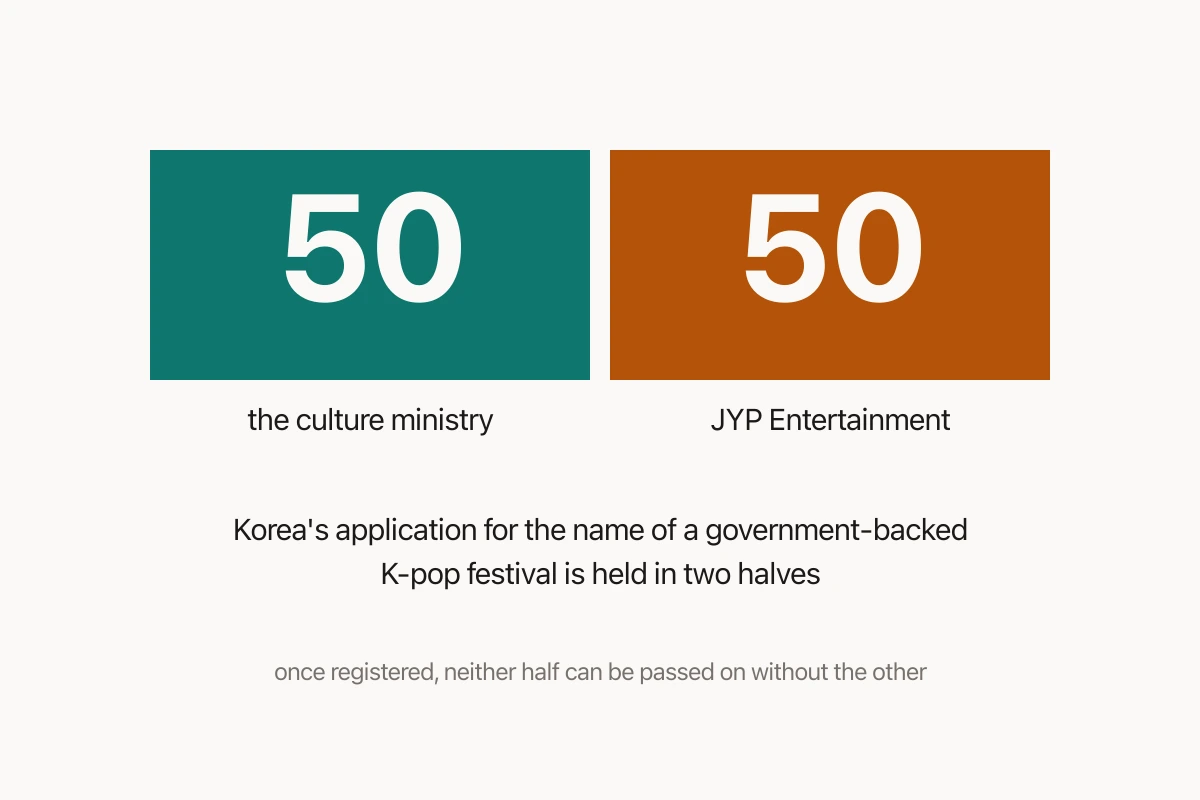
The Government's Giant K-pop Festival Has a Name. Half of It Belongs to JYP — and the Contract Was Too Secret for the Committee Chair to See
FANOMENON is meant to be Korea's state-backed answer to the world's pop festivals, planned for December 2027 by a presidential committee co-chaired by 박진영. His company filed the trademark first. On 7 October, at the National Assembly, a lawmaker put the contract on the big screen, the chair halted the audit, and 박진영 conceded that the way the name was taken was 'not normal'.
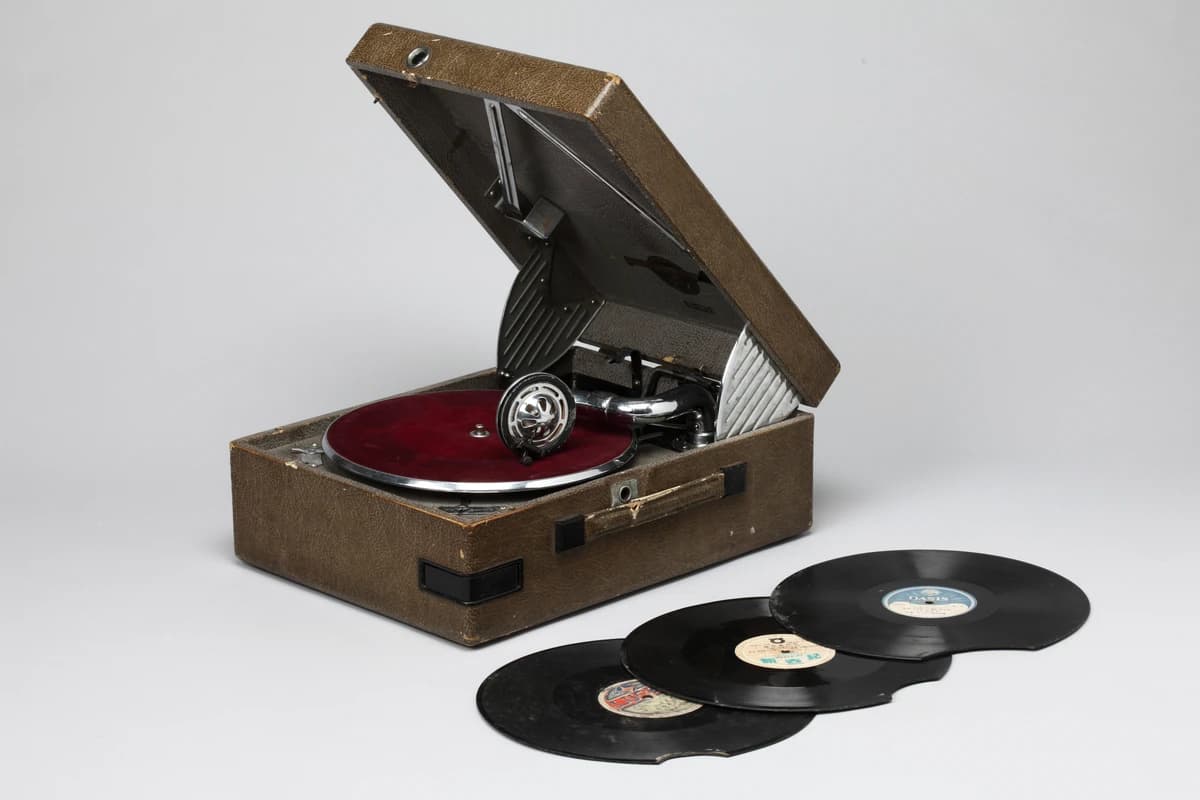
Korea's Most-Streamed Artist Sings a Genre the Country Banned for Two Decades
In 1935 a Korean record company slipped an anti-Japanese line past the colonial censors by submitting it as nonsense that sounded identical when sung. Thirty years later the Korean state banned the same genre for sounding Japanese — using a broadcasters' agreement, a ministry policy measure and three committees, but never once a law. The genre is called trot, and English writing about Korean music has essentially never mentioned it.

Waterbomb: Korea's Least Modest Party, and the Argument It Starts Every July
Waterbomb Seoul runs July 24–26 — nine hours a day of K-pop, EDM and 30,000 people shooting each other with water guns. It's also the subject of an annual Korean debate about bodies, water and who gets scrutinised. A guide to what actually happens, what it costs, and the 300-ton statistic that isn't true.
The Weekly Dispatch
Korea, curated. Every week.
The best of K-culture, straight from Seoul. Written by people who actually live here.
Free, no spam, unsubscribe whenever.